Patrick Husbands’ greatest victory was making it as a Black jockey
September 29, 2026
After weeks at Woodbine Racetrack with few chances to ride, Patrick Husbands was ready to return to Barbados.
The young jockey had already made his name at home where winning mounts were plentiful and he knew the horses, trainers and rhythms of the track.
In Canada, Husbands was virtually unknown. He could barely find a horse to exercise in the mornings, let alone a promising mount on race day.
He told his older brother, Anthony, that he was going back. Anthony urged him to stay, keep showing up at Woodbine and give himself time to establish a career there.
Husbands listened.
More than three decades later, as he prepares to leave Canada and return to Barbados, he still sees that conversation as a turning point.
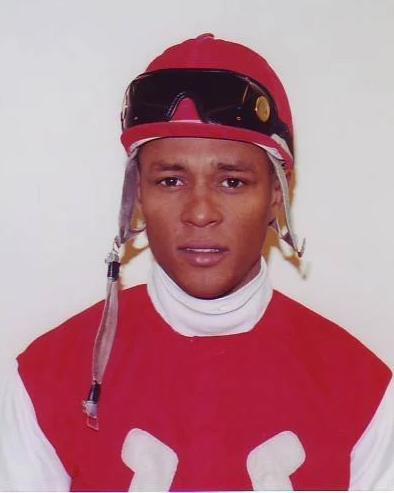
The young rider who once wondered whether a Black jockey could succeed at Woodbine became a Canadian Horse Racing Hall of Famer, a seven-time Sovereign Award winner as Canada's outstanding jockey and the partner of Wando, the last horse to sweep the Canadian Triple Crown.
Husbands retired earlier this year with 3,714 victories and a place among the finest jockeys in Canadian thoroughbred racing history.
Looking back on his stellar career, he places one achievement above the trophies and major race wins.
“Forget all the races,” Husbands said. “A Black man making it at Woodbine Racetrack is the highlight of my career.”
Before moving to Canada, he wondered whether there was a place for him at Woodbine. His older brother encouraged him to come north during visits from Barbados, but he remained doubtful.
“Anthony would say, ‘What are you doing back home? Move here’,” Husbands recounted. “I would tell him, ‘You ever see a Black rider at Woodbine? There are no Black riders there. Why do you want me to move up here?’ He said, ‘Stick with it.’”
Already an accomplished jockey in Barbados, he had reason to stay on the Caribbean island.
In 1990, at age 16, Husbands rode Vardar to victory in the Barbados Gold Cup, becoming its youngest winning jockey. After a serious spill in Trinidad, he returned to Barbados and won the riding championship before establishing himself at Woodbine.
“I came back to Barbados and destroyed them in the championship,” he said. “I had to win four or five races every day. Then the following year, I moved to Canada.”
At Woodbine, that record brought him little immediate opportunity.
For about six weeks, Husbands struggled to find horses to exercise. He tried Fort Erie, but the only horse he mounted there bolted. His brother persuaded him to return to Woodbine.
There, horseman Bill Marko offered him work exercising difficult horses. He took it, determined to show what he could do.
“You fight your way,” Husbands said. “There were bumpy roads, but three and a half or four years later, I was rolling. I showed people that it was just in their imagination that a Black man couldn’t make it in any part of the world. You have to put those things behind you and focus. That’s what I did.”
By 1999, he was Woodbine’s leading rider and had won his first Sovereign Award as Canada’s outstanding jockey. He claimed the award four years in a row and eight times over his career.
Husbands’ rise meant something to Caribbean Canadians who followed racing.
A Barbadian jockey who had struggled to find a mount at Woodbine was now one of its leading riders. He, however, was focused on the work rather than what his success might represent to others.
“I always focused on horse racing,” noted Husbands. “Horse racing is the only sport I know. I don't know about basketball, football, baseball, the Olympics or cricket. I came from a very poor family. All I knew was horses. I would ride in the morning and afternoon, come home and it was races, the farm, horses, horses, horses. I did that my whole life.”
That dedication shaped how he rode. Before a race, he studied the form and considered how the horses and rival jockeys might respond as the pace developed.
“Every horse is different, every jockey is different, every horse's style is different and every jockey's style is different,” Husbands said. “You have to know how to play the game. You cannot be negative and you cannot beat yourself before the race.”
He also knew that a jockey’s next opportunity could depend on the last result.
“It is a business,” Husbands said. “Your best ride is your last ride. Everybody is trying to make a living for their families. If you get beat, the groom wants you off the horse and the trainer wants you off. Nobody wants excuses. You have to be consistent.”
For Husbands, confidence was part of meeting that pressure.
“In sports, you always have to be cocky,” he said. “People might call it arrogance, but you have to believe.”

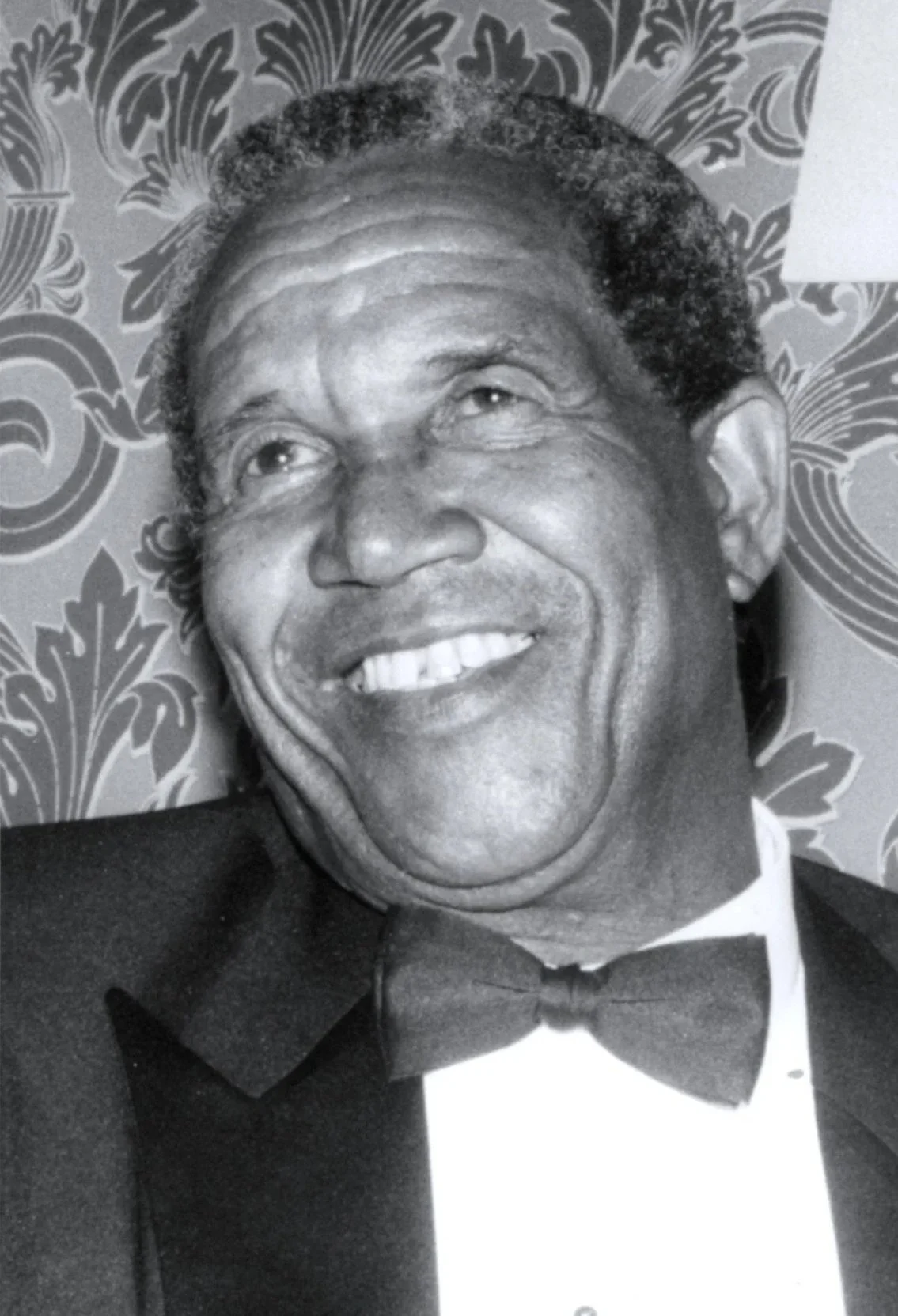
Barbados’ Consul General Leroy McLean congratulates Errol Barrow Memorial Award winner Patrick Husbands. The presentation was made at the Barbados Ball Canada Aid seventh annual gala in June 2010 (Photo by Ron Fanfair)
In 2001, Husbands rode Numerous Times to victory in the Woodbine Mile and Exciting Story to an upset win in the Metropolitan Handicap at Belmont Park.
His partnership with Wando gave him one of the clearest demonstrations of that belief.
In 2003, Husbands steered the Mike Keogh-trained colt to victories in the Queen’s Plate, Prince of Wales Stakes and Breeders’ Stakes.
Wando remains the most recent horse to sweep the Canadian Triple Crown. The jockey’s achievement was celebrated with the Barbados Service Award and ‘Patrick Husbands Day’ at Barbados’s Garrison Savannah on January 3, 2004.
Husbands, the recipient of the African Canadian Achievement Award for Excellence in Sports in 2004, was eager to ride either of Keogh’s promising colts, Wando or Mobil. He asked his agent to pursue both mounts and was assigned Wando.
“I had so much confidence that it didn't matter which horse,” he said. “If I had chosen Mobil, I believe I would have won the Triple Crown with him, too. You have to understand that if you have confidence in a horse and the horse has confidence in you, you cannot go wrong.”
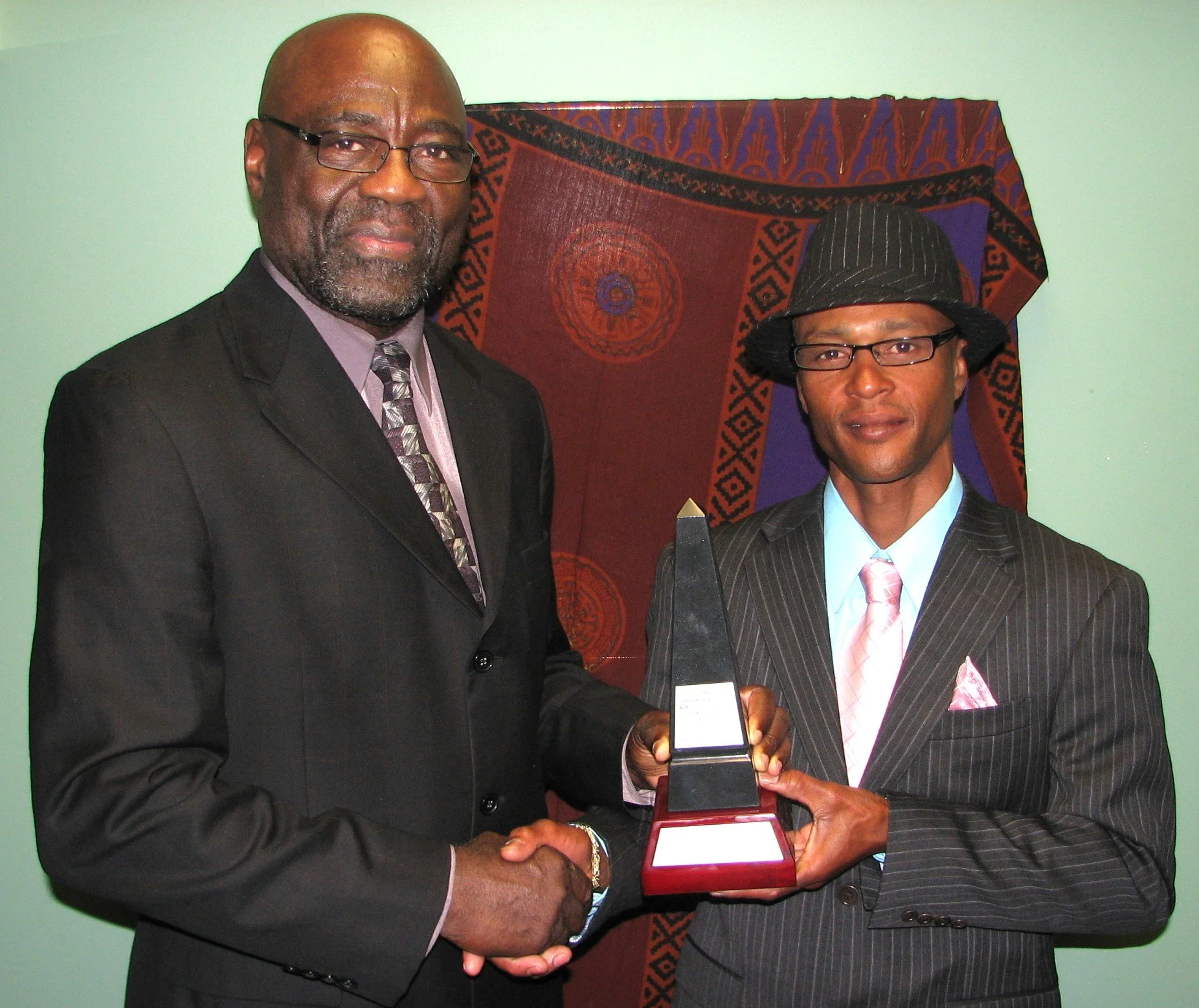
Retired Toronto Police deputy chief Keith Forde presented the African Canadian Achievement Award to Patrick Husbands in 2004 (Photo by Ron Fanfair)
Wando’s Triple Crown was one of many major wins.
He later rode Sealy Hill during her 2007 Canadian Horse of the Year campaign and made his Kentucky Derby debut aboard Seaside Retreat in 2006. His record also includes nine wins in Canadian Triple Crown races and four Barbados Gold Cups.
Twenty years after winning the Queen’s Plate with Wando, Husbands claimed his third Plate victory aboard Paramount Prince in 2023. Whether the colt could handle the distance was a concern, but he intended to let him run from the front.
“I told Mark, ‘I ain't changing anything,” he said. “The last words Mark said to me were, ‘Work your magic.’ I left the gate with confidence and rode him with confidence.”
Paramount Prince led throughout. Watching with co-owner Gary Barber, Casse saw the colt set a brisk early pace but trusted Husbands’ judgment. That trust, built over years of working together, gave the jockey room to ride the race as he saw it.
Casse became one of the people Husbands trusted most in racing.
“Mark has done everything for me,” Husbands said. “Every interview is about Mark because he took over from Thomas Peirce. He has done everything for me.”
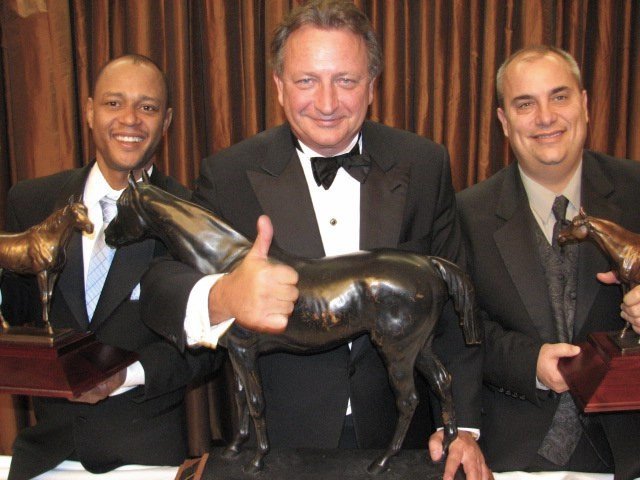
Jockey Patrick Husbands, owner Eugene Melnyk (c) & trainer Mark Casse won Sovereign Awards in their respective categories for Sealy Hill which was the champion female turf horse in 2007 (Photo by Ron Fanfair)
Husbands traces that support back to Barbados.
He remembers Peirce as a father figure after his own father died around the time he received his jockey’s licence. Pierce believed in him and helped him establish himself.
“Mr. Peirce became like a dad because my daddy passed away as I got my jockey's licence,” he said. “He played a part in my life. He invested for me in Barbados. He did everything for me. He was my father.”
Their bond lasted well beyond Husbands’ early years in racing. When Peirce died in 2007, Husbands returned to Barbados to serve as a pallbearer.
He also recalls the influence of the late Eugene Melnyk, a Canadian racehorse owner with strong ties to Barbados. Melnyk, who also owned the Ottawa Senators, named horses after places on the island, bringing a piece of it into the racing spotlight.
Husbands’ career was shaped by serious injuries as well as the people who supported him.
Before applying for his jockey’s licence in Barbados, a yearling kicked him and broke his hand. He went ahead with the application the next day, then waited weeks for the injury to heal.
A fall in Trinidad was far worse.
Husbands recalled winning the first three races on a rain-soaked card before falling near the finish of the fourth. He suffered broken ribs and injuries to a kidney and lung. His older brother, Anthony, feared another accident in the Caribbean could kill him and urged him to pursue a career in Canada.
Racing in Canada brought more injuries.
Husbands fractured his right leg in a 2013 spill, then returned to lead the Woodbine jockey standings in 2014. In 2018, a horse fell on him before a race, fracturing his pelvis in two places. Surgery required a metal plate and screws, and he did not return to racing until the following spring.
Husbands underwent eight operations during his career and can joke about what his body endured.
“The doctor told me that if I were a horse, they would have had to put me down,” he pointed out.
The strain was also mental.
In his final years, Husbands rode fewer races, but felt that trainers and the public still expected him to win as often as he had at his peak.
“It bothered me because my whole life I was always on top,” he said. “The last seven years, I was under so much stress. I didn't sleep at night. When you are not the top rider, everybody complains because only one person can win a race. The trainers complain, the public complains, everybody complains.”
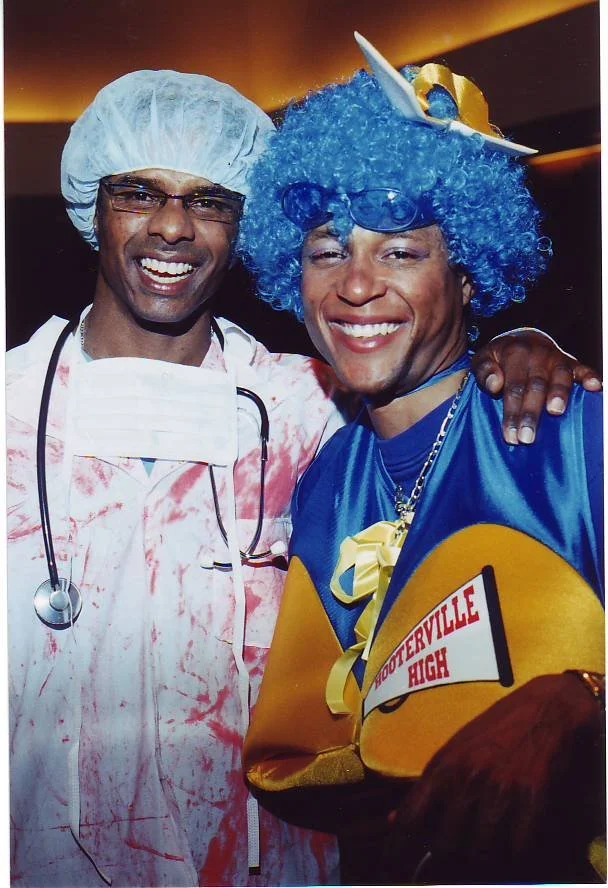
Patrick Husbands (r) and close friend Sean Hall at a Barbados community organization Halloween celebration in the Greater Toronto Area (Photo by Ron Fanfair)
He had considered retiring for several years.
Before Woodbine’s 2026 season, he drove to the track for more than two weeks, each morning confronting the same thought -- “I can't do this anymore. I'm done with that.”
Husbands, the first jockey inducted into the Brampton Sports Hall of Fame in 2005, announced his retirement from race riding on April 24. At the time, he allowed that he might one day feel the urge to return.
Privately, he said, his decision was firmer.
“It is tough to walk away from a sport that you love,” he said. “When I first said I was finished, I was sugar-coating it for my brain, saying, ‘You aren't done yet’. But I knew I was done.”
Husbands still planned to exercise horses in the mornings. After one such ride alongside his brother ended with him being thrown to the ground, he got up sore and felt his decision confirmed.
“I am done with that,” he said
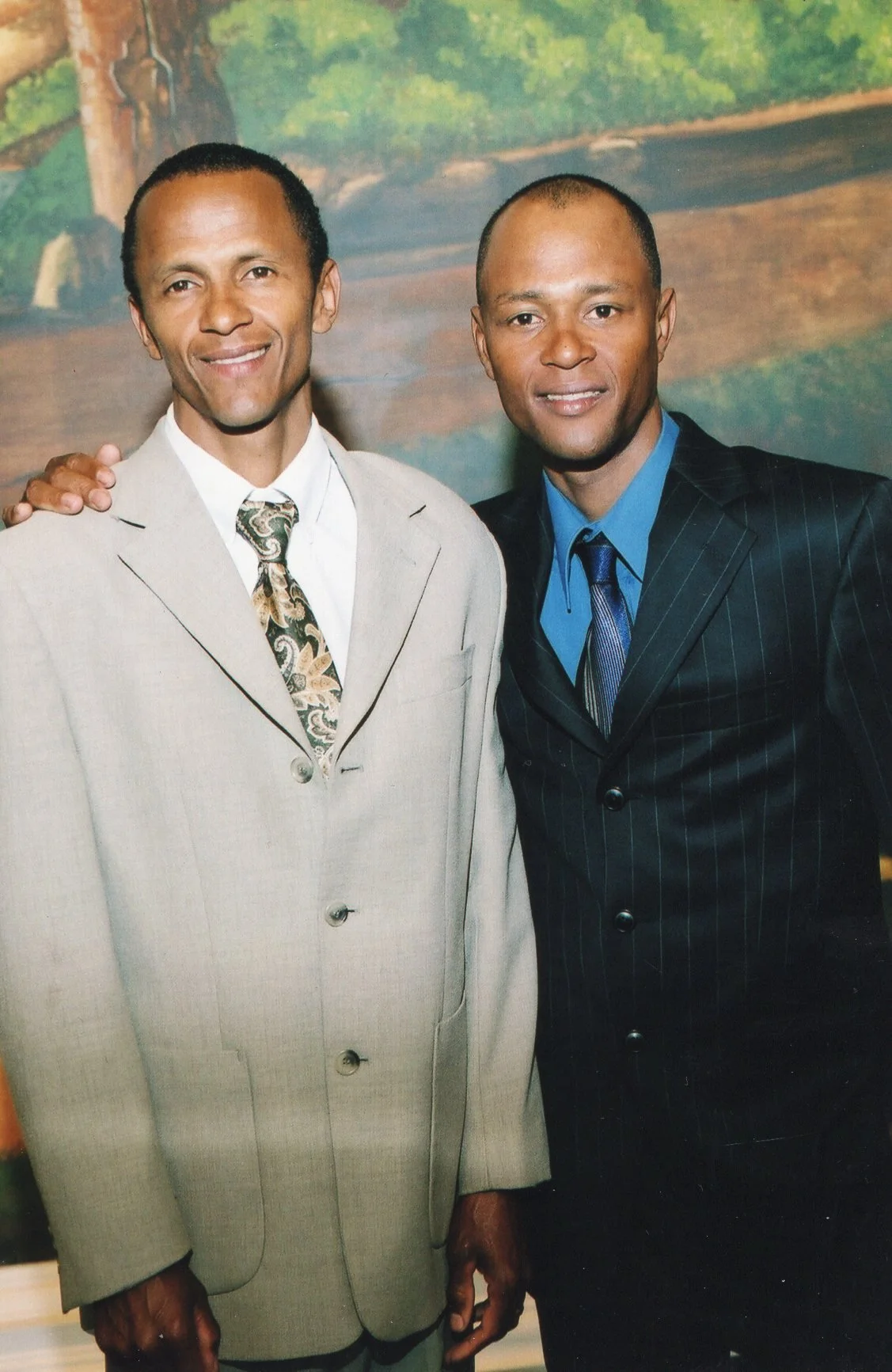
Patrick Husbands (r) with his brother Simon at the 2005 Brampton Sports Hall of Fame ceremony (Photo by Ron Fanfair)
Retirement is giving Husbands time for a life that rarely fit around racing.
At 53, the father of three speaks with humour about slowing down and spending more time with his family. One of his sons, now six, loves horses while another prefers soccer. He has no intention of choosing a path for either of them.
Husbands plans to write a book about the rewards and hardships of racing. For now, his priority is a riding school in Barbados, an ambition he carried with him when he came to Canada.
“The plan was to come out here, make some money, go back there and open a riding school,” he said. “But things just kept taking off. It kept going and going.”
Husbands says he is working to secure land and hopes to move the project forward by the end of 2026 or early in 2027.
He wants the school to offer young people in Barbados and beyond the training and opportunities that helped him build a career. He has also spoken publicly about making it accessible to people with disabilities.
Husbands’ advice to aspiring riders comes from his experience of arriving at Woodbine with a record of success in Barbados, then struggling to find anyone willing to put him on a horse.
“A Black man can make it,” he said. “This is for the youths out there. Come away from that negative energy, think positively and work hard. Once you work and you have the talent, they have to recognize it.”
A riding school would let Husbands pass on more than what he learned about horses. He could give young riders a place to start and the encouragement to stay when opportunities are hard to find.