Lonnie Ali reveals the heart behind The Greatest
November 2, 2026
When The Greatest premieres worldwide on Prime Video on November 4, audiences will meet a young Cassius Clay navigating the ambitions, relationships and convictions that shaped his transformation into Muhammad Ali.
The first authorized scripted series about his life counts his widow, Lonnie Ali, among its executive producers. All eight episodes will be available that day.
Filmed across Ontario, including Hamilton, the production adds another Canadian connection to a champion whose ties to this country extended beyond the boxing ring.
In Toronto over the weekend for an evening honouring her husband at the Aga Khan Museum, Lonnie said she hopes viewers will come to understand the person behind the celebrated public figure.
Speaking at the presentation of A Legend Carved in Stone, Omi Woods’ fine jewellery collection honouring his legacy, she recalled a husband who was quiet at home, delighted in children and appreciated how much a brief encounter could mean to an admirer.
That understanding grew partly from his own disappointment.
As a young boxer, Ali approached his idol, Sugar Ray Robinson, for an autograph and was turned away.
Lonnie believes the hurt stayed with him, shaping his determination to make time for those who sought his attention.
“He was in New York for a fight and walked to Harlem hoping to get an autograph from his hero,” she said. “When Sugar Ray refused, he was crushed. I think that’s why Muhammad never turned down an autograph request. Even in the middle of a meal, he would put down his fork or spoon and sign.”
Lonnie saw that generosity as an expression of a broader belief in the bonds between people, wherever her husband travelled.
“There was something special about Muhammad in that humanity that he possessed, of how he saw people as his brothers and sisters, regardless of who they were and where they came from,” she said. “I used to say wherever he travelled to, and he put his foot down on that soil, those people became his people. And that’s the way he felt.
“He had no agenda. He wanted nothing from anybody. All he wanted was interest, curiosity and love. That’s what he brought with him. And people responded to that, and they still respond to that, actually. That part of his legacy continues on today.”
Children held a special place in Ali’s life.
Lonnie remembered an indulgent father who used everyday moments to teach kindness and responsibility.
“He was very patient and loving,” she said. “A very easygoing dad. He had seven girls and two boys, but he spoiled kids. He loved children and he spoiled kids. But he was always teaching, taking the opportunity to teach them and to teach me those things in life that we should know -- how to be kind to one another, how to give back, and how to be good citizens.”
Ali’s delight in children extended beyond his own family.
“His real joy was his family, his children, his grandchildren, anybody’s child, to be honest with you,” Lonnie said. “He just loved, loved, loved people. If God made anybody to be a celebrity, it was him.”
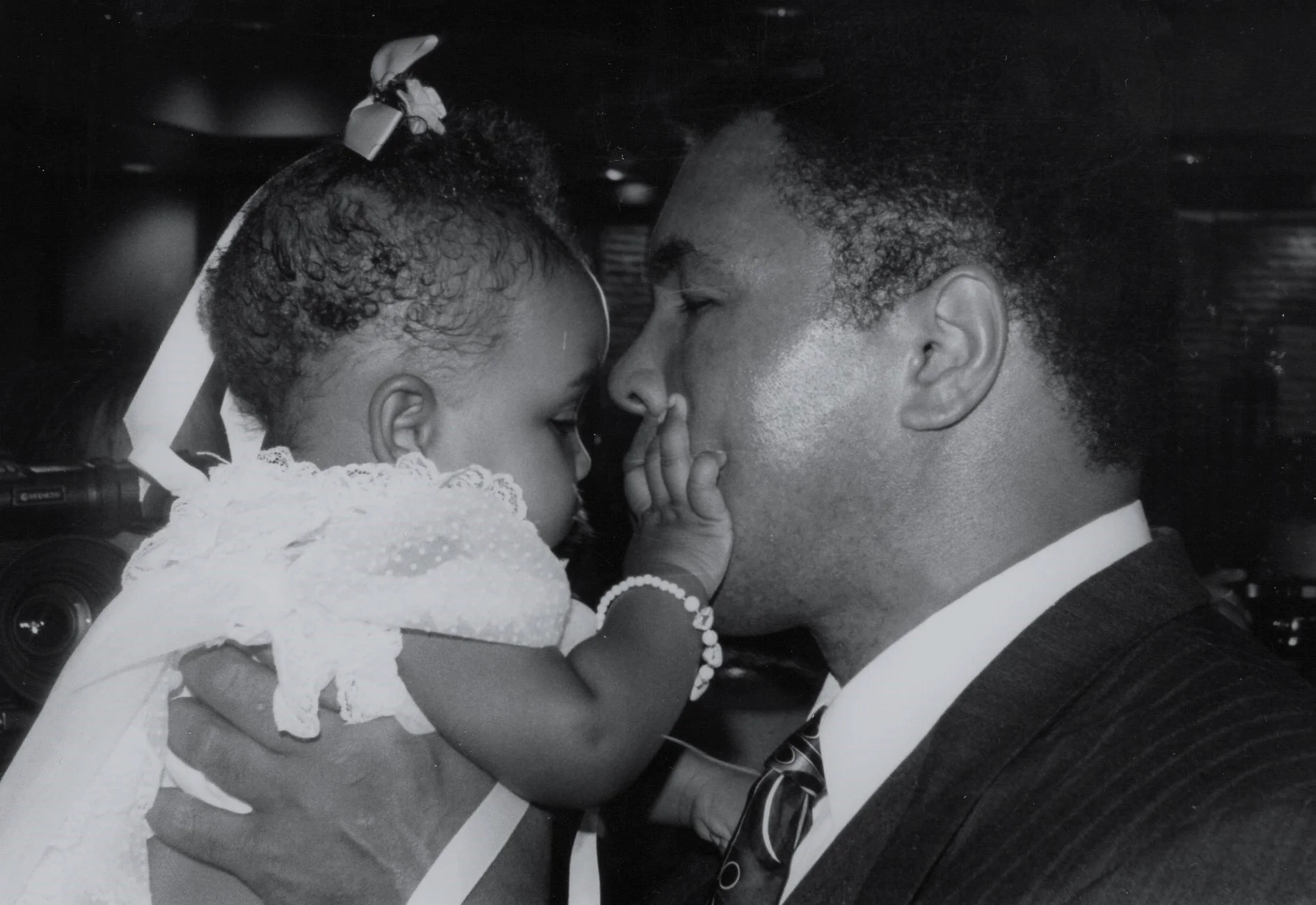
Muhammad Ali with eight-month-old Amaala Chapman in August 1994. He was in Toronto for the launch of 'Salam', an Islamic TV program shown on Vision TV (Photo by Ron Fanfair)
Away from the crowds, however, the exuberant showman settled into a quieter routine.
“Muhammad was always on when he was out in public,” she said. “Whether it was at a restaurant or wherever, as long as there were people or there was a possible fan base and an audience, he was on. But at home, he was very quiet and pensive, read a lot, studied a lot. He was very agreeable and he never, ever made demands of any sort. If I fed him leftovers five days in a row, he would have never complained.”
Lonnie said Ali enjoyed revisiting his old fights and looking through photographs of himself with others. Even at home, there was pleasure in watching the performances that had captivated the world.
Bringing her husband’s formative years to television came with a clear requirement for Lonnie. The story had to be authentic.
Created by showrunner Ben Watkins, with Michael B. Jordan’s Outlier Society among its producers, The Greatest stars Jaalen Best as Cassius Clay. Its eight episodes follow his rise from Olympic gold in Rome in 1960 to his first world heavyweight title victory over Sonny Liston in 1964 and his adoption of the name Muhammad Ali.
For Lonnie, the series offers space to explore the family relationships and experiences that shaped him.
“You get to pull that curtain back and see what made that young man, Cassius Clay,” she said. “How did he get to be Muhammad Ali? What was that pathway? What were the family dynamics? What gave him the foundation to be able to do the things that he did?”
That perspective introduces viewers to someone still discovering who he wanted to become.
“When we think of Muhammad, we normally think of that fully formed champion in the ring,” Lonnie said. “Well, now you get to see the young man before that ever happens, and the challenges he had and the obstacles he overcame. And he was a teenager. He did teenager kind of things. We get to experience that part of Muhammad, or Cassius, I should say. That’s fun and interesting, but also complicated and nuanced.”
Best’s ability to capture that emerging personality impressed her.
“The young man who is playing him does a phenomenal job,” she said. “You will think you are watching Cassius Clay for real.”
Lonnie helped shape the production by reviewing scripts, correcting details and connecting the filmmakers with relatives and others who knew Ali in his youth.
“What I did mainly was to look at scripts and correct them, make sure they were authentic and truthful and honest, give the little nuances, the things that the writers would never have known,” she said.
Lonnie approached that work with future audiences in mind.
“This is going to have a long shelf life,” she said. “And I want young people of the current generations and generations we don’t even know yet to understand who he was and how he got there.”
Much of his early world was recreated in Ontario, with filming locations including Hamilton, Cambridge and Cobourg. Asked about the choice of Hamilton, Lonnie credited Watkins’ familiarity with working in Canada and the advantages he saw in filming here.
Visiting the sets gave her a deeper appreciation for the care behind those recreations.
Lonnie recalled the family home and the offices of the Louisville Sponsoring Group and Ali’s early attorney, Alberta Jones, with clothing, furnishings and wall panelling helping transport the production to the period.
“Seeing the detail that goes into this, I will never again watch an awards show and overlook the people behind that work,” she said. “They do everything so meticulously because they want to take you back to that time and make you feel as though you’re in the room with him, experiencing his life alongside him.”
Lonnie encouraged viewers to appreciate the care taken to recreate Ali’s world as well as the actors’ performances.
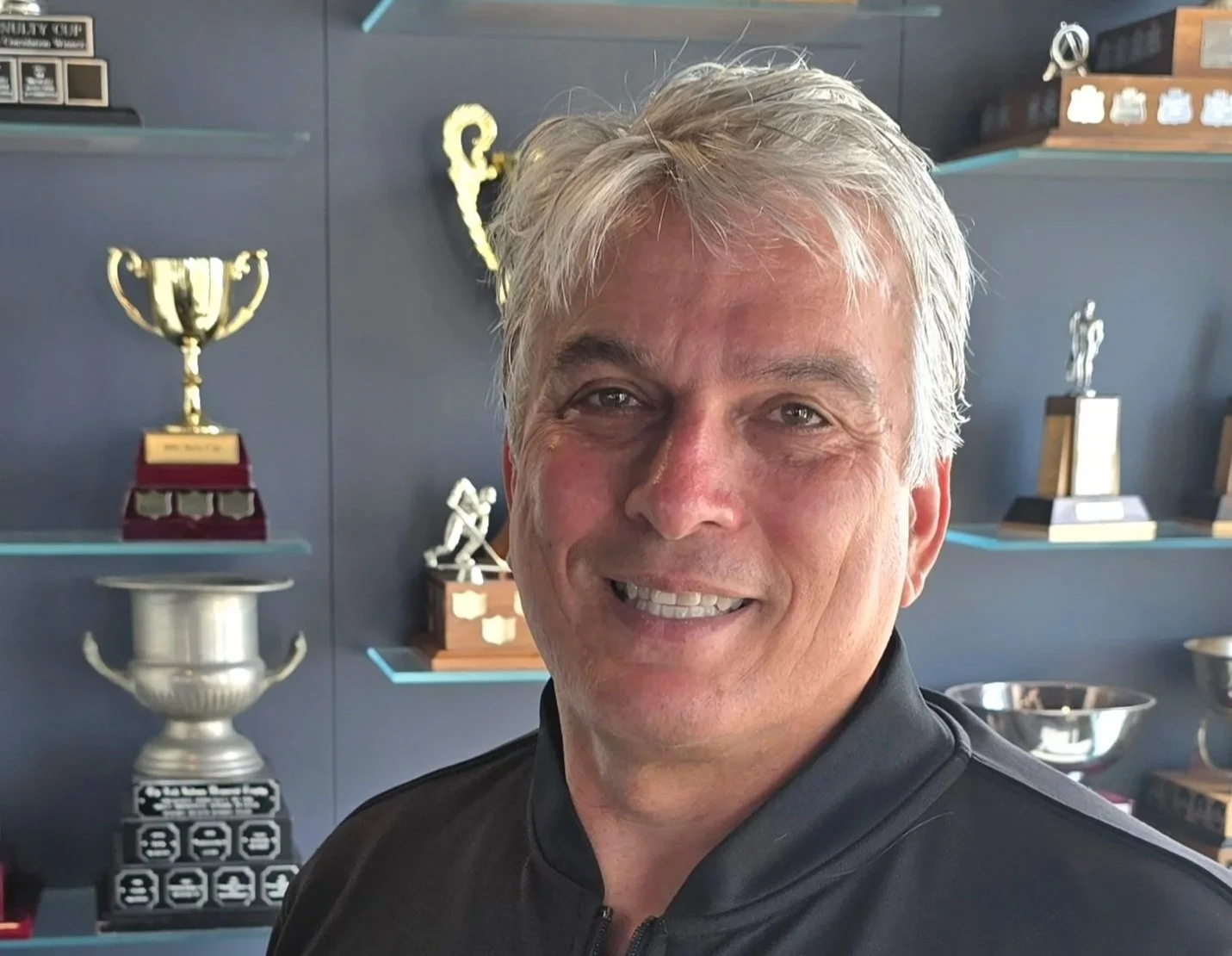
Hamilton’s connection to Ali also includes an encounter hockey coach Peter DeBoer recalled after the boxer’s death in 2016.
DeBoer was 17 and attending his prom at the Royal Connaught Hotel when Ali arrived. After asking a member of the boxer’s entourage for an introduction, he and several friends were invited to Ali’s room. There, Ali personalized copies of the Qur’an for them and asked about their lives.
The encounter reflected the generosity Lonnie described, with Ali taking time to make young admirers feel welcome.
She also recalled accompanying her husband to Toronto for events involving Canadian boxer George Chuvalo. Ali had fought Chuvalo years earlier in Toronto in 1966 and Vancouver in 1972.
“I have fond memories of Toronto and Canada in general,” she said. “The people are friendly, they’re nice and they’re hospitable.”

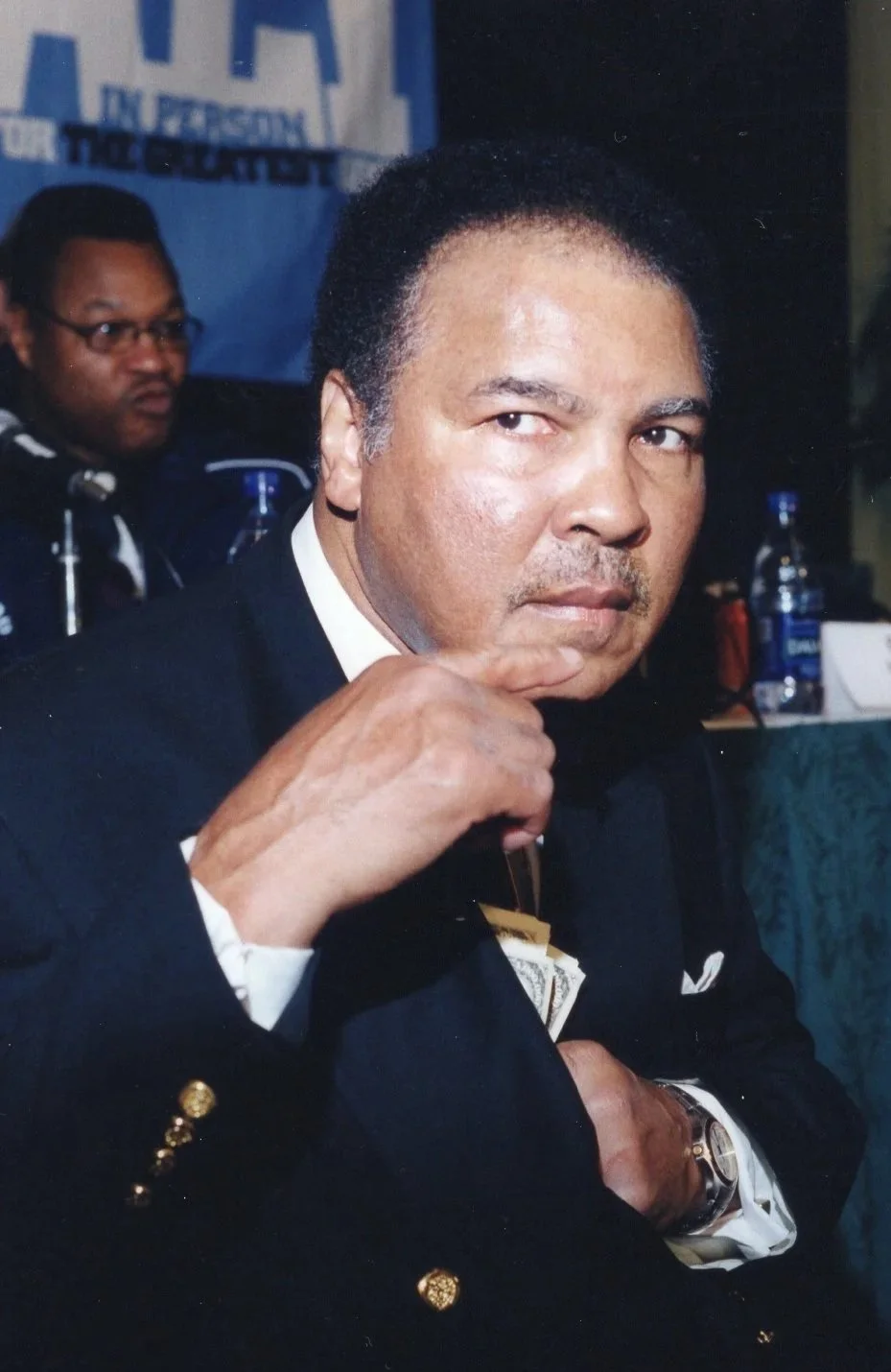
Muhammad Ali on his last visit to Toronto in October 2002 to headline a major fundraiser for Parkinson’s disease research. He was honoured by the Toronto Argonauts at half-time (Photo by Ron Fanfair)
Ali’s concern for others was rooted in his faith and his experience of racial discrimination.
Raised Baptist, he publicly confirmed his affiliation with the Nation of Islam in 1964 and embraced Sunni Islam in 1975.
Lonnie described a man drawn to Black independence, dignity and equality, determined to use his prominence on behalf of people whose struggles were often ignored.
“He believed in Black pride and lifting Black people up,” she said. “He wanted to stand up for oppressed people who needed a voice, and he was determined to be that voice.”
Ali’s convictions came at a considerable cost.
After refusing induction into the United States armed forces in 1967, he was stripped of his heavyweight title and denied the opportunity to box for more than three years during his prime. The U.S. Supreme Court overturned his draft-evasion conviction in 1971.
Yet Lonnie said he did not expect other athletes to follow his example.
“He would never judge another athlete because they didn’t step forward or they didn’t speak out, because everybody’s situation is different,” she said. “He did what he thought he should do, but he never put that on anybody else.”
Lonnie hopes young viewers will recognize the perseverance and sense of responsibility behind those choices.
“Sometimes we have to understand that we have to take stands,” she said. “We have to tell the truth. We have to lift others as we rise.”
At home, that responsibility found expression in the simplest gestures.
“He always taught us that you have to do acts of kindness every day, whether it’s just giving someone a smile, letting someone in traffic, handing somebody a glass of water, checking on a sick neighbour,” she said. “If you repeat them every day, it’s like a muscle being flexed. It becomes natural. And it was as natural to him as it was breathing.”
Through the Muhammad Ali Center in Louisville, which they co-founded, Lonnie continues carrying those values forward. She described its purpose as inspiring greatness, cultivating curious and courageous leaders, and helping build a more compassionate world.
“He saw everyone and he stopped,” Lonnie said.
As The Greatest introduces Ali to another generation, that willingness to stop may be as revealing as anything he accomplished in the ring.
Lonnie’s memories bring his legacy into the everyday, where kindness could be as simple as putting down a fork so someone else could feel seen.