Collaboration and clay connect Caribbean histories in new Gardiner Museum exhibition
October 2, 2026
A new Toronto exhibition uses clay to connect Caribbean histories, artistic traditions and migration experiences across languages, borders and generations.
After the Island: Caribbean Canadian Ceramics, presented by the Gardiner Museum in partnership with Black Artists’ Networks in Dialogue (BAND), brings together the work of PJ Anderson, Eddy Firmin, Manuel Mathieu and Sharon Norwood.
Through ceramics, sculpture, painting, installation, scent and an interactive video game, the artists explore how the body holds memories of colonialism, labour, displacement, survival and belonging.
The exhibition opens October 9 and runs until April 25, 2027.
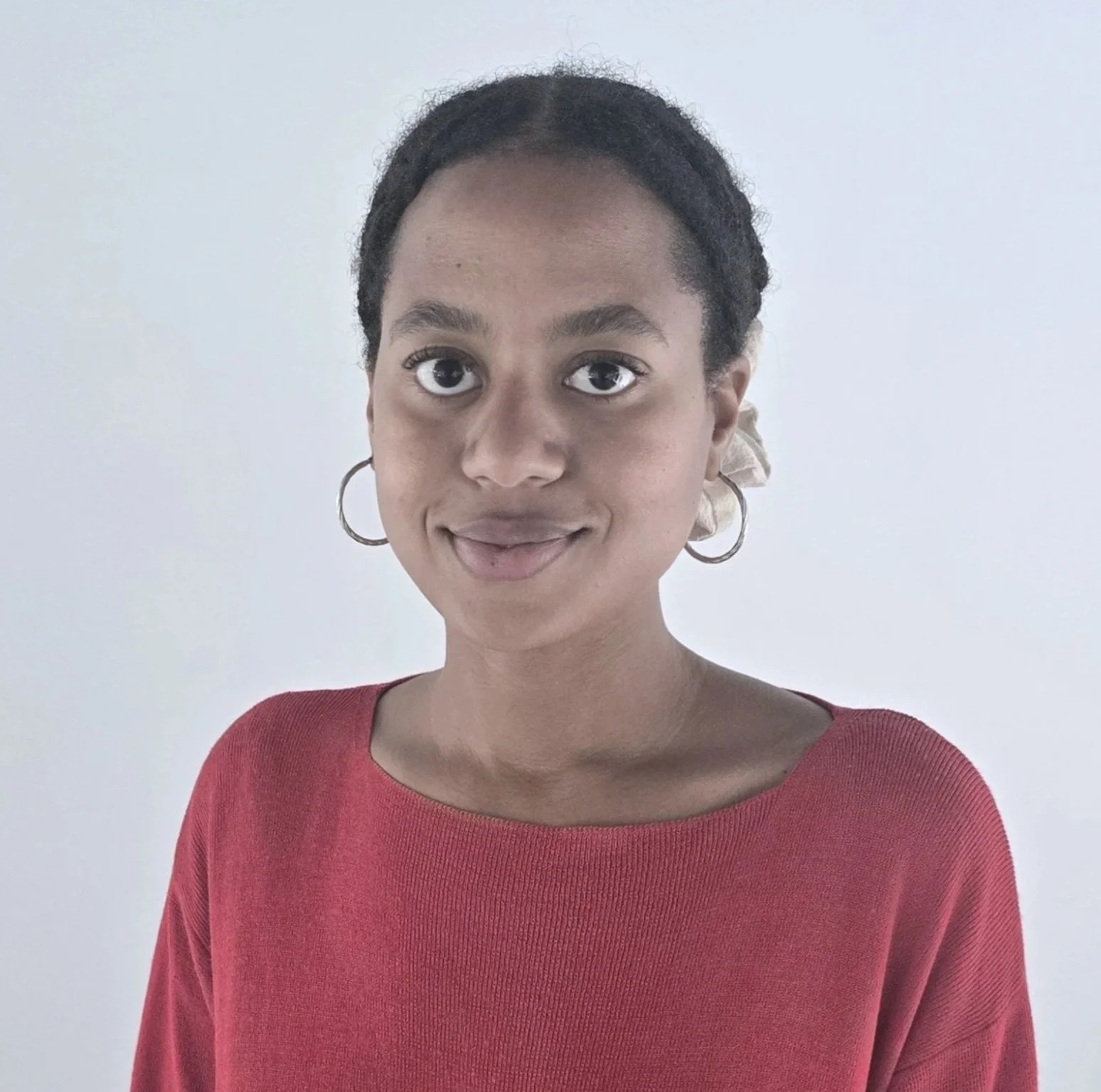
It is co-curated by Dr. Sequoia Miller, the Gardiner Museum’s Chief Curator and Deputy Director, and Joséphine Denis, BAND’s Co-Director and Director of Curatorial Initiatives.
Denis said the partnership shows what can be achieved when a major cultural institution values the knowledge, relationships and lived experiences of a community-based Black arts organization.
The collaboration grew from an introduction to Miller by writer and broadcaster Nahlah Ayed who had previously worked with BAND. Conversations about the exhibition began more than a year before its opening.
Founded in Toronto in 2010, BAND is renovating and expanding its permanent home at 19 Brock Avenue in Parkdale. While construction continues, the organization presents exhibitions and programs through partnerships and off-site venues.
“For us, doing institutional collaborations is also a way of sharing best practices with museums that don’t necessarily have the expertise or know-how to work with our communities,” Denis, who was born and raised in Haiti, said. “It is important that the narratives and research being generated are voiced by us and that we are leading that framework.”
Successful partnerships, she noted, depend on mutual respect and an understanding of each organization’s strengths.
“The Gardiner brings knowledge of its space, collection and audience, while BAND contributes curatorial expertise, community relationships and experience presenting Black artists,” Denis pointed out. “What is interesting in those kinds of collaborations, when you have the level of respect that I have been met with, is that they are clearly more familiar with their space and their team, but they really lean on your curatorial expertise, skills and community network to generate something extremely rich, layered and nuanced. Sequoia has been an incredible co-curator, and it has been really great working with the Gardiner.”
The collaboration also reaches across the border.
The Gardiner and BAND have partnered with the Museum of the African Diaspora (MoAD) in San Francisco to present two related exhibitions exploring Caribbean histories, memory and cultural traditions through ceramics.
MoAD’s exhibition, After the Island: Ornament and Ceramic Practice in the Jamaican Diaspora, features PJ Anderson, Jacqueline Bishop and Sharon Norwood.
Their work explores how connections to Jamaica are carried through personal memory, inherited histories and ancestral ties. Anderson and Norwood also participate in the Toronto exhibition, providing a direct link between the two presentations.
For Miller, such partnerships demonstrate how museums and artists can keep cultural conversations open across borders, even amid political disagreements between Canada and the United States.
“We can cultivate mutual understanding,” he said. “Part of the project’s thesis is that we are products of a system that structured the settlement and economies of North America, not just in one country or region. Seeing cultural expression today as part of the outgrowth of that larger system gives us greater insight into who we are and why.”
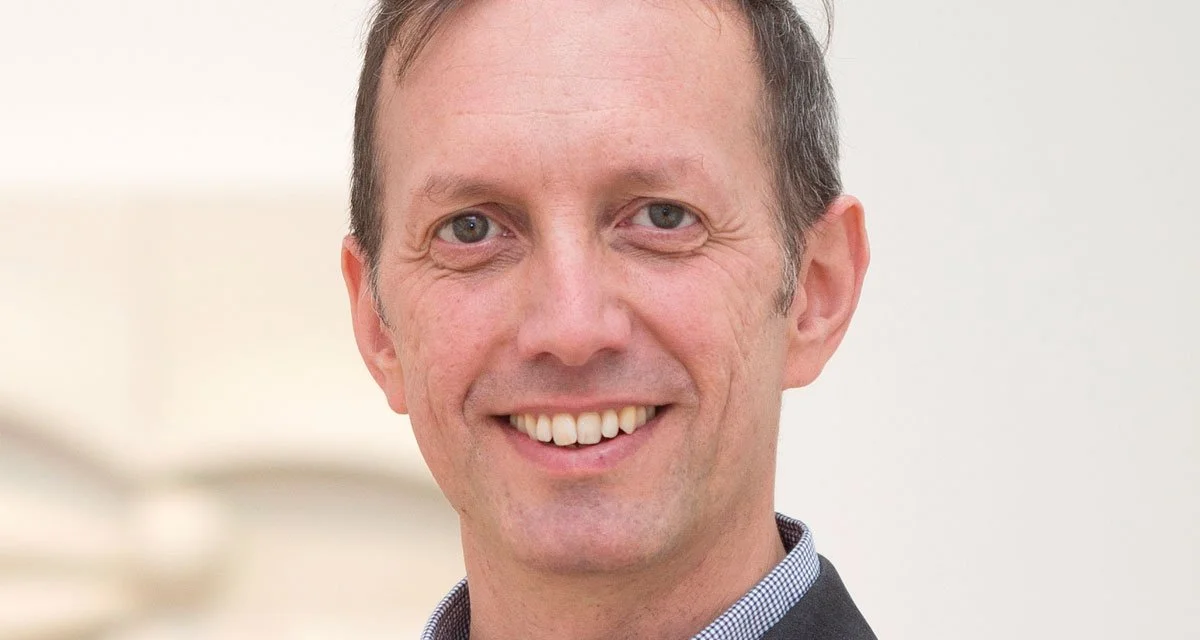
Dr. Sequoia Miller (Photo contributed)
Clay, he noted, offers a powerful way to explore these shared histories through its connections to the earth, the human body and everyday life.
“As a material, clay carries so many suggestive meanings, from evoking the land we live on to the elements more broadly, including fire and water, as well as histories of labour, domesticity and ritual,” he pointed out. “Each of the artists in After the Island uses clay and ceramics to connect themselves to these histories, both personal and cultural.”
Denis described working with clay as bringing together earth, water, air and fire.
She said the material can retain visible traces of the hands that shaped it and take many forms -- a vessel, a building component, a household object or an artwork that evokes protection and preserves memory.
“Clay makes completely visible the fact that our hands and our bodies are behind the shapes of the objects that define our cultures and make cultural practices possible,” Denis said. “When you think about the ways in which our bodies have made possible whole systems and civilizations, clay is an undeniable marker of that activity.”
Presented as fine art, she added, this familiar material invites viewers to look more closely at their surroundings and consider whose labour created the buildings, objects and social structures they take for granted.
“It allows you to pause and really stop taking for granted the house that is built or the society that is built,” Denis said. “You start questioning how it got built, who built it and whether knowing that means perpetuating the violence that gave way to these places or changing the way we relate to the built environment.”
The artists explore these questions through distinct cultural backgrounds and experiences of migration.
Drawing on her Afro-Jamaican and Red River Métis heritage, PJ Anderson uses clay to evoke both protection and containment. Her Claw Forms suggest weapons and protective extensions of the body. For Denis, they raise questions about who has the power to define self-defence as a threat.
“She is negotiating who decides when protection becomes danger and what kinds of power dynamics that implies,” Denis said. “Are my nails there to protect me or are they there to attack? From whose point of view is that decision being made?”
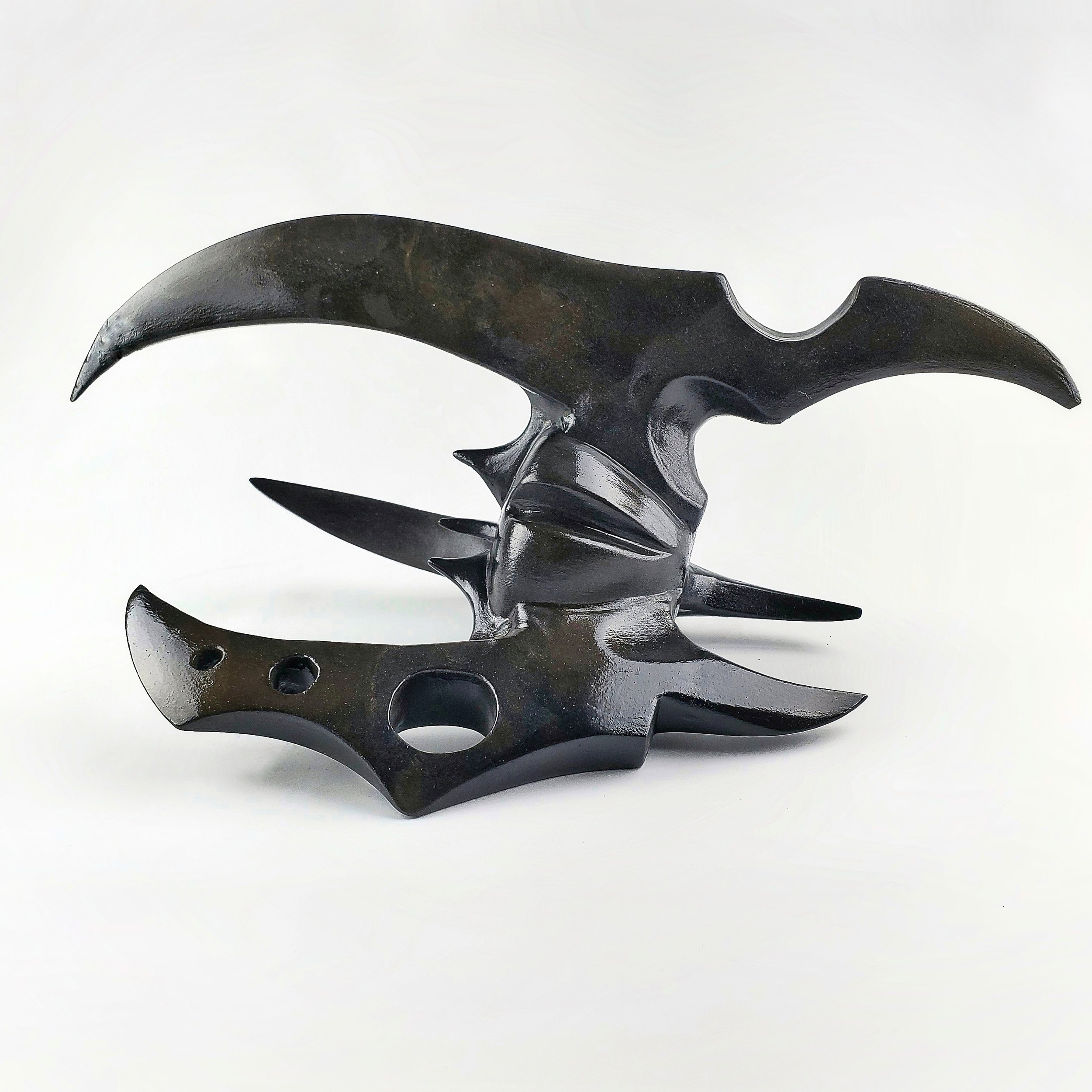
PJ Anderson’s Claw Forms (Photo contributed)
Anderson also presents large smoke-fired vessels adorned with beads and jewels. Her practice draws on coiling and burnishing traditions she studied with ceramic practitioners in South Africa and the American Southwest, bringing those experiences into conversation with her Afro-Jamaican and Red River Métis heritage.
Guadeloupe-born Eddy Firmin, who works between Montreal and Halifax, explores the body as a carrier of knowledge and history. His work considers how the legacies of colonialism and indentured labour are embodied and passed between generations.
In Punching X, ceramic punching bags rotate as visitors approach. Human features, including those of Firmin and his daughter, appear on one side, with floral decorations on the other. The encounter invites viewers to consider how bodies anticipate, absorb and resist violence.
“Eddy works with the body as a literal site for mapping and knowledge,” Denis said. “Our bodies are vessels that house histories and anecdotes about our past and origins. That knowledge can be used to extract and abuse, or it can be used to enrich.”
An interactive installation extends that exploration into a video game-like experience. Using a joystick, visitors navigate a life-sized digital representation of Firmin’s body, uncovering stories connected to the African diaspora.
In Sans signe, a ceramic figure sits in a boat beneath an inverted world map. The work questions whether borders and national identities can fully account for a person’s sense of belonging after migration.
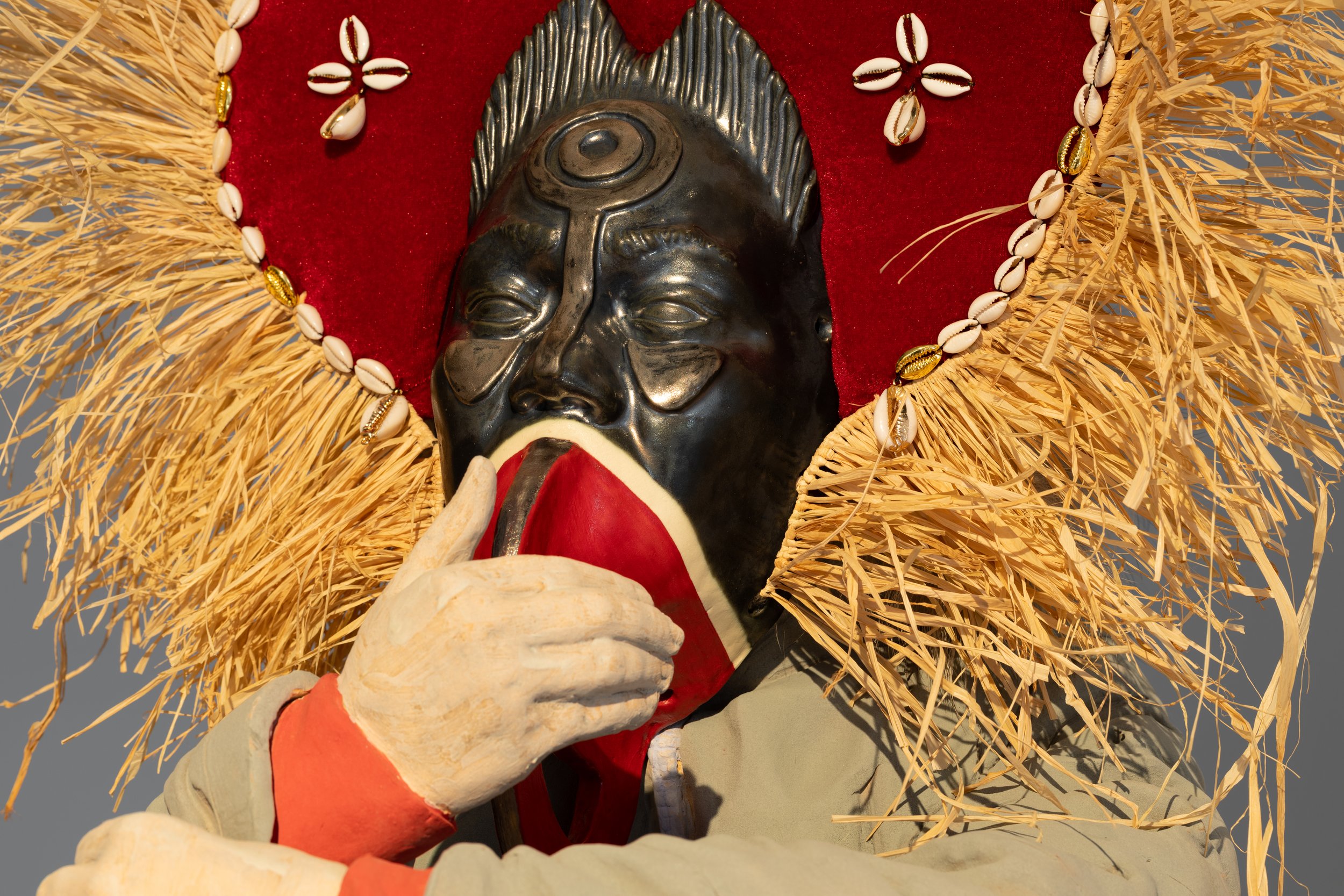
Eddy Firmin’s Sans signe (Photo contributed)
Montreal-based Haitian Canadian artist Manuel Mathieu, widely known for his paintings, brings ceramics, scent and mixed media into his exploration of memory, ritual and the body.
His installation, Shhrine, invites visitors into a structure made from metal, canvas and ceramic elements. Both sheltering and exposed, it uses scent to engage memory, while a central form resembling a spine reinforces its connection to the body.
Denis said Mathieu extends the emotional atmosphere of his paintings into the space around the viewer.
“He is trying to make us think about the rituals we enact with our bodies that allow us to return to a sense of self that is dignified, filled with knowledge and grounded in a certainty of where we come from and what our purpose is,” she said.
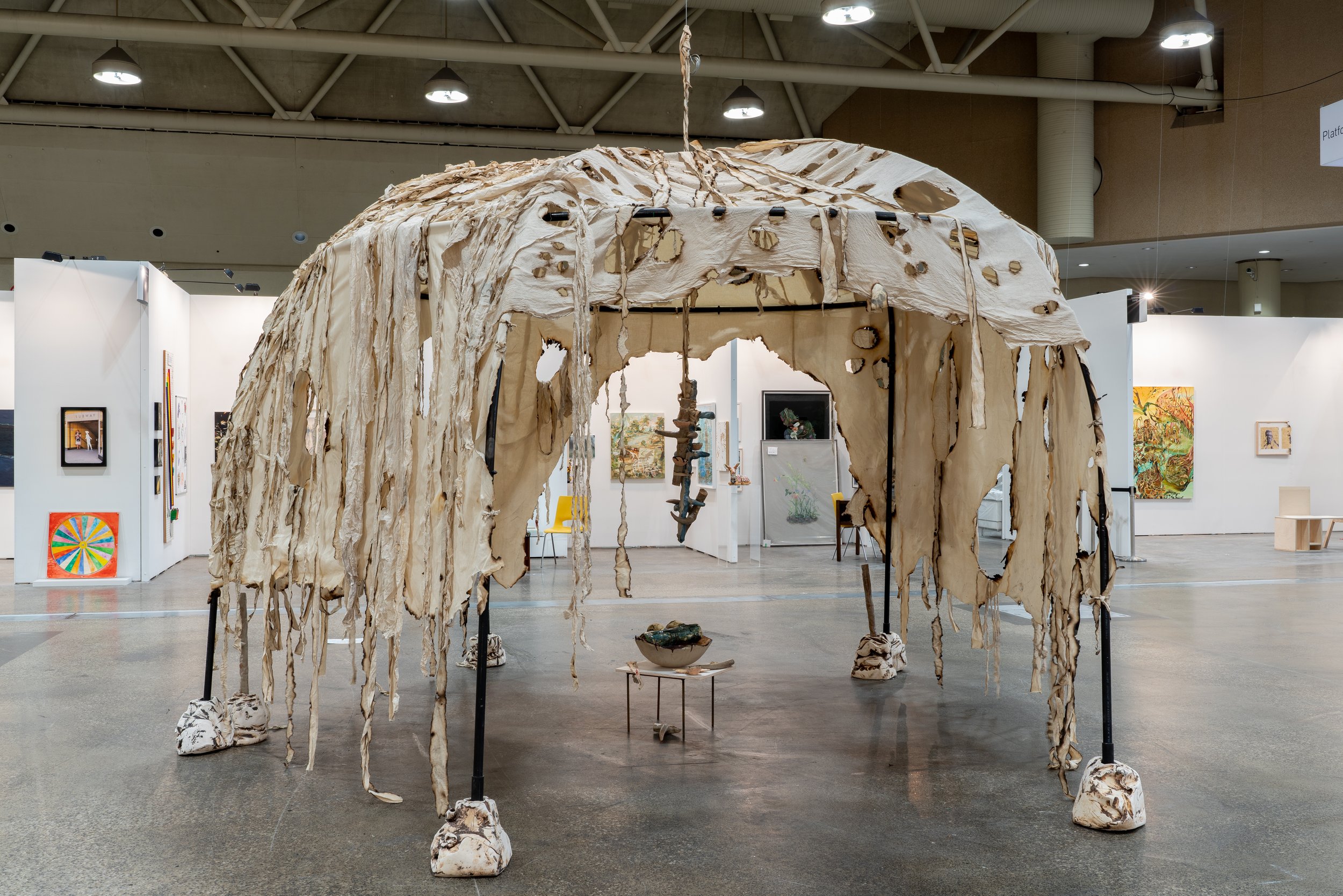
Manuel Mathieu’s Shhrine (Photo contributed)
Jamaican-born Sharon Norwood examines domestic spaces and objects associated with refinement, from teacups and decorative ceramics to furniture and building materials. Her work asks whose labour made these environments possible and whose contributions were left out of their histories.
One installation incorporates Savannah Grey bricks salvaged from her property and surrounding neighbourhood in Savannah, Georgia. Made by enslaved people, some retain impressions of hands and fingers.
“On those bricks, you get the markers and fingerprints of the enslaved people who made them,” Denis said. “The houses those bricks gave way to are considered beautiful. Whether the people who made them were considered beautiful is the question.”
Those traces become a record of people whose labour helped build the city, even as their identities were largely excluded from its official history. Norwood also asks what these makers might have created had they been free to direct their own talents.
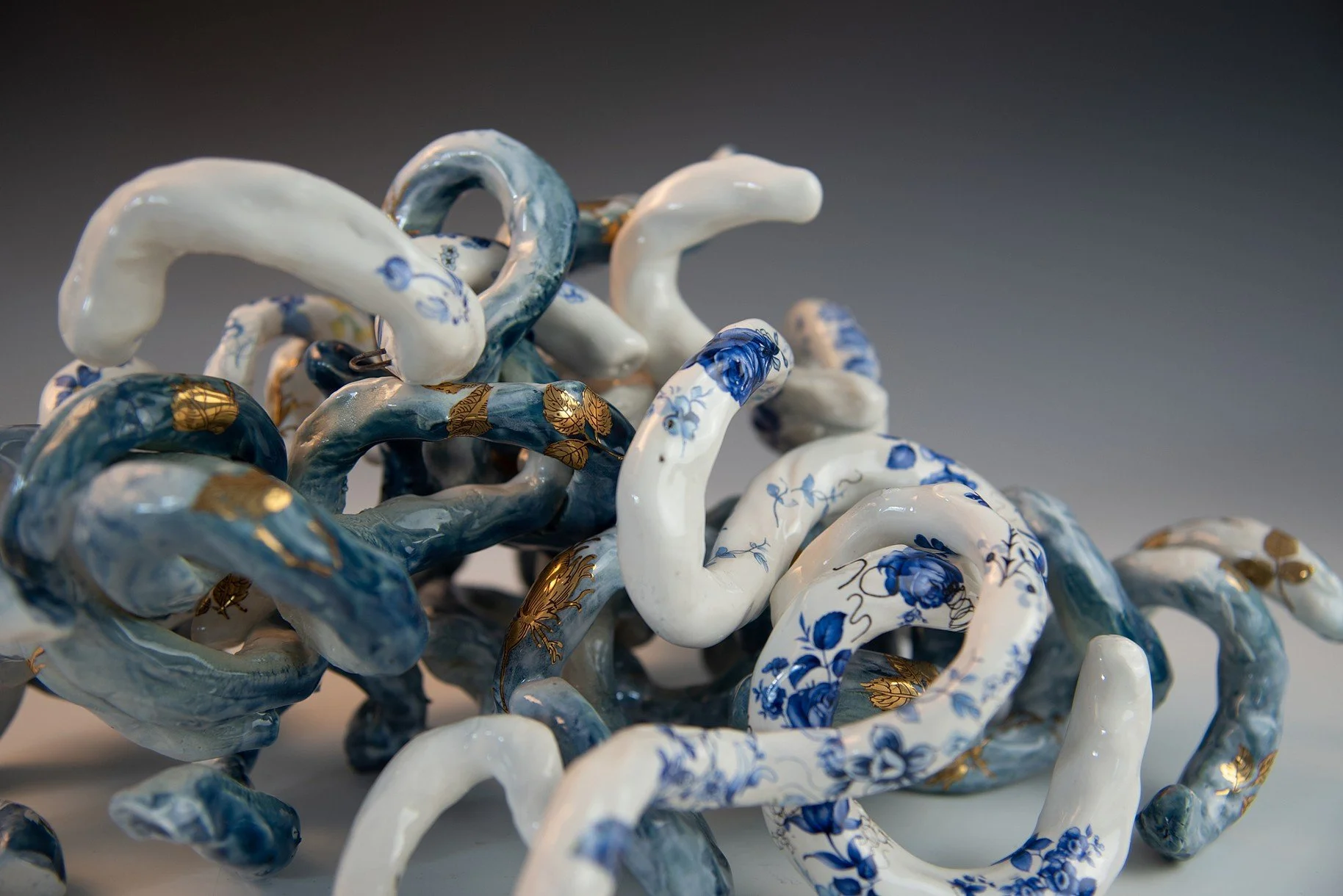
Sharon Norwood’s Untitled (Photo contributed)
A recurring curly line, inspired by Black hair, runs through her work. Appearing on ceramics and domestic objects, it asserts a Black presence within spaces and objects historically associated with European refinement.
The exhibition also brings anglophone and francophone Caribbean perspectives together.
Miller said the curators found more similarities than differences, while recognizing how distinct linguistic and cultural traditions shape experiences in Canada.
For Denis, those connections reflect a long history of movement, exchange and resistance across the Caribbean.
“A revolution in one place was inspired by another,” she said. “The connections have been central to our identities and ways of being.”
Different colonial histories also shaped the region’s languages, foods, oral traditions and mythologies.
Bringing these experiences together, she said, creates opportunities for diaspora communities to learn from one another and consider how to preserve and share their knowledge.
“When people from francophone and anglophone communities come together, it becomes an exercise in how we share our histories, how we listen to the ways they differ and what that means for how we show up for each other in solidarity,” Denis said.
She sees that exchange as increasingly important amid environmental pressures, questions of sovereignty and concerns about preserving cultural knowledge. She also noted stronger connections between Caribbean residents and members of the region’s global diaspora.
Through clay, After the Island asks what people inherit, protect and carry forward. The fingerprints in a brick, the protective shape of a vessel and the memories stirred by scent make those questions tangible, connecting personal experience to histories that continue to shape Caribbean lives.
After the Island: Caribbean Canadian Ceramics runs at the Gardiner Museum, 111 Queen’s Park, from October 9, 2026, to April 25, 2027.