Tobago Drama Guild brings ‘In My Dreams’ and a spirit of collaboration to Toronto
October 6, 2026
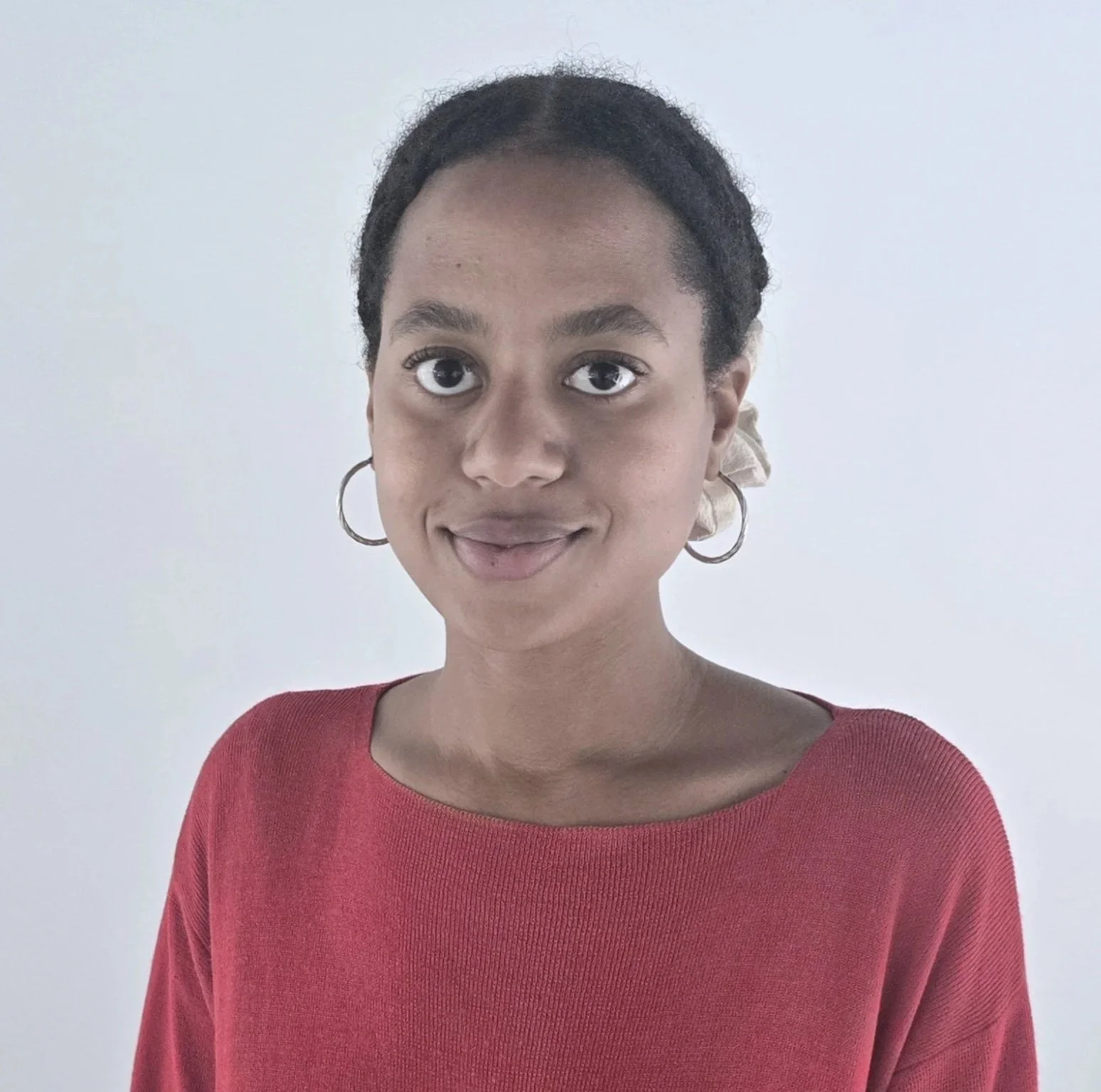
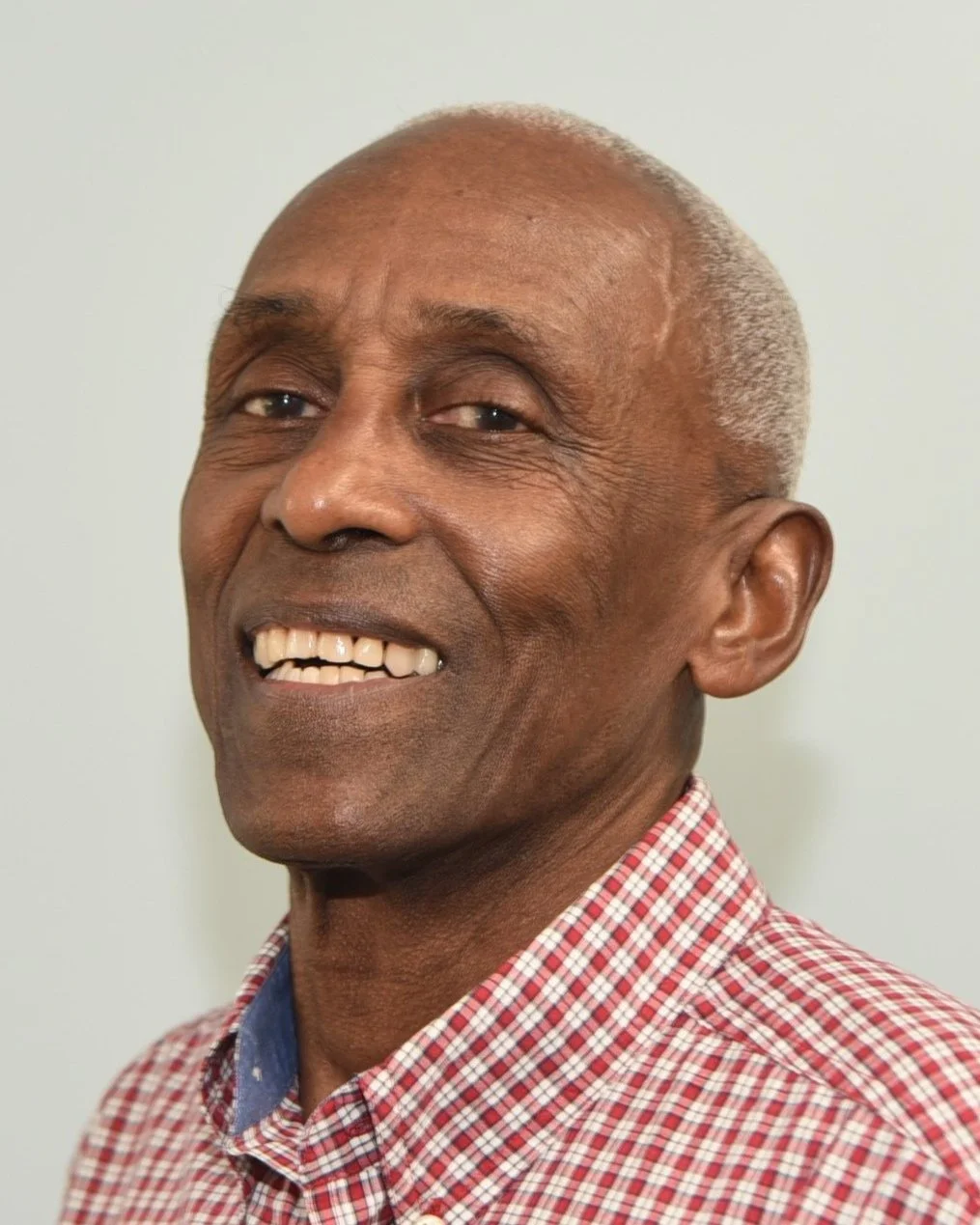
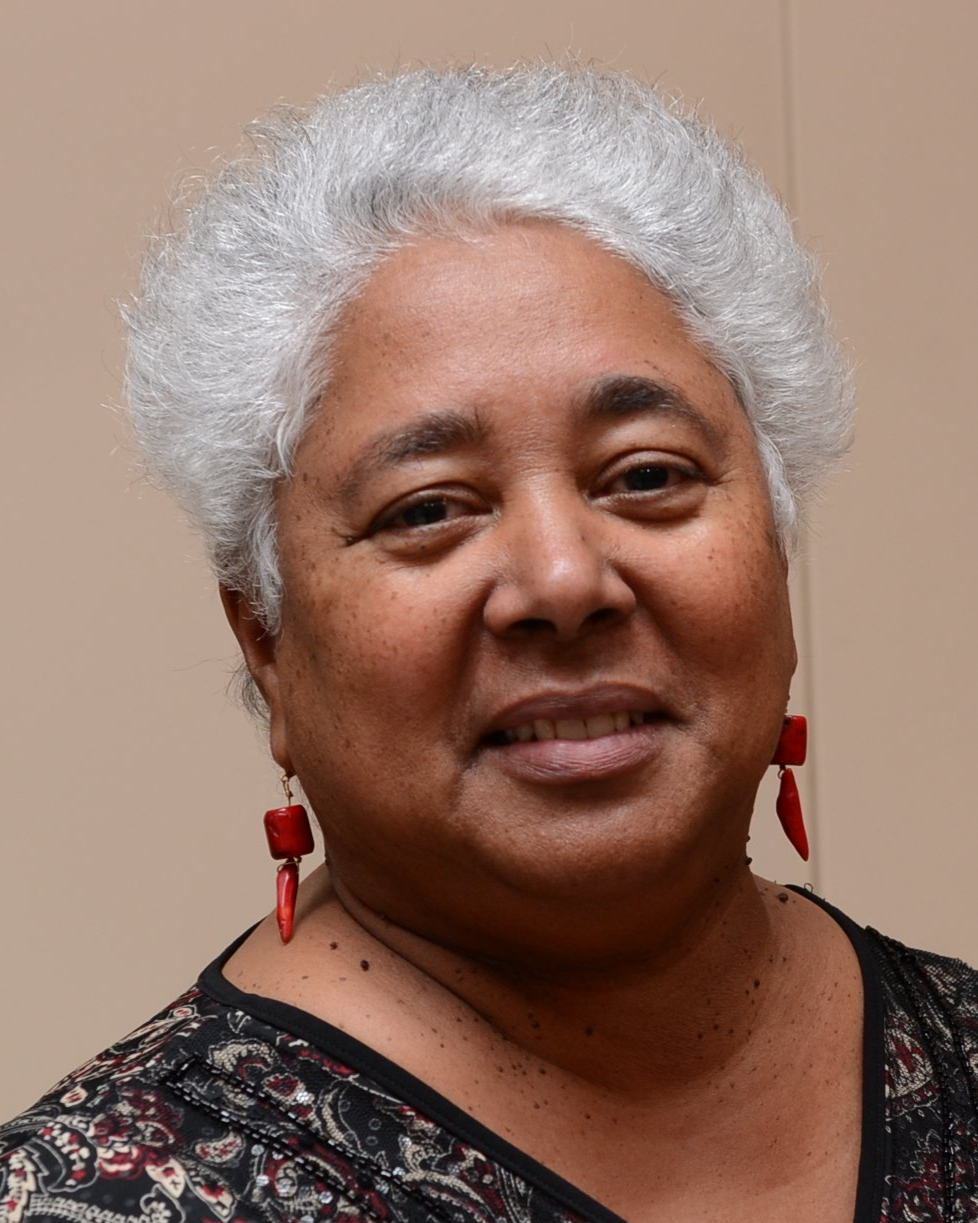
After years in Canada, Thabiti and Cherryll Birchwood returned to Tobago with experience in theatre and education, and a belief that the stage could help young people find their voices.
They founded the Tobago Drama Guild, which came to Toronto last week for two days of performances of Birchwood’s play In My Dreams. Drawing on Tobago’s cultural mix, the production brought performers from the island together with artists in Canada.
The visit was personal for both founders. Birchwood studied in Winnipeg, while Thabiti spent about 25 years in Canada and worked in theatre before returning to Tobago.
Now the guild they built at home brought Tobago’s performers to a country that helped shape their own artistic lives.
Birchwood has a phrase for what that journey means. It is ‘bringing home to home’.
“When we look at our audience, it’s not that we do not have other Canadians, but our audience is mostly from the diaspora,” she said.
Presenting a play here allowed people with ties to Tobago to experience its stories through performers who live and work on the island. She hoped it also prompted audiences to reflect on the relationships at the centre of the work.
Those relationships run across generations and cultures. Birchwood said she is interested in how men and women relate to one another, how people understand their spirituality and how African and East Indian histories continue to shape everyday life.
“There are one or two of the things that we say about each other, we say it in our homes and we won’t say it out loud,” she said. “Theatre offers a place to bring some of those thoughts into the open and consider what they mean.”
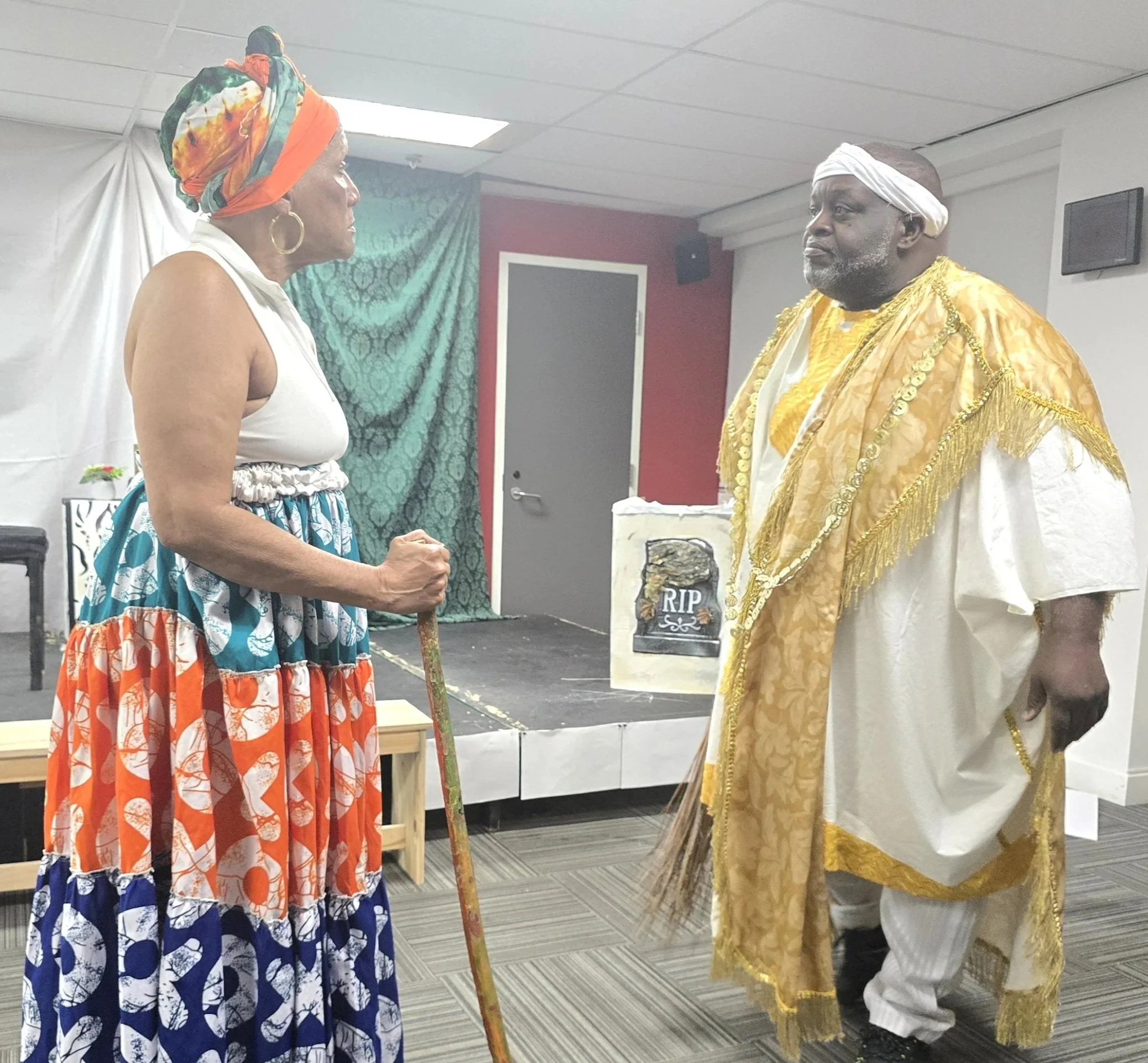
In In My Dreams, those themes unfold through Marjorie, played by longtime guild member Tasha Frank who described the play as Marjorie’s dream, something the character has hoped for and imagined, told through different parts of her experience.
“It’s actually her dream,” she said. “It’s something that she would have been hoping for and dreaming for.”
As Marjorie’s story develops, Frank said audiences encounter ‘the different culture and the mixture of culture and food and everything else’
The production also included chutney music.
Thabiti said the guild invited a chutney singer to join the cast and helped him take on an acting role. Local Indian dancers were added to the Toronto presentation, carrying the cultural exchange into the show’s movement as well as its music.
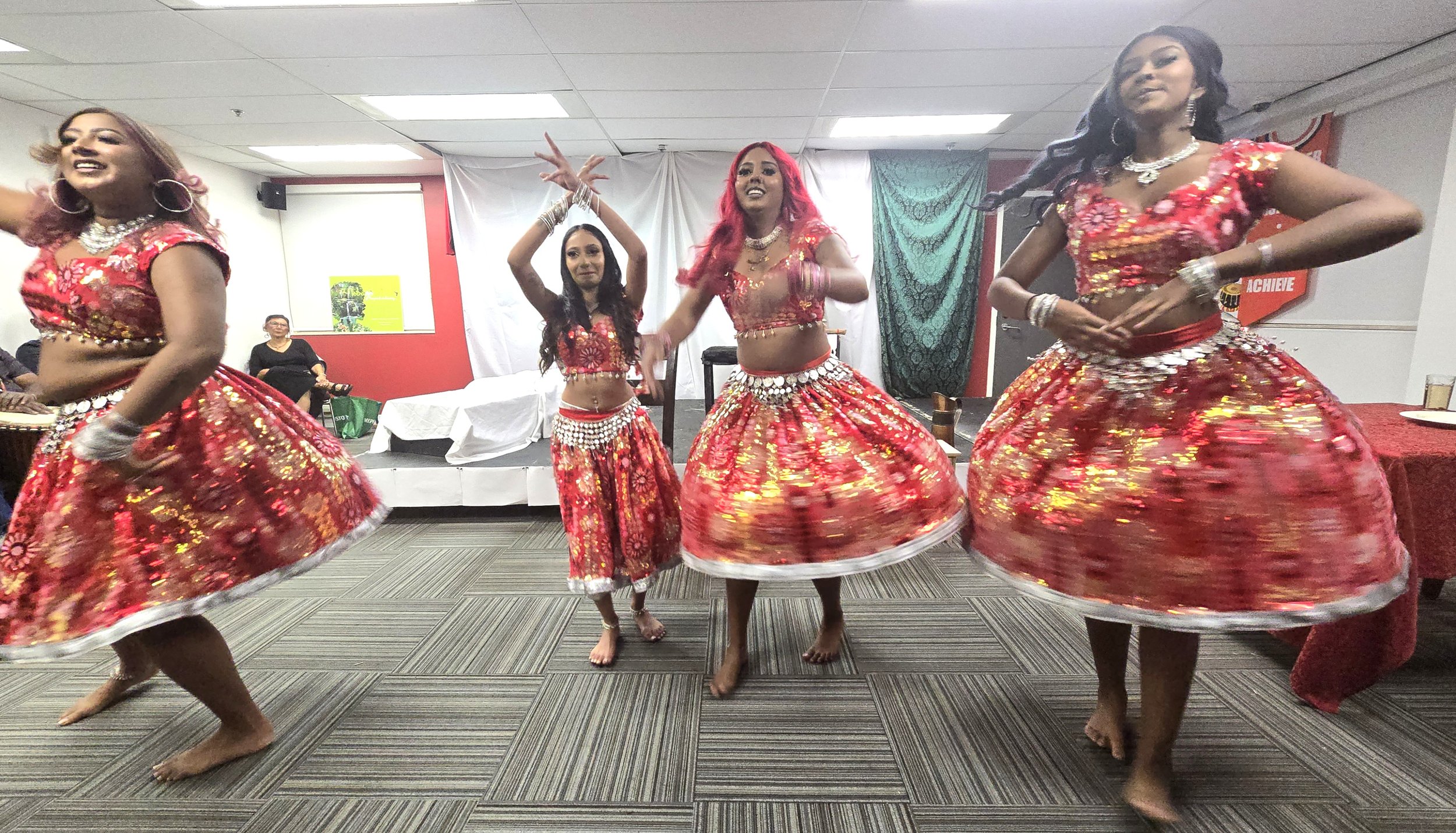
Performers from the Mahima Dance Academy (Photo by Ron Fanfair)
The decision to include a chutney performer, Thabiti pointed out, grew out of conversations about what was happening around them in Tobago.
Birchwood had already written the play, he explained, and the company saw an opportunity to give its Indian cultural presence a stronger place in the staging.
“We thought that it would be a wonderful idea to have chutney or to have something Indian in the play,” he said.
The result is consistent with the way Birchwood thinks about Tobago.
She does not describe its cultures as separate subjects to be checked off in a script. She is drawn instead to the relationships among people including what they share, what they misunderstand and what they may hesitate to discuss.
Nor does Birchwood begin writing with a lesson she intends to deliver.
“I just get up and write,” she said. “I did not begin it with, ‘I’m going to write about a cultural experience’.”
Birchwood said ideas gather as she observes the world around her.
Some remain in her thoughts for months before a story starts to take shape. When the time comes, she lets the characters and their connections lead her forward.
“The script itself started to create its own linkages,” Birchwood said. “There are things that are happening around you and they impact you without you crystallizing it and saying, ‘This is impacting me here now.’”
That openness extends to how she structures a play.
Not every story, Birchwood believes, has to resolve neatly.
“Some contain several themes that connect in unexpected ways while others leave audiences with a question,” she said. “There are some stories that never end. And it is okay to leave it hanging.”
Birchwood developed that outlook in part during her time in Canada.
She arrived intending to study physical education, but her interests led her into education, English and cross-cultural studies. Theatre became another way to explore language and the experiences people bring into a room.
In Winnipeg, Birchwood encountered productions that made her consider what she wanted from her own writing. She respected the challenge of demanding work, but wanted to create theatre that also moved with the energy she knew from the Caribbean.
“I wanted my script to reflect us, the way we think, the way we feel,” she said. “Caribbean people are different. We are also people of movement.”
Birchwood did not want a play that offered laughter without substance or ideas without life on stage. The challenge, as she saw it, was to hold an audience’s attention while giving people something worth thinking about.
That belief followed her into teaching after she returned to Tobago.
Birchwood began using short dramatic scenes in the classroom, drawing on the interests of students who did not always respond to conventional lessons. If boys talked about cars or imagined running a grocery, she could build a skit around those interests and use it to draw them into the work.
She also paid attention to how students used language. Rather than treating Tobago’s dialect as an obstacle to expression, she encouraged students to write in the language in which they felt comfortable and then work through an exercise that moved their ideas into standard English when needed.
“They were allowed to present themselves richly,” the cultural activist said. “They could then learn to express the same ideas for a different audience or purpose.”
Birchwood’s work as an educator earned her Trinidad and Tobago’s Teacher of the Year honour in 2003.
It was a memorable year for another reason as she and Thabiti married. She later became principal of Goodwood High School, where her belief that students should have room to grow continued to guide her work. Together, the couple also helped create opportunities for young performers through the Tobago Drama Guild and a secondary schools drama festival.
For Birchwood, theatre remained part of a broader conviction that students should have room to grow, regardless of the reputation of the school they attended. She and her husband also worked to extend opportunities for drama students beyond a single classroom, including through a secondary schools drama festival.
Thabiti’s path back to Tobago likewise linked theatre with education.
He returned after many years in Canada through a Canada Council collaboration grant. The idea of collaboration stayed with him. He became certified to teach theatre arts, worked with young performers and helped build the company that grew into the Tobago Drama Guild.
“We are both educators,” Thabiti said. “Seeing former students continue their theatre studies has been one of the rewards of that work.”
He also wants audiences abroad to recognize Tobago’s own performance traditions.
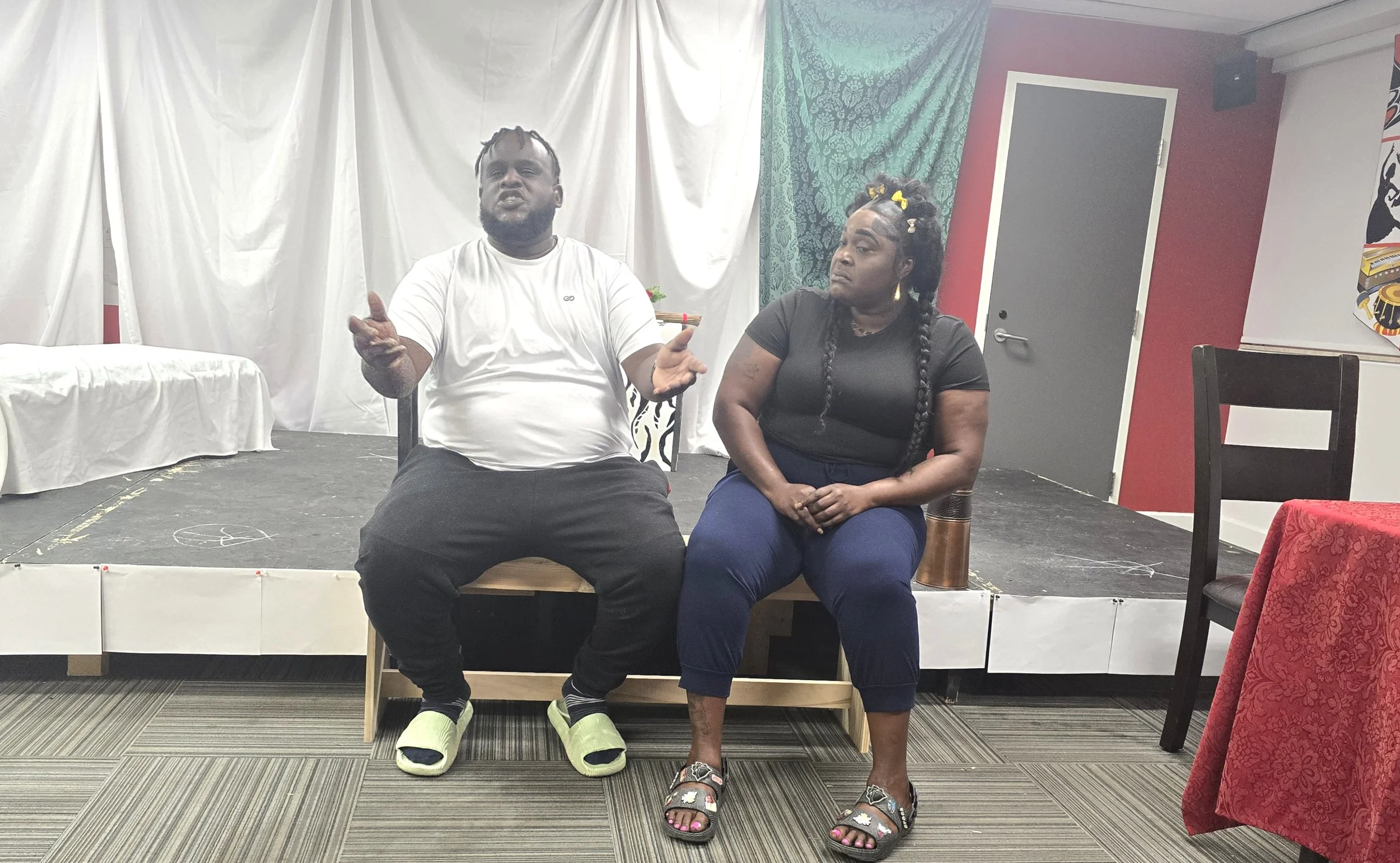
Andell Franklyn & Nicole Moses-Beckles (Photo by Ron Fanfair)
The island’s Heritage Festival and community presentations, Thabiti said, have their own forms and histories. Bringing the guild to Toronto gives performers a chance to share work rooted in that background while showing what they have developed through formal training.
“It is important that the people of the diaspora connect,” he said. “Many guild members have friends or family in Toronto. The performances give those personal ties a public meeting place.”
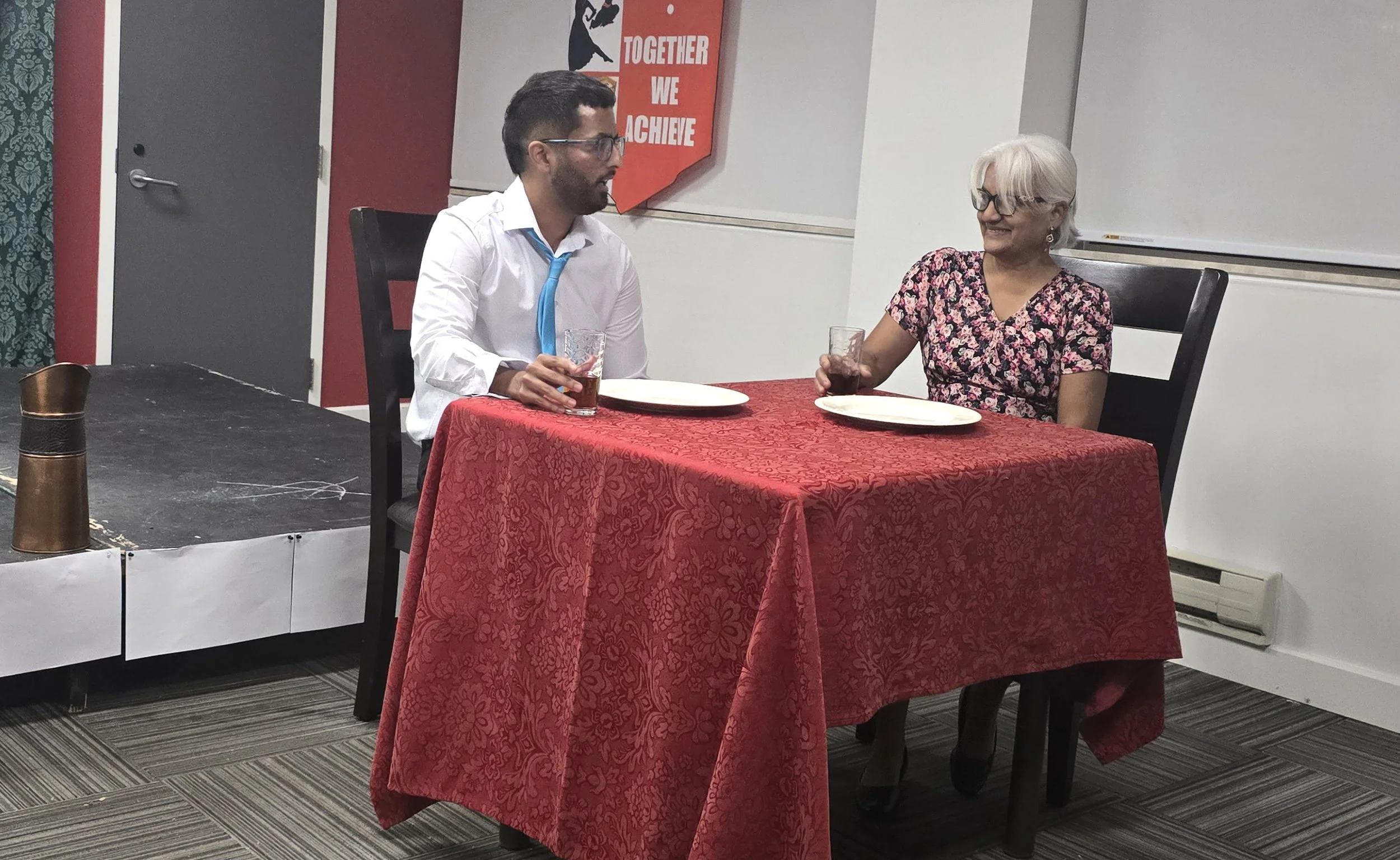
Govinda Ramlogan (l) & Thakurani Cassie (Photo by Ron Fanfair)
For Frank, the connection between community tradition and professional theatre began early.
She grew up in Moriah, where the Old Time Wedding presented during Heritage celebrations caught her attention as a child. She watched people dance and act at the community centre and wanted to be among them.
Her father, the late Earl Alan Frank, danced in the Old Time Wedding. When someone suggested she could not dance, she recalled, he stood up for her and encouraged her to join. She was about eight when her interest took hold.
“I started to dance,” Frank said. “Then I saw the acting on stage, and I wanted to write my own script.”
At 13, she performed a monologue in a school drama festival. A theatre practitioner offered her pointed advice afterward, including a reminder that an actor had to make herself heard. She appreciated that he took the time to give her constructive criticism. The following year, at 14, she joined the Tobago Drama Guild.
Frank, 36, has studied theatre arts and carnival studies and works as a theatre arts teacher, stage manager and production manager. She is among the guild’s longest-serving members, although she is careful to say that others have been involved even longer.
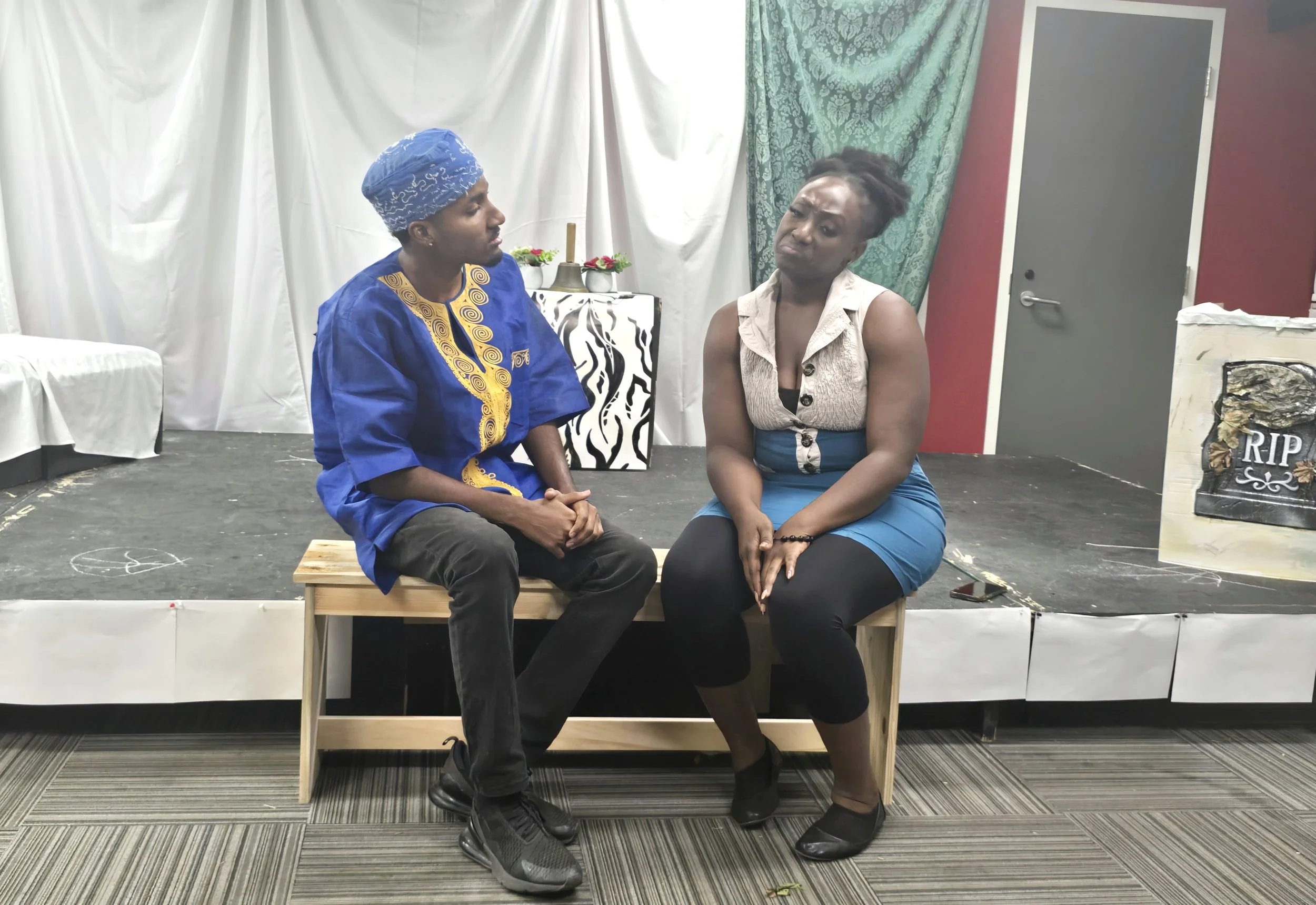
Tasha Frank & Simon Newallo (Photo by Ron Fanfair)
Her role as Marjorie brought her back onto the stage with the company that helped her grow. It also gave her a first opportunity to travel with the guild for a Toronto production. She visited Canada before, including on a study tour with students, but this journey has a different purpose — sharing the work of the company to which she has given more than two decades.
The Toronto cast reflected the guild’s ability to draw people into its work at different stages of their lives.
Shaun Hutchinson returned from England to perform after previously reviewing the guild’s plays as a journalist.
Frank brought a history that reaches back to her teenage years. Other performers joined from Tobago while artists in Toronto contributed to the presentation.
Birchwood said the guild has more than 40 members and cannot bring everyone overseas. Its solution is to build on relationships Thabiti formed in Canada. In earlier Toronto productions, local drummers and singers have helped support the visiting performers. This time, the company brought one of its own drummers as well.
For Birchwood, that arrangement is more than a practical way to stage a show.
“It is the collaboration, the working together,” she said. “It is a two-way street.”
The company is also attentive to what audiences bring to the performance. Birchwood recalled a Tobago presentation for secondary school students that produced a more vocal response than she had expected. Young people called out as the action unfolded, making clear that they were following the characters and had strong feelings about their choices.
“They responded all the way from beginning to end,” she said.
Watching them helped Birchwood understand something about how they viewed the situations in the play.
She has learned that a quieter response does not necessarily mean people are unmoved. She is interested in what viewers carry away, whether they react aloud during the performance or think about it afterward.
That possibility lies at the heart of the guild’s visit.
In My Dreams brought together music, dance, humour and questions about relationships in a story told by artists whose own lives cross borders.
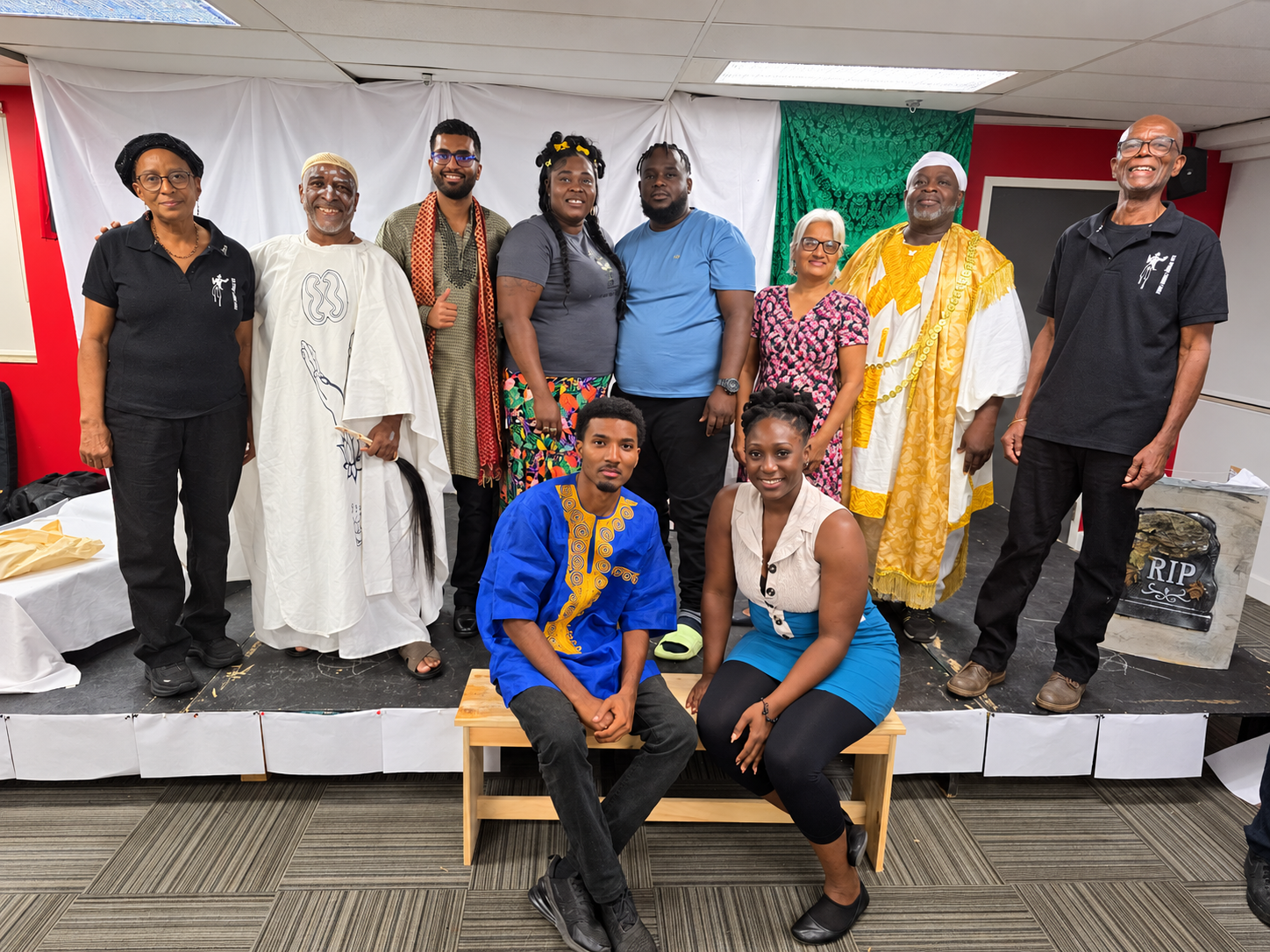
Cherryll Birchwood (l) & Thabiti (r) with the cast of ‘In My Dreams’ Shaun Hutchinson, Govinda Ramlogan, Nicole Moses-Beckles, Andell Franklyn, Thakurani Cassie, and Antonio ‘Chiller’ Franklyn. Sitting are Simon Newallo & Tasha Frank (Photo by Ron Fanfair)
Its founders returned to Tobago after years in Canada and created a place for young performers to develop. Some of those performers have grown into teachers and theatre professionals. Now they came back across the border to share what they made.