Natural beauty alone will not secure Caribbean tourism’s future
October 7, 2026
The Caribbean cannot rely on its natural beauty alone to secure its tourism future, Guyana’s President Irfaan Ali warned, calling for stronger transport connections, better disaster preparedness and closer regional partnerships as competition for visitors intensifies.
Speaking at the opening of the Caribbean Tourism Organization’s (CTO) State of the Tourism Industry Conference at Atlantic Suites by Hyatt in Georgetown on October 7, he urged governments and investors to think bigger and develop a shared vision for the next decade.
“For tourism to succeed, compete and stay alive in this region, we have to scale up our thinking, scale up our infrastructure and scale up our commitment,” said Ali who previously held responsibility for Tourism, Industry and Commerce from 2011 to 2015.
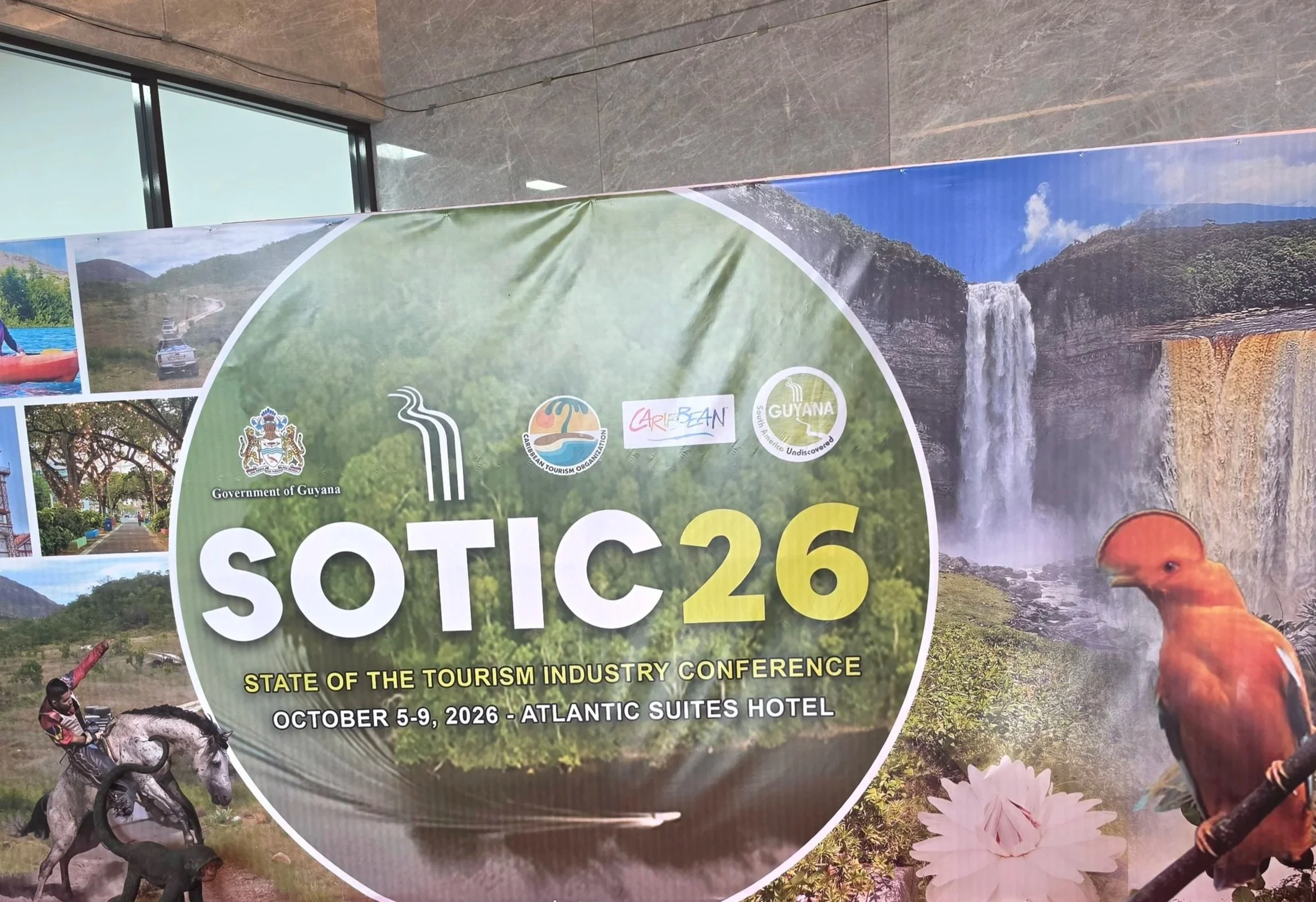
Guyana is hosting SOTIC for the first time under the theme ‘Tourism Futures: Smart, Sustainable and Inclusive’.
Ali cautioned that the region’s beaches, forests, rivers and cultural heritage would retain their competitive value only through sustained investment, innovation and cooperation.
“We run the danger in this region of complacency,” he noted. “Complacency because we are blessed with a great product, a natural product.”
Ali used the rise and subsequent struggles of West Indies cricket to illustrate the danger of relying on natural advantages without adapting to change.
“For tourism, adaptation means rethinking how governments and businesses plan, finance and connect projects to the wider economy,” he pointed out. “An airport, for example, should offer more than a place to arrive and depart. It should introduce visitors to the destination and become part of their experience. The airport itself must be able to tell a story and present a picture.”
Ali said that approach was guiding Guyana’s investment in a second terminal, designed to tell the country’s story and reflect its ambitions.
He also stressed the need for stronger regional transport connections, both to help visitors travel between destinations and to move the goods that tourism businesses need.
“Visitors drawn to Caribbean beaches may also want to explore the forests, rivers and biodiversity of Guyana, Suriname or Belize, Ali said. “Better connections would make it easier to combine those experiences and allow the region to benefit more fully from its diversity.”
He urged Caribbean leaders to study competing destinations, particularly in the Middle East and Latin America, where investment in hotels, entertainment, sporting events, heritage attractions and transportation is shaping future travel choices.
Ali suggested that Caribbean countries work together to attract major events and build partnerships with emerging tourism markets.
Technology, he added, also requires a coordinated response.
“We have to come up with an AI strategy for the region,” Ali said, while calling for a shared cybersecurity strategy.
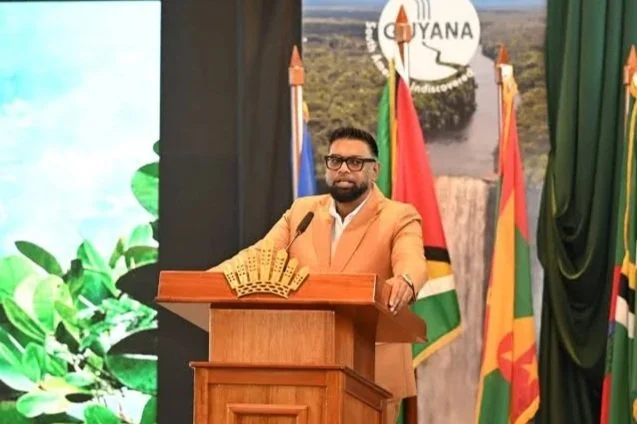
Guyana’s president Irfaan Ali (Photo contributed)
He identified disaster resilience as another priority, urging businesses to include contingency provisions when negotiating project financing.
“Those arrangements should be in place before a hurricane or other emergency occurs,” said Ali. “Preparedness must extend beyond government emergency plans to include insurance, access to credit, reliable supply chains and business continuity. Many people just think about disaster preparedness as a government responsibility. But it is a business responsibility in its expanded sense.”
He called on the CTO to help develop those mechanisms and explain to Caribbean populations why investment is necessary to protect the industry and strengthen its competitiveness.
Conferences, Ali argued, must produce a clear vision that governments, businesses and citizens can act on.
Guyana’s Minister of Tourism, Industry and Commerce, Susan Rodrigues, carried that call for cooperation into a discussion of who should benefit from tourism growth.
She said the industry’s success must be visible in the livelihoods of farmers, fishermen, drivers, guides, artisans, entertainers and small business owners.
“Our objective is not simply to count more arrivals,” noted Rodrigues. “Our objective is to build an ecosystem in which more Guyanese can participate in, contribute to and benefit from the growth of the industry.”
She reported that Guyana recorded 453,489 visitor arrivals in 2025, an increase of approximately 22 percent over 2024, and 360,623 during the first nine months of 2026.

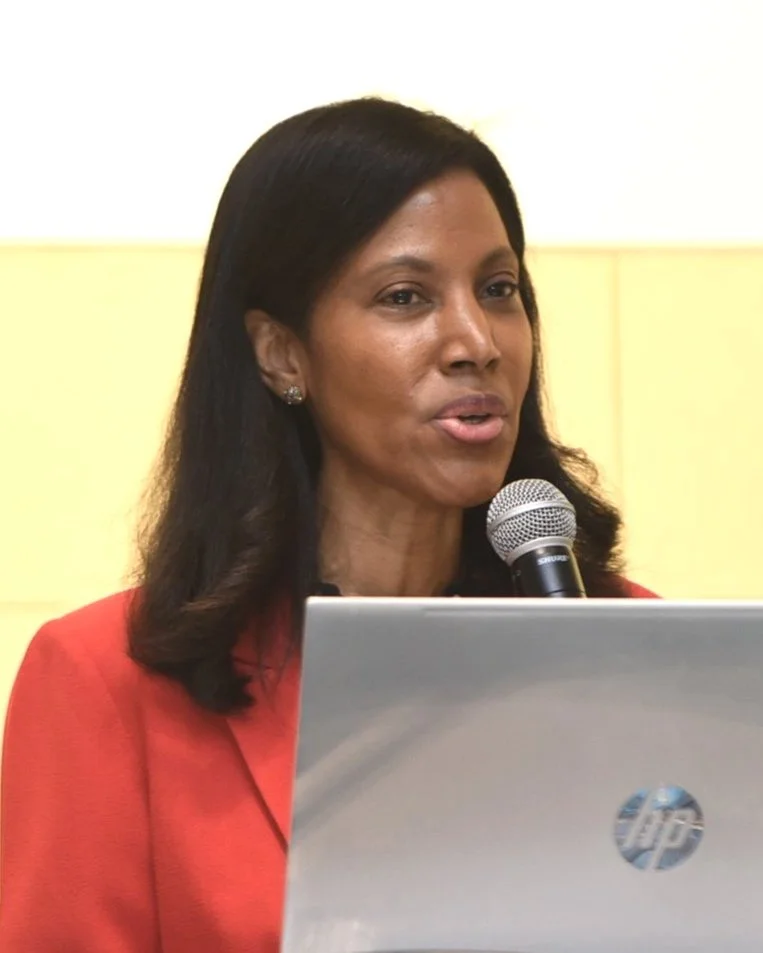
Guyana’s Minister of Tourism, Industry & Commerce Susan Rodrigues (Photo contributed)
Rodrigues said expanded air connections and accommodation were supporting that growth, while creating opportunities for Guyana to attract meetings, incentives, conferences and exhibitions.
Yet the value of those investments, she argued, should also be measured by their connections to communities and local suppliers.
“A visitor staying at a community lodge in the Rupununi, buying a locally made craft, eating locally sourced food or hiring a local guide should generate income that remains in the community,” noted Rodrigues. “The tourism ecosystem must therefore be designed so that the growth of one part of the industry creates opportunities for another.”
She identified access to financing as part of that process, adding that the newly operational Guyana Development Bank would offer tourism businesses and other small enterprises access to zero-interest, collateral-free loans.
Protecting the assets that attract visitors was equally central to her message.
“Our forests, biodiversity, rivers, wildlife and Indigenous heritage are not simply attractions to be enjoyed by visitors,” Rodrigues said. “They are national, community and global assets.”
She urged delegates to see Guyana’s hotels and infrastructure alongside the communities, businesses and conservation efforts supporting its visitor economy.
Her appeal also extended beyond national borders.
“Our differences are not weaknesses,” Rodrigues said. “They are our collective strength.”
Outgoing CTO ministerial council chairman Ian Gooding-Edghill reinforced that emphasis on cooperation, saying the region’s tourism future must be deliberately shaped through better intelligence, environmental protection and broader participation.
He noted that technology is changing every stage of the visitor journey while climate pressures require destinations to protect the resources on which their economies and communities depend.
“Our strongest measure of progress is not simply how many visitors arrive on our shores,” Gooding-Edghill said. “It is how tourism improves the lives of the people who call the Caribbean home.”
Antigua & Barbuda is the new CTO chair with Minister of Tourism, Civil Aviation, Transportation & Investment Charles ‘Max’ Fernandez assuming leadership of the CTO Council of Ministers and Commissioners of Tourism.
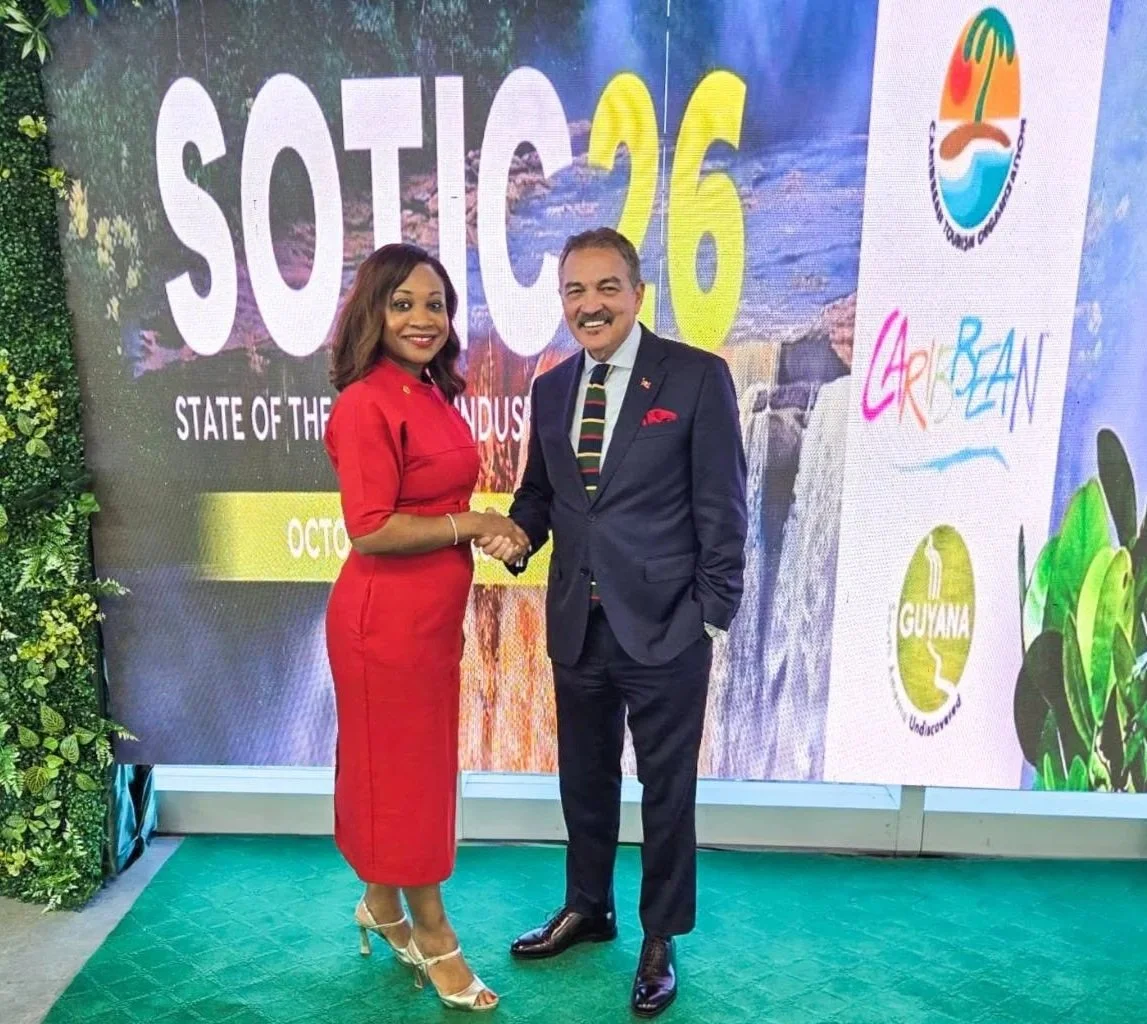
CTO Secretary General & CEO Dona Regis-Prosper welcomes new Council of Ministers and Commissioners of Tourism leader Charles ‘Max’ Fernandez (Photo contributed)
Ivan Alonzo Gaviria, the Inter-American Development Bank’s Chief of Operations in Guyana, urged delegates to ensure that more tourism revenue stays in Caribbean economies and benefits local businesses and communities.
He described work supporting stronger regional supply chains and community tourism enterprises, including initiatives in Guyana’s South Rupununi.
The message connected tourism to agriculture, trade, transportation, workforce development and entrepreneurship.
“Tourism development is not one investment or a series of single investments,” Gaviria said. “It is an entire ecosystem.”
The opening ceremony also included sustainability recognition for Guyana and presentations honouring outgoing CTO leaders.
Good Travel Institute (GTI) director Darcy Dornan presented Guyana’s country baseline assessment recognition under the Green Destinations framework.
The GTI assess, supports, and recognizes the sustainability practices of travel and tourism businesses through practical tools, guidance and certification programs.
Dornan said the certificate and trophy recognized compliance with applicable Green Destinations Standard criteria evaluated through the country baseline assessment.
Dornan described continuing work with the Guyana Tourism Authority, businesses and communities to assess performance, identify improvements and strengthen the evidence supporting sustainability claims.
The recognition was presented to President Ali on Guyana’s behalf.
“The question is not simply how many visitors can the country continue to attract, but what kind of tourism it wants to build and what value visitors create for people, businesses, communities and the environment,” noted Dornan.
He linked sustainability to stronger business performance through greater efficiency, reduced risk and more credible information for investors and financial institutions.
“Thank you for your trust, your leadership, your commitment to building tourism that is not simply bigger but better,” added Dornan.
CTO Secretary-General and Chief Executive Officer Dona Regis-Prosper also made presentations recognizing Gooding-Edghill, outgoing chairman of the Council of Ministers and Commissioners of Tourism, and Andrea Franklin, outgoing chair of the CTO Board of Directors, for their two years of service.
Together, the presentations reflected two priorities running through the opening -- protecting the resources that sustain tourism and strengthening the regional institutions needed to guide its development.
Guyana is hosting the State of the Tourism Industry Conference for the first time, building on its experience staging earlier CTO events. The country welcomed the fourth Conference on Sustainable Tourism Development in May 2000 and the 13th edition in April 2012.