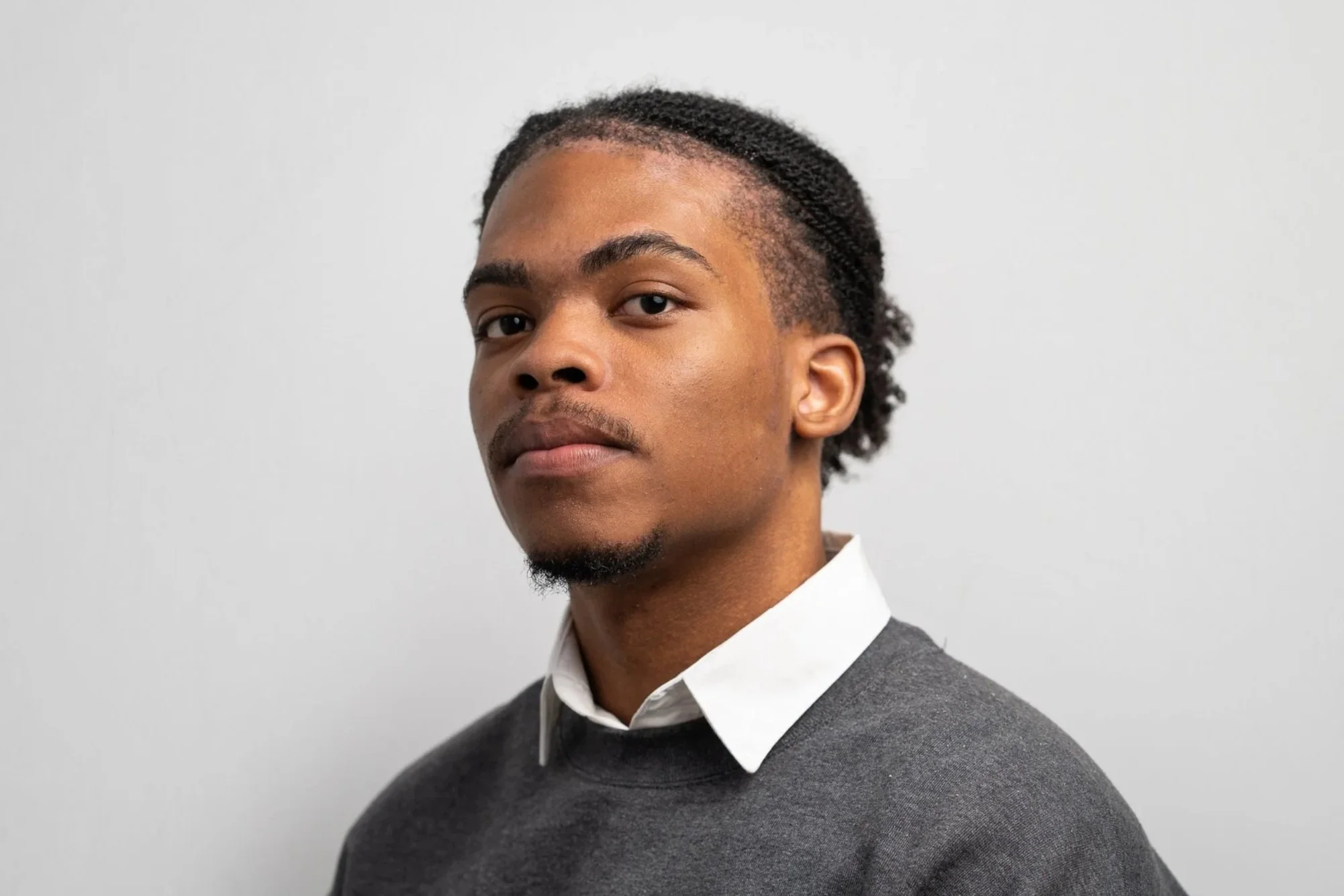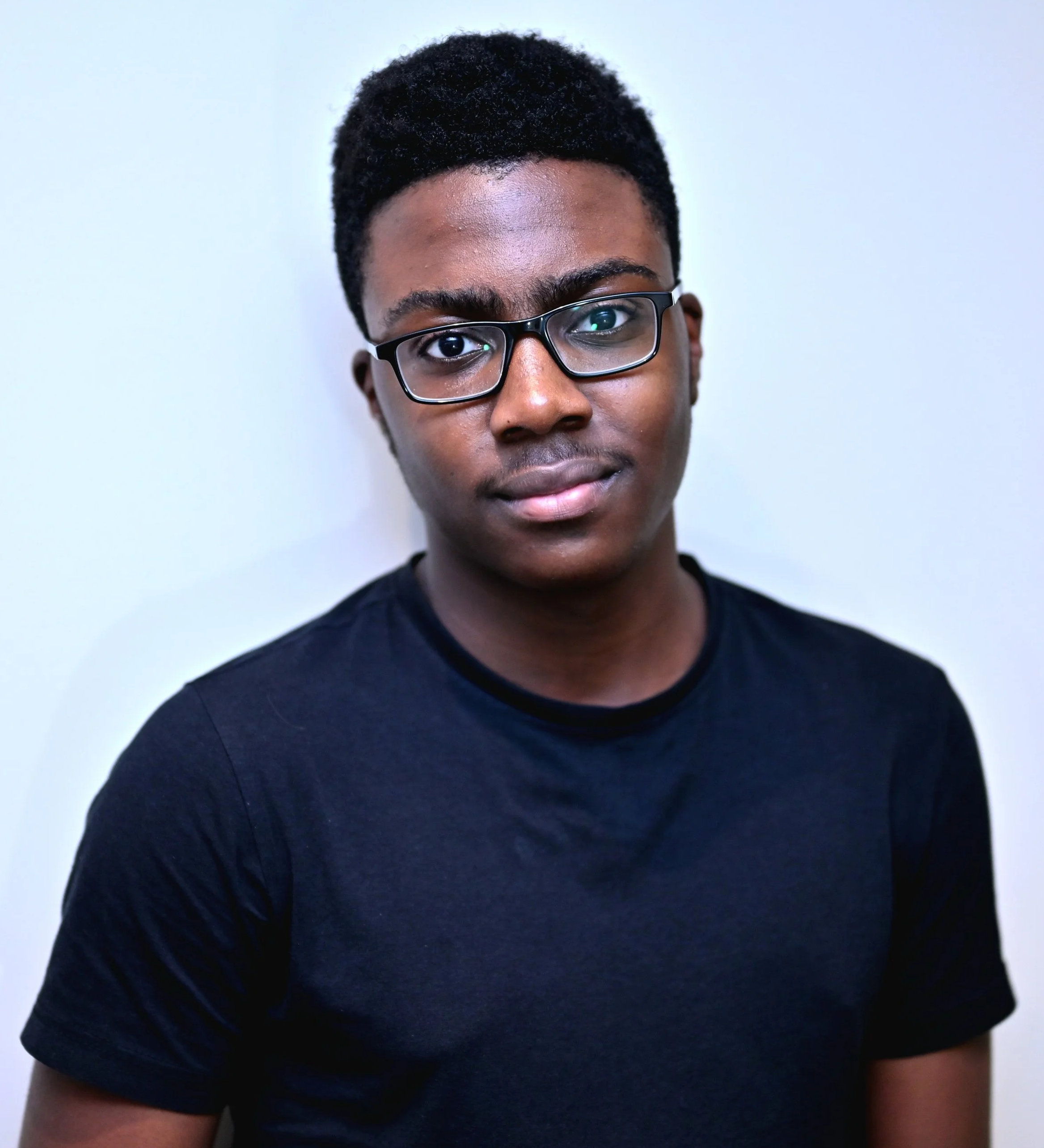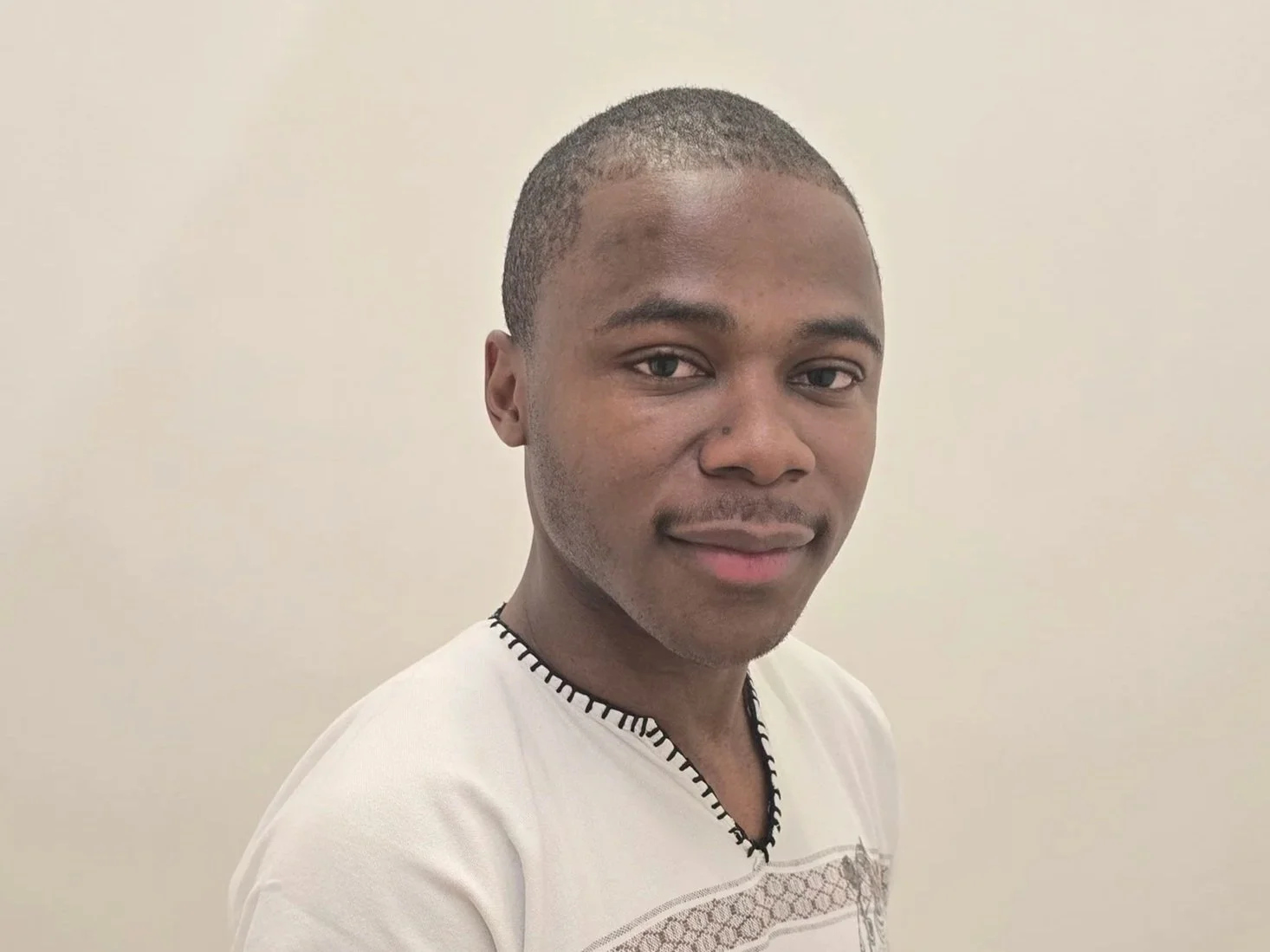
Kelvin Doe is building the next generation of innovators
July 6, 2026
Growing up in Sierra Leone, Kelvin Doe learned early that waiting for opportunities was rarely an option.
Instead, he created them.
Long before he visited prestigious institutions such as the Massachusetts Institute of Technology (MIT), gained international recognition as a teenage inventor or established a technology-focused non-profit in Toronto's Regent Park, Doe was simply a curious child fascinated by how things worked.
Living in a country where access to modern technology was limited, he dismantled discarded electronics, examined their components and imagined how they could be transformed into something useful.
That curiosity eventually led him to build batteries and radio transmitters from scrap materials, inventions that attracted worldwide attention and launched a journey spanning three continents.
Today, after nine years in Canada, the recent graduate of Toronto Metropolitan University's (TMU) New Media program is pursuing a new mission, ensuring young people from underserved communities see themselves not merely as consumers of technology, but as its creators.
“My upbringing shaped the way I look at life,” Doe said. “I don't take opportunities for granted because I know what it is like to grow up without them.”
Born and raised in Freetown, the youngest of five children credits much of his success to his mother, who nurtured his curiosity despite the family's limited resources.
Raised by a single parent, Doe watched her struggle to provide for the family while making sure her children received an education. Those experiences continue to shape both his outlook and his determination to open doors for others.
“I saw my mom struggle to put food on the table,” he recalled. “Going to government school, we didn't even have a proper innovation lab or computer lab. That gave me a different perspective on life.”
While many children his age devoted most of their free time to sports, Doe gravitated toward electronics and engineering. His mother recognized that passion early and encouraged him to pursue it.
“I played football like everybody else,” he said. “But my mom realized technology was something I really loved.”
His aptitude became evident while he was still in primary school.
At age 12, Doe and his classmates entered an innovation challenge in which they were asked to design a mechanism capable of moving an object from one point to another without using electricity.
Their simple pulley-based design won the competition, giving the young inventor confidence that engineering could become far more than a hobby.
“My teacher and my mom both told me they believed I could do this,” said Doe. “That was a turning point.”
His academic success earned him a scholarship to Prince of Wales School, one of Sierra Leone's oldest secondary schools. There, his interest in engineering and design continued to grow through science clubs and extracurricular activities that connected him with like-minded students.
Another defining moment came when he met David Sengeh, then a doctoral student at MIT's Media Lab and now Sierra Leone's Chief Minister.
Sengeh introduced aspiring young inventors to new possibilities by creating spaces where they could experiment, collaborate and compete internationally.
Under his mentorship, Doe entered another innovation competition, one that ultimately took him to the United States.
Travelling abroad for the first time at age 15, he arrived at MIT's renowned Media Lab, an experience that fundamentally reshaped his understanding of what was possible.
“It was my first time leaving Sierra Leone,” Doe said. “Everything was new, from the food and culture to the environment. It was definitely a culture shock.”
Despite the adjustment, he immersed himself in every experience.
Growing up, institutions such as MIT, Harvard and Silicon Valley represented places where groundbreaking ideas became reality.
Suddenly, Doe found himself working alongside researchers whose accomplishments he had only imagined from afar.
“I knew I had to take advantage of every opportunity,” he said. “Whether it was the workshops, working with researchers or meeting people from around the world, everything was meaningful.”
The experience did far more than expand his technical knowledge. It transformed the way he thought about innovation.
Rather than simply admiring MIT's sophisticated facilities, Doe returned home determined to recreate elements of that environment for young people in Sierra Leone.
Inspired by the Media Lab's makerspaces, where students are encouraged to design, experiment and solve problems collaboratively, he established similar clubs in local schools.
Students were invited to build prototypes, showcase their inventions and share ideas with educators, government officials and community members.
“I wanted to create something that worked within our local context,” Doe explained. “I wanted students to experience what I experienced.”
Those early initiatives reinforced a lesson that continues to guide his work today. Talent exists everywhere, but opportunity does not.
For Doe, innovation has never been solely about technology. It is about creating environments where curiosity can flourish regardless of economic circumstances.
That philosophy would eventually shape one of the most significant decisions of his life.
Although he considered returning permanently to Sierra Leone after his international experiences, another path emerged that would take him to Canada and allow him to broaden his vision even further.
The possibility arose through an unexpected conversation.
While living in Ghana, Doe met a Canadian mentor who spoke enthusiastically about Canada's culture, spirit of innovation and long history of invention.
At the time, his future remained uncertain. He could either return home to continue his work or pursue further education abroad.
Canada ultimately became the place that offered him the chance to do both.
“I knew I could come and build something from scratch,” Doe said. “That was important to me.”
When Doe arrived in Toronto, he had virtually no local support network beyond his mentor.
“I didn't really know much about Canada,” he admitted. “I just knew it was a place where I could continue building.”
Doe enrolled at TMU where academics were his priority. As had been the case throughout his life, however, learning extended well beyond the classroom.
His years at the downtown Toronto university became as much about building relationships and supporting others as they were about earning a degree.
“The experience at TMU gave me a holistic framework for the things I am doing now,” Doe said.
Among his proudest accomplishments was helping establish a student union within his academic program, securing funding and fostering a stronger sense of belonging among students in what he describes as a close-knit faculty.
Recognizing that many African students struggled with the transition to university life in Canada, Doe also helped create a student group that brought together Black students from across the faculty.
For him, the initiative was about far more than organizing social events.
Students from Sierra Leone, Ghana, Nigeria and other African countries suddenly found themselves adapting to a new culture thousands of kilometres from home.
The group became a welcoming space where they could share familiar music, exchange experiences and support one another through the challenges of settling into Canadian life.
“We wanted to create a community where people felt comfortable,” Doe said. “Somewhere they could relate to each other's experiences.”
His entrepreneurial spirit soon found another outlet.
In 2023, Doe launched an online community radio platform that later evolved into a podcasting initiative, giving students opportunities to host programs focusing on sports, politics, education and civic issues.
“My role was to create a platform where young people could talk about issues that mattered to them,” he pointed out.
The initiative reflected a philosophy that continues to shape his work, giving young people the tools and confidence to tell their own stories.
While completing his undergraduate degree, Doe also became involved in research through an undergraduate placement with a TMU professor. The experience introduced him to fabrication techniques, modelling and product development.
“It has been a really fun experience,” he said. “I am learning about different aspects of research and building prototypes.”
Yet perhaps his most ambitious work has taken place beyond the university campus.
Recognizing that many young people in Regent Park lacked access to the equipment and creative spaces available to university students, Doe began organizing workshops that brought those resources directly into the neighbourhood.
Initially, TMU faculty members volunteered to lead sessions on electronics, coding and design. While the workshops proved popular, transporting equipment between the university and Regent Park quickly became impractical.
That challenge sparked a new idea.
Rather than moving equipment from place to place, why not establish a permanent makerspace where young people could explore, experiment and learn year-round?
The result was a dedicated facility that gives students access to coding, electronics, 3D printing, podcasting and digital design—resources many schools and community organizations are unable to provide.
“We wanted students to have a place where they could come, build and experiment,” Doe noted.
As interest in the project grew, potential partners and sponsors repeatedly asked whether the initiative had formal organizational status.
The question prompted another important step.
“It started as a hobby group,” he recalled. “Eventually we realized that if we wanted to grow, attract partners and receive funding, we needed to become an organization.”
The project was subsequently incorporated as a federally registered non-profit, opening the door to new partnerships while introducing an entirely different set of responsibilities.
Beyond designing workshops and mentoring students, Doe found himself navigating governance, fundraising, legal requirements and day-to-day administration.
“It's been a learning experience,” he admitted. “On any given day, I am balancing the administrative side of running a non-profit with continuing to do the work that inspired it in the first place.”
His efforts have since earned national recognition.
This year, Doe was selected as one of 10 young leaders for the Pathy Foundation Fellowship, a program that will take him to Halifax for four weeks before returning him to Toronto to further expand his community-based STEM initiatives.
He hopes the fellowship will strengthen not only his leadership and communication skills but also help establish a long-term model for technology education in Regent Park.
“The goal isn't just to run workshops,” he said. “The goal is to build something sustainable.”
For Doe, sustainability means creating an educational pathway that begins long before students reach university.
He envisions introducing children to science, technology and engineering while they are still in middle school, mentoring them through high school, supporting their transition to post-secondary education and eventually connecting them with internships and careers in Canada's growing technology sector.
“We want to create opportunities from middle school right through to employment,” he said. “That's what success looks like.”
His vision extends well beyond teaching coding or electronics.
It is about helping young people, particularly those from marginalized communities, recognize that innovation belongs to them as much as anyone else.
“Canada gives people the opportunity to build,” Doe said. “Our responsibility is to make sure every young person has access to those opportunities.”
While Doe's work centres on innovation, he believes the conversation around technology must extend well beyond teaching young people how to use the latest devices.
Instead, he wants them to understand how technology works and to see themselves as the people capable of creating it.
As artificial intelligence (AI) rapidly reshapes education, business and the workplace, Doe believes access to technology alone is no longer enough.
“We need to help young people understand what's behind the technology,” he said. “If they understand coding, electronics and how these systems work, they will have choices in the future.”
Although Doe describes himself as “old school” when it comes to some aspects of technology, he recognizes that AI will influence nearly every profession.
Rather than viewing artificial intelligence as something to fear, he sees it as another tool that can empower young people, provided they understand its fundamentals.
For students in communities such as Regent Park, access remains the greatest challenge.
“We're trying to provide resources that many young people wouldn't otherwise have,” he said. “These are skills that will be important for the jobs of the future.”
His goal is not to steer every young person toward a career in engineering or computer science.
Doe is equally supportive of careers in the skilled trades, business, healthcare and the arts. What matters most, he said, is ensuring young people have the chance to discover their interests before deciding which path to follow.
“I am not saying everyone should become an engineer,” he explained. “But everyone deserves the opportunity to explore what's possible.”
That philosophy extends beyond the classroom.
Away from workshops and community meetings, Doe performs as DJ Focus, a creative outlet that also allows him to celebrate African culture.
Music, he says, has always been a universal language capable of bringing people together.
“When I'm DJing, I get to be myself,” he said. “It's another creative space.”
Whether spinning Afrobeats, dancehall, soca or other genres, he enjoys introducing audiences to artists from Sierra Leone and across Africa whose music remains unfamiliar to many Canadians.
People frequently ask about the songs he plays, creating opportunities to discuss the artists, languages and cultures behind the music.
“It is another way of educating people,” he said.
Doe's pride in his Sierra Leonean heritage remains evident throughout the conversation.
Although grateful for the opportunities Canada has provided, including earning permanent resident status and preparing to apply for Canadian citizenship, he has never lost sight of where his journey began.
“I have a strong sense of responsibility to Sierra Leone,” he said.
That commitment has already taken practical form.
Over the years, he has organized fundraising initiatives following national emergencies, including the Ebola outbreak and the devastating mudslide that claimed hundreds of lives.
While Doe recognizes those efforts provide immediate relief, he believes lasting change depends on stronger institutions, better education and visionary leadership.
His immediate plans include pursuing graduate studies, with the MIT Media Lab and McGill University among the institutions he hopes to attend.
Education, however, is only part of the journey.
“I have a passion for teaching,” he said.
Looking further ahead, Doe also hopes to serve his homeland through public service, believing meaningful change often comes from helping shape policy rather than simply advocating from outside government.
For now, however, his attention remains firmly focused on the young people walking through the doors of his makerspace in Regent Park.
Every coding workshop, robotics demonstration and conversation about innovation represents another opportunity to ignite the same curiosity that transformed a young boy in Freetown who once dismantled discarded electronics to understand how they worked.
He hopes those children will discover something even more valuable than technical skills.
He wants them to discover confidence.
For Doe, success will never be measured solely by the technologies he invents, but by the number of young people who come to believe that, regardless of where they were born or the obstacles they face, they have the power to imagine, create and change the world.