Canadian innovator Moroti Adegboyega turns ‘black goo’ into global water prize
September 2, 2026
Young people do not always wait for laboratories, corporations or governments to solve the environmental problems they will inherit.
Sometimes their creativity begins with an unusual substance, a question no one around them has asked and the determination to keep experimenting when an invention refuses to float.
For Moroti Adegboyega, it began with a strange magnetic ‘black goo’.
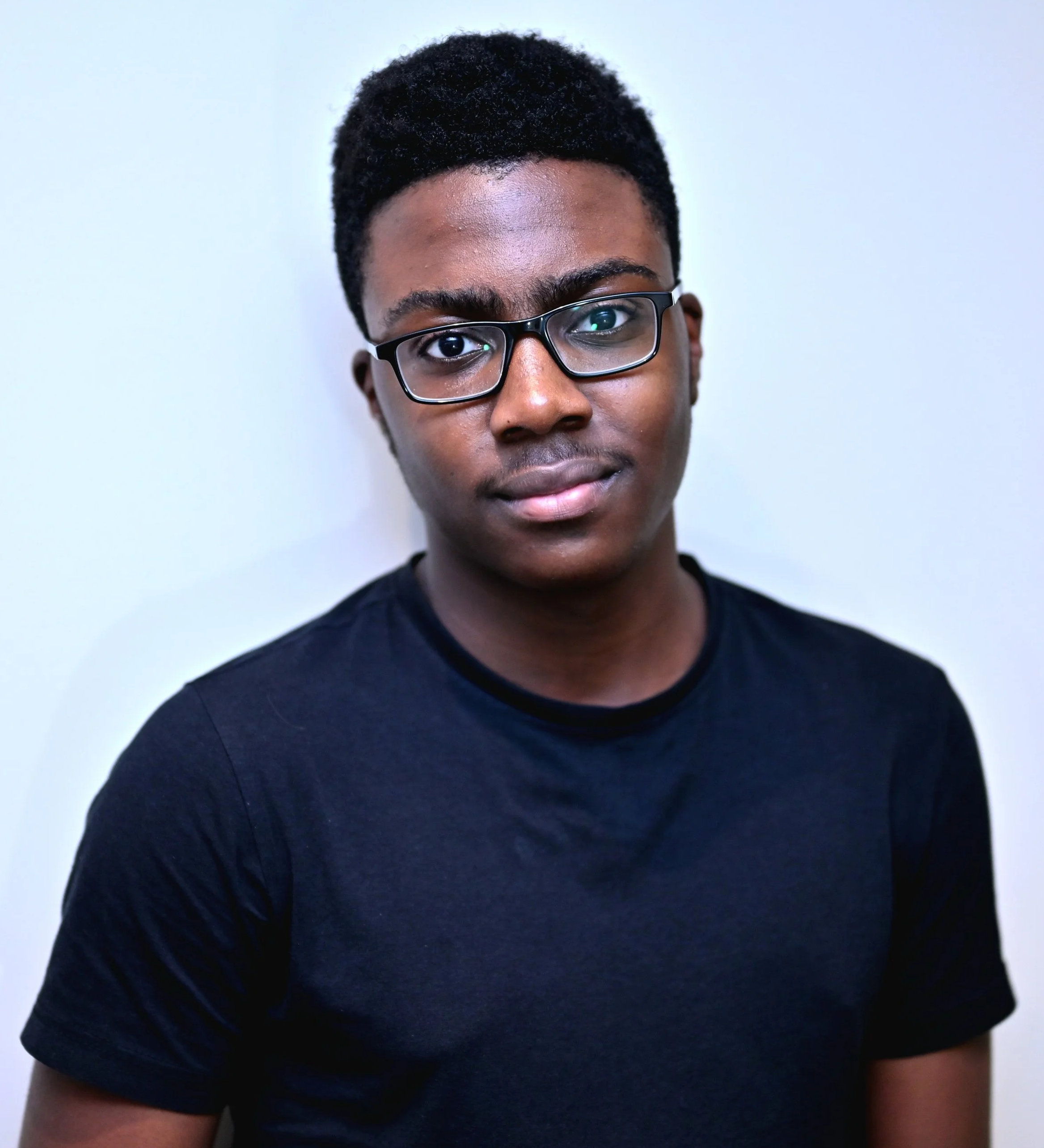
The 17-year-old St. John’s student transformed his fascination with ferrofluid into Ecoferroquatics, an autonomous aquatic robot that combines artificial intelligence, computer vision, robotics and a magnetic liquid to identify and remove plastic pollution from water while minimizing contact with aquatic organisms.
The invention earned the Grade 12 student at St. Bonaventure’s College the 2026 Stockholm Junior Water Prize, regarded as the world’s leading international water competition for young people.
Adegboyega was chosen from national winners representing more than 40 countries.
“I am always inspired by the talent and determination of today’s young water leaders,” said Hayati Yarkadas who is the president & executive vice-president of Water Infrastructure at Xylem that is a global water technology company. “When I look at the Stockholm Junior Water Prize finalists, I see a generation stepping forward, using science imagination and courage to help solve some of the world’s greatest water challenges.”
Crown Princess Victoria of Sweden presented Adegboyega with the award on August 25 at Stockholm City Hall during World Water Week.
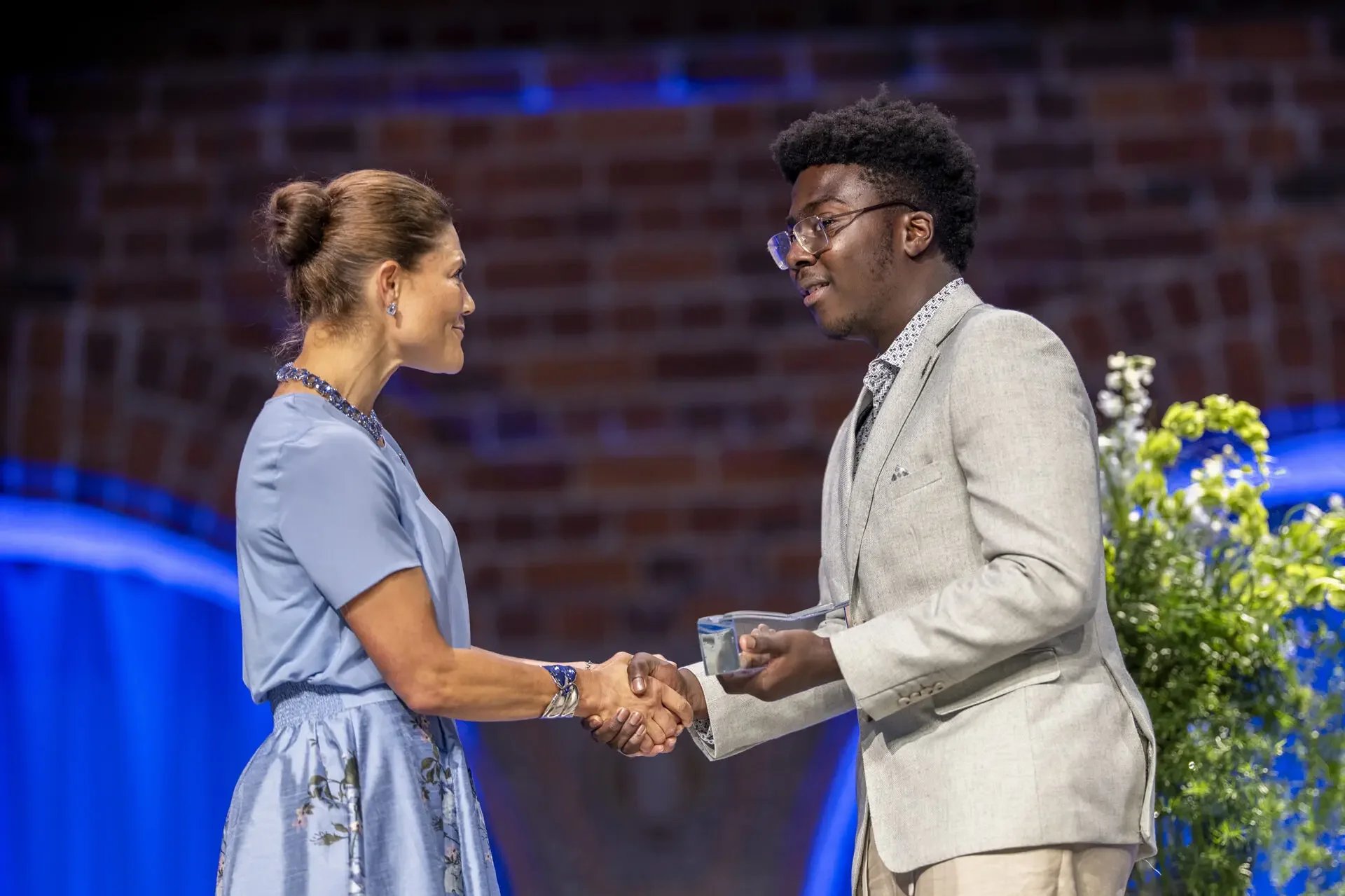
Crown Princess Victoria made the presentation to Moroti Adegboyega (Photo contributed)
The competition, which has recognized young water innovators internationally since 1997, draws on national contests involving tens of thousands of students.
Adegboyega, the fourth Canadian winner in the competition’s history, was not expecting to add his name to that short and distinguished list.
“I was absolutely shocked,” he said. “I realized that my life in science was going to change just from winning this award. I think there is a video of me with my mouth wide open. I was just so shocked.”
The award includes US$15,000 for Adegboyega and US$5,000 for his school to support science, technology, engineering and mathematics activities.
For his family, the announcement ended several anxious hours of waiting, hoping and praying.
“When his name was called, the win felt almost unreal,” said his father, Babatunde Adegboyega. “We are immensely proud of what Moroti has achieved, but what makes us especially proud is the thoughtful and compassionate person he has become. This is an incredibly special moment for all of us and one we will treasure for a very long time.”
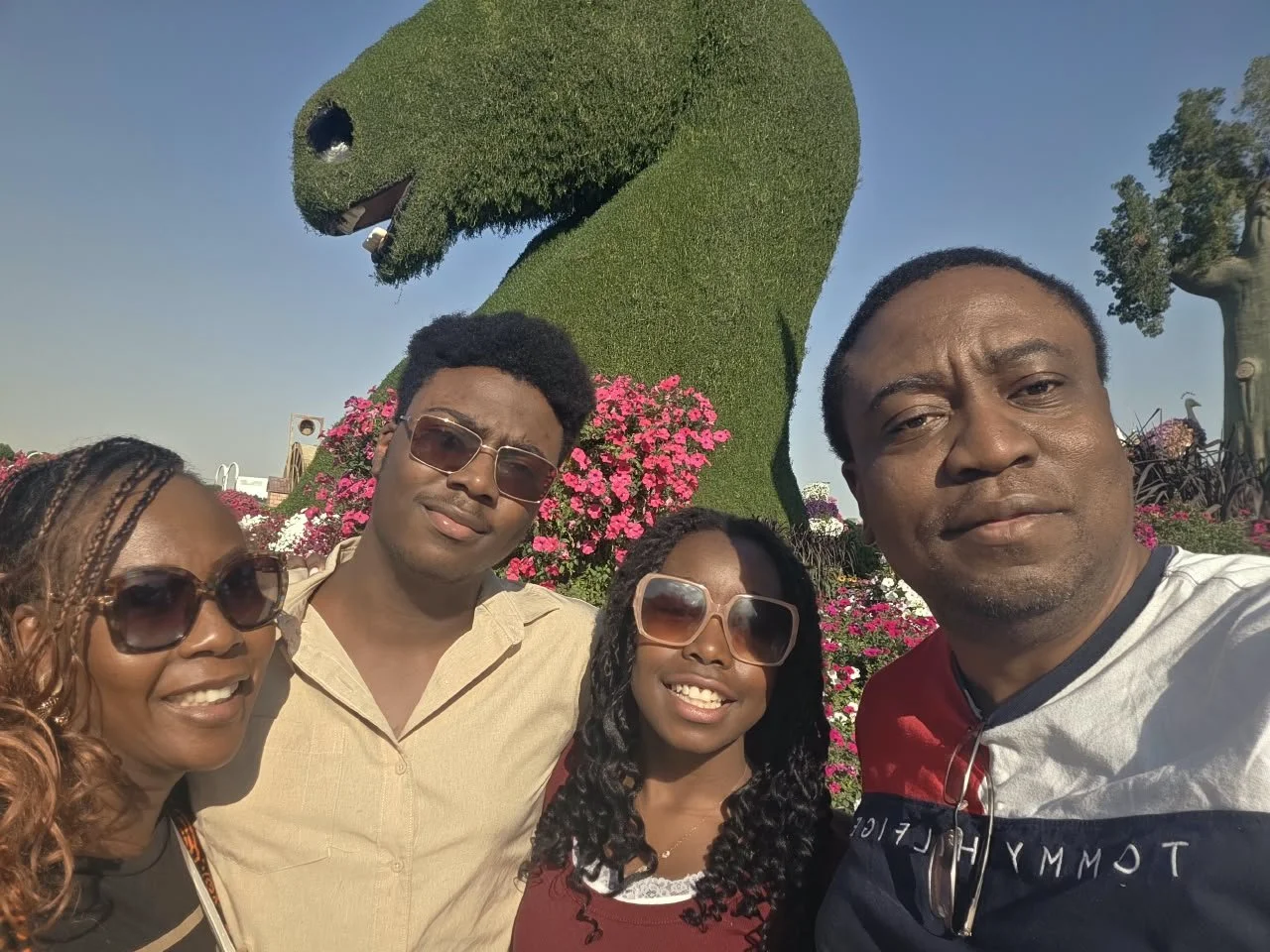
Moroti Adegboyega with his younger sister Morife and their proud parents Babatunde and Lonpe (Photo contributed)
St. Bonaventure’s College science teachers Robyn Matthews-Hillier and Adam Green said Adegboyega’s achievement demonstrates that curiosity and creativity can lead to success, regardless of a school’s size.
“Science Fair has always been an important avenue for learning and exploration at St. Bonaventure’s College,” they said. “It has helped our students build problem-solving, innovation and communication skills for many years. Moroti’s success shows the next generation of young scientists in our K–12 community that exploring science can be an empowering and creative outlet. It also highlights that young people in our school and province can contribute to global research addressing real-world environmental issues such as microplastic waste.”
The teachers added that the generous donation to the school will be directed toward areas of need within its STEM programming and used to support extracurricular science activities.
Yet the significance of the achievement extends beyond the prize money.
It recognizes a young Black immigrant representing Canada on one of the world’s most prominent youth science stages and an invention aimed at protecting an essential natural resource.
Born in Nigeria, Adegboyega was six when he moved to Canada. Newfoundland and Labrador became the place where his scientific curiosity was encouraged and where an interest that began with school science fairs grew into an internationally recognized environmental project.
“Newfoundland has always been kind to me ever since I moved to Canada,” he said. “They have given me so many opportunities, and I have loved my time here. Being able to represent the country that has given so much to me meant a lot. I am so happy I was given the opportunity.”
Adegboyega’s interest in science took root in Grade 8 when he began entering projects in the Newfoundland and Labrador Science Fairs Council competition.
Over time, he gravitated towards public health and environmental subjects. Those projects allowed him to explore how scientific knowledge and technology could be applied to problems affecting people and their surroundings.
The inspiration for Ecoferroquatics came while Adegboyega was browsing online and learned about a previous science-fair project that used ferrofluid containing magnetic nanoparticles to extract microplastics from water.
He was intrigued by the science but felt its laboratory-based application was limited. Instead of simply repeating the experiment, he began considering how the technology could be made mobile, autonomous and useful beyond a controlled setting.
“I thought I could make a solution that was more active,” Adegboyega said. “I did some research on robotics and automatic rovers and decided that was what I was going to build. I wanted to make the technology of ferrofluid not just a laboratory concept, but something real that could one day be implemented.”
The result was Ecoferroquatics -- formally titled A Novel Autonomous Plastic Cleanup Platform Integrating AI, Robotics and a Biocompatibility-Oriented Magnetic Suspension.
The system operates in two main stages.
First, a camera and artificial intelligence identify plastic in the water, determine its approximate centre and direct the robot towards it. Once the robot reaches the debris, Adegboyega’s specially developed magnetic liquid adheres selectively to the plastic, allowing magnets to remove it from the water.
He created the liquid from oleic acid, magnetite nanoparticles and vegetable oil. The mixture relies on hydrophobic and non-polar interactions to attach to plastic.
“In simple terms, the AI is trained to identify the centre of mass of plastic particles and move towards them,” Adegboyega explained. “It tells the robot how to move to reach the plastic. Once the robot moves towards it, I have my own magnetic liquid material. It uses non-polar and hydrophobic forces and is made with vegetable oil. It has the ability to pick up non-polar objects. The goal is to spare aquatic life.”
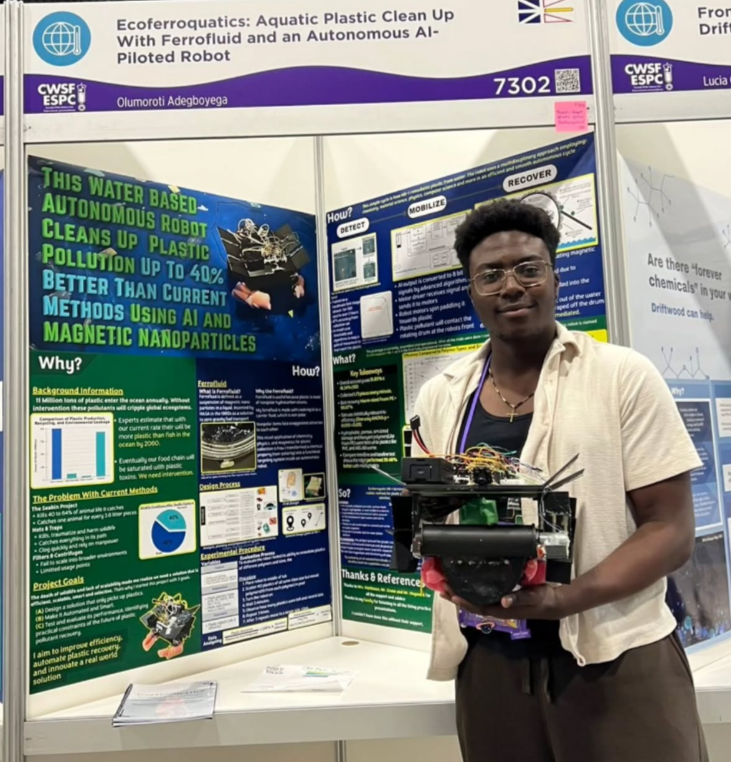
Moroti Adegboyega with his invention (Photo contributed)
That environmental consideration is central to the project.
Collecting plastic from lakes, rivers and oceans is not as simple as removing everything caught in a net. Conventional cleanup methods can require considerable manual labour and may disturb fish, plants and other organisms. Plastic debris also breaks down into increasingly smaller particles that can be consumed by wildlife and enter food chains.
In controlled testing, Ecoferroquatics outperformed a basic sieve when collecting the smallest, microplastic-scale particles that can escape conventional screening.
Adegboyega wanted his system to distinguish between pollution and living organisms rather than indiscriminately capturing whatever crossed its path. Its camera was trained to recognize plastic, while the collection material was designed to adhere selectively to it.
The invention’s sophistication could suggest it emerged from years of specialized instruction in chemistry, materials science and marine engineering.
Adegboyega began with coding and computer science as his strongest areas. He had to teach himself much of the chemistry and robotics required to turn his idea into a functioning prototype.
“My expertise is fully on the computer side,” he said. “I was not well equipped in chemistry, materials or even much in robotics or aquatic devices, so I had to learn a lot of that on the job.”
The learning process included failure, an essential but sometimes overlooked element of innovation.
One of Adegboyega’s most persistent challenges was keeping the robot afloat for extended periods. Each failed test prompted him to recalculate its weight and buoyancy and refine the design.
“I was most concerned when the robot struggled to remain above water,” he said. “After a lot of calculations and trial and error, I finally achieved consistent flotation on the sixth attempt.”
The teenager’s persistence reinforces the message he now offers other young people, which is expertise does not always have to precede experimentation.
“I started this project with very little knowledge of the material and the rest of the subject matter, but I learned as I went along,” he said. “I feel like the best way to learn is to build.”
Adegboyega brought that philosophy to Stockholm, where he met other national winners and presented Ecoferroquatics to an international jury.
Winning was not his only objective. He wanted experienced scientists to challenge the project, identify its limitations and help him think about what a more advanced version might become.
The discussions ranged from whether a single large robot would be more effective than a network of smaller machines to the environments in which the technology could be most useful.
“The biggest reason I went there was to get more feedback,” Adegboyega said. “I truly did not expect to win. The judges and I enjoyed discussing the reality of making a bunch of small robots that work together or making one big robot. We also discussed where it could be implemented. If I build a Mark Two (Mk II) in the near future, the best place could be a wetland restoration project. These are the places where my robot would excel.”
The Stockholm experience also brought opportunities rarely available to a teenager.
Adegboyega spoke with Crown Princess Victoria about his invention and the barriers young researchers encounter when trying to develop ambitious projects. He also attended a dinner with Sweden’s King Carl XVI Gustaf.
His discussion with the Crown Princess touched on one of the most difficult parts of developing the artificial-intelligence component of Ecoferroquatics.
Adegboyega needed images of plastic in public waterways to train the system to recognize the material. When he could not find an appropriate existing dataset online, he had to assemble his own.
“I talked to her about how we need more support for people to make projects like mine and those of my competitors,” he said. “We struggled a lot with making our projects. To drive true innovation, we need to make it easier for youth to develop these types of projects.”
His call for greater support reflects a reality faced by many young innovators. Creativity may supply the idea, but developing it often requires equipment, technical advice, suitable workspaces and adults willing to make time for experimentation.
Adegboyega credits his teachers and school community with helping him overcome some of those barriers.
Matthews-Hillier helped spark his early interest, while Green assisted him as he became older and prepared to present his work in increasingly demanding competitions.
“Mrs. Matthews-Hillier helped me become interested in science when I was young,” he said. “She was quite wonderful. Mr. Green helped me practise my presentations as I got older. He is an amazing teacher.”
Technology teacher Ryan Hayward gave Adegboyega access to one of the school’s new 3D printers, an important contribution because he did not own one and needed it to produce components for his prototype.
“I had to use his 3D printer and bother him a lot just to get my project completed,” he said with a laugh. “They also helped me a lot with practising my presentation. St. Bon’s has been a wonderful school.”
The $5,000 accompanying the award for St. Bonaventure’s College will help support STEM and water-science education, allowing Adegboyega’s achievement to create opportunities for other students.
“I would love to bring more support back to Newfoundland and raise awareness that youth in Newfoundland can be innovative too,” he said.
His family also nurtured his curiosity.
Adegboyega’s father works in oil and gas engineering, though the teenager sees his own future moving in a different environmental direction.
He was particularly inspired by his late paternal grandfather, Gabriel Adegboyega, a professor emeritus who instilled in him a passion for knowledge and innovation.
“He helped give me a true passion for learning and innovating,” noted Adegboyega. “I will always be thankful to him.”
Despite winning the world’s premier youth water-science award, he regards Ecoferroquatics as a beginning rather than a finished solution.
Before the technology could be deployed in natural environments, further research would be needed to determine the potential biological effects of the ferrofluid mixture he created. The detection system also needs refinement, as the camera’s ability to recognize plastic under varying water and lighting conditions remains a limitation.
“I would need more time to research the exact biological hazards that my magnetic ferrofluid mixture may pose because it is my own original material,” Adegboyega pointed out. “I would also like to build a Mark Two that corrects some of the issues. I found the AI camera was a significant limitation. Another way of detecting plastic in water for navigation may be better. But this first model was an amazing start and helped me identify the strengths and weaknesses that a future model may have.”
His willingness to discuss those limitations is as important as the invention itself. Science does not advance by pretending a prototype is perfect. It advances by testing ideas, identifying risks and allowing evidence to guide the next version.
As Adegboyega enters Grade 12, he has not decided which university he will attend. He is considering institutions in Newfoundland and Labrador, elsewhere in Canada and in the United States.
He is more certain about the kind of work he wants to pursue.
“In the future, I want to focus on autonomous solutions,” said Adegboyega who last February received the Rise Award, presented to 20 of Newfoundland & Labrador’s top-performing high school students in recognition of their research potential, outstanding STEM achievement and academic excellence. “That is my true passion. Automating processes for people and finding automated ways to repair our environment are my biggest goals.”
His achievement also carries significance for young Black students and immigrants who may not see themselves represented in science, engineering or environmental technology.
Adegboyega’s message to them is direct.
“Do not wait until you possess every skill before entering the field,” said the Memorial University research intern. “There is a space for you, and all you have to do is jump in and you will find it. The scientific community loves contributions so you will not be pushed away. Even if you believe you have not learned enough or you do not believe in yourself, all you have to do is try.”
Adegboyega’s journey demonstrates what can happen when young people are given the encouragement and tools to confront the environmental problems shaping their future.
What began as magnetic ‘black goo’ has become a potential new approach to removing plastic from water and proof that a young person’s imagination can generate solutions with global significance.