Jamaican Justin Brown makes history as first Caribbean McCall MacBain scholar
May 27, 2026
After learning that he had not advanced to the final interview stage for one of Canada’s most prestigious scholarships, Justin Brown tried to come to terms with the disappointment. Weeks of preparation, extensive interviews and high hopes appeared to have ended in heartbreak.
Then came the phone call that changed everything.
A finalist spot had unexpectedly become available, giving the Jamaican student a second chance and sending him to Montreal last March for another round of intensive interviews for the McCall MacBain Scholarships at McGill University.
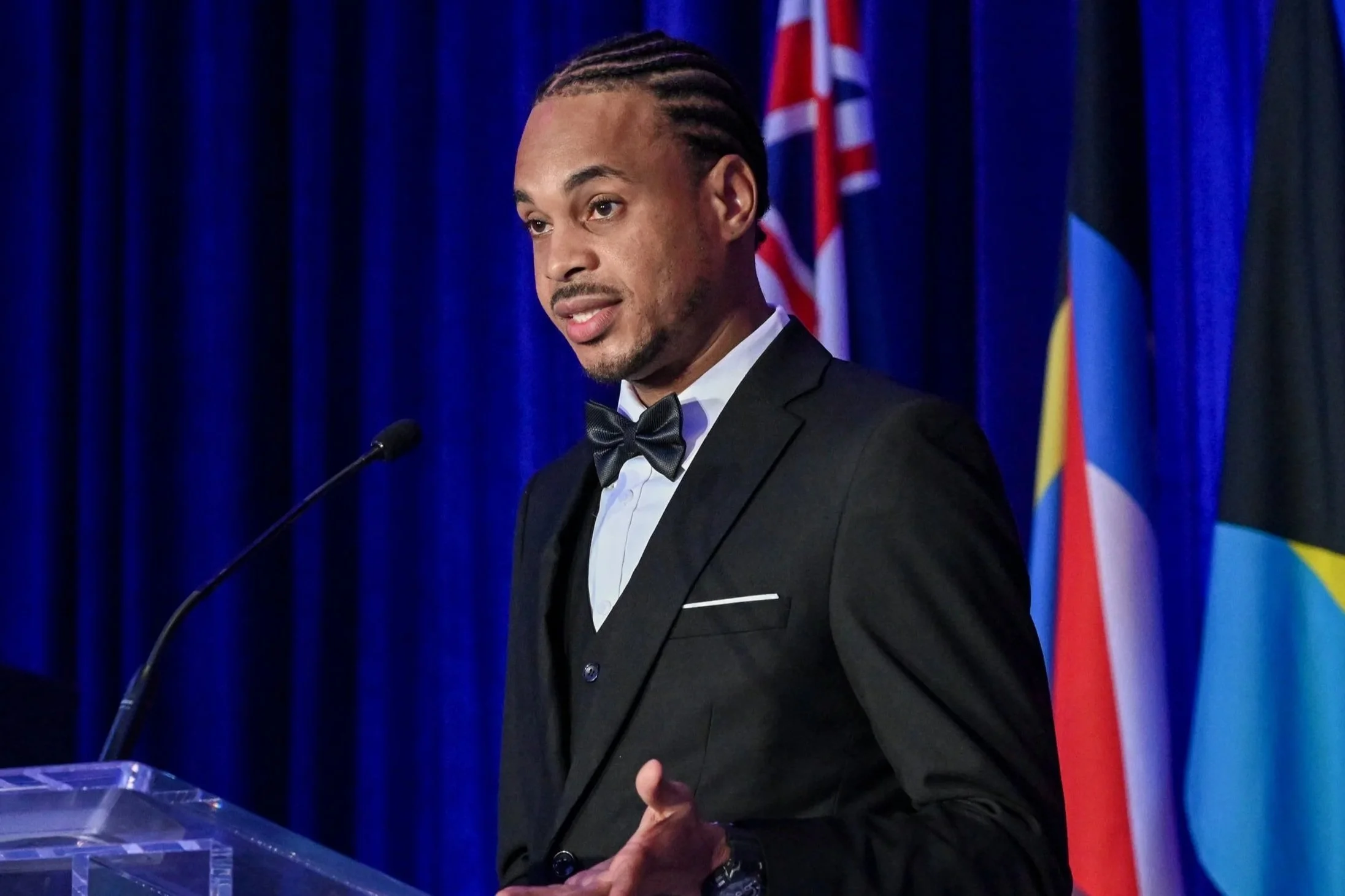
Days later, Brown learned he had made history, becoming the first student from the Caribbean selected for the prestigious scholarship program.
“They had sent me a Zoom link to join and that is where they delivered the news,” he recalled. “I can say I was delightedly surprised. I was mentally doing backflips but kept the composure on the outside.”
The moment marked a dramatic turning point for the 20-year-old fourth-year Computing student at the University of Technology who had once considered postponing graduate school altogether because of financial constraints.
Before discovering the scholarship opportunity, Brown planned to enter the workforce, save money and eventually continue his studies later. However, encouragement from his father and a spiritual leader convinced him not to abandon his academic ambitions and instead pursue scholarship opportunities.
During that search, he discovered the McCall MacBain Scholarships at McGill University and was further intrigued after learning that several notable Jamaicans, including former Prime Minister Michael Manley and politician Peter Bunting, had studied at the Montreal institution.
“That piqued my interest and I applied,” he said.
Established in 2019 through a landmark $200-million gift, the McCall MacBain Scholarships are Canada’s largest leadership-based scholarships for master’s and professional studies. Applicants come from more than 2,300 universities worldwide. This year, 280 candidates advanced to the first round of interviews, 66 received regional awards and 91 finalists advanced to the final interview stage.
For Brown, however, the journey became about far more than earning financial support for graduate studies.
As the first Caribbean student to secure the scholarship, he believes the achievement carries significance throughout the region.
“It extends far beyond me personally,” Brown said. “I think it represents what’s possible for students across Jamaica and the wider Caribbean. Opportunities like this can sometimes feel distant or out of reach, especially for students from smaller developing nations.”
He believes the accomplishment reinforces the idea that talent, leadership and innovation exist throughout the Caribbean and deserve greater international recognition.
“Often, international recognition is associated mainly with sports or entertainment,” Brown said. “But this shows that academic leadership, innovation and community involvement can open doors too.”
The trip to Canada also carried deep personal meaning because it reunited him with his mother for the first time in nine years.
Roxon Brady completed her undergraduate studies at the University of Technology before later earning a graduate degree at the University of the West Indies. She now works as a project management professional in Ontario, while his father, Kevin Brown, is an accountant in Jamaica.
Brown credits much of his mindset and discipline to the values instilled by his parents and the experiences that shaped him growing up.
He spent the early part of his childhood living with his mother in Kingston before moving to Spanish Town to live with his father after she migrated to Canada.
Brown later attended Wolmer’s Boys’ School, where the school motto, ‘Age Quod Agis’, meaning ‘Whatever you do, do it to the best of your ability’, became a guiding principle in his life.
His father also played a major role in shaping his outlook.
“One memory that stuck with me was when I had to train for track with him at Emancipation Park,” Brown recounted. “At first, he ran with me and it felt fun and competitive, but once he stepped back and started timing me seriously, I lost interest because it no longer felt exciting.”
The lesson that followed stayed with him long afterward.
“Dad made me write 500 lines of ‘victory loves preparation’, and honestly, that resonated deeply with me,” Brown said. “It taught me that preparation is what creates opportunities for success.”
That philosophy, he added, became especially important during the demanding scholarship interview process.
“My dad always said, ‘When you are doing something important, don’t let it be the first time you’re doing it’,” Brown added.
That preparation has also influenced his leadership journey at university.
Brown currently serves as president of the university’s Future Developers Club where he has helped create a space for students to explore emerging technologies and apply them to real-world challenges.
The initiative, he pointed out, is about encouraging students to move beyond theory and begin building solutions with practical impact.
“I have met engineering and computer science students who go through university focused mainly on theory or extracurricular activities, but rarely spend time actually building things that solve real people’s problems,” Brown noted.
Through the club, students are encouraged to experiment, collaborate and develop projects that address challenges beyond the classroom.
“That exposure not only expands their technical skill set, but also prepares them to think beyond university toward innovation, entrepreneurship and creating meaningful solutions in the real world,” Brown explained.
Balancing leadership responsibilities with internships in artificial intelligence and software engineering, while also working part-time during his studies, demanded discipline and structure.
“At one point, I was balancing multiple internships, my business PosterBoy, the Future Developers Club and school all at the same time,” Brown said. “The level of time management and structure that was required was no joke.”
Those experiences, he said, taught him valuable lessons about resilience, leadership and trust.
“I realized I could not micromanage everything, so I had to learn to trust the people around me and empower them to take ownership,” Brown said. “Most importantly, it taught me how to remain composed even when things became overwhelming or uncertain.”
Beyond academics and technology, he has dedicated time to providing free tutoring sessions for fellow students, something he believes is especially important within the Caribbean education system.
“Access to higher education and specialized knowledge in the Caribbean is still a privilege for many people,” Brown said. “Through tutoring and mentorship, we get the chance to help reduce some of those gaps and make learning more accessible.”
He believes mentorship is equally important because it allows younger students to benefit from the experiences of those who came before them.
“Mentorship allows the next generation to build on the lessons and experiences of those before them instead of starting from scratch every time,” Brown said.
This fall, he will enter the Master of Management in Analytics program at McGill University, a path he admits was not originally part of his plan.
Brown initially applied to McGill’s MBA program but lacked the required full-time work experience. He also applied unsuccessfully to the university’s Computer Science program.
“After reflecting on it, though, I genuinely feel like it was God’s intervention,” he said. “The MMA program is almost a combination of both paths, blending business acumen with data analytics and technology.”
Brown feels the program aligns closely with his long-term vision of contributing to the Caribbean technology ecosystem.
“I am hoping it helps me build the knowledge, relationships and perspective needed to execute my long-term vision for contributing to the Caribbean tech ecosystem,” he said.
As artificial intelligence and analytics continue transforming industries worldwide, Brown sees enormous opportunities for innovation throughout the Caribbean, particularly within government systems and consumer software.
“Across the Caribbean, many government services are still slow, fragmented and paper-based,” he said. “AI and digital systems could significantly improve areas like healthcare, tax collection, licensing, disaster response and overall citizen services.”
Brown also sees opportunities for regional start-ups to create digital products designed specifically for Caribbean realities.
“There’s space to build digital products for areas like payments, e-commerce, logistics and support for small businesses, areas that larger global companies often overlook,” he noted.
Over time, Brown believes a stronger regional technology ecosystem could create opportunities for young people to pursue successful careers without feeling forced to leave the Caribbean in search of opportunity.
For the young man, the scholarship represents more than personal achievement. It stands as proof that talent, innovation and leadership emerging from the Caribbean can compete and thrive on the global stage.
From the disappointment of rejection to becoming the first Caribbean student selected for one of Canada’s most prestigious scholarships, his journey serves as a powerful reminder to other young people that setbacks do not always signal the end. Sometimes they become the beginning of something far greater.