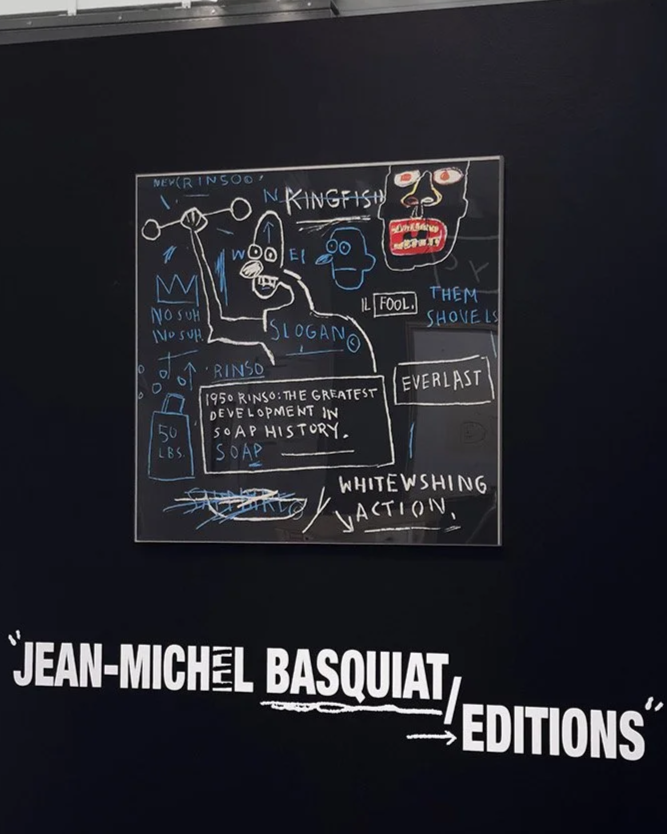
Jean-Michel Basquiat’s voice still echoes through a Toronto exhibition decades after his death
May 31, 2026
Decades after his death, the art of Jean-Michel Basquiat continues to resonate with audiences around the world.
A new exhibition of his limited-edition prints in Toronto serves as a reminder of both his extraordinary talent and enduring relevance.
Through bold imagery, symbols and text, Basquiat explored themes of race, inequality, power, identity and social injustice that are issues that remain at the centre of public discourse today. His work challenged viewers to confront uncomfortable truths and examine the realities faced by marginalized communities.
A first-generation Haitian-American and Puerto Rican-American born in Brooklyn, Basquiat died in 1988 at just 27 years old, cutting short a career that had already transformed the art world. Yet his voice lives on through a body of work that continues to inspire, provoke and educate new generations. While the artist himself is gone, the messages embedded in his paintings and prints remain strikingly relevant, underscoring both how much society has changed and how much work remains.
His legacy endures not only in galleries and museums, but also in the conversations his art continues to spark.
That legacy is now on display at Taglialatella Galleries Toronto, where Jean-Michel Basquiat / Editions brings together celebrated editioned works released by the artist’s estate over the past 25 years.
Founded in 1978, the gallery has long showcased artists who helped shape the cultural landscape of their era, including Andy Warhol and Basquiat.
Alan Ganev said that commitment to influential artists remains at the heart of the gallery's mission under its current ownership.
“I am part of a group of four that formed a new ownership group about eight years ago and purchased the gallery from Dominic J. Taglialatella,” he said.
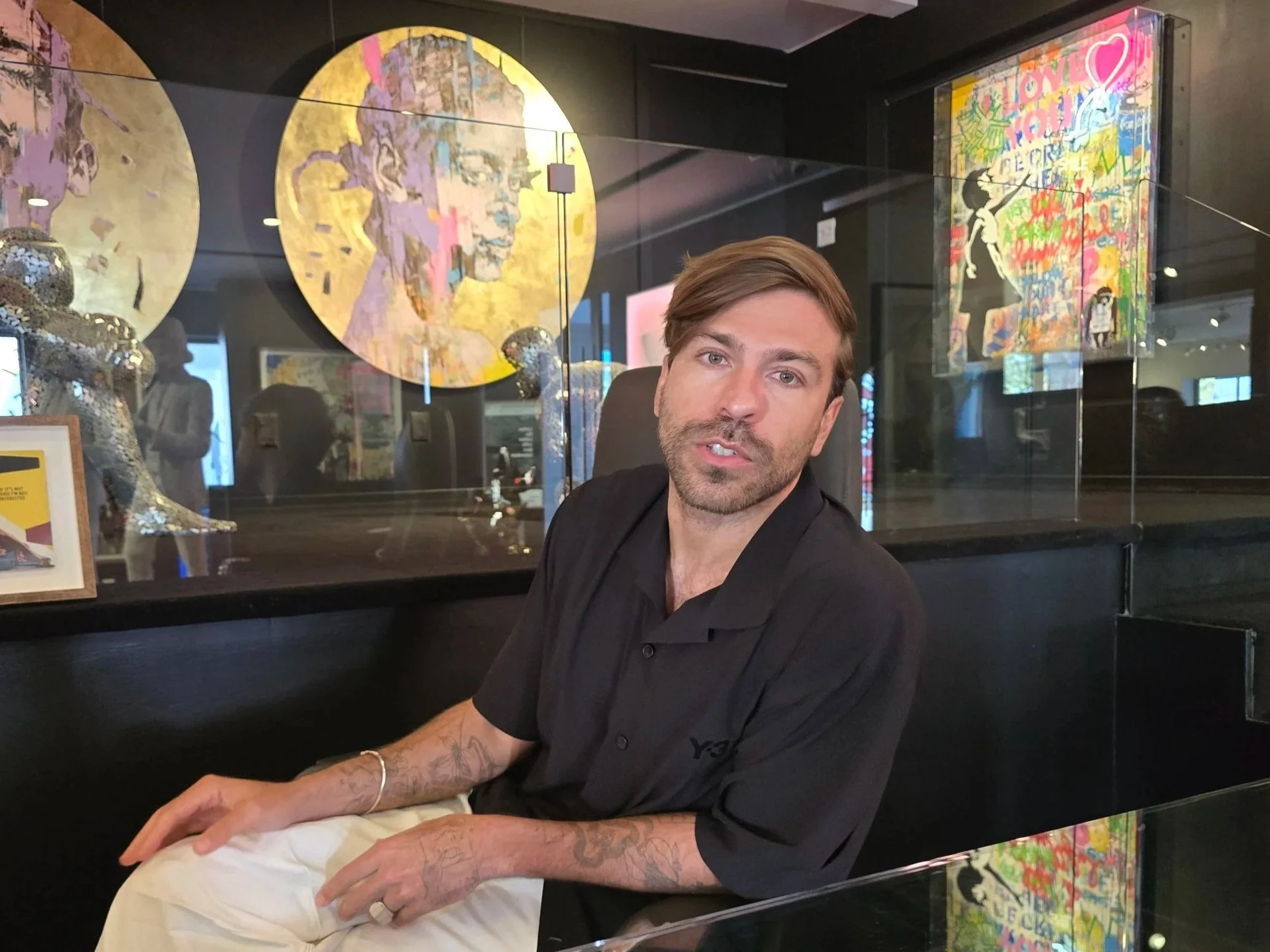
Alan Ganev (Photo by Ron Fanfair)
While the gallery has stayed true to its roots, Ganev noted that its scope has expanded over the years.
“What is interesting is that we have been able to continue the tradition on which the gallery was built while broadening our programming and curatorial vision,” he said. “We also support Canadian artists and showcase work that reflects that same spirit and energy.”
The exhibition also offers visitors an opportunity to examine why Basquiat’s work continues to connect with audiences’ decades after it was created.
“I think a lot of the issues he shared in a raw and unfiltered way are still true,” noted Ganev. “When you see this idea of institutions taking advantage of people in society, you can relate to it. People are frustrated, and when they see this type of work, they connect with it. A lot of the issues he was addressing in the 1980s are still with us today.”
He hopes visitors who know Basquiat primarily through fashion, popular culture or his celebrity status will come away with a deeper appreciation of the artist’s intellectual depth.
“When Basquiat was working, he had the television on, jazz playing and history books around him,” Ganev said. “He was channeling all of that energy and revisiting history in his own way on canvas. Some people dismiss his work as simply taking information in an unfiltered way and expressing it. But if you look more closely at the issues he was addressing, you can see how deeply he cared about them. He was not just grabbing an article and putting it on a canvas.”
One of the exhibition’s standout works is 50 Cent Piece (1983), a major painting and text-driven screen-print that merges themes of currency, power and Black history.
The work features Jamaican activist Marcus Garvey alongside references to the Federal Reserve and Noah’s Ark. It also references François “Papa Doc” Duvalier, the Haitian politician whose presidency evolved into a brutal dictatorship. The piece reflects Basquiat’s fascination with history, politics, medicine and Black identity.
“This is such a complex piece, and to think he created it when he was just 23 is remarkable,” said Ganev. “When I think about myself at that age, I was an idiot. To see someone engage with social, political and cultural issues with this level of depth and present them in such a captivating way is amazing. I hope people pay closer attention to what is in front of them because there is so much more beneath the surface.”
The exhibition focuses on limited-edition prints released by Basquiat’s estate, a process that began in 2001 under the direction of the artist’s father and continues today through his sisters, Lisane Basquiat and Jeanine Heriveaux.
“They come directly from the estate of the artist,” said Ganev. “His father started the tradition in 2001 with the first portfolio. After he died in 2013, Basquiat’s sisters continued it, focusing on works they feel are especially important to Jean-Michel’s practice. The estate has done a wonderful job releasing these editions in a very deliberate way over the past 25 years. They sell out quickly, go to collectors and are rarely seen again.”
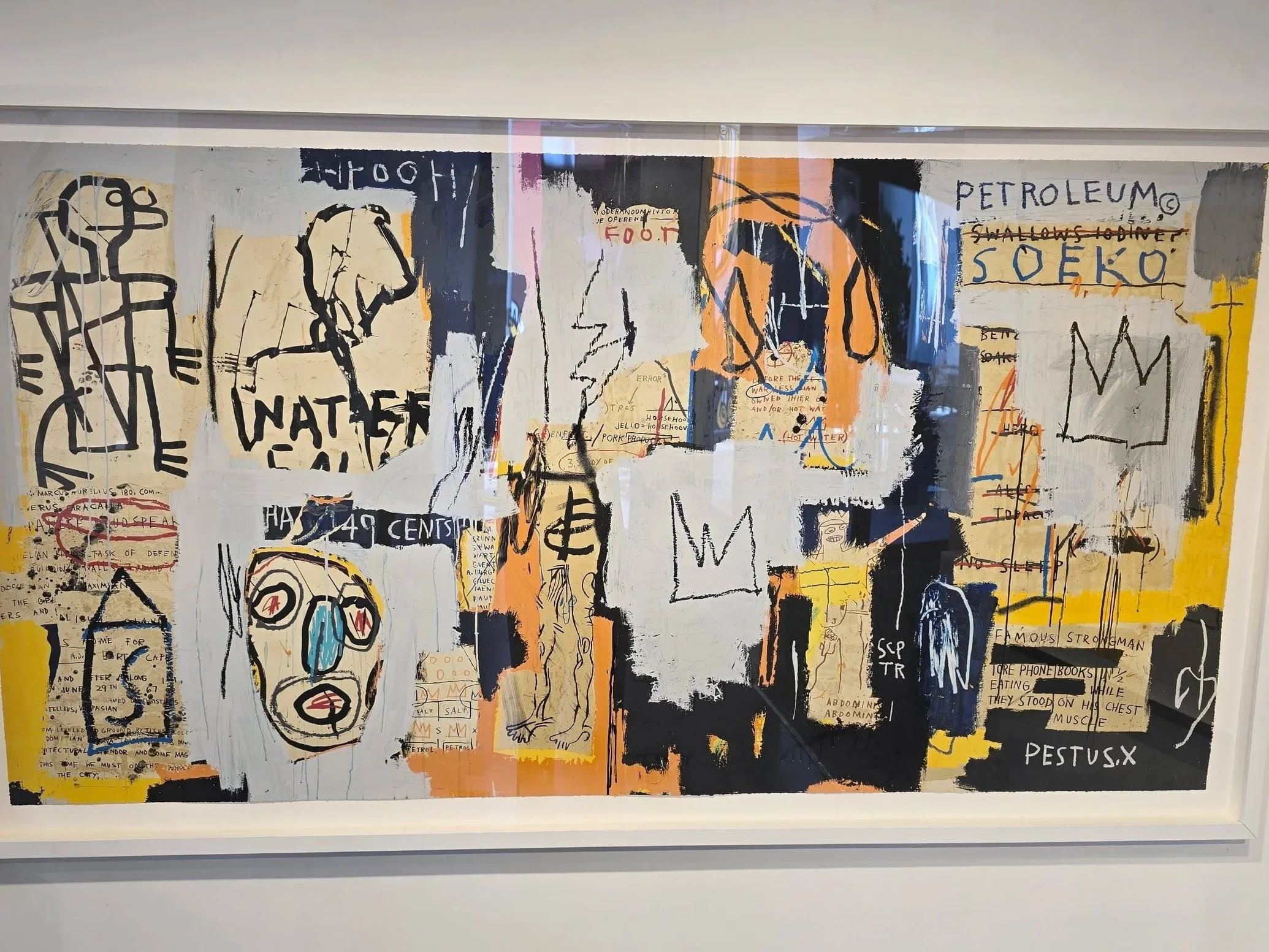
Phooey, 1982/2021. Ed. 60/Stamped, signed and authenticated by the Estate of Jean-Michel Basquiat
The Concordia University Bachelor of Fine Arts graduate believes simply presenting the exhibition helps preserve Basquiat’s legacy while making his work more accessible.
“I think the very act of presenting the exhibition contributes to his legacy,” he said. “As a commercial gallery, we do not charge admission. That makes it accessible. We also go to great lengths to promote the show.”
Basquiat’s cultural significance has also contributed to the increasing value of his work.
“His cultural relevance at this point is undeniable,” Ganev said. “He was active for less than a decade after embracing painting and visual art. Even though he was prolific, he did not have a lot of time to create. With the editions, these are reproductions of original works that come directly from his family. Even those have become extremely valuable because of their limited-edition nature.
“The first portfolio released by his father consisted of four pieces and sold for about $25,000. Today, that same portfolio would sell for more than $500,000. It speaks to the enthusiasm people continue to have for his work.”
That enthusiasm may be particularly meaningful in Toronto, one of the world’s most multicultural cities.
“Many of the issues Jean-Michel experienced as a minority resonate with minorities in general,” said Ganev. “Toronto is a multicultural city with a rich mix of communities and cultures. Many people have witnessed or experienced some of the challenges reflected in his work, and his art speaks to those experiences.”
Ultimately, Ganev hopes visitors leave with something more valuable than a greater understanding of the art market.
“Authentic conversations,” he said. “If you approach the work with a desire to be present and really look at what is in front of you, and then have an honest conversation with the person beside you, I think you will leave with a rich experience.”
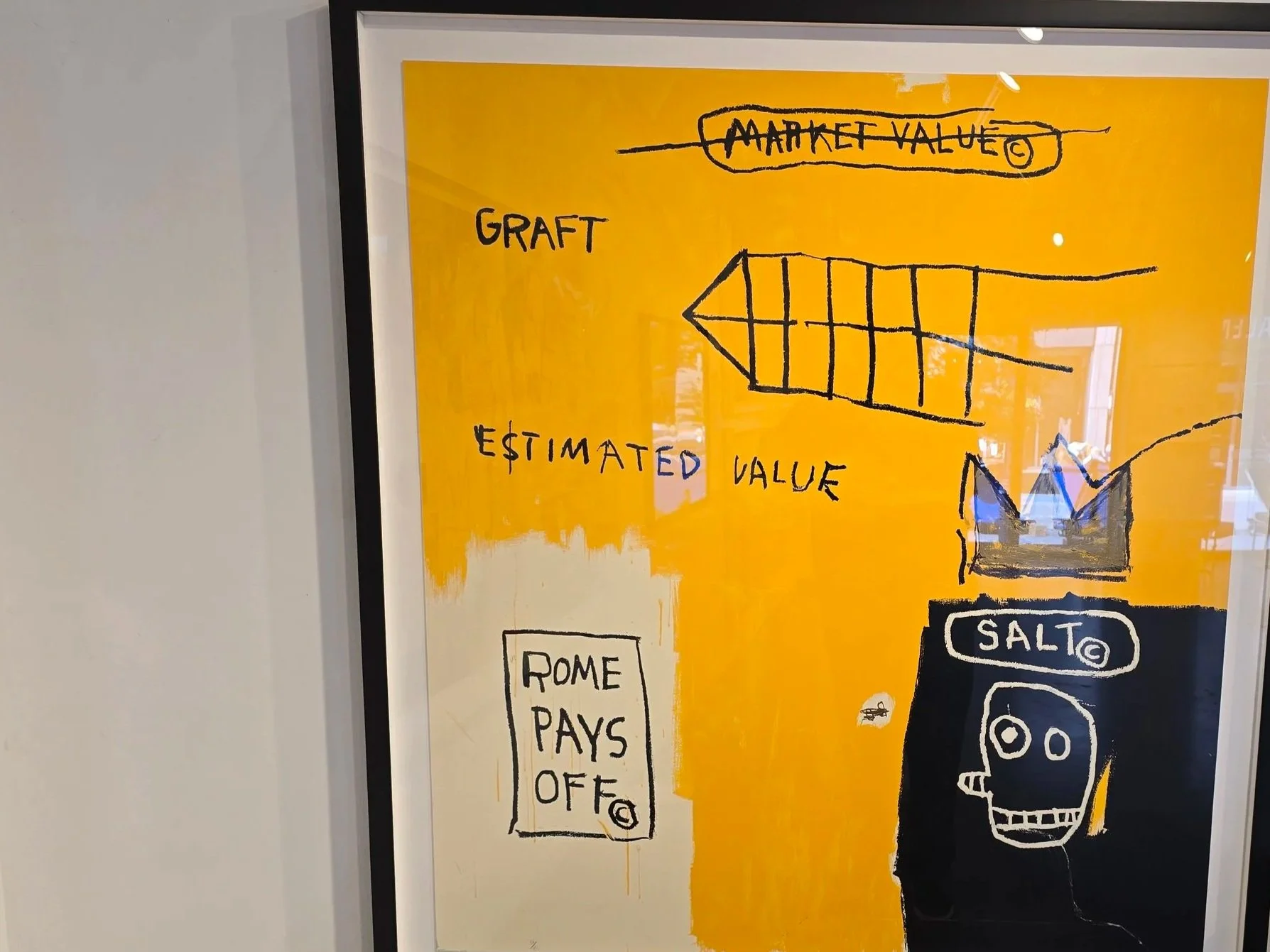
Rome Pays Off, 1982/2005. Ed. 85. Stamped, signed and authenticated by the Estate of Jean-Michel Basquiat
The exhibition runs until June 11 and includes works produced by Basquiat’s estate over the past quarter-century, including the newest release, King Alphonso (1982/2025), unveiled in collaboration with Pace Prints and Flatiron Editions.
Based on Basquiat’s celebrated 1982 composition, King Alphonso is a limited-edition screen-print of 60 that reflects the artist’s recurring exploration of power, identity, race and mythology. Each print is stamped, signed and dated on the verso by Basquiat’s sisters and administrators of the Estate of Jean-Michel Basquiat.
Taglialatella Galleries is located at 99 Yorkville Ave. and is open Tuesday to Saturday from 11 a.m. to 7 p.m.