Winfield Longe helped chart a new course for Black mariners in Canada
June 3, 2026
When Winfield Longe guided massive vessels through the narrow locks of the St. Lawrence Seaway, the responsibility was immense. Thousands of tonnes of cargo, multimillion-dollar ships and the safety of entire crews depended on his judgment.
Yet among the many accomplishments in a maritime career that spanned more than four decades, one moment remains especially meaningful.
It was the day his father stood aboard a ship he commanded.
From the bridge, Eric Longe watched his son confidently direct officers and crew as the vessel navigated the locks.
“Dad looked at me and said, ‘You make me so proud,’” Longe, who turns 84 on June 22, recalled. “That meant everything coming from him.”
Today, he is widely believed to have been Canada's first Black sea captain, a distinction he never set out to achieve.
“I was surprised when I learnt about it,” Longe said. “I could not believe there had not been a Black captain in Canada before.”
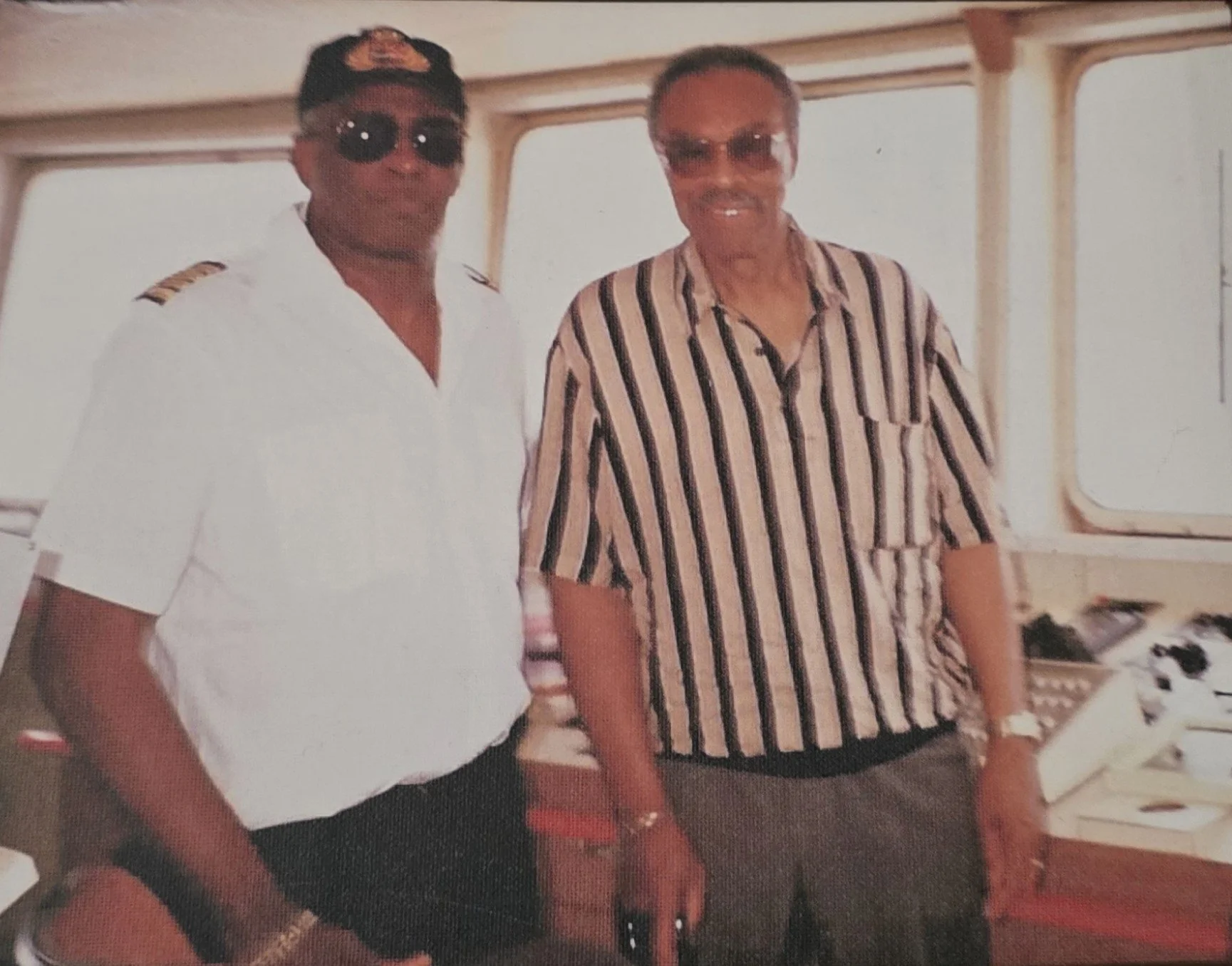
Late Ontario Lieutenant Governor Lincoln Alexander and Winfield Longe on a ship deck in Hamilton (Photo contributed)
The achievement capped a remarkable journey that began thousands of kilometres away in Guyana.
Born and raised in the only English-speaking country in South America, Longe grew up around ships and shipyards. His father worked in shipbuilding and ship repair, exposing him to the maritime industry at an early age. He occasionally travelled by boat to the shipyard where his father worked and watched vessels being repaired in dry dock.
“I never thought then that I would end up spending my life at sea,” Longe said.
As a teenager, however, his ambitions lay elsewhere. He wanted to become a teacher.
The death of his mother when he was 10, followed by changes within the family, altered the course of his life. At 17, after a disagreement with his stepmother, he was forced to leave home.
Longe’s future took an unexpected turn when an aunt helped him secure a job in 1959 with the Transport and Harbours Department as a deck boy on the Canje Pheasant passenger and cargo vessel that operated along the Essequibo River.
“That changed everything,” he said. “Had that not happened, I probably would have gone into another profession.”
Working aboard ships quickly captured Longe’s imagination. While learning the trade firsthand, he began studying maritime navigation and licensing requirements.
“I looked around and saw the officers and figured I could do the job,” he said.
By the time Longe left Guyana for Canada in October 1964, he had already earned qualifications that would help launch a remarkable career in his adopted country.
He arrived in Montreal to join his sister, Marcelle Longe, who had immigrated to Canada a year earlier through the West Indian Domestic Scheme, a program that enabled Caribbean women to come to Canada for domestic work.
Building a new life was not easy.
While attending the Marine and Electronics Navigational School in Montreal, Longe worked a series of jobs to support himself, including washing cars at a Volkswagen dealership and later working as a hospital orderly.
“It was tough,” he recounted. “Sometimes I would work nights, go to school during the day and barely get any sleep.”
The sacrifice paid off.
Canadian authorities recognized his credentials, allowing him to continue pursuing advanced maritime certifications.
Longe’s first Canadian shipboard position was as an able-bodied seaman on a Canadian Steamship Lines passenger vessel operating between Montreal and Quebec City. After three months, he spent six months with the former Hall Corporation before joining Upper Lakes Shipping, where a career that would make Canadian maritime history began to take shape.
Rather than immediately pursuing officer positions, he chose to learn every aspect of the industry.
“As a Black man coming into a new environment, I wanted to see how everything worked,” Longe said.
What he found was an industry where Black officers were almost non-existent.
“There might be one Black sailor on five or six ships,” said Longe who is the older brother of retired Justice of the Peace Cledwyn Longe. “Sometimes you wouldn’t see one at all.”
The racism he encountered was sometimes subtle and other times direct. After being referred for officer positions through the union, he said he was turned down more than once.
Eventually, Longe asked union representatives to be upfront with employers.
“I said, ‘Tell them I am Black before they send me. Don’t waste my time.’”
Rather than allowing discrimination to derail his ambitions, Longe focused on becoming exceptionally good at his job. He studied relentlessly, earned additional certifications and built a reputation as a skilled navigator and practical seaman.
Captains soon recognized his ability to solve problems under pressure.
On one occasion, he repaired a broken wire that threatened to delay a vessel moving through the St. Lawrence Seaway. On another, his radar plotting expertise helped prevent a collision in dense fog.
“He said from then on, ‘Do whatever you want,’” Longe recalled of one captain who became convinced of his abilities.
The promotions followed steadily.
After joining Upper Lakes Shipping as a fourth officer, Longe advanced through the ranks to become chief mate. In 1975, he was promoted to captain, becoming what is widely believed to have been a historic first for a Black mariner in Canada.
The promotion represented more than a personal milestone. It marked a breakthrough in an industry where opportunities for Black officers were extremely limited.
About 18 months after becoming a shipmaster, Longe was assigned to command what was then Canada's largest dry bulk carrier. Measuring 800 feet long and 116 feet wide, the vessel transported oil and dry cargo between Sorel-Tracy and Havre-Saint-Pierre, Quebec.
“This was an extremely huge ship with no bow thruster, which plays a vital part in manoeuvring and navigating vessels,” he said. “I was able to moor the ship for the three months I spent on it without the bow thruster, which provides assistance in berthing a ship without taking up too much time.”
Not every voyage was smooth.
When the vessel was caught in a fierce storm with winds approaching 90 miles per hour and waves reaching nearly 30 feet, Longe and his crew relied on their training and experience to bring it safely through.
“That was one of the few bad experiences I had at sea,” he said. “The vessel was very difficult to manoeuvre and we almost lost some hatches.”
After moving to Toronto in 1970 and completing radar observer courses at George Brown Polytechnic, Longe continued to build an impressive résumé. Among the ships he captained was the Canadian Pioneer, which had a left-handed propeller.
“Most ships have right-handed propellers that turn clockwise,” he explained. “The propeller on the Canadian Pioneer rotated anti-clockwise, which most captains don’t like because you were taken out of your comfort zone.”
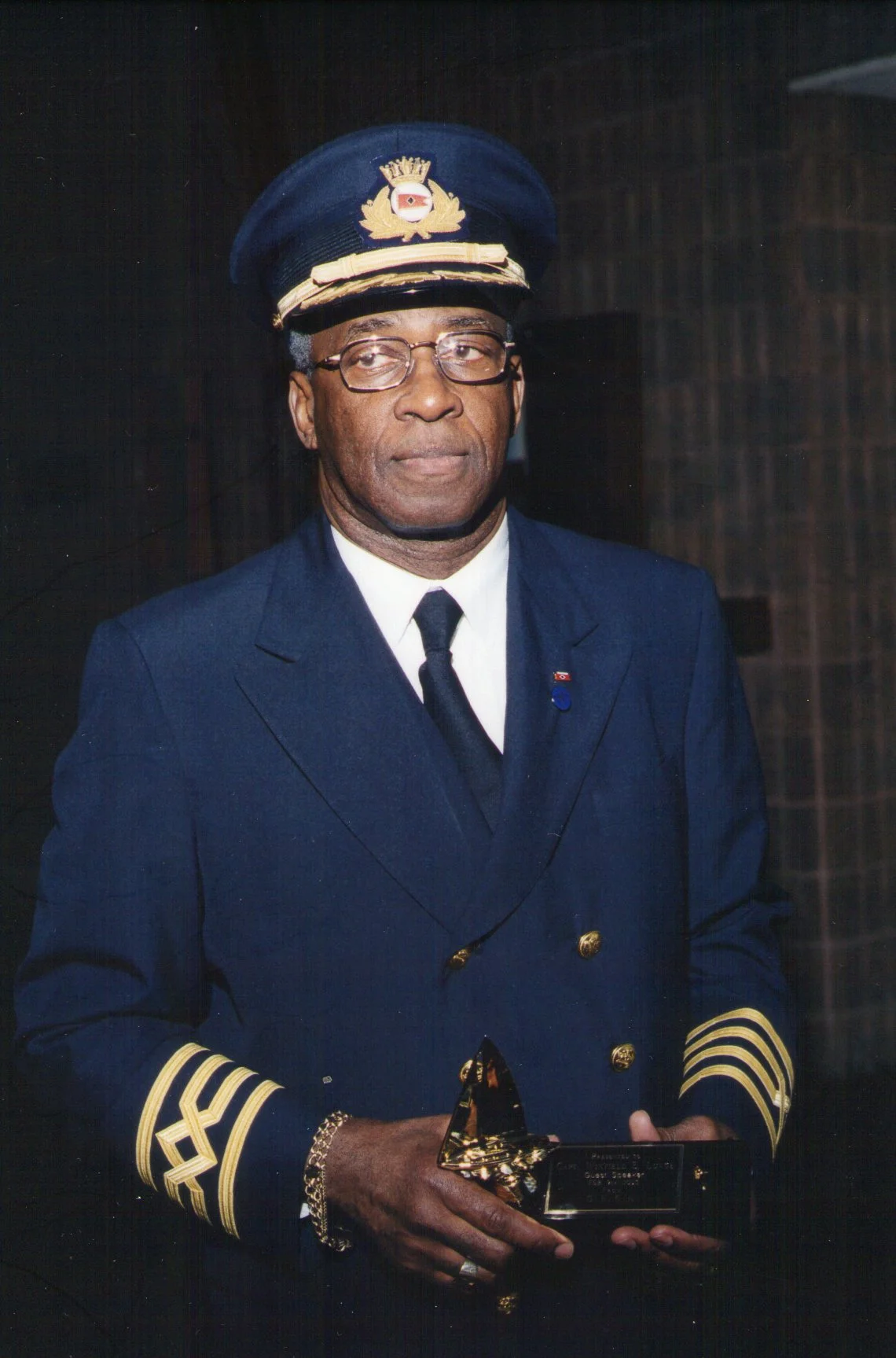
His expertise and leadership continued to earn recognition. In 1981, six years after being promoted to captain, he became fleet captain. In 1998, he was appointed commodore, one of the most senior operational positions in the company.
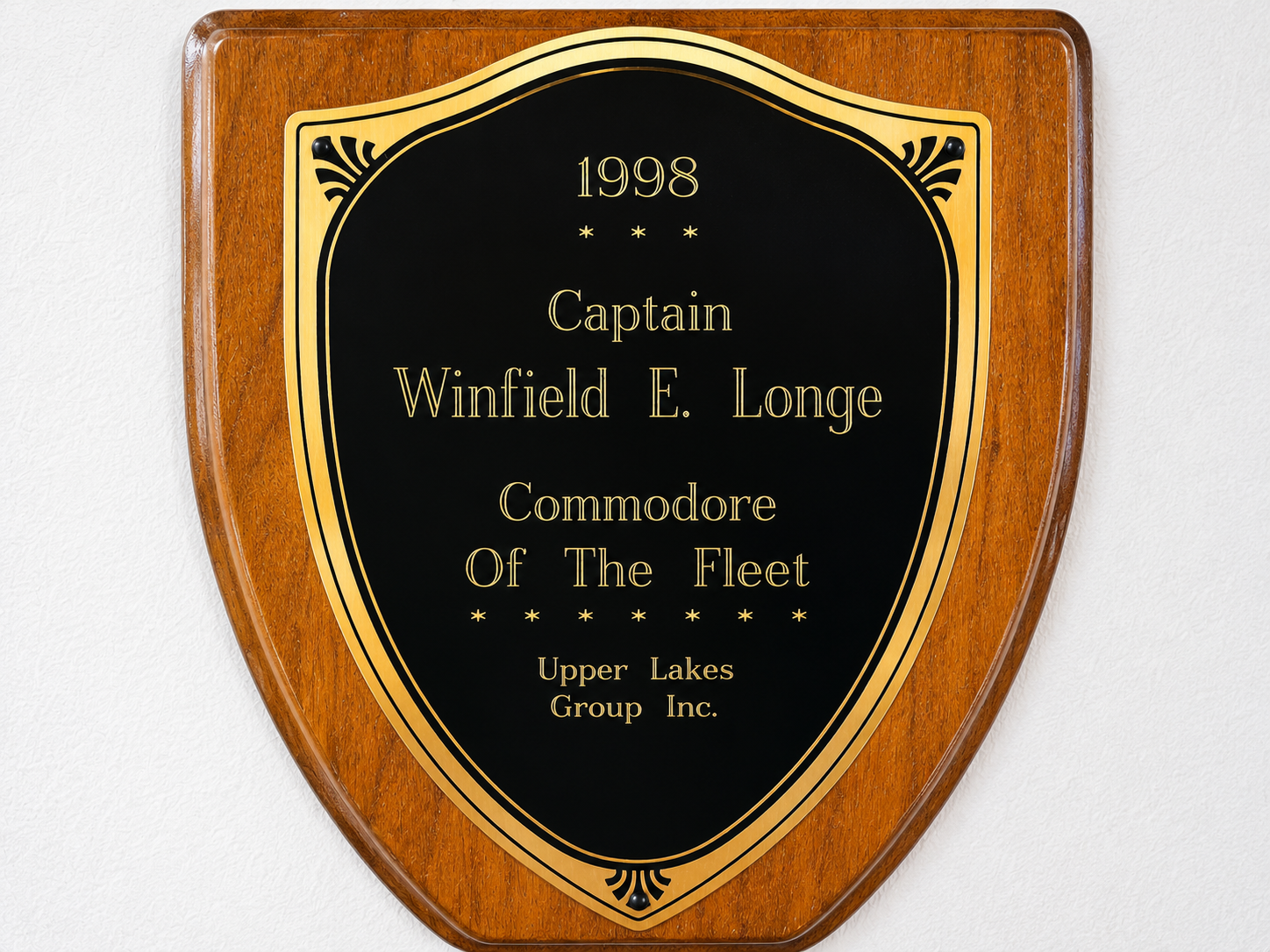
Winfield Longe was promoted to commodore in 1998 (Photo contributed)
Longe’s reputation also extended beyond Canada.
In 1985, he was selected from among 35 candidates to co-ordinate the mooring of ships to concrete drilling-ring platforms in the North Sea. He later taught a shipmaster business course at Georgian College and served as a consultant on the preparation of the Atmospheric Environment Program Alternative Service Delivery Study.
Over more than four decades, Longe commanded vessels throughout the Great Lakes, the St. Lawrence Seaway, Canada's East Coast, the Gulf of Mexico and parts of the Caribbean. His expertise also led to specialized assignments involving self-unloading ships in Scandinavia.
Known for his practical approach, he developed operational recommendations that improved efficiency and increased cargo capacity for shipping companies.
Despite Longe’s professional accomplishments, some of his most enduring memories are deeply personal.
Among them is the pride he saw in his father's eyes aboard that ship.
Another is the pain of losing him after what appeared to be a heart attack.
Shortly before he died in 1978, his father told family members after returning from the hospital that he would not live to see the next morning.
A few hours later, he passed away.
For Longe, the loss was devastating.
In 1992, he experienced another profound tragedy when the eldest of his three daughters died from cancer at the age of 22.
He acknowledged that losing a child is a pain that never fully leaves a parent.
Another loss has continued to weigh heavily on Longe over the years.
His older brother, Clive Longe, died in 1986 under circumstances that he says have never sat comfortably with him.
After leaving Guyana in 1960, Clive Longe built a distinguished career in athletics and military service. He served in the Royal Air Force, won a silver medal for Wales in the decathlon at the 1966 Commonwealth Games in Jamaica, captured eight United Kingdom decathlon titles and later became Bermuda’s national track and field coach.
Contemporary news reports stated that he died on Christmas Eve 1986, shortly after the death of his girlfriend, a Bermuda government archivist. He was 47.
However, Longe said he has struggled for decades to accept the official account of his brother’s death.
He said that months before his brother died, he warned him that access to sensitive information through his partner could place him in a vulnerable position. While he acknowledges that his concerns were based on his own suspicions and not on evidence, he said the circumstances surrounding his brother’s death have continued to raise questions in his mind.
Nearly four decades later, those unanswered questions remain a source of sadness and reflection for the retired mariner, who still believes there may be more to the story than was ever publicly known.
Longe retired on Jan. 31, 2008, after more than four decades in the maritime industry.
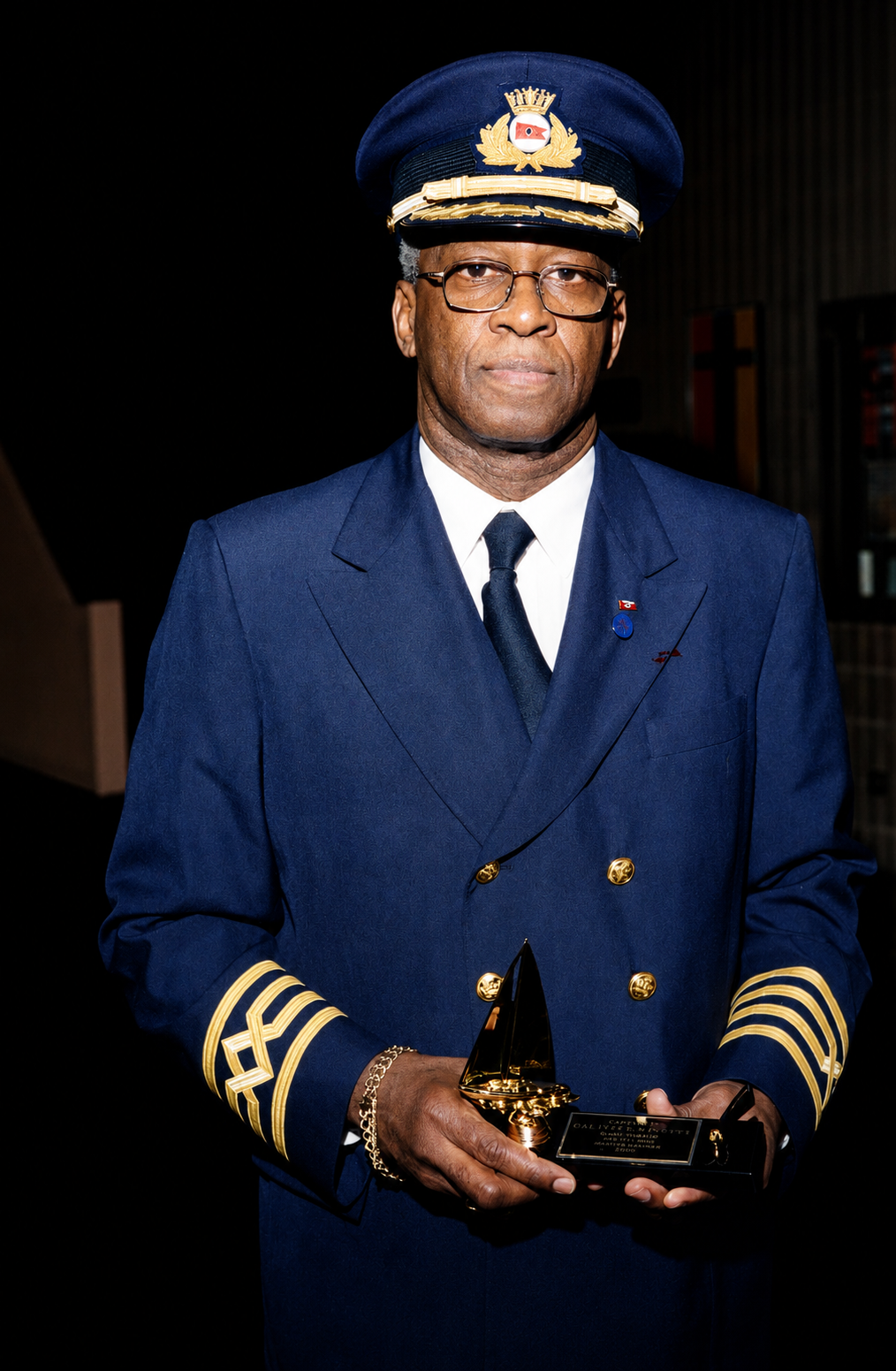
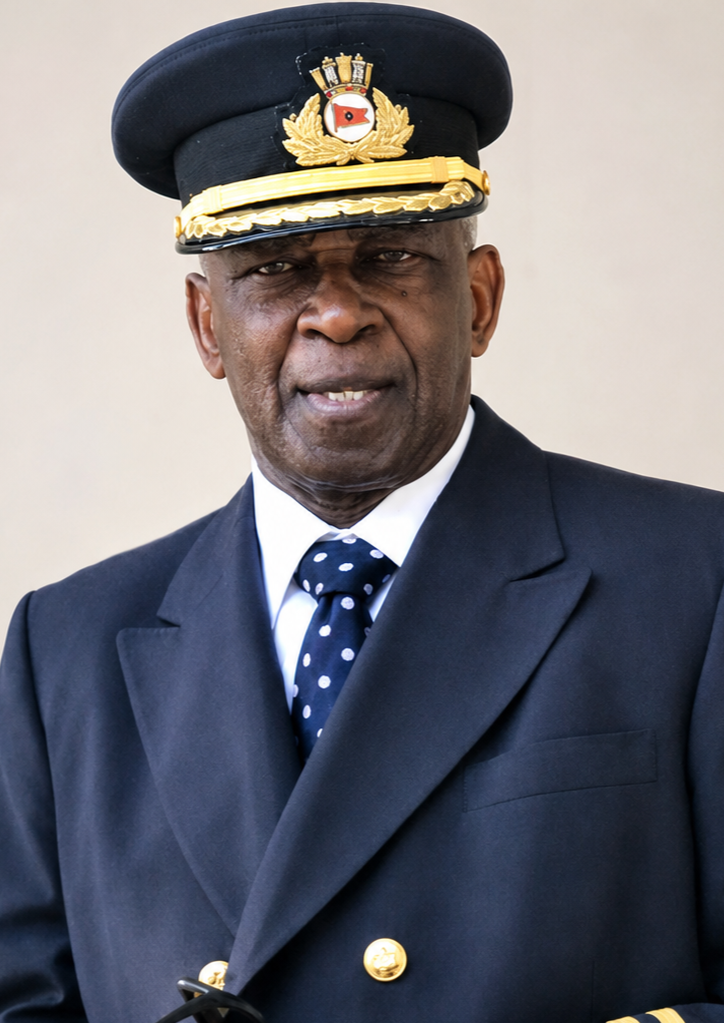
Retired sea captain Winfield Longe (Photo by Ron Fanfair)
Looking back, he sees a life defined by resilience, determination and opportunity.
He is also proud of the accomplishments of his children. Dr. Belinda Longe is a Protective Services Consultant with the Ontario Principals' Council while Tanya Sawh is a senior product manager in Ottawa.
From a teenage deck boy on a Guyanese river vessel to what is widely believed to be Canada's first Black sea captain, Longe charted a course few could have imagined.
The distinction is significant, but perhaps not as impactful as the example he leaves behind.
Longe’s story is one of resilience, perseverance and determination, proof that barriers can be broken, opportunities can be created and adversity can be overcome.
For the young boy who once wandered through a Guyanese shipyard watching vessels being repaired in dry dock, that may be the most enduring achievement of all.