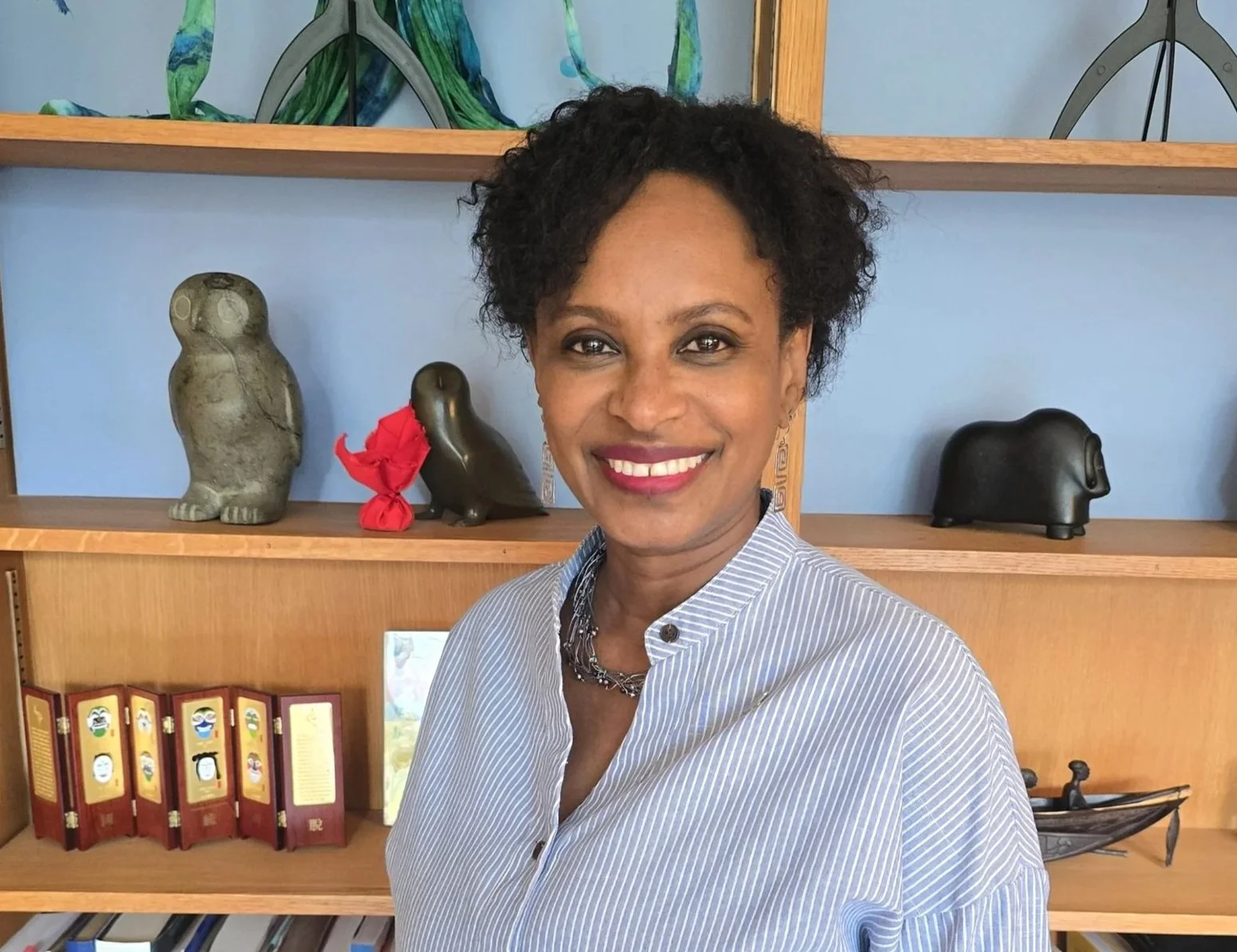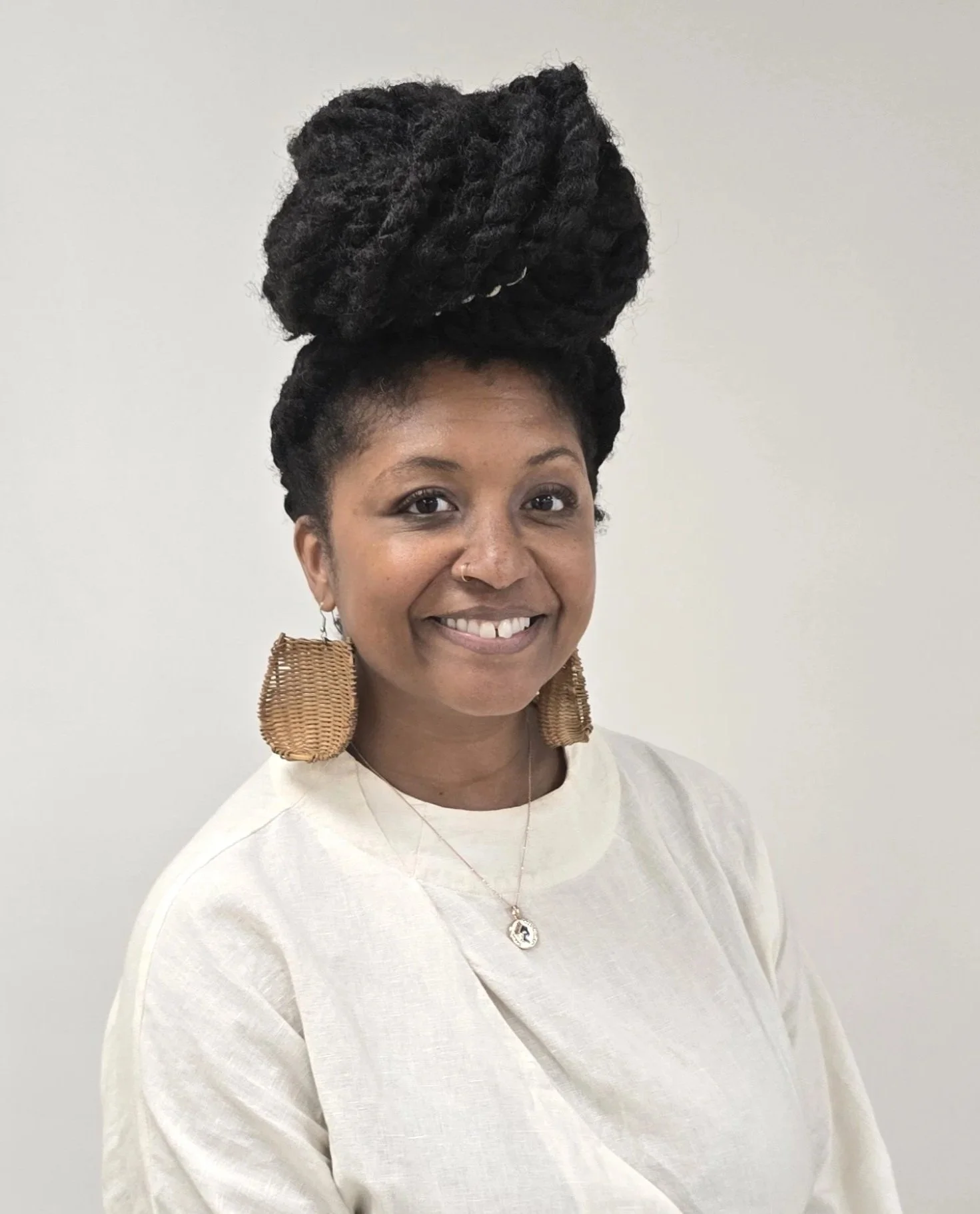
Beyond the beaches, Kristin White curates Bermuda's untold stories
June 4, 2026
For Kristin White, Bermuda is far more than pink-sand beaches and postcard-perfect scenery.
As a travel and tourism curator, entrepreneur, storyteller and cultural advocate, she is working to ensure visitors leave the island with a deeper understanding of its people, history and culture.
Through curated experiences, research projects and community partnerships, White is helping to tell stories that often remain absent from traditional tourism narratives.
Her commitment to cultural storytelling was shaped in part by a year spent studying at McGill University in Montreal, the only time she has lived outside Bermuda.
During a break at the recent Caribbean Tourism Organization Sustainable Tourism Conference in Belize where she sat on two panels, White reflected on how that experience broadened her understanding of identity and continues to influence the way she presents Bermuda to the world.
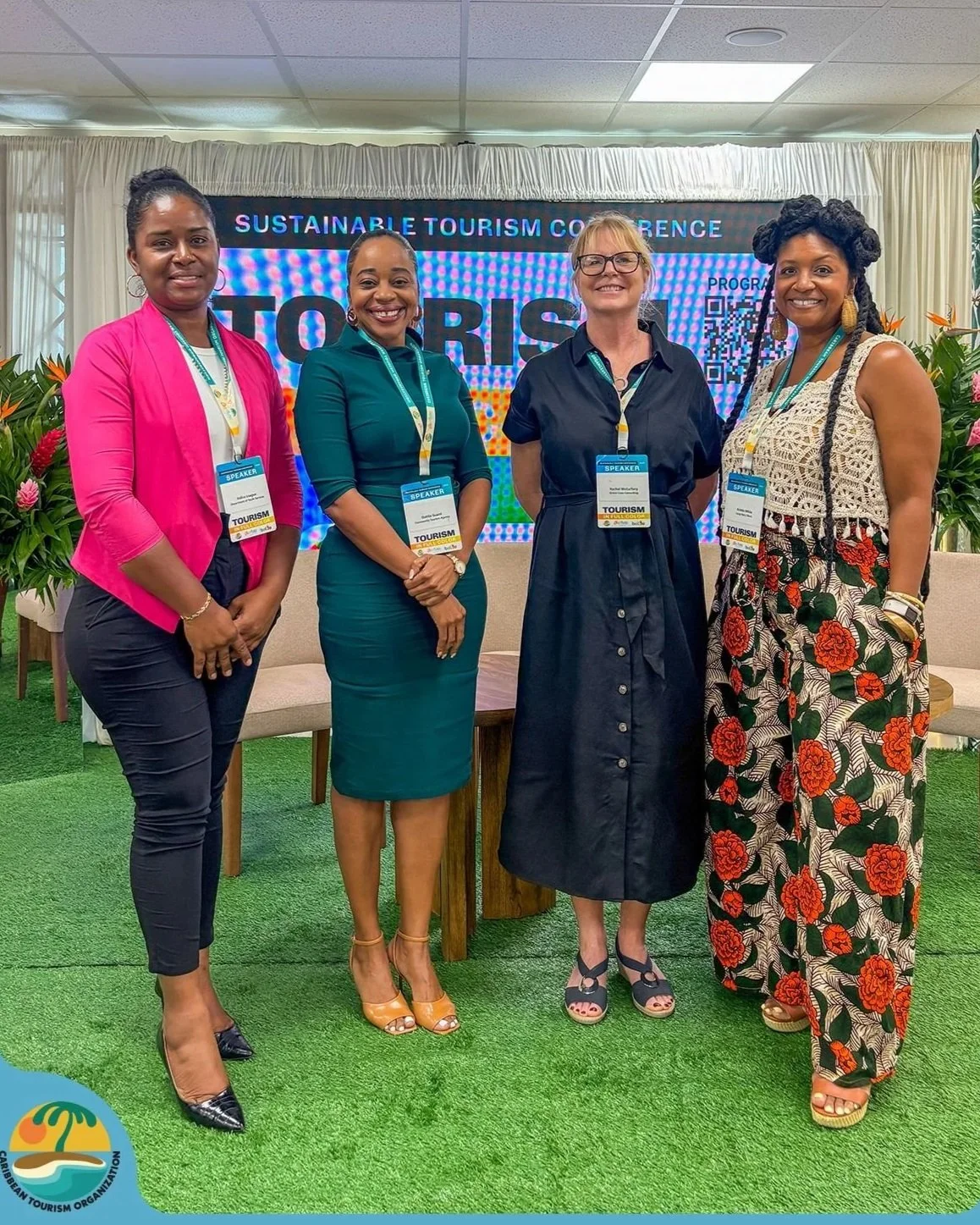
Kristin White (r), was part of a panel, moderated by Belize Director of Youth Services Indira Loague (l) that also included Saint Lucia Community Tourism Agency CEO Dahlia Guard and Green Case Consulting CEO Rachel McCaffery (Photo contributed)
Leaving her island was never about escape.
Instead, it was an opportunity to gain perspective on how the Caribbean is viewed internationally and how people in the region see themselves.
“Not only was it my first time living outside of Bermuda, but my first time living somewhere so cold and so different from what I was used to in terms of culture,” White said.
The transition challenged assumptions she had never previously questioned.
“I never really had a question or thought about Black identity, Caribbean identity in that way before being there,” White said.
Her perspective expanded further through involvement with McGill’s Black Students’ Association, where she encountered a level of political and social engagement that was unfamiliar to her.
“The Black Students’ Association was very political, very socially engaged and I was not at that time,” said White. “That was a culture shock for me as well.”
Exposure to activism and social justice initiatives broadened her worldview and helped shape aspects of her identity that continue to inform her work today.
White attended Bermuda College before transferring to McGill as a teen mom.
Since Bermuda does not have a university, many students pursue post-secondary studies abroad. Drawn by Montreal’s cosmopolitan atmosphere, she selected McGill because of its strong economics program and the opportunity to experience life in a major city.
White credits the then-president of Bermuda College with encouraging her to apply to academically rigorous institutions.
“He was really helping me with these applications and using his influence to get me in a door that I probably would not have been otherwise,” she said.
While her time in Canada strengthened her connection to Bermuda, it also ignited a lifelong passion for travel.
“That little bit of time overseas whetted my appetite for wanting to explore and travel and live internationally again at some point,” White said.
Today, she and her husband are avid travellers. She has led an outdoor adventure program for young adults that took them on international expeditions to several countries, including Costa Rica, Nicaragua, Malaysia and Namibia.
Those experiences have influenced how she approaches tourism and cultural storytelling.
White describes herself as a travel and tourism curator, a role that balances authenticity with the realities of a commercial tourism industry.
“For me, curation is about really thinking about the authentic experiences of Bermuda, the culture, the heritage, the history and making sure that at every touch point with the group that I am curating experiences for, it is all embedded into that experience,” she said.
White acknowledges the challenge of presenting history and culture in an industry often associated with leisure and entertainment.
“We are in a world where sometimes people want to feel like it is light and airy and history isn’t that,” she said. “The Caribbean has been a place of extraction and exploitation, colonialism and racism.”
The challenge, White added, is finding ways to educate visitors without overwhelming them.
“I want my stories represented as full, authentic stories, but I also have to be mindful of the fact that people are coming to me for entertainment as well,” she pointed out.
White believes many modern travellers are seeking deeper cultural connections and that destinations should embrace those opportunities.
“Gen Z and millennial travellers want to travel for authentic cultural experiences,” she said. “They want to travel to understand a region, so we have to lean into that and not shy away from it.”
White’s approach is simple.
“If you had a friend visiting you, what is the experience that you would want them to have?” she said.
Rather than offering generic tourist packages, White focuses on experiences that reflect everyday Bermudian life.
“You are going to have a home-cooked meal, you are going to go on a boat, you are going to visit favourite restaurants and places where people grow food,” she said. “Those are the same things we should be creating for visitors.”
At the centre of her work is a determination to highlight chapters of Bermuda’s history that remain largely unknown outside the island.
White points to figures such as abolitionist Mary Prince who was the first Black woman to publish an autobiography of her experience as a slave, Sarah ‘Sally’ Bassett who was an enslaved African woman and Black nationalist Pauulu Kamarakafego who is best known for leading the fight for universal adult suffrage, as stories deserving greater recognition.
“People know Bermuda as this pink-sand paradise, but they don’t know these stories,” she said.
White notes that Bermuda hosted the first International Black Power Conference in 1969 and has a long history of resistance movements and social activism.
“I think no one thinks about Bermuda in this way at all,” she said.
White’s efforts extend beyond tourism experiences. Through a project she co-created with Yesha Townsend, Cartographies of Loss, they examine gaps in Bermuda’s historical record and explore stories that have been forgotten, overlooked or erased.
“These are gaps that exist for Bermudians as well,” she said. “It’s something that has been erased from our own cultural memory.”
As an entrepreneur, White has built her business through storytelling, creativity and community connections rather than large amounts of startup capital.
“One of the things I love about being a tour guide is that it doesn’t take a lot of startup capital,” she said.
What began with walking tours, research and social media has grown to include electric bikes, retail operations and large-scale curated experiences.
She believes tourism also offers opportunities for artists, photographers, designers and other creatives.
“You are a photographer, you can take people on a photo walk,” she said. “You’re an artist, you can show people public art. If you are interested in fashion, you can introduce visitors to local designers.”
Bermuda’s close-knit nature has helped shape that entrepreneurial philosophy.
“It is a small island,” White said. “It allows me to know everyone who is in the space doing really cool things.”
That network allows her to connect visitors with poets, chefs, mixologists, artists and storytellers while ensuring those contributors are compensated for their work.
“I am going to pay them,” she said. “I am going to value them. I’m going to connect them to more opportunities.”
White’s approach is rooted in collaboration rather than competition.
“Rising tide, lifting all of our boats, is a big part of how I think about curating experiences,” she said.
White also believes sustainability extends beyond environmental protection.
“Sustainability has to be thinking about how we are sustaining our natural resources, how we are sustaining our people, and how we are sustaining our heritage and culture,” she said.
For her, that includes creating jobs, preserving cultural traditions, ensuring access to housing and health care, and making sure tourism benefits local communities.
When discussing tourism development, White stresses the importance of planning.
“None of what we’re talking about ever happens magically,” she said. “It has to be done with intention and structure.”
White believes cultural heritage should be woven into every aspect of tourism development, from hotel design and public art to employee training and visitor experiences.
“It has to be someone’s job,” she said. “We have to be paying someone to do it. Otherwise, nothing will change.”
White also credits the Bermuda Tourism Authority with helping local entrepreneurs gain international exposure.
“The more that you have local people on a global stage, the better for your destination,” she said.
White praised efforts to connect international media with local storytellers and entrepreneurs, helping visitors discover Bermuda through the voices of the people who know it best.
Ultimately, she hopes visitors leave Bermuda with a richer understanding of the island and its place in the history of the Black Atlantic.
“I would want them to take away that Bermuda has been at the forefront of liberation movements over the centuries,” White said. “Hopefully, that is what they leave with.”
Visitors wishing to explore Bermuda can contact White through her tour company, Long Story Short, by email at hello@longstoryshort.life