Mohamed Lachemi steers Toronto Metropolitan University through transformational change with vision and purpose
July 27, 2025
During his first week on the job in April 2016 as Toronto Metropolitan University’s (TMU) ninth President and Vice-Chancellor, Dr. Mohamed Lachemi received a call from former Ontario Premier and Education Minister Bill Davis, requesting a meeting to discuss an impactful initiative in Brampton.
Trying to get a clearer understanding of Davis’ thoughts, he quickly learnt that central to his vision for the province’s education system was the establishment of a university in his hometown.
“When I told him that our Board had clearly stated over the years that our location should be downtown, he said, ‘President, I can help you with your Board, just come’,” recounted Lachemi.
At the time, Davis had already touched base with the University of Toronto, his alma mater, and was heading the municipal blue-ribbon panel to bring a university to Brampton.
“He told me about his involvement with the newly formed group and asked if I could come and talk to them,” Lachemi recalled. “I told him I would be happy to do that, but I reminded him that Sheridan College has a campus in Brampton. His response was, ‘President, I know. That campus is named after me, but I want a university’.”
Davis, who died in 2021 at the age of 92, championed the creation of the province’s college system and was instrumental in the establishment of Sheridan College and its Brampton campus, the largest of the three that bears his surname.
Nine years after those conversations, Ontario’s third-largest city, behind Toronto and Ottawa, has a university presence.
The provincial government provided funding and support for TMU’s School of Medicine located at the former Bramalea Civic Centre.
It is the second medical school to be launched in the Greater Toronto Area after U of T’s establishment in 1843.
“You don’t open medical schools regularly because they are costly,” said Lachemi who is TMU’s Senate Chair. “At the same time, there is a huge need for medical doctors specializing in family care, particularly after COVID. One of the reasons we wanted this medical school to be in Brampton is that the city and Peel region have been underserved for decades. This is an opportunity to fill a gap and train future doctors based on the needs of today and not the past.”
From the start, TMU said three quarters of its incoming medical students would be selected from a stream of applicants that are Black, Indigenous or other equity groups and the other 25 percent from the general application stream.
In 2023, the university was ranked #1 on Forbes’ list of Canada’s Best Employers for Diversity.
Representation matters in all professions, but especially in healthcare where it directly impacts patient outcomes, trust and equity.
“The expectation is that this school will be a magnet for quality students from all communities because we need representation,” said Lachemi who has co-authored over 240 publications and 30 major research reports. “I can assure you we are going to attract the best. The school will train doctors to be culturally competent. During two years of community consultation, people asked to have students trained who would reflect the diversity of their community. We are not shy about having those doctors who will be reflective of the spaces they are in.”
The residency program started at the beginning of July and the MD program begins in September.
With technology becoming increasingly central to medical education and practice, Lachemi said the new school will provide students with digital tools for learning, research and patient care.
“We need to ensure that the new generation of physicians is armed with the tools to use technology,” he pointed out. “If you put artificial intelligence and other advances in technology in the curriculum, students will use it and that will benefit our public health system which is not sustainable.”
More than just a place for learning basic clinical sciences, Lachemi said the medical school will feature integrated health clinics that offer a comprehensive and coordinated approach to healthcare by combining conventional medical treatments with complementary therapies to enhance patients’ well-being.
“Starting this summer, there will be two in Brampton with the idea of expanding this network to other municipalities,” the former Provost & Vice-President Academic noted. “One of the clinics will be in the same building as the medical school. With a comprehensive system in place like the one we are rolling out, I guarantee that it will be the first place that community citizens will go to and I bet the family doctors there will become those people family doctors. The other thing is that students will receive experiential learning in these clinics.”
Rarely do universities open two new schools in a short period.
Just imagine the complex decision-making and adaptive strategies involved in starting one during the COVID-19 pandemic.
In September 2020, TMU’s Lincoln Alexander School of Law was launched.
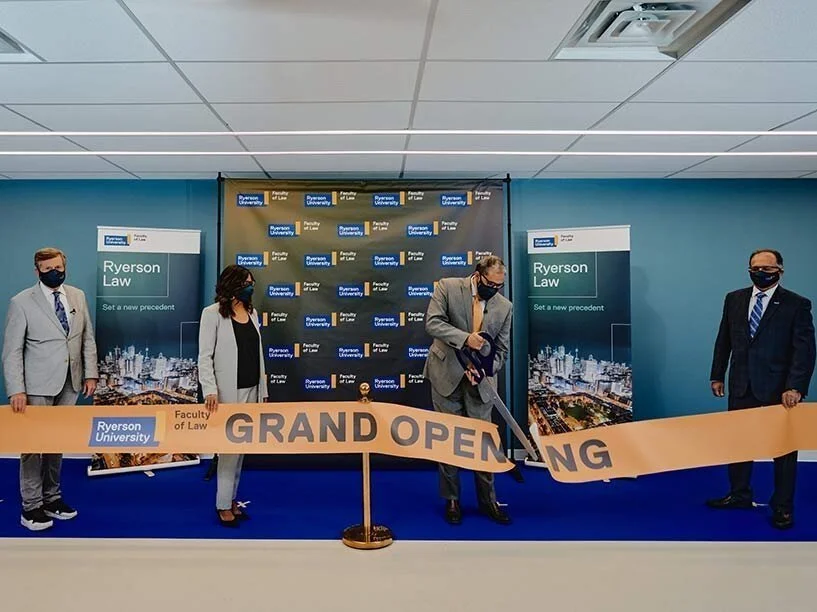
Then Mayor John Tory (left) joined Dean Donna Young, President Mohamed Lachemi and Interim Provost Saeed Zolfaghari to cut the ribbon to mark the official launch of the Lincoln Alexander School of Law on September 30, 2020 (Photo contributed)
It provides a rigorous academic program and produces cutting-edge research that’s committed to helping communities gain access to justice.
In addition, it is dedicated to training the next generation of legal professionals to engage and shape technology and is designed to help make the legal profession reflect and respond to the rich diversity of Canadian society.
“The journey to get this law school off the ground was not easy because everyone was saying there are two excellent law schools in the city (U of T and Osgoode Hall at York University) and there was no need for another one,” said Lachemi who was appointed to the Order of Ontario in 2022. “The argument we put forward was that there was a need for a different type of law school. We need future lawyers who are tech-savvy and an increased focus on access to justice. Wealthy people can get the best lawyers on Bay St. What about those people who are not wealthy? We also need more diversity in the legal system. I am so proud of Dean Donna Young and the leadership team.”
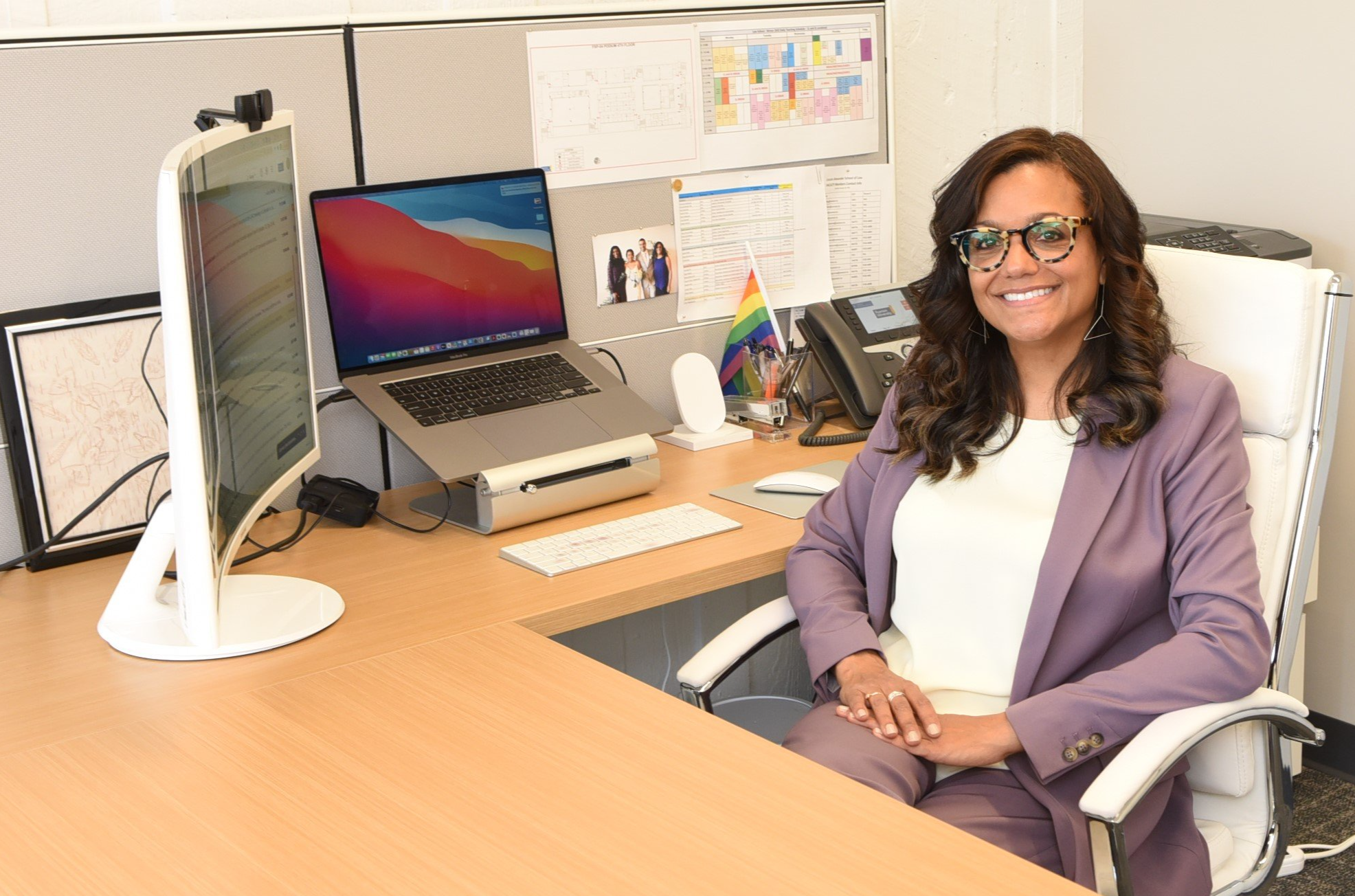
Donna Young is the inaugural Dean of the Lincoln Alexander School of Law (Photo by Ron Fanfair)
In 2023, TMU acquired two properties from the city to meet campus expansion needs.
The law school will be in one of the buildings that is being renovated at 277 Victoria St. at Dundas St. E.
“It will be a gateway for our campus,” said Lachemi who was a Visiting Professor at Alhosn University in Abu Dhabi and Artois University in France and an Adjunct Professor at Sherbrooke University and the University of Toronto. “That is the best possible location for the school.”
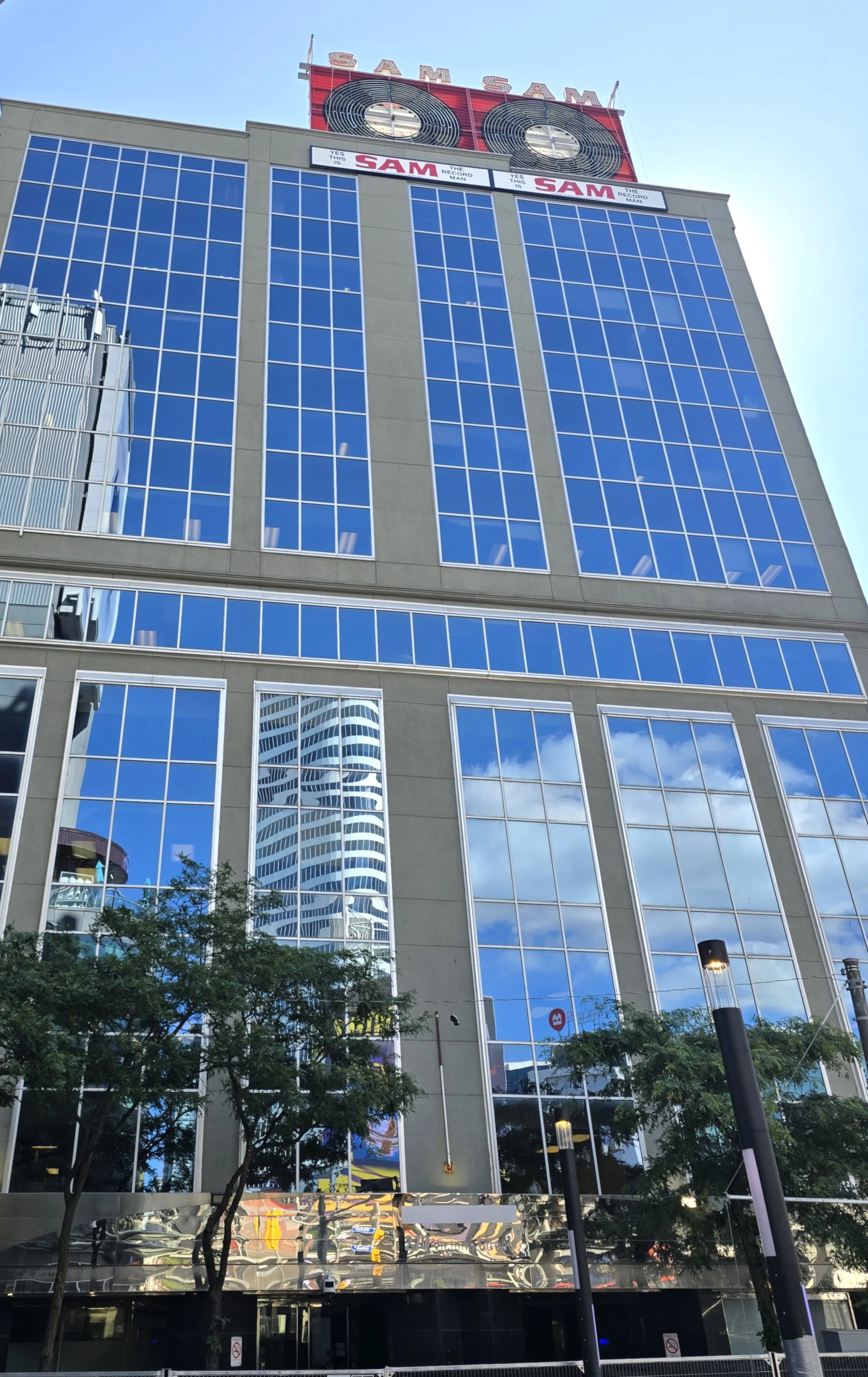
The Lincoln Alexander School of Law will be housed in this building at 277 Victoria St. (Photo by Ron Fanfair)
Under Lachemi’s transformational leadership, students were provided with two pathways to further their education in Toronto or Egypt and ground was broken on a world-first digitally enabled building that will serve as a living lab for smart city, office, home technology, sustainability and AI integration. Additionally, the DMZ incubator expanded globally, offering accelerator programs, capital and support, especially for Black and women start-ups.
He also helped launch DMZ Ventures pre-seed/seed funds and supported the creation of the Future Skills Centre consortium to upskill Canada’s workforce.
Funded by the federal government, the consortium – supported by Blueprint and the Conference Board of Canada – is a research and collaboration hub, partnering with various stakeholders to address labour market challenges and promote lifelong learning opportunities.
Though Lachemi’s initial discussions with Davis in 2016 did not yield a university immediately, they led to the creation of the Brampton-based Rogers Cybersecure Catalyst which is a TMU national centre for training, innovation and collaboration in cybersecurity.
Through its innovative training and certification programs, a unique commercial accelerator for cybersecurity start-ups and scale-ups, the first-of-its-kind cyber range, extensive public education initiatives and a prominent policy development platform, the Catalyst helps enhance Canada’s global competitiveness in cybersecurity.
Last year, it partnered with BlackBerry to bolster cybersecurity skills in Malaysia.
“Starting as a national initiative, it is now international,” said Lachemi who oversaw the creation of the Faculty of Science while serving as Dean of the Faculty of Engineering & Architectural Science. “I always gave kudos to Brampton because they saw the benefit of doing this.”
University life can be stressful, and the pandemic added an extra layer of challenges for many students.
Last May, TMU broke ground to begin construction on its innovative new Student Wellbeing Centre that will consolidate the institution’s well-being services under one roof, improving access for the university community.
“One of the biggest challenges facing society is mental illness and addiction, especially among young people,” the former Canadian Journal of Civil Engineering associate editor said. “The pandemic has accelerated this. As a university with 48,000 students, we are not isolated from what is happening. We are a reflection of society. We have a clinic on campus and counselling for students along with an office dealing with sexual violence and another for students struggling with disabilities. However, these services are in different buildings.”
Tired of trying to figure out which part of the campus offices are located for various services, students suggested the creation of a hub.
“My mission is to trust students because they are much closer to the issues than me,” Lachemi, a Council of Ontario Universities member, noted. “They came forward, saying they wanted to partner with us to enhance this service.”
It is very uncommon for students to vote in favour of increasing their fees. When they do, it is usually under specific circumstances where the benefits are perceived to outweigh the costs.
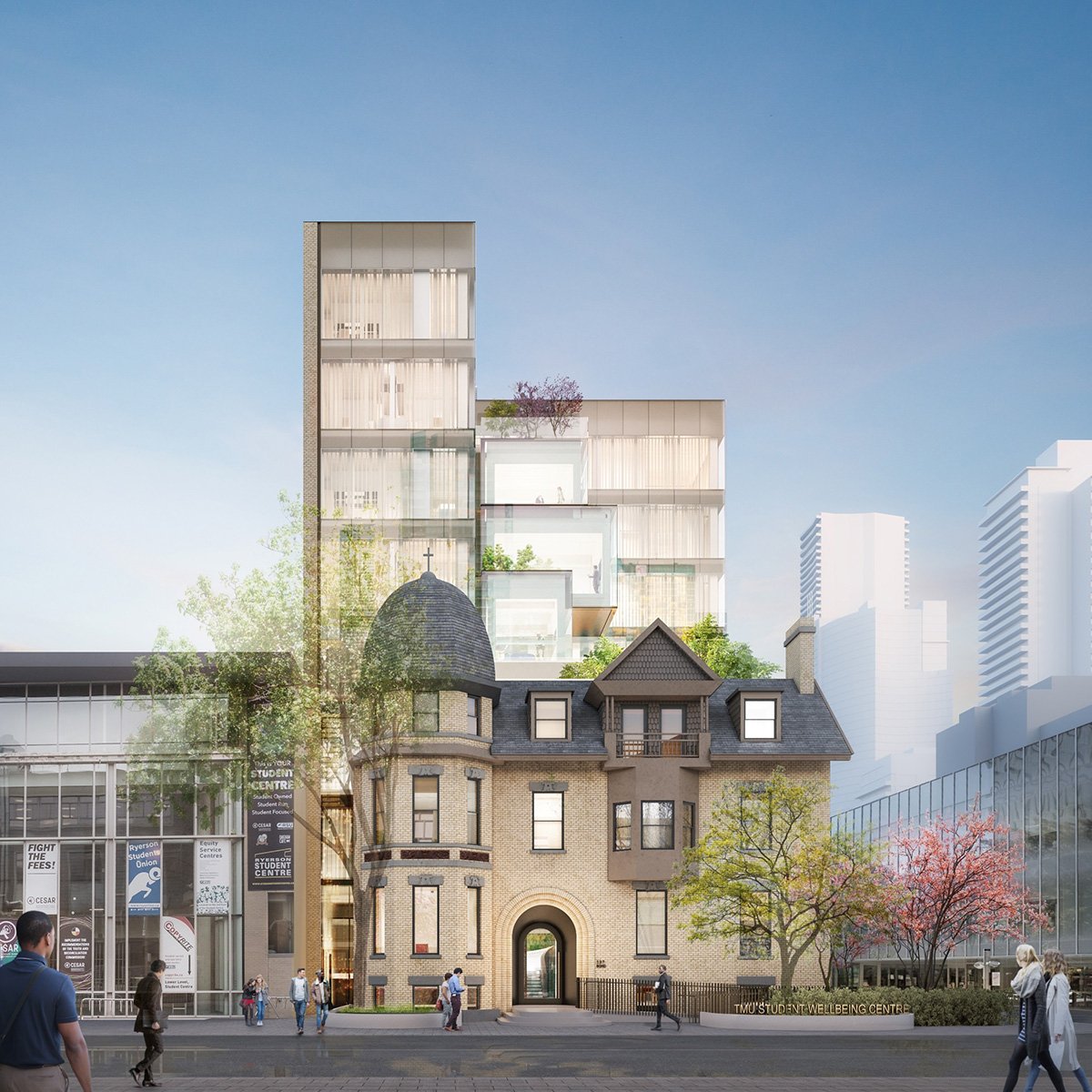
The Student Well-being Centre will be located at 137 Bond St. (Photo contributed)
In November 2022, TMU students voted in a referendum to increase the student wellbeing levy fee by $34.90 a term to fund the eight-storey hybrid mass timber centre.
Without government funding for the initiative, the university started a fundraising campaign to transform O’Keefe House at the corner of Gould & Bond Streets into the new centre that is expected to open by the end of 2026.
Chancellor Donette Chin-Loy Chang started the campaign rolling by donating $1 million last January. Other donors so far include philanthropists Richard Rooney, Mark Bonham and husband and wife Edmund and Fran Clark who have each donated $1million.
Sometimes, difficult discussions are necessary for growth, clarity and stronger relationships.
While some institutions have renamed their universities because of historical ties to the slave trade, TMU made the change because of Egerton Ryerson’s ties to the Indian Residential Schools system, of which he was one of the architects.
His statue was toppled in June 2021 during a rally organized in response to the preliminary discovery of the remains of as many as 215 Indigenous children buried on the site of the former residential school in Kamloops, British Columbia.
Lachemi, who held a Canada Research Chair in Sustainable Construction, said there were conversations around the university’s name from the time he joined TMU as a Civil Engineering professor on August 1, 1998.
“There is no doubt that Ryerson championed modern education in Canada,” the award-winning teacher and mentor said. “But the foundation of residential schools was set in his time. I am not here to judge what he did. It is about our university. The conversations around his statue on our campus were controversial for many years. People were saying we can’t walk along Gould St. because of the statue of someone who initiated the concept of residential schools. The name was a source of frustration because it created divisions. Alumni from the 1950s and 1960s told me that no one was talking about that when they were at this institution. Others said to keep the name because it is in their DNA. People approached me on campus and called me, saying we need to change the name. I told them that was not going to be the solution. I proposed a difficult conversation.”
Lachemi established a task force to conduct a thorough review of Ryerson’s historical role and recommend actions to address his legacy.
In September 2021, the Board of Governors approved a motion to accept the Standing Strong Task Force’s final report and its 22 recommendations, including a name change to the downtown Toronto university.
After feedback from over 30,000 people and 2,600 suggestions, the name was changed in April 2022.
Chin-Loy Chang was a member of the 17-member advisory committee that guided the process of identifying a new name that reflects the university’s strengths, values and inspirations.
“I lived with that university for a long time and that university lived with me for a long time,” she said. “In addition to being an alumna, my late husband (Raymond Chang) was a Chancellor. The name Ryerson has been integral in my life, but it was time for a change.”
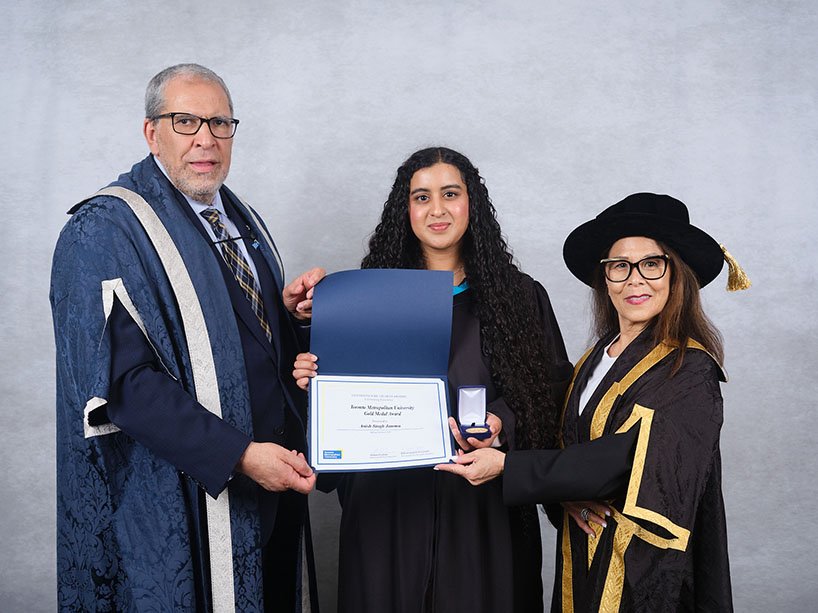
Dr. Mohamed Lachemi & Donette Chin-Loy Chang present the Gold Medal to Anish Jammu at last month’s convocation ceremony. The university’s top honour recognizes students who excel in the classroom and make significant contributions to the university and wider community (Photo contributed)
The new name, Lachemi noted, has united the university.
“I think the fact that Toronto is part of the name is very good for the reputation of the university,” he said. “When I travelled around the world before the name change and presented myself as a representative of Ryerson, some people asked, ‘What is Ryerson and where is it?’. Now, nobody asks those questions. That is the best thing in terms of public relations we have done.”
Chin-Loy Chang said Lachemi’s leadership has been brilliant, visionary and transformative.
“Through a global pandemic and a rapidly changing world, he has led TMU teams with kindness, compassion, dignity and diplomacy, upholding the underpinning values of the University – reconciliation, inclusive excellence and innovation<’ she added.
TMU honourary board member Jack Cockwell pointed out that Lachemi has successfully led TMU with his intellect, integrity and a strong commitment to academic excellence in the past decade.
“Notable accomplishments under his leadership include the launch of two new faculties and the successful development of the Brampton campus,” the philanthropist added. “Given Mohamed’s visionary leadership, TMU’s reputation as a model for educational innovation has been meaningfully enhanced.”
Lachemi’s outstanding leadership extends beyond the institution, influencing the broader community.
CivicAction has been the beneficiary of his guidance which is an essential aspect of a university president’s role.
Created in 2002 by late civic leader David Pecaut after a business and community leaders’ summit, the Toronto-based non-profit organization boosts civic engagement and addresses urban challenges in the Greater Toronto & Hamilton Area (GTHA).
“Under Mohamed’s watch, CivicAction’s partnerships with TMU have created impact through research that has expanded the diversity of voices at decision-making tables and, more recently, connected entrepreneurs to the urban challenge of housing affordability,” said Chief Executive Officer Leslie Woo. “His passion and openness are a beacon for the city in dark times and an anchor to what a positive civil society can be.”
France is the most popular destination for Algerian students studying abroad because of historical ties, a shared language and strong academic programs.
The eldest of five children and the first in his family to attend school, Lachemi left his North African homeland in 1986 to pursue a Master’s in Structural Engineering at the University of Sherbrooke, where he went on to earn his PhD.
He didn’t speak a word of English when he arrived in Quebec as an international student.
“I wanted something different, especially with a global perspective,” Lachemi said was the reason for coming to Canada. “The North American perspective is quite different from the European perspective. I am glad I chose to come here.”
He believes the federal government’s decision to decrease international student enrolment, which brings in additional fees to universities and colleges, will negatively impact Canada’s reputation on the global stage.
“I think the government had to do something to limit international students because international recruitment was done in a way that had a damaging effect on Canada because some students were taking advantage of it,” said Lachemi who has an honourary Doctor of Laws from Ontario Tech University. “The federal government was right to do something to correct the problem. However, the way they did it is penalizing everyone, and I think this is wrong. Instead of examining the problem and finding solutions, they established a cap that will not serve Canada well. I am concerned this country’s reputation will suffer. Some international students may stay here and contribute to the country, while others will leave and become ambassadors for Canada.”
His journey from international student to university president and vice-chancellor is a powerful example of the transformative potential of global education, the value of diversity in leadership and the extraordinary contributions international students make to academic and professional communities.