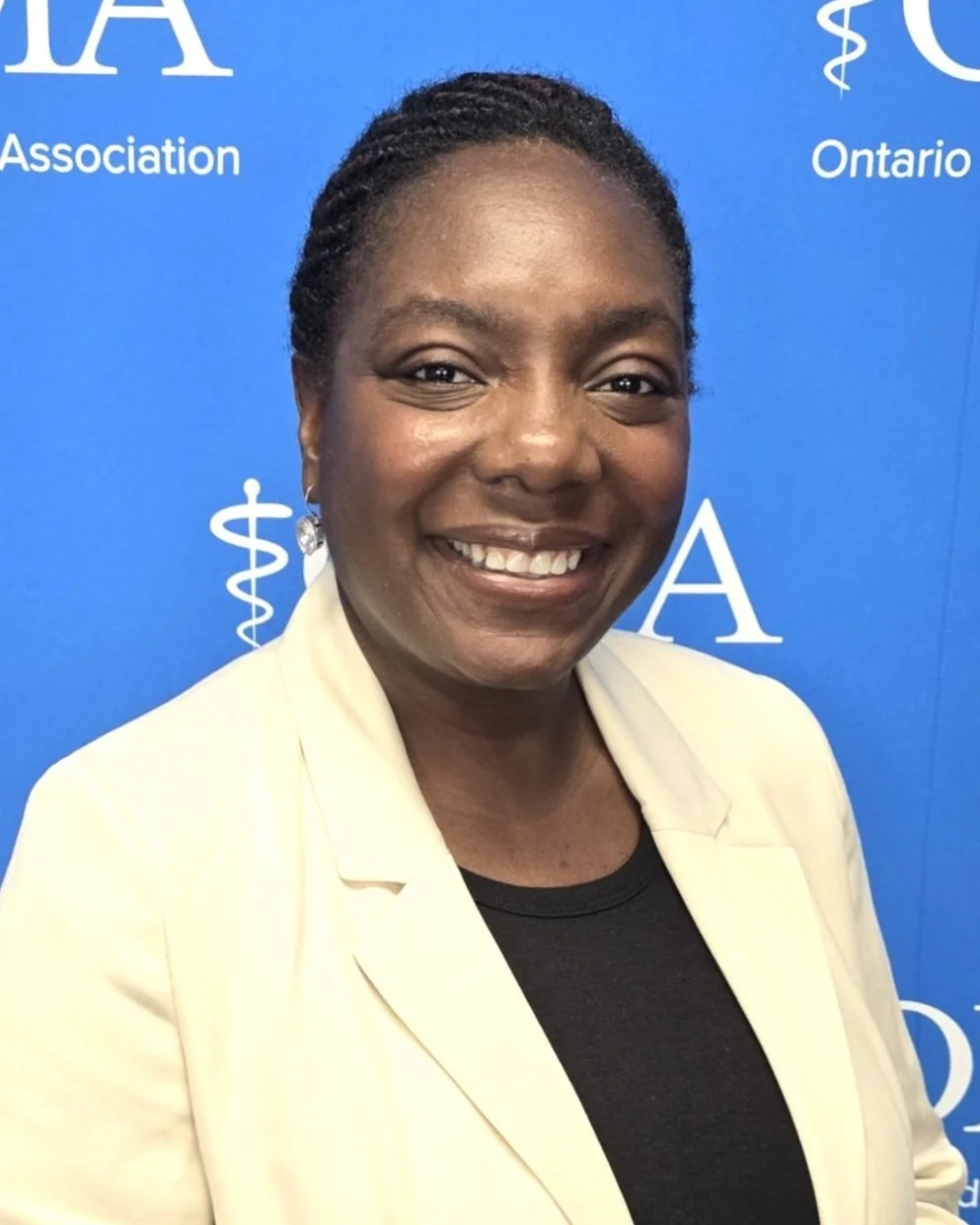
Ontario Medical Association first Black woman president Zainab Abdurrahman carrying weight of representation and hope of transformation
July 24, 2025
Who says representation does not matter?
Pride and joy fill Dr. Zainab Abdurrahman when she sees the excitement on the faces of young Black girls and their mothers as they enter her office for the first time.
“They look at me and I could sense them saying, ‘Oh my gosh, she looks like us’,” the allergist and clinical immunologist pointed out. “That is so important, especially living in Canada.”
Stepping into the role as president of the Ontario Medical Association (OMA), the first Black woman to hold the position in the organization’s 145-year history, is much more than a personal achievement for Abdurrahman.
It signifies that excellence has no colour barriers and that those young girls belong in every room where decisions are made.
That is what Abdurrahman is most proud of as she advocates for the province’s 43,000 doctors, residents and medical students.
An OMA board member for four years before her historic ascendancy, she said her active involvement in leadership fueled her ambition to seek the presidency.
During her medical school years at the University of Toronto, Abdurrahman served as co-president of her cohort and head of the Women in Surgery group. She also contributed to the development of a new biostatistics module in the curriculum that reflected her strong emphasis on communication and data literacy in medicine.
She was also a key contributor to the Black Scientists Taskforce on COVID-19 Vaccination Equity and the Black Health & Vaccine Initiative, in partnership with the Black Physicians Association of Ontario.
In addition, Abdurrahman served as a physician peer leader and member of the educational task force for OntarioMD, contributing to digital health innovation and medical education.
“When I became a physician working in my office, I thought I was going to focus mostly on my patients and that would be my advocacy work,” she said. “However, there have been a lot of changes in healthcare and the turmoil in 2016 and 2017 about the well-being and retention of physicians, particularly family doctors. I used my voice before to help effect change, and I kept hearing my parents say that you can complain about something or be part of the solution.”
Before last February’s provincial elections, 28 percent of Ontarians said healthcare was the single most crucial factor influencing their votes.
Their concerns included primary care shortages and access gaps, as well as wait times and hallway healthcare.
In the next nine months of her presidency, Abdurrahman’s focus is on ensuring that the province’s healthcare system is sustainable and that Ontarians have access to a system they are paying for through taxes.
“The population has increased and we have a severe shortage of specialists across the province, especially after COVID,” she said. “Many physicians retired, some because they were burned out. Others became gun-shy after seeing what some of their older colleagues went through during the pandemic. Before COVID, the Ontario health system was already facing challenges. The pandemic broke the system wide open, exposing the vulnerabilities that had been building for years.”
Nearly 2.5 million Ontarians don’t have a family doctor.
Abdurrahman said attracting newly trained physicians to enter and stay in clinical practice, especially in underserved areas or primary care, is an urgent challenge.
“They are looking at the situation, saying it is hard to pay their staff and purchase equipment if they are not making enough money to make their practice financially viable,” said the co-supervisor of the Canadian Society of Allergy & Clinical Immunology Fellow in Training curriculum. “They are hesitant to open doors, not knowing if they can keep them open.”
Doctors spending far too much time on paperwork when they should be focused on caring for patients is also an area that Abdurrahman will address during her tenure.
“We have family doctors spending 19 hours a week doing paperwork,” she pointed out. “Artificial intelligence can assist with some of that administrative burden. We are also looking for a partnership with the government to help ensure that offices have access to this to be able to do that.”
The demanding nature of a physician’s career often lead to their families residing in different countries.
That was the case with Abdurrahman.
The youngest of five siblings born in Nigeria spent time in Saudi Arabia, the United Arab Emirates and England before arriving in Canada at age 12.
After completing his residency in 1974 at the Hospital for Sick Children, Dr. Murtala (Muri) Abdurrahman returned to Nigeria to work in the Ahmadu Bello University Faculty of Medicine where he rose to professor of pediatrics in 1981.
He was a pediatrics professor at the King Saud University College of Medicine in Saudi Arabia for five years until 1990 and at United Arab Emirates University Faculty of Medicine and Health Sciences before coming back to Canada in 1992 to practice.
Instead of choosing a major city, the family patriarch – who retired in 2021 -- decided to serve in Sudbury.
The Northern Ontario sense of community that was immediately inviting and welcoming appealed to his daughter who completed high school at Lo-Ellen Park Secondary that celebrated its 60th anniversary last year.
“There are a lot of immigrant populations, and everyone is welcomed to showcase their various cultures,” she said. “I liked that.”
Seeing the healthcare system stretched in a small community opened Abdurrahman eyes to the much-needed advocacy for better resources and equitable access to care.
Behind every diagnosis and treatment, there is a personal story that shapes the care and connection between doctor and patient.
Her dad’s caring interactions with patients and a close association with a cousin who is a veterinarian influenced her decision to be a physician.
“During her studies and practicums, she took me to see a cow that was having trouble giving birth and a horse,” said Abdurrahman who worked in her father’s office during the summer. “It was a bit scary at times being around these large animals. Rather than caring for animals, human medicine appealed to me. I wanted to be in a profession that is caring and one where I could talk to children and their parents. Being part of people’s lives seemed extremely rewarding.”
After finishing her undergraduate degree in physiology and math at McGill University, she did a Master of Mathematics at the University of Waterloo.
Abdurrahman focus was on biostatistics which is the application of statistical methods to biological and health-related data.
She was the first Waterloo biostatistics master’s student who planned to become a doctor.
“There were not a lot of students in the master’s program who had an interest in doing medicine,” noted Abdurrahman who did a co-op at Mt. Sinai Hospital. “A lot of them had an interest in medical research and working with medical researchers. Sometimes, doctors might think statisticians speak a different language and vice versa. I wanted to ensure there is a collective understanding.”
In her first year in medical school at the University of Toronto, she offered to help Dr. Ian Johnson create a biostatistics module.
At the time, he taught ‘Determinants of Community Health’ which is four-year undergraduate curriculum course that was introduced to the Faculty of Medicine in 1999.
“I was new to teaching medical students statistics and the challenges were two-fold,” Johnson said. “First, there was incredible diversity in the class with respect to statistical knowledge and skills. Most students had taken a basis statistics course, some had advanced statistical knowledge and some had none. In addition, I had limited time in the classroom and wanted the students out in the community working on applied research so they could get experience with the eventual goal that they do their own quality improvement projects when they graduate. The solution was an online module.”
Because of her master’s in statistics, friendliness and openness, Abdurrahman was hired to be the main person writing the module after Johnson accepted her offer and received funding for the project.
“I appreciated her high level of knowledge and skills while I could provide the overall direction,” said the 2023 Excellence in Postgraduate Medical Award winner for teaching, performance, mentorship and advocacy “She was very energetic and highly committed to the project of building an educational online biostatistics module for medical students, she always set high standards for herself and was always pushing for the highest quality outcome. Also, she was inclusive in that she made sure the module was approachable and open to everyone, irrespective of their background knowledge in statistics.”
After finishing McMaster University’s Postgraduate Medicine, Clinical Immunology and Allergy Residency program in 2012, Abdurrahman became a pediatric allergist/immunologist at McMaster Children’s Hospital and an adult and pediatric allergist/immunologist at various medical offices, including Q & A Allergy in Mississauga.
As a medical doctor specializing in the diagnosis, treatment and management of allergic and immunologic disorders, she agrees that allergies are on the rise.
“Climate change and pollution play big roles,” said Abdurrahman who is an assistant clinical professor of medicine at Toronto Metropolitan University new School of Medicine. “The other day, someone told me that ragweed pollen allergies feel worse now than 10 or 20 years ago. I told them they were correct. The pollens are trying to propagate because they want ragweed to come out the following year. With so much pollution in the air, pollen are impacted, increasing its allergic potential and affecting its viability and germination. When it is cold, they modify themselves to be hardier so they can survive pollution. But part of the change that ragweed has made for their pollen to survive pollution has made it more allergenic. That is why people are feeling more effects of those pollens.”
To safeguard against allergies, she said creating greener spaces can be beneficial.
“Also, if you are having lots of symptoms, talk to your doctor because there are interventions,” Abdurrahman pointed out. “What happens unfortunately is that people learn not to like certain things if it makes them feel awful. I don’t want kids to think that if they go outside during the summer, they will feel sick. It is important for people to recognize there are treatments and things they can do to combat this, and we can teach your body to become more tolerant.”
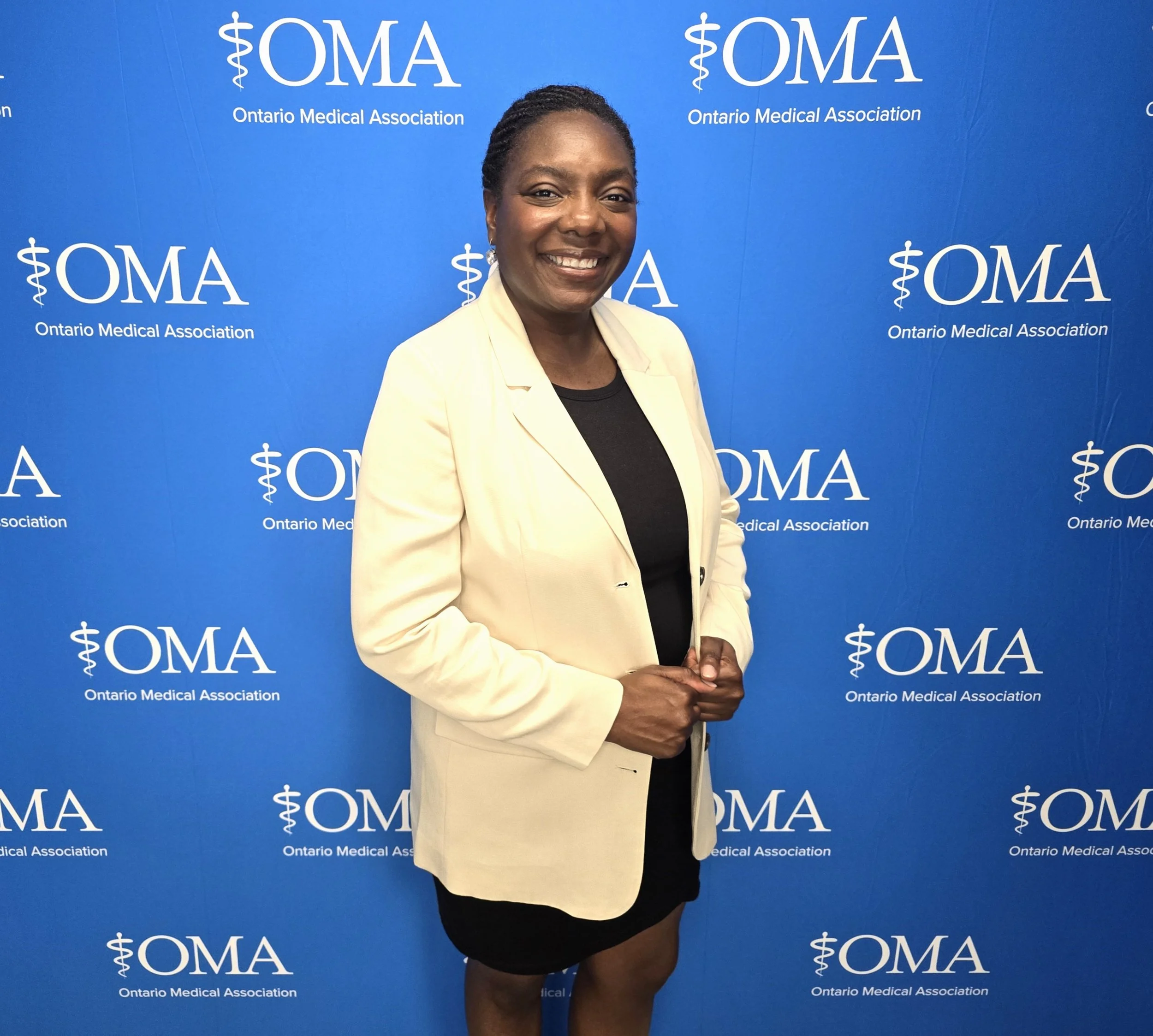
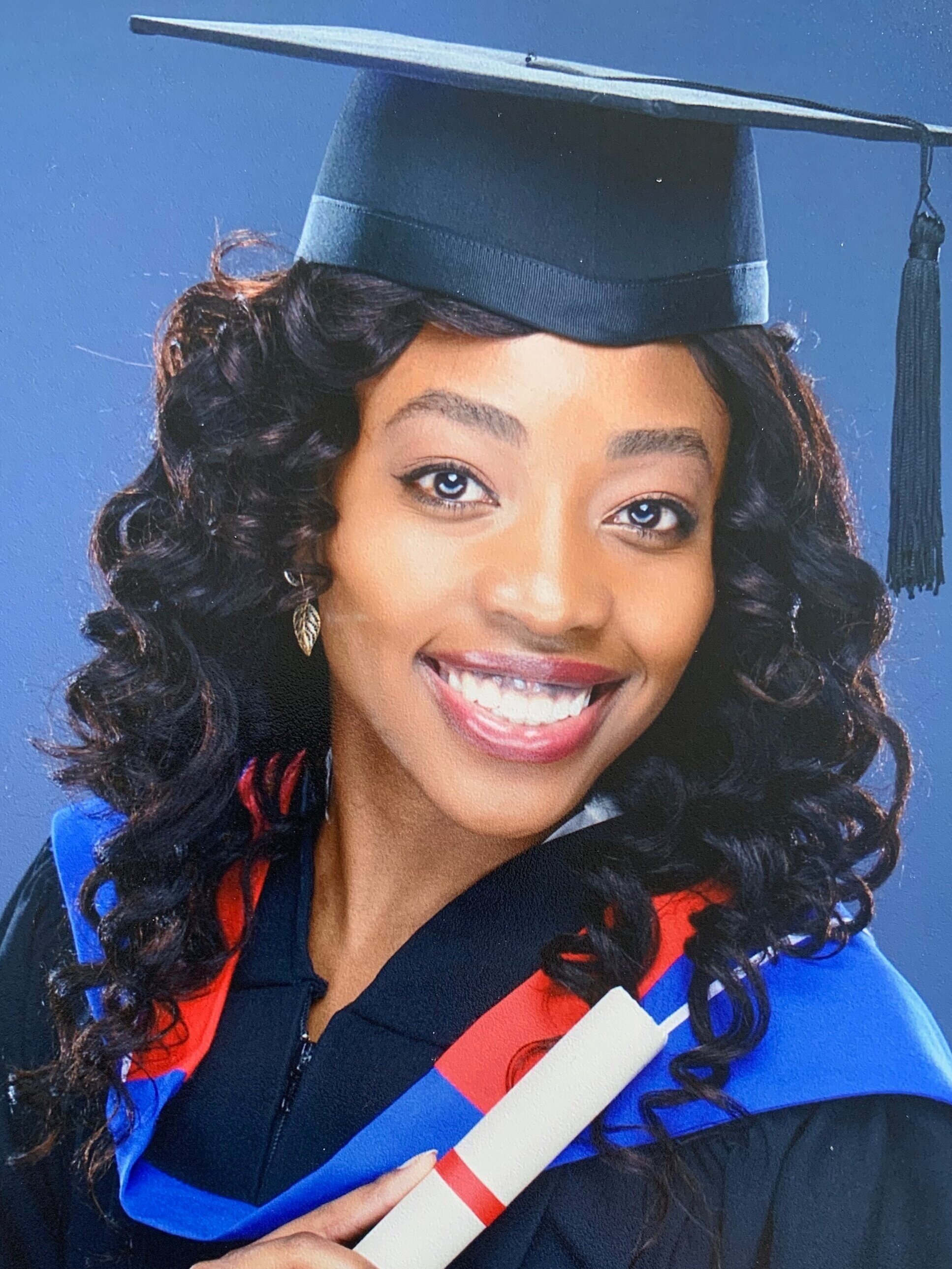
Dr. Zainab Abdurrahman (Photo by Ron Fanfair)
With all her accomplishments, she never forgets her roots and the parents who paved the way.
Her mother, Maryam Abdurrahman, supported her physician husband by assisting in his medical practice while raising their children.
“I am standing on their shoulders,” Abdurrahman said. “They are determined people who are not afraid to take risks. They could have stayed in Nigeria and enjoyed a comfortable life. Adventurous by nature, they were always seeking new experiences and change.”
Other family members and individuals outside that immediate network assistance also played a meaningful role.
“My siblings read a lot of applications and support me in things that I do,” added Abdurrahman who enjoys travelling and dancing. “My uncles and aunts are also strong believers in higher education who encouraged me to pursue my passion. There are people I met that have helped me on this journey. I think of Professor Leon Glass at McGill University who supported me and a few others in our cohort, high school teacher John Savage who inspired my love for math and friends who I convinced in my first year to do this degree with me.”
Humility shines brightest when we recognize those who lifted us.
To be the first woman of her colour to lead a major organization is not just a milestone for Abdurrahman.
It is a quiet act of humility, carrying both the weight of representation and the hope of transformation.
In 2014, Dr. Ved Tandan became the OMA’s first Black president.
The general surgeon’s mother, Verna Tandan (Blake), migrated from Jamaica in 1954 to study at Queen’s University. She was married for 63 years to Jagroop (Jaggi) Tandan who was raised in Lucknow, India and taught Chemistry at Mohawk College before retiring in 1989.
She died in 2023 at age 90 while her husband passed away last January at age 94.