A family rum punch recipe becomes a retirement bet
November 25, 2026
When Colin James retired after nearly four decades with General Motors, requests for his rum punch kept coming.
He had been making it for family, friends and co-workers for more than 30 years. Now people were asking him to make batches for weddings and other gatherings.
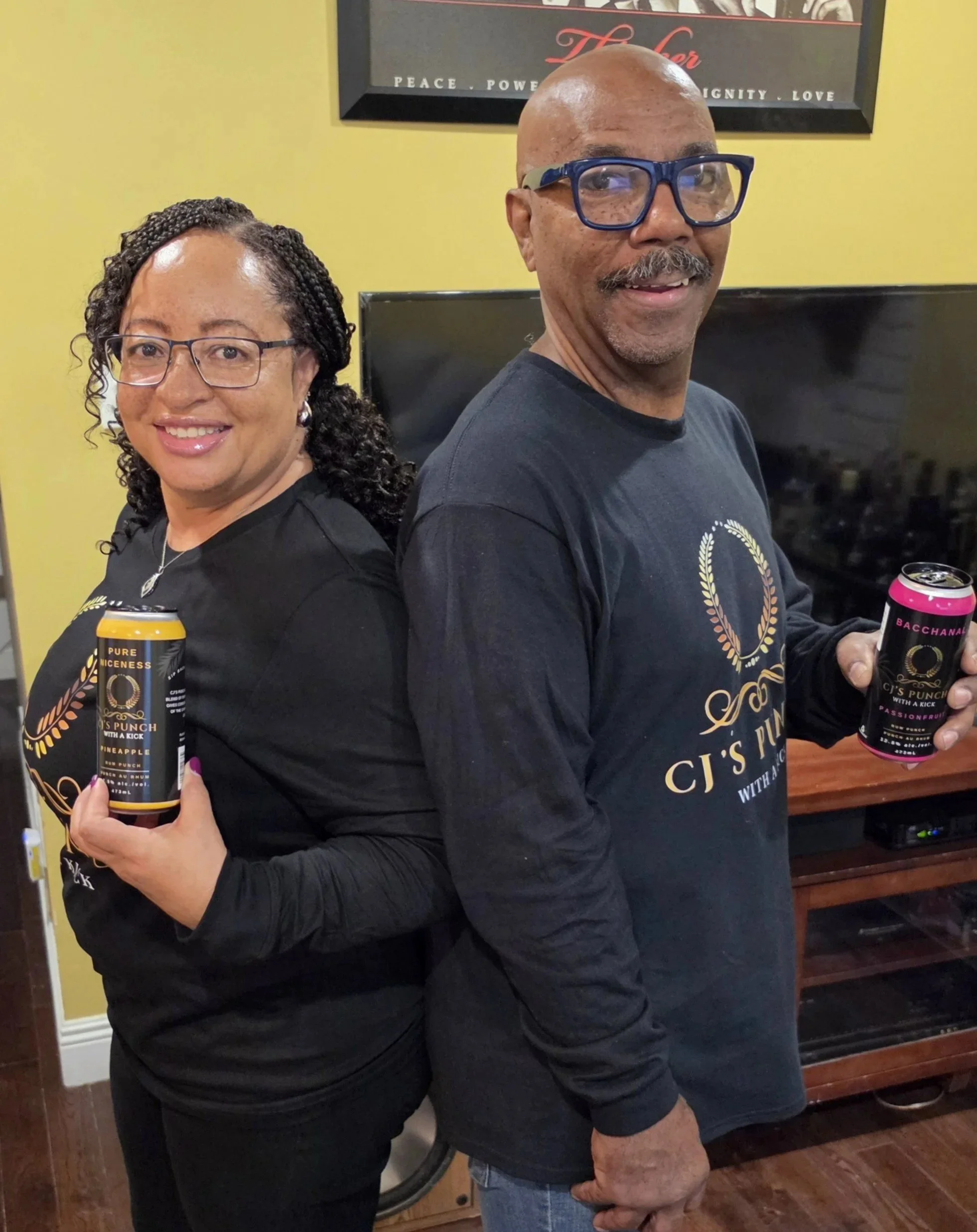
James and his wife, Allicia Miller, decided to see whether the punch he’d adapted from a family recipe could become a business. He put some of his retirement savings into CJ’s Punch, and Miller invested alongside him. She took on the finances and day-to-day operations of the Ajax company while holding down a full-time job.
The couple, married for 15 years, have spent more than $300,000 building the business.
CJ’s Punch was still getting off the ground when a CBC producer from Trinidad tasted the drink and urged them to apply for Dragons’ Den, a CBC television show where entrepreneurs pitch their businesses to a panel of investors known as the Dragons.
They turned her down twice.
The punch hadn’t reached store shelves yet, and they figured another year would give them sales figures to show the Dragons.
The producer asked them to get on a call.
“She said, ‘You guys don’t really understand what you have and what the response has been so far’,” Miller recalled. “She advised us to fill out the application because we had nothing to lose.”
When CBC aired their Dragons’ Den pitch on November 5, James and Miller asked for $225,000 in exchange for a 10 percent stake in CJ’s Punch. They left without a deal.
Miller said two Dragons offered encouragement that didn’t make it into the broadcast. Venture capitalist and tech entrepreneur Michele Romanow advised them on developing the business, and businesswoman and investor Arlene Dickinson said she’d be interested in speaking with them in a year.
Within weeks of the primetime airing, the couple had a more immediate concern. Orders had climbed back to August levels, and they had to buy more supplies and schedule another production run before Christmas.
Christmas was when James first watched his Kittitian-born mother make ginger beer and rum punch while growing up in Birmingham, England.
When he was old enough to try his mother’s rum punch, he liked the flavour but found it too strong. In his twenties, he began making his own version with less rum. It was a hit with his siblings, and soon cousins and neighbours were asking for it, too.
“I would make a batch or two at Christmas for a lot of the guys and that ended up getting bigger and bigger and bigger,” James, who moved to Canada at age 13, said of his co-workers at General Motors.
Floyd Henry, who worked at GM for 32 years, first tried James’s punch more than a decade ago. It reminded him of the rum punch he drank at Christmas in Jamaica, a holiday tradition he hadn’t kept up in Canada.
“When Colin introduced this rum punch to us, it was like, ‘Oh, man, it’s a bomb’,” he said. “And it just keeps getting better and better year after year because he was always investing in getting better quality, better taste.”
Henry still orders the punch.
“I like the pineapple because of its smooth finish and flavour, but they all taste good,” he said. “It’s just like having that quiet, tasteful beverage that hits the spot.”
James joined GM in 1980 and rose through the union ranks, becoming the first racialized worker elected president of Unifor Local 222 in 2016.
He also ran a martial arts studio for 20 years while working at GM. After he retired, requests for punch for weddings and other gatherings had him making a batch about every two weeks.
After two Christmases spent filling orders from their kitchen, Miller and James decided in December 2023 to see whether they could sell their punch commercially. They visited LCBO stores and spotted a difference. The canned rum punches they found were carbonated, while theirs had no fizz.
“The last two Christmases before we decided to do this, we were in here bottling and people were ordering and paying,” she said. “So, we had the conversation about what if we could do some research to find out what we could do to monetize this, because there has to be a way to scale it so that we’re not always doing it in our kitchen.”
Before bringing the punch to market, the couple asked friends for candid feedback. Among them was Barry Arseneau, a former GM health and safety representative who got to know James through that work.
“My name was right on top of the list because I’m very blunt,” he said. “I liked it right off the bat.”
Born in Jamaica, Miller moved to Canada at seven. She grew up seeing the long hours her father put into his transportation and logistics business. She began her own career in finance and accounting before moving into sales, market research and operations.
At CJ’s Punch, she manages cash flow, sources supplies and schedules production while her husband draws on the negotiating skills he developed at the union.
Miller estimates it cost about $100,000 to get the company started, including legal fees, trademark work and early production.
Without a distillery, the couple hired a company to make and package the punch. Their first production partner shut down within about six months of them starting work together. They found a replacement in Stoney Creek that can handle both bottles and cans.
For Miller, the biggest sacrifice in building CJ’s Punch has been time, followed by money. She had to learn QuickBooks, build a network of contacts and turn to friends and family when the business needed volunteers.
That juggling act followed her to Dragons’ Den.
Miller auditioned on her own while James was away, and the show put them on standby. They couldn’t make it to the studio the first two times the producers called. The third call came around 10:30 a.m. and they had to be there before 1 p.m.
“We practiced our pitch in the car,” she pointed out. “I had a work meeting that morning and joined it online on the way to the studio, then went back to rehearsing with my husband.”
When they arrived at the studio for the April taping, they learned the rum barrels they had chosen for their display were unavailable. They opted for a tiki hut and approved the placement of their bottles and cans.
Not knowing whether they’d receive any promotional material from the show, their daughter took photos and video.
Miller was looking for an investor who knew how to grow a business and could open doors in markets CJ’s Punch hadn’t yet reached.
“Personally, I was looking for mentorship opportunities from those individuals that were investors,” she said. “They have scaled before and they know what they need to do. It’s nerve-racking to put yourself out there in front of national TV and really expose the intricacies of our business to all of Canada when you think about it. Looking back, I am proud of how we represented ourselves.”
Much of the couple’s work introducing people to CJ’s Punch happened face to face.
They attended 27 events in 2026, offering tastings and encouraging people to ask for the drink at their local LCBO. Pineapple was the first flavour to reach Ontario liquor store shelves.
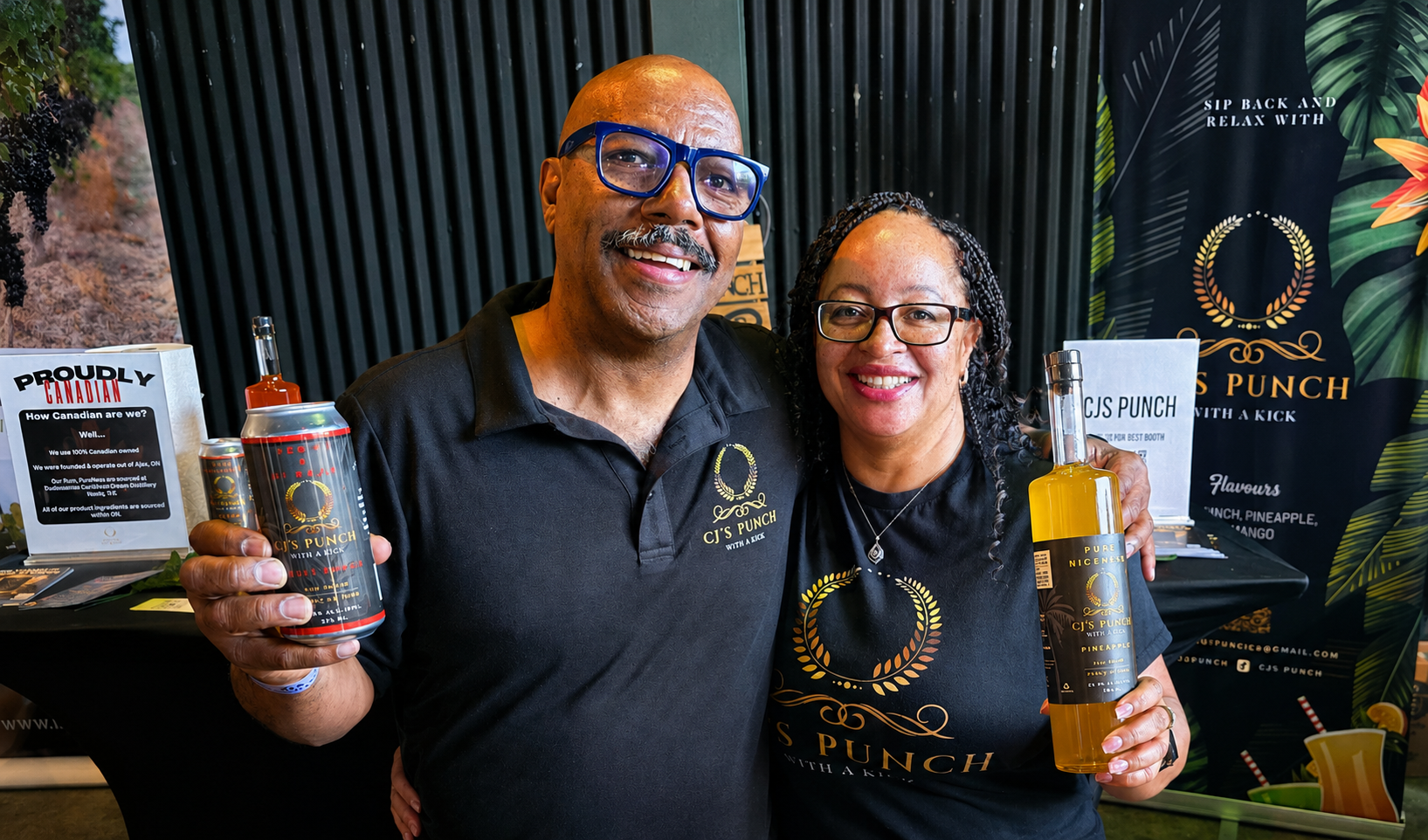
CJ’s Punch was among the beverage companies participating in ByBlacks Restaurant Week in May 2026 (Photo by Ron Fanfair)
Linden King, who works in information technology, was sold on CJ’s Punch in June 2024 after his first taste at a friend’s 60th birthday party.
“The pineapple is definitely my favourite,” he said. “It’s smooth, refreshing and full of tropical flavour, with just the right balance of sweetness and rum. I also love that CJ supports local and cultural communities across the Greater Toronto Area, which makes it a brand I am proud to support.”
James and Miller have developed four flavours.
The original fruit punch grew out of the recipe he made at home, with pineapple and mango rounding out the initial lineup. This summer, they made 80 cases of passion fruit to see how it would sell. The limited run sold out in less than a month and they plan to bring it back next season.
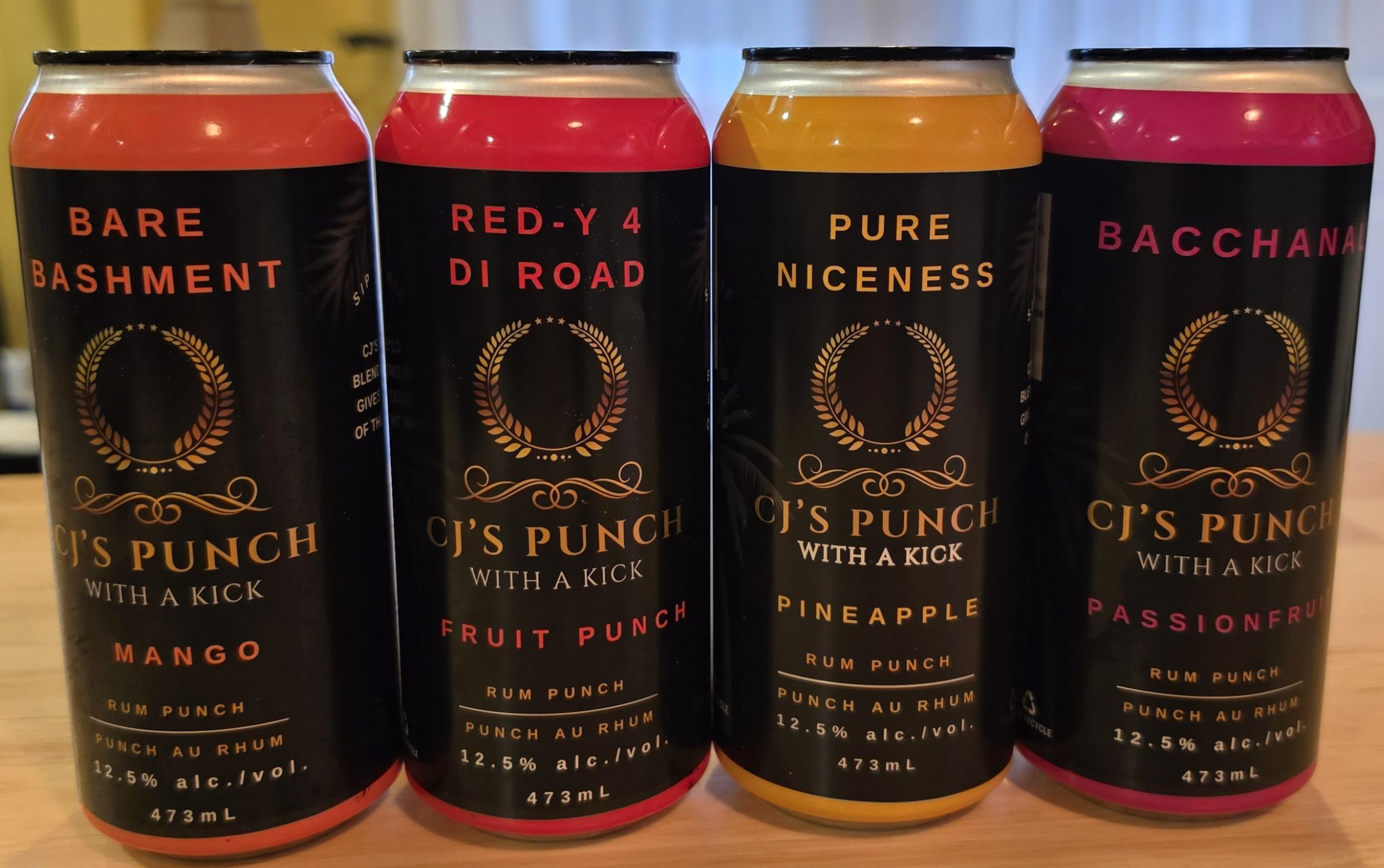
CJ’s Punch four flavours (Photo by Ron Fanfair)
CJ’s Punch started in 750-millilitre bottles before cans were added for wider retail distribution. The LCBO lists the Ontario-made pineapple punch in a 473-millilitre can at 12.5 percent alcohol by volume.
Arseneau said he tried other punches and kept coming back to CJ’s because it had a distinctive taste and went down smoothly. He rarely drinks rum and said the flavour was what kept him buying it.
“For this drink to stay with me, it wasn’t the friendship,” he noted. "It was the taste.”
Arseneau lives just north of Cobourg and gets to the town’s larger LCBO about once a month. He said the store carries CJ’s Punch, but it had little stock the last time he checked.
James and Miller have paused production of bottled punch but plan to resume it. Some bars and customers ordering for weddings and other private events still prefer bottles.
Beyond Ontario, the couple have spoken with their distributor about expanding retail distribution, with Alberta and British Columbia among the markets they’re considering.
James said they already received inquiries from people elsewhere in Canada and in the United States who want to buy the punch.
Closer to home, the next step brings the entrepreneur back to the flavour that started it all.
James said the LCBO has accepted the original fruit punch for an expected March 2027 release.
For years, he knew who would drink the next batch. If the rollout goes ahead as planned, someone he’s never met will be able to pick up the punch he used to make by the batch at home.