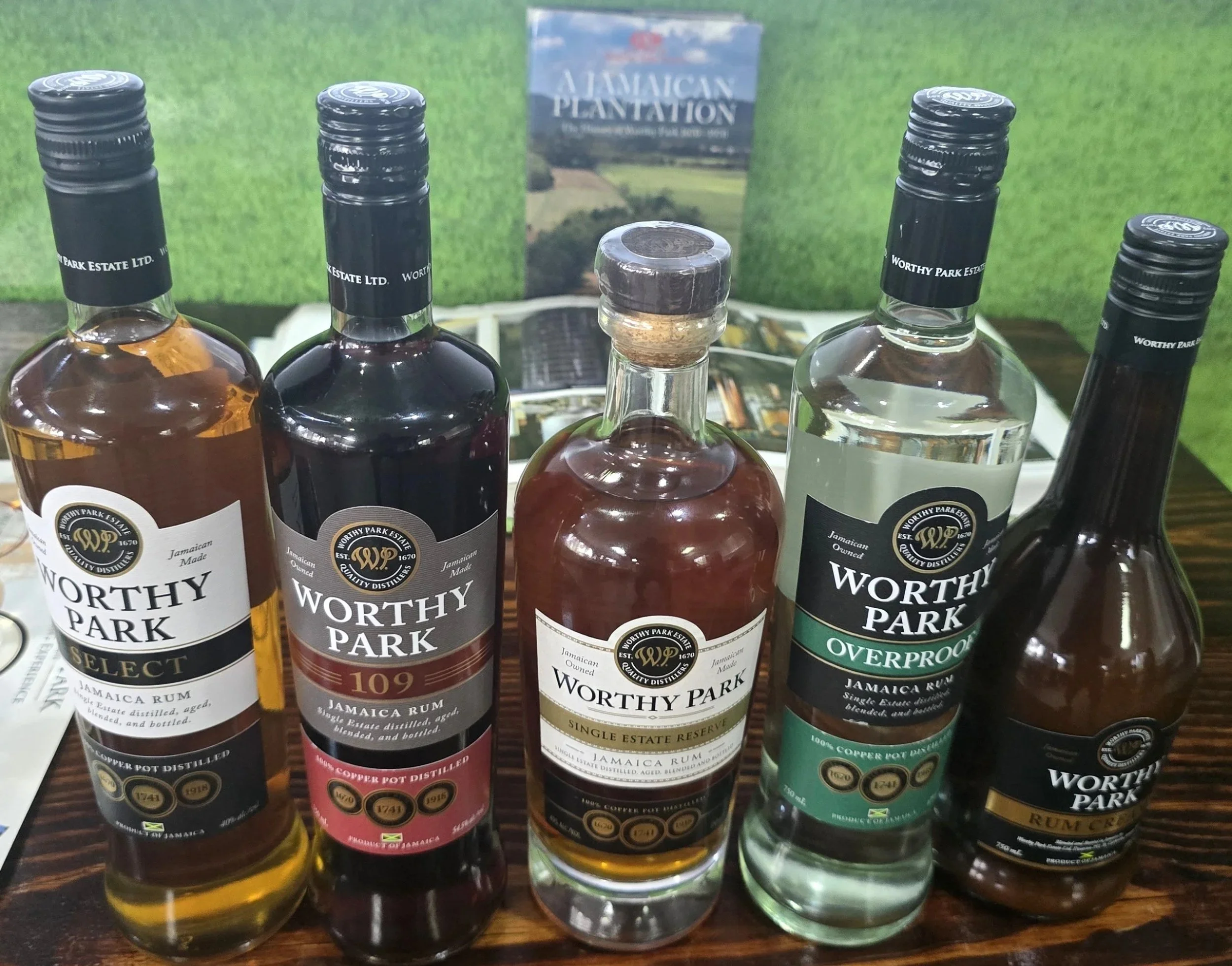
From cane fields to rum glasses, Worthy Park offers a taste of Jamaican heritage
September 21, 2026
Becoming a rum blender was never part of Craig Nicholson’s plan.
Meteorology was his first career interest, followed by medicine. However, an opportunity close to home eventually led him in an entirely different direction.
“I kind of fell into rum,” said Nicholson, Worthy Park Estate’s senior blender. “I grew up beside a distillery. When I was heading to the University of the West Indies, Mona, the production manager told me, ‘When you are finished, you are going to come and work for us.’ I said, ‘All right, fine, if you say so’. As it turned out, I joined the company after graduating and have been in the rum industry ever since.”
That unexpected career path brought Nicholson into a centuries-old Jamaican industry and eventually to one of the country’s most historic estates.
Located in Lluidas Vale, St. Catherine, Worthy Park Estate spans more than 10,000 acres of sugarcane fields, forests and production facilities. Commercial sugar production began on the property in 1720, while its earliest recorded rum production dates to 1741.
The Clarke family acquired the estate in 1918. Four generations later, it remains Jamaican-owned and operated.
As a single-estate producer, Worthy Park oversees every stage of production, from growing sugarcane to bottling the finished rum. Cane harvested on the property is crushed in its sugar factory, and the resulting molasses is fermented and distilled on site.
The Worthy Park Rum Tour introduces visitors to this ‘grass to glass’ process.
The experience includes samples of sugarcane, fresh cane juice, molasses and brown sugar, along with a presentation on the estate’s history and visits to the distillery, ageing warehouse and bottling facility. It concludes with a guided tasting of several Rum-Bar and Worthy Park products.
For Nicholson, creating those rums requires far more than following a formula. Developing the necessary sense of smell and taste took years of training, experimentation and careful observation.
“When I started in blending, I spent months just nosing and tasting different types of rum to understand the different marks, fermentations and distillations and how they affect the flavour profiles,” he said. “I also had the opportunity to work as an apprentice to a master blender at a previous company, so I used that experience to develop my own craft.”
Nicholson joined Worthy Park in 2021 after gaining experience elsewhere in Jamaica’s rum industry. Despite his senior position, he believes he is still developing his craft and is not yet ready to call himself a master blender.
“I still see myself as learning in the role and developing as I go along,” he said. “I learn from other blenders in the industry, and we have a very good relationship.”
Continuous learning is essential in a profession that combines science, sensory skills, experience and an understanding of consumer preferences.
Nicholson’s goal is to create rum that satisfies his standards while appealing to consumers.
“There is always a balance between what I personally would like to put out and what the public is looking for,” he noted. “Whenever I am producing a blend, I try to find that sweet spot. After customer feedback and product testing, and seeing how people react to it, I know whether I am hitting the right spot.”
Protecting his senses is also important. When preparing to nose or taste samples, he avoids heavy colognes, strong scents and foods that could interfere with his palate. He also uses coffee grounds to refresh his sense of smell between samples.
While paperwork occupies much of his week, Nicholson often reserves weekends for uninterrupted work in the laboratory. The reward comes when a product leaves the lab and reaches consumers.
“What I enjoy most is seeing people’s reactions to the rums we produce,” he said. “I also do a lot of training and educational sessions, and the teacher in me responds well to that. Having people give their feedback, good or bad, is what motivates me to continue.”
His favourite creation so far is Worthy Park Overproof. He has also refined some of the estate’s existing blends. Among aged rums, he prefers one that balances vibrant fruit flavours with the oak and smoke acquired during barrel ageing.
Before visitors taste the finished products, Shunna-Gaye ‘Sugah’ Mitchell shows them where the journey begins.
The Visitor Centre Tour Supervisor has worked at Worthy Park for more than seven years. She brought considerable industry experience to the position, having previously served as a tour guide and team leader at Appleton Estate.
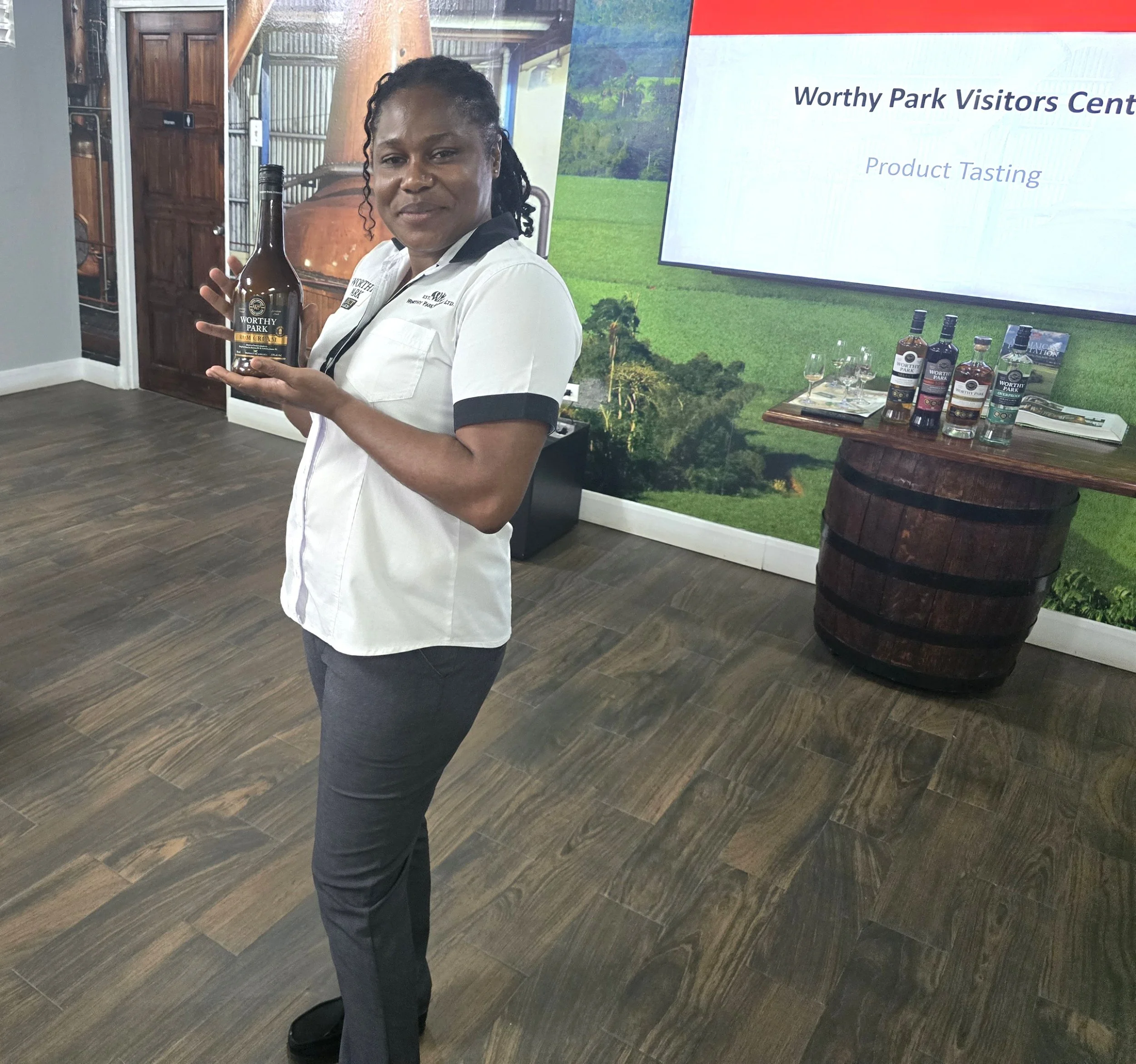
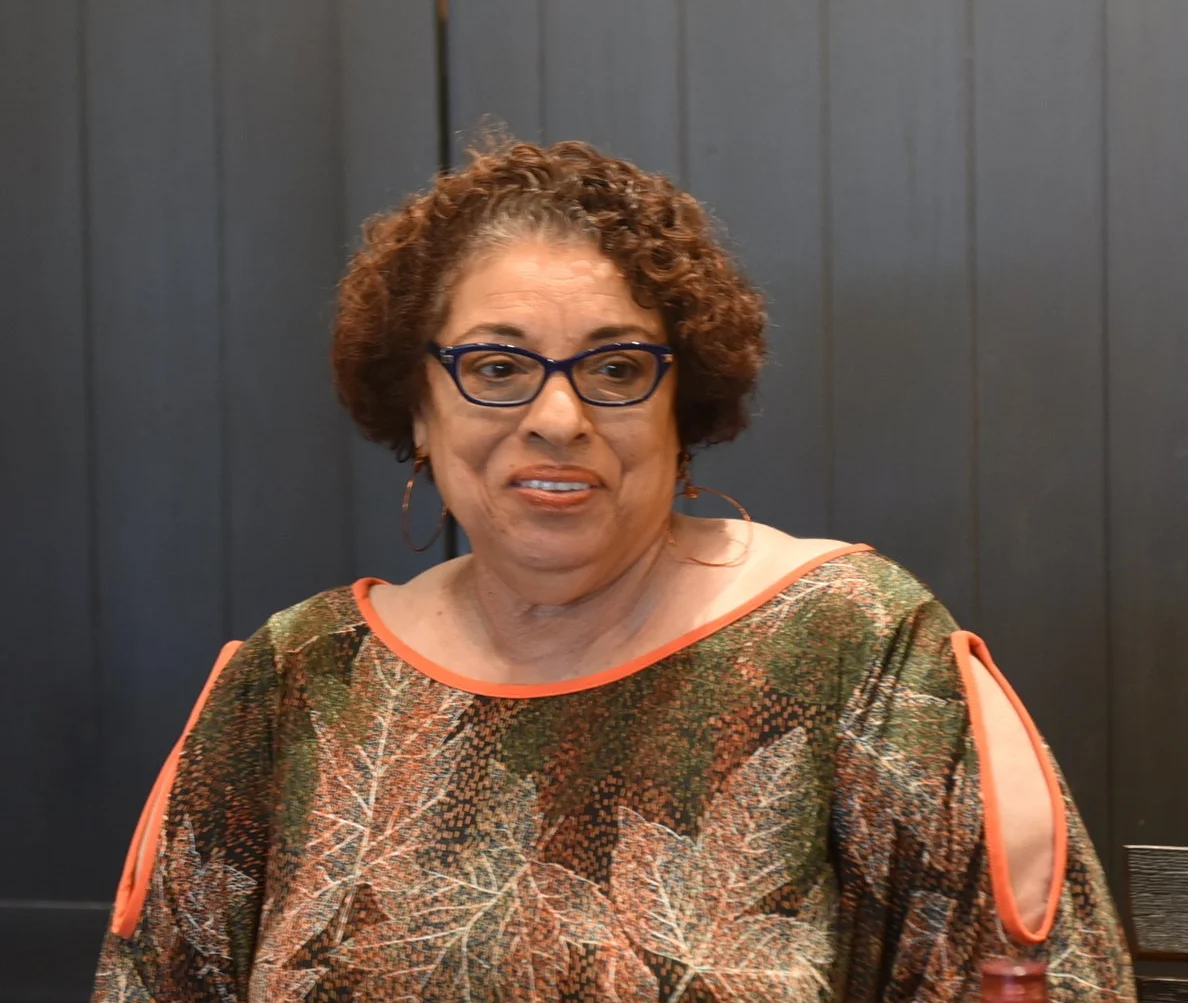
Shunna-Gay Mitchell (Photo by Ron Fanfair)
When Worthy Park sought someone who could work independently and help establish its visitor experience, Mitchell accepted the challenge.
“They wanted someone to work on their own initiative and start a tour,” she said. “I came with the knowledge and experience, and here we are.”
The Worthy Park Rum Tour was launched on March 4, 2019.
Since then, Mitchell has helped make the estate’s complex agricultural and manufacturing processes engaging and easy for visitors to understand.
She begins by explaining that sugarcane belongs to the grass family, hence the description of the experience as a journey from ‘grass to glass’. Visitors sample sugarcane and some of its by-products before learning how the crop is transformed into sugar, molasses and rum.
For Mitchell, the most rewarding aspect of her job is meeting visitors and watching them absorb what they learn about the estate.
“What I enjoy most is meeting people, sharing information and watching them absorb it,” she said. “I get to tell them that the company I work for is a single-estate producer. From start to finish, everything is done on the property. Not only that, it is owned and operated by Jamaicans. That is what I love.”
Jamaican ownership is central to Worthy Park’s identity.
The estate stopped producing rum in the 1960s when Jamaica’s supply exceeded market demand. As Worthy Park did not have its own branded rum at the time, it shut down its stills and supplied molasses to other producers.
More than four decades later, an opportunity arose to return to the industry.
Chief Executive Officer Gordon Clarke, a fourth-generation member of the family, spearheaded the construction of a modern distillery that combines traditional Jamaican pot-still methods with contemporary technology.
“The 1960s were a peak period for sugar production in Jamaica,” he said. “All the sugar producers were making molasses, and they were also making rum. There was too much rum and not enough demand, so some sugar producers decided to shut down and allow other rum producers to expand and handle the molasses.”
Worthy Park was among the estates that stopped distilling rum.
“There was an opportunity in 2004 for us to get back into rum production with the goal of developing branded rum, which we have done,” Clarke pointed out. “I was very happy to present the opportunity to my family. They were supportive and said we should go ahead, but they wanted me to return, build the distillery and run it. That is what I have been doing for more than 20 years.”
Rum production resumed in 2005 after a hiatus of more than four decades.
“My family has owned this company for over 100 years, and I am the fourth generation,” Clarke said. “Each generation has done something different while keeping it going. My generation brought us back into the rum business, so I am really happy about that.”
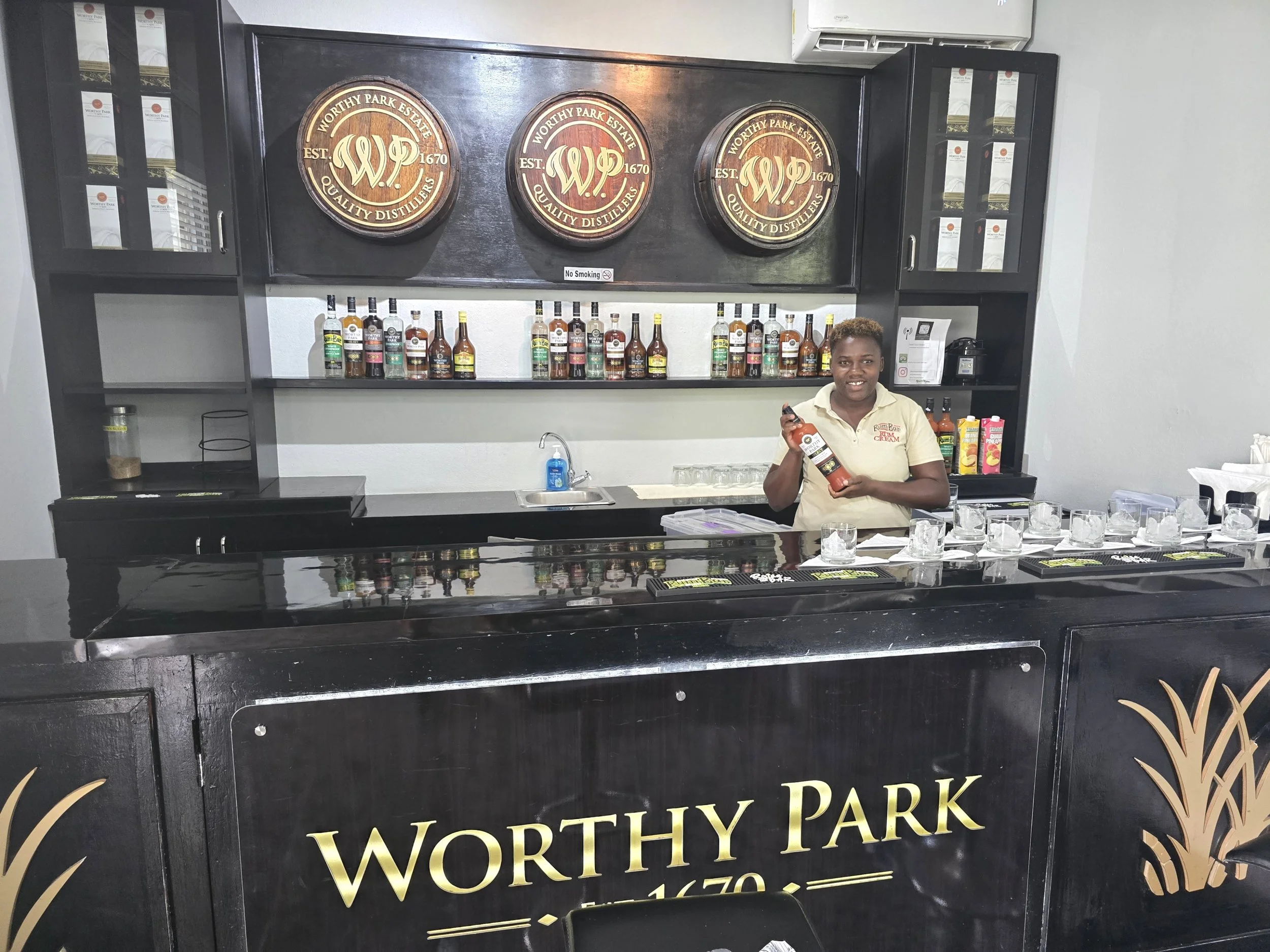
Chanta Grant has been a bartender at Worthy Park Estate since 2023 (Photo by Ron Fanfair)
Worthy Park now produces sugar and rum on the same estate, using molasses derived from its own sugarcane. Even the bagasse -- the fibrous material left after the cane is crushed -- is used to fuel boilers that help power the operation.
After distillation, some rum is bottled without ageing, while the rest is placed in oak barrels. As the spirit ages, its interaction with the wood and Jamaica’s tropical climate gradually transforms its character.
“The oak transforms an aged rum,” Clarke said. “It becomes mellow and smooth and is very easy to drink, even without a mixer. The longer it ages, the better it is.”
Some of the rum evaporates through the barrels during ageing. Known as the ‘angel’s share’, the loss occurs each year the spirit remains in the barrel.
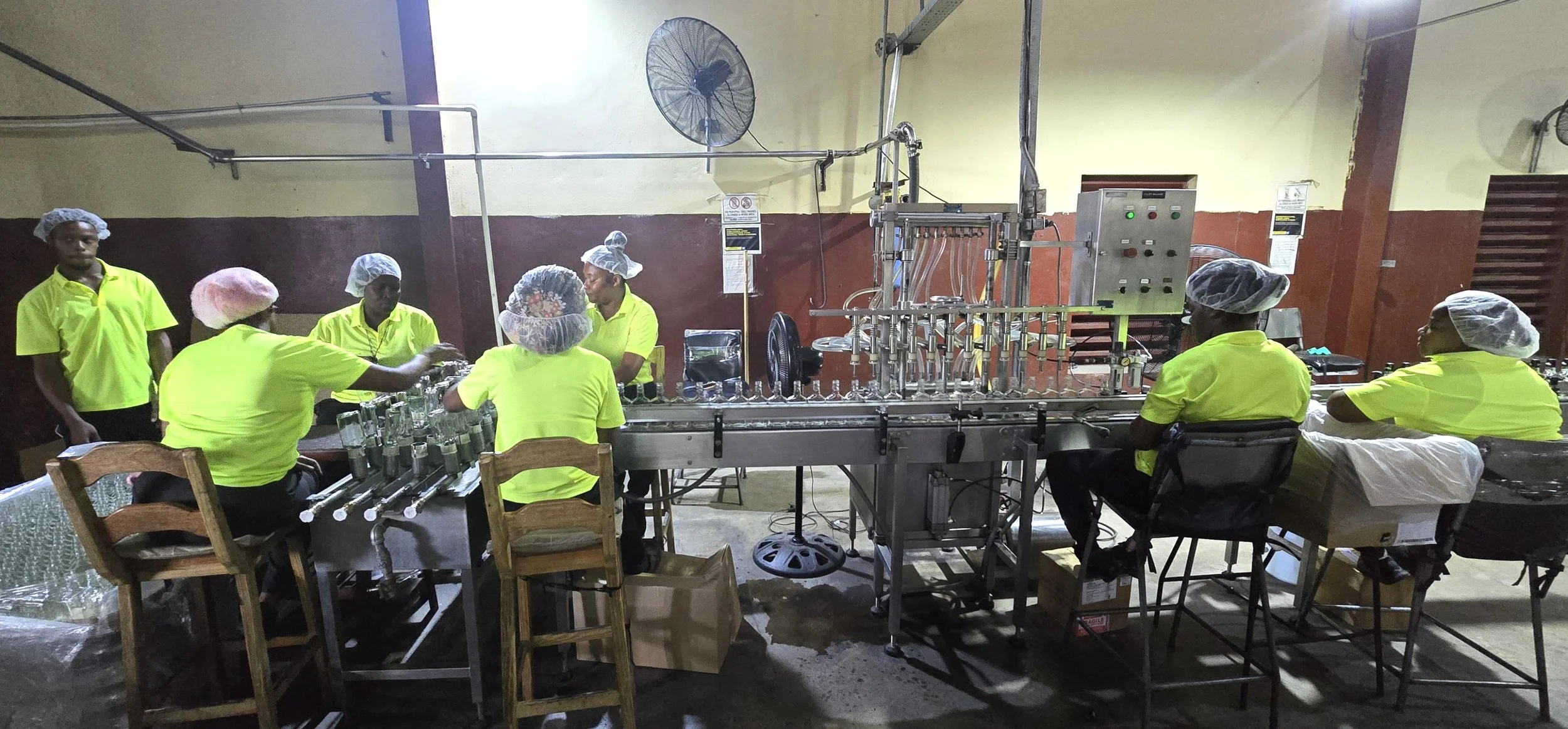
Employees working on the bottling line at Worthy Park Estate (Photo by Ron Fanfair)
For Canadian visitors, particularly those with Jamaican or Caribbean roots, the Worthy Park Rum Tour offers more than an opportunity to sample rum. It provides insight into the agriculture, labour, entrepreneurship and family stewardship behind one of Jamaica’s best-known exports.
Tours are available by appointment at 10 a.m. and 2 p.m., Tuesday through Saturday. To make a reservation, call 876-279-7421.