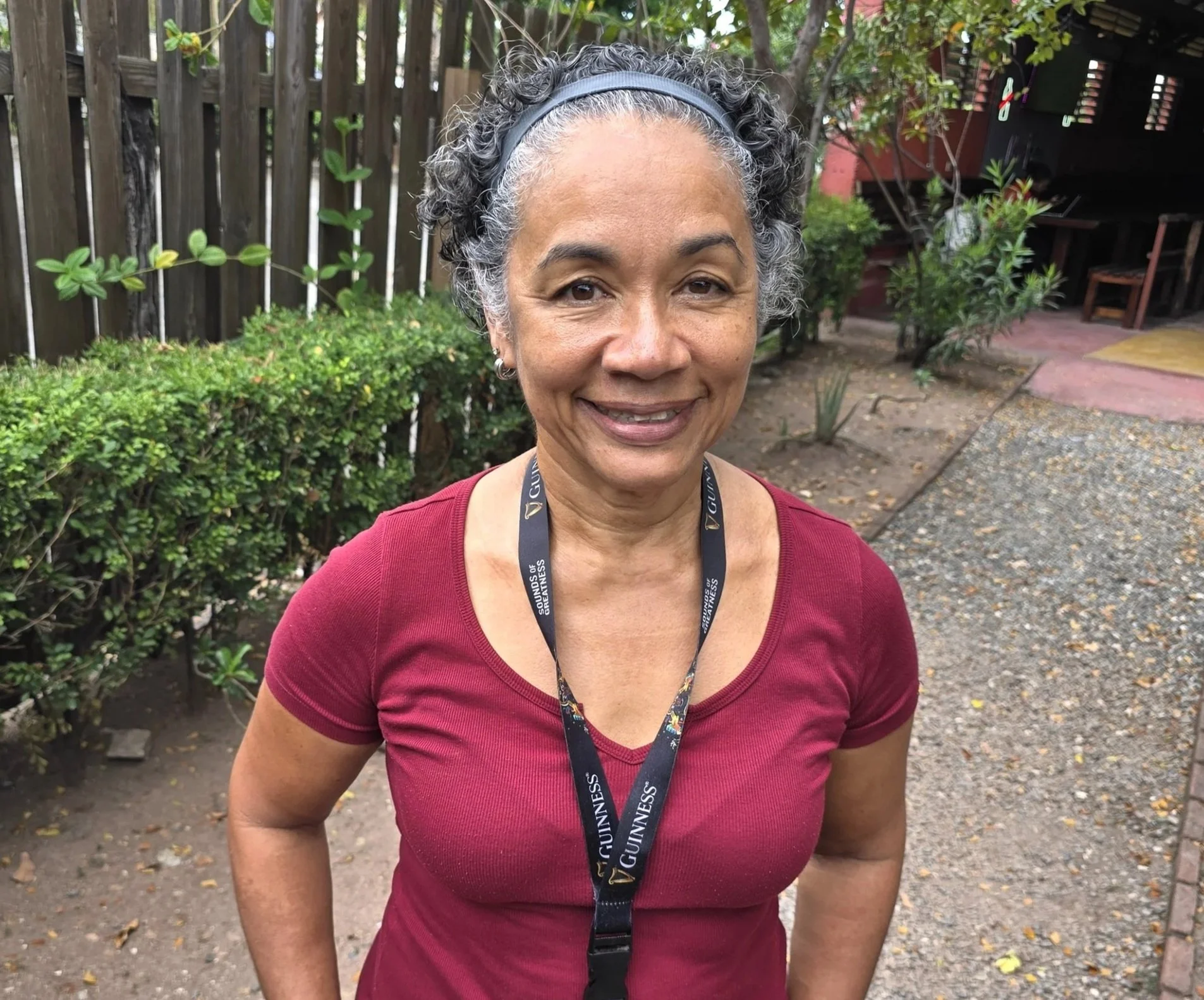
From Bay Street to the Bencher’s Table, Tanya Walker leads with purpose
September 22, 2026
A decade ago, Tanya Walker broke new ground as the first Black woman elected a Toronto bencher of the Law Society of Ontario.
Her 2016 election gave her a voice on the governing body for Ontario’s lawyers and paralegals.
It was particularly noteworthy because Walker, still relatively early in her career and running a small law firm, did not fit the traditional profile of those elected to the position.
“Becoming the first Black woman elected as a Toronto bencher was significant to me because representation matters, particularly in the institutions that make decisions affecting our profession,” she said. “The fact that my peers supported me demonstrated that there was room for different experiences and perspectives at the table.”
Now in her third term, Walker continues to use the position to promote inclusion and ensure that a wider range of voices is heard within the profession.
Her leadership and commitment to opening doors for others have earned Walker a place among the 2026 cohort of 100 Accomplished Black Canadian Women. The initiative highlights the achievements, leadership and community contributions of Black women across Canada.
“Being named one of the 100 Accomplished Black Canadian Women is a tremendous honour, particularly because the recognition celebrates not only professional achievement, but also leadership and contributions to the advancement of Black women and girls,” she said.

Award-winning lawyer Tanya Walker is the founder, owner and managing partner of Walker Law (Photo by Ron Fanfair)
The daughter of Jamaican immigrants, Walker was raised to value education, hard work and the importance of creating opportunities for those who follow.
When she entered the legal profession, there were few Black women in senior or highly visible positions. She hopes her journey will show the next generation that they belong at every level and can chart a path consistent with their own goals and values.
“I hope that young Black women who see this recognition understand that there is a place for them at every level of the profession -- as litigators, managing partners, business owners and leaders within institutions,” Walker said. “I also hope they understand that their path does not have to look like anyone else’s. You can build a career that reflects your own ambitions and values while creating opportunities for others along the way.”
Called to the bar in 2006 after earning an Honours Bachelor of Commerce degree, with a minor in economics, from McMaster University and a law degree from Osgoode Hall Law School, she began her career at two Bay Street firms, gaining valuable experience. At the same time, she also confronted questions about whether she could attain equality and professional fulfilment in a workplace culture she did not control.
“I did not always feel that I was treated with the same respect or as an equal,” pointed out Walker who was recognized by the Canadian Association of Black Lawyers in 2015 with the Law Practice Award. “In my experience, my gender, my race and my socioeconomic background all played a role.”

Tanya Walker was the recipient of a CABL Award in 2015 (Photo by Ron Fanfair)
Neither of her parents attended university, and she entered the legal profession without the family connections and established networks available to some of her colleagues.
Walker had always aspired to become a partner.
Her experiences on Bay Street, however, led her to question whether attaining that position would ensure that her judgment and contributions were valued equally.
“If I did not believe I was being treated with equality and respect as an associate, why would I expect that simply becoming a partner would change that?” Walker recalled asking herself.
Instead of spending her career trying to fit into a workplace culture she could not control, she decided to build one that reflected her values.
“I wanted to create a firm where people were treated the way I wanted to be treated with respect, fairness and an opportunity to succeed based on the quality of their work,” noted Walker.
In 2010, just four years after being called to the bar, she established Walker Law with a part-time assistant.
Understanding the value of guidance from experienced practitioners, she rented space from an established commercial litigation firm whose partners agreed to mentor her.
Although she could have worked from home, Walker regularly went to the office, including on weekends, to observe and learn from the senior lawyers.
The mentorship continued for about six years.
Walker also invested considerable time in developing her legal expertise. During the firm’s early years, she sometimes devoted three or four times the number of hours to a matter than she ultimately billed.
The 2016 Precedent Setter Award winner continued researching and refining her arguments until she was satisfied that she had done everything reasonably possible to strengthen them. Rather than charge clients for all the additional time, Walker regarded it as an investment in her professional development.
That investment has continued to pay dividends.
“The client who comes to us today benefits from the time I invested years ago,” she said.
Providing high-quality legal services at a reasonable cost became one of Walker Law’s founding principles.
Walker applied the same standard whether the client was an individual, a small business or a major corporation.
She also learned that exceptional service requires anticipating clients’ needs rather than simply responding to their instructions.
When a large corporate client sometimes learned about lawsuits after valuable time had elapsed, Walker asked her assistant to periodically check court records for new proceedings involving the company. The firm provided the service without charge, allowing it to identify claims sooner.
Walker Law took a similar approach with another client for which it was handling several matters. The firm began preparing consolidated status reports, initially at no cost. The client recognized their value, and they eventually became part of the services the firm provided.
“Understand what your client needs, take the initiative to solve a problem, demonstrate the value and then build from there,” said Walker who was honoured with the National Bar Association Chair’s Award for Outstanding Service in 2014.
That approach helped Walker Law grow from a one-lawyer operation with a part-time assistant into a firm with 18 full-time employees. The boutique commercial litigation practice is now an approved legal-services provider for multiple Fortune 500 companies.
Despite that growth, Walker said the firm remains guided by the principles on which it was founded.
“Do your best work, treat the client’s money as though it were your own, think beyond the immediate assignment and take a long-term view of both your expertise and the relationship,” she said.
Walker has also sought to remove some of the biases and barriers she encountered earlier in her career.
The firm uses a blind hiring process designed to assess candidates on their abilities rather than their backgrounds or personal connections. Applicants are asked the same questions and evaluated using a common rubric, with offers based on their rankings.
Of the firm’s 18 full-time employees, nine are visible minorities and 11 are women. Both partners are women.
Although candidates’ backgrounds do not influence hiring decisions, Walker said the different experiences and perspectives they bring become valuable once they join the firm.
“When we are developing a strategy for a client, those different experiences can bring additional perspectives to the discussion, help us identify issues or approaches that might otherwise be overlooked, and encourage us to test our assumptions,” she said. “For me, inclusion is not simply about who is sitting at the table. It is about whether different perspectives are heard once people get there and whether the systems we create give talented people a fair opportunity to get to the table in the first place.”

Tanya Walker with former Canadian national basketball team player Sherman Hamilton (l) and Basketball Hall of Fame broadcaster Paul Jones at the St. Lucia Toronto Association golf fundraiser in September 2015 (Photo by Ron Fanfair)
Walker has carried that philosophy into her work with the Law Society.
Rather than focus on being the first Black woman elected as a Toronto bencher, she has sought to make a meaningful contribution.
Her work has included chairing the Law Society’s Human Rights Monitoring Group, which intervenes when lawyers, judges, other legal professionals and human-rights defenders around the world face threats to their liberty or independence because of their work.
She has also advocated for mentorship, greater diversity and a stronger voice for lawyers from different backgrounds and firms of all sizes.
Although the legal profession has changed considerably since Walker was called to the bar 20 years ago, she said Black and other racialized lawyers still face barriers to mentorship, sponsorship, business-development opportunities and the informal networks that can be critical to career advancement.
She believes senior lawyers and legal organizations have a responsibility to make those opportunities more accessible and to look beyond those traditionally included in influential professional circles.
Walker said young lawyers must also take an active role in shaping their careers.
“An opportunity may not always arrive as a formal mentorship program or an invitation,” she said. “Sometimes you have to put yourself in the room, demonstrate initiative and give someone a reason to invest their time in you, irrespective of whether that person comes from a different background.”
Early in her career, Walker tried to complete assignments ahead of schedule and understand the entire file rather than limit herself to the specific task she had been given. By anticipating what senior lawyers and clients might need next, she earned the trust of colleagues and gained opportunities to work on significant matters.
She also encourages young lawyers who work remotely to consider what they may miss when experienced colleagues are in the office. Informal conversations, invitations to meetings and opportunities to observe senior lawyers solving problems can all contribute to professional development.
“Flexibility is valuable, but so is proximity to people from whom you can learn,” said Walker who was the recipient of a Harry Jerome Award in 2013.

Tanya Walker was honoured with a Harry Jerome Award in 2013 (Photo by Ron Fanfair)
For her, creating a more equitable profession requires institutions to remove barriers while young lawyers prepare themselves to take advantage of the opportunities that follow.
“Firms and senior lawyers need to provide meaningful access to mentorship, important files, clients and business development opportunities, including to lawyers who may not look like them or come from the same background,” she said. “At the same time, young lawyers have to take initiative when those doors are opened. They must be prepared, be curious, make themselves useful, build relationships and take advantage of opportunities to learn. Greater equity requires removing unnecessary barriers, but professional development also requires individual initiative. We need both.”
A decade after her groundbreaking election, Walker is doing more than occupying a place where Black women had not previously been represented.
Through her leadership at the Law Society and the inclusive workplace she has created at Walker Law, she is widening the path for those who will follow.