Ocho Rios fishermen become guardians of the sea
September 18, 2026
Noel ‘Cookie’ Francis does not need a scientific report to understand why protecting the waters off White River in Ocho Rios matters.
The lifelong fisherman has watched the sea provide food, income and a way of life for generations of families. Today, as president of the White River Fishermen’s Association (WRFA), he is helping preserve that vital resource for those who will follow.
“It is our bread and butter,” said Francis, 67. “This fishing village comes from tradition. The folks before us gave us a start and handed the baton to us to take it a step further. We are trying our best to do that.”
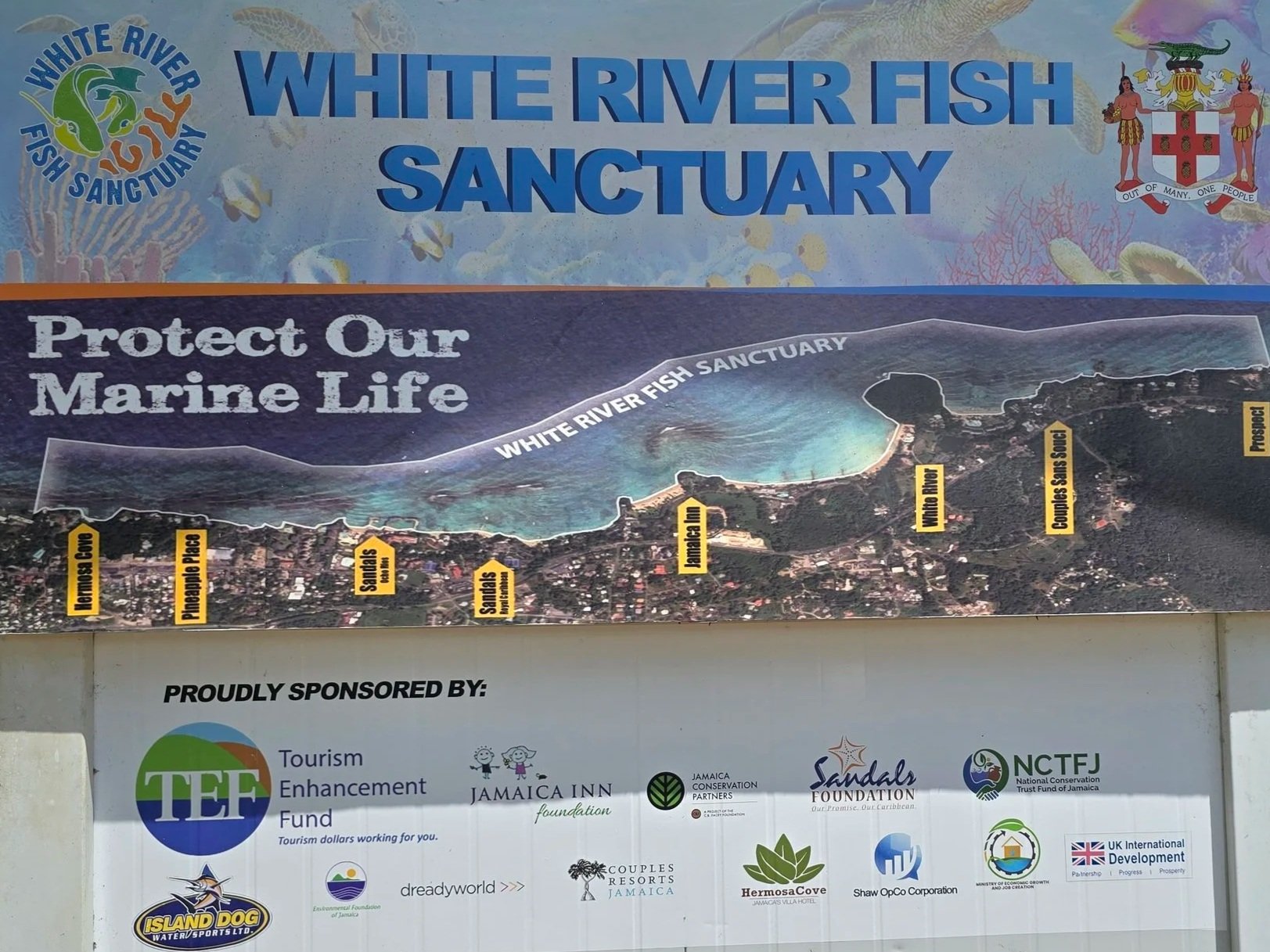
That commitment has united fishermen, hoteliers, environmental advocates, government agencies and community members through the White River Fish Sanctuary (WRFS). The 150-hectare special fishery conservation area was established to restore fish populations and damaged coral reefs while protecting local livelihoods.
Guided by its motto, ‘Protect, Restore, Engage’, the sanctuary combines marine conservation with community education and involvement.
The fishermen are not merely observers. They are active partners who participate in decision-making and help shape conservation measures affecting those who depend on the sea.
As a member of the sanctuary’s executive board, Francis presents proposals to the fishermen’s association and brings members’ views back to the board before decisions are made.
“We may agree or disagree, but as president, I take the matter to the fishermen,” he said. “If they support it, I return to the board and let them know we are on board.”
Nearly 30 fishermen are registered with the association, which continues to encourage others to join. Their involvement is essential because conservation restrictions may initially seem threatening to people whose livelihoods depend on fishing.
The White River sanctuary, however, was created to strengthen the fishery rather than end fishing. Protecting an area where fish can reproduce and mature is intended to increase the number and size of fish eventually caught outside the sanctuary’s boundaries.
The partnership has also encouraged fishermen to reconsider practices that damage the environment on which they depend.
Francis said increased awareness has changed attitudes towards pollution, particularly the improper disposal of plastics and other waste.
“We are not the problem,” he noted. “We are trying to be part of the solution. We have to play our part as fishermen and look after our environment. When someone throws plastic away, other creatures suffer the consequences, and it can also affect the fish we depend on.”
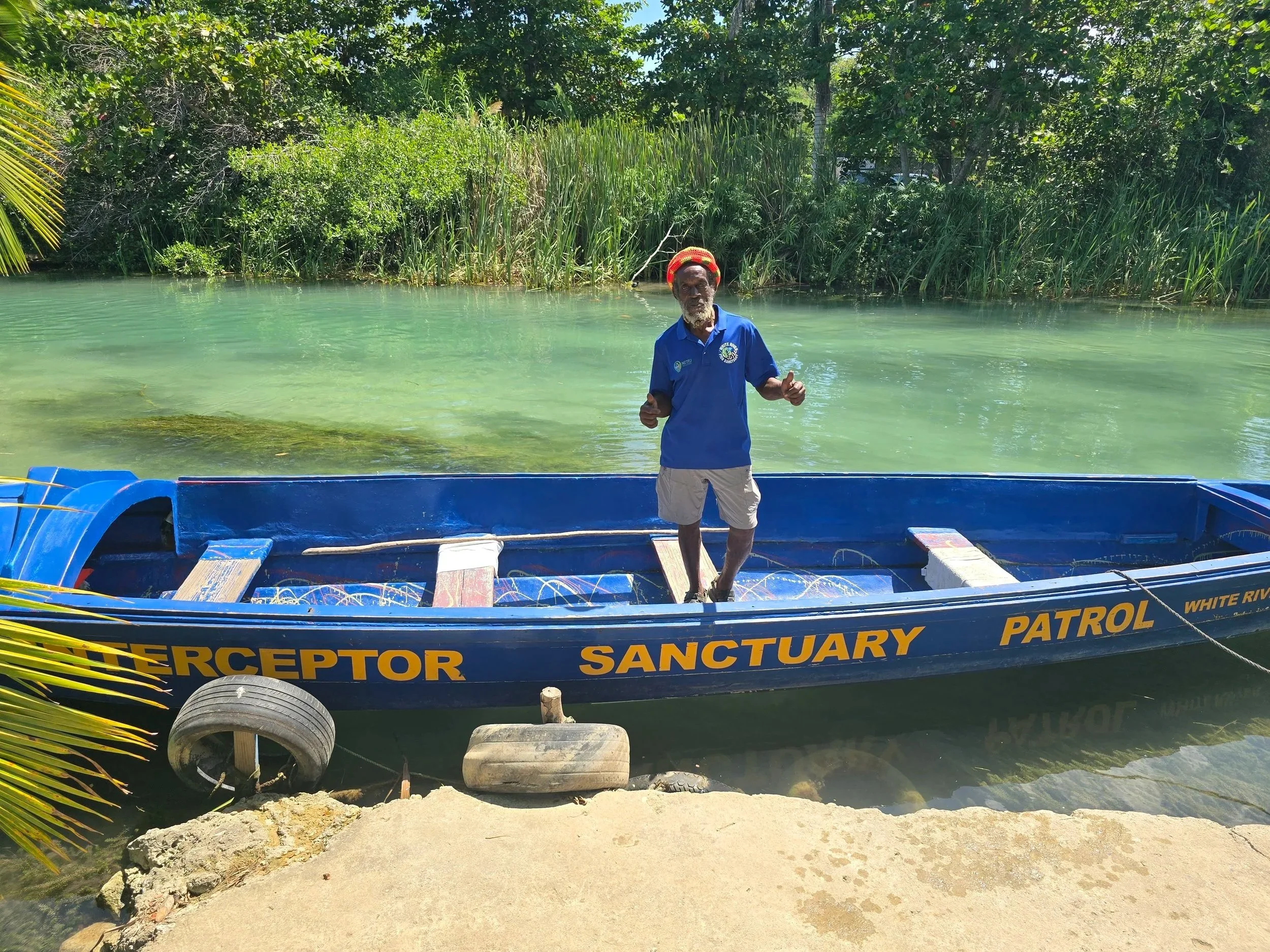
Noel ‘Cookie’ Francis (Photo by Ron Fanfair)
Francis does not hesitate to challenge harmful behaviour when he sees it.
“I take it very seriously,” he noted. “If I go out there and see someone throwing plastic away, I raise hell. I tell them that is a no-no and that I am going to bring it up at the meeting.”
For him, the relationship with the White River Marine Association has also opened opportunities for fishermen to visit other sanctuaries, exchange information and learn new approaches.
“It helps us to go places and interact with other fish sanctuaries and other people,” Francis said. “We share our knowledge and they share theirs with us. It is a win-win.”
His attachment to the ocean is deeply personal.
“Whenever I am not on the ocean, I don’t feel good,” added Francis, who lives about three miles from the sanctuary. “I love this work. White River is my happy place, especially among the fishermen and the White River Marine Association.”
The community-driven project was highlighted during the Jamaica Product Exchange (JAPEX) 2026 in Ocho Rios when media visited the sanctuary for a corporate social responsibility activity.
Former Jamaica Hotel and Tourist Association president Nicola Madden-Greig joined the volunteers in learning how coral nurseries are assembled and used at sea.
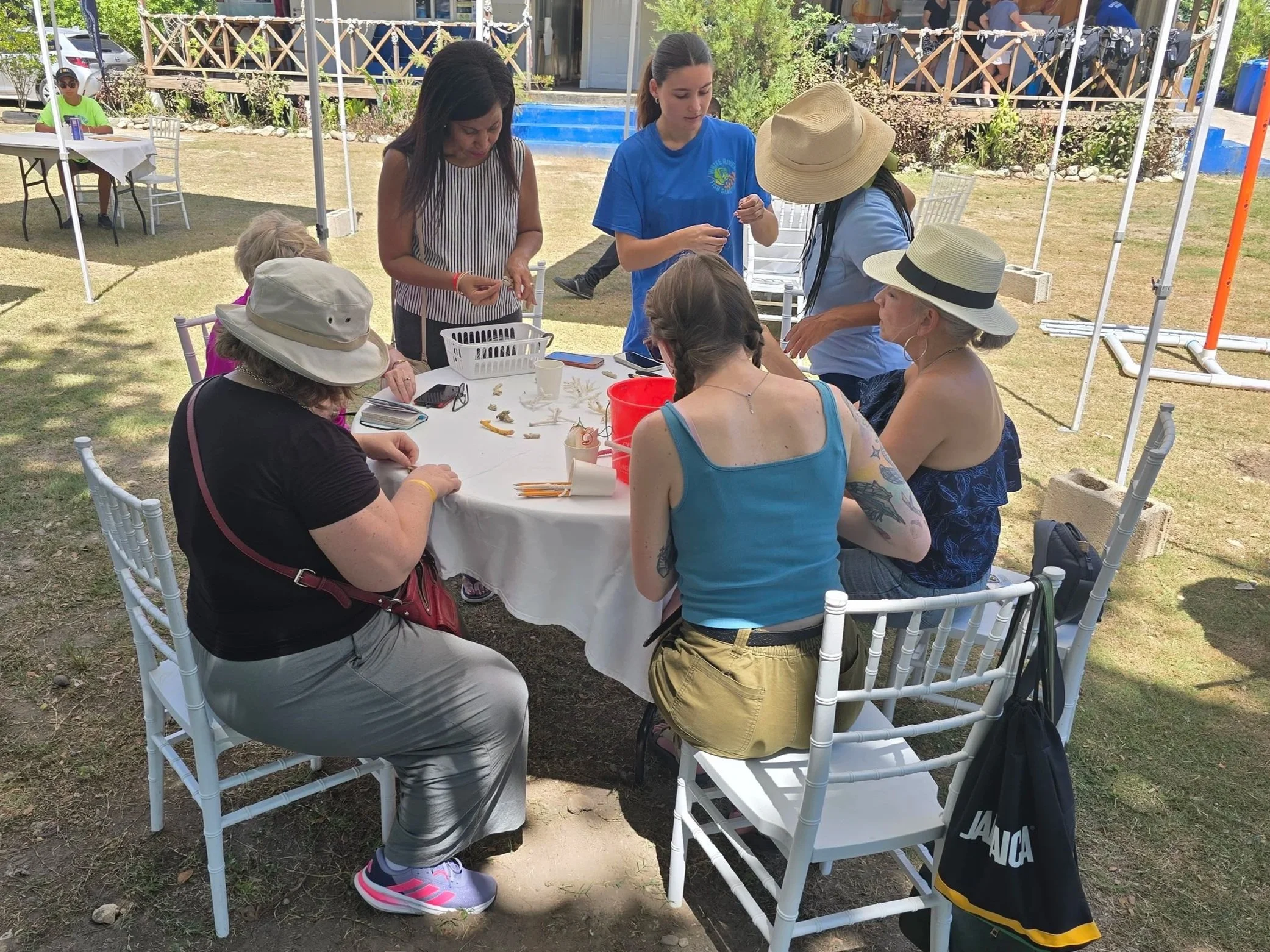
Former JHTA president Nicola Madden-Greig joined foreign journalists who volunteered for a few hours at White River Fish Sanctuary (Photo by Ron Fanfair)
Her involvement connected Jamaica’s leading tourism trade event with efforts to protect the marine resources on which the industry depends.
The visit was more than ceremonial.
Participants gained practical insight into coral restoration, water-quality testing and the scuba equipment the sanctuary team uses to survey marine life and conduct its underwater work.
Sanctuary manager Jonathan Hernould said the structures assembled by the volunteers were replicas of the nurseries used beneath the surface.
“We are showing our volunteers how we set up our coral nurseries at sea,” the environmental consultant said. “This is a mock-up of exactly what they look like. When we propagate corals, we place them in nurseries like these.”
The activity also highlighted the work of marine biologist Francesca Russell and other specialists who tend coral, monitor fish populations and collect scientific data.
Volunteers learned how the sanctuary regularly tests water quality at its office on the banks of the White River and at sites farther upstream in the White River Valley.
“We conduct regular water-quality tests of the White River,” Hernould said. “This is one of the methods we use with volunteers to collect data about the health of the river.”
The connection between the river and the sea is critical.
Pollution entering the river can eventually reach the coastal ecosystem, threatening coral, seagrass, fish and other marine life. Protecting the sanctuary therefore requires attention to what happens on land as well as beneath the water.
Scuba diving is another essential part of the operation, allowing the team to restore coral and survey marine life throughout the sanctuary.
The JAPEX visit demonstrated that corporate social responsibility can extend beyond financial contributions. It allowed media representatives to see the challenges firsthand, participate in restoration activities and better understand why environmental protection is essential to the long-term sustainability of Jamaica’s tourism industry.
Few people understand that connection better than Kyle Mais, managing director of Jamaica Inn and a founding director of the White River Marine Association (WRMA) which operates the sanctuary.
About 12 years ago, he was among a small group of Ocho Rios stakeholders invited by the National Environment and Planning Agency to discuss the resort town’s deteriorating marine environment.
The warning signs were clearly visible.
“When you grow up in Jamaica, especially in Ocho Rios, you are used to seeing fishermen walking along the road with their catch,” Mais said. “Over time, you could clearly see the reduction in its size. The fish being caught were much smaller, and the fishermen’s catches had declined significantly.”
Conversations with local fishermen confirmed that the problem was more than anecdotal.
“We were told that life as a fisherman in what had once been a fishing village had changed significantly,” noted Mais. “It had become much more difficult and unsustainable.”
The stakeholders formed the WRMA and commissioned a baseline study of the coral reefs and surrounding marine environment. The study identified damage caused by overfishing, pollution, storms, anchors and other human activity.
The association then worked with the fishermen to establish a conservation area. Drawing on their extensive knowledge of the seabed, fishing grounds and water depths, the fishers helped determine the sanctuary’s size and boundaries.
“They were instrumental in creating the sanctuary and designing its shape and size,” Mais said. “They know the topography. They know where it is too deep to use fish pots and where spear fishermen cannot go. They were part of those initial conversations.”
The association also helped the fishermen form an organization and employed 12 local fishermen as sanctuary wardens.
“Who better to protect it than the fishermen themselves?” Mais asked.
The positions provided steady income at a time when fishing alone could no longer adequately support many families. Improvements were also made to Fisherman’s Beach, including the installation of sanitary fish-cleaning facilities and freezers that allow fishers to keep their catches fresh longer.
“The fishermen have a very symbiotic relationship with the sanctuary,” Mais said. “I am confident that is one of the reasons it has been so successful.”
The sanctuary initially set a five-year goal of increasing fish biomass by 500 percent and growing and planting 5,000 pieces of coral. Progress was slow during the first few years, but by the third and fourth years, fishermen and sanctuary officials were seeing more fish on the reefs and larger catches outside the protected area.
The sanctuary later experienced significant setbacks.
In 2023, unusually high water temperatures triggered a major coral-bleaching event that killed substantial amounts of coral across Jamaica and the wider Caribbean. Around the same time, the population of long-spined sea urchins declined sharply. The marine animals graze on algae and play an important role in keeping reefs clean.
With fewer sea urchins present, algae covered the weakened coral and contributed to further losses.
Despite those challenges, the number and size of fish increased inside the sanctuary and in surrounding waters. Coral replanting resumed, monitoring continued and most local fishermen respected the restrictions prohibiting fishing within the protected area.
Mais said the sanctuary’s primary purpose has sometimes been misunderstood.
“It was not necessarily a protection plan at first; it was a fishing plan,” he said. “It was about improving fishing for the fisherfolk rather than simply telling them to stop. Protection was one measure taken to achieve that larger goal, and it was clearly working.”
The sanctuary has established new targets for 2030, including a 300 percent increase in fish biomass and the planting of 3,000 pieces of coral. It is also developing a land-based facility where heat-resilient coral fragments can be cultivated before being transplanted to the reef.
The project’s importance extends beyond restoring fish populations. Coral reefs help protect shorelines from waves and erosion while contributing to the formation and preservation of beaches. Seagrass beds and mangroves provide habitat for marine life, store carbon and help shield coastal communities from damage.
Healthy marine ecosystems are therefore essential to fishermen, residents, tourism operators and others whose livelihoods depend on Jamaica’s coastline.
“Tourism stakeholders have the most to lose,” Mais said. “The reefs we are protecting are now among the most beautiful because they are being managed, protected and replanted.”
The sanctuary receives support from government ministries, hotels, villas, foundations and companies outside the tourism sector. Depending on its activities, however, it costs between US$12,000 and US$15,000 a month to operate. Expenses include wardens’ salaries, boats, patrols, diving equipment, insurance, monitoring technology and coral restoration.
Mais said Jamaica has approximately 18 fish sanctuaries and marine parks, although not all are active.
Greater collaboration could create a stronger national network and improve efforts to engage Jamaicans in Canada and other parts of the diaspora.
“As the saying goes, it takes cash to care,” he said. “It takes significant financial resources to operate a sanctuary as it was designed.”
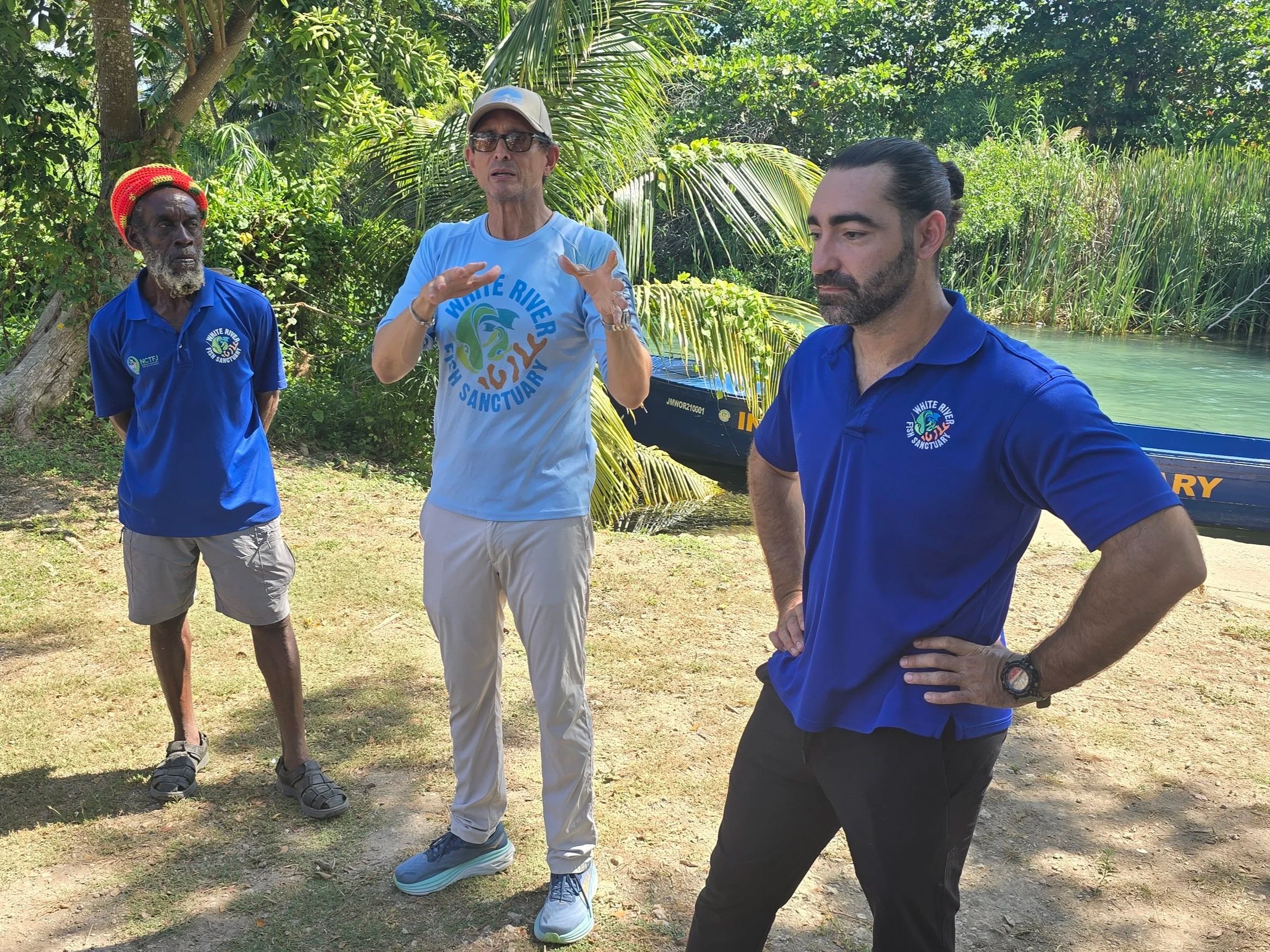
Kyle Mais (c) with sanctuary manager Jonathan Hernould (r) and White River Fisherman Association president Noel ‘Cookie’ Francis (Photo by Ron Fanfair)
Mais also has a personal connection to Canada.
After attending Campion College in Jamaica, he received a swimming scholarship to St. Andrew’s College in Ontario. He later earned his undergraduate degree at Bishop’s University in Quebec before returning to Jamaica in 1989.
An accomplished swimmer who represented Jamaica at the CARIFTA Games and Commonwealth Games, Mais has always been drawn to the water.
Renowned marine wildlife artist and conservationist Guy Harvey introduced him to scuba diving, and he later became a divemaster. His early career in the hotel industry included overseeing watersports and diving operations.
“The plan was always to come back,” Mais said of returning to Jamaica after six Canadian winters.
That decision eventually placed him at the centre of a partnership showing that environmental protection and economic survival are not competing interests.
“What we hope to do now is duplicate what we are doing here,” Mais said. “It is not about preventing fishing or stopping people from enjoying the beach. It is about ensuring that fishing and those other activities can continue. Otherwise, if we keep doing what we have been doing, we will lose it all.”
At White River, Francis and his fellow fishermen are helping to prevent that loss. Their participation provides the sanctuary with local knowledge and credibility while ensuring that those most affected by its regulations have a voice in its operation and a stake in its success.
The reef lies below the surface, but its value is visible throughout Ocho Rios in the fishermen returning with their catches, the visitors attracted by clear water and thriving marine life, the beaches protected by a healthy coastal ecosystem and the families hoping the sea will continue to sustain generations to come.