Savanna Royes’ legacy helps open doors in aviation
November 22, 2026
A four-minute walk from Loraine Royes’ Aurora home leads to a bench and tree dedicated to her daughter. The family calls it ‘Savy’s Spot’.
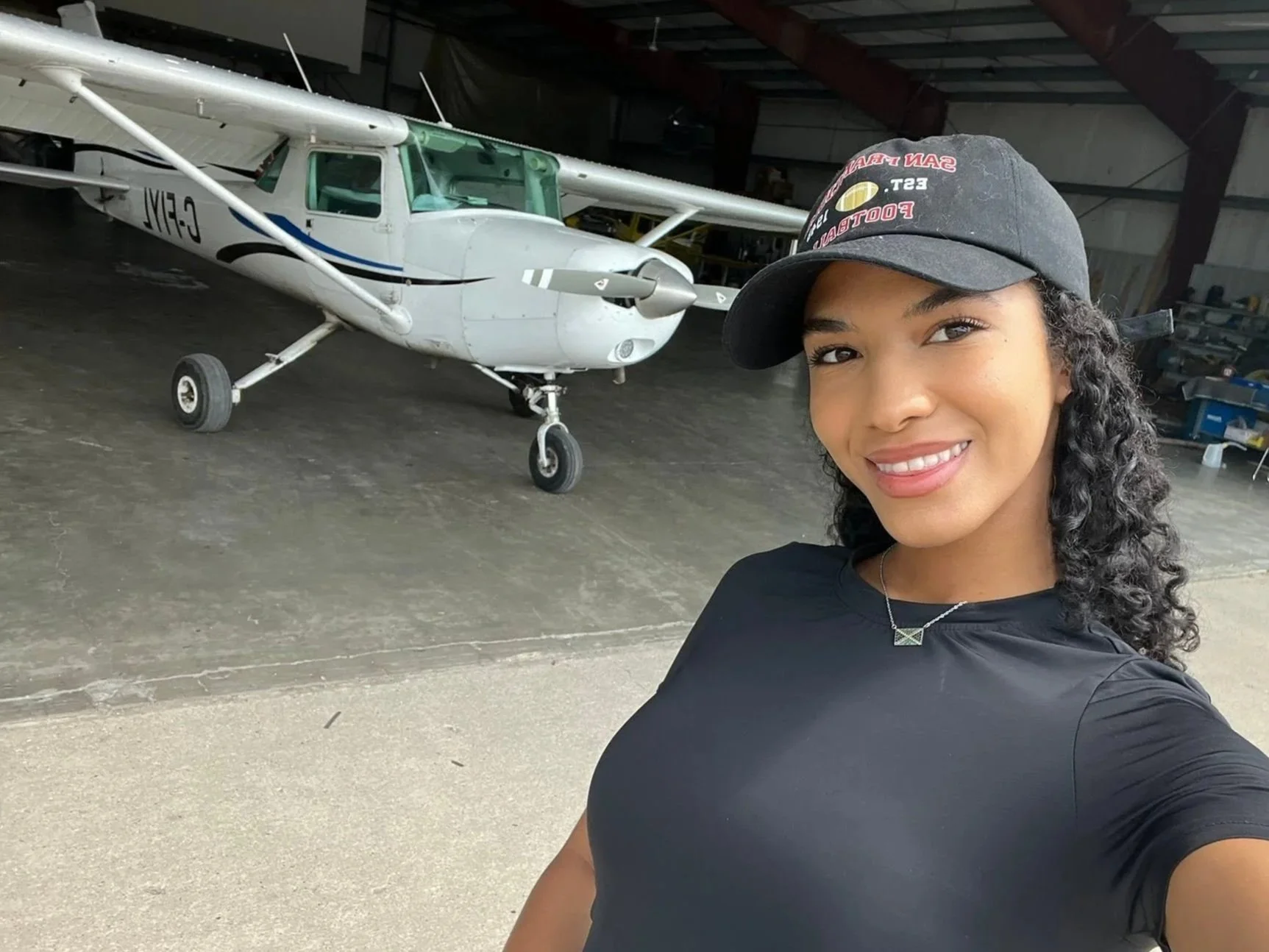
Within a week of losing Savanna Royes, her parents began considering how to honour her. Just 20 and a few weeks away from earning her private pilot’s licence, she died in a midair collision during a training flight near Steinbach, Manitoba, in July 2025.
“It’s been a really tough year for us,” her mother said at the Urban Pilots & Professionals Network’s (UPN) year-end gala in Mississauga on November 21. “But we’re turning her pain into purpose.”
That purpose took shape in February 2026 when the family and UPN established the Savanna May Royes Aviation Safety Grant. The family’s fundraising efforts brought in $22,000 for the grant, including $10,000 from a single donor.
The annual $2,000 award helps UPN members from underrepresented communities cover the cost of flight safety materials and attend an international aviation safety conference.
At the gala, pilot Allison Couch, one of the women Savanna looked up to, reflected on what it meant to be the grant’s first recipient.
“Knowing the family and what they’ve been through and knowing Savy, it means everything,” the Air Transat first officer said.
Tim Royes introduced Couch to his daughter. The two pilots worked together at Coywolf Aviation where she flew the Pilatus PC-12 and he flew helicopters.
Her own interest in flying also began at home.
“My father was an aircraft mechanic and he introduced me to aviation at a young age through trips to air shows and travels abroad,” said Couch who was a flight attendant with Emirates for five years. “I just really wanted to follow in his footsteps.”
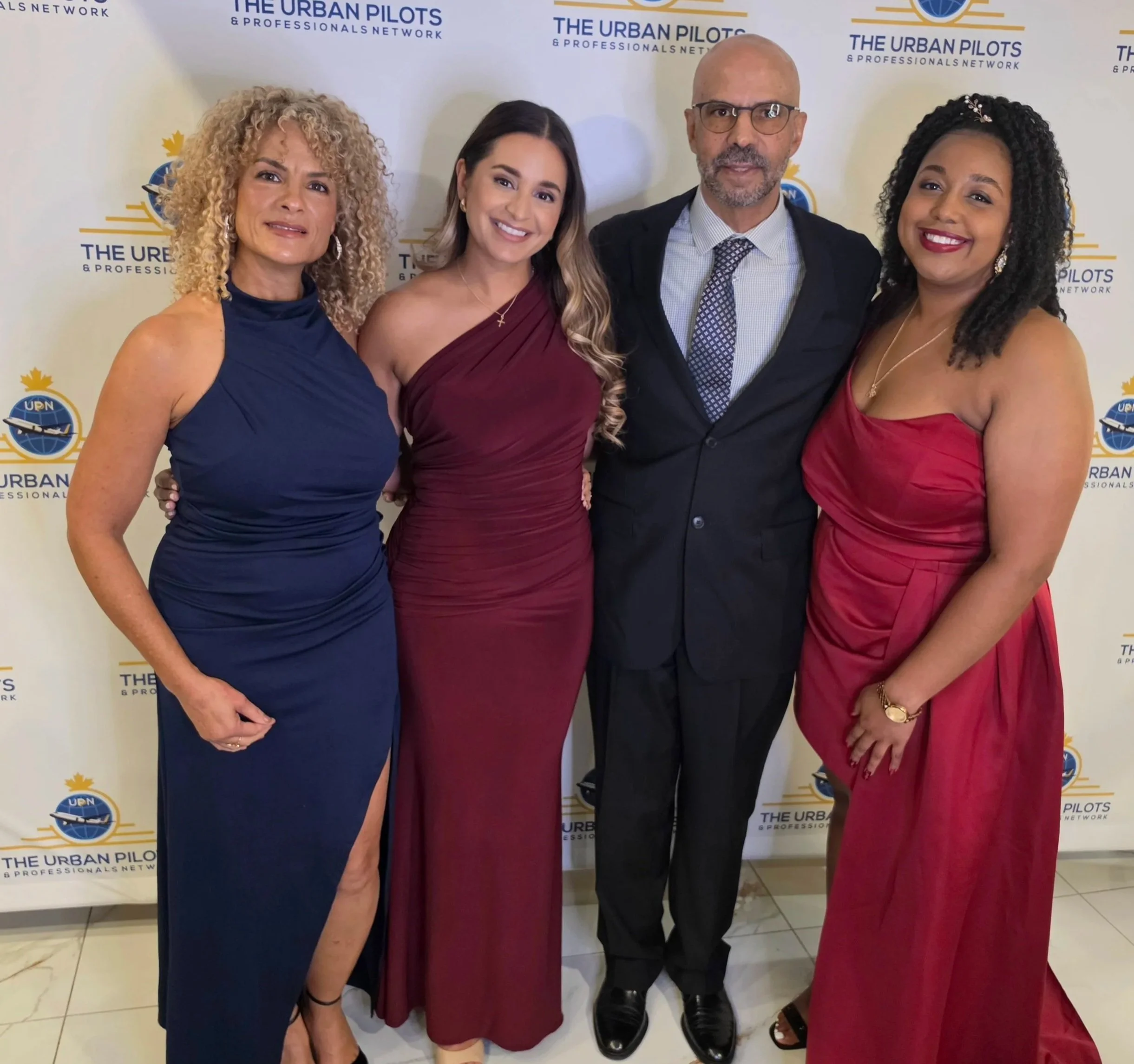
Loraine (l) & Tim Royes with inaugural Savanna May Royes Aviation Safety Grant recipient Allison Couch (second from left) and UPN director of scholarships Arianna Woodley (Photo by Ron Fanfair)
Savanna was a year old when Tim first took her up in his helicopter. Years later, when she began considering aviation as a career, he knew how demanding the work could be and initially tried to steer her away from it.
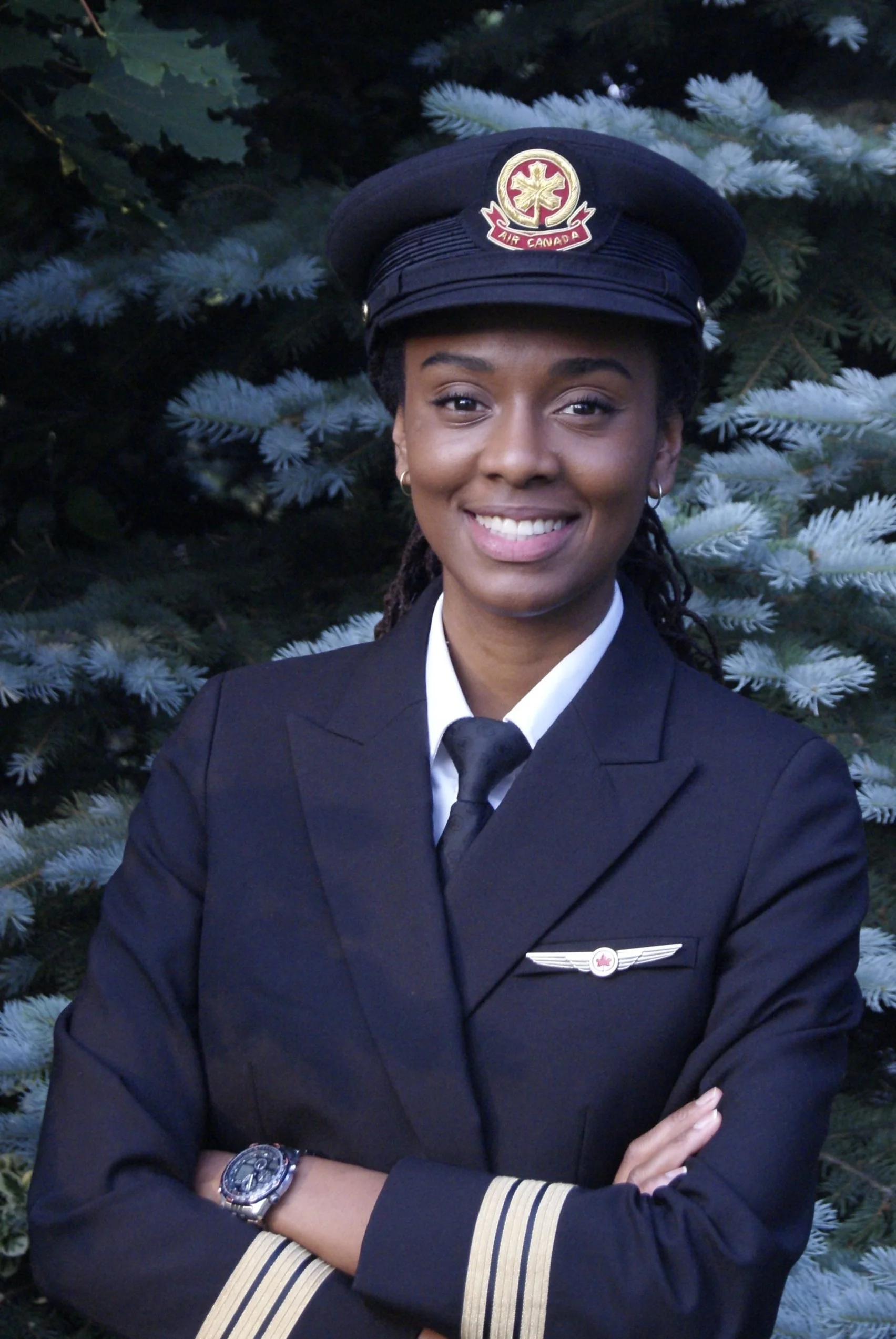
Seeing Couch and Zoey Williams, Air Canada’s first Black woman pilot, fly professionally helped Savanna picture herself in the cockpit.
She began flight training in Manitoba in March 2025. By the time of her final flight, she had logged 59.3 hours, including 14.4 flying solo.
Had Savanna earned her commercial pilot’s licence, she would have been the fifth member of the Royes family and the first woman in the family to do so.
UPN posthumously named Savanna an honorary member at its 2025 year-end gala. Last July, more than 350 people took part in a five-kilometre memorial walk in Aurora to mark the first anniversary of her death.
“About 50 people registered that morning, and some participants came from as far away as Winnipeg and New Brunswick,” said Loraine Royes, whose late father, Herbert Bradford, designed several Jamaican landmarks, including the Bank of Jamaica. “The route through the Aurora Arboretum passed the bench and tree dedicated to Savy. It was an incredible afternoon. It was everything and more.”
Decades before Savanna took up flying, her father helped bring a Jamaica Defence Force (JDF) helicopter down safely after an engine malfunction.
On February 14, 1992, he was one of two pilots carrying late General Colin Powell, then chairman of the U.S. Joint Chiefs of Staff, and his wife, Alma, from Up Park Camp to Norman Manley International Airport. The Powells were to transfer to a U.S. Black Hawk helicopter for a visit with American troops on the island.
After the JDF rotorcraft stalled on its final approach to the airport, the pilots made an emergency landing in a sandy area close to where fuel is stored.
By the time Royes saw Powell again in Toronto in November 2013, he was chief pilot of the York Regional Police helicopter. The reunion gave Powell another chance to thank the former Wolmer’s student for his help.
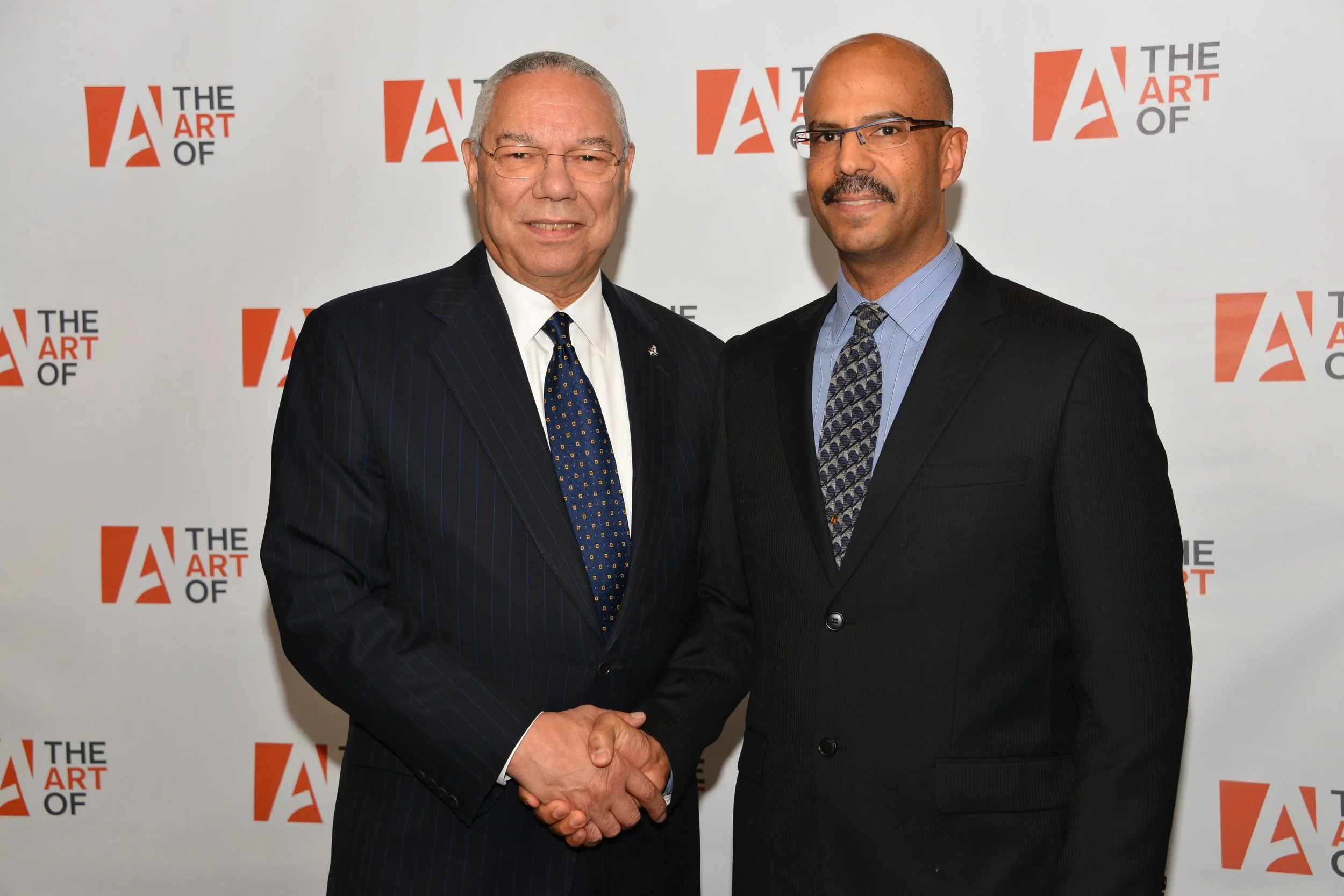
Tim Royes and the late Colin Powell reunited in Toronto in 2013 (Photo contributed)
At this year’s gala, Stephon Lamy spoke about what it took to pursue aviation after moving to Canada from Trinidad. When he received an Aviation Excellence scholarship in 2025, he was taking flying lessons while working as a line service representative at Porter Airlines. He is now a certified flight dispatcher with the airline and is working toward his commercial pilot’s licence.
“Leaving was hard for me,” Lamy said of moving from Trinidad.
He credited the guidance he received in Canada with helping him pursue an aviation career, where the high cost of flight training can be a barrier.
“I sacrificed a lot,” Lamy, the recipient of the UPN Outstanding Member of the Year Award, said. “The flight training is very expensive.”

Stephon Lamy (l) & his mentor Karl Loken who is a first officer with Porter Airlines (Photo by Ron Fanfair)
He acknowledged UPN with helping him find his footing and thanked WestJet and the Dream Never Dies Foundation for their financial support.
Lamy plans to study for the commercial pilot written exam over the winter before pursuing multi-engine and instrument training.
Karl Loken, who mentors Lamy, said the young man made the most of the help he received.
“From the time I met him, he’s been a very motivated young man,” the Porter Airlines first officer said. “I see an incredible amount of potential in him. He has made the most of his time in Canada by staying open-minded, adapting and showing a willingness to learn.”
UPN introduces young people to aviation through school visits and summer camps.
For a Black student who has never met a pilot, a school visit can be a first chance to ask how someone in the profession got started. At camp, children learn the basics of flight, try simulators and can fly in a four-seat aircraft with a certified pilot. As students begin exploring careers, mentors help them weigh their training options, while scholarships supported by Air Canada, WestJet and NAV CANADA can help cover the cost.
Coneil Campbell, the UPN vice-president and Air Canada first officer, said the most rewarding part of putting on the event is seeing young people make connections that could open new paths for them in aviation.
UPN named Ruba Al-Nazer an honorary member at the gala. As Toronto Pearson’s director of community engagement and impact, she partners with local organizations to help residents near the airport access job training and overcome barriers to employment.
Gala speaker Deborah Flint, president and chief executive officer of the Greater Toronto Airports Authority, drew on her own career to talk about who gets a start in aviation.
Born in Hamilton, she spent part of her early life in Jamaica, Nigeria and upstate New York. She took the helm at Pearson in 2020 after more than four years leading Los Angeles World Airports. She also served on President Barack Obama’s Advisory Committee on Aviation Consumer Protection.
Flint recalled applying for a job in her late 20s that she felt ready to take on. The hiring team told her she had shown she could deliver, but they chose someone who had already done the job. Looking back, she credited the people who helped her move forward in her career.
“Hard work is the mother of good luck,” she said. “Where there is hard work, the opportunities tend to open up. And so I also know that opportunities didn’t come to me just because of my grit, determination, my work, or my talent, but by the support of other people.”
Flint noted that professional networks can help young workers learn how decisions are made on the job by giving them a chance to observe experienced colleagues and ask questions. She said that kind of access matters as automation changes how people get their start.
“Entry-level jobs across all sectors are starting to disappear,” she pointed out. “They’re not there the way they used to because they are being automated. We’re already seeing that transition happen, which is why employment pathways for our youth are more important now than ever.”

Greater Toronto Airports Authority president & chief executive officer Deborah Flint and UPN president and Air Canada pilot Warren Holt (Photo by Ron Fanfair)
Flint pointed to Pearson’s partnership with Ingenium’s Canada Aviation and Space Museum, which aims to introduce more than 1,600 high school students to careers in aviation, aerospace and airport operations by 2028.
She asked gala guests to help students in their communities take part.
“Our vision is to put the joy back into travel by making Pearson the chosen place to fly and the chosen place to work,” said Flint who was the recipient of the UPN Recognition Award.
In May, Pearson broke ground on the first phase of Pearson LIFT, a decade-long modernization program that began with a $3 billion investment. The program includes upgrades to the airfield and baggage systems, along with improvements to Terminals 1 and 3.
Flint told pilots at the gala that the airfield work would lay the groundwork for technology that could help crews navigate runways and taxiways.
“We’re building the infrastructure today for future technologies that we know will be coming into aviation very soon,” she said.
Flint expects the number of people working at Pearson to grow from about 52,000 to 64,000 by the mid-2030s. She urged guests to consider who would have access to those jobs and which local businesses could compete for a share of the billions Pearson spends with suppliers and professional firms.
When Savanna Royes was deciding whether to pursue an aviation career, she could look to pilots like Couch.
A future grant recipient may first see Savanna’s name on an application. Behind it is the story of a young woman who flew solo, came within weeks of earning her private pilot’s licence and set out to become the first woman in her family to fly commercially. And when that recipient is asked who helped her get started, she will have a name to give.