Dwayne Holness honours the mother whose sacrifice gave him a second chance
October 27, 2026
At 23, Yvonne Robinson left Jamaica in 1993 with her five-year-old son, determined to build a life in Canada that would open doors for him.
Raising her only child in Toronto’s Jane and Finch community, she sometimes worked two jobs to make ends meet.
While Robinson worked to provide for him, Dwayne Holness became involved in a gang, was arrested and was expelled from school in Grade 10.
His mother’s reaction to the expulsion forced him to confront the direction his life was taking.
“I saw a look of defeat on her face that I will never forget,” Holness recalled. “She had tried so hard with me. Seeing her like that changed everything. I told myself, ‘You know what? I’m going to change and do better’.”
On October 23, the son who once saw defeat in his mother’s eyes gave her a reason to celebrate, accepting a Jamaican Diaspora Impact Award at the Toronto Botanical Garden.
As founder, president and CEO of Corex Creative, Holness has built a career in visual storytelling, worked with internationally recognized artists and opened professional production sets to young people eager to learn.
He dedicated the honour to the woman whose sacrifices made that journey possible.
“This one is dedicated to her,” he said. “It wouldn’t be possible if it wasn’t for her. This award is actually going to her, to really highlight her resilience and her vision and the hard work that she has put in to allow me to even stand in this position.”
For Robinson, the moment reflected how far they had come.
“I am so proud of my son,” the healthcare worker said. “I raised him all by myself. We both came here when he was five. I struggled along the way, and over the years he has made me so proud. I am so grateful to have him as a son.”
Robinson recalled moving from Toronto community housing to a condominium as she worked to improve their lives. Before smartphones, staying connected with her son required resourcefulness.
“It was pager days, so we had a code,” she said. “I would call him and he would know that it was me. That was how we communicated, because I was always on the road trying to make ends meet.”
Holness now understands more fully what it took for his mother to leave Jamaica and start again in another country.
“When I think of a risk-taker, I think of my mother,” he said. “She left everything she knew, her family and her friends, to seek a better life and greater opportunities for me. Looking back, that is what stands out most.”
Her willingness to embrace uncertainty continues to influence Holness decisions.
“A lot of us now are just planted, and we are afraid to jump into a new environment,” he said. “The fact that she has done it and she has successfully planted herself in a new environment is where most of my inspiration comes from.”
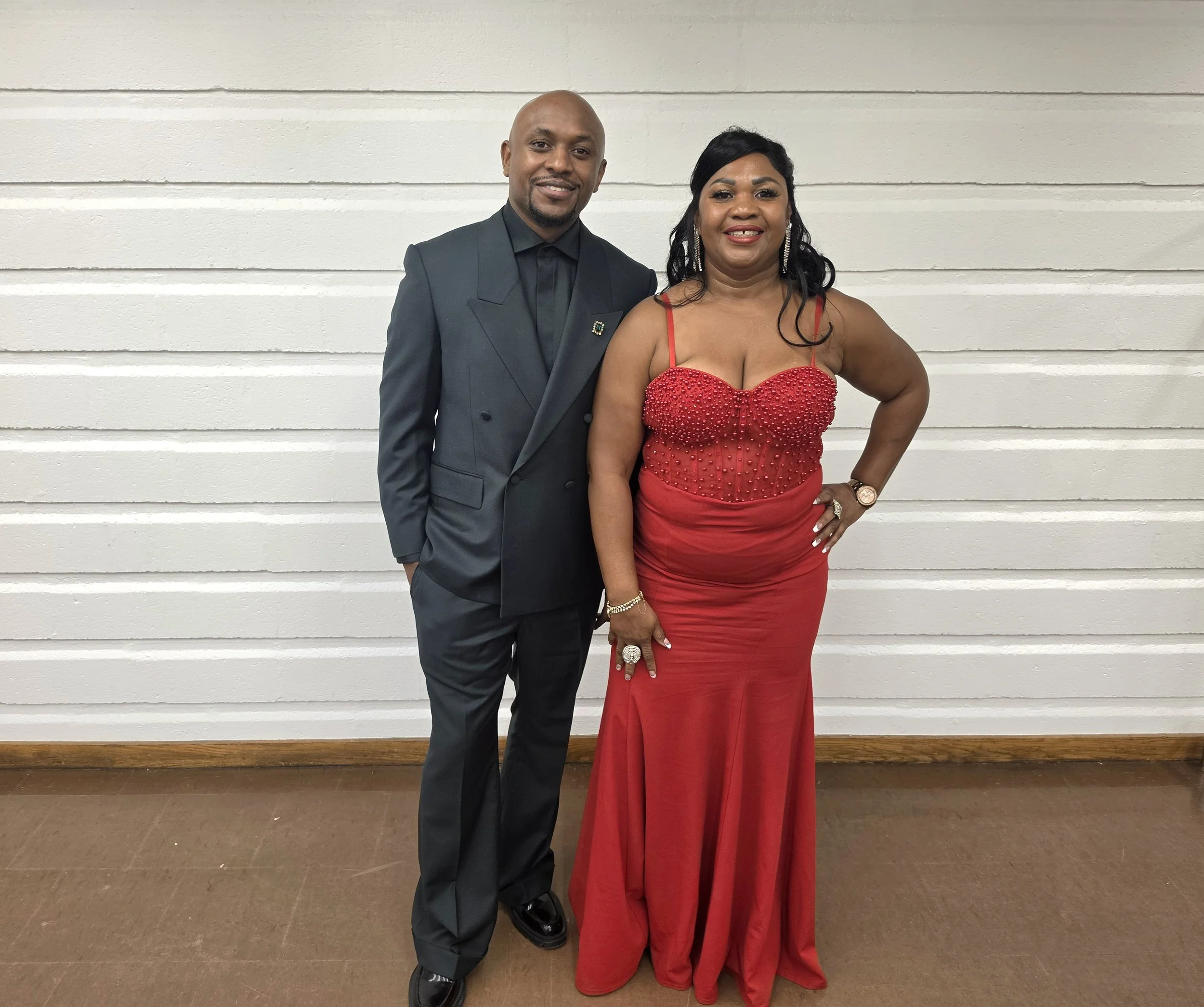
Dwayne Holness and his proud mom Yvonne Robinson (Photo by Ron Fanfair)
As a child, however, Holness struggled to find his place. With his father absent, he sought belonging among his peers. Once a target of bullying, he began bullying others and eventually led a gang.
“I was forced to find community in whatever ways that I could, whether good or bad,” he said.
Holness recalled keeping guns under his bed, losing friends to gun violence and watching others go to prison, knowing how easily he could have shared their fate.
“I could have been on the other side,” he said. “I believe God was rerouting me towards what he had planned for me. Having lived through those experiences, I can speak from a place of understanding.”
After his expulsion, Holness transferred to Emery Collegiate Institute where he completed his schooling. Keeping his promise to change meant confronting his behaviour and learning to see beyond the identity he had built among his peers.
An interest in the creative arts had already offered glimpses of a different future.
Watching Black performers on television, including those in The Fresh Prince of Bel-Air, helped him imagine possibilities beyond his surroundings.
In middle school, Holness accompanied a friend and the friend’s mother to meet an agent, an introduction that led to opportunities in acting and theatre. His curiosity soon extended beyond performing to how stories were told behind the camera.
“I was in front of the camera doing acting and doing theatre, but I saw the camera and I saw how they were able to tell a story,” he noted.
Unable to afford expensive equipment, Holness began making videos with a webcam in his bedroom. Friends joined him, and those early experiments became a way to express himself and document the lives around him.
“I was not only able to tell my story, but I was able to tell other people’s stories as well,” he said. “I saw the value in it.”
As people in his community recognized his talent, Holness began turning his creativity into a business.
“I saw an opportunity to use my creativity to help people around me, and that’s how Corex Creative began,” he said. “Making music videos and supporting community projects connected me with people who invested in me, opened doors and provided the mentorship to turn my vision into a business.”
That encouragement helped give Holness ambitions direction.
“I was just a raw talent, and I was able to find people to help me bring it to life,” he said.
Leading a company required more than creative ability.
Holness also had to communicate effectively, build trust and accept responsibility for people who depended on him.
“I had to soften myself,” he said. “I had to look in the mirror to really identify the person that I wanted to be in this life and the things that I would have to change to be able to become that. Sometimes we want to become things, but don’t realize the change that we have to make within ourselves.”
Convincing others that he had changed took time.
“People who had known me in my past life didn’t have the faith that I could have been that person that I was aiming to be,” Holness said. “It was an uphill battle trying to get people to see the new version of who I wanted to be.”
Those experiences helped him recognize struggles that others might conceal.
“When I share my journey, it gives people the opportunity to know that they’re not alone,” Holness said.
His understanding of storytelling’s purpose deepened through his collaboration with Somali-Canadian journalist Hodan Nalayeh.
Their partnership began in 2013 and took them on journeys documenting Somalia and its diaspora.
Nalayeh wanted to challenge narrow portrayals of her community by sharing stories of its people, aspirations and achievements.
“She believed in me as much as I believed in her,” Holness said. “To see the side of the world that many people don’t get to see and to tell a story of someone who was so impactful to their community highlighted my purpose and the reason why I’m here.”
Nalayeh was killed in a hotel attack in Kismayo, Somalia, in 2019, during a trip he had been unable to join. Their footage became an enduring record of her work and the person he had come to know.
“I was left with so many great moments and footage and things that many people didn’t get to see of her,” he said. “I was allowed to have that and be able to turn that into a powerful story that people can enjoy. Now she’s going to continue her legacy through these stories that we tell of her.”
Holness directed Hodan’s Story, a documentary tribute to his friend and collaborator. The experience reinforced his belief that filmmaking could preserve a person’s legacy while helping audiences understand communities beyond their own.
His connection to Jamaica has similarly found expression through storytelling and service.
At the awards ceremony, Holness reflected on a career that has taken him around the world, including working with Lauryn Hill and travelling with Chronixx. He also described his response to Hurricane Melissa’s devastation in Jamaica a year ago.
“We raised $20,000 in nine days through an initiative I started,” he said. “We also travelled to Jamaica at our own expense to help in person.”
The relief effort took him to communities in St. Elizabeth, Westmoreland and St. James, where he helped residents and documented their experiences.
What stayed with Holness was the determination of people who had lost so much and were already looking towards rebuilding.
“No matter the destruction, you can’t kill the spirit, because the resilience of the Jamaican people is evident in anything we do,” he said. “No matter how hard it hits us, everybody was still positive, looking forward, looking for the rebuild. That sat with me as a Jamaican person, to say, ‘Yeah, this is how we are. We get knocked down, but we get back up’.”
His wife of two years, Tracy Holness, sees that concern for others as central to who he is.
“He is phenomenal, and he deserves this award,” she said. “He cares a lot about people and he cares a lot about Jamaica. So, this is just a representation of everything that he’s done across his career.”
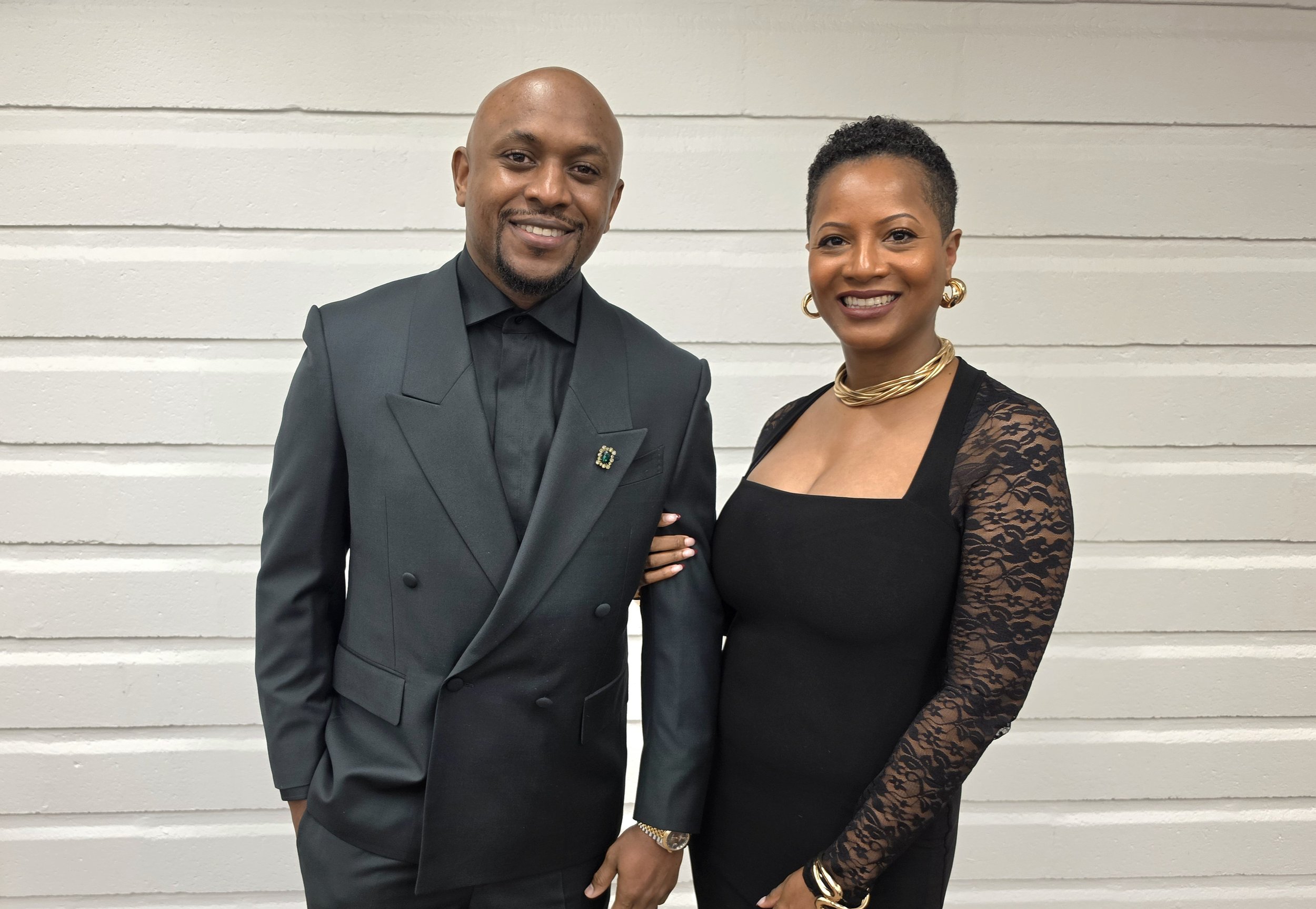
Dwayne & Tracy Holness (Photo by Ron Fanfair)
For Holness, service carries an obligation that extends beyond his profession.
“I am grateful for this honour,” he said. “But the work that we do to lift each other up is never about recognition. It is about our responsibility as citizens of this planet.”
Holness brings that conviction to mentoring young people, offering the access that once helped him recognize his own potential.
Through Corex Creative, emerging talent joins professional production sets to observe, learn and gain practical experience.
“We bring young people on, and we mentor them while we’re on these sets, because the one thing that really opened my eyes was to be in the room,” Holness said. “A big mission that Corex Creative prides itself on is that we create space for young people to be on real projects, in the moment, and they get to see what it’s like. We’ve been able to do that on many of our projects, and that’s what really keeps me going.”
His past helps him connect with those who struggle to imagine a different future.
“I can speak to people who are currently on that side, and I can influence them by showing them you can do a 180 and be on a whole different side of things,” said Holness.
For Robinson, her son’s transformation is also reflected in the care he now gives her. After years of struggling to afford a house on her own, he bought the home where she now lives.
The child she brought to Canada in search of a better future was now helping secure hers.
Accepting his award, Holness connected their journey to the sacrifices and enduring ties shared by generations of Jamaican immigrants.
“This award isn’t about me,” he told the audience. “It’s about every mother who got on a plane with nothing but a reason. It’s about every child in this city with a Jamaican last name and a Canadian accent. And it’s about every one of us who left the island and still really never left it.”
Then he addressed his mother directly.
“So, my mom, I still don’t have a plan,” Holness said. “But I have always had a reason, and that reason is you.”
The future Robinson crossed borders to give her son is now one he helps other young people imagine for themselves.