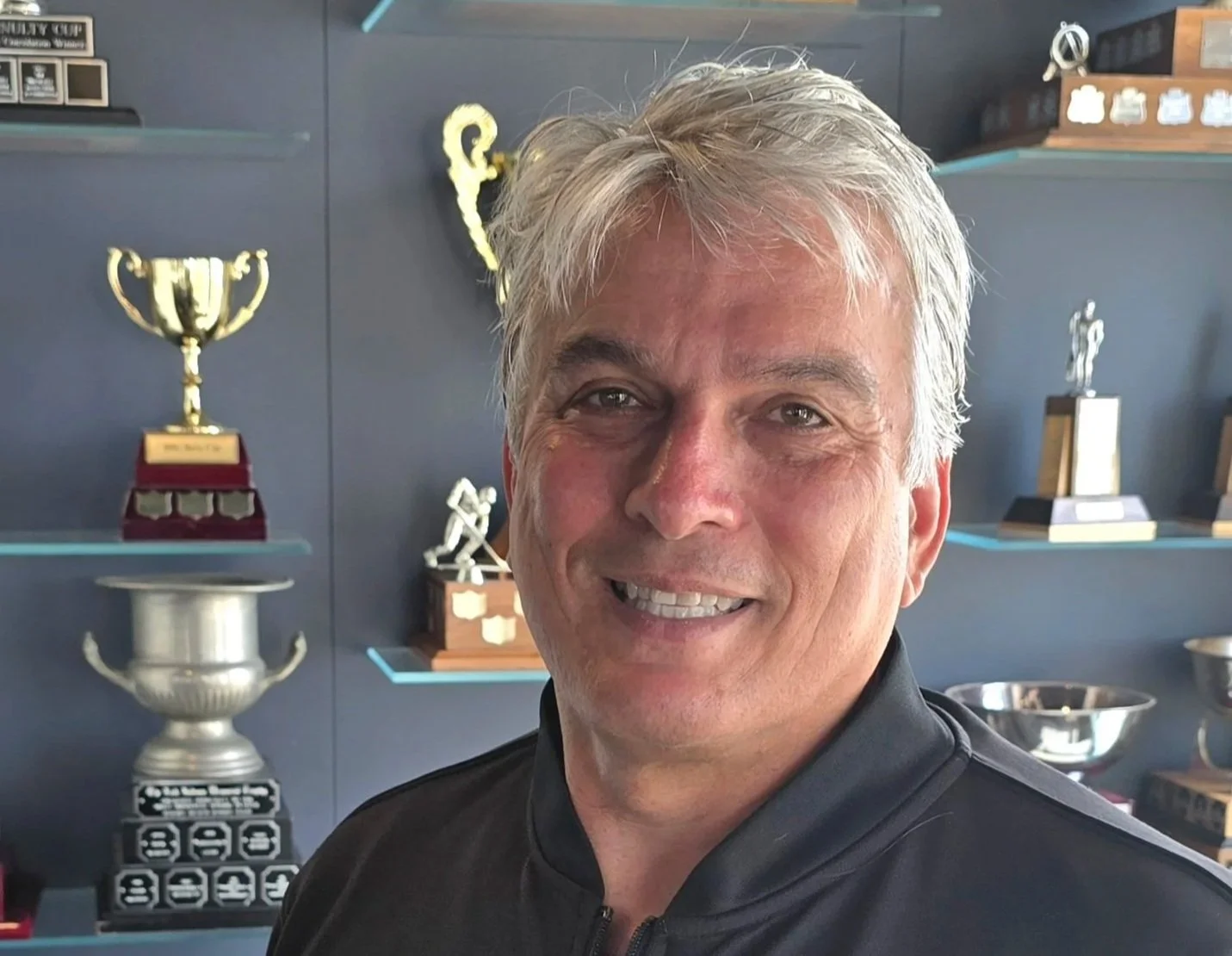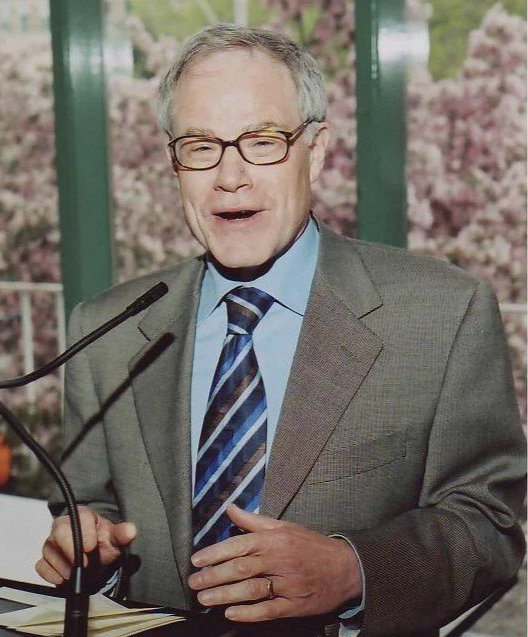
Apartheid's pain still brings Bruce Kidd to tears
August 26, 2026
The pain of apartheid remains so immediate that Bruce Kidd is brought to tears when he remembers what the system did to his family.
The former Canadian Olympian had already read accounts of Black and racialized South African athletes who were humiliated, excluded and brutalized.
Kidd knew about Sewsunker ‘Papwa’ Sewgolum, the gifted South African golfer of Indian descent who could neither read nor write. Despite winning the Natal Open at the Durban Country Club in 1963, apartheid rules barred him from the clubhouse and forced him to receive his trophy outside in the rain. The three-time Dutch Open champion died impoverished in 1978 at age 49.
He also knew the story of poet and anti-apartheid activist Dennis Brutus who was shot by police while attempting to escape custody and left bleeding after a Whites-only ambulance refused to transport him.
Then apartheid struck close to home for Kidd.
His younger brother, Ross, now living in Botswana, was doing development work in Swaziland, now Eswatini. While travelling through South Africa with his wife and their two young daughters, the family’s car broke down.
Apartheid’s racial classification system prevented them from staying together. Ross was sent to accommodations reserved for White people, his wife to a place designated for Black people and their mixed-race daughters to a third location with a guardian.
Kidd’s voice broke as he recalled the family’s ordeal.
“I can’t tell you how viscerally upsetting that was for our family and us,” Canada’s premier middle-distance runner from 1960 to 1964 said. “If ever I had a political objection to apartheid, that brought it home in the most personal way.”
The emotion, five decades after Kidd became one of Canada's most persistent advocates for the sporting isolation of South Africa, demonstrates that apartheid was never an abstract debate about whether politics belonged in sport.
It was a system that decided where people could live, sleep, travel, compete and receive medical care. It separated a family after a roadside breakdown and forced children to absorb the cruelty of racial classification.
Kidd’s recollections also add nuance to a history that is sometimes told too narrowly.
Black South Africans and other oppressed people endured apartheid’s violence and led the struggle to dismantle it. But they were supported by an international, multiracial network of athletes, academics, activists and politicians.
Among them were White allies such as Kidd, who understood that opposing racism required more than private disapproval. They used their access, reputations and influence within powerful institutions to amplify the voices and demands of those denied equality.
That conviction began taking shape for Kidd at the 1962 British Empire and Commonwealth Games in Perth, Australia, the first edition held after South Africa withdrew from the Commonwealth in 1961 and, consequently, the first in which it did not compete.
He was a young distance-running star among older and more experienced competitors, and athletes in the village debated whether countries that denied people equal access to sport should be allowed to participate internationally.
Kidd particularly remembers British distance runner Martin Hyman, a teacher and active supporter of the Campaign for Nuclear Disarmament, as a persuasive influence. Hyman believed athletes had responsibilities that extended beyond their own performances and pursuit of medals.
“That is where I was part of a group that really forged a consensus that it was appropriate to take steps against nations that did not extend the right of competition to all people,” the 11-time national champion pointed out. “I can date my involvement in this issue from those Games.”
Kidd’s political awareness deepened later in the decade.
While pursuing graduate studies at the University of Chicago in 1967 and 1968, he became involved with the Olympic Project for Human Rights, the movement led by American sociologist Harry Edwards to challenge racial discrimination in U.S. sport and advocate for a Black athlete boycott of the 1968 Mexico City Olympics.
The campaign took on an international dimension in February 1968, when the International Olympic Committee (IOC) voted to allow apartheid South Africa to compete with what it described as a racially integrated team.
Leaders of the proposed Black athlete boycott insisted that their fight for racial justice could not end at the American border.
“They said, ‘We can’t fight just for Blacks in U.S. sport. We also have to fight for all oppressed people, particularly Blacks in South Africa’,” recalled Kidd who was named Canadian Press Male Athlete of the Year in 1961 and 1962 and received the Toronto Star’s Lou Marsh Trophy in 1961. “That was another occasion when I wrote several things and spoke out. Those were embryonic steps towards what developed later as leadership in the international campaign.”
That experience reinforced his conviction that sport could neither escape politics nor remain neutral in the face of injustice.
As a University of Toronto student studying political economy, Kidd saw how governments shaped sport through legislation, funding and nation-building projects. The 1964 Tokyo Olympics were themselves a massive exercise in political economy, while Canada’s Fitness and Amateur Sport Act influenced how sport was organized and financed at home.
When athletes who received government funding insisted that their activities existed outside politics, the University of Toronto Professor Emeritus challenged the contradiction.
“You are on a Sport Canada Athlete Assistance Program grant and you don’t think that is a political decision?” Kidd would ask. “Why should one category be in the political category and something else be completely outside it?”
Apartheid South Africa also used sport as a political instrument.
The regime invited prominent White athletes from other countries, welcomed them into privileged sporting clubs and carefully managed their visits to project an image of normality to the outside world.
Kidd recalled travelling from a sports banquet in Kingston to Toronto with two celebrated Canadian Olympians who challenged his opposition to sporting contact with South Africa. One had recently visited the country and said she had encountered only one or two Black people during her stay.
“You were set up,” he told her bluntly. “You were taken to a Potemkin village version of South Africa and given very special treatment as a way of promoting a false image of what was happening in that society. Did you ever talk to any Black sports leaders or Black athletes? They were wholly in support of this campaign.”
The exchange demonstrated that remaining neutral effectively meant accepting the status quo.
Continuing to compete with segregated South African teams allowed the regime to use respected international athletes as evidence of acceptance. Refusing contact, by contrast, imposed a reputational cost and affirmed the humanity of athletes whom apartheid excluded.
Kidd and fellow Canadian Olympian Abby Hoffman initially tried to persuade athletes and sports organizations to join the international campaign voluntarily.
They spoke, wrote letters and protested visits by South African and Rhodesian competitors, including events in tennis and golf. The sports establishment repeatedly shut them out.
Hoffman eventually concluded they were wasting their time and should take the case directly to politicians. That strategic turn produced results.
Kidd said late federal health minister Marc Lalonde, whose portfolio included sport, grasped the argument and took early steps to stop Canadian athletes from competing against South Africa.
“The lesson Abby and I took was that we were wasting our time with the sports community,” he said. “We didn't stop trying, but the only ones who really came through, and fortunately they had the power to make it work, were the federal politicians and Marc was the leader in that.”
The resistance continued for years.
In 1977, Commonwealth leaders adopted the Gleneagles Agreement, pledging to discourage sporting contact with apartheid South Africa. However, British Prime Minister Margaret Thatcher later resisted demands for broader economic sanctions against the regime.
That opposition helped trigger a mass boycott of the 1986 Commonwealth Games in Edinburgh. Thirty-two eligible nations, most of them from Africa, Asia and the Caribbean, stayed away. Canada participated despite Kidd’s appeal to Canadian athletes and sports leaders to support the boycott.
Some people he knew and respected rejected his request angrily.
“It was a very bitter experience,” said Kidd, a former University of Toronto ombudsperson whose contributions to sport and social justice are recognized through the Bruce Kidd Field House on the university’s St. George campus. “They wouldn’t listen. They were abusive. The Canadian sports community only came on side with assistance from the federal government.”
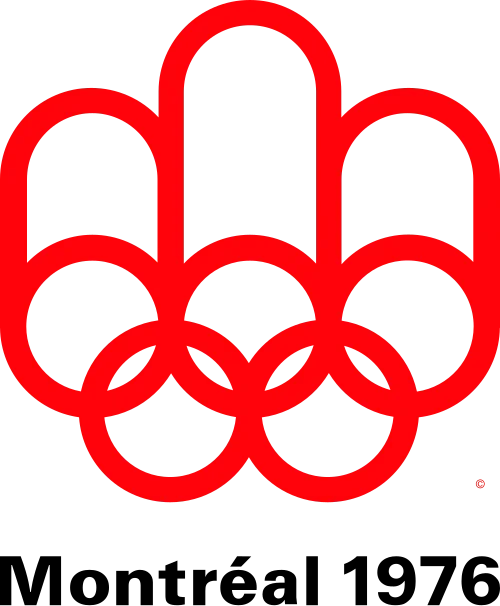
One of Kidd’s most important relationships in the anti-apartheid struggle began during the turmoil surrounding the 1976 Montreal Olympics.
Sam Ramsamy, a South African educator and sports administrator of Indian descent, had left his homeland and settled in London. As chair of the South African Non-Racial Olympic Committee, he became a leading strategist in the international campaign to isolate apartheid sport.
Kidd met Ramsamy in Montreal as African nations pressed the IOC to exclude New Zealand from the Games. Earlier that year, the All-Blacks rugby team had toured South Africa, defying international efforts to isolate the apartheid regime.
The IOC refused, maintaining that rugby was not an Olympic sport and that it could not hold the New Zealand Olympic and Commonwealth Games Association responsible for the actions of an independent rugby organization.
Most African nations withdrew in protest, joined by Guyana and Iraq. The boycott cost many athletes what may have been their only opportunity to compete at the Olympics, but it also compelled the sporting world to confront the consequences of maintaining ties with apartheid South Africa.
Kidd remembers Ramsamy working closely with Congolese sports leader Jean-Claude Ganga, who helped lead the boycott, and South African activist Dennis Brutus as delegations prepared to leave Montreal.
The withdrawals were painful for the athletes and weakened events such as track and field and boxing, but Kidd regarded the boycott as a decisive act of international solidarity.
“It was a huge tragedy for the Olympics and for sport,” he said. “But they made their point effectively, and international support was never the same again.”
A year later, Kidd met Ramsamy for lunch in London. At the end of the meal, Ramsamy handed him two boxes, one containing letterhead and the other envelopes.
“Sam said, ‘You are now the Canadian director of the International Campaign Against Apartheid Sport, and this is the letterhead you will use for all your correspondence’,” he recounted.
The appointment formalized work Kidd had already begun.
He wrote to federal and provincial leaders, challenged Canadian sports organizations and worked to keep apartheid sport in the public eye.
The two men remained close for decades.
Kidd visited Ramsamy on several occasions, welcomed him to Canada and successfully nominated him for an honourary degree from the University of Toronto that he received in June 1992.
“I love Sam,” he said. “He is one of the giants and one of the funniest guys you will ever meet. He is brilliant, unrelenting and strategic. What a terrific guy.”
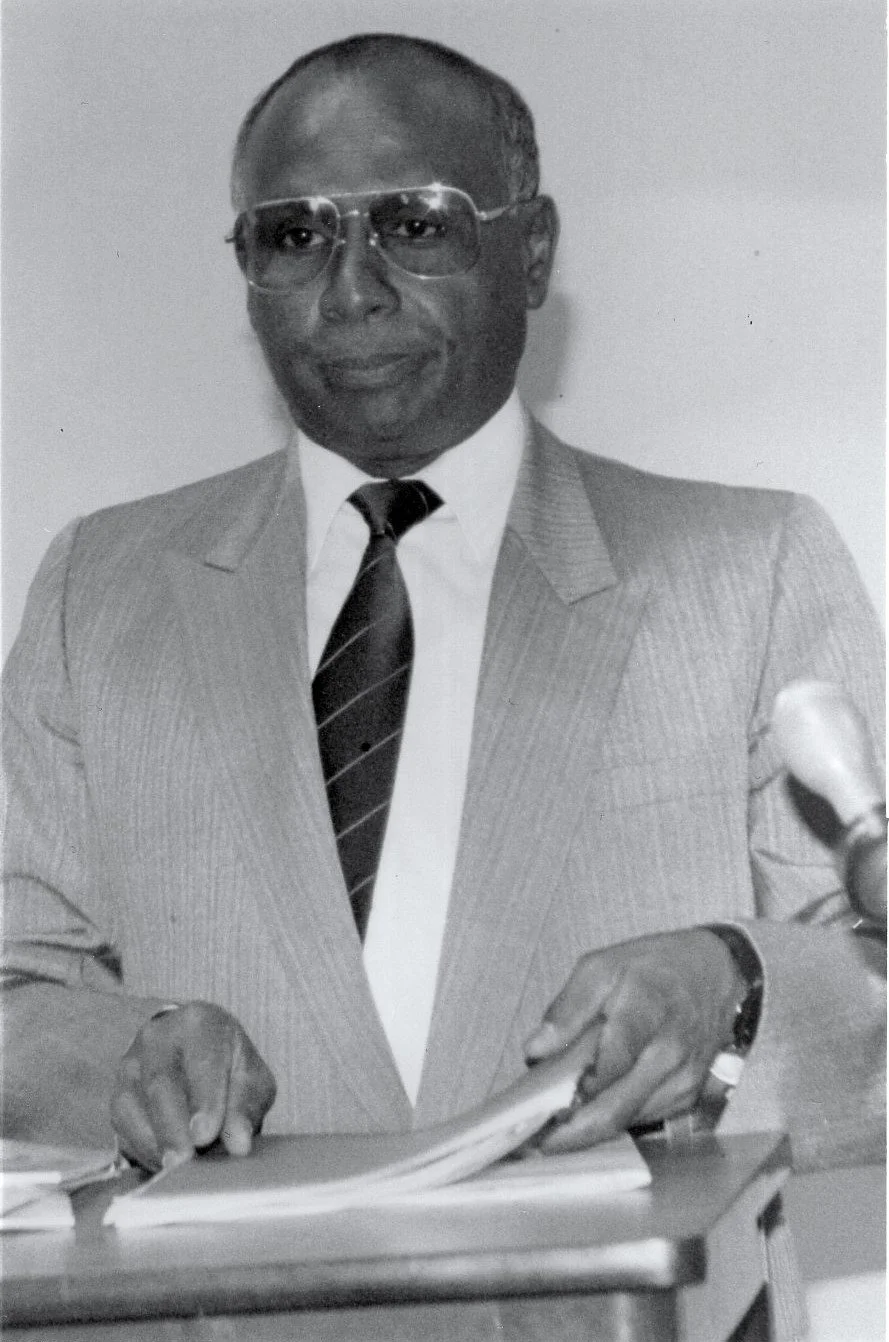
The University of Toronto conferred an honourary degree on Sam Ramsamy in 1992 (Photo by Ron Fanfair)
Kidd witnessed the Montreal boycott unfold from inside the host city.
Before the withdrawals, he watched African runners break Canadian records at pre-Olympic meets and anticipated exceptional performances from athletes representing Ethiopia, Tanzania, Nigeria and other countries.
He said their absence significantly diminished the depth and quality of competition at the Games, particularly in track and field and boxing.
Some critics argued that African governments had sacrificed the ambitions of young athletes for a political cause.
Kidd rejected that interpretation after travelling to Botswana shortly after the Olympics. During a talk at the Botswana campus of the University of Botswana and Swaziland, he mentioned the boycott and all of the nearly 200 people in the audience rose to their feet and cheered.
“They said, ‘These athletes are heroes because hey stood up for Africa’,” he recalled. “They had the support of all of Africa. It was an extremely powerful act of solidarity that nobody who knew what was going on would have missed.”
The athletes paid a profound personal price.
Years of preparation ended without the opportunity to compete, and some never qualified for another Olympic Games.
Kidd said the athletes he later met regretted missing the competition but remained proud of the stand they had taken and the support they received at home.
“To the best of my knowledge, those athletes are known as the heroes of 1976,” he said.
The boycott also produced consequences beyond Montreal.
International sport increasingly recognized that it could not claim universality while tolerating racial exclusion. FIFA had already suspended South Africa and the IOC had expelled it from the Olympic movement in 1970, but pressure for comprehensive isolation intensified.
Within a year, Commonwealth leaders endorsed the Gleneagles Agreement, committing governments to discourage sporting contact with South Africa.
Kidd regards Montreal as a watershed in international sport history yet worries that Canadians often remember the boycott merely as a disruption of the country’s first Summer Olympics.
“I have always regarded it as a significant act of solidarity,” he said. “But there are some who regard it as just a blip or an unfortunate event and have not remembered it the way it should have been remembered.”
Remembering the boycott properly requires holding several truths together.
It caused athletes real personal loss and did not, by itself, end apartheid. Nor should its history elevate international allies above the South Africans who endured state violence and led the resistance.
However, the sporting boycott helped strip the apartheid regime of international legitimacy and demonstrated what can be achieved when people outside an oppressed group refuse the comfort of neutrality.
For Kidd, the lesson of Montreal extends far beyond the 1976 Olympics.
He sees the same sense of responsibility in Colin Kaepernick’s protest against racial injustice and in the collective action taken by National Basketball Association players after the police shooting of Jacob Blake in 2020.
Such activism has weakened the longstanding expectation that athletes should remain silent about injustice and simply concentrate on competition.
“You can’t have normal sport without equal sport, equitable sport and accessible sport,” Kidd, who was appointed an Officer in the Order of Canada in 2004, said. “If you want sport at the highest level, you have to respect human rights and extend opportunities for all, regardless of colour or race, religion or sexual orientation.”
Kidd spoke from experience.
As one of Canada’s most celebrated young athletes, he was expected to remain positive and avoid criticizing the institutions that praised him. His willingness to challenge inequality was not always welcomed.
Conn Smythe, the powerful Toronto Maple Leafs executive who reportedly said he would pay $10,000 to anyone who could ‘turn Herb Carnegie white’, lectured Kidd about loyalty. The Globe and Mail sports columnist Dick Beddoes dismissed him as ‘immature’.
The criticism became so persistent that Varda Burstyn, Kidd’s partner at the time, described him as ‘the golden-haired boy and enfant terrible of the Canadian sports establishment’. Some interpreted his criticism as evidence that he was hostile toward sport.
They misunderstood him.
Kidd, who was inducted into Canada’s Sports Hall of Fame in 1968, loves sport and believes deeply in its possibilities. He challenged its institutions because he wanted them to become more equitable, humane and accountable.
The athlete once chastised for refusing to remain silent went on to become one of Canada’s most respected sport scholars and human-rights advocates. Many of the principles he championed, including racial equality, gender equity, athletes’ rights and the isolation of apartheid sport, gradually moved closer to the centre of Canadian and international sporting policy.
Kidd endured the criticism because he believed sport could live up to its highest ideals only when it respected the dignity and rights of everyone. Decades later, the causes for which he risked his reputation are widely regarded as fundamental to the integrity of sport, a powerful affirmation that he has always stood on the right side of history.