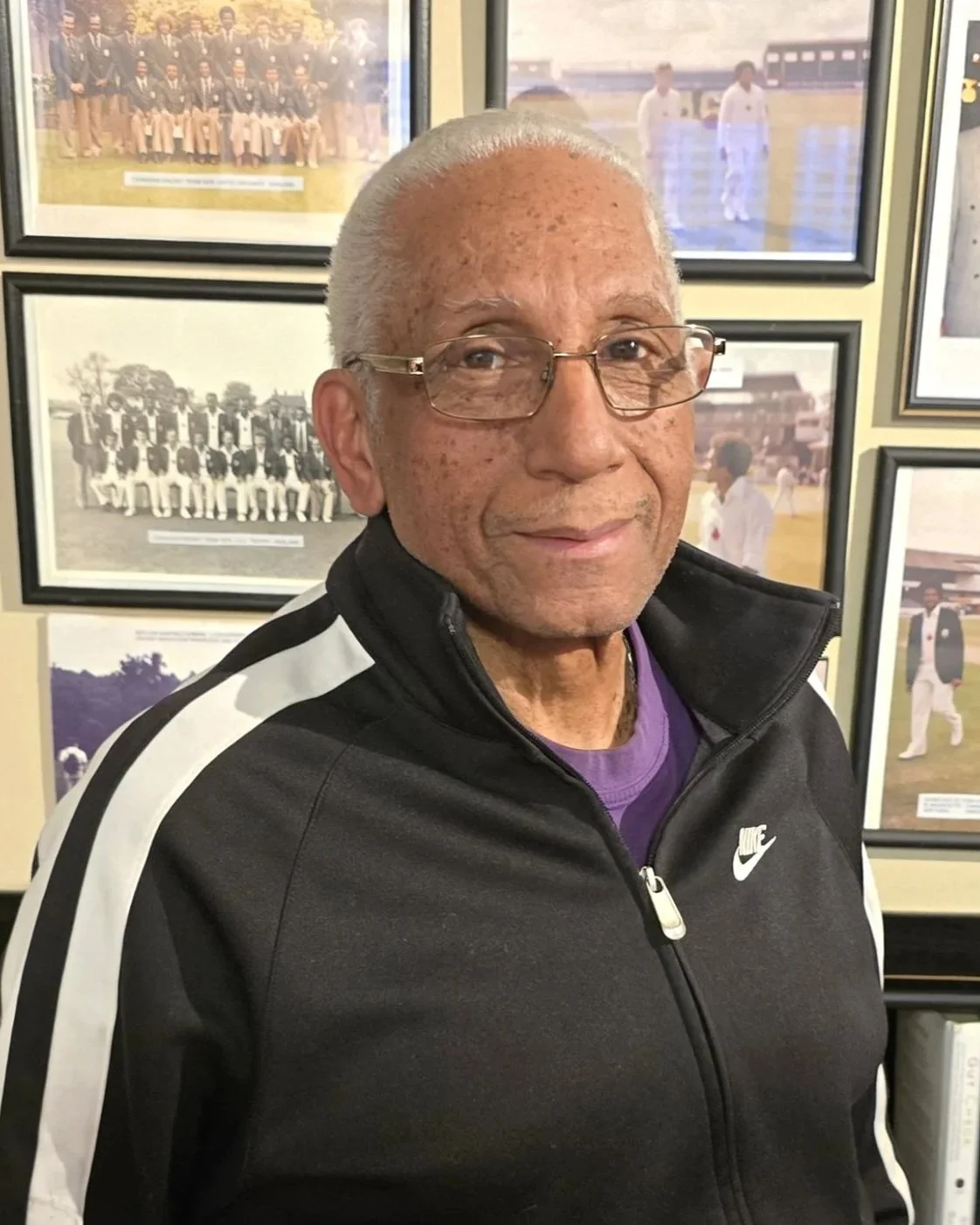
Carl Valentine’s Canadian journey recognized with Top 25 Immigrant honour
August 12, 2026
When Carl Valentine left England for Vancouver in 1979, no agents were handling every detail of a young professional soccer player’s move, there was no social media offering an instant glimpse of his new surroundings and no Google search to show him what awaited thousands of kilometres from home.
Though the 20-year-old knew where Canada was, he had to consult a map to locate Vancouver on the country’s West Coast.
Sold by Oldham Athletic to the Vancouver Whitecaps for £100,000, Valentine packed his belongings, said goodbye to his parents and four sisters in Manchester and headed into the unknown. It was only the second time he had travelled outside England, following a holiday in Spain a few years earlier.
His introduction to his new home was hardly reassuring.
Arriving in February after the long journey from England, Valentine went to bed exhausted. Still adjusting to the time difference, he awoke in the middle of the night to pouring rain, hardly the welcome he might have imagined from the place that would eventually become home.
“I remember thinking, ‘Oh man, what have I done’?” he recalled.
Everything changed the next morning.
Valentine climbed into one of the Honda Civics provided to Whitecaps players, cautiously adjusted to driving on the opposite side of the road and headed to Empire Stadium.
The rain had stopped, the sun was shining and the mountains provided a spectacular backdrop.
“You just knew this place was something special,” he said. “It was so scenic and I quickly fell in love with it.”
Vancouver soon returned that affection.
In his second season, Valentine received the Whitecaps’ most popular player award and was voted Vancouver’s most popular athlete in a Vancouver Sun poll.
Forty-seven years after he arrived in Canada, the city he initially struggled to locate on a map is the place he proudly calls home.
There is also a fitting coincidence attached to Valentine’s Canadian journey.
He arrived in Vancouver just nine days before Valentine’s Day, a date that would take on even greater personal significance decades later when he married his second wife on February 14.
For a man named Valentine, the date has become intertwined with both the beginning of his Canadian story and another important chapter of his life.
The former Canadian national soccer team player and longtime Whitecaps ambassador is among this year’s recipients of the Top 25 Canadian Immigrant Awards.
The recognition carries special meaning for someone whose relationship with Canada has extended far beyond the soccer field.
Valentine arrived as a young English professional looking to advance his career. He became a Canadian citizen, represented his adopted country at the 1986 FIFA World Cup and, after his playing days, devoted much of his life to promoting soccer and connecting with communities.
He ranks fourth on the Whitecaps’ all-time goals list with 65, holds club records with 409 appearances and 69 assists, and was among the first four inductees into the club’s Ring of Honour in 2014.
Yet, for Valentine, his immigrant story is rooted as much in gratitude as achievement.
Canada provided something he could not have anticipated when he boarded the plane for Vancouver -- a sense of belonging.
Born and raised in England to a Jamaican father and an English mother, Valentine grew up when interracial relationships were not widely accepted.
Racism also followed him onto the soccer field.
As a young winger with Oldham Athletic, he was often warned about what awaited him at certain grounds. Black players were subjected to monkey chants, bananas thrown from the stands and other forms of racist abuse.
Canada offered a striking contrast.
Valentine found a game that was still establishing itself in the country and a community that quickly made him feel welcome.
“Living in Vancouver, which is one of the most beautiful places in the world and obviously winning the championship that first year also made it easy to settle down and adjust in a new environment,” the Canada Soccer Hall of Famer said.
Just as important were the relationships he formed away from the field.
“Everyone looked after me because I was a young man that knew absolutely nobody when I came to Vancouver,” he said. “It just felt like they adopted me.”
The support was so immediate that he remembers being surprised by how little homesickness he experienced despite the magnitude of the move.
“I don’t remember feeling homesick, which I should have been as a 20-year-old,” the Manchester United fan said. “I was still living at home with my mum and dad and four sisters, so obviously we were very close. That was a big move.”
Winning the 1979 North American Soccer League championship (NASL) gave Valentine an unforgettable start to his life in Canada, but the sense of belonging he found beyond the field proved even more enduring.
Years later, after returning to Vancouver and taking on an ambassadorial role with the Whitecaps, he made a point of thanking supporters he encountered.
“I purposely made it a duty that every time I bumped into someone that supported the Whitecaps, I thanked them for looking after me,” he said.
The affection Valentine developed for Canada also played a significant role in one of the most important decisions of his life.
As the NASL neared its end, he contemplated returning to England to continue playing at the highest level. West Bromwich Albion had previously shown interest, and he wanted an opportunity to establish himself in England’s First Division.
At the same time, Valentine was thinking beyond soccer.
Though single and not yet seriously contemplating marriage or children, he had already decided where he eventually wanted to raise a family.
“I knew Canada was a place that I wanted to bring a family up,” Valentine said. “Even though I wasn’t thinking about kids and family at the time, I knew I wanted to be here in Vancouver.”
Uncertain whether he could easily return to Canada as a professional soccer player without another career to fall back on, Valentine applied for Canadian citizenship.
An opportunity to represent his adopted country soon followed.
Valentine was invited to play for Canada at the 1984 Los Angeles Olympics, but declined while concentrating on establishing himself in England.
Looking back, he considers it one of the biggest mistakes of his career.
Valentine feared his chance to represent Canada had disappeared until national team coach Tony Waiters called in 1985.
Canada was preparing for a decisive World Cup qualifier against Honduras, and injuries had depleted the squad. Waiters wanted Valentine to help the country reach soccer’s biggest stage.
This time, there was no hesitation.
“I made a better decision and said yes,” Valentine pointed out.
Canada defeated Honduras 2-1 in St. John’s, Newfoundland, on September 14, 1985, to qualify for the men’s World Cup for the first time. Despite battling the flu, Valentine delivered the corner kicks that led to both Canadian goals in the historic victory.
He secured his place at the 1986 tournament with Canada before England had clinched its berth. His achievement attracted attention in his birth country because an Englishman was going to the World Cup, not with England, but with his adopted nation.
It represented a remarkable transformation for the young man who had arrived in Vancouver knowing almost nothing about the city.
Canada was no longer simply where he played. It was his country.
Valentine’s contribution to Canadian soccer did not end when he stopped playing.
Through coaching, mentoring and his role as a Whitecaps club ambassador, he has remained visible in the sport and the community, viewing those responsibilities as an opportunity to repay some of what was given to him when he arrived.
“I really wanted to say thank you to everyone that supported me,” he said. “But I also wanted to make a difference again.”
Valentine has watched soccer grow dramatically in Canada while trying to ensure his contribution extends beyond appearances and titles.
Being in the community does not feel like an obligation attached to his job.
“It is something I genuinely enjoy,” Valentine said. “I am just so appreciative that I am able to go out there and make a difference and be loved by so many people.”
The Top 25 Canadian Immigrant recognition comes at an especially meaningful stage of his life.
Last March, Valentine received the 2026 Jack Diamond Sports Personality of the Year Award for his community contributions.
Receiving another accolade has prompted him to reflect not only on what he has accomplished in Canada, but also on the opportunities the country has provided for him and his family.
“America is often described as the land of opportunity, where you can make great strides if you are willing to work hard, but Canada has been that place for me,” Valentine said.
His family reflects the international journey that has shaped his life. Of his three children, one was born in England, another in the United States and the third in Canada.
“They are all Canadians,” pointed out Valentine who retired from regular play at age 39 in 1997 which is the same year the Whitecaps retired his number 21 jersey.
He also has nine grandchildren growing up in the country their grandfather chose as his home. Some of the youngest are beginning to attend Whitecaps games and experience the atmosphere surrounding the club that first brought him to Canada.
Nearly five decades after his uncertain arrival, Valentine’s connection to the club, the city and the country continues through a new generation.
His latest honour validates a journey that began with uncertainty and developed into a deep sense of gratitude and belonging.
“Something like this is just immeasurable because it’s validation for all that you do,” said Valentine, who was inducted into the BC Sports Hall of Fame in 2016. “I feel so blessed because I’m doing a job that I love. It doesn’t feel like a job. I am just going out there and trying to make a difference.”
The irony is not lost on him.
Valentine believes he owes Canada a debt of gratitude, yet the country continues to recognize him for his efforts to repay it.
“I’m the one that’s so grateful, and yet I keep getting rewarded for the things that I do,” he said. “I’m just so thankful to be a Canadian and to give back and show my appreciation.”