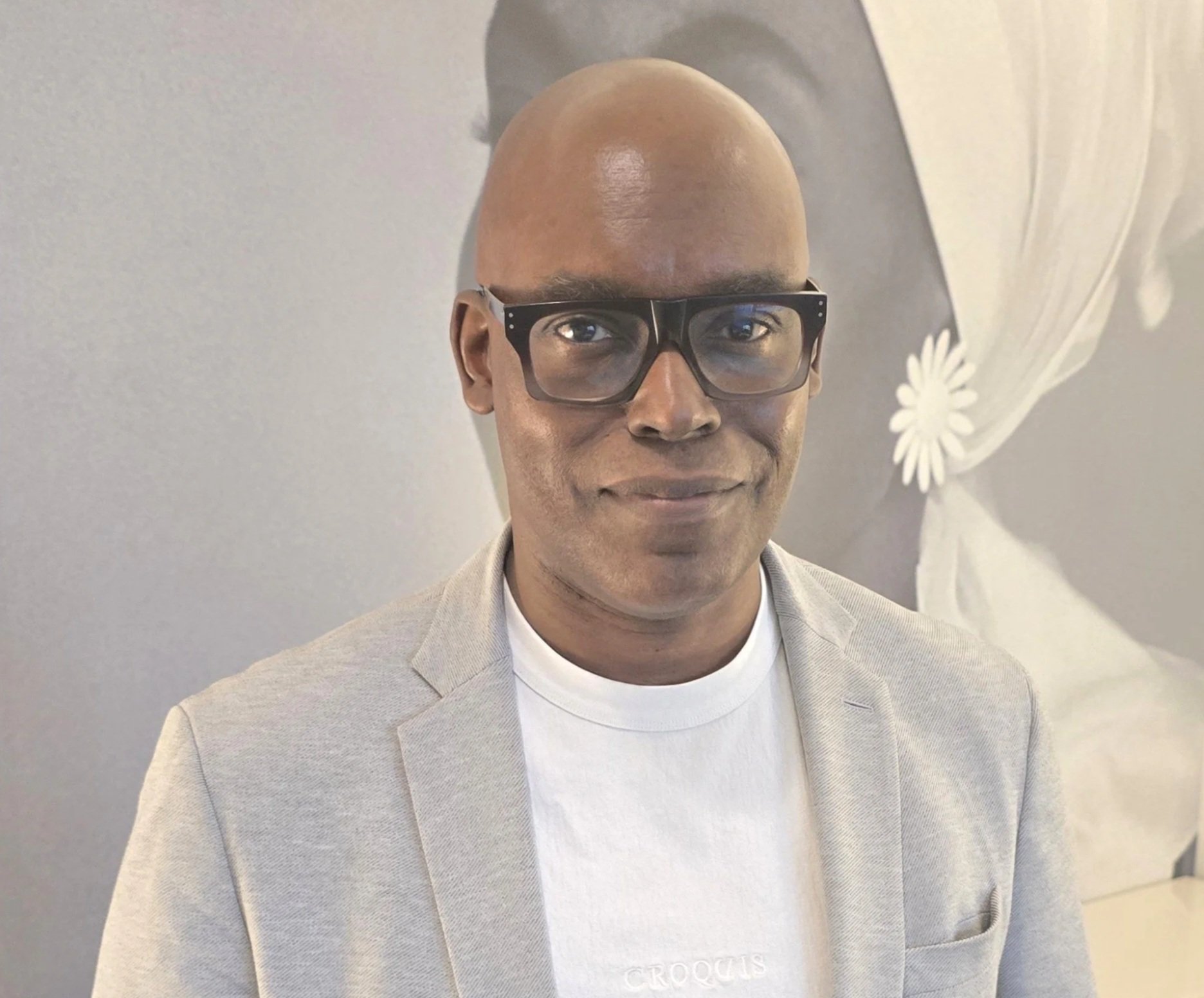
Cameron Bailey’s journey from immigrant to TIFF CEO earns national recognition
August 13, 2026
Some honours require a journey.
For Cameron Bailey, receiving one of Canada’s Top 25 Immigrant Awards on August 12 required only a short trip down a few floors at TIFF Lightbox, the Toronto institution where he has spent much of his career helping shape the city’s place on the global film map.
Yet the real journey behind the honour has stretched across three countries, several cultures and more than five decades.
Born in England, raised for part of his childhood in Barbados and arriving in Canada in the 1970s, Bailey has gone from immigrant child and self-described outsider to film critic, programmer and one of the most influential figures in international cinema.
As Chief Executive Officer of the Toronto International Film Festival (TIFF), he occupies a position from which he can help determine which filmmakers and stories are introduced to audiences around the world.
That made receiving the immigrant award at TIFF especially meaningful.
“I am an immigrant from England to Barbados and then Barbados to here,” said Bailey who is widely recognized as Canada’s first Black film critic. “So, it is a big part of my life and how I see myself.”
At a time when immigration has become an increasingly contentious subject in Canada and elsewhere, he has no hesitation embracing the label.
“I am a very proud immigrant and I try to open doors for other immigrants and more recent ones as well,” said Bailey who has taught film and curation at the University of Toronto. “So, it’s great to be here at the Lightbox so we can open our doors to these awards tonight.”
His ability to recognize the experiences of people arriving in unfamiliar places developed early.
“I was born in England at a time when Caribbean people, Black people and immigrants generally were not always warmly welcomed,” Bailey recalled. “I was too young to understand it then, but my parents experienced it. Growing up in that environment taught you to remain alert and keep your wits about you.”
He and his sister, maxine, travelled by ship to Barbados, a country they had never visited but where their grandparents and extended family lived.
Once again, adaptation was necessary.
Bailey arrived speaking with an English accent, started school in Barbados and gradually learned a new country and culture.
Years later, another transition awaited when he came to Canada.
Looking back, Bailey believes repeatedly having to understand new environments sharpened his powers of observation while nurturing something even more important: empathy.
Despite spending most of his life in Canada and rising to the top of one of the country’s most internationally recognized cultural institutions, he said a piece of that outsider identity remains.
“Even now in this role and having been in Canada most of my life, I still see myself in some senses as a bit of an outsider because that’s how I started,” said Bailey who was appointed to the Order of Ontario last February.
Rather than viewing that as a disadvantage, he sees it as a perspective that helps him understand people whose stories and experiences exist outside the mainstream.
That sensitivity has become particularly important at TIFF where thousands of filmmakers compete for a relatively small number of coveted places in the festival.
Bailey said TIFF receives nearly 9,000 film submissions annually but can select only a few hundred. Behind each submission may be years of work, significant personal sacrifice and, in some cases, virtually everything a filmmaker could afford to invest.
“You have to approach that responsibility with real gravity,” he noted. “It is a serious matter when people have sometimes spent years working on a project and invested all the money they have access to in making it. The film may or may not be selected, but I never want filmmakers to feel that we are going to make or break them. Of course, we can do a great deal for films and filmmakers, but I always encourage those who have invested that much time and passion to keep going and never allow a festival rejection slip to stop them.”
Bailey’s own history, however, inevitably influences what resonates with him.
“As an immigrant, as somebody who came up as an outsider, I think I have a bit more of an eye or a feel for outsider stories as well,” he said. “There are, I think for everybody, certain kinds of stories that just resonate more with us because they reflect some part of our own experience.”
That perspective can cross boundaries of race, nationality and circumstance.
Bailey pointed to Being Heumann, a film about pioneering disability rights activist Judy Heumann, as an example. The film will open this year’s TIFF on September 10.
The story of people fighting to remove barriers faced by those with disabilities reminded him of his own community’s struggle for equality.
“Ultimately, it is a civil rights story,” said Bailey, a member of the inaugural cohort of the Michael D. Eisner Arts and Culture Fellowship at the Aspen Institute. “Stories about people trying to bring about change and make the world a better place resonate deeply with me.”
Long before reaching TIFF’s executive suite, he was helping widen the cinematic lens.
Bailey’s career has included championing filmmakers and films from Africa, South Asia, the Philippines and other communities that historically received limited exposure in mainstream North American cinema. He founded TIFF’s Planet Africa program, an initiative that helped introduce audiences to Black and African filmmaking.
Some of that curiosity, Bailey said, came directly from his mother, Luciene Bailey, who passed away in 2019.
She arrived in Toronto in the late 1960s, while he and his sister followed in the 1970s, a period when immigration was rapidly changing the face of the city.
The family initially lived in predominantly white suburban communities before Bailey began seeing more newcomers arrive.
While living in the Don Mills and Finch area, two of Bailey’s closest friends were boys from recently arrived Lebanese and Portuguese families.
“They were immigrants too, though their experiences were very different from mine,” he said. “But those were the people you naturally spent time with.”
Bailey said his mother’s openness to others also broadened his outlook. As a nurse, she worked alongside West Indians, Filipinas, White Canadians and people from many other backgrounds, and encouraged her children to be curious about those beyond their immediate community.
“She always encouraged us to look beyond our own small circle and see the wider world,” he said. “That is something I have tried to carry with me.”
Few places demonstrate the transformation Bailey witnessed more clearly than Toronto.
The city he encountered as a young immigrant bears little resemblance demographically and culturally to the Toronto in which he now leads TIFF.
“The numbers are what have changed,” Bailey said, pointing to the enormous proportion of Toronto residents who are immigrants or children of immigrants. “That was definitely not the case when I got here.”
He sees that transformation as one of Toronto’s strengths.
“That’s been a great thing for the city,” said the former co-chair of Toronto’s CivicAction Arts & Culture Working Group who represented TIFF in 2011 at the inaugural Beijing International Film Festival, where he met leaders in China’s film industry. “The city has a kind of life and a spirit because of the contribution of all of these immigrants that have come in and changed the character of the place.”
Diversity at street level, however, does not necessarily mean that the institutions controlling wealth, influence and opportunity have changed at the same pace.
Bailey believes Canada still has work to do to ensure that those in positions of authority reflect the country’s diversity.
“There is still entrenched power in this city,” he said. “The people who make decisions and have access to the networks and capital that drive major developments in Toronto and across the country have not changed nearly as much. When you enter the corridors of power -- whether corporate, political, media or other influential institutions -- it can sometimes feel as though you have stepped back into the 1960s.”
That observation reflects the skepticism Bailey says has remained with him from his immigrant childhood through every stage of his professional journey.
“I don’t take anything that I am told or that is the dominant narrative as given,” he said.
It is the instinct that led Bailey, while studying English literature, to question why the writers presented as the great voices of genius were overwhelmingly white men from England and the United States.
“Is that the only place genius resides?” he remembered asking.
The same questioning followed him into film and, eventually, leadership.
Who gets hired? Who gets represented? Who holds political and economic power? Who performs society’s lowest-paid work and who leads its major institutions?
For Bailey, those questions remain relevant in a country that prides itself on immigration and multiculturalism but where opportunity is not always distributed equally.
“There is a gap,” he said. “As a society, we are at risk of sorting ourselves according to where we come from and, perhaps, how long we have been in this country.”
Bailey’s career demonstrates what is possible, and he readily acknowledges that he has prospered in his adopted country.
“I consider myself one of the immigrants who have succeeded,” he said. “I have done very well in Canada, partly because of what the country has given me and partly because of what I brought here.”
Since 2012, Toronto Life has named him one of the city’s 50 Most Influential People.
However, Bailey cautioned that individual success should not obscure the inequalities confronting others.
“Opportunities sometimes seem unevenly distributed,” he said. “Where you immigrate from and when you arrive in Canada can help shape the opportunities available to you.”
Bailey does not suggest that any one person or institution can eliminate those disparities.
What matters, he said, is acknowledging them rather than becoming too comfortable with the stories Canada tells about itself.
“No one person is going to change everything, but we have to remain aware, think critically and sometimes question the stories we tell ourselves,” said Bailey, a voting member of the Academy of Motion Picture Arts and Sciences, which presents the Oscars, and a Chevalier in France’s Order of Arts and Letters.
He has put that outlook into practice throughout his career.
Bailey co-founded the Black Film & Video Network and completed his first screenplay, The Planet of Junior Brown. The film was named Best Picture at the 1998 Urbanworld Film Festival in New York, while the screenplay earned a Gemini Award nomination.
That commitment to creating opportunities for others makes his latest recognition particularly fitting.
The immigrant child who learned to keep his antenna up while moving between three countries eventually reached a position where he could help broaden the screen for others.
When Bailey was honoured as one of Canada’s Top 25 Immigrants, the ceremony was just three floors below his office at TIFF Lightbox.
It was a short trip that marked the culmination of a much longer journey.