Golf gives Amaya Athill an unexpected path to making a difference in Canada
August 14, 2026
Four years is not a long time to establish yourself in a new country, change careers, build a community and make enough of an impact to attract national recognition.
Amaya Athill has managed to do all four.
When the Antigua-born lawyer arrived in Canada in April 2022, she brought a decade of legal experience and every expectation that her professional future would remain in law.
Golf was supposed to be an interesting stop along the way while she prepared for the Canadian bar examinations, which she passed in March 2023. She was called to the Bar of Ontario three months later.
Athill had previously been called to the Bar of England & Wales in 2011 and the Bar of Antigua & Barbuda a year later.
Instead, golf became her new calling, providing an unexpected platform to advance many of the principles that had guided her work in law and human rights.
Now, Athill has been named one of Canada’s Top 25 Immigrants, a remarkable distinction for someone whose Canadian journey is still relatively new and whose impact has come largely through a sport in which Black women have historically been significantly underrepresented.
The recognition has given her reason to reflect on just how uncertain that journey once seemed.
“I came here with a 10-year tenure working in law, and I had no idea what any of my life would look like,” said Golf Canada regional director for Ontario.
Athill’s plan initially seemed straightforward.
While studying for the bar examinations, she became involved in golf, intending to return to her legal career once she was called to the bar.
That moment eventually came, but her return to law did not.
What began as a temporary professional detour gradually became something much more meaningful.
“I arrived here with a clear sense of what I thought I wanted to do, but once I started doing this work and discovered how fulfilling it was, it really changed my life,” Athill said. “That certainty became uncertainty, but it has now come full circle. I am very sure about where I am, what I am doing and how much fulfillment and joy it brings me.”
The decision was unusual.
Athill had invested years in establishing herself as a lawyer. Walking away from a profession requiring that level of education and commitment was not something she did without occasionally wondering whether she should return.
Even now, law has not completely disappeared from her thinking.
“Now and again, you think, ‘Could I? Should I go back? Should I not go back’?” she said. “I am very firm in that I am happy with what I’m doing now.”
If there was a moment that convinced Athill she had found the right path, it came in the summer of 2023.
She had already been working with Golf Canada for a year when she organized her first independent Black Women Golfers event at Lionhead Golf Club in Brampton.
About 30 women attended.
What Athill remembers most was not their scores or how far they hit the ball, but the enthusiasm they brought to the experience.
“They had an amazing time,” she said. “What I saw was joy. What I saw was a sense of, ‘Oh my gosh, I’m so happy to be doing this’. We gave them a space to ask questions, and there were so many questions that we got out of it.”
For Athill, watching those women embrace a game in which many had not previously seen themselves represented confirmed that her work could make a difference.
“I think that one moment really solidified for me that this is what I want to do and what I want to continue to do which is work in the space and make an impact in the space,” she noted.
Three years later, Black Women Golfers has grown from that small gathering into a community involving hundreds of women.
Its significance extends beyond introducing them to the fundamentals of the sport.
Athill sees the real measure of success when women no longer need her organization to get them onto a golf course.
They are booking tee times themselves, bringing friends and relatives and introducing their children to the game.
“Yes, we have created this space and women have tried golf with us, but they are going out there and independently doing it themselves now,” she said. “They are now taking up the mantle to do it themselves and bring other people along, including their families, friends and their kids.”
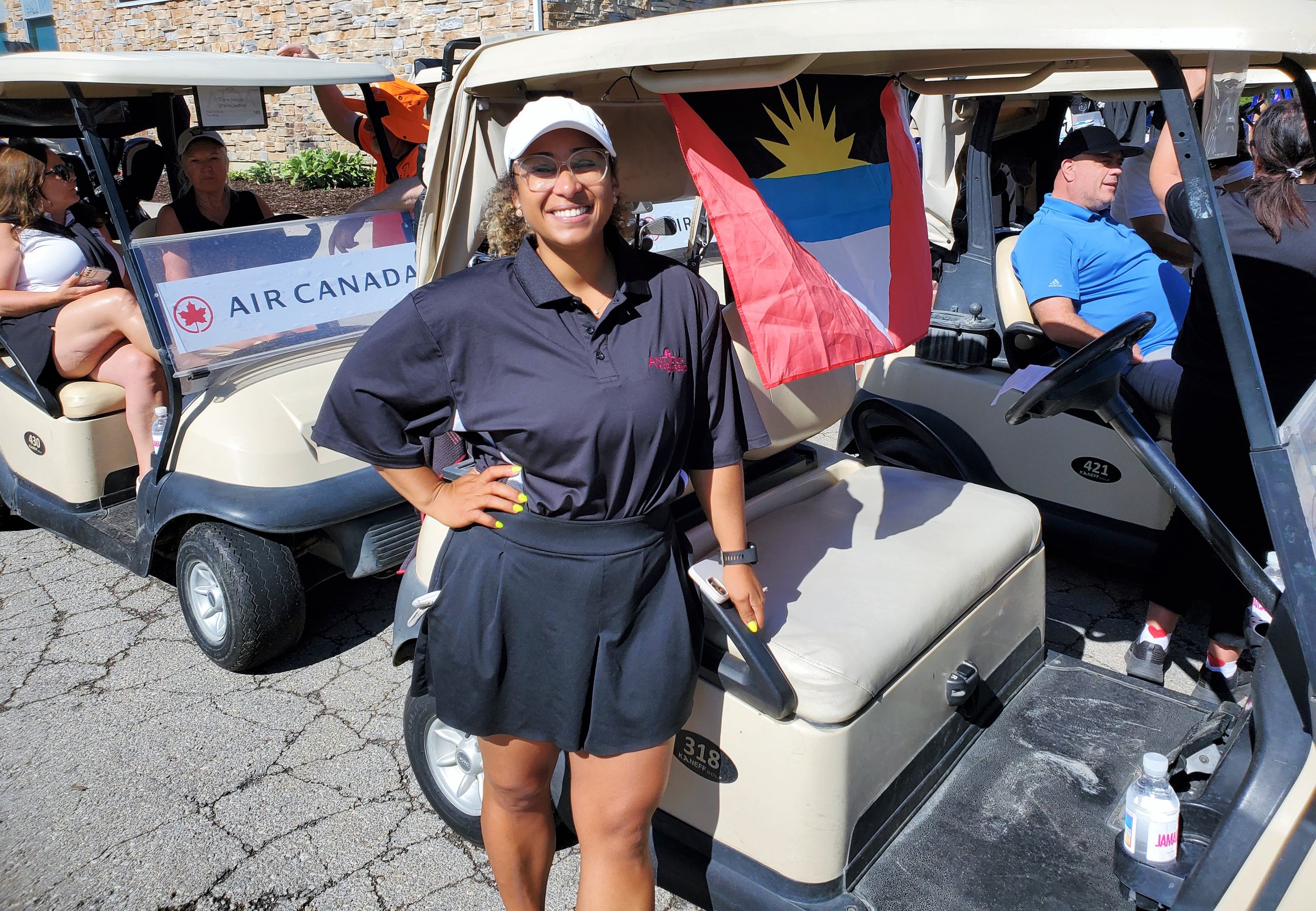
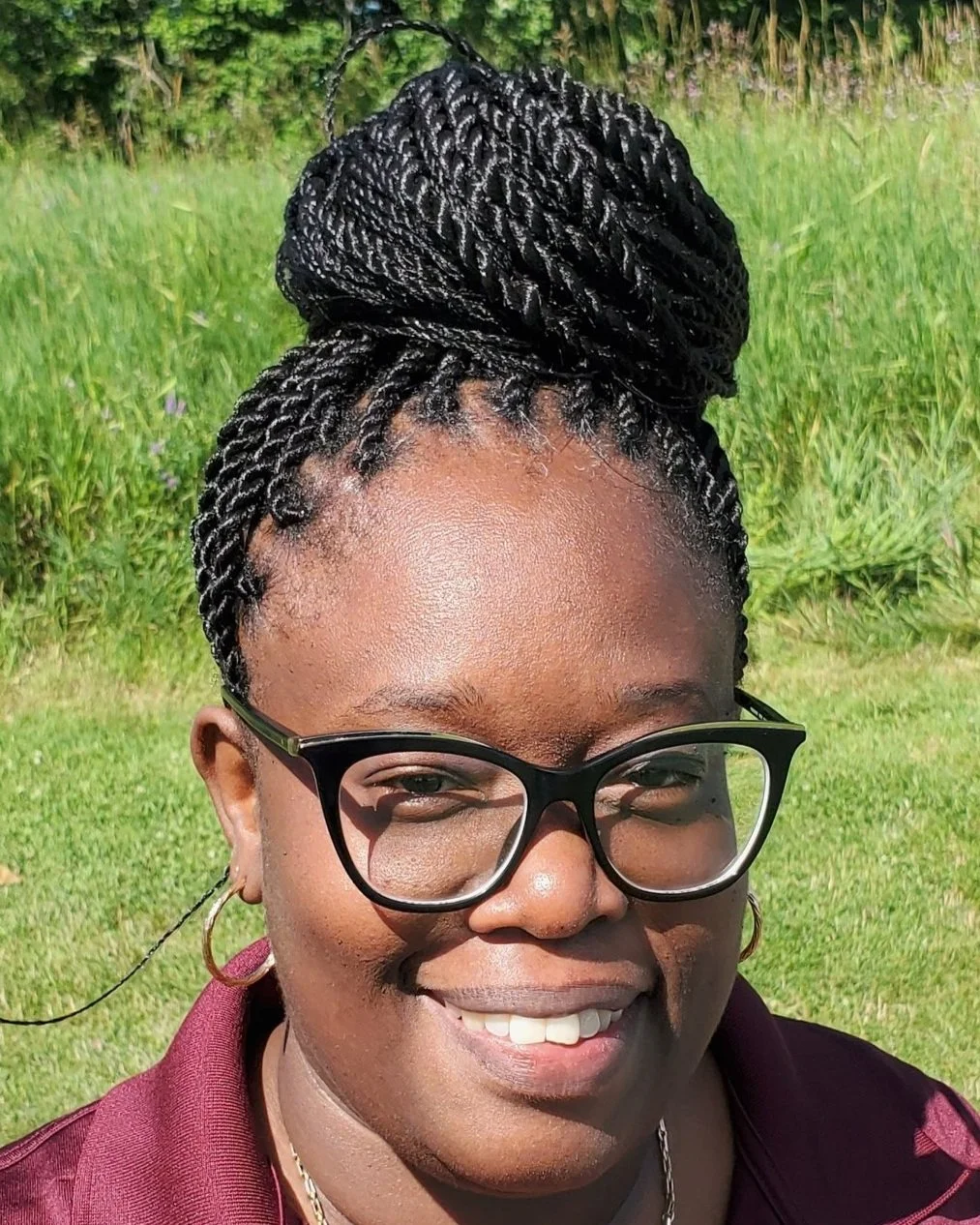
Amaya Athill is Golf Canada’s regional director for Ontario (Photo by Ron Fanfair)
For someone determined to make golf more accessible, that growing independence is perhaps the most satisfying outcome.
“I think the biggest change I have seen is the growth in their confidence and their willingness to take up space on their own,” Athill said. “That was always the goal, so seeing that change has been both beautiful and significant.”
Her work has extended beyond Black Women Golfers.
Athill has also worked with Golf Canada’s First Tee program, helping introduce young people to the sport. Though her role has since changed, she remains proud of the program’s growth and its efforts across the country to make golf more accessible to communities traditionally underrepresented in the sport.
“The program continues to grow in leaps and bounds, and I think it has an incredible impact across the country,” she said. “I am so proud to have been affiliated with the program for three years.”
Athill sees encouraging signs in Canadian golf.
More organizations are working to bring young people into the sport, while women have become an increasingly important part of golf’s growth.
Getting newcomers through the door, however, is only the beginning.
Athill believes the larger challenge is ensuring they continue to feel welcome once they arrive.
“It needs to be sustained,” she said. “The culture of golf also needs to change and become more welcoming and mindful of the new communities entering the sport.”
That means something as simple as experienced golfers showing patience with beginners. It also requires examining language and attitudes that can make women and other newcomers feel as though they are entering someone else’s space rather than becoming full members of the golfing community.
“We have so many more women in this game,” said Athill who last year was recognized with the PGA of Canada Warren Crosbie Community Leader of the Year Award. “We don’t want these new women who have started to feel suddenly unwelcome when they try to sustain that interest.”
The question for Canadian golf, she suggested, is no longer simply whether it can attract a more diverse group of participants.
“It is whether it can keep them,” Athill pointed out. “We are doing well right now because things are booming and everybody is interested. But what does sustainability of that look like? What does that long-term participation look like?”
Athill’s perspective on inclusion did not begin when she moved to Canada.
She grew up in Antigua, where seeing Black people on golf courses was not unusual. That experience gave her a frame of reference markedly different from perceptions surrounding golf in parts of North America.
Rather than leaving that experience behind when she immigrated, she deliberately incorporated it into the community she is building here.
“Literally everything,” she said when asked how much her Caribbean upbringing and human-rights background influence the leader she has become. “I have brought my full Antiguan self to Canada.”
That declaration is more than figurative.
At her Black Women Golfers events, Caribbean culture is part of the atmosphere.
Athill hosts an annual event around Toronto Caribbean Carnival, encourages participants to represent their islands and proudly displays the Antigua and Barbuda flag.
“I bring my full self to everything we do, including my soca and Caribbean music, to create a vibe at our events,” she said. “Everything I know about myself and the golf culture I grew up experiencing in Antigua, I bring to the events we create. I have not left any part of myself behind.”
That philosophy also shapes the advice Athill gives other immigrants.
Immigration, she said, should not require people to discard the experiences, knowledge and culture they developed before arriving in Canada.
Quite the opposite.
“I saw in Antigua what communities of Black people in golf look like, and I brought that with me here because Canadian communities didn’t necessarily see that,” Athill said. “We come with experiences that benefit this country.”
Her move from law to golf might appear to be a dramatic professional change, but she does not necessarily see it that way.
Athill’s legal career and human-rights work were rooted in helping people understand systems, gain access and exercise their rights.
In golf, she is applying much the same philosophy in a different arena.
“I have always had an interest, rooted in my human-rights background, in educating people and helping them gain access, whether to the legal system or to justice,” Athill said. “This work is very much in line with that. It is the same mission.”
The courtroom has been replaced by the golf course, but she sees a common purpose connecting the two.
“It’s all about education, informing and supporting people and ensuring access to sport, which is a human right,” said Athill who was co-chair and host of the inaugural TEDx Antigua in 2015. “The mission has not changed. The only difference is that I am taking a different path to achieve it.”
That path has led somewhere she could hardly have anticipated when she arrived in Canada uncertain about what her new life would look like.
In just over four years, she has gone from studying for the bar and viewing golf as an interim pursuit to helping change who feels entitled to pick up a club, walk onto a course and call themselves a golfer.
Being selected as one of Canada’s Top 25 Immigrants so early in that journey is therefore more than recognition of individual accomplishment.
It speaks to the speed with which Athill has built connections and, more importantly, to the resonance of work aimed at opening a traditionally exclusive sport to people who may never have imagined themselves belonging there.
The PGA of Canada member has not completely closed the door on law.
Athill maintains her licence and pays the required fee each year.
“It’s not completely off the table,” said the 2015 Caribbean-Canada Emerging Leaders Dialogue Fellow. “But what I can say is I am happy with what I am doing now. And, you know, the future is the future. We will see what happens.”
For the moment, however, there seems little uncertainty about where she belongs.
Athill came to Canada expecting to resume the career she had already built.
Instead, she discovered that starting over did not have to mean abandoning the person she had been.
She brought the lawyer, human-rights advocate, golfer, Antiguan and community builder with her and found a new way for all of them to occupy the same space.
Four years later, Canada is recognizing the impact of that decision.