Trailblazers remembered as Canada returns to World Cup cricket stage
February 1, 2026
As Canada’s cricketers prepare to compete at the International Cricket Council (ICC) Men’s T20 World Cup for the second time in two years, their return to the global stage is a moment worth celebrating.
Yet amid the excitement of the present, it is equally important to pause and honour the pioneers who carried the Canadian flag at earlier World Cups, including the team that secured the country’s first-ever World Cup victory in 2003.
Their sacrifices, resilience and belief laid the foundation for where Canadian cricket stands today.
Canada first qualified for the Men’s 60-over World Cup in 1979 after defeating Bermuda in the ICC Trophy semi-final. That achievement earned the nation a place at the second World Cup, marking a defining moment in Canadian sporting history.
Among the squad was St. Lucia-born wicketkeeper-batsman Bryan Mauricette who had previously represented the Combined Islands and the Windward Islands in the Caribbean before migrating to Canada in 1974.
Originally vice-captain, he was thrust into leadership after captain Garnet Brisbane was sidelined by injury.
For 79-year-old Mauricette who played for Victoria Park in the Toronto & District Cricket Association League, taking part in a World Cup was a profound honour.
Sharing the same stage with players he had long admired and followed ranked among the highlights of his tournament.
“Growing up in the Caribbean, we only heard about these famous cricketers,” said Mauricette who made his debut for Canada against the United States in 1977. “To suddenly find myself competing against them was something I never imagined possible.
“They were players my teammates and I admired, but we weren’t intimidated. We were playing at a higher level, and that meant we had to raise our mental game. Once we stepped onto the field, our focus was simple, and that was to compete hard and try to win, no matter who the opposition was.”
He was among 10 players born in the Caribbean who were on that Canadian squad.
Although Brisbane played in the ICC Trophy final, a right thigh injury sustained a few weeks earlier ruled him out of the World Cup.
“We had fun, and the guys competed hard,” said the 87-year-old.
The highlight of the tournament for Brisbane was witnessing Viv Richards and Collis King lead the West Indies to their second consecutive World Cup title.
With the team reeling at 99 for four, the pair added a crucial 139 runs for the fifth wicket, turning the match around and setting up a commanding 92-run victory over England. Richards remained unbeaten on 138 from 157 balls, while King struck a rapid 86 off 66 deliveries.
“Being at Lord’s and watching them bat so brilliantly and lead their team to victory is something I will never forget,” said Brisbane who represented the Combined Islands in a regional match against Guyana at Bourda in 1961 before migrating from St. Vincent & the Grenadines to Montreal where he now resides.
In that match which the Combined Islands lost by an innings and 144 runs, the left arm spinner took 4-68, including the wicket of the late Colin Wiltshire — the game’s leading scorer — who made 197 in Guyana’s total 438.
Two days before his 39th birthday, Barbadian-born all-rounder Glenroy Sealy walked out at Headingly alongside Chris Chappell to open the batting against Pakistan, facing a fearsome new-ball attack led by Imran Khan and Sarfraz Nawaz, who together went on to play 143 Tests and 220 One-Day Internationals.
Undaunted by the occasion, he drove the first ball he faced from Khan through the onside for four and went on to top-score with 45 off 110 balls in Canada’s total of 139 for 9 from 60 overs.
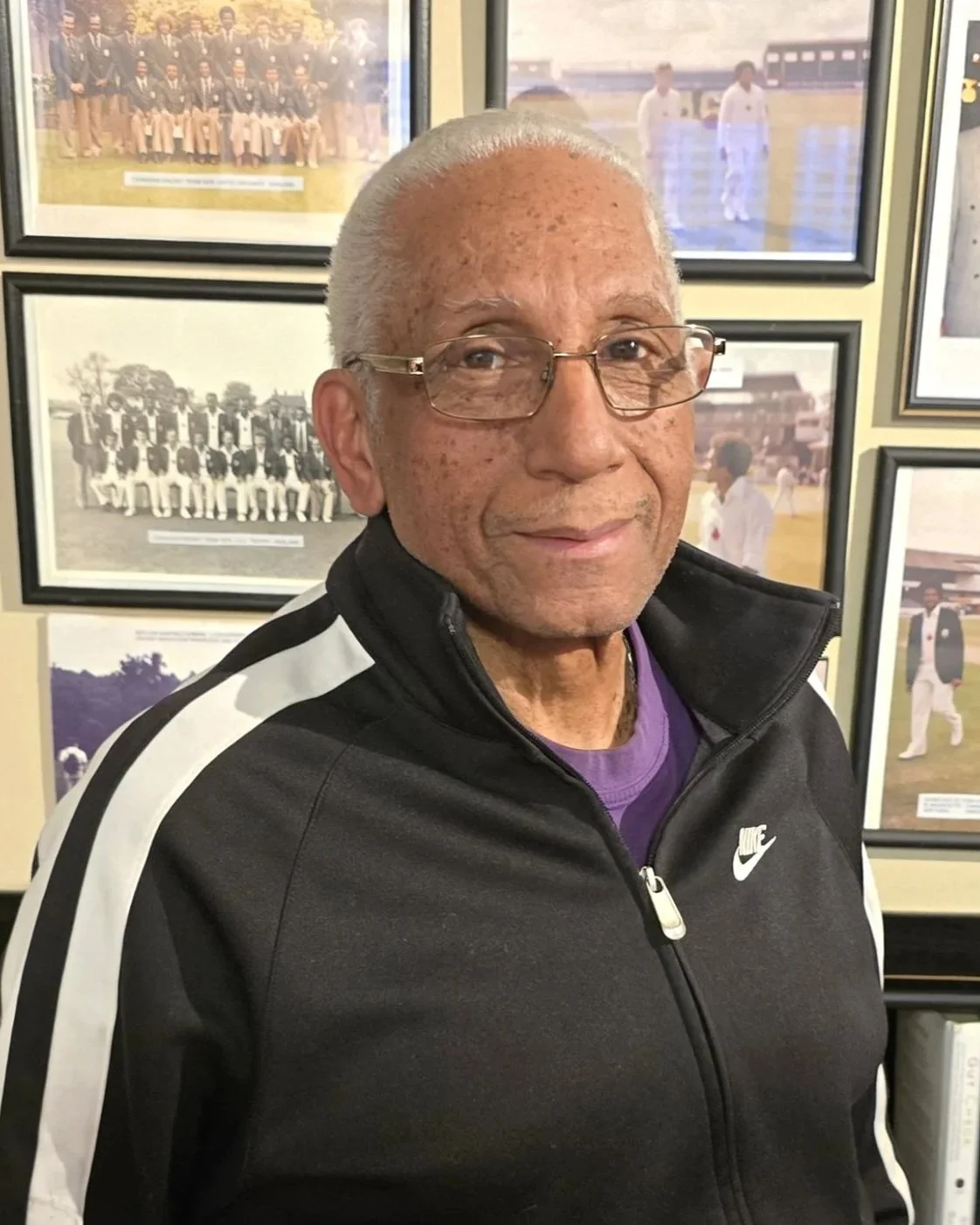
Glenroy Sealy (Photo by Ron Fanfair)
Although Sealy managed scores of just three, 25 and two in the remaining matches against England, Australia and Sri Lanka, he retains fond memories of Canada’s first appearance at the World Cup.
“Going to that tournament and facing good cricketers, many of whom went on to have Hall-of-Fame careers, was special,” said the former Maple captain whose teammates included late West Indian all-rounder Keith Boyce and John Shepherd. “Another highlight was the team meeting with the Queen at Buckingham Palace.”
An attacking batsman, Sealy spent the 1969 season playing league cricket for Ayr in Scotland before coming to Canada and representing Dovercourt until the club folded in 1995.
When Franklyn Dennis migrated from Jamaica in 1972, he had no idea that cricket was even played in Canada. At the time, he was focused on soccer, turning out for West Indies United, when former organizing secretary Neville Glanville invited him to watch his cricket club, West Indian, practise at Sunnybrook Park.
Glanville had himself made three World Cup qualifying appearances for Jamaica as a midfielder in 1965.
Dennis, meanwhile, had previously played cricket in Jamaica for Boys Town and Melbourne, the country’s third-oldest cricket club.
What started as a casual outing to watch a practice soon reignited his lifelong passion for cricket, eventually taking him all the way to the World Cup stage.
Batting at number three in the first group match against Pakistan, Dennis finished as the team’s second-highest scorer with 25.

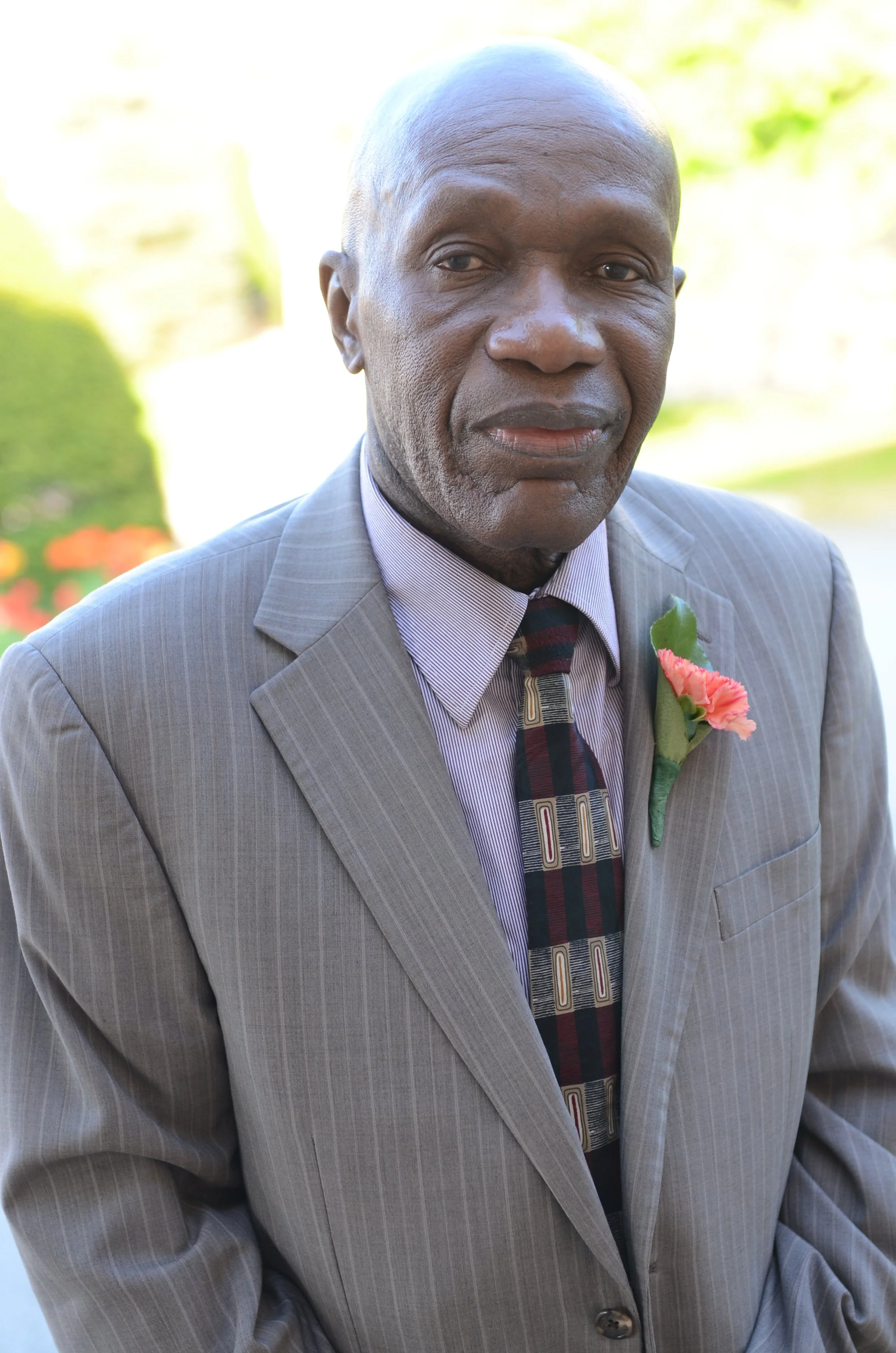
Franklyn Dennis (Photo by Ron Fanfair)
One of his most enduring memories from that match was facing Khan who, at the time, was regarded as one of the world’s fastest bowlers.
“I hit him for successive boundaries, including a straight drive down the ground,” recalled Dennis. “The third ball almost took my head off. You must remember we did not bat with helmets in those days.”
Brief though it was, his innings caught the attention of the late Sir Everton Weekes who a few months earlier had conducted coaching clinics across Canada.
After Dennis scored just over 50 in a trial match in Winnipeg to select the World Cup squad, he related that Weekes approached him saying, ‘Franklyn, you don’t know how good you can bat’.
During the World Cup match against Pakistan, the Canadian batsman suffered a foot injury and was forced to leave the field for a few minutes.
While in the pavilion receiving treatment for his injury, Weekes -- who unbeknownst to him was at the ground -- came over and said, ‘Now you know how good you can bat’.
It was a moment Dennis would never forget.
The World Cup experience itself came with surprises beyond the boundary.
Dennis and his teammates were unaware that they were entitled to a financial payment for qualifying until Rohan Jayasekera, who was a member of the Sri Lankan squad, mentioned it casually to him during a conversation in the hotel lobby.
“Rohan asked me to buy a drink, and I told him that I wanted to use the little money I had to get something to take back home,” he recounted. “He then told me that there were payments for the two Associates that advanced to the World Cup. I was shocked.”
Jayasekera migrated to Canada in 1982 and was a member of the national team and Grace Church which won four Toronto & District Cricket Association premier league titles in seven years in the 1980s.
Medium-pacer Cornelius Henry, who migrated from St. Lucia to Ottawa in 1974, vividly remembers the moment that fueled Canada’s push to the World Cup.
Ahead of the ICC Trophy semi-final against Bermuda, he overheard a dismissive remark suggesting Canada should simply go home. Rather than discouraging him, the comment became a powerful motivation.
Henry responded with figures of two wickets for 17 runs in 5.1 overs, playing a key role in Canada’s four-wicket victory with 13 balls to spare and securing the team’s place at the World Cup.

Cornelius Henry (Photo submitted)
Although Canada went on to lose all three of its matches, the tournament remains memorable for Henry. One of his personal highlights was bowling Australian Allan Border who would later become the first batsman in Test history to score 11,000 runs.
“It was a fantastic experience just to be among a great group of guys competing on cricket’s biggest stage,” he said.
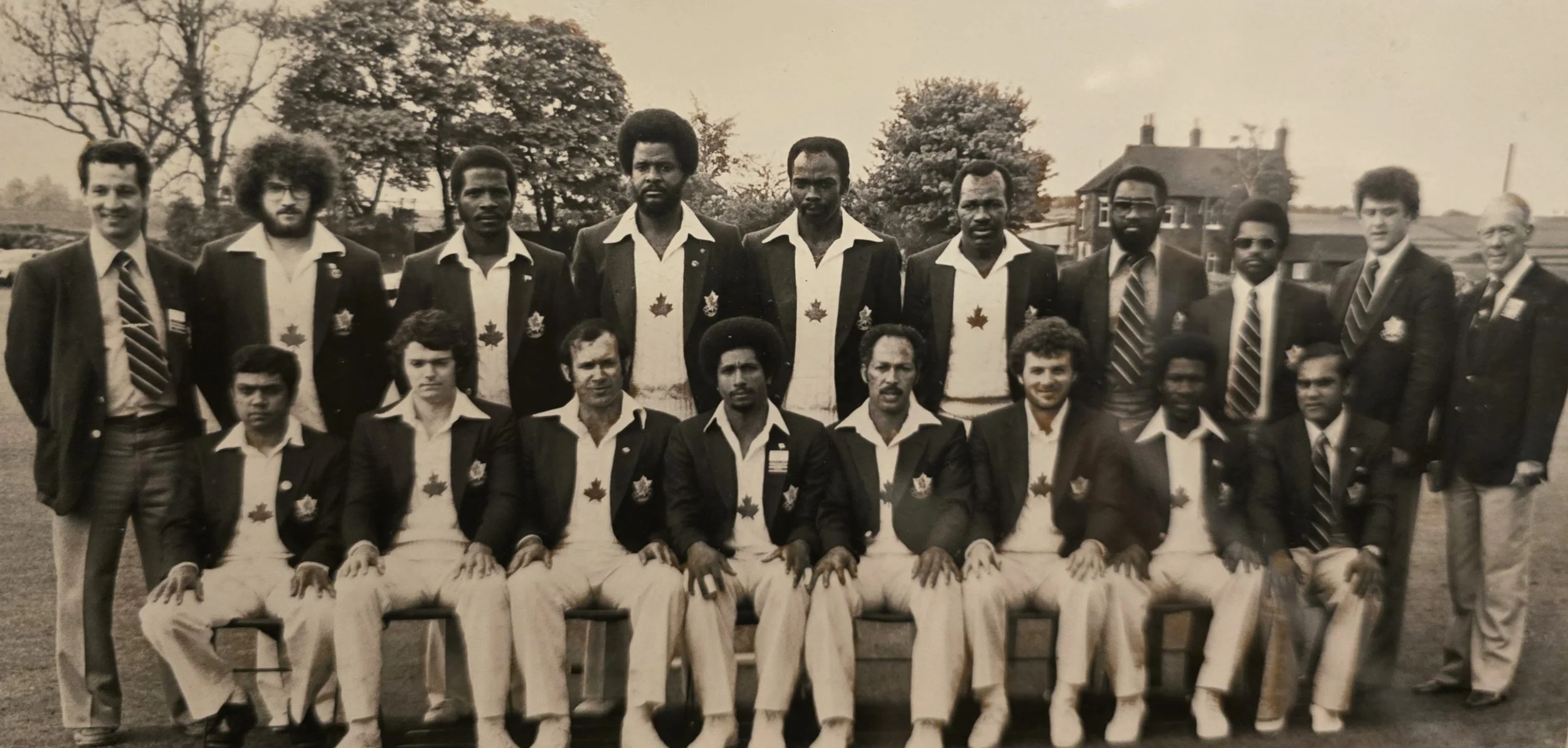
Canada’s squad at the 1979 World Cup in England. From left standing are assistant manager Vic Walker (deceased), John Valentine, Cornelius Henry, Cecil Marshall (deceased), John Vaughan, Glenroy Sealy, Keith ‘Fatty’ Walters, Malcolm McKenzie (deceased), Merv Savage (manager) and Ted Whitfied (adviser). From left sitting are Jitrenda Patel, Martin Stead, Tariq Javed, Bryan Mauricette, Garnet Brisbane, Chris Chappell, Franklyn Dennis and Charles Baksh. Robert Callender, who was a last minute call up, is not in photo (Photo by Ken Kelly)
Davis Joseph was still in high school in Grenada and representing his island in youth cricket when Canada made its first World Cup appearance.
By the time the country returned to the tournament in 2003 after a 24-year absence, he was a senior member of the national team.
For Joseph, representing his adopted country carried deep personal meaning as it affirmed both his Canadian citizenship and identity. And being part of Canada’s first World Cup team to win a match was the ultimate reward.
That tournament delivered Canada’s first World Cup victory, a 60-run win over Bangladesh in Durban.
“That historic win meant so much,” recalled Davis who represented the Windward Islands in the 1981 and 1982 West Indies youth tournaments before coming to Canada. “Struggling to put up a competitive total on the scoreboard, the captain suggested we should not worry about whether we win or lose and be happy to be there. I was flabbergasted. My mindset was that we should always be playing to win.”
Joseph and Austin Codrington added 21 runs for the final wicket and combined to take seven wickets as Bangladesh collapsed from 44 for 2 in the 10th over to 120 all out in the 27th. Codrington took 5-27 off nine overs.

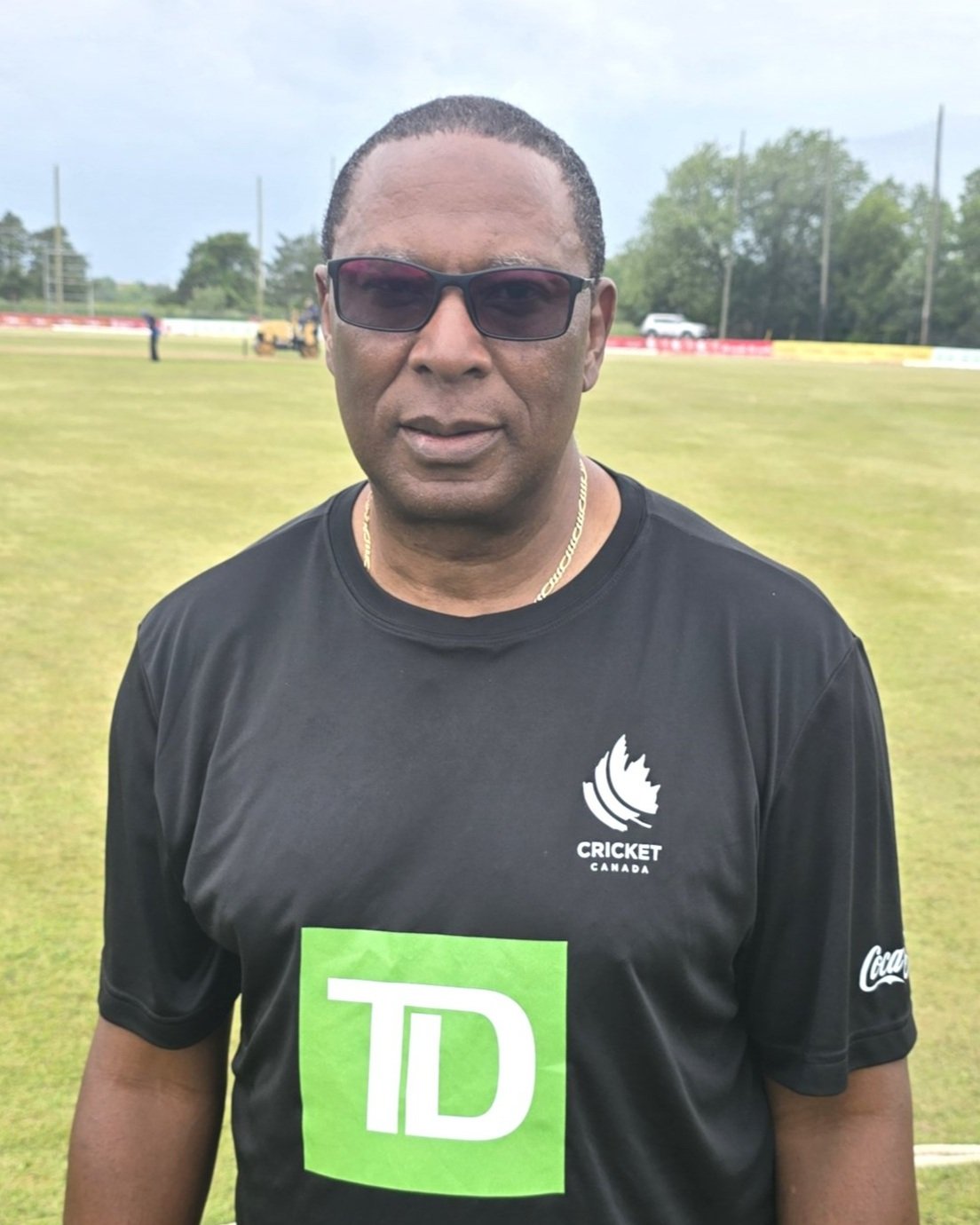
Davis Joseph (Photo by Ron Fanfair)
“I never felt we were out of place, even against a Test-playing nation,” said Joseph who, beneath his pleasant exterior, is a fiercely competitive person driven by hard work and a love of challenge. “Once the game starts and you’re competing in the middle, anyone can win.”
After going winless in three group matches in St. Lucia during the 2007 World Cup, Canada secured its second-ever World Cup victory in the 2011 tournament co-hosted by India, Sri Lanka and Bangladesh.
Zubin Surkari, the Major League Cricket (MLC) tournament director based in Dallas, was a member of the team that beat Kenya by five wickets with 27 balls to spare in Delhi.

Zubin Surkari (Photo by Ron Fanfair)
“That entire tournament is among my career highlights,” he said. “We played well and were competitive in nearly every game.”
Middle-order batsmen Ashish Bagai, the captain, and Amarbir ‘Jimmy’ Hansra each scored two half centuries while averaging 45 and 43 respectively.
In its debut at the T20 World Cup two years ago, Canada recorded a single victory, defeating Ireland by 12 runs.
This year, the national team will open its campaign against South Africa on February 9 in Ahmedabad. Four days later, they will face the United Arab Emirates in Delhi, followed by matches against New Zealand on February 17 and Afghanistan on February 19. Canada’s final two fixtures will take place in Chennai.
As the team returns to the global stage, Canadians across the country are cheering them on, proud to see their players compete with determination and represent the nation with honour.
This journey is built on more than just the present moment. The sacrifices, resilience and belief of those who came before have laid the foundation for today’s progress.
Their legacy reminds us that advancement in sport is not only about the players on the field now but also about remembering and honouring the trailblazers who made these moments possible.