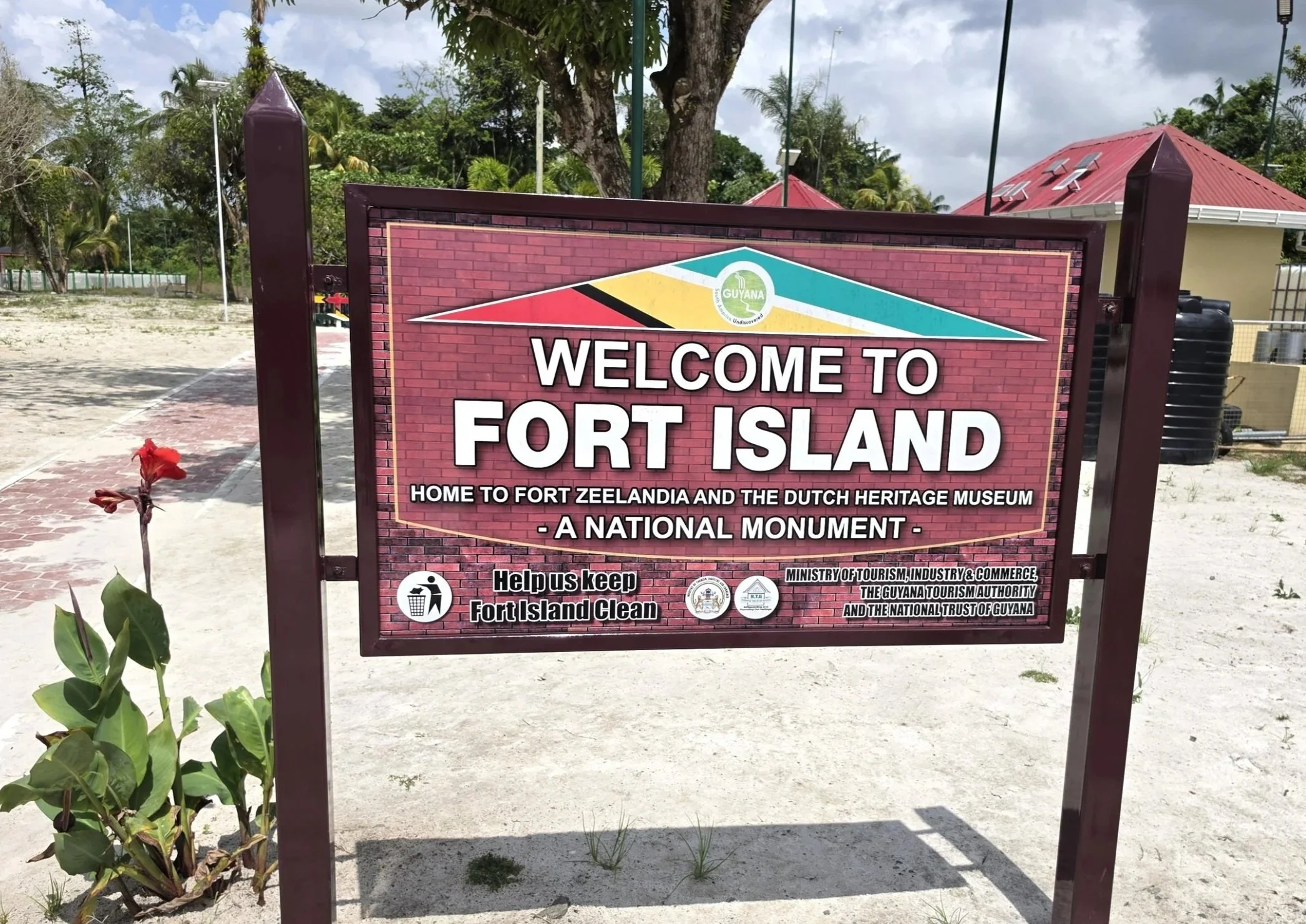
Along Guyana’s Essequibo River, history and community bring the journey to life
October 16, 2026
Just over four months earlier, Fort Island had welcomed thousands for Guyana’s 60th independence anniversary celebrations.
In early October, it offered a quieter welcome to media representatives and delegates exploring the country ahead of the Caribbean Tourism Organization’s (CTO) State of the Tourism Industry Conference (SOTIC) in Georgetown.
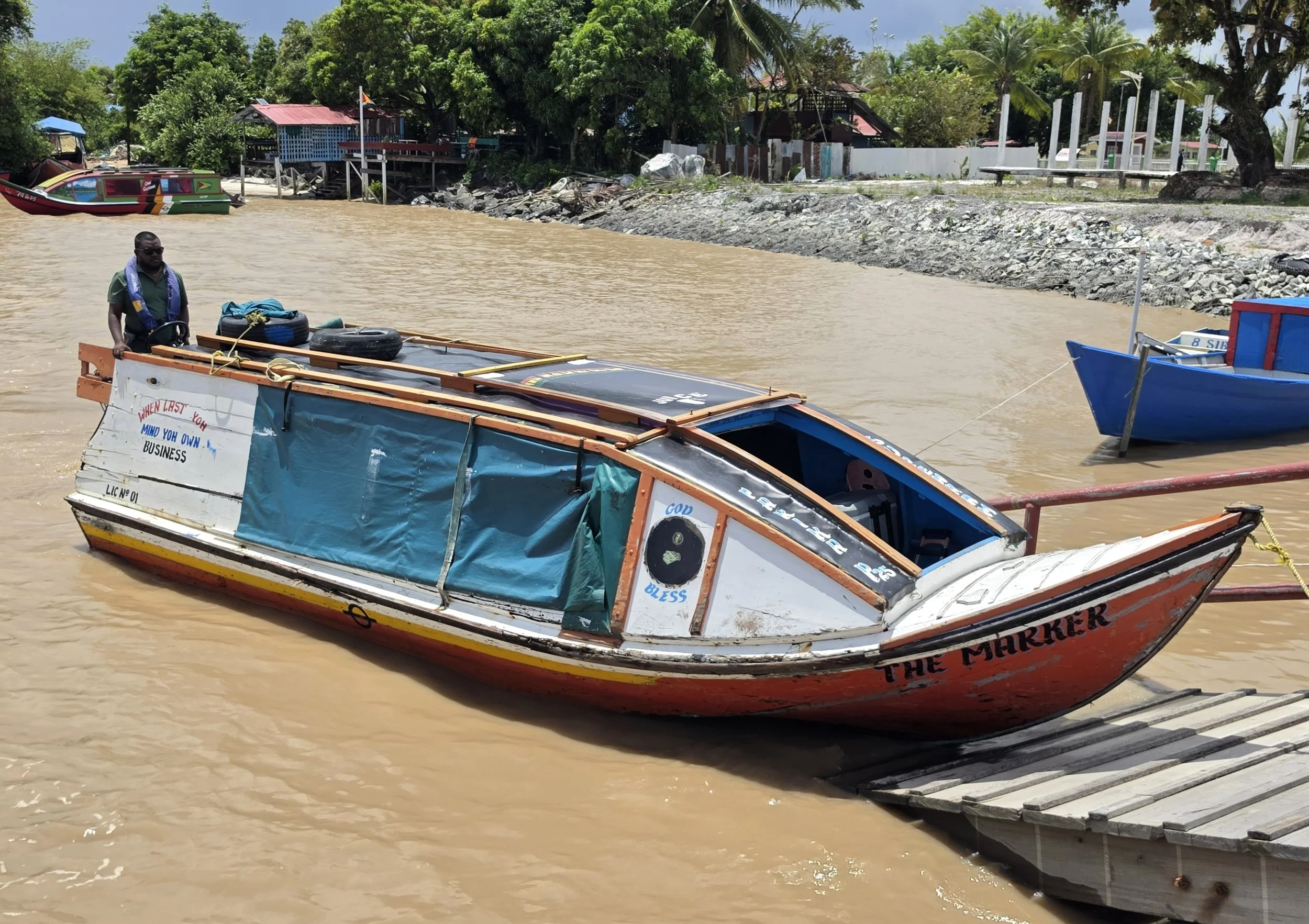
The speedboat that took media representatives and delegates on the Essequibo River tour ahead of the CTO State of the Tourism Industry Conference in Guyana (Photo by Ron Fanfair)
Centuries-old fortifications and a former colonial government building preserve important chapters of Guyana’s past. Yet some of the visit’s most memorable encounters were with residents whose lives give those historic surroundings a present-day meaning.
“My mom was a medic here before she passed away,” said Pretty Debideen, the island’s administrator and health worker. “Then I took over from her.”
Having lived on Fort Island for 32 years, she also serves people on neighbouring islands, where the river connects communities and shapes everyday life.
“It is very quiet and very simple here,” Debideen said. “Everybody looks out for each other.”

Pretty Debideen (Photo by Ron Fanfair)
Fort Island was the first stop on an excursion that continued to Fort Kyk-over-al, Sloth Island and Baracara Falls. Along the way, the group saw Bartica and Mazaruni Prison, before passing an island home associated with Guyanese-born musician Eddy Grant on the return journey to Parika.
Leading the tour was Christopher Persaud, who received the Best Emerging Tour Guide award at the 2025 Guyana Tourism Awards and Gala. His enthusiasm for history and the natural environment had drawn him away from a 15-year career as an information technology consultant.
“I love history, I love the jungle, I love wildlife and I love conservation,” he said.
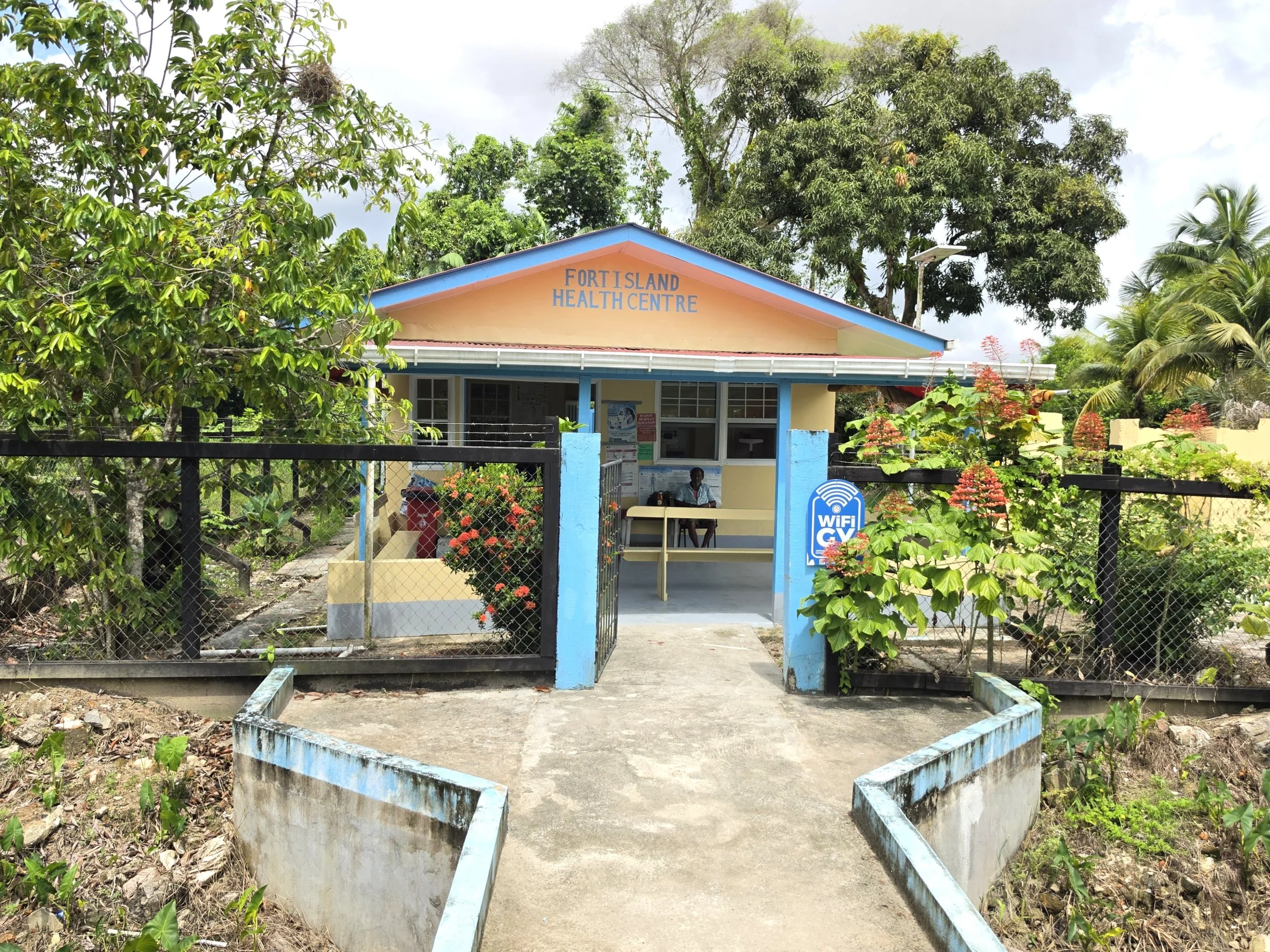
Fort Island Health Centre (Photo by Ron Fanfair)
Long before guiding became his livelihood, Persaud spent his free time fishing, birdwatching and taking friends and relatives to different parts of the country.
“When I got into this career completely by accident, it was like a match made in heaven,” he said. “And I haven’t looked back.”
His introduction combined humour with reassurance.
An emergency medical technician and lifeguard, Persaud described himself as the group’s ‘backup lifejacket’.
He also encouraged his passengers to think beyond the scenery.
“History kind of gets lost in time,” Persaud said.
Over the course of the day, he connected that history to the buildings, waterways and communities along the route.
The speedboat journey from Parika to Fort Island took about 20 minutes, bringing visitors to a place that had served as a centre of Dutch colonial administration long before becoming a setting for a celebration of Guyanese sovereignty.
On the night of May 25, the island hosted the national flag-raising ceremony marking the country’s diamond jubilee of independence. Guyana became independent from Britain on May 26, 1966.
Debideen put the island’s population at 106 at the time of the visit and estimated that more than 6,000 people had attended the anniversary gathering.
“We never had anything like that before,” she said.
Her satisfaction came from both the occasion and the care taken to accommodate such a large gathering.
“Everything was in order,” she said. “There were no accidents and no emergencies.”
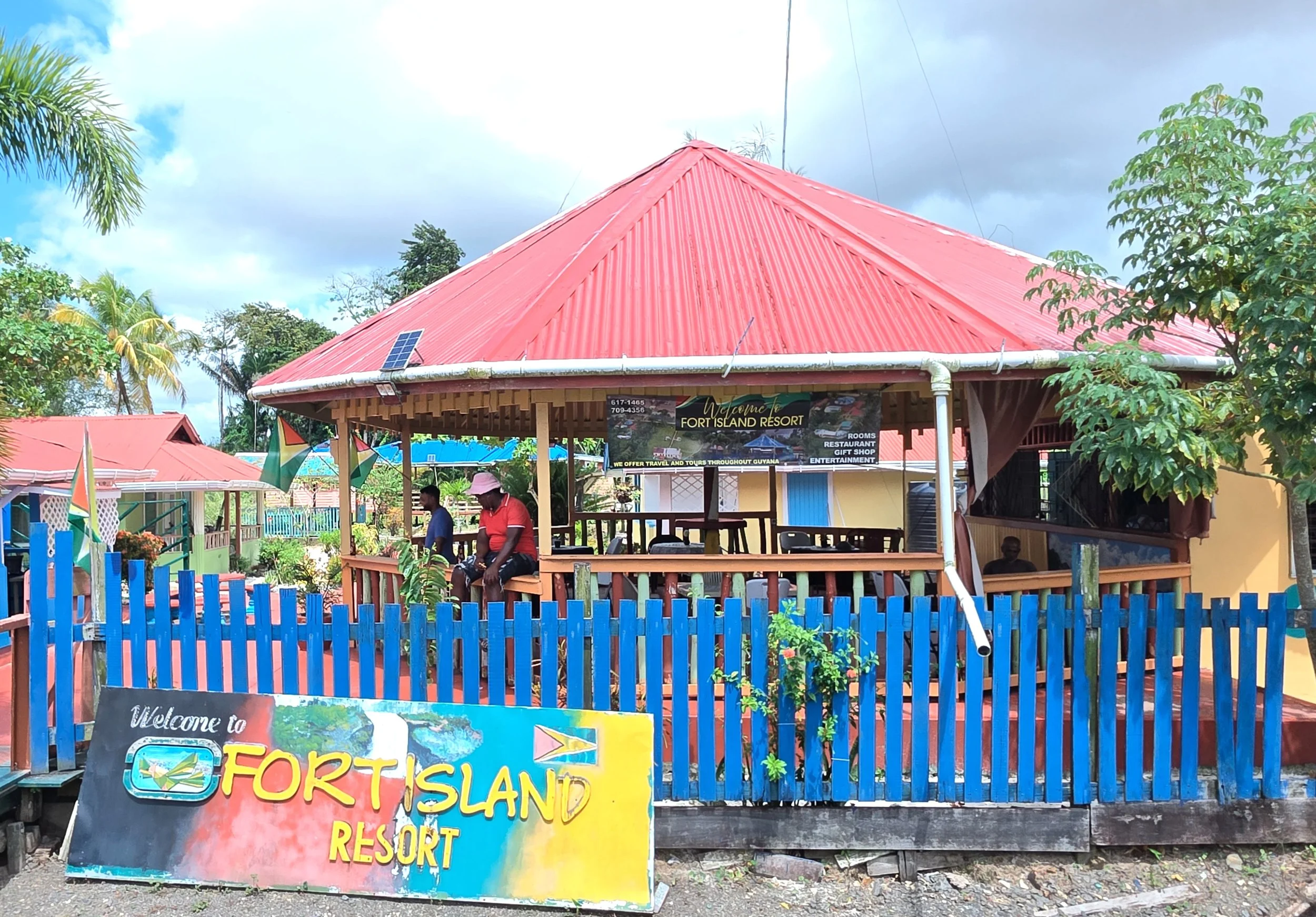
Fort Island Resort (Photo by Ron Fanfair)
Away from major celebrations, farming, fishing, family relationships and heritage tourism help sustain the community.
Bibi Catega, a fruit and juice vendor, moved to Fort Island 41 years ago after marrying. Her offerings included cane juice, coconut water, sorrel and locally grown fruit.
“Very peaceful,” she said of life there. “Very fresh air.”
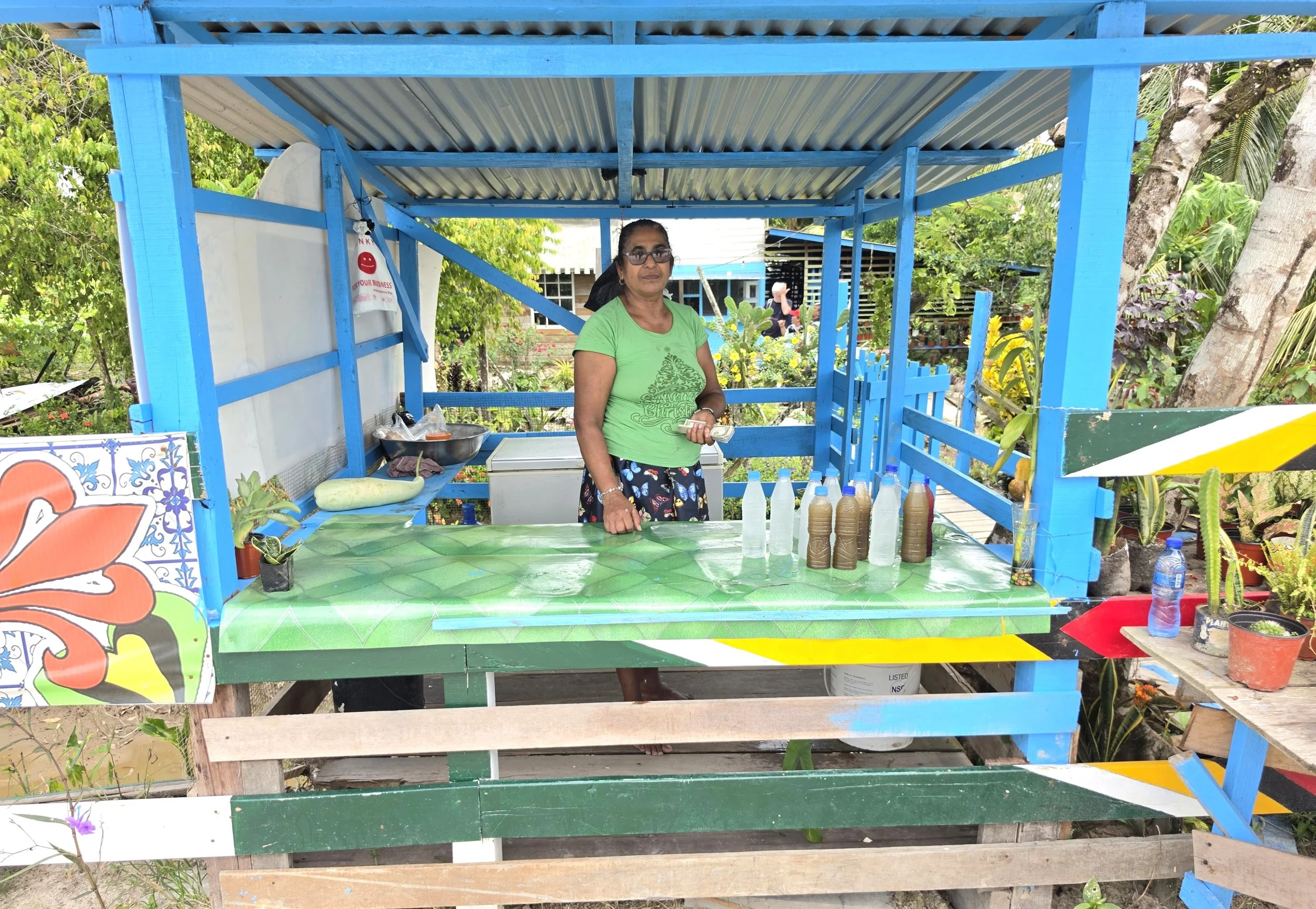
Bibi Catega has been a Fort Island resident for four decades (Photo by Ron Fanfair)
Debideen described how residents use what grows around them, including mangoes blended with ginger for homemade drinks.
“We don’t use carbonated drinks like ginger ale, Coca-Cola and Pepsi because we have the trees and we have the mangoes,” she said. “That means we can save money.”
Those conversations brought the island’s daily life into focus before the visit turned to the structures that explain its place in Guyana’s history.
At Fort Zeelandia, surviving walls and gun openings offered a glimpse of the Dutch effort to defend their interests along the Essequibo.
Completed in 1744, the brick fort replaced an earlier timber fortification. Its construction formed part of a move towards a stronger defensive and administrative position closer to the river’s mouth. By 1748, the Dutch colonial capital had moved downriver from Kyk-over-al to what was then known as Flag Island.
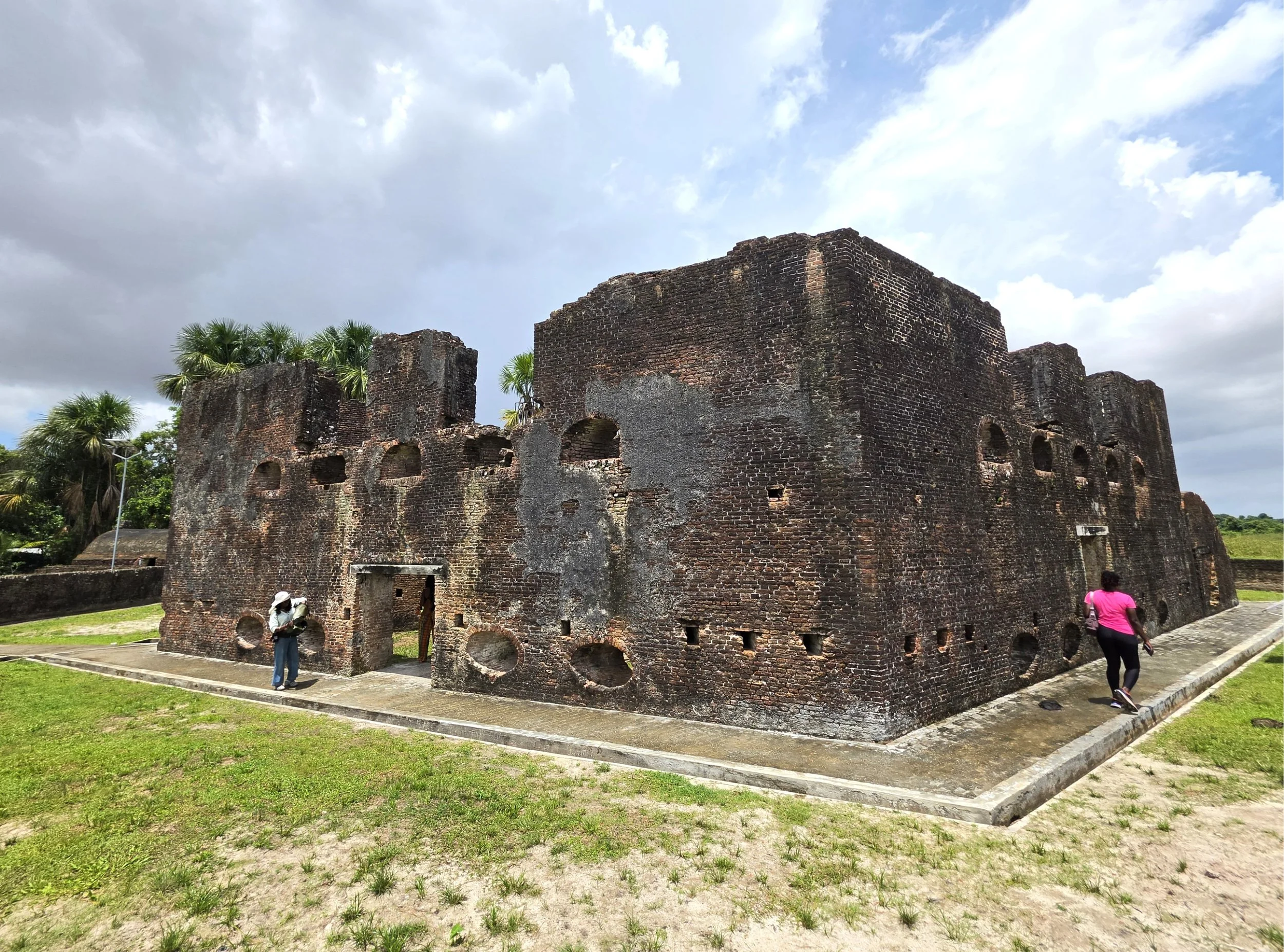
Fort Zeelandia (Photo by Ron Fanfair)
Persaud explained how the fort’s position and design helped its occupants monitor approaching vessels. The river carrying the visitors had once been a route to defend and control.
Walking through the ruins meant imagining the soldiers, supplies and weapons that had filled a colonial outpost dependent on access to the water.
Nearby, the former Court of Policy and Church Building revealed another side of that colonial enterprise.
Completed around 1752, it combined administrative and religious functions. One room was later adapted as an auction office, primarily for the sale of enslaved people. The building now houses the Dutch Heritage Museum.
Its significance extends beyond age and architecture. The building records the connections between colonial government, commerce, religion and slavery.
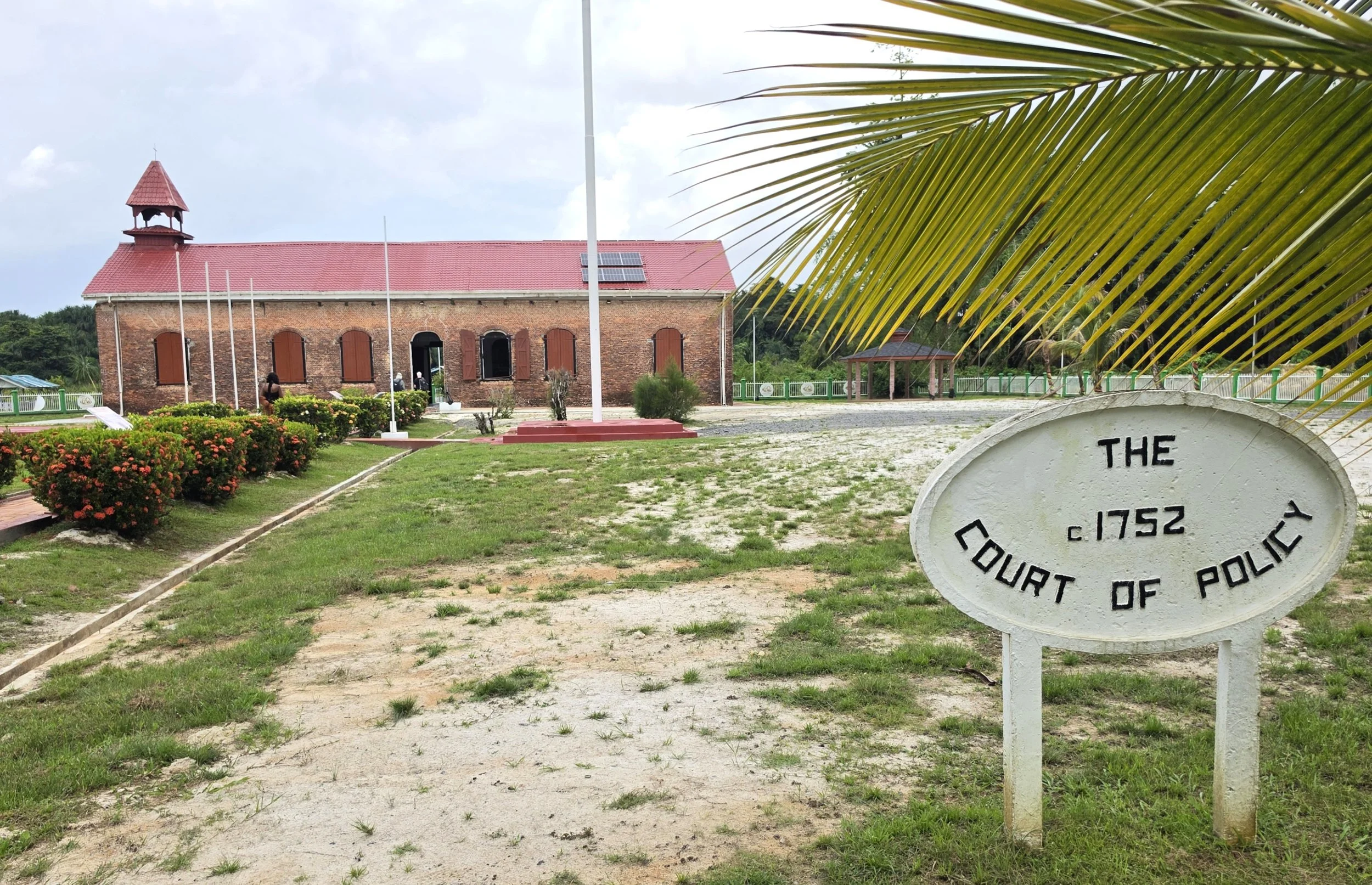
Fort Island’s Court of Policy (Photo by Ron Fanfair)
During Guyana’s independence anniversary year, the setting also invited reflection on how the island’s role had changed. A former seat of foreign administration had become a gathering place for celebrating national sovereignty.
From Fort Island that has historically had limited electricity access and unreliable cellphone reception, although solar installations have brought power to some facilities, the group travelled for approximately another hour by speedboat to Fort Kyk-over-al.
The small island, with its surviving brick archway, offered a different experience from the more substantial ruins downriver.
“This is all of it, by the way,” Persaud told the group. “There’s no secret attachment area or any extension.”
The National Trust of Guyana dates the Dutch fort to around 1616. It stands on an islet in the Mazaruni River near its confluence with the Cuyuni, within the wider river network connected to the Essequibo. Its name means ‘see over all’, reflecting the strategic value of its outlook.
Persaud encouraged visitors to consider the practical challenges of operating from such a confined location, especially when people and supplies arrived under sail.
The island offered defensive advantages but little room for an expanding administration. By 1716, overcrowding had prompted the construction of buildings for colonial officials at nearby locations. Efforts to move the administrative centre to Fort Island followed, and Kyk-Over-Al was abandoned by 1748.
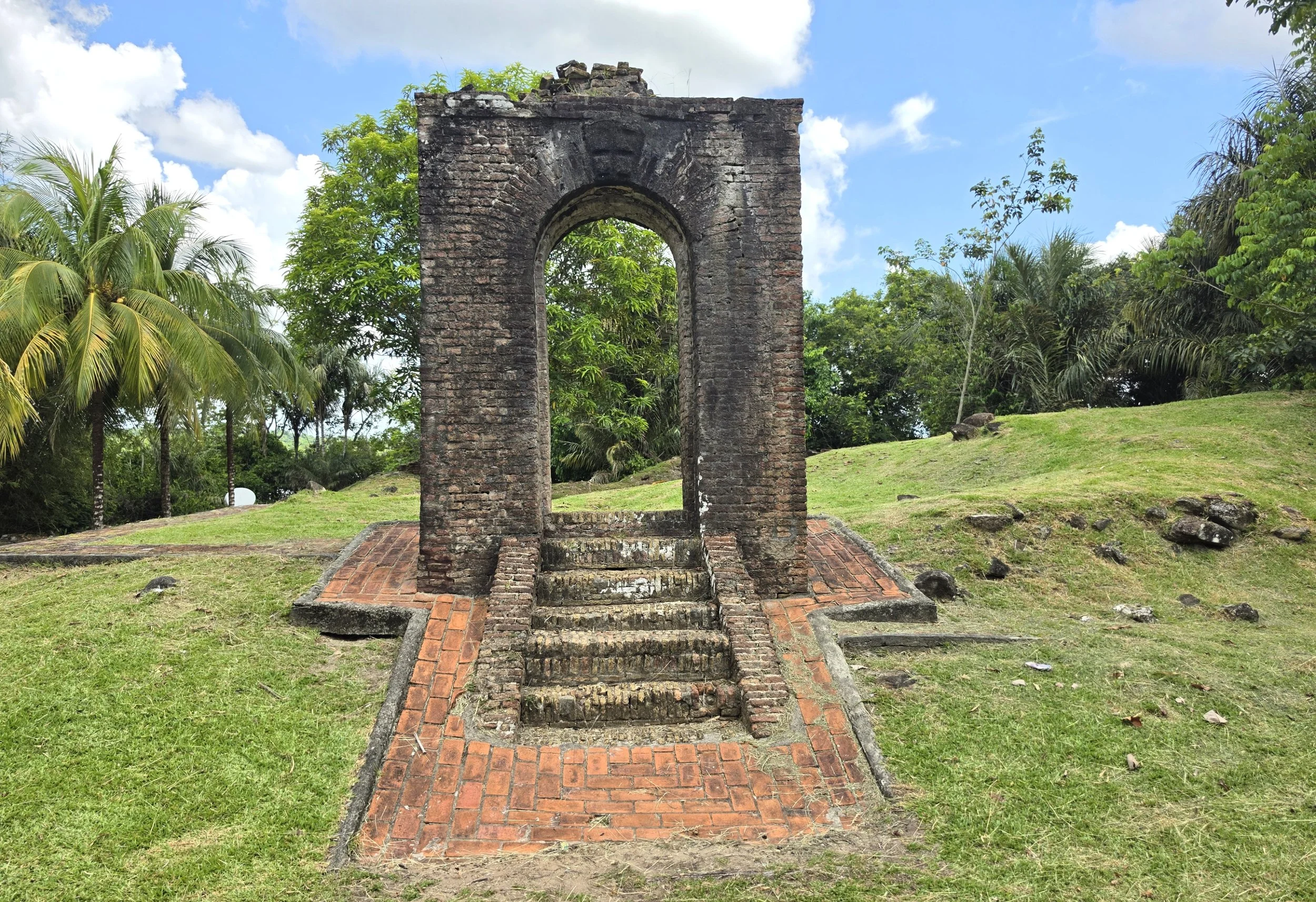
Fort Kyk-Over-Al (Photo by Ron Fanfair)
The archway preserves only a fragment of the former fort. The surrounding water helps explain why this small piece of land mattered to those seeking to establish and maintain colonial power.
Elsewhere along the route, the river revealed places that continue to support the movement of people and goods.
Bartica, a gateway to Guyana’s interior, serves gold and diamond mining communities. Its history stretches back well beyond its recognition as a town, celebrated at its inaugural township ceremony in May 2016.
Seen from the water, it was a reminder that these waterways carry workers, supplies and residents alongside visitors exploring the region.
Mazaruni Prison brought a more sobering chapter of history into view.
The British colonial penal settlement opened in 1842, following construction that began in late 1841. Its early development continued over several years. Prisoners supplied labour for the settlement, whose history forms part of the wider story of punishment and confinement in colonial Guyana.
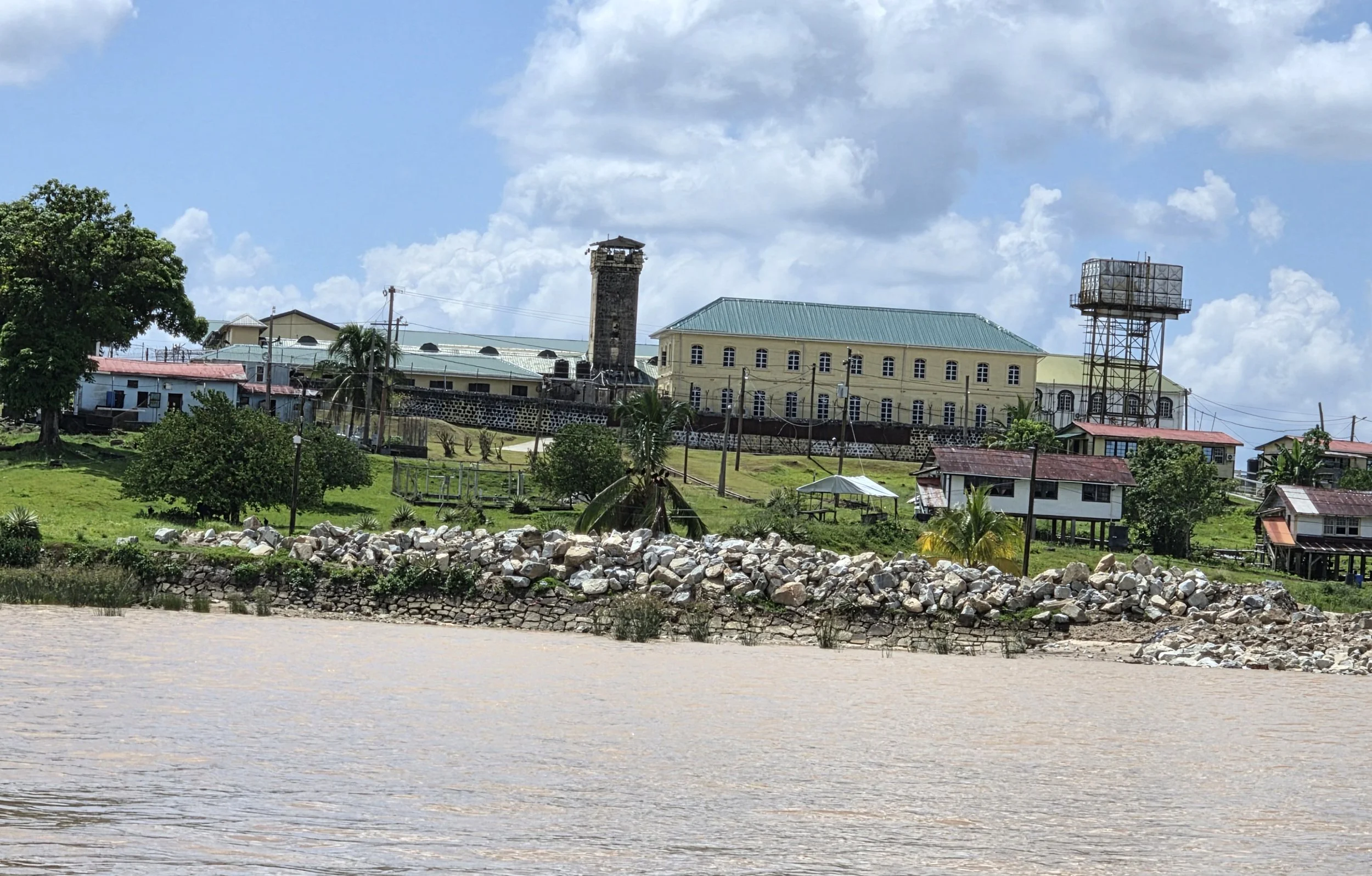
Mazaruni Prison (Photo by Ron Fanfair)
From fortifications and former administrative buildings to a prison still in use, the journey revealed how the rivers had served institutions of colonial power as well as communities and trade.
At Sloth Island, attention shifted to the forest canopy.
The group spotted a sloth in a tree, encountering the animal that gives the island its name.
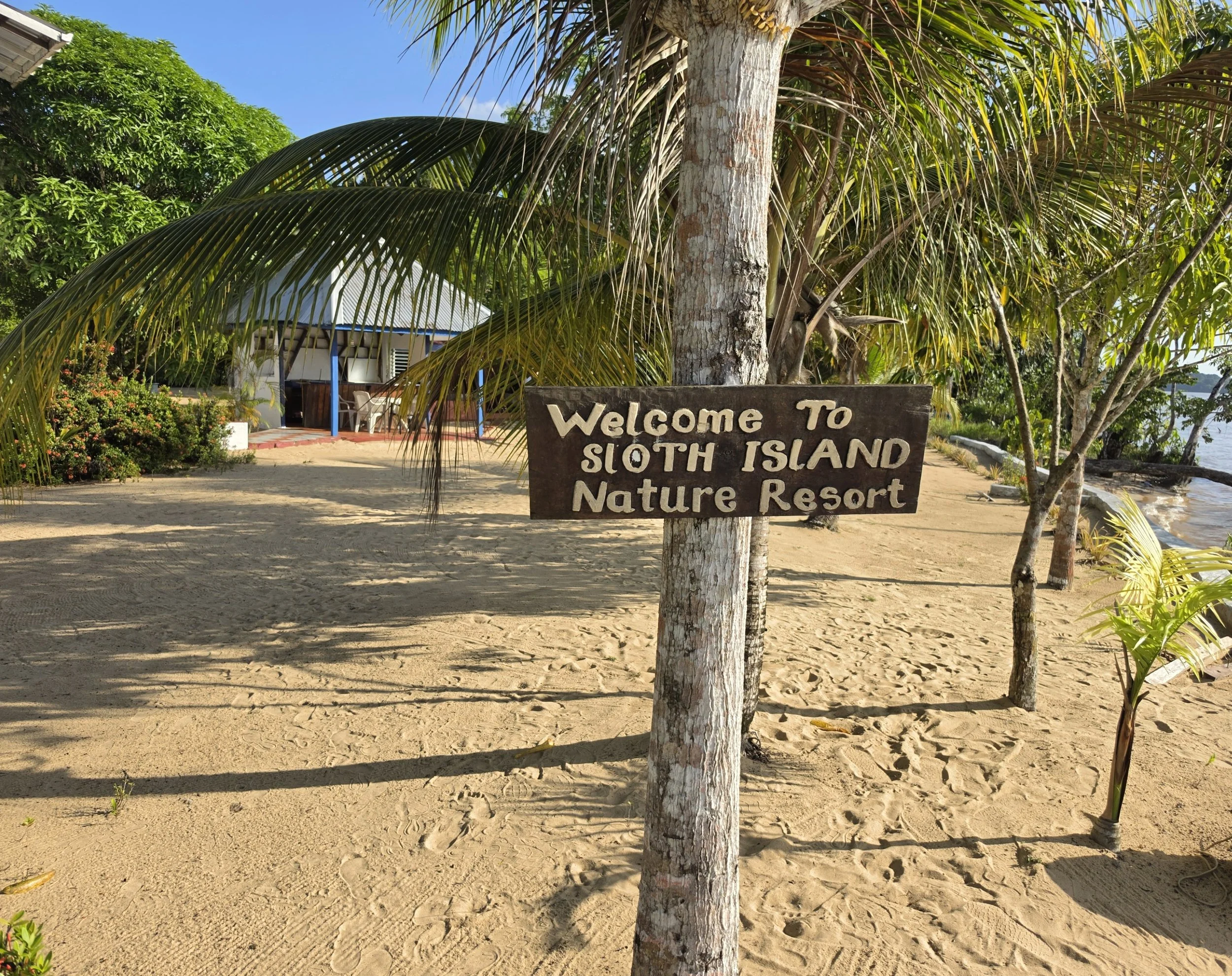
Sloth Island (Photo by Ron Fanfair)
Sloth Island Nature Resort occupies a 160-acre island in the Essequibo near Bartica. According to the resort’s account of its development, work began in the early 1990s, with Indigenous builders from the Agatash area constructing traditional accommodation. Much of the island remained forested as the visitor facilities developed.
The stop brought another dimension to a day that combined heritage sites and community encounters with opportunities to experience Guyana’s natural environment.
The excursion continued to Baracara Falls, where cascading water provided another reason to pause.
Nearby, Aruwai White H₂O Resort occupies an island in the Mazaruni River.
Its accommodation and recreational facilities offer another option for visitors exploring this part of the country, alongside the forest retreat at Sloth Island and the circuit’s historic attractions.
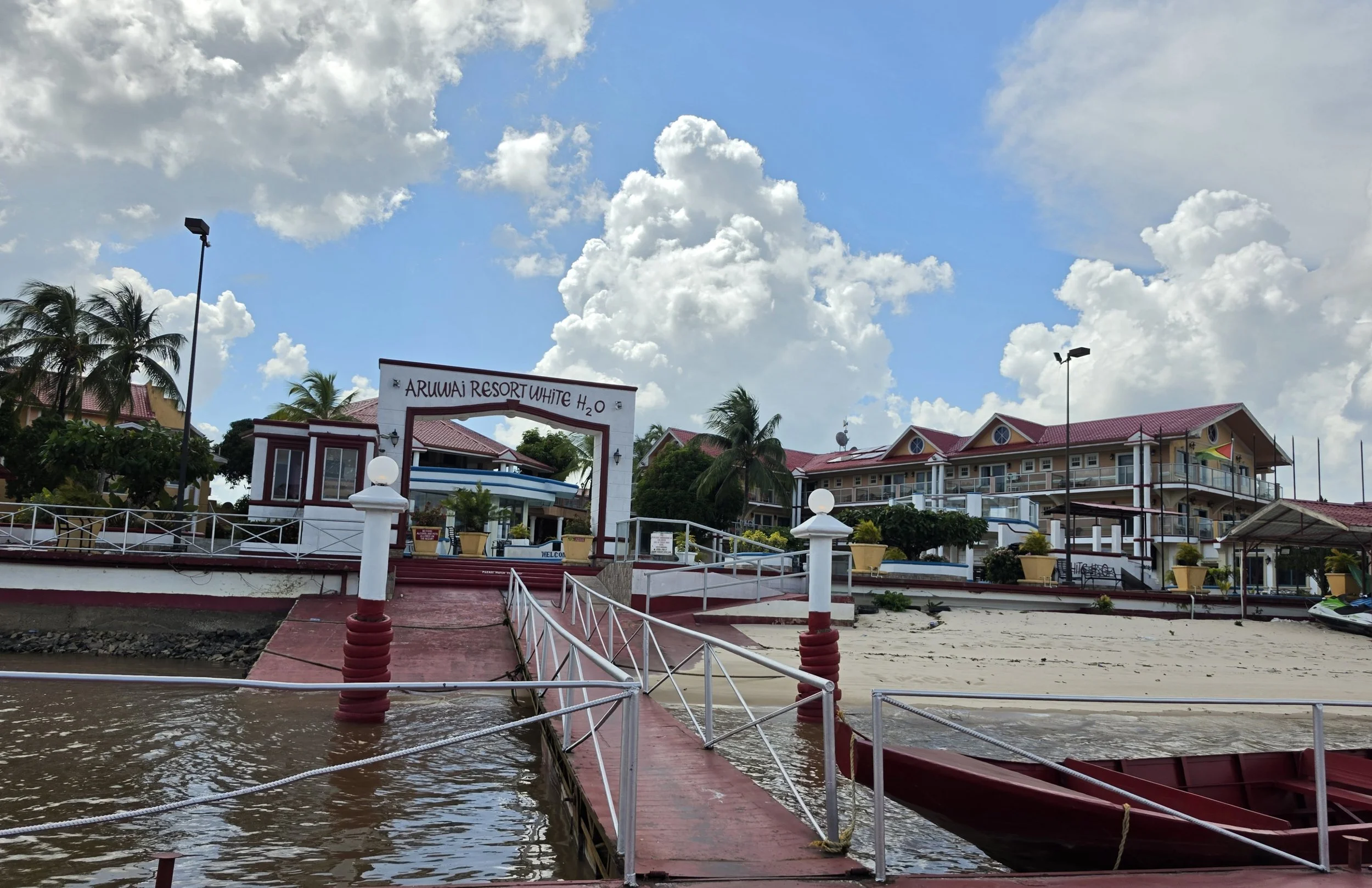
Aruwai White H₂O Resort island retreat on the Mazaruni River. (Photo by Ron Fanfair)
On the return trip to Parika, the group passed the island home of Guyanese-born musician Eddy Grant who earned a Grammy nomination for Best Rhythm & Blues Song in 1984 for ‘Electric Avenue’. For those familiar with his music, the sight added a cultural connection to a journey already rich in history and natural attractions.
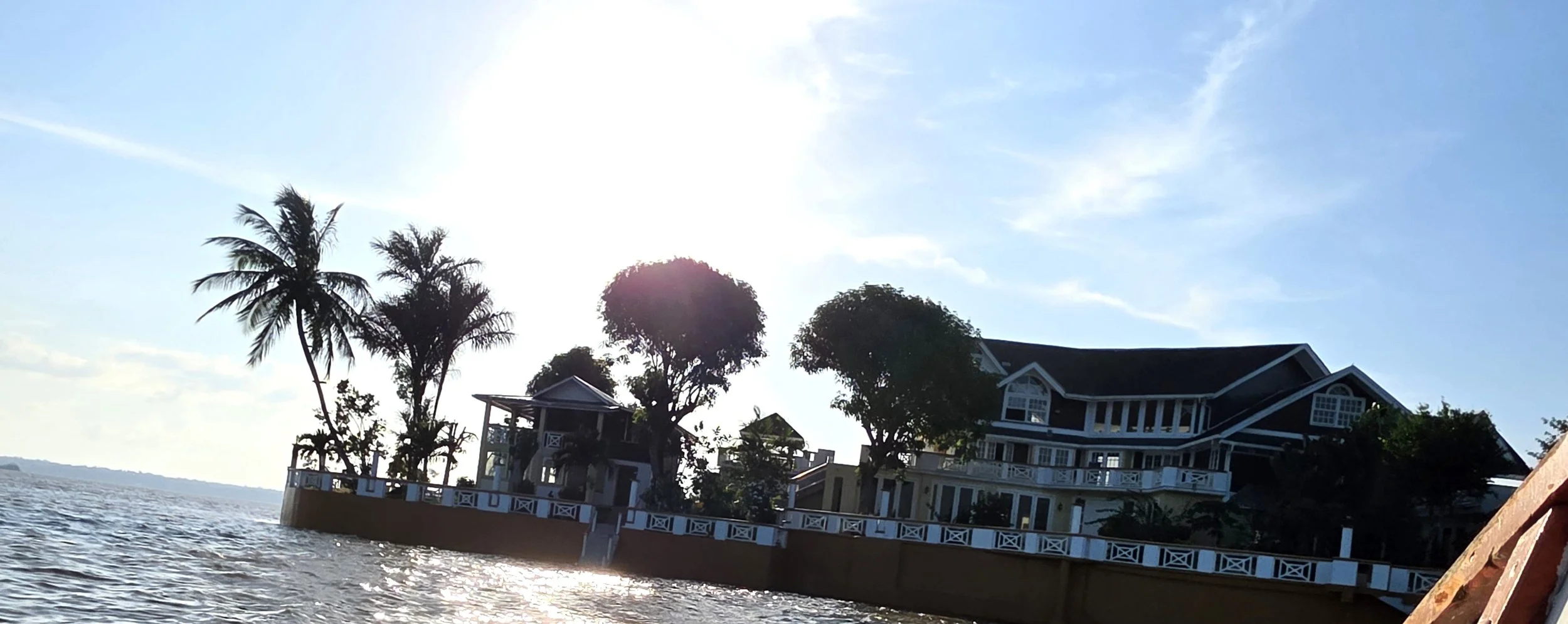
Eddy Grant’s island home on the Essequibo River (Photo by Ron Fanfair)
By then, Persaud had spent the day connecting places that might otherwise have seemed like separate stops on an itinerary.
His own career reflected the possibilities of building tourism around a close knowledge of home. The history, wildlife and outdoor activities he once pursued in his spare time had become the substance of his working life.
“I do this every single day, forgetting that it is still my job,” Persaud added.
For media representatives and delegates preparing to discuss the region’s tourism industry, the excursion gave those conversations a human context.
There was the guide who had turned a passion into a profession, the vendor selling local fruit and drinks, and the health worker continuing her mother’s service to a river community. Together, their stories brought the places along the journey to life.