Dee George keeps Guyana’s sugar story alive at Herdmanston Lodge
October 13, 2026
A guest about to check into the Rose Hall room at Herdmanston Lodge noticed another room named Albion, after the Guyanese sugar estate where he had once lived.
He asked to switch rooms, and staff accommodated him after confirming availability. Delighted by the unexpected connection to his past, he photographed the Albion room’s name to share with his siblings.
For Omadele ‘Dee’ George, moments like this show how the hotel can reconnect guests with their own place in Guyana’s sugar history.
The hotel’s director developed the business with her husband, Michael George, building a place where family history and personal attention shape the guest experience.
George’s approach to hospitality draws on her childhood on Guyana’s sugar estates where close friendships and shared community celebrations brought people of different backgrounds together.
“Taking part in one another’s festivals taught me to connect across racial lines and appreciate different traditions,” she said.
Those influences are evident throughout the boutique hotel, from rooms named after sugar estates to familiar Guyanese dishes and staff who remember returning guests’ preferences.
Set amid lawns and gardens in Georgetown’s Queenstown neighbourhood, Herdmanston Lodge preserves elements of Guyana’s distinctive colonial architecture.
The heritage hotel was among the accommodation options for delegates attending the Caribbean Tourism Organization’s 2026 State of the Tourism Industry Conference.
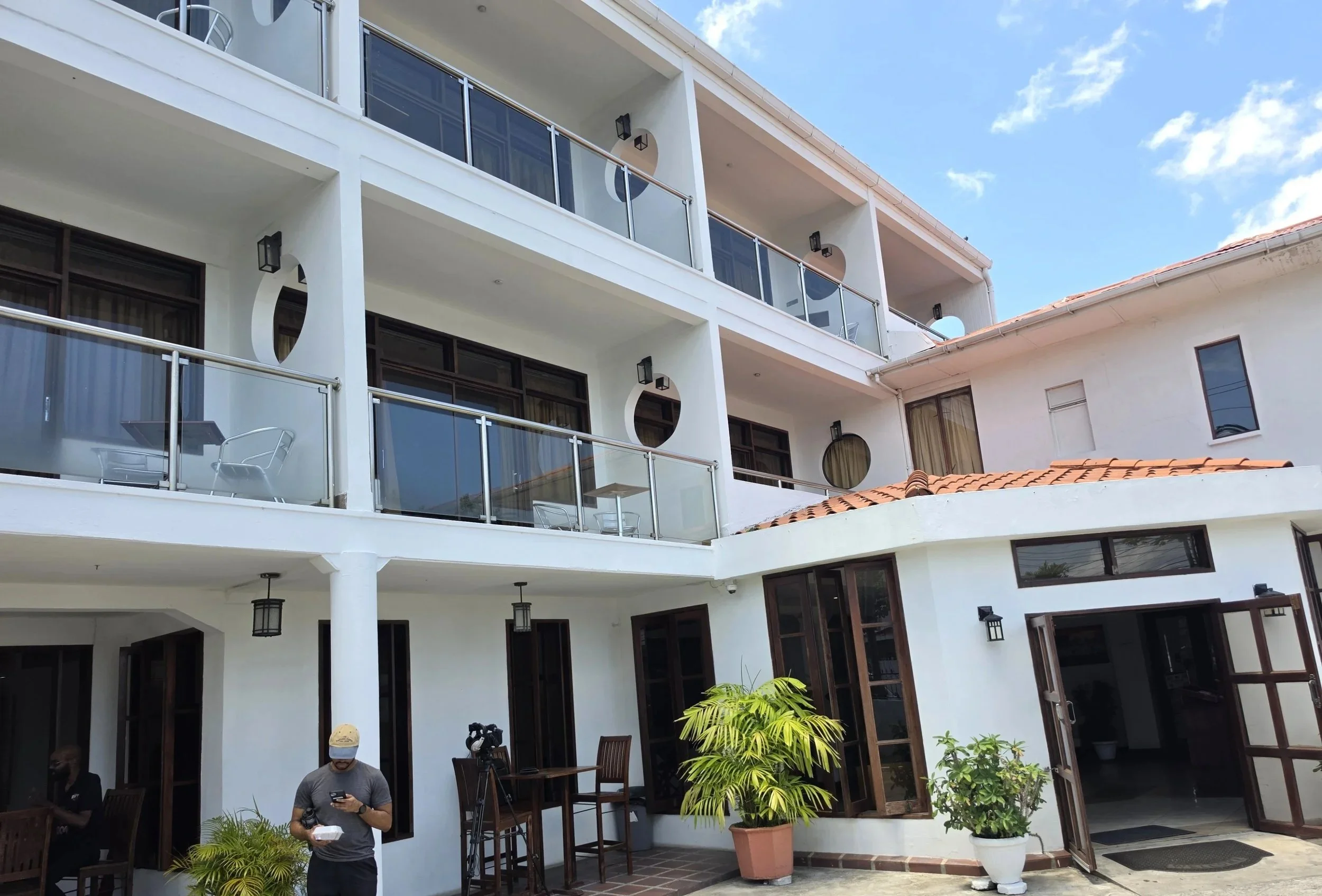
The entrance to Herdmanston Lodge (Photo by Ron Fanfair)
For George, the connection to sugar began long before she entered hospitality.
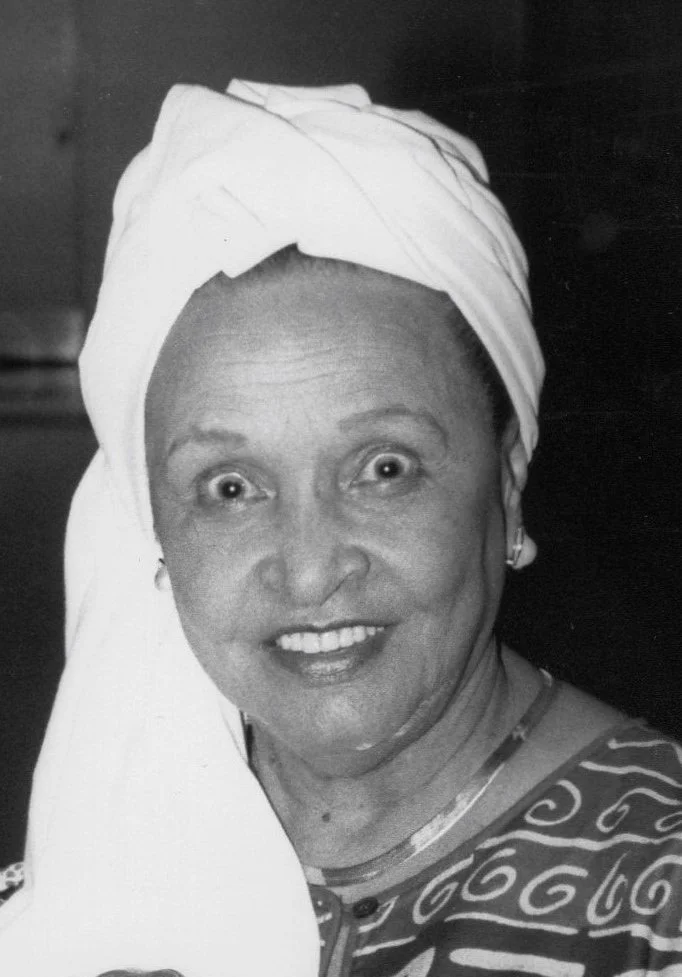
Her late father, Keith Williams, worked in Guyana’s sugar industry. As his career took the family from one estate to another, she attended several primary schools before they settled in Georgetown, where she went to Bishops’ High School.
When asked where she is from, she gives an answer that captures a childhood spent in many communities.
“I am Dee from all over,” George said.
Through those moves, she experienced a strong sense of community that crossed ethnic lines. Neighbours were known as aunties and uncles, while children travelled to school together and joined in one another’s celebrations.
George remembers the colours and playful splashing of water at Phagwah, the celebration of Diwali and the food shared in neighbours’ homes.
Her memories centre on the sense of safety and belonging she experienced as a child. She acknowledges that racial divisions may have existed beyond the world the adults created for them.
“I am sure it was there, but we were protected from it,” George said. “There were the children’s parties and everybody was aunty and uncle. Adults throughout the compound watched over the children, knew whose mother to call and made sure they went home when they should. That sense of belonging to a wider family stayed with me.”
That wider family also remembers the qualities she brought to it.
Longtime friend Esther Granger recalls a quiet, shy child who was protective, nurturing, and kind, with a radiant smile and poise that seemed beyond her years.
“Although the Williams household employed domestic and gardening staff, the children were expected to take over chores when their mother gave employees weekends off,” she said. “Dee cleaned the house, cared for poultry and watered the garden, approaching those responsibilities with the same diligence she brought to school. She never frowned or saw it as below her. Her humility shone through.”
Even with that foundation, opening a hotel was never part of George’s original plan.
An economics graduate who had worked as a research assistant, she was involved in property investment when a realtor introduced her to a building at Peter Rose and Anira streets in Queenstown.
Previously operated as Queenstown Inn, the property offered the potential to revive an accommodation business.
Her first response was to resist.
“At the time, I had a young family and this was definitely not my space,” George recalled thinking. “I was not into hospitality. That was not my thing.”
Further discussions persuaded her to reconsider.
Nearby Herdmanston House, familiar to her through her father’s work in the sugar industry, provided a connection to her childhood. Naming the venture Herdmanston Lodge gave the unfamiliar business a meaningful link to the world she knew.
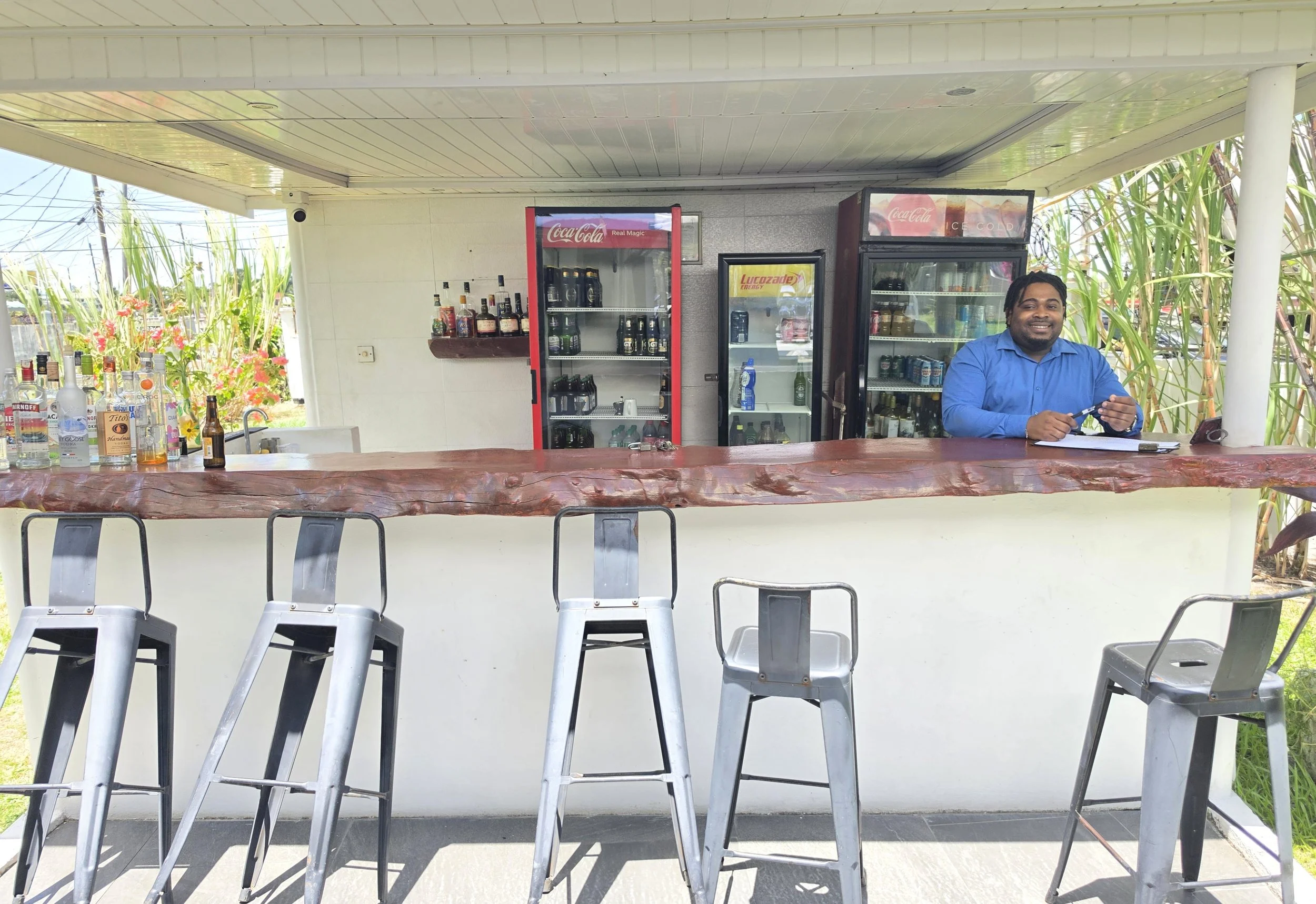
Bartender Ezekiel Fredericks inside the Sucre Restaurant & Outdoor Bar (Photo by Ron Fanfair)
Herdmanston Lodge began in a neighbouring building before expanding into the historic Herdmanston House, which George said they acquired in 2009.
The house had long been associated with the sugar industry’s meetings and social gatherings.
For George, acquiring the property brought a personal responsibility to preserve its history.
As she walked through the building with her retired father, he recounted the people who had stayed there and the meetings and occasions held within its walls. His memories convinced her that those stories should remain part of the property’s future.
“I said to myself, this story has to continue and it has to be told,” noted George.
The lodge employs 32 full-time staff, with additional support as needed.
Her family was central to building that business.
Michael, who holds a Bachelor of Engineering degree in Computer and Electrical Engineering from McMaster University, works behind the scenes in finance, technology and construction.
George’s parents brought their own skills and experience to the venture.
Her mother helped with housekeeping, cooking and gardening, and her father oversaw the remodelling of Herdmanston House before becoming general manager, bringing his knowledge of the sugar industry and enthusiasm for history to conversations with guests.
For Guyanese returning from abroad, those conversations sometimes helped restore family connections.
George recalled her father tracing guests’ backgrounds, discovering people they knew in common and, on one occasion, taking a visitor to see where his grandparents had lived.
“He would sit with you,” she said. “Where are you from? Where are your parents from? And he would go down the line. Some people came here and found their people because of him.”
Granger saw those childhood lessons carry into George’s working life as she and her mother took on the daily demands of establishing the lodge and training its staff.
“She booked reservations, welcomed guests effortlessly, cleaned rooms and did whatever was needed to build that business,” the United States-based resident said. “Her smile never faded.”
For Granger, the willingness to take on whatever needed doing was familiar. So was the generosity that accompanied it.
She recalled George helping her and others access the business’s services, sometimes without charge or any expectation of something in return.
“Dee has never forgotten how to be kind and generous,” she added.
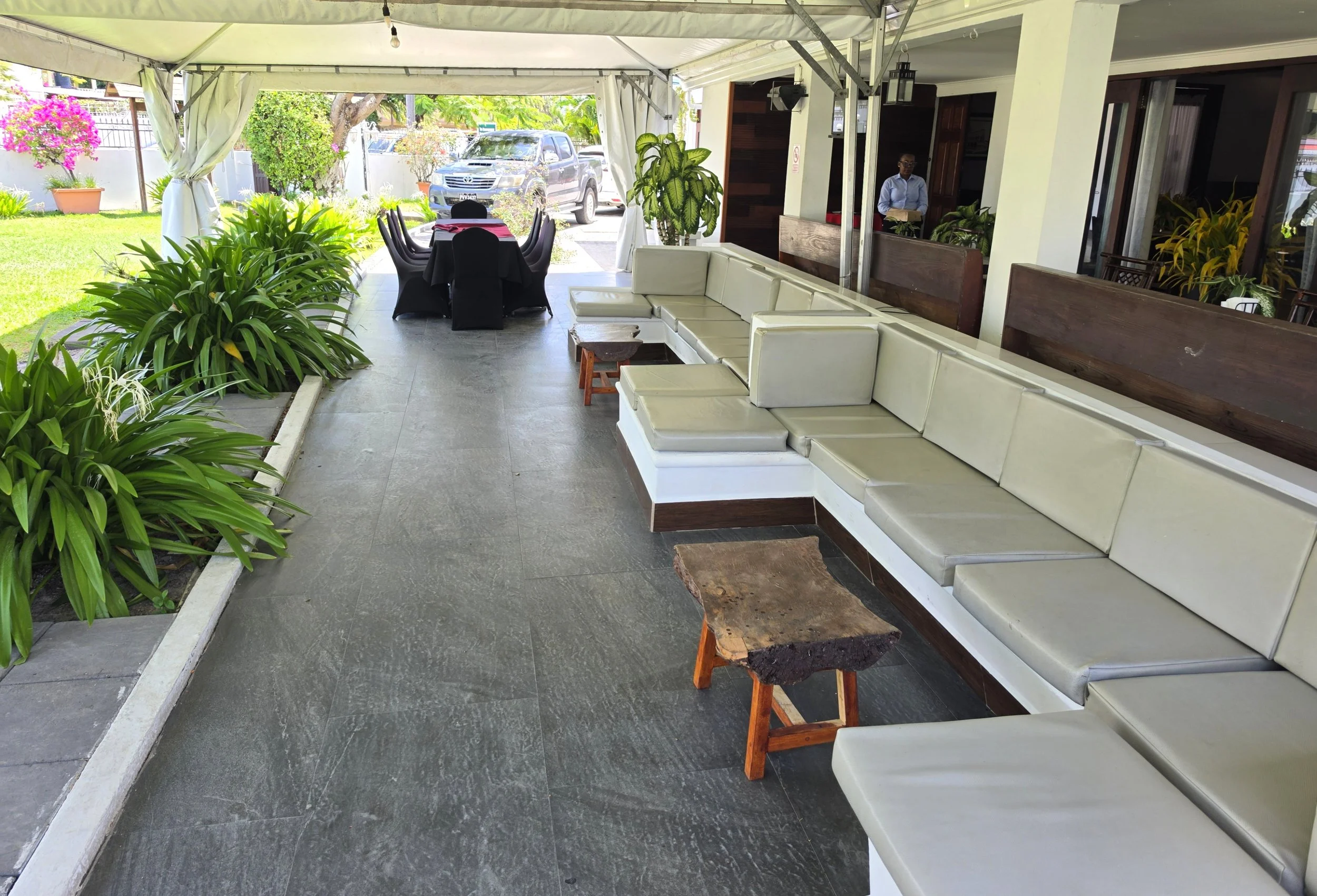
The outdoor Caneview Terrace (Photo by Ron Fanfair)
That personal commitment to the lodge runs alongside its role in preserving sugar history. Rooms named after estates offer guests an introduction to the industry’s past. Some names spark questions and others revive memories of places where guests and their families lived and worked.
The shared spaces carry similar references.
George said the Yellow Crystal space recalls a type of sugar her father remembered, while the Mill Dock patio evokes the places where estate workers gathered when operations paused.
She wants the stories told at the hotel to recognize the labour and suffering of earlier generations, as well as the community life that developed around the industry.
“We have an obligation to keep telling our story, the Guyanese story and the sugar story,” George said. “That story, along with what followed thereafter, has to continue to be told or else it will be forgotten. We always make sure that our team members are told of the story so that it continues.”
Food offers another connection to home.
Pepperpot, bakes and saltfish are among the favourites guests look forward to, particularly at Sunday brunch. Roti, cook-up rice, curries and locally grown fruit also feature on the menu.
“Serving pepperpot beyond Christmas gives visitors on short trips a chance to enjoy a familiar dish they might otherwise miss,” George said.
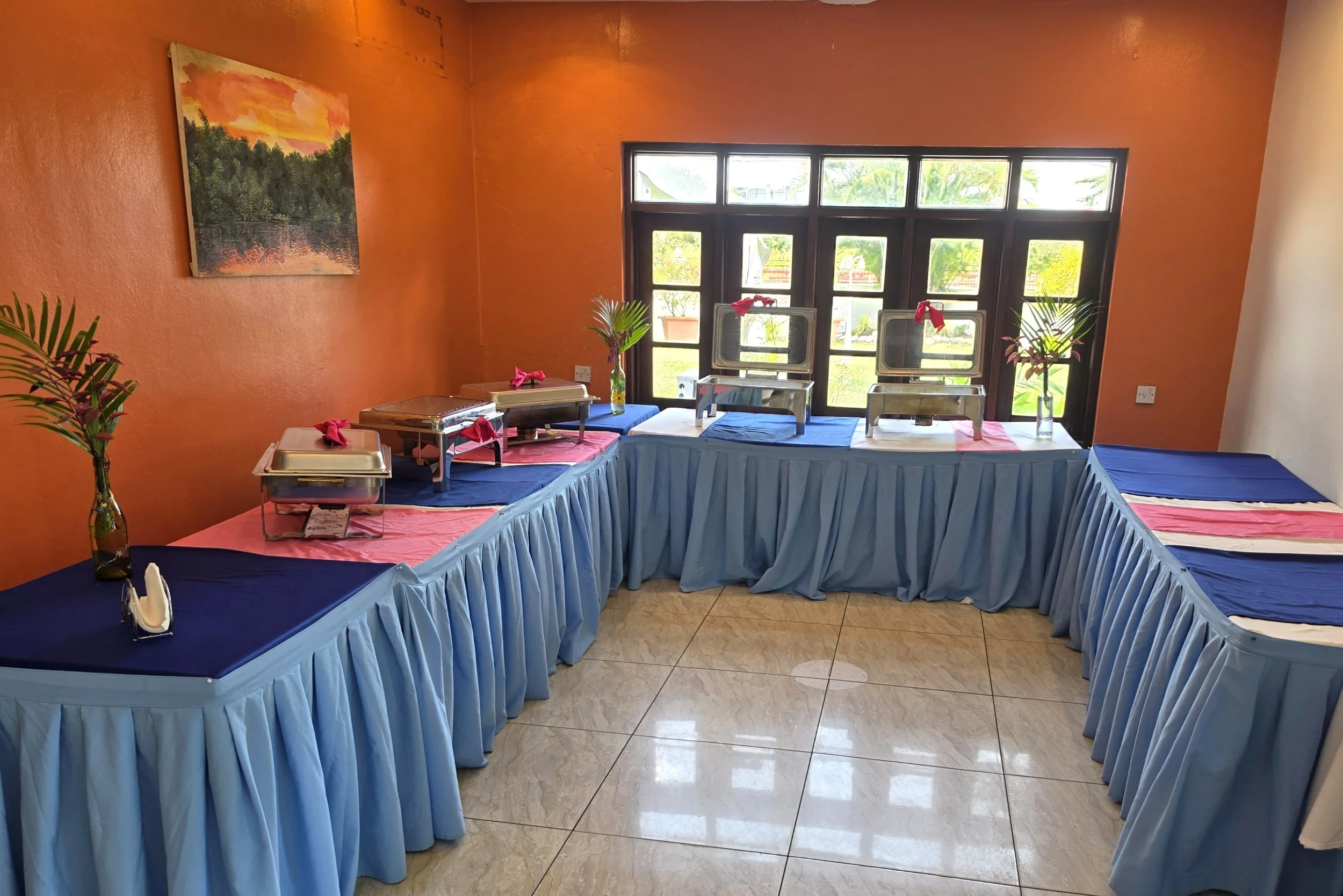
The buffet space at Herdmanston Lodge (Photo by Ron Fanfair)
For cultural scholar Vibert Cambridge, the lodge provided a base for researching Guyana’s wider history.
A professor emeritus of Media Arts and Studies at Ohio University and author of Musical Life in Guyana: History and Politics of Controlling Creativity, he began staying there around 2008. He and his wife have returned over the years.
Introduced to Michael George while on sabbatical, Cambridge found a quiet setting for his research and a hotel that celebrated Guyanese life.
“It is attractive because it is off the beaten path,” said the former Guyana Broadcasting Corporation program director with responsibility for culture. “You don’t have much distracting traffic, so it is quiet and it is safe. The orientation of the hotel is to celebrate Guyana.”
The food brings back particularly strong childhood memories.
“The folks who prepare food at the hotel remind me of growing up, with the care that is put in the preparation, the natural flavours as opposed to packaged flavours,” said Cambridge, a former president of the Guyana Cultural Association of New York.
He fondly remembers a Diwali stay when the hotel arranged an outing for guests to experience celebrations around Georgetown. The group included visitors who were not Guyanese.
The outing introduced overseas visitors to Guyanese cultural life while giving returning nationals a chance to reconnect with a familiar tradition.
Cambridge also recalls the care George’s mother put into the grounds, from green lawns to carefully tended potted plants.
“Her mom has the green thumb,” he said. “She kept that place impeccable. From the yard and the plants, you see care. And that care is what transferred into the general running of the hotel.”
During stays lasting a month or six weeks, the lodge became a base for Cambridge’s book research and cultural activities. George and her family also became people with whom he could discuss ideas.
“Dee has always been very close to me as we think through things culturally,” added Cambridge. “We are always talking about things we want to do. It is a receptive and supportive ear.”
That sense of connection is sustained by employees who have helped shape the lodge over many years.
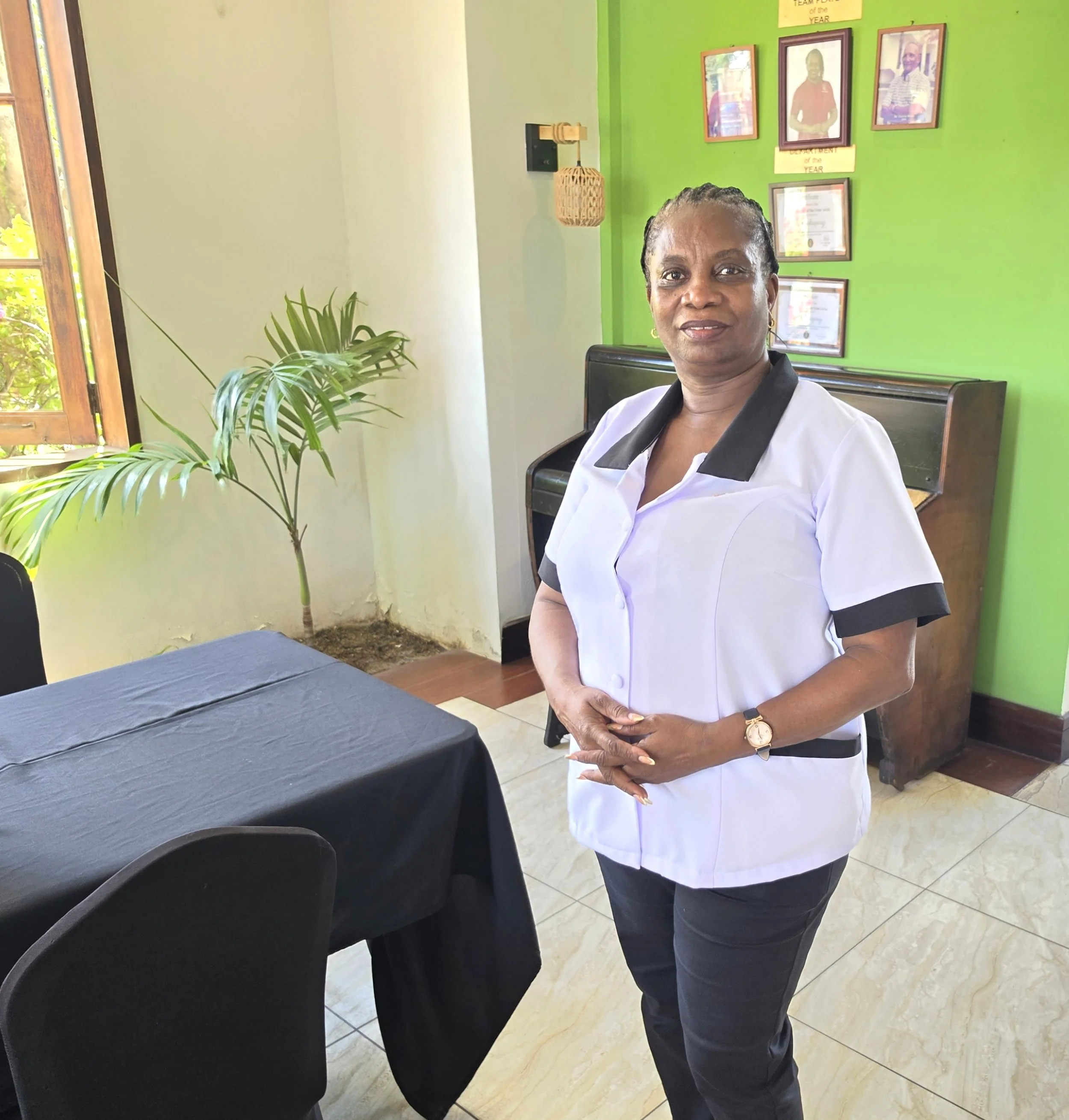
Housekeeping employee Jewel Rowe joined 18 years ago when the hotel had just 11 rooms and two housekeeping staff.
“I just saw the advertisement, and I just decided to try to get a job here,” she recounted. “Looking back, I have no regrets about that.”
Rowe’s work includes caring for linen and keeping rooms tidy, but her attention extends to the details that make returning guests feel remembered, from their preferred coffee to the way they like their beds made.
“This one likes fruit, this one likes nuts and this one likes the bed made up that way,” she said. “We get to learn about everyone.”
Those preferences guide preparations for returning guests, while conversations resumed from earlier visits help each stay feel like a reunion.
That care also extends to visitors who become ill or arrive facing personal difficulties.
Jewel Rowe (Photo by Ron Fanfair)
Rowe said staff try to offer practical help and reassurance, mindful that they, too, might one day need kindness away from home.
“I do like engaging with guests,” she said. “Some of them would come with some sad story and we would try to meet them halfway at least. We try to assist because we don’t know what would happen to us out there. So we treat everybody the same.”
For Rowe, the appreciation of returning guests makes the work rewarding. Some tell staff they have recommended the lodge to friends because of the care they received.
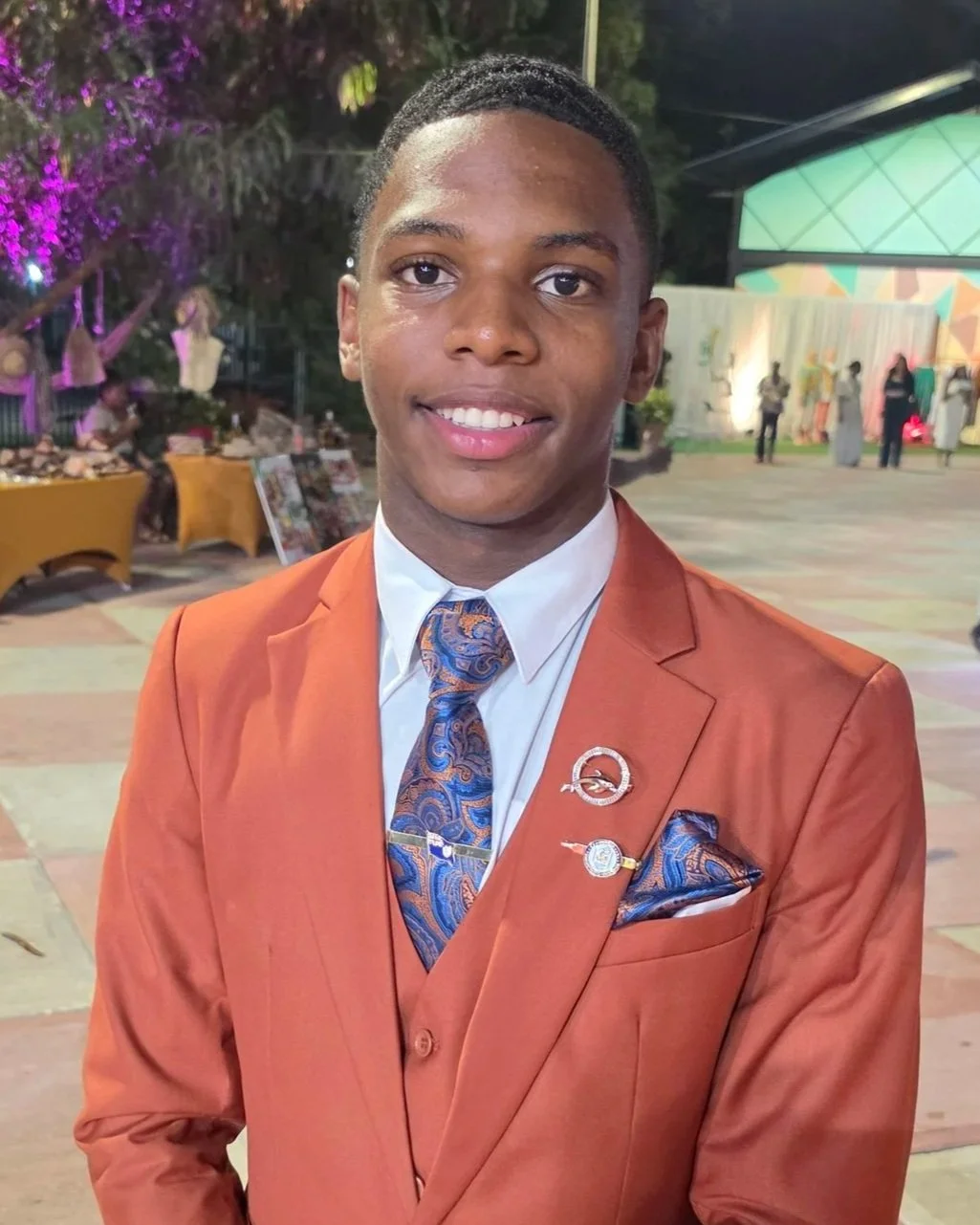
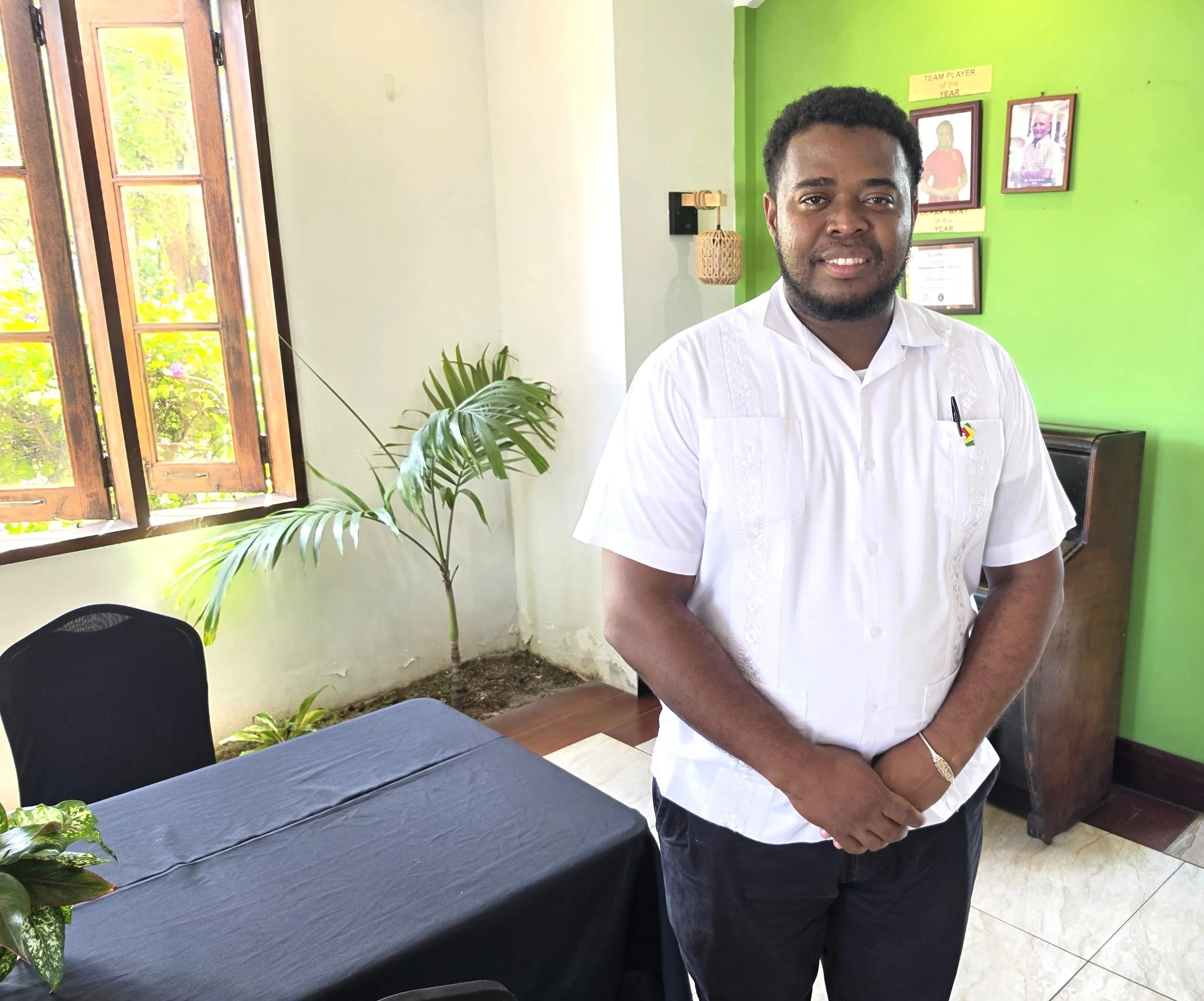
Duty manager Damon Crandon has also grown with the business. Starting 14 years ago as a chef, he later moved into restaurant supervision before assuming his current role.
He guides the team and checks work across housekeeping, the restaurant and front desk to ensure nothing has been overlooked.
The lodge’s quiet surroundings and greenery appeal to Crandon, as does the opportunity to connect with guests.
“It suits my lifestyle,” he said. “I love quietness, I don’t like large gatherings and I love plants.”
Damon Crandon (Photo by Ron Fanfair)
Crandon also enjoys learning about visitors’ home countries, giving him a starting point for conversation.
“As soon as a guest checks in, I could tell you something about your country,” he said. “When it happens, it makes me feel happy. Meeting people keeps me going.”
The concern for people that shapes life at the lodge also draws George into youth mentorship, elder care, conservation and cultural initiatives.
“I don’t say no to young people,” she said.
George shares her entrepreneurial experience with young people considering starting businesses.
She remembers trying to find her own way when the guidance and support now available were harder to come by.
“I spent many lonely nights trying to figure out how this works,” George, who has three daughters, recalled.
During her presidency of the Tourism & Hospitality Association of Guyana that ended last year, she launched SWIFT (Student Work and Internship for Tourism). The initiative grew from a teenager’s request to gain experience alongside her and developed into a program connecting high school students with tourism businesses.
George said the association also works with teachers and school counsellors to help them explain the industry’s opportunities to students.
“We have a shortage because our young people don’t know about tourism,” she said.
George’s involvement with Uncle Eddie’s, where she serves as a trustee, began through a lodge guest who travelled from Britain to visit his mother at the home for the elderly. On one visit, she and members of her staff followed him there with a birthday cake, singing as they arrived.
The visit gave her a closer understanding of the home’s work and prompted her to become involved.
She said its commitment to affordable accommodation and care for older people makes donations essential.
Maintaining a welcoming environment is part of that responsibility.
“Plant flowers, clean up and the other things will come,” she said. “You will see your way and you will feel encouraged to do other things.”
George also serves as a director of Guyana’s Protected Areas Commission which is overseeing the redevelopment of Georgetown’s Zoological Park and Botanical Gardens. The project aims to combine conservation, education and recreation, with plans for larger, more natural wildlife habitats, improved animal care facilities, themed gardens and a Discovery Centre featuring an aquarium.
A treetop trail and upgraded waterways and walking paths are also planned, giving residents and visitors new ways to experience Guyana’s biodiversity in the capital. The facility is scheduled to open in 2029.
George, who volunteers with the Rotary Club of Stabroek, is also involved with the newly formed European-Guyanese music and opera association.
Recalling a free concert at St. George’s Cathedral, she said about 800 people attended, demonstrating an audience for classical music alongside Guyanese choral traditions.
These commitments provide a different kind of satisfaction from running a business.
“What keeps me going is the escape of those other activities that don’t have profit margins on them,” George said.
As Guyana’s accommodation options expand, she sees opportunities for hotels serving different kinds of travellers. Her focus is on preserving Herdmanston’s identity while adapting to guests’ expectations and contributing to the country’s tourism development.
She also wants visitors to experience Georgetown beyond the lodge. Staff recommend events and activities, helping guests make the hotel a starting point for exploring the city.
“We tell them what’s happening around the city because we want you to have an experience,” George said. “We don’t want to lock you in here.”
It is an approach that brings together the lessons of her childhood, her family’s contribution and the daily attentiveness of her staff.
“You can go out, you can do that, but this is home for the time that you are here,” added George. “And we want to make that feel like home when you are here and then experience everything else.”