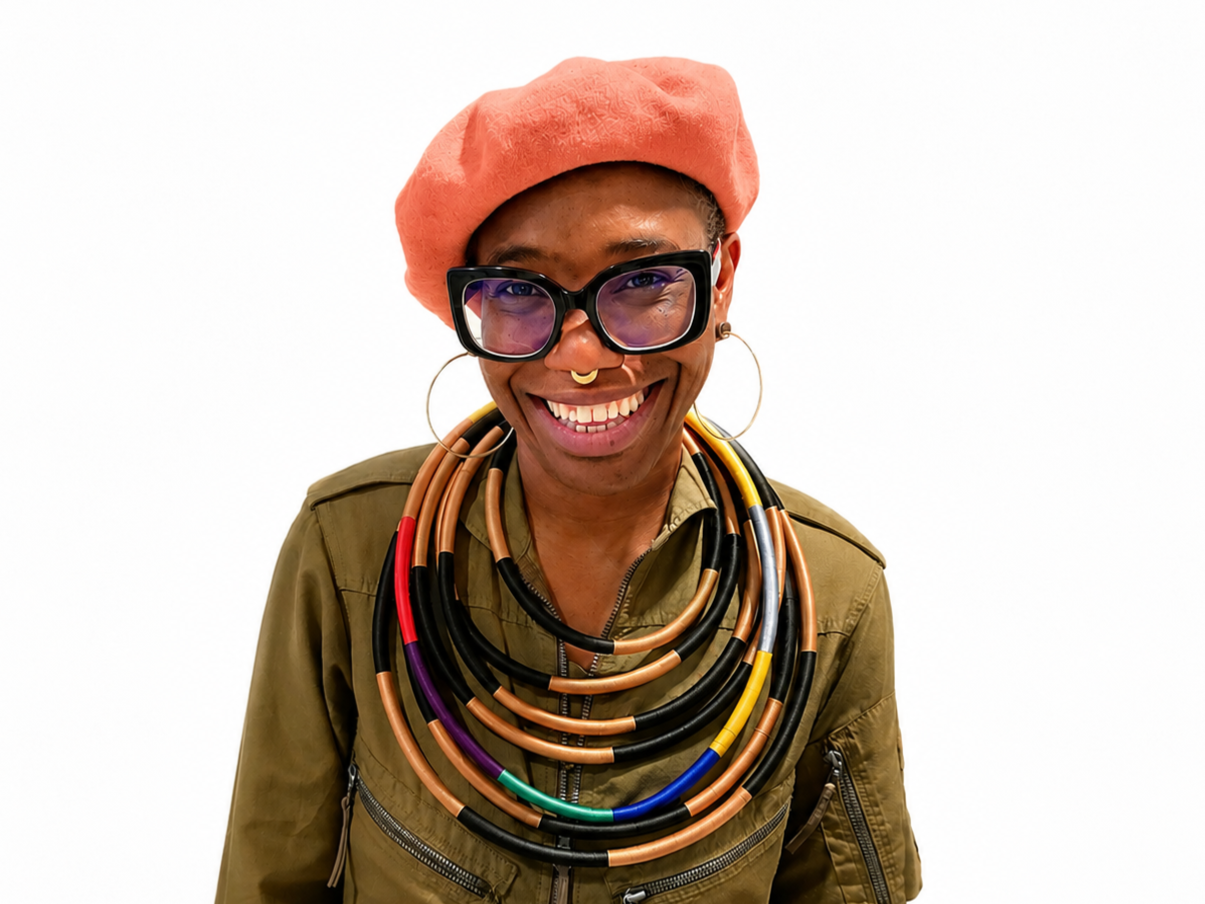
Jamaican-born storyteller d'bi.young anitafrika turns art into scholarship
August 4, 2026
For more than 25 years, d'bi.young anitafrika has challenged audiences to think differently about identity, freedom and the power of storytelling.
Whether performing dub poetry, directing theatre, teaching emerging artists or building cultural institutions, the Jamaican-born creative has consistently blurred the boundaries between artist, activist, educator and scholar.
Long before entering a doctoral program, she was already creating original theatrical forms, mentoring generations of performers and using the stage to confront racism, sexism, colonialism and social injustice.
Yet after spending more than two decades helping to shape contemporary Black theatre, anitafrika did something that surprised many of her colleagues.
She stepped away from the relentless pace of professional life and returned to university in 2018.
For the internationally acclaimed playwright, performer and educator, earning a master's degree and later a PhD was never about adding academic credentials to an already distinguished résumé. It was about documenting a lifetime of artistic practice, honouring the Black womyn whose work had shaped her own journey and creating an intellectual framework that future generations could build upon.
“I found myself standing between the generations of Black womyn who raised me and the generations I am now helping to raise,” anitafrika said. “I wanted time to study my own practice with intention and to deepen the methodologies I had been developing over decades. And I wanted to understand how my work sits within a much larger lineage of Black performance traditions.”
Her dissertation, she explained, became ‘a love letter to Black womyn’ and a bridge connecting her artistic and scholarly lives.
“I did not separate what I consider my art from what I consider research,” noted the Black Theatre School educational director. “Storytelling has been my life lab. Through my poetry and theatre, I ask questions about liberation, remembrance, community and what it means to be fully humxn.
“The PhD gave me another medium through which to continue that inquiry. I brought my artistic practice into the research, and I developed dubography because I wanted a methodology that honoured the storyteller as much as the scholar. I wanted my lived experience, my body, my performance practice and my community relationships to remain central to the work.”
Growing up in Jamaica, anitafrika was immersed in a household where language itself became an act of resistance. Her mother, pioneering dub poet Anita Stewart, exposed her to the rhythms of dub poetry and Rastafari language.
“She taught me that language is alive,” she said. “I grew up hearing words like ‘overstand’ instead of ‘understand’, ‘downpressor’ instead of ‘oppressor’ and ‘politricks’ instead of ‘politics’. Those words shifted my consciousness by shifting my vocabulary. People actively created new words to centre their own lived realities while simultaneously challenging neo-colonial systemic oppression.”
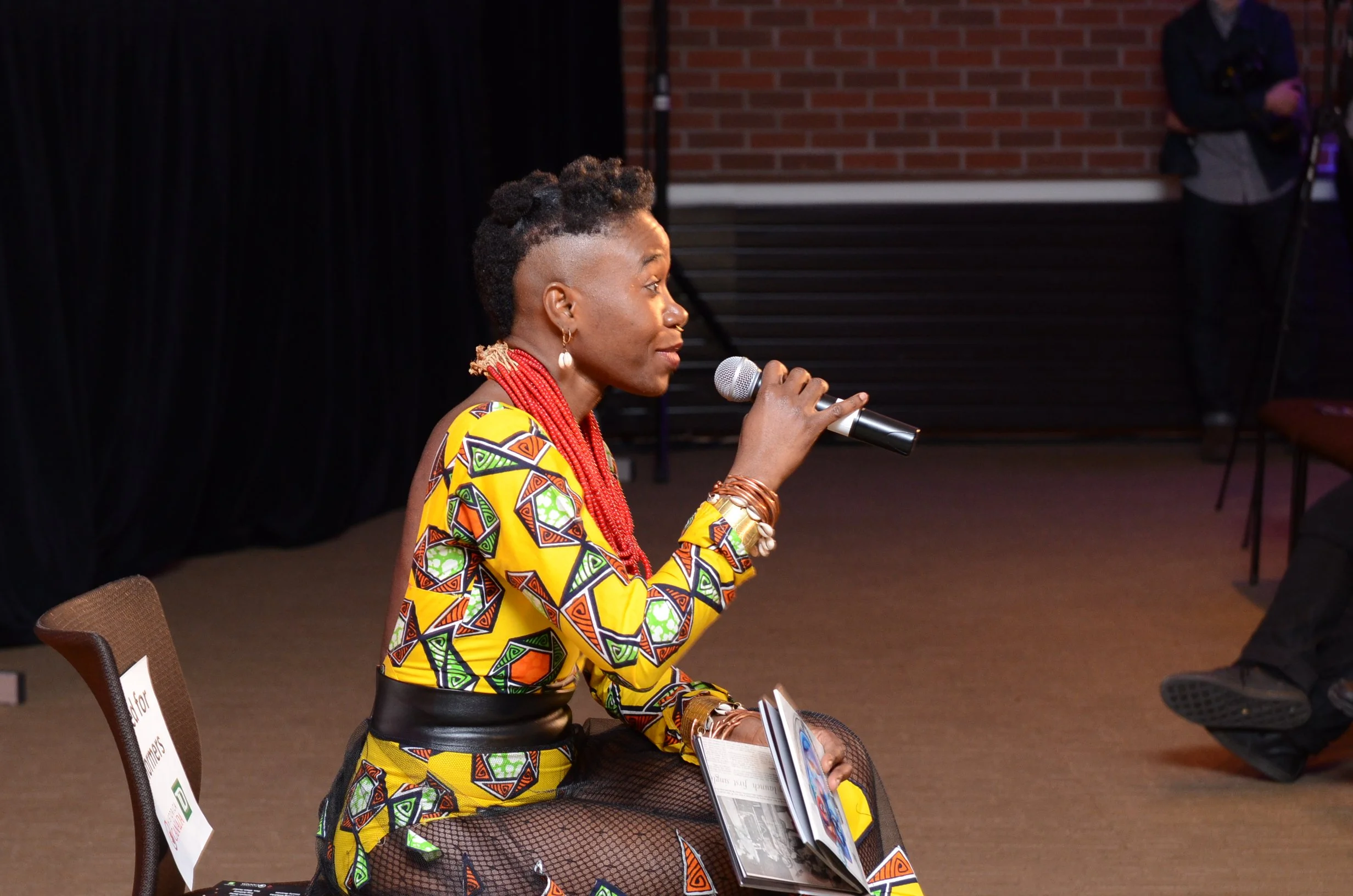
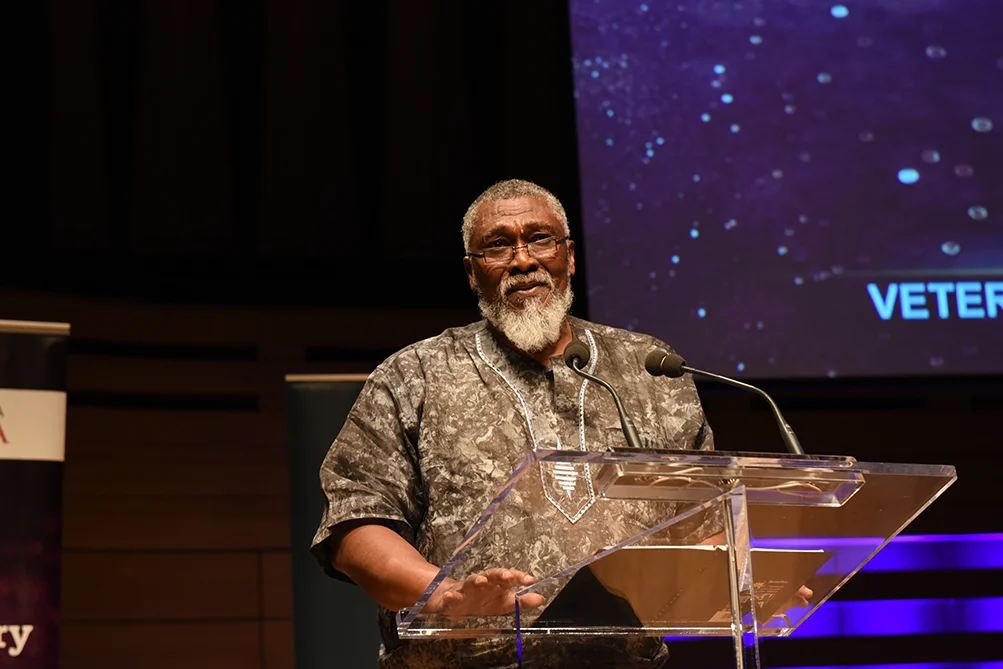
d'bi.young anitafrika at a TD Bank Black History Month event in 2014 at the Toronto Public Library (Photo by Ron Fanfair)
That early understanding that language has the power to shape thought remained with her throughout her career and ultimately became one of the foundations of her doctoral research.
Rather than relying solely on existing academic terminology, anitafrika created the Anitafrika Praxis Dubitonary to describe artistic practices that conventional scholarship had yet to adequately define.
“The Anitafrika Dub Praxis is the philosophy that brings together African Indigenous worldviews, Black feminist thought, embodied performance, critical theory and trauma-aware practice into a framework for making art that transforms both the artist and the community,” the Watah Theatre founding artistic director pointed out. “Through the praxis, I am asking how theatre can help us cultivate liberated personhood while transforming our communities.”
Creating a new scholarly language required anitafrika to embrace her own voice rather than conform to conventional academic expectations.
“The deeper I leaned into who I already was as a Jamaican dub poet, theatre practitioner, Black queer transfeminist and educator, the stronger the research became,” she said. “I didn't want to write a dissertation that sounded like someone else. I wanted it to sound like me. That meant trusting my own language, creating new vocabulary along the way and allowing my artistic practice to shape my scholarship rather than the other way around.
“When I finished, I realized that my dissertation was an academic document that reflected my ancestors, my communities, my teachers and the people who have walked beside me throughout my life. The PhD reflected to me the process of becoming more fully myself and, in so doing, I am attempting to make more room for other practitioners to feel welcome to do the same.”
That commitment to authenticity extended beyond the ideas she explored to the very structure of the dissertation itself.
“I wanted it to move like a story so the reader/listener could recognize me as a storyteller in the work,” anitafrika said. “My worldview centres Ubuntu, Sankofa, Iwa Pele, Jamaican Nation Language, dub poetry and Black feminist thought. These became the architecture of the research. I was interested in building frameworks that reflected the ways many of us already live, create and come to know instead of trying to fit myself into a conventional academic box.”
From that overarching ADP emerged a series of interconnected concepts that together form the foundation of anitafrika's scholarly framework. Among them are the Anitafrika Method, Critical Dub Pedagogy, Dubography, Circleturgy, Character Adjacency Practice and the Three R Process.
To readers unfamiliar with the terminology, the concepts may initially sound highly academic. Their purpose, however, is remarkably practical.
anitafrika said the Three R Process moves through remembering, restorying and refuturing, allowing personal experience to become theatre.
“Character Adjacency Practice allows artists to transform personal experience into character while maintaining emotional safety and artistic freedom,” she noted. “Circleturgy reimagines dramaturgy as a collaborative circle of dialogue, reflection and shared leadership. Although each concept can stand on its own, I see them all working together because I am asking the same question of how to create art that helps people become more fully themselves while contributing to collective liberation.”
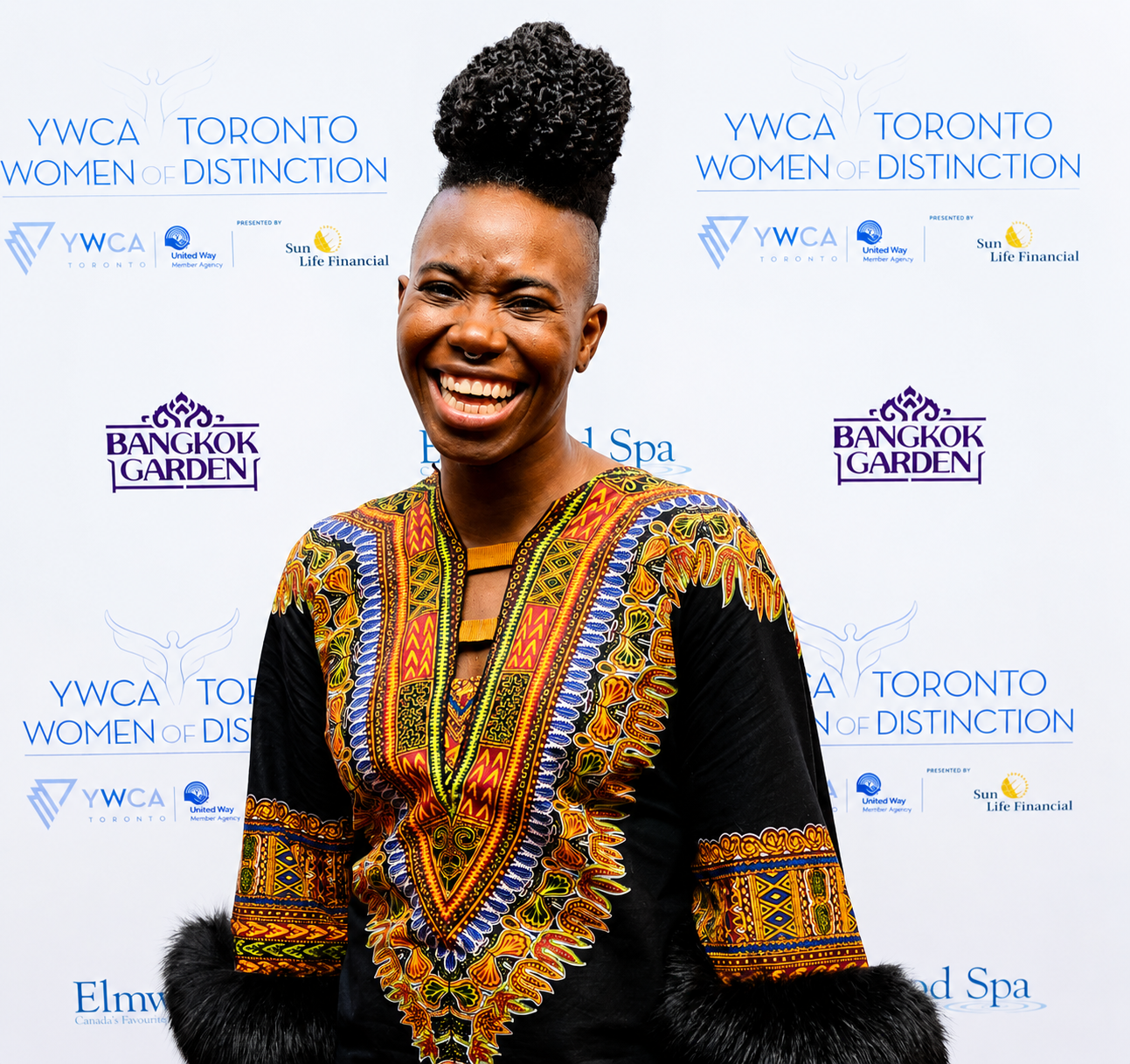
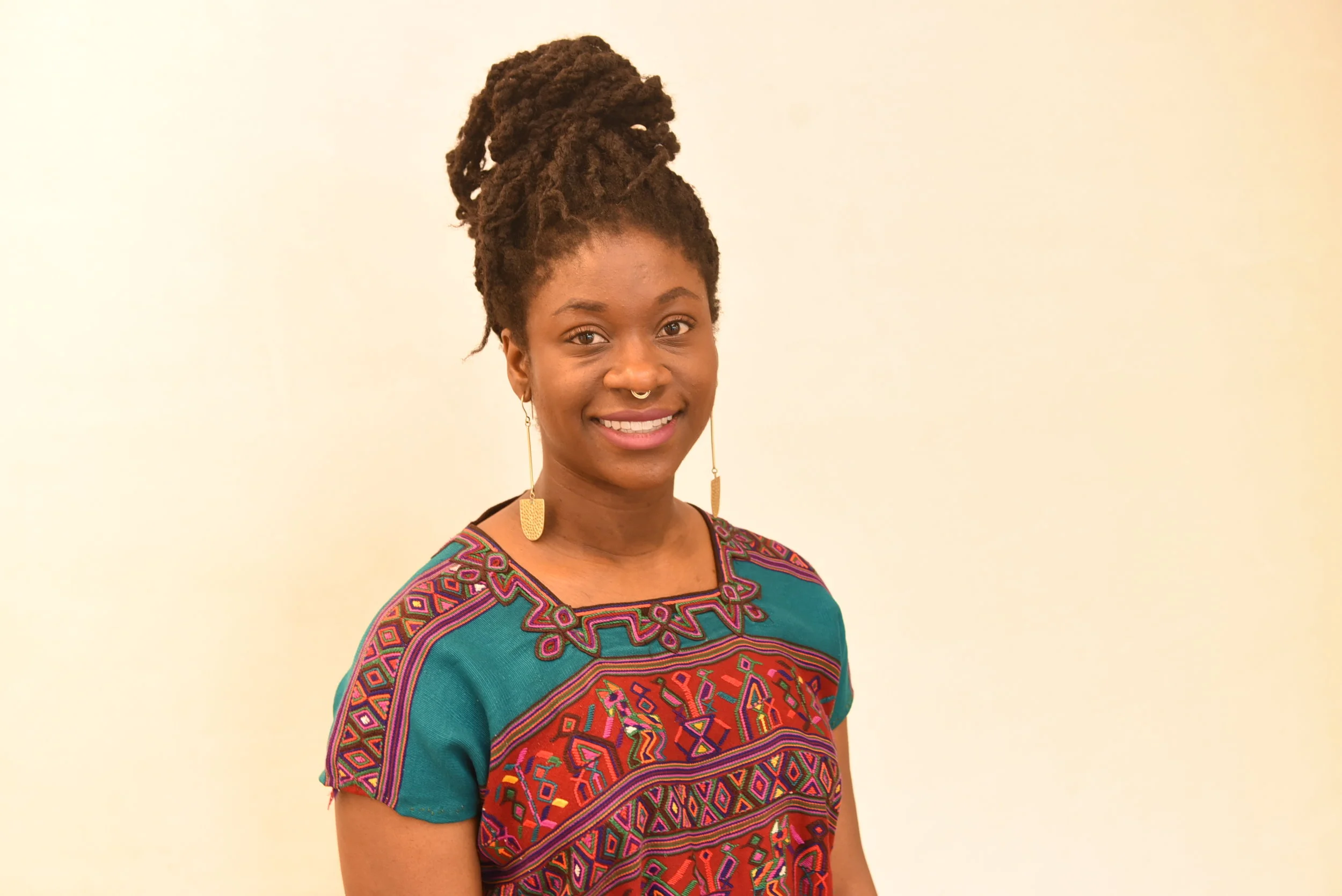
d'bi.young anitafrika was the recipient of a YWCA Woman of Distinction Award in 2015 (Photo by Ron Fanfair)
That same pursuit of liberation shaped her research into the experiences of Black womyn theatre practitioners across Toronto and North America. Again and again, she encountered a common reality. Theatre was never simply entertainment.
“It is where we metabolize grief, confront injustice, celebrate joy and imagine new ways of being together,” said anitafrika, who has authored 12 plays, released seven dub poetry albums and published four poetry collections. “For the Black womyn who participated in the research, it is a practice of survival, healing and world-building.”
Her interviews convinced her that these relationships have sustained generations of artists despite systemic barriers.
“Theatre functions as a profound technology for metabolising oppression,” anitafrika said. “By metabolizing, I mean transforming experiences of violence, grief and systemic harm into creativity, meaning, connection and possibility. Theatre allows us to witness one another.”
One of the most original ideas to emerge from that work is what she calls ‘Concentric Kinship Circles’.
“This is the intergenerational networks of femtorship through which Black womyn sustain one another as artists, educators, leaders and institution builders,” the Black Womyn in Theatre Archive principal researcher said. “Even when systems exclude us, we continue to open doors for each other and create the spaces we need. Black womyn do not wait for permission to innovate. Every day, we are creating new aesthetics, new pedagogies, new methodologies and new ways of imagining theatre. My research gave me the language to describe what our communities have been doing for hundreds of years.”
Those themes have long appeared throughout anitafrika's own creative work.
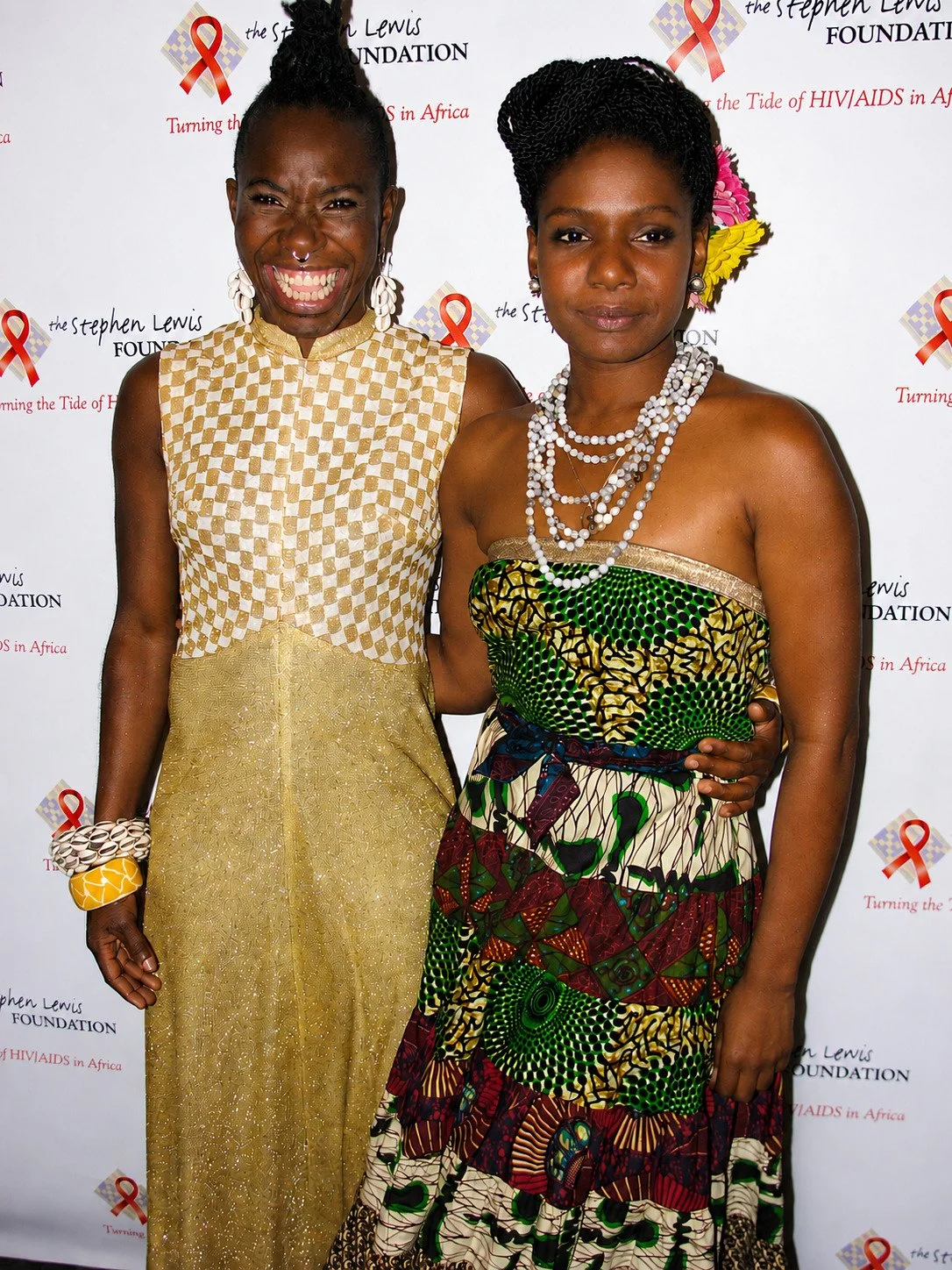
d'bi.young anitafrika (l) & Ngozi Paul at the Stephen Lewis Foundation Hope Rising concert in May 2011 (Photo by Ron Fanfair)
When she began writing and performing, conversations surrounding gender identity, sexuality and feminism were often met with silence or resistance. Her landmark biomyth monodrama blood.claat, exploring childhood sexual abuse, challenged audiences to confront experiences many believed should remain hidden.
Looking back, anitafrika believes public conversations have changed dramatically.
“Today, there is far more openness and language to speak about gender, sexuality and identity, and there is a continually developing critical consciousness in our communities that gives us the tools to think critically about how we can unshackle ourselves from the chains of White supremacist ideology,” she said.
“At the same time, we are also living through a global backlash. Trans and queer rights are being challenged and Black womyn are being targeted specifically. So, I hold both truths at once. We have come a long way, and we have a long way to go. My work is an invitation to imagine a world where we all have the freedom to become ourselves fully.”
That commitment to artistic evolution is also evident in anitafrika's recent reimagining of the acclaimed production shx mami wata & the pxssywitch hunt.
Revisiting the work after completing her doctorate allowed her to rethink both its theatrical form and its political dimensions. She refined what she now calls African Dub Theatre into three branches while updating the script to reflect contemporary understandings of transgender identity.
Perhaps most significantly, anitafrika introduced the concept of Intimate Theatre. Instead of forcing audiences to adapt to the performance space, the theatre itself adapted to them. Each evening, seating was rearranged according to attendance so every audience member occupied a central place within the storytelling experience. Whether two people attended or an audience of fifty, everyone should feel seen, welcomed and essential to the performance.
Ironically, spending eight years immersed in academic study did not distance anitafrika from her Jamaican roots.
It deepened them.
“The PhD was a boomerang that brought me right back home to African, Caribbean and Jamaican ways of knowing, doing and being,” she said.
The deeper anitafrika immersed herself in scholarship, the greater her appreciation became for Jamaican performance traditions, African philosophy and Indigenous knowledge systems that continue to shape Caribbean culture.
Rather than viewing those traditions as historical curiosities, she sees them as living systems of knowledge capable of addressing contemporary social challenges.
As she prepares for a two-year international tour, those ideas will continue travelling far beyond the pages of her dissertation.
anitafrika hopes audiences leave feeling more connected to themselves and to one another.
“I want my stories to reflect back to people how magical, special and miraculous they are,” she said. “I want them to experience a deep sense of connection to themselves and to one another when they witness my stories. I want my stories to inspire hope and inner strength in my audience members.”
Whether performing before a handful of people or a packed theatre, anitafrika wants every audience member to feel they belong in the story.
That philosophy reflects the African principle of Ubuntu that has guided much of her life.
“I am because you are because we are,” said anitafrika. “It reminds us that our lives are interconnected and that our well-being is bound up with one another. Artists have a unique role because we help people imagine what is possible. Through story, music, poetry and performance, we invite people to see themselves and each other differently.
“If we are asking society to transform, then we also have to practise that transformation in the way we live, create and relate to one another. When I work on myself, I see that work translates into how I theorize, how I communicate with my children, how I teach student practitioners and how I create theatre.”
As anitafrika embarks on a two-year international tour, she carries with her far more than a doctorate. She carries a lifetime of stories, a language shaped by Jamaica, a philosophy rooted in African ways of knowing and a vision of theatre as a force for healing and transformation.
Her dissertation may have given that vision an academic home, but its true destination remains the people and communities whose stories continue to inspire her work.