Ed and Eva Smith among the builders of Black Toronto
June 18, 2026
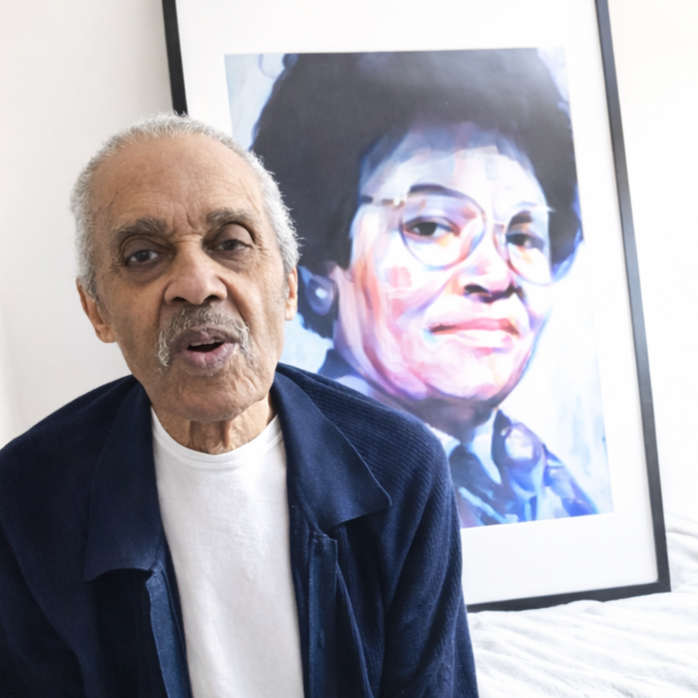
For Edward (Ed) Smith, memories of Toronto’s early Black community are inseparable from memories of his late wife, Eva Smith.
Sitting among family photographs and cherished mementoes, the Bermuda-born elder reflected on a life that began thousands of kilometres away but became deeply rooted in Toronto’s growing Caribbean community.
Smith’s recollections offer a glimpse into a city that looked very different from the multicultural metropolis it is today.
He arrived in Canada in 1950 as a teenager to complete high school. After graduating from Central Technical, he attended Radio College of Canada before pursuing electronics studies at Toronto Metropolitan University.
Smith went on to build a career in electronics, including working for Canadian Arsenals Limited.
When he first arrived, Toronto’s Black population was small.
“There weren’t too many people of colour here,” Smith recalled. “Eventually, they came in from the Caribbean. Everything was in transition.”
Among those who helped transform the city’s demographic landscape was Eva Smith, who arrived from Jamaica in 1956 through the Caribbean Domestic Scheme. The program allowed small quotas of single women from the region to come to Canada as domestic workers and subsequently obtain landed immigrant status after completing their contracts.
The future couple met through mutual acquaintances at a boarding house on Lippincott Street operated by Ruby (Ma P) and William (Uncle Willie) Peters whose home served as a gathering place for many Caribbean newcomers trying to establish themselves in Toronto.
“At that time, they had a group of ladies who came to Canada to work as domestics,” Smith said. “That was one of the ways of getting into Canada.”
As Eva visited the Peters household, the two became acquainted and eventually began a relationship.
Asked what attracted him to her, Smith smiled.
“Well, I don’t know,” he replied. “She was a lady and I was attracted to her. She was from the Caribbean and I am from the general area.”
The couple married on September 20, 1958, beginning a partnership that would span decades and leave a lasting mark on Toronto’s Black community.

The Dr. Daphne DaCosta Memorial Foundation made a presentation to Ed & Edeva Smith in 1994 behalf of the late Eva Smith (Photo by Ron Fanfair)
Neither Ed nor Eva had family in Toronto when they arrived. Instead, they found support through friendships, community organizations and the growing network of Caribbean immigrants who were helping one another navigate life in a new country.
Organizations such as the Universal Negro Improvement Association (UNIA), then located on College Street, became important gathering places.
“They had programs down there and I met a lot of people from the Caribbean area,” Smith recalled. “You got to know each other and eventually you got married and the rest is history.”
He remembered a time when Black Torontonians were so few that encountering another Black person on the street often led to an instant conversation.
“You’d have a little chat with them before moving on,” he said.
That close-knit atmosphere fostered lifelong friendships with pioneers, including the late Bromley Armstrong, Howard Matthews, Archie Alleyne and many others who helped shape Black community life in Toronto.
Smith remained active in community organizations, though he is quick to acknowledge that Eva was often the driving force.
The couple became involved with a variety of institutions serving Toronto’s Black population, including the Home Service Association and the British Methodist Episcopal Church.
Smith served on the board of the Home Service Association, helping preserve a building that functioned as an important community resource.
“The idea was to keep the building for the Black community,” he recalled.
The trailblazer also sang baritone in the church choir and witnessed generations of Black Canadians build institutions that continue to serve the community today.
His memories also capture a city undergoing rapid transformation.
He recalled gathering outside Honest Ed’s to watch one of Toronto’s earliest television displays.
“They had a black-and-white TV in the window,” Smith pointed out. “People would stand around watching because television was just making its appearance at that time.”
He remembered when Scarborough’s Golden Mile was a brand-new shopping destination and many suburban neighbourhoods were still being developed.
“Everything was in transition then,” Smith said. “People used to go out to the suburbs to the new stores and so forth.”
Sports also helped create bonds within the growing Caribbean community. He played soccer with a Caribbean team that included Armstrong and members of his family, providing another avenue through which newcomers built friendships and connections.
Yet despite his many stories about Toronto’s early Black community, Smith’s thoughts repeatedly returned to Eva.
After completing her domestic work contract, she built an impressive career of service. A postal clerk and American-trained dental technician, she worked as a switchboard operator at Scarborough General Hospital, later becoming a liaison officer with the former North York Board of Education.
In that role, she helped establish the Learning Enrichment Academic Program, which identified schools offering learning support for newly arrived immigrant students.
She also served as a project coordinator with the Jamaica Canadian Association (JCA).
Concerned by the high dropout rate among Black high school students, Smith organized workshops and seminars while working closely with parents to help them better understand the Canadian education system.
She co-founded the North York Emergency Home for Youth and, through the JCA, single-handedly established a youth program on Bathurst Street that was later relocated to the Jane and Finch community.
Young people always held a special place in her heart. Through her tireless volunteerism and advocacy, she embodied the true meaning of community service.
Daughter Edeva Smith recalls growing up in Scarborough when Black families were few and far between, but says her parents ensured she remained connected to Toronto's emerging Black community through cultural programs, community events and strong family friendships.
She remembers her mother's unwavering commitment to helping others through youth initiatives, educational programs and community outreach, efforts that reflected Eva Smith's lifelong belief in creating opportunities for those facing barriers.
In recognition of her contributions, the former City of North York named its first community youth shelter in her honour. Eva’s Place, a 40-bed emergency shelter for youth aged 16 to 24, opened in June 1994, six months after her death.

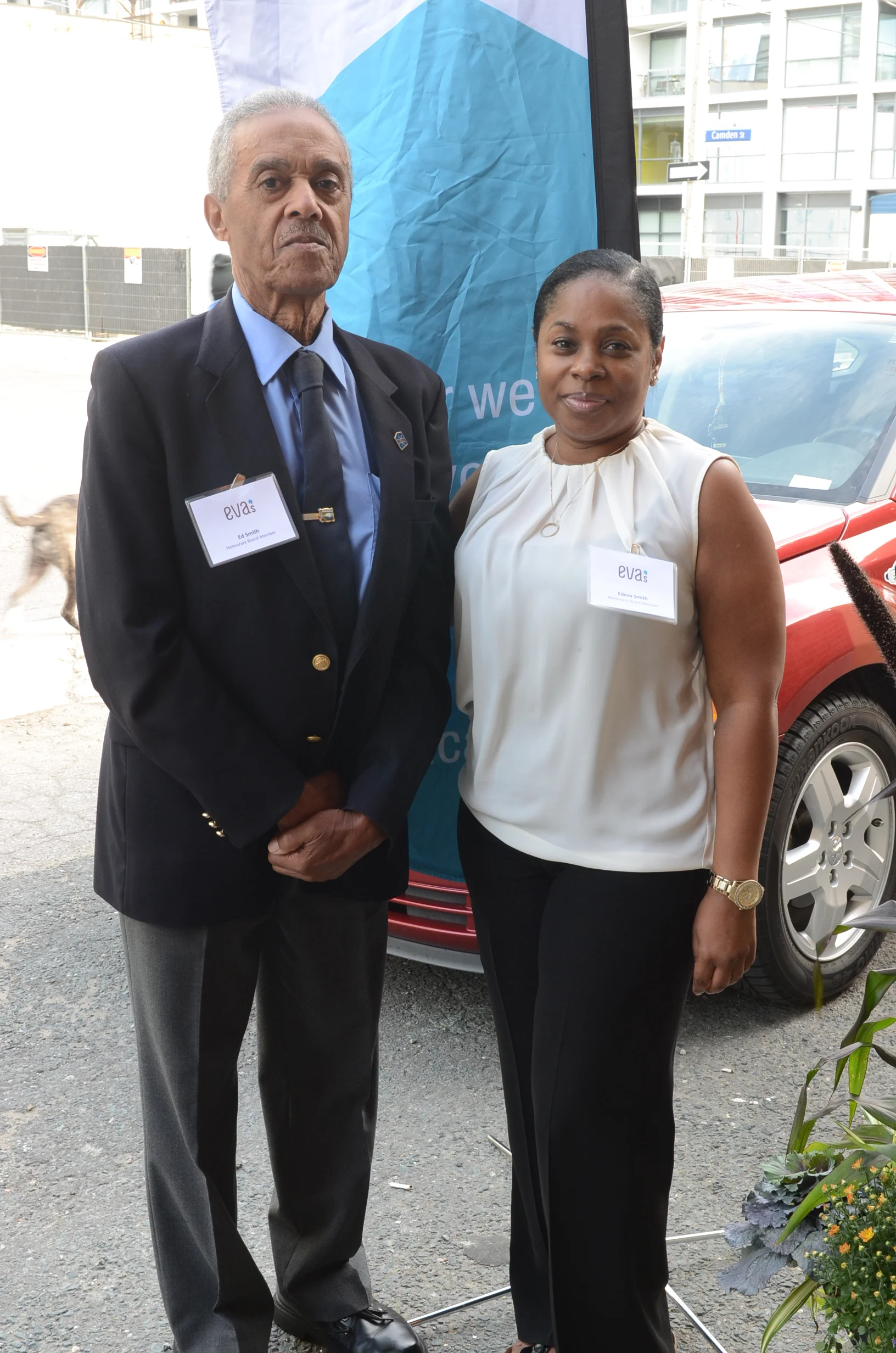
Ed & Edeva Smith at the reopening of Eva's Phoenix at a new location in October 2016 (Photo by Ron Fanfair)
Smith succumbed to cancer on December 30, 1993, at the age of 70.
“That there is an established institution for youth named after Eva Smith is monumental,” said historian Dr. Sheldon Taylor. “Eva’s Place is an acknowledgment not only of Eva’s contributions to Canadian society, but also of the kind of conscious social transformation that women of African descent like Eva Smith willed into Canadian society.”
Smith’s legacy continued to be recognized long after her passing.
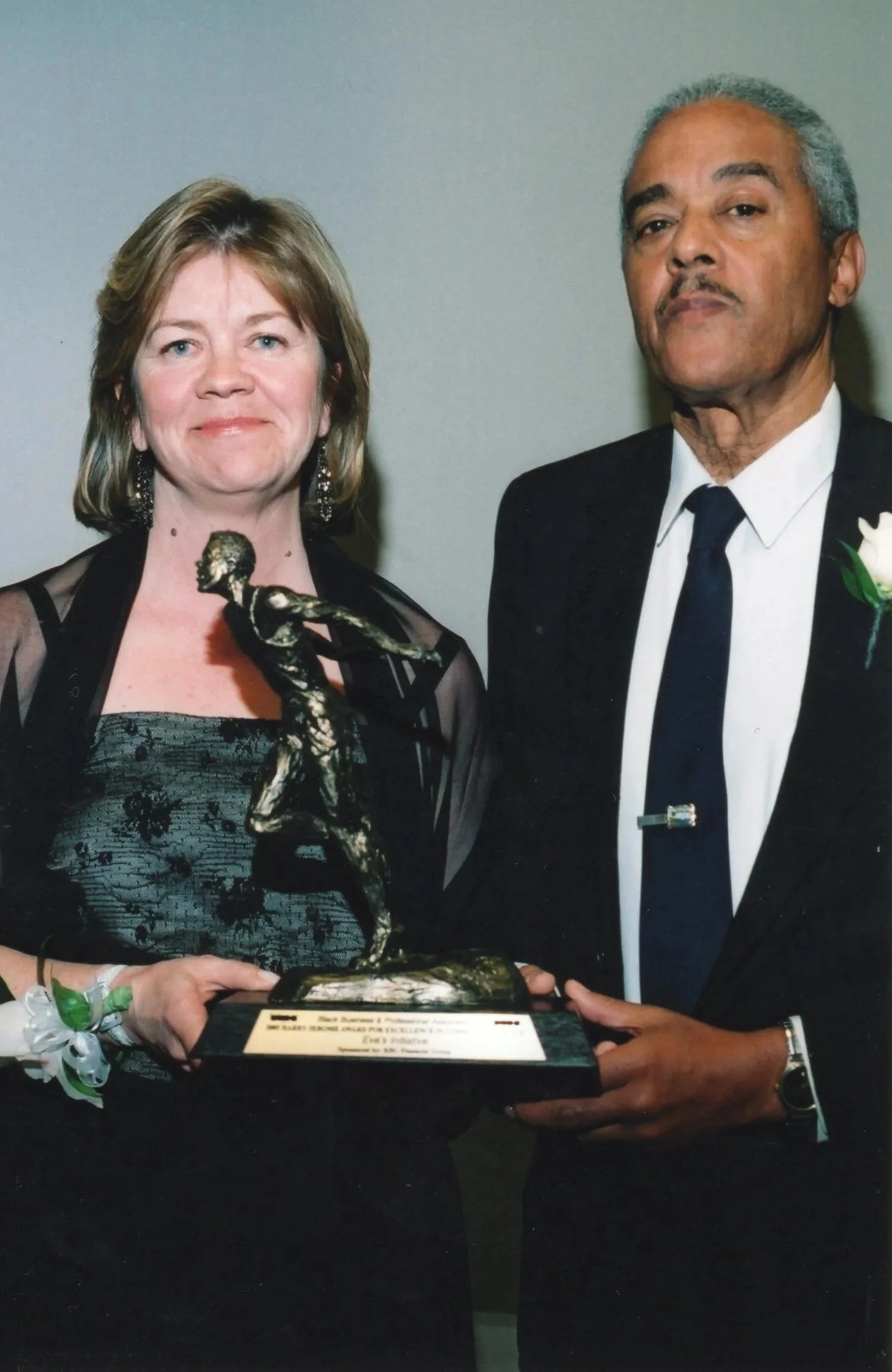
Ed Smith and then executive director Maria Crawford received the Harry Jerome Award presented to Eva’s Initiatives in 2005 (Photo by Ron Fanfair)
In 2005, the Black Business and Professional Association honoured Eva’s Initiatives with a Harry Jerome Award for community service excellence. Eva’s Initiatives remains the only organization to have received that distinction since the awards program was established in 1983.
Her memory is also preserved through an annual bursary administered by the JCA.

Ed Smith presented an Eva Smith Memorial scholarship to Tashana Watts at the Jamaican Canadian Association scholarship awards in September 2008 (Photo by Ron Fanfair)
Asked how he would like people to remember his late wife, Smith paused before answering.
“First of all, she was very quiet,” he said. “She gave a lot and people got to know her quite well.”
The couple shared a love of movies, dances, community events and social gatherings. Whether attending functions at the UNIA, supporting community initiatives or simply spending time with friends, they built a life centred on service, friendship and community.
Today, as one of the remaining links to an earlier chapter of Black Toronto history, Smith remembers a time when newcomers depended heavily on one another, community institutions were built from the ground up and friendships often became family.
“The Black community was small then,” he reflected. “Everybody knew each other. You kind of stuck together as a group.”
For Ed Smith, that enduring sense of belonging remains one of the defining memories of a life shared with Eva and with a community they helped strengthen for generations to come.