Claudine Bonner is filling gaps in Canada’s historical memory
April 19, 2026
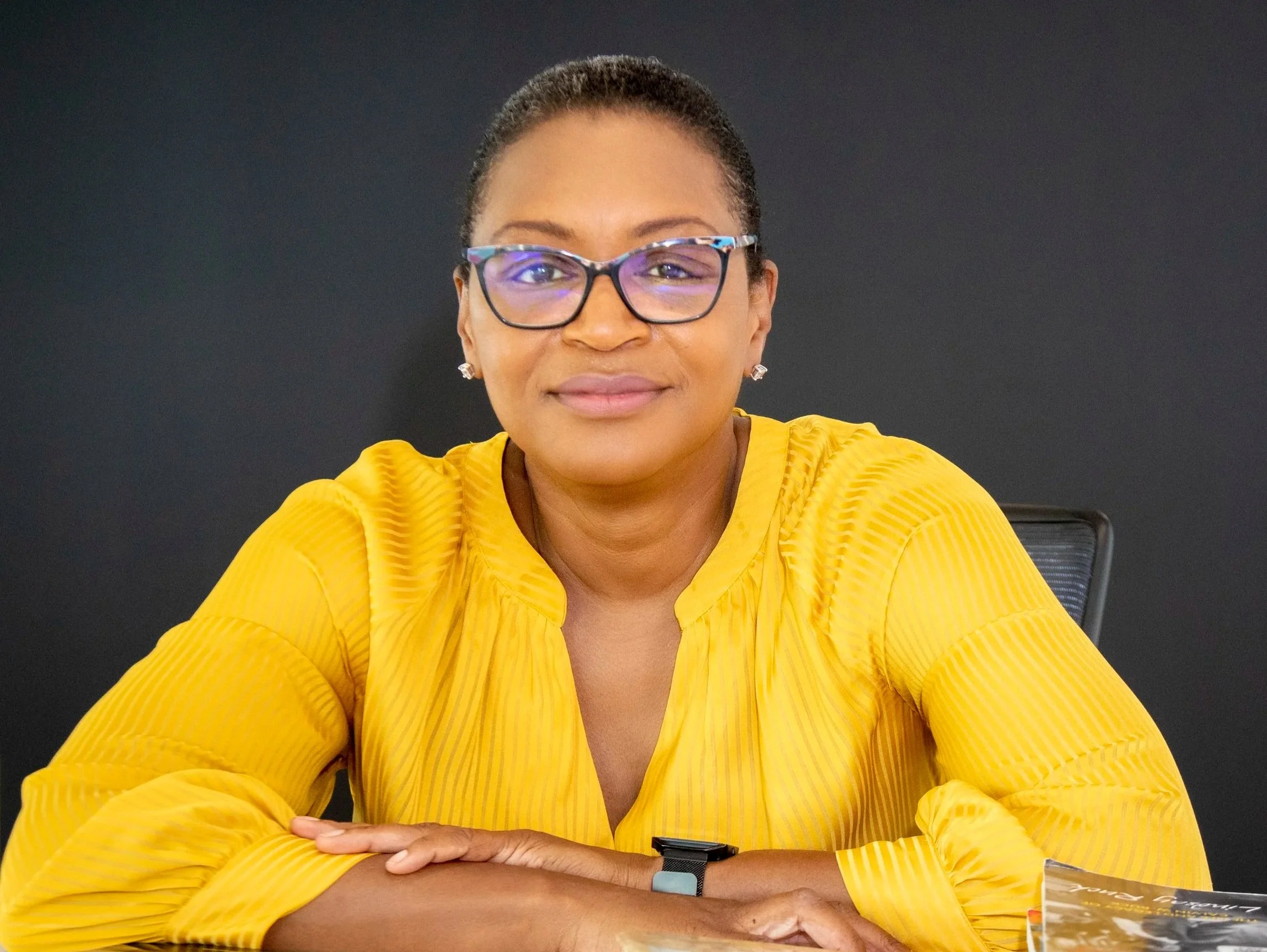
Dr. Claudine Bonner often reflects on the irony that the very history she now teaches was largely absent from her own education.
The Mount Allison University associate professor of sociology once struggled to understand how Black Canadian histories could be overlooked or omitted altogether. That absence stayed with her. Today, as a historian and educator, she is actively reshaping that experience for her students, ensuring they encounter the stories, voices and contributions that were once missing from her own learning.
In doing so, Bonner is not simply teaching history. She is restoring it, transforming a gap she once questioned into a space of discovery, affirmation and deeper understanding.
Her path to this work was not linear, as she did not begin her academic journey as a historian. Instead, her early studies were rooted in education, shaped by her time at the University of Toronto’s Ontario Institute for Studies in Education (OISE), where she pursued a Master’s in Education in Educational Administration. There, her focus centred on education policy, particularly issues of equity and diversity, and how institutions attempted to translate those ideals into meaningful, lived change.
It was during this period that the Toronto District School Board introduced a new race and ethnocultural equity policy. The initiative sparked her curiosity, prompting her to examine how such frameworks moved beyond policy documents and into actual classroom practice.
“At a time when conversations around equity and diversity were already underway more than two decades ago, there were significant gaps between policy intentions and lived reality in schools,” said Bonner, whose PhD is in gender, equity and social justice in education. “Teachers often felt ill-equipped to meaningfully engage with Black Canadian history, despite the foundational work already being produced by scholars such as Dr. Afua Cooper, Dionne Brand and others who were actively documenting and amplifying these narratives.”
It was within this space between what was known and what was being taught that her trajectory began to shift. The lack of representation in the curriculum was not simply an oversight. It reflected a deeper structural gap. That realization pushed her beyond policy analysis and toward historical inquiry, driven by a desire to help surface and centre stories that had long been overlooked.
Bonner’s transition into history was not a departure from her earlier work, but a natural extension of it. By turning to archives and storytelling, she sought to bridge the very gap she had identified, ensuring that the histories already being uncovered would find their way into classrooms, conversations and collective understanding.
The social scientist and historian continues to challenge dominant narratives that erase or minimize Black presence in Canada.
“We have seen established historians in the 21st century writing histories that suggest there is no Black presence,” said Bonner, the holder of a Master of Arts in Canadian History from Dalhousie University. “And when those of us who study Black Canada point out the absences, people are still surprised.”
That sense of surprise, she suggests, underscores just how deeply those omissions are embedded.
Bonner traces her motivation to a mix of intellectual curiosity and lived experience.
“I did my undergraduate studies in the sciences, but I love stories,” she said. “I love understanding where people come from, where their people come from and how we come to be in the places we are, and the forces that shape us in those places.”
The interdisciplinary scholar’s move to Canada and the realities she encountered further sharpened that curiosity.
“Coming to Canada and experiencing racism, like not being able to find jobs in my area of specialty, were some of the challenges I faced,” said Bonner who has a Bachelor of Science (honours) from the University of Toronto. “I was curious about what it felt like for someone going to a place like Cape Breton in the winter and trying to understand what would make people from the Caribbean want to stay there.”
A pivotal moment came during her doctoral studies.
“In the first year of my doctorate, the supervisor I went to Western University to work with died,” Bonner said. “I didn’t know what I wanted to do, but I knew suddenly I didn’t want to do policy work. I was still interested in the Black history part of it, but I was not interested in what I saw as dry policy work.”
That turning point clarified her path. Drawn more deeply to storytelling and historical inquiry, she began focusing on uncovering and documenting lived experiences, stories that policy alone could not fully capture, but which have the power to reshape both understanding and curriculum.
“I think it was a process of sense-making for me because I didn’t understand how I was not taught those things in school,” Bonner said. “Why was that missing from my education?”
Her early education in Jamaica also played a key role in shaping her intellectual confidence.
“Campion and Mona Prep, which I attended before high school, filled me with a lot of intellectual curiosity,” said Bonner. “I was not afraid to explore anything or to believe there was something I could not do. If I was curious about something, I pursued it, and the support was there. My parents let me run with what I wanted to do.”
Because a close family member resided in Toronto, Canada became the natural destination for her post-secondary studies.
“There was an understanding that when I finished high school, I would go to Toronto for university,” Bonner, who previously held a Fulbright Canada Research Chair, noted. “While many of my friends went to the United States, I was among a handful who came here.”
Raised by her mother and stepfather, Bonner said her curiosity about migration was shaped by family stories.
“A lot of my curiosities around migration came from my grandmother,” she said. “My grandparents belonged to a generation of Caribbean people who moved frequently because of economic need. My grandmother told me stories of her sisters travelling between Cuba and Jamaica for work, sometimes simply following opportunity.
“My grandfather went to Panama for work, even though he was a school teacher in Port Antonio. My mom told me stories of him returning with items like shoes for her. My stepfather left Jamaica at 16, served in the Royal Air Force and told me stories of Windrush and Caribbean life in England. These were the stories of diaspora that I grew up with.”
Outside her family, Bonner found encouragement from educators.
“I remember being in undergrad and seeing Afua Cooper, recognizing a Jamaican immigrant was doing significant work in the space I was entering,” she said. “There are other scholars I have looked to over the years. If you put your head down and do the work, it is still possible to succeed despite the hurdles. I keep pushing because I don’t think there is an end to doing your best.”
Bonner is also deeply invested in mentoring students.
“That is always on my mind because I think the ways that we exist in the academy show there are stages in our journey,” said the former inaugural Vice-President, Equity, Diversity and Inclusion at Acadia University. “There comes a point where your role is to prepare the next generation and ensure they understand the importance of contributing knowledge. It is more than representation. Knowledge is power, and they can shape how future generations are informed.”
Bonner co-edited with Drs. Nina Reid-Maroney and Boulou Ebanda de B’béri a collection of essays, The Black Press: A Shadowed Canadian Tradition, that was released last summer. This collection, spanning the period from the 1850s to the early twentieth century, is the first in the field to bring together original historical and Communication Studies research that positions pioneering Canadian Black journalists as effective intellectual activists.
The essays demonstrate how the Black press served as a crucial space for reflecting on Black Canadian identity, belonging, social justice and human rights within the colonial contexts of the nineteenth and twentieth centuries. Combining historical, archival and cultural analysis, the book uncovers the profound and often overlooked influence of the Black press on Canada’s cultural and political landscape.
“The book is a culmination of a project that I worked on with colleagues who were my mentors when I was a graduate student,” said Bonner, who enjoys hiking, paddling and travelling. “We worked on the Promised Land, and from that, we became interested in the intellectual history of the Black community. The notion of the Black press in the United States is well established, unlike in Canada, where studies have often focused on individuals.”
For young scholars and journalists documenting Black Canadian life today, she emphasizes the importance of responsibility and context.
“How they frame their stories will shape how communities are understood, and that, in turn, will shape how policy and institutions respond,” Bonner said. “Context is crucial. Individual stories cannot be separated from the structural conditions that shape them. It is important not to flatten narratives. They should also remember Black joy instead of being so hyper-focused on struggle.”
In reclaiming histories once left untold, she is doing more than filling gaps.
The Canada Research Chair in Racial Justice and African Diaspora Migration is reshaping how Canada understands itself. Her work sits at the intersection of memory, identity and responsibility, reminding both educators and students that what is taught, and what is omitted, matters deeply.
By bringing Black Canadian stories into clearer focus, Bonner is not only answering the questions that once unsettled her as a student, but ensuring that future generations no longer have to ask why those histories were missing in the first place.