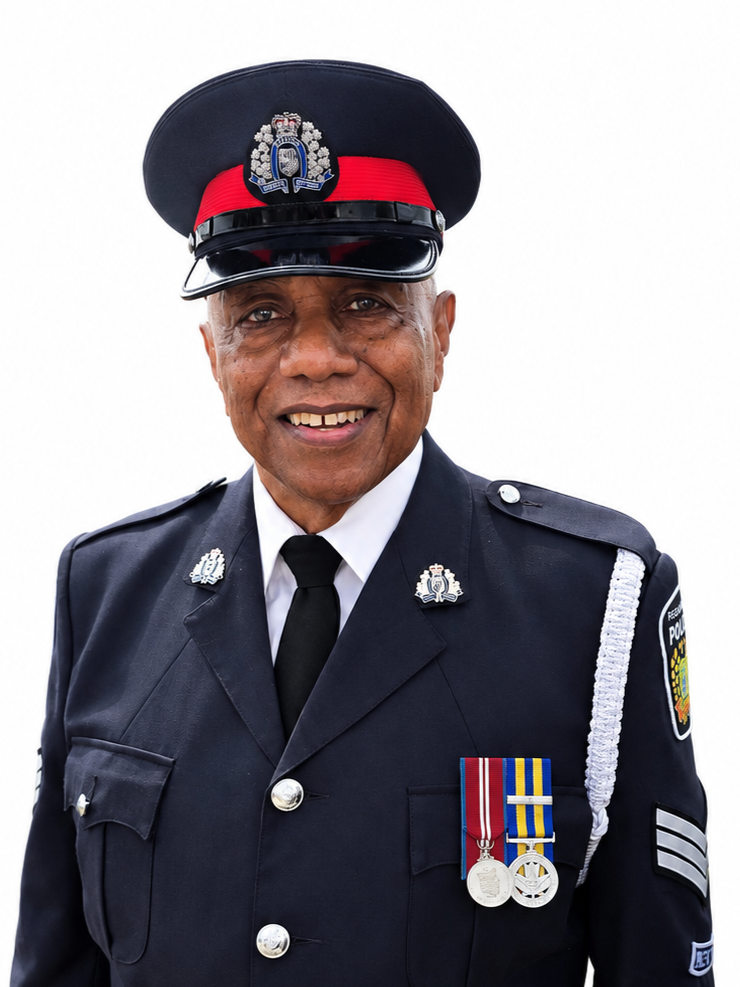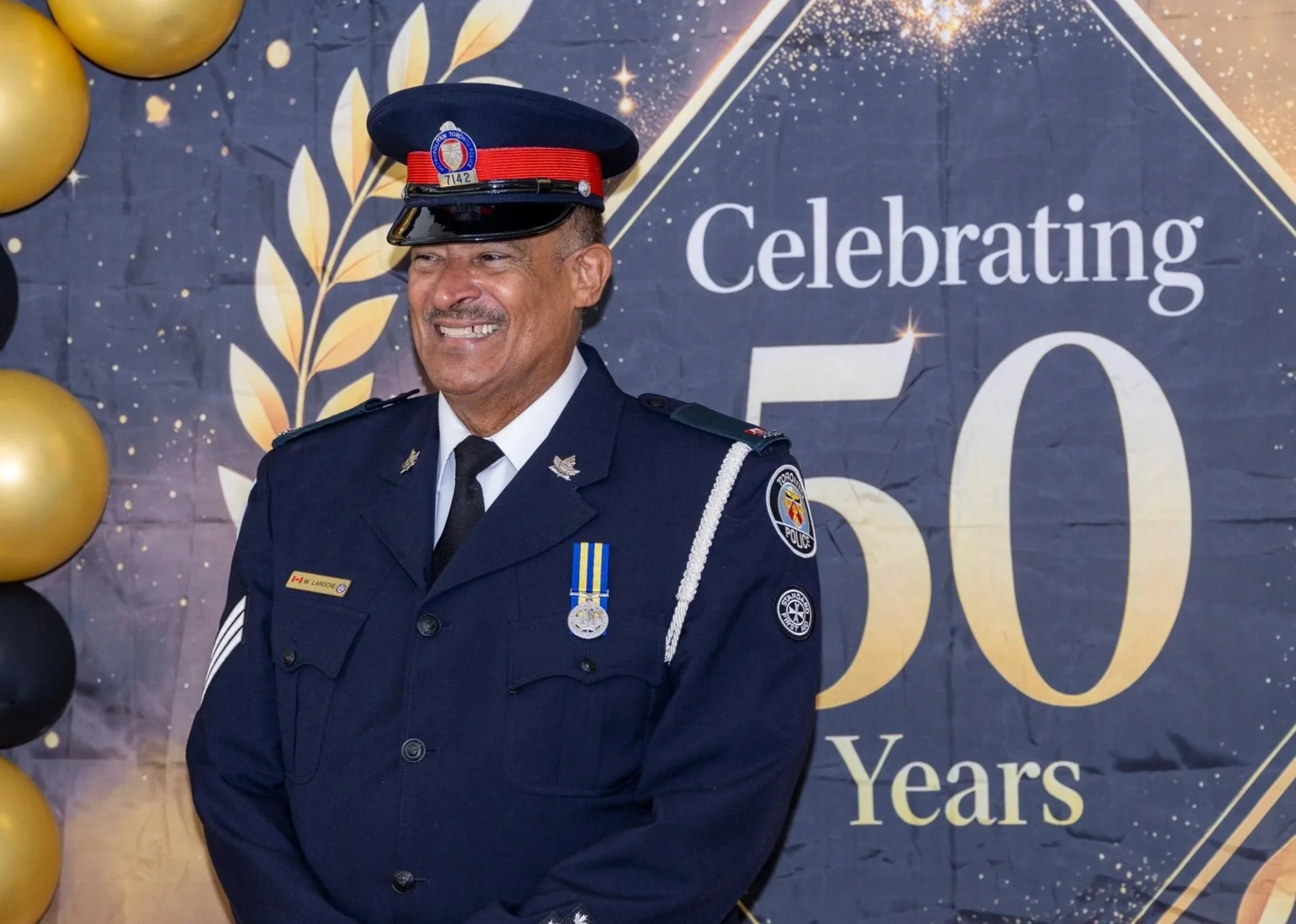
Love of policing keeps Winston Laroche serving after 50 years
November 5, 2026
Staying with one organization for 50 years takes more than familiarity with the job. It takes a belief in the work and a reason to keep showing up.
Toronto Police Sergeant Winston Laroche still has both.
Half a century after joining the Service in 1976, he continues to find purpose in helping people, strengthening relationships with Toronto’s Black communities and contributing to an institution he entered determined to help change.
“I certainly have enjoyed policing and I continue to enjoy it,” Laroche said. “I feel just as enthusiastic as when I joined that I am here to serve the public. I honestly believe in public service. It’s one of the great callings for any citizen to be involved with.”
That enthusiasm helps explain a milestone few working people reach. It also explains why friends who began their careers alongside him are unsurprised that he has remained.
“From the time I have known Winston, I used to tease him and call him Mr. Policeman because he absolutely loved policing,” said retired officer Charles Payne. “Whenever he puts himself into something, he gives it all he has.”
Over five decades, that commitment has taken Laroche from street patrol and youth investigations to community relations and his current work responding to residents through the Primary Report Intake Management and Entry (PRIME) unit.
Along the way, he has mentored young people, advocated recognition for pioneering Black officers and helped advance police participation in Caribana. Across those assignments, he has pursued the same goal that brought him into policing, helping people feel represented, heard and fairly treated.
“If we want to bring about change in this city and these institutions, we have to participate,” Laroche said. “We just can’t have these debates outside and leave it up to the institutions themselves for transformation. That’s what drove me to policing.”
Colleagues and friends recently gathered to celebrate that contribution and the man behind it.
Deputy Chief Rob Johnson said the anniversary recognized the impact of Laroche’s work as well as its duration.
“It represents not only longevity, but an unwavering commitment to public service, professionalism and the safety and well-being of our communities,” he said. “Milestones such as this are rare and provide an opportunity not only to celebrate years of service, but also to recognize the lasting impact one person can have on an organization, colleagues and the countless members of the public whose lives have been touched through dedicated service.”
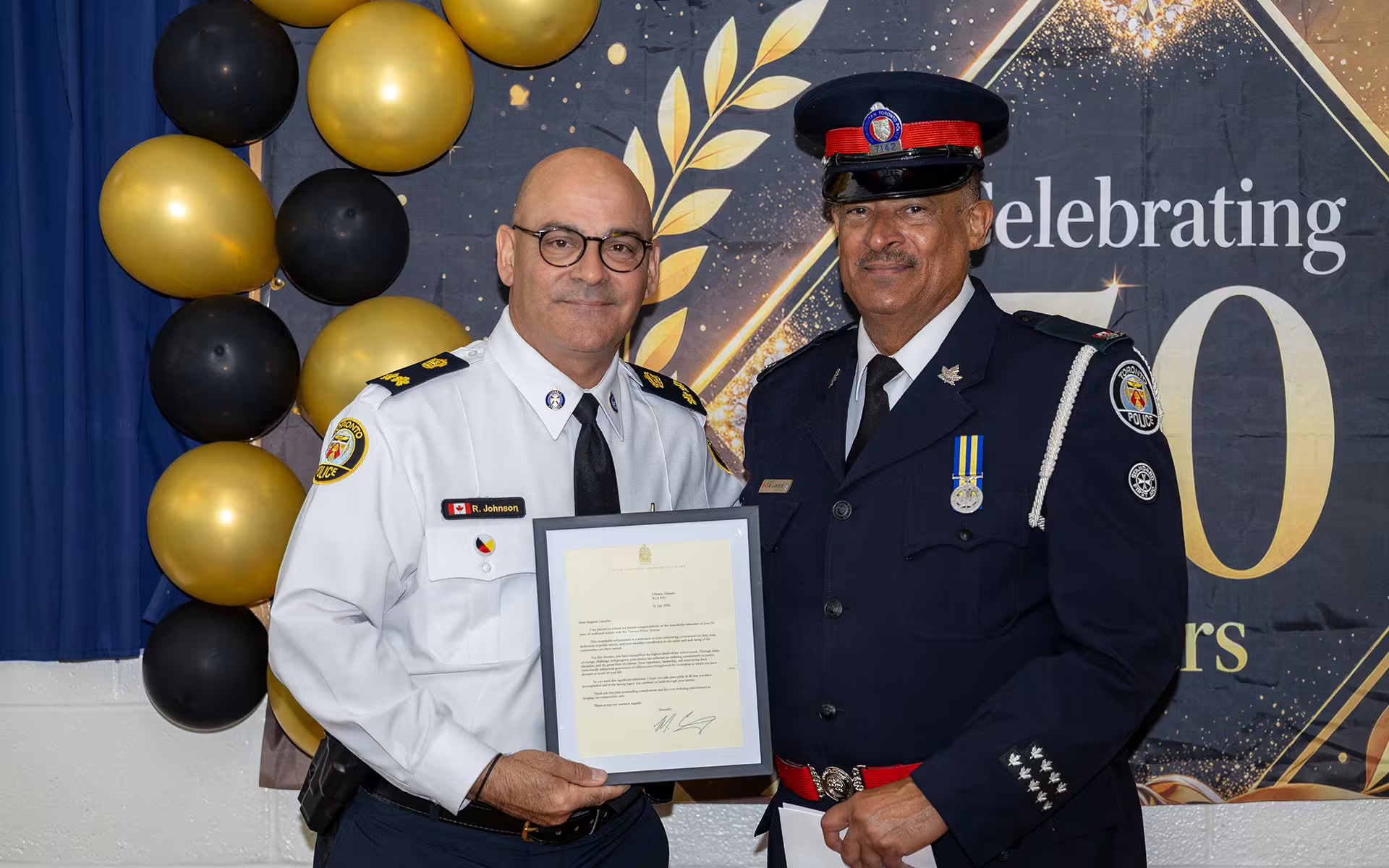
Deputy Chief Rob Johnson presented a plaque to Winston Laroche to mark his 50th year in policing (Photo by Trevor Owens)
Retired Deputy Chief Keith Forde, who worked with Laroche at 11 Division, spoke about the demands behind that achievement.
“I had the privilege of working with Winston over the years, and during that time I came to appreciate not only his professionalism and dedication, but also the qualities that make a truly outstanding police officer,” he said. “Fifty years of service is an accomplishment that very few people can claim. It represents five decades of early mornings, long hours, difficult situations, personal sacrifices and countless moments when Winston placed the needs and safety of others before his own.”
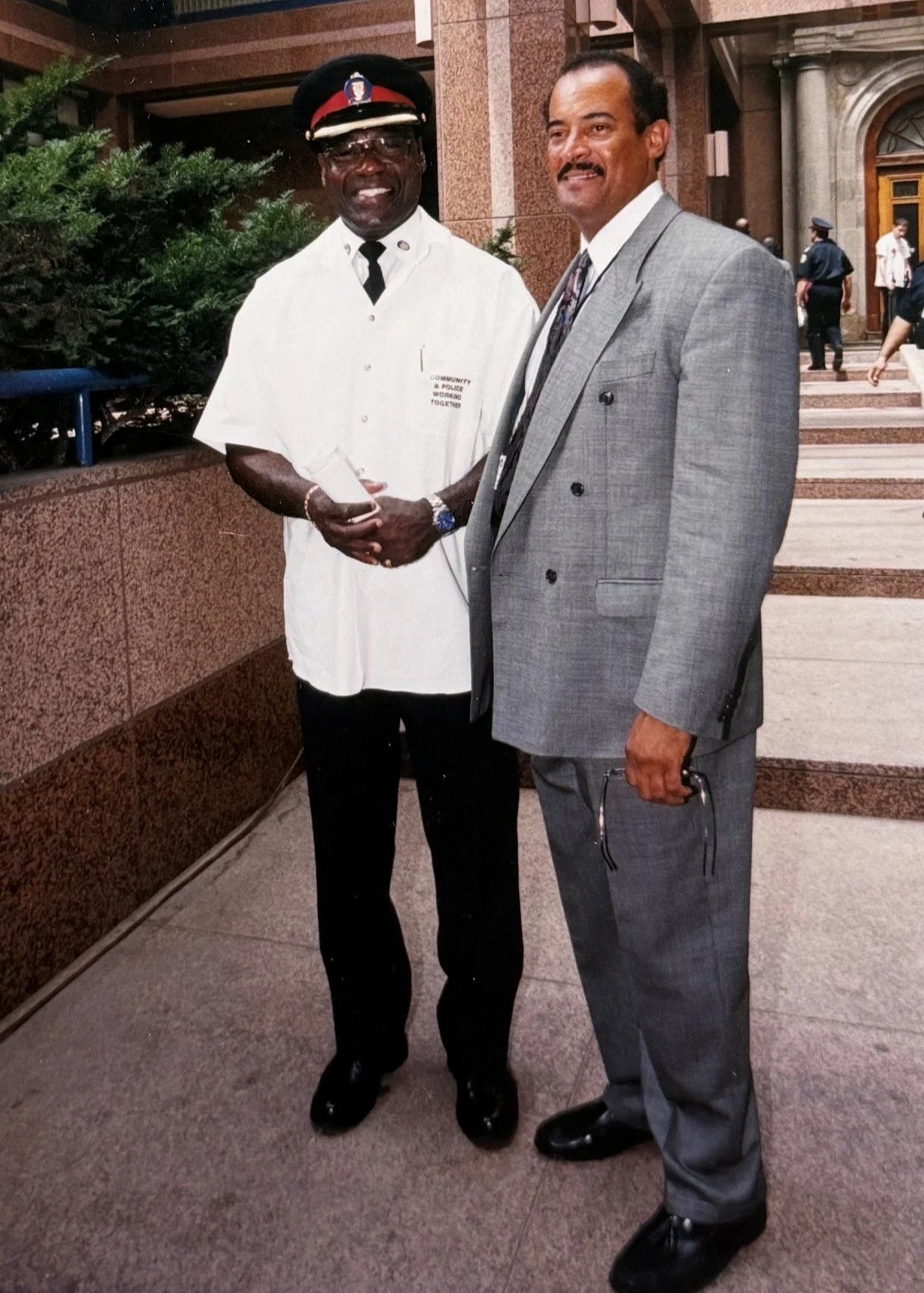
Winston Laroche and retired deputy chief Keith Forde outside police headquarters (Photo contributed)
Policing was not Laroche’s original career plan.
Born in Trinidad and Tobago, he came to Canada in 1971 to pursue post-secondary education. Three sisters were already here, while a brother who attended Sir George Williams University had helped inspire his decision.
Laroche studied business at Centennial College and took courses at what was then Ryerson. Student involvement and community discussions encouraged him to consider how Black Canadians could influence the institutions shaping their lives.
When police recruiters visited post-secondary campuses seeking graduates, he saw an opportunity to act on those convictions.
“I would love the opportunity to serve the citizens of Toronto,” Laroche recalled telling interviewers. “But furthermore, the opportunity for the people in my community, the Black community, to see a person of colour as a police officer.”
He was one of four Black recruits in his class, alongside Theodore Payne, Charles Payne and Phil Semple. All three have retired, but the friendships formed at the beginning of their careers remain strong.
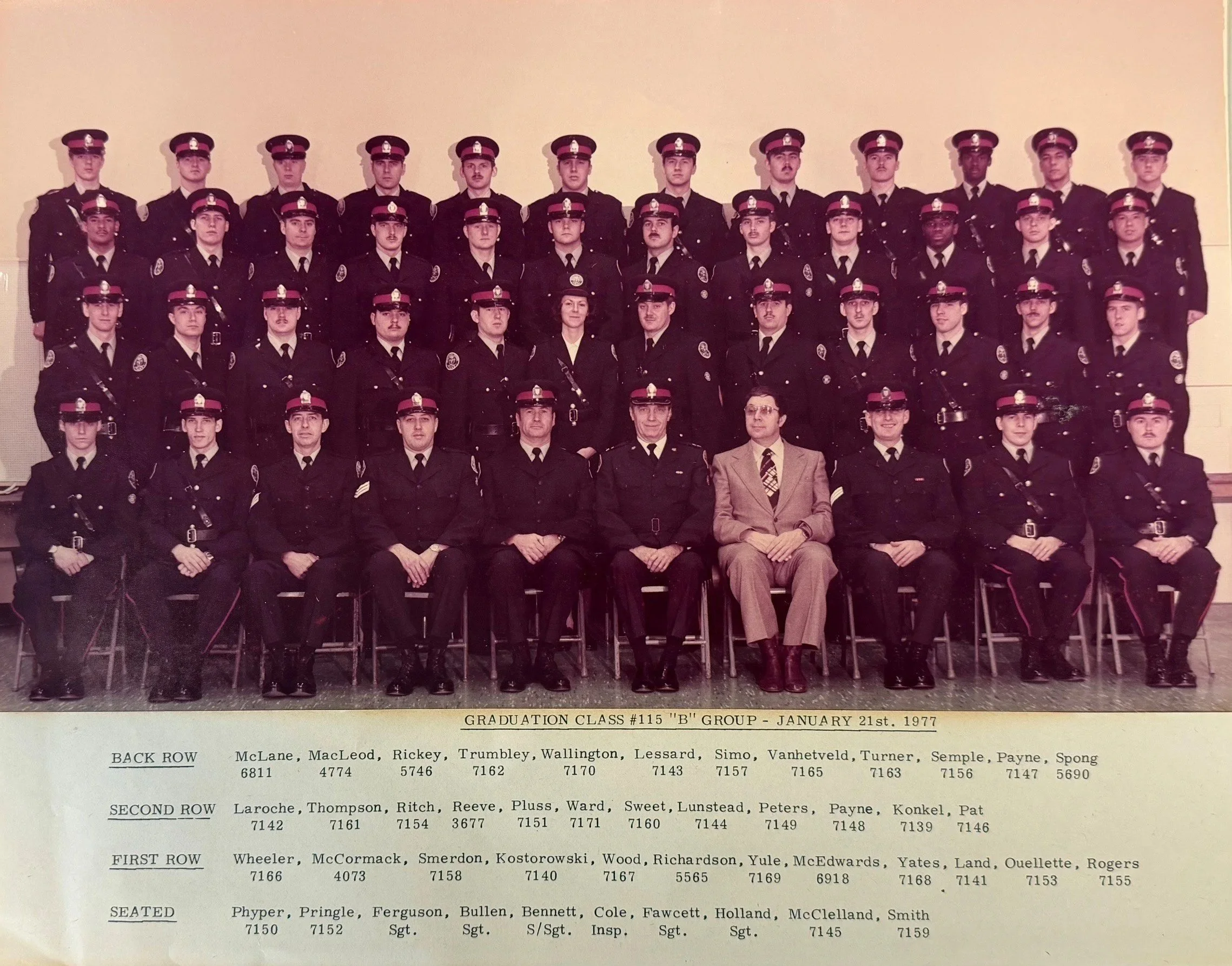
Winston Laroche (second row left in his 1976 recruit class (Photo contributed)
At the anniversary celebration, their presence connected Laroche’s achievement to a shared history. Others attending included Ed Reid, who joined in 1963 as the Service’s second Black officer, Stan Pinnock, who joined two years later, and Kelly Mohammed who retired in 2012.

Winston Laroche (second from left) joined former and current officers Bonnie Estwick (l), Stan Pinnock, Ed Reid, George White, the late Tony Pinnock, Sonia Thomas and Brian Sutherland at the funeral of the Service’s first Black female officer Gloria Bartley in May 2018 (Photo by Ron Fanfair)
Laroche entered policing hoping to see Black officers eventually lead divisions and the entire Service. During his career, he has witnessed those changes while working to strengthen connections between police and the communities they serve.
Some of his most enduring contributions began at 33 Division, where he worked on the street before moving into investigative duties and the Youth Bureau.
Dealing with young people in trouble, Laroche understood that enforcing the law also required an appreciation of their circumstances. An encounter with police could leave a lasting impression, and he wanted fairness to be part of what they remembered.
Years later, some of those young people, now adults, still recognize Laroche and stop to speak with him.
“They’ve told me that, even though they were on the wrong side of the law back then, it was reassuring to see someone who looked like them in that role when they came into the station or were being investigated,” he recalled. “They felt they were treated fairly.”
His involvement with young people extended beyond police assignments. He also mentored youth through Tropicana Community Services during its early years.
“We are representatives of our community,” noted Laroche. “We are police officers, and the expectation is that we would give back to the community. Before coming to policing, my firm belief was that I had to contribute somehow to my community.”
A supervisor at 33 Division encouraged him to broaden his experience at headquarters. In community relations, he worked alongside Black officers whose careers had helped create opportunities for those following them.
Laroche later advocated recognizing pioneering Black officers during the Service’s Black History Month observances, seeking to ensure their contributions were acknowledged and their experiences preserved.
He also helped advance police participation in the Toronto Caribbean Carnival, seeing it as an opportunity to strengthen relationships with the Black community by celebrating its culture.
“We wanted to send a message to the Black community about our commitment,” Laroche said. “We were prepared to take part in their cultural celebrations.”
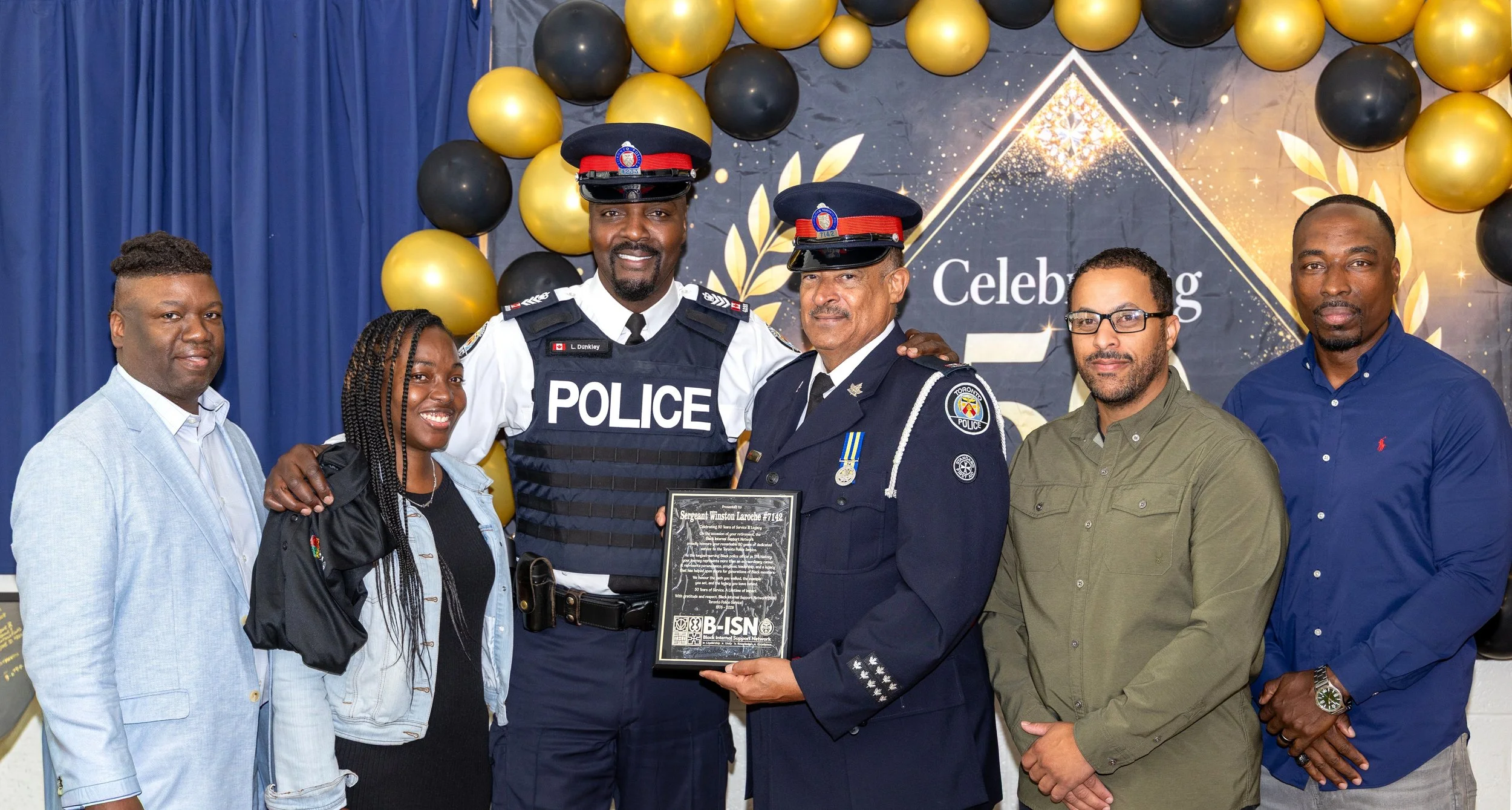
Toronto Police Black Internal Support Network members John O’Dell (l), Tanya Douglas, Detective Sergeant Leslie Dunkley, Detective Robert Asner and Superintendent Ryan Forde made a presentation to Winston Laroche at a celebration to mark his 50th year in policing (Photo contributed)
Participating offered a visible expression of that commitment, allowing the Service to celebrate alongside the community.
Semple, who served for 31 years and later earned a doctorate, recognized the sense of purpose behind Laroche’s approach. Reflecting on the experiences of Black officers entering policing in the 1970s, he said support from colleagues helped him navigate those years.
“Winston exemplifies that attitude that you do the right thing for the right reasons,” he said.
Laroche’s familiar smile, Semple added, reflects a resilience that has helped sustain him.
“There are days that get you down, but it’s your ability to bounce back,” he said. “Winston has that ability to bounce back because he is doing it from the heart.”
Theodore Payne saw that same steadiness in an officer whose ability to communicate made him someone others could learn from.
“Winston and I became very good friends when we joined the service, and we have remained close ever since,” he said. “He has always been a very steady and calm person. You couldn’t ask for someone better to learn from, particularly when it came to communicating with members of the community.”
Their friendship also revealed how readily Laroche stepped forward when someone needed help.
When Payne’s father died, Laroche was the first person to call. Along with their friend Robert States, who died in July, he helped Payne through the difficult days that followed.
“Winston was right by my side,” Payne recalled. “He took on the responsibility of coordinating and organizing everything for me. He came in and took over when I needed someone most. That’s what a leader does. Winston is definitely a leader, and I love him for that.”
Having served for 40 years himself, the Barbadian-born retiree understands what Laroche’s anniversary represented.
“It wasn’t always easy,” he said. “There were rough times, and I know what it takes to stay in the job that long. When I think about Winston reaching 50 years, it is incredible. He has certainly made his mark, and he should be proud.”
Charles Payne, originally from Belize, found a similar generosity in his friendship with Laroche. With his own family living in the United States, he was welcomed into Laroche’s family.
“If you are his family and you are his friend, you come first in his life,” said Payne who served for 16 years. “He will do anything for you.”
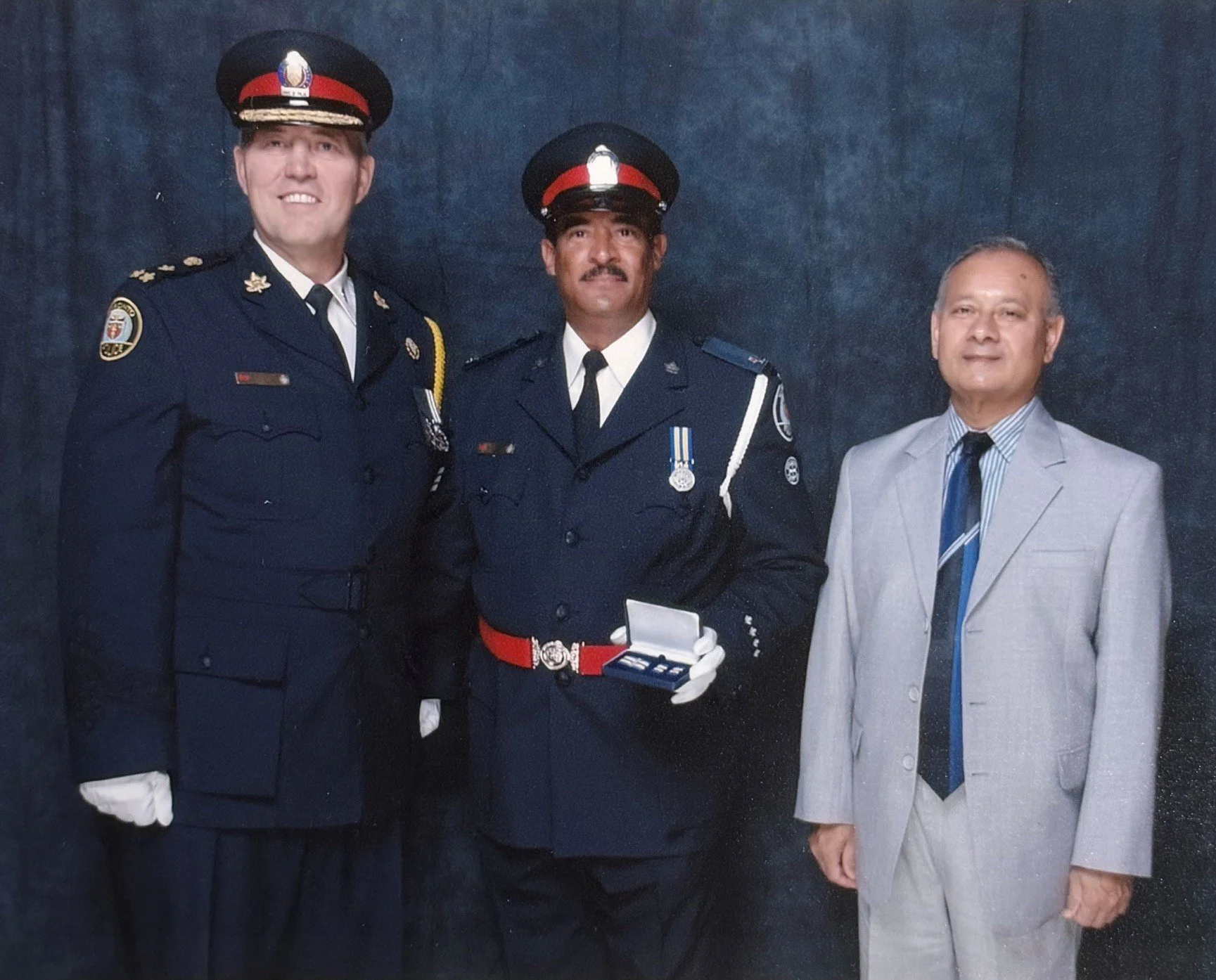
Retired Chief Bill Blair and former Toronto Police Service Board chair Alok Mukherjee with Winston Laroche (Photo contributed)
Laroche has also needed support during painful periods in his own life, and the care he received from colleagues has deepened his appreciation of the organization.
His wife, Elizabeth, a head nurse at North York General Hospital, died in 2002. Their daughter, also a nurse, was diagnosed with cancer in 2016. She had been cancer-free for four years.
Laroche remains grateful to supervisors who encouraged him to put his family first.
“I have worked with some of the brightest people,” he said. “The majority of people here care about what they do and about serving the community. I have had some challenges, but most of my experiences have been very positive. The service has supported me through my situation with my daughter and with my wife passing.”
Today, his work in PRIME continues to demonstrate the value of personal attention. Reading a resident’s email, returning a call and explaining what police can do may seem routine, but those exchanges matter to someone frustrated by difficulty reaching help.
“They appreciate the fact that you have read their email, you’re returning the call in a timely fashion,” Laroche said. “They get a response.”
He encourages younger officers to build those relationships too, volunteering with community organizations, mentoring young people and making themselves available to residents seeking guidance.
Retirement is approaching, although Laroche has not settled on a final working day.
Still active, he cycles and completed a 50-kilometre Don Valley Parkway ride this year. Travel, theatre, cultural events and continued involvement with young people are among his plans.
Asked why he has stayed so long, Laroche offered a lighter explanation.
“I came and I forgot to leave,” he said.
Laroche’s reflections on the city he has served reveal the deeper attachment.
“I feel a sense of pride to have had this opportunity,” he said. “I’ve got to thank the citizens of Toronto for allowing me to serve them.”
Fifty years after he joined, that gratitude is matched by people who remember being treated fairly, colleagues who could count on him and young people he encouraged. The work still matters to Laroche, and so do the people who give it meaning.