Ashley McFarlane carves Muhammad Ali’s legacy in stone
November 4, 2026
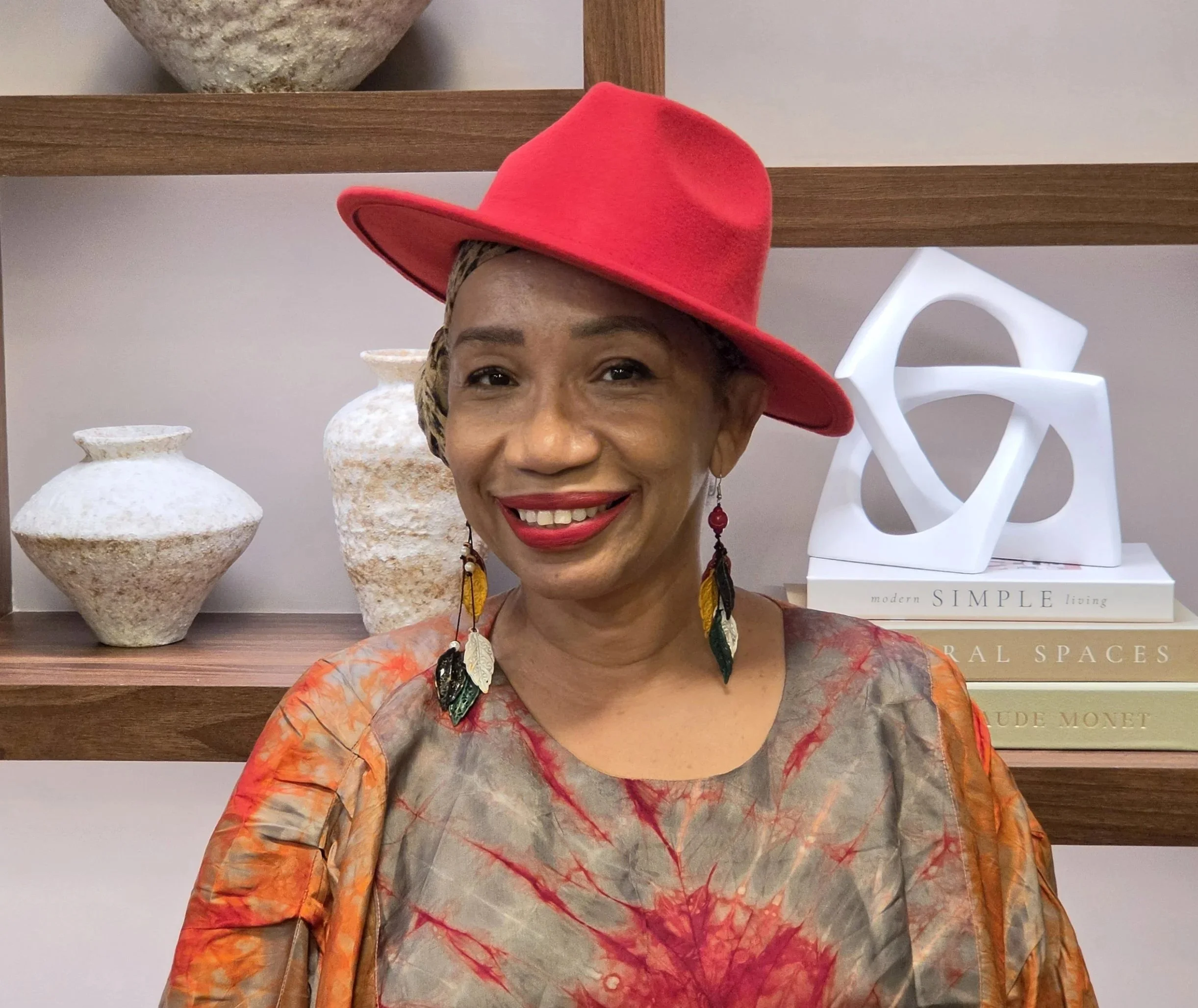
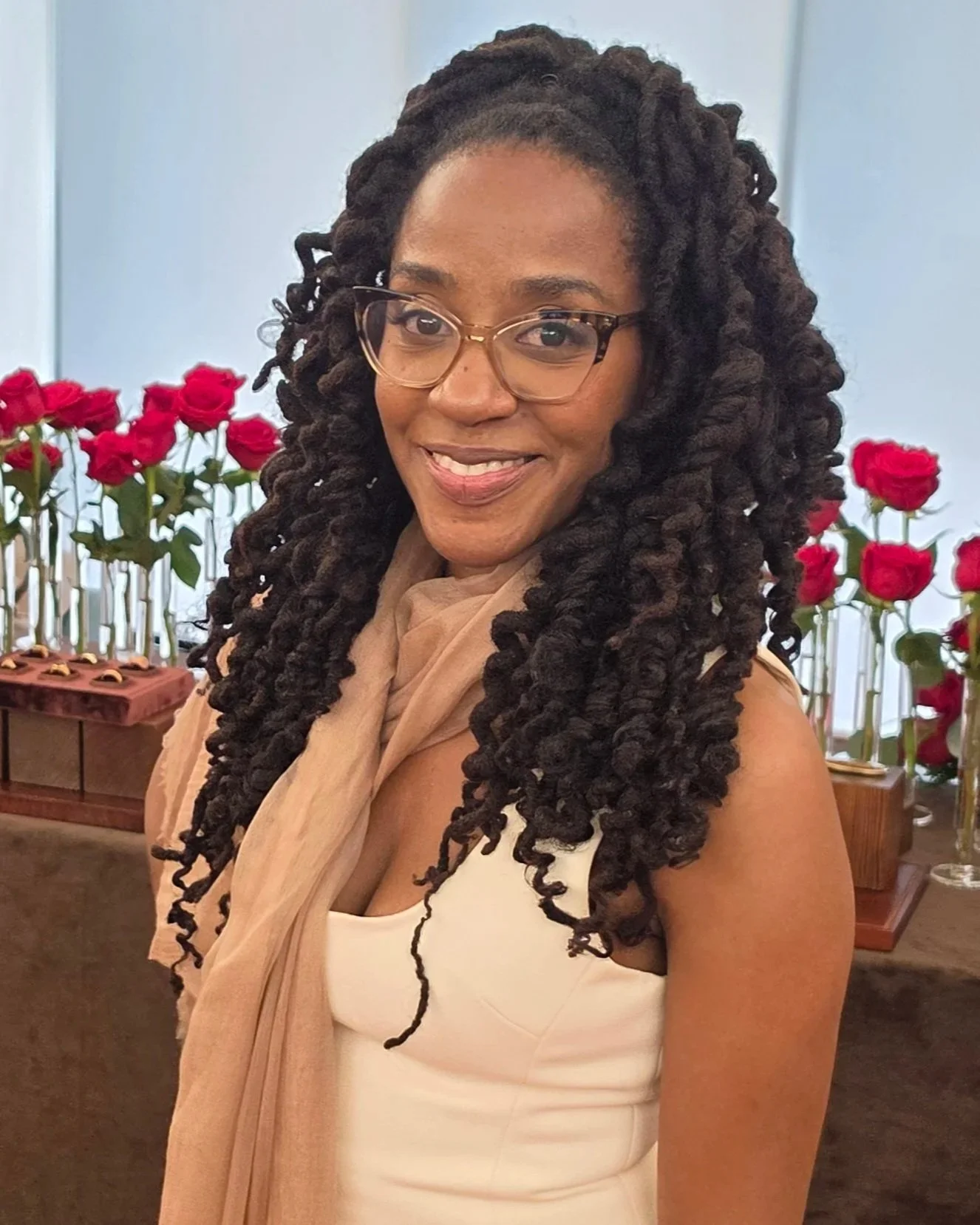
An invitation to interpret Muhammad Ali’s life through jewellery reached Ashley McFarlane at a Jamaican airport as she prepared to return home after attending a family funeral.
The Toronto designer was staying with a friend whose coffee table held a book about the boxing great. Now, unexpectedly, she was being asked to consider how his story might take shape in her hands.
“Seeing that book and then getting the email, I thought, wow, this is very serendipitous,” McFarlane said.
That approach more than a year ago led to A Legend Carved in Stone, a limited-edition fine jewellery collection by her brand, Omi Woods.
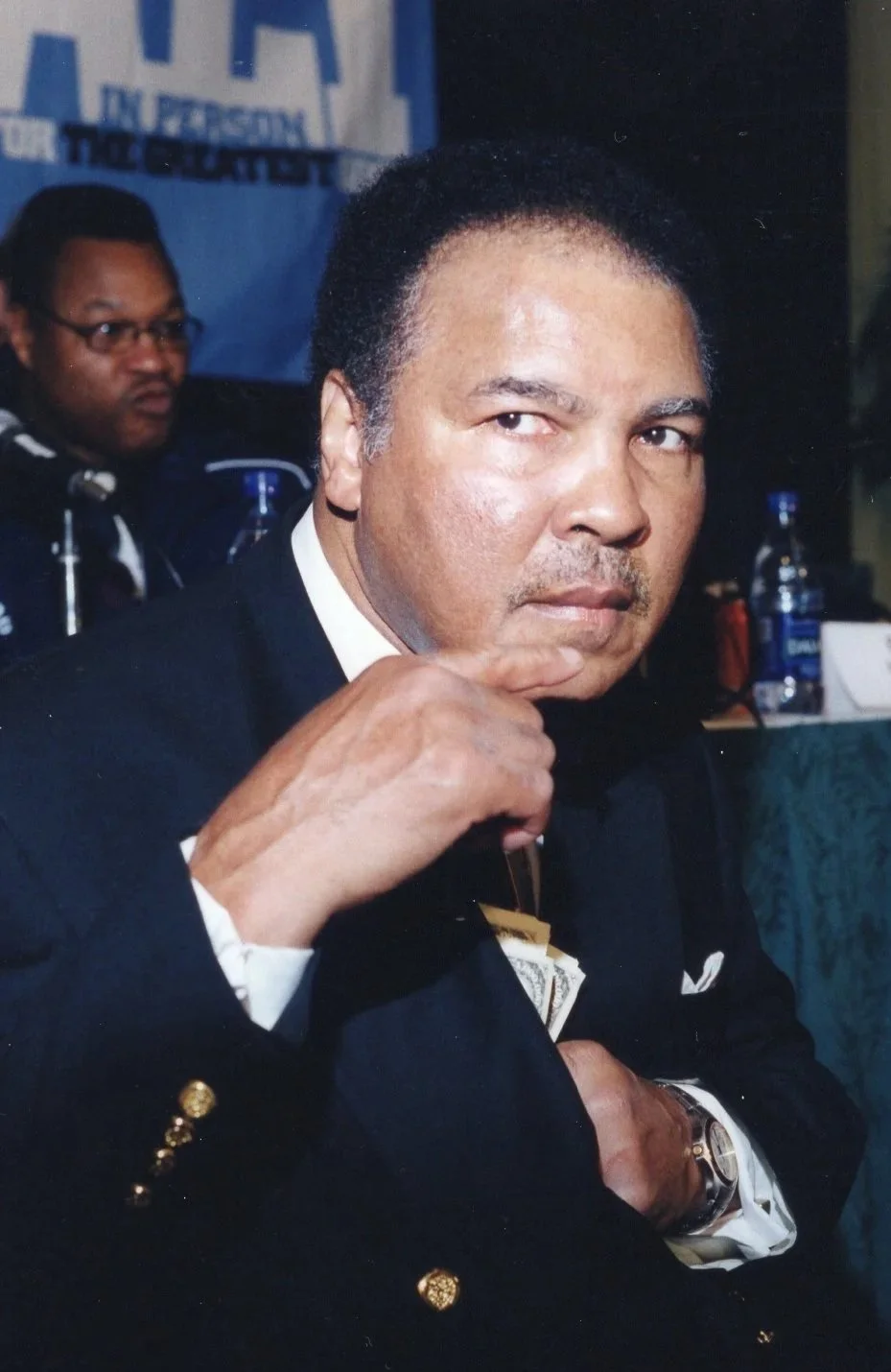
Muhammad Ali Enterprises and Omi Woods presented the collection at the Aga Khan Museum on November 1, with Ali’s widow, Lonnie Ali, joining guests for a private tribute and launch.
Among those celebrating McFarlane was someone who knew her long before her designs became objects people would collect and pass down.
Three-time Canadian Olympian Phylicia George remembered joining a high school track club and being struck by an athlete whose ability and confidence made an immediate impression.
“We ran track and field together in high school, and I remember joining the track club and walking in, and she was one of the cool kids who was super-fast and so smart and carried herself with grace and poise,” she recounted. “And I remember thinking to myself, like, maybe one day I can be like that.”
George went on to compete in athletics at the 2012 and 2016 Summer Olympics before winning a bronze medal in two-woman bobsleigh with Kaillie Humphries at the 2018 Winter Games.
Introducing her long-time friend, she spoke about the influence people can have without realizing it.
“I think that’s what’s so beautiful about showing up authentically because we never know who we’re inspiring and what trajectory we’re setting somebody else on,” George, the first Black Canadian woman to compete in both the Summer and Winter Olympics, pointed out.
McFarlane’s work continued to affect her in that way.
“You continue to inspire me with the work that you do because it’s so much more than just jewellery,” George said. “It is ancestry, it is culture and it is the stories that we tell and the ones we pass down for generations.”
McFarlane responded with a memory that drew attention to her friend’s perseverance.
She recalled that George was not the fastest athlete in their group. After going away to university, McFarlane was surprised and delighted to learn that the girl who once looked up to her had become an Olympian.
“Dedication is real,” she said. “And that’s one of the principles of Muhammad Ali.”
Although a talented athlete, McFarlane would forge a creative path spanning fashion, film and jewellery, exploring ancestry and identity through her work.
Even so, she initially needed time to see how an Ali collection would fit within her work.
“When I first received the email about Muhammad Ali, I wondered how the collaboration would fit with my brand,” McFarlane said. “But when I looked at my brand’s aesthetic alongside Ali’s style at the time, I saw a natural connection through Pan-Africanism.”
The historical references already informing Omi Woods offered a connection.
“We have a lot of vintage African coins from that era when a lot of these countries in Africa and the Caribbean were gaining their independence from colonial rule,” she said. “There’s definitely an influence of Pan-Africanism in the pieces that I make. I saw that connection.”
As McFarlane considered the proposal, hesitation gradually gave way to ideas she could not put aside.
“When I was contacted about making this collection over a year ago, I was a little nervous and hesitant,” she said. “But the inspiration kept coming. About six months into the process, I found myself constantly thinking about the pieces. Even while travelling, I would start sketching.”
McFarlane’s appreciation of Ali had begun years earlier when she watched a documentary about the Rumble in the Jungle as a teenager in Toronto.
“It was the first documentary I’d seen that made me feel as though I was going back in time, experiencing the culture of that era and watching history unfold,” she said. “It explored his personal life alongside what was happening politically and socially in America, while also drawing connections to Africa.”
The film helped McFarlane understand why his appeal extended far beyond boxing.
“People around the world were really rooting for him because he was like the people’s champ,” she said. “It was nice as a teenager to have that kind of perspective.”
His story also connected with the interests McFarlane was developing through poetry, spoken word, organizing and non-profit work.
“I grew up in Toronto during a time when we were very socially conscious,” noted the former Urban Alliance on Race Relations media co-ordinator and gender-based violence specialist. “That was something that I was around. Just seeing that reflected in a documentary was really interesting.”
Those early impressions found expression in pieces that draw on Ali’s wit, imagination and familiar imagery.
“The collection includes a series of one-of-a-kind brooches inspired by some of Ali’s most iconic quotes, including ‘float like a butterfly, sting like a bee’,” McFarlane said. “I had them hand-carved from tiger’s eye and tiger iron, whose yellow, brown, red and black tones reflect his signature colours.”
Australian gemstone carver Ryan Bowen created the intaglios, translating the imagery into small scenes cut into stone.
“My favourite brooch features a little alligator, a little whale and a lightning bolt,” said McFarlane, one of two Canadian designers featured in the 2016 TD Black History Month exhibition Water Carry Me Go. “It whimsically captures the scene while bringing a fine-art quality to the piece.”
The stone’s natural appearance helped shape the composition.
“When I was planning the design, I had to decide where to place the whale and the alligator,” she said. “The gemstone lent itself naturally to the scene because it looks stormy, with an alligator emerging from the water and a whale leaping out. It’s a fun piece.”
Other designs grew from McFarlane’s interest in faith, cultural exchange and her Jamaican Maroon heritage.
Visits to the Aga Khan Museum encouraged her exploration of star motifs and the Seal of Solomon, an interest further shaped by time spent at artist Javid Jah’s studio. Her research into Mudéjar art also deepened her interest in the exchange of artistic traditions in medieval Spain.
McFarlane connected these influences with Ali’s humanitarian legacy and commitment to interfaith understanding.
“I just thought it was really beautiful in representing Ali’s legacy and his story about interfaith dialogue, cross-cultural connection,” she told guests.
The collection also includes simpler designs inspired by monarch butterflies, honey and honeycombs.
Lonnie Ali saw the collection as a reflection of her husband’s interests and the care McFarlane took in honouring his legacy.
“His father was a fantastic artist, and Muhammad enjoyed drawing too, although his style was different,” she said. “He also loved jewellery. He really did.”
Lonnie believed Ali would have appreciated the attention given to the materials and designs.
“She’s put a lot of care into this and attention to do homage to him, and I know he would be very, very grateful for the work that she has done,” she said.
Asked which pieces she preferred, Lonnie pointed to the butterfly, an image closely associated with her husband.
“I am very partial to butterflies,” she said. “But the entire collection is beautiful, and every piece reflects who he was.”
The butterfly also reminded Lonnie of her husband’s influence and the sense that he remains close to her.
“They say the flap of a butterfly’s wing can change so much in the world, and that’s who Muhammad was,” she said. “Whenever I see a butterfly, I think of him. I feel as though he’s there with me.”
Lonnie also described a bee box in a tree above her husband’s burial place at Cave Hill Cemetery in Louisville, Kentucky, giving the collection’s bee imagery another personal connection.
McFarlane’s interest in preserving history predates the collaboration. Her documentary, Re-membering Maroonage, followed her return to Accompong, Jamaica, to explore the community where her grandfather, Eddie Salmon, grew up.
The Ali collection carries that interest into jewellery, creating objects that people can wear, treasure and pass down.
“Jewellery is one of the world’s oldest art forms, and it holds deeply personal meaning for so many people,” the published poet and filmmaker said. “Each person will find their own meaning in these pieces.”
Some designs draw directly from Ali’s words, while others leave room for meanings shaped by the wearer’s experiences.
“The gemstone carvings with figures representing his quotes are more literal,” McFarlane said. “Other pieces allow people to find their own meaning and tell their own stories.”
Conversations about the collection have shown the designer how Ali’s influence extends across generations.
“Almost everyone I’ve spoken to has a personal connection to Ali, whether he affected their own life or the life of a parent or grandparent,” McFarlane said. “I want to create pieces that honour those connections, something tangible that represents who he was and helps your children remember him.”
Asked about jewellery that people could wear and eventually pass down, Lonnie captured that purpose in a few words.
“That’s legacy,” she said. “It’s heirloom.”