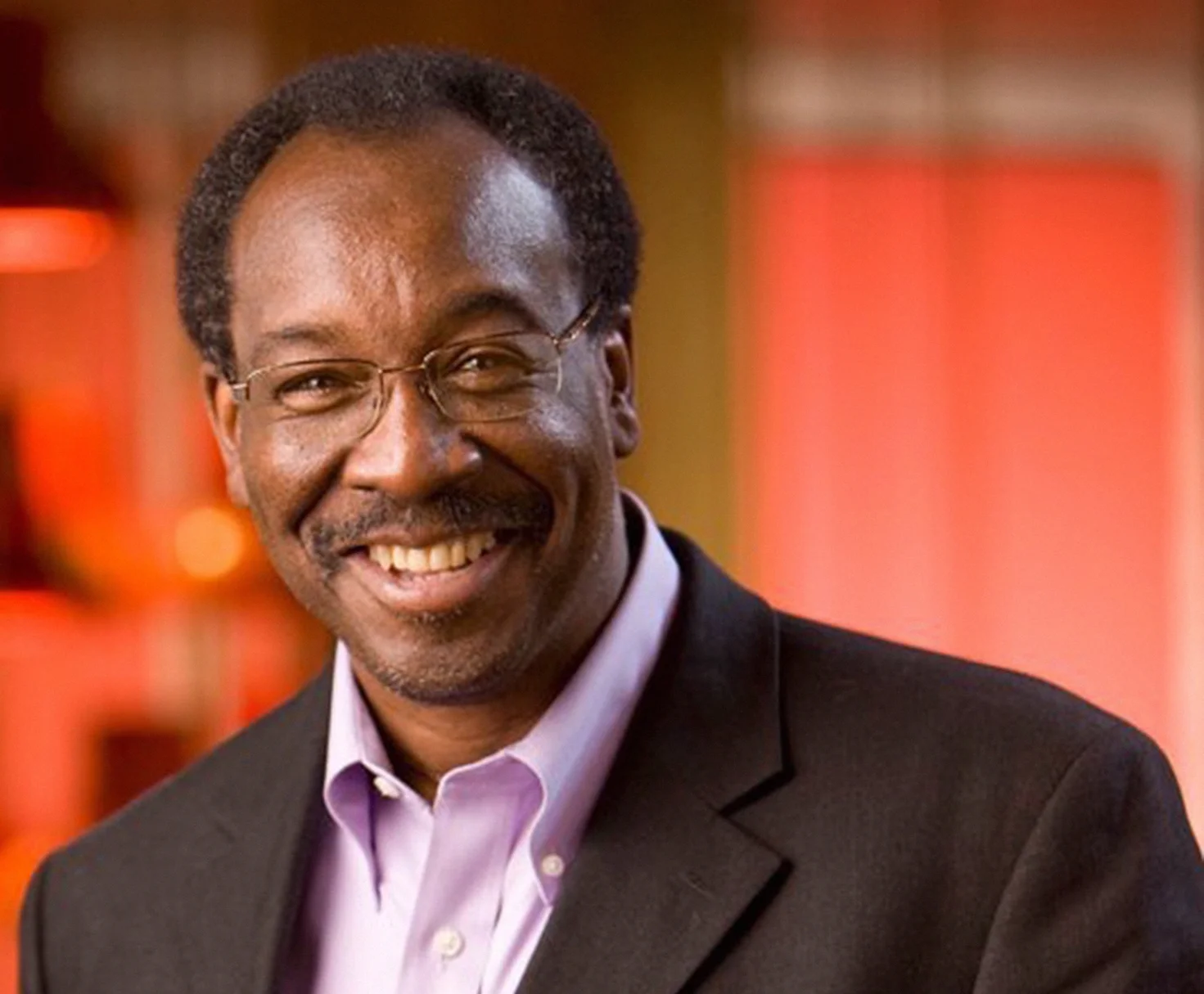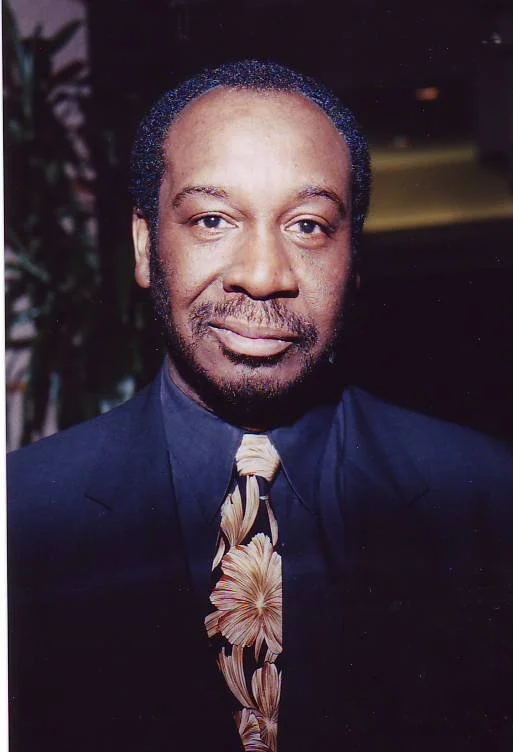
Pat Case devoted his life to making equality a reality
November 11, 2026
Patrick ‘Pat’ Case’s passion for human rights took root in the example set by older brother Fred Case.
Growing up in the United Kingdom, he remembered the late University of Toronto New College principal travelling to Europe to help build houses for Hungarian refugees after the 1956 uprising.
The example stayed with him throughout a career in community advocacy, law, education and public service.
“Fred was my brother, best friend and father all rolled into one,” he told ronfanfair.com in 2017. “When I got to Canada and got into a deeper relationship with him, so much of what we talked about had to do with the lack of inclusive education at New College. My passion for equity and social justice definitely came from him.”
Case, who died on November 9 after a brief illness, carried that influence into his work as a school trustee, human rights lawyer, university educator and senior Ontario public servant.
For feminist activist and writer Judy Rebick, his lasting strength was his refusal to lose touch with the movements that had shaped him.
“I can’t remember when I first met Pat, but it feels like he was always there,” she said. “He was one of the few people who, despite getting important jobs in government, didn’t get sucked up by the establishment. Instead, he stayed connected to our movements. He was a loving and generous man, and I will cherish his memory.”
Case’s commitment was also shaped by his own experiences of racism in postwar England.
He recalled a shop owner chasing him away while shouting racial slurs after he asked for work in 1968. His brother had encouraged him to come to Canada, and within weeks he left England.
Case’s early years in Toronto included selling encyclopedias, day labour and a period of homelessness before community activism opened a path into education and law.
Fred also provided support after the death of their father, Edward.
“He was my protector in many ways,” Case said tearfully at a celebration of his life in May 2008. “As Fred was lying in hospital, it occurred to me that I was actually being orphaned. He raised me physically, emotionally and mentally.”
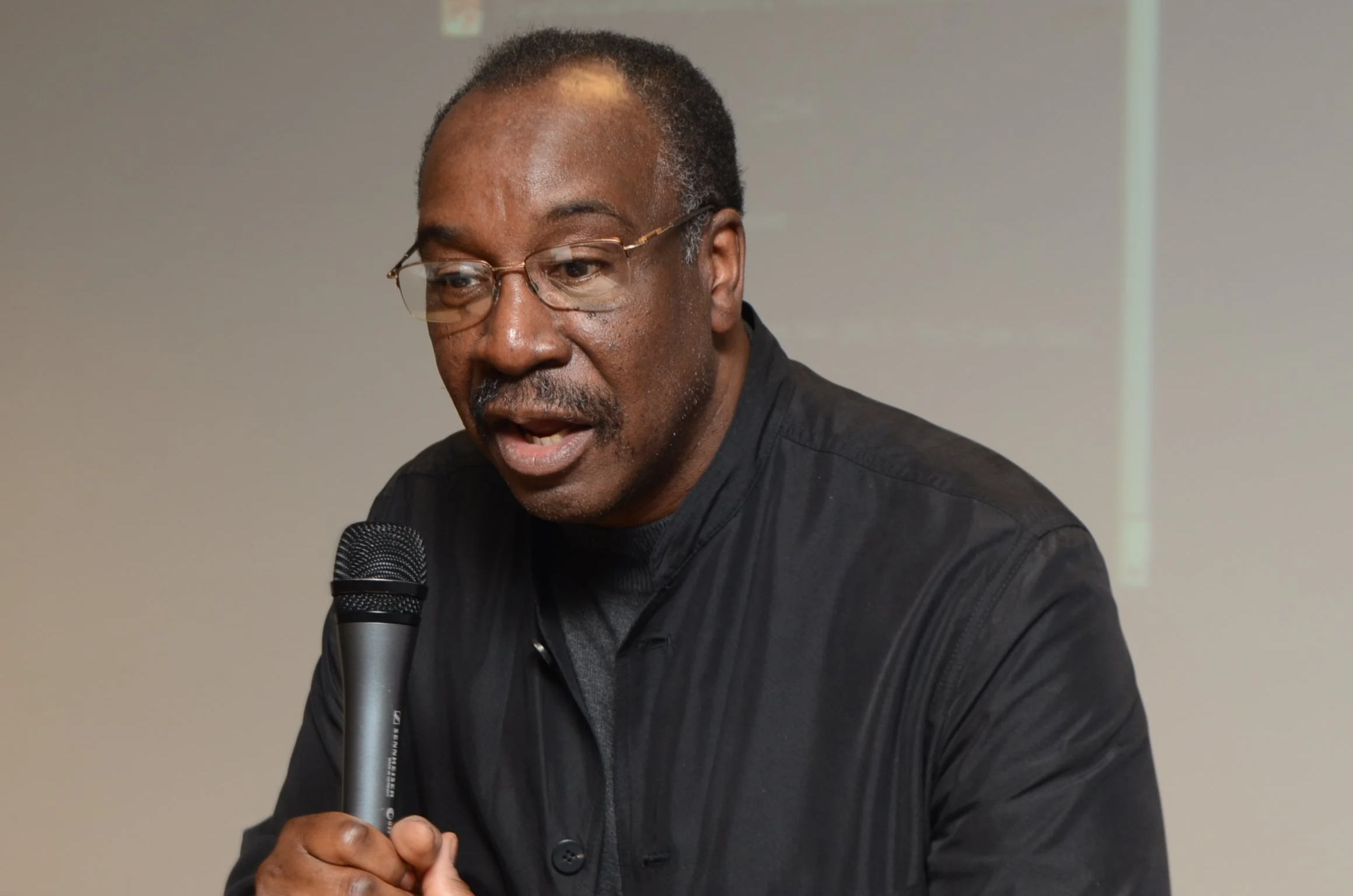
Pat Case (Photo by Ron Fanfair)
Education became one of the principal avenues through which he pursued change.
Case served as a Toronto Board of Education trustee from 1979 to 1985 and returned to the board as an equity advisor beginning in 1989. His work later extended to provincial efforts to address governance failures and inequity in school boards.
He was also a member of the Toronto District School Board governance advisory panel in 2015. Two years later, he and former senior public servant Sue Herbert were appointed to review governance and performance concerns at the York Region District School Board.
In May 2017, Case became an assistant deputy minister in Ontario’s Ministry of Education, leading its Education Equity Secretariat as chief equity officer.
Shortly after that appointment, he recalled how quickly his family helped him decide to accept the position.
“Quite frankly, I couldn’t resist the temptation,” Case said. “I told them I would get back to them in two days, but after speaking to my partner, she said you really don’t need two hours. My son told me the same thing, so I phoned back within a couple of hours and said, ‘Let’s do it’.”
His enthusiasm came with impatience about the distance between identifying inequities and correcting them.
“The consultation has been done on so many things,” noted Case. “There are too many reports supporting change. There is no need for another one or consultations. What we may need is consultation in relation to the implementation of this or that piece.”
The Education Equity Secretariat he headed also supported the provincial review of the Peel District School Board.
Case’s expertise continued to be sought after he retired from the ministry in early 2024.
In April 2025, the Upper Grand District School Board appointed him and human rights lawyer Julie Lassonde to conduct an independent review of its application of human rights practices.
An Osgoode Hall Law School graduate with a master’s degree in law, Case brought experience from community legal practice to those assignments. At Parkdale Community Legal Services, he worked as a family law staff lawyer, focusing on women experiencing male violence.
His advocacy also extended beyond Canada.
In 1994, Case was part of an Oxfam-Canada team that monitored South Africa’s historic elections, which brought an end to apartheid rule.
He also contributed to the work of the Commission on Systemic Racism in the Ontario Criminal Justice System and taught a course on African Canadians, racism and law at Osgoode.
Case later served as an Ontario Human Rights Commission commissioner from 2006 to 2010, became chair of Ontario’s Human Rights Legal Support Centre in October 2010 and co-chaired the Equality Rights Panel of the Court Challenges Program of Canada.
In 2003, he succeeded Lincoln Alexander as chair of the Canadian Race Relations Foundation, bringing an activist’s perspective to its national mandate.
“I am not ashamed of the fact that I am an activist,” he said when he took on the foundation role. “I am not neutral on these matters. That is what they are getting.”
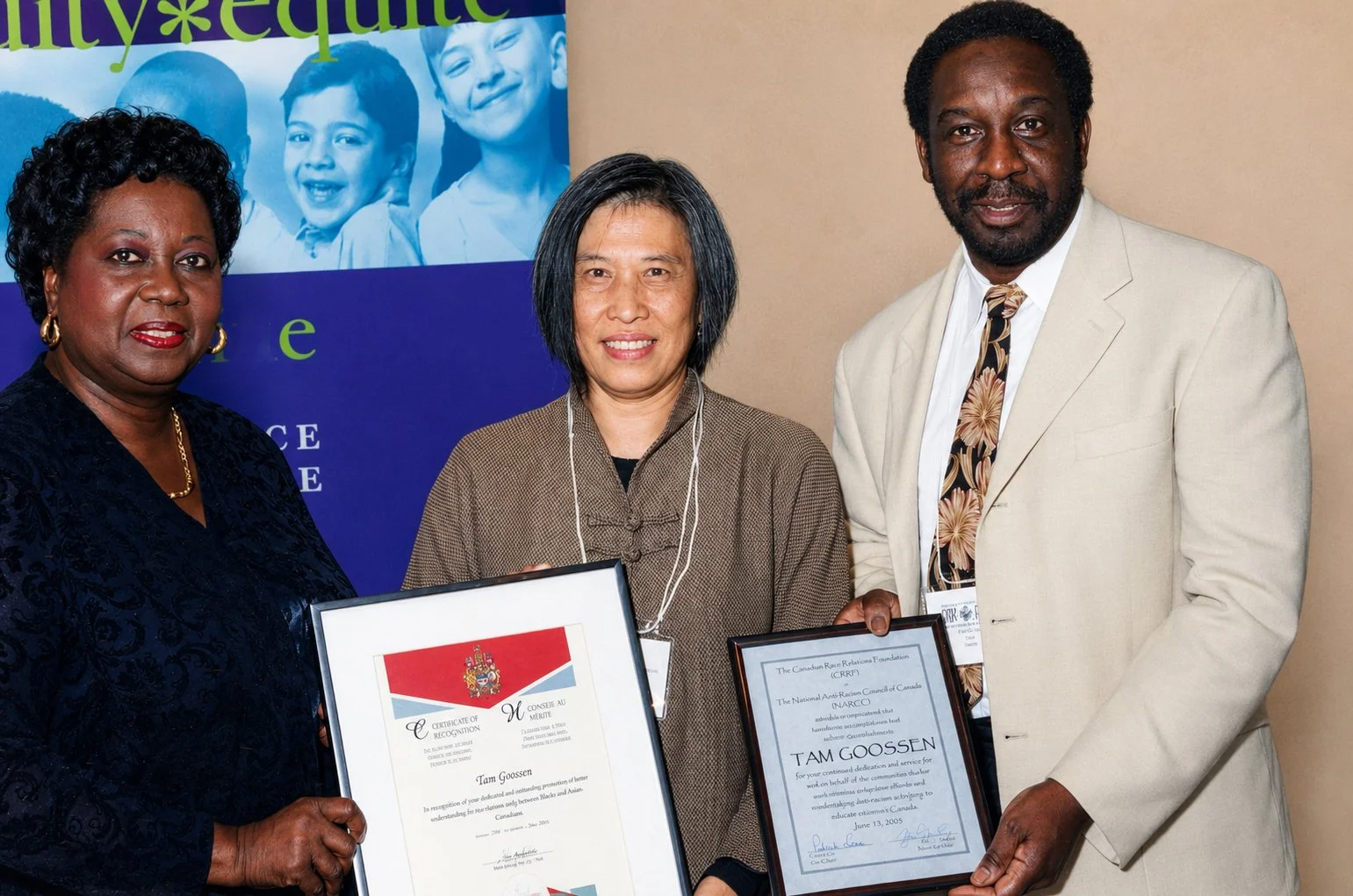
Pat Case, representing the Canadian Race Relations Foundation and the National Anti-Racism Council of Canada, presented a plaque to activist Tam Goossen in 2005. Jean Augustine (left) presented a certificate of recognition on behalf of the Government of Canada (Photo by Ron Fanfair)
In 2017, he received the Law Society Medal in recognition of his contributions to social justice and addressing racism.
Human rights educator Dr. Karen Mock recalled a relationship spanning school board initiatives, university training, the Canadian Race Relations Foundation and provincial education work.
“Pat was one of the first to really speak out on the importance of people working together and understanding that all of the isms and phobias were connected,” she said. “He did some of the early work and training in our Black-Jewish dialogue.”
Their collaboration included programming through B’nai B’rith’s Black-Jewish dialogue during the early 1990s, when maintaining relationships across communities required difficult conversations.
Mock later invited him into other educational initiatives, while he asked her to conduct training in settings where he worked. Their partnership survived changing roles and disagreements.
“He was extremely affable with so many colleagues and young people,” she said. “At the same time, we could engage on issues where we differed to try to come up with the strongest common ground.”
Case brought the same approach to the University of Guelph, which he joined in 1999. He led its Human Rights and Equity Office and later taught in the Department of Political Science before moving to the ministry in 2017.
Case spoke proudly of helping rebuild hiring and recruitment systems and developing policies that could endure because the people responsible for applying them had participated in their creation.
He also helped develop a procurement policy requiring the university to seek apparel from non-sweatshop sources.
“That policy took about three-and-a-half years to conclude, but by the time it was done, everybody around the table had agreed on it,” Case said in an earlier interview. “These processes not only take a long time, but they also move the people who are around the table to the same place about how to deal with things.”
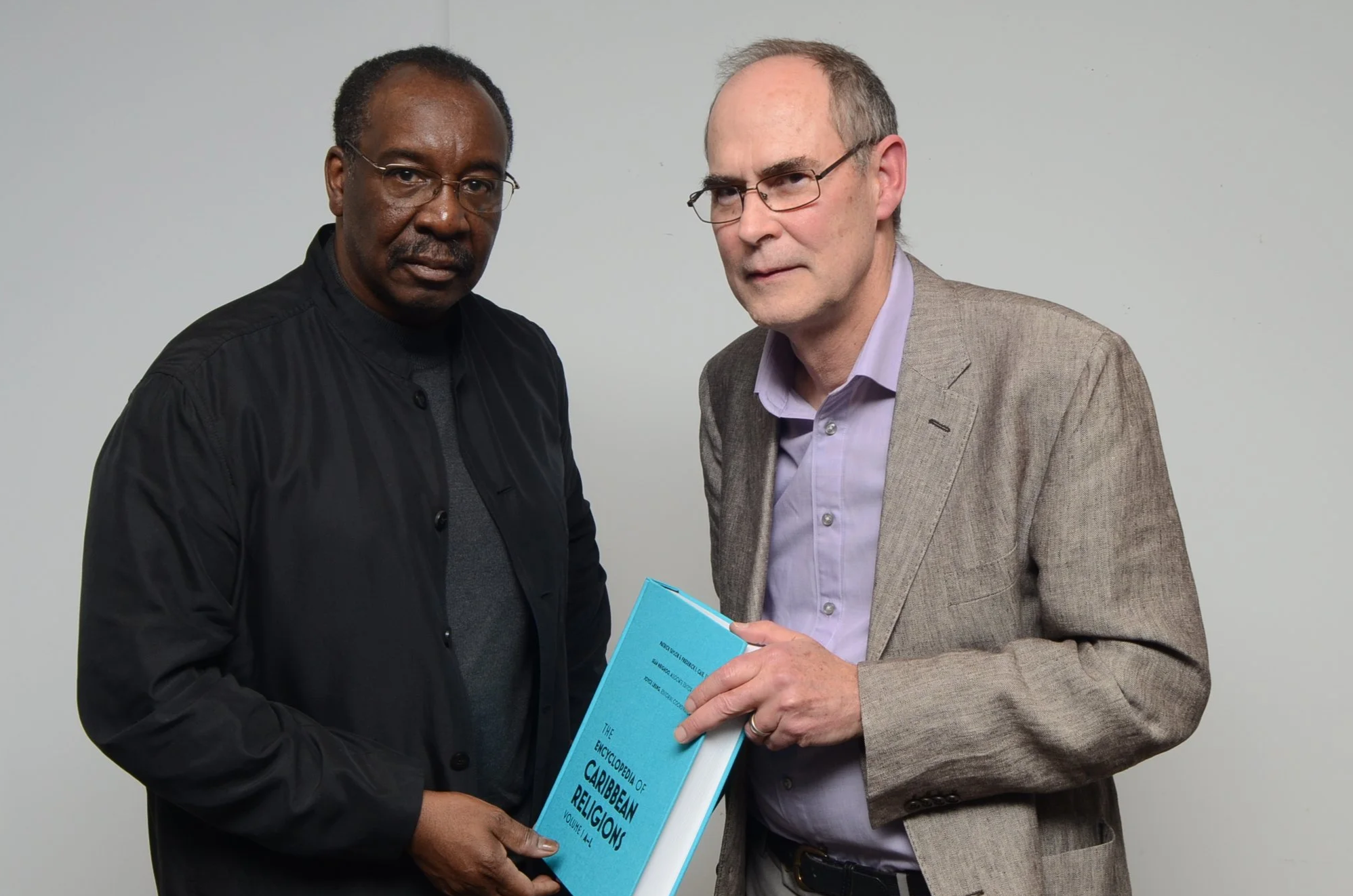
Patrick Solomon (r) presented a volume of ‘The Encyclopedia of Caribbean Religions' to Pat Case in November 2013 (Photo by Ron Fanfair)
Teaching offered another avenue for examining those questions.
A longtime adjunct professor at Osgoode Hall Law School, he helped direct its Certificate in Human Rights Theory and Practice and had served on the board of Facing History and Ourselves, which helps educators connect history with contemporary moral choices.
“I learnt a lot because the teaching kept me reading, doing conferences, debating and so on,” he said in 2017.
University of Guelph chancellor Mary Anne Chambers saw his effectiveness with students when she invited him to address a colloquium she directed at York University’s Glendon College during the 2020–21 academic year.
Entitled Canada and Its Place in the World, the course gave master’s students in Public and International Affairs access to thought leaders, public figures, diplomats, senior public servants and academics.
Case left a particularly strong impression.
Among the students’ responses, Chambers recalled, were ‘one of the most enlightening lectures so far’, ‘my favourite lecture so far’ and praise for his ‘detailed and honest answers’ and ‘really helpful examples’.
“Patrick sought opportunities to mentor students,” Chambers said. “He was always eager to share his knowledge and experience. He was an educator in every sense.”
Diversity and inclusion advocate Hamlin Grange remembered a colleague whose presence in community life stretched back more than three decades.
“Pat Case has always been this constant in our community around issues of social justice, through his work at the Canadian Race Relations Foundation and elsewhere,” he noted.
Their most recent collaboration demonstrated that Case’s willingness to speak out endured after his years in senior public service.
In June, they helped prepare a letter to Prime Minister Mark Carney challenging Canada’s abstention on a United Nations General Assembly resolution concerning the trafficking and enslavement of Africans.
Grange produced an initial draft, Case suggested changes, and others contributed before the letter was sent with signatures from Black Canadians across professions and generations.
“I will always remember Pat for that because he’s always willing to add his voice,” the former Toronto Police Service Board member said.
The letter acknowledged Canada’s stated objections to the resolution’s language while pressing the government to explain its abstention and demonstrate leadership in addressing slavery’s enduring consequences.
“We are not asking for symbolic gestures,” the signatories wrote. “We are asking for alignment -- between Canada’s stated values and its actions.”
Their appeal followed the March 25 adoption of the resolution by 123 votes to three, with 52 abstentions, including Canada’s.
Case’s recent advocacy included helping Black parents raise concerns with a school board in the Barrie area.
“To the very end, Pat was working on behalf of our people,” Grange added.
Away from that work, his Facebook page offered glimpses of everyday interests, including his regular Wordle results. He also acknowledged people who brought items to his attention with a brief ‘H/T’ which is shorthand for ‘hat tip’.
Case is survived by his wife of 46 years, Susan Mason, and children Bem Case and Sarah Mason-Case.
Fred Case’s example remained visible in the way his younger brother shared his knowledge, stayed connected to community movements and helped people challenge the barriers they faced. He saw positions of influence as opportunities to serve.