From ten meals to three storeys, Samantha Baker builds on her grandfather’s legacy
October 28, 2026
Samantha Baker has endured two prolonged shutdowns, invested money she could scarcely afford to lose and sacrificed personal comforts to build something she hopes will benefit generations.
On family land where her grandfather once operated a rum shop, the Guyanese entrepreneur has developed Brown Sugar Restaurant, added a banquet hall and is preparing four guest rooms for short-term accommodation.
The three-storey property in Ogle, on Guyana’s East Coast Demerara, grew from her last wages used to prepare ten boxed meals.
“There was no money left to cook another batch unless those first customers bought my food,” Baker recalled.
She took the chance, trusting her cooking and the encouragement of people who had agreed to buy from her.
“If I didn’t take that risk, then I would be stuck,” Baker said. “But I took that leap of faith and I invested money. And here I am today.”
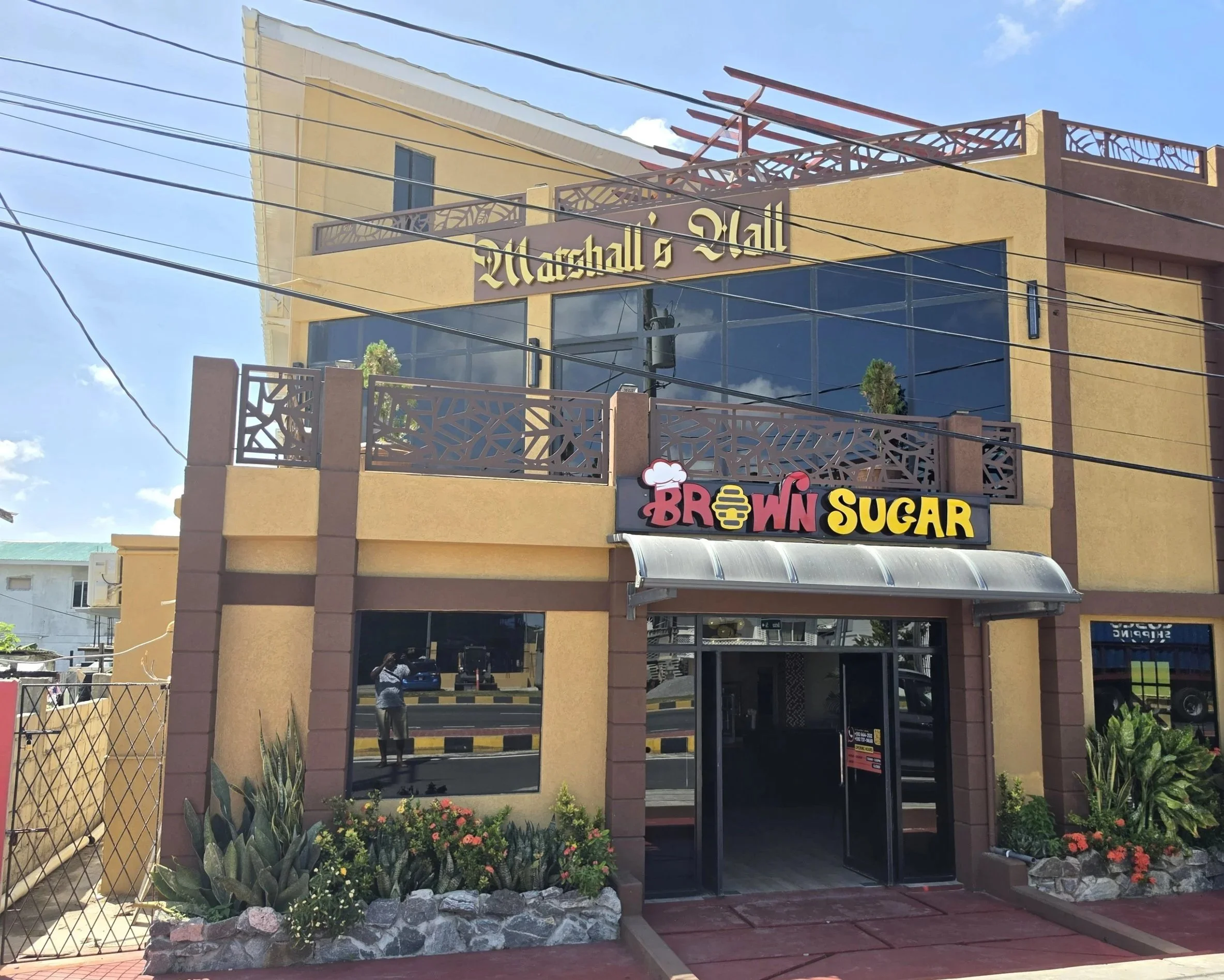
The three-storey building in Ogle (Photo by Ron Fanfair)
Years later, she still finds it difficult to reconcile those beginnings with the building she now oversees. Developed in stages as money became available, it reflects her determination to build on the opportunity her grandfather provided.
“I never even thought of going three storeys up and this big,” Baker said. “It never came into my mind that this could actually happen because of how I started.”
Her relationship with food began long before she had customers.
The eldest of three children, Baker recalled preparing meals for her younger siblings while her mother travelled to Venezuela for trading and her father’s military responsibilities took him away from home.
She was just six when she began cooking.
What started as a household responsibility became an interest that eventually led to paid employment.
Baker’s introduction to restaurant work, however, came at the sink.
At the defunct Coalpot restaurant in Georgetown, she started washing dishes. Her curiosity drew her towards the kitchen, where a supervisor noticed her interest and brought her potential to the owner’s attention.
Given an opportunity to cook, Baker developed her skills. However, the workload, pay and cost of travelling between Ogle and Georgetown eventually prompted her to reconsider her future.
“If I could do it for somebody, why not do it for myself?” she recalled thinking.
Baker approached friends who knew her cooking and asked whether they would buy meals. With their encouragement, she prepared her first ten boxes, travelled into Georgetown and walked from customer to customer.
“When I reached the city, I would start to distribute it to different people,” she said. “But as people heard of the food, they started to buy more. So, I started to expand and expand.”
Customers were scattered along Water Street and around the market area. As orders increased, carrying the meals became impractical.
Baker began sharing space with someone who had a market stand, later rented a stall and eventually bought one at Stabroek Market.
While she was developing a clientele in Georgetown, another opportunity was waiting at home.
An aunt visiting Guyana noticed the deteriorating rum shop on the family property and suggested Baker use it for her business. People from the neighbourhood and surrounding villages were already coming to buy her food, only to find she had left for Georgetown.
The property had belonged to her grandfather, William Marshall, before passing to three of his children. Family members encouraged her to develop the space and carry on its business tradition.
Baker took their advice and invested her savings in improving the premises, starting small and expanding in stages.
“The vision that I had for the building changed every year,” she said. “I knew where I wanted to go, but it’s just that I didn’t have the finances to take me there one time.”
Baker’s progress was interrupted by two prolonged shutdowns.
During the COVID-19 pandemic, she closed for nearly nine months. Catering bookings disappeared, including weddings affected by travel restrictions.
“Nothing was coming in,” Baker recounted. “But I had a little savings and I lived on that.”
At that stage, only the downstairs portion of the present development existed. She used some of the closure to paint and repair the premises.
Another disruption followed when road construction made access to her business difficult.
Mud and excavation around the property forced Baker to close again, this time for about a year.
The interruption threatened her livelihood, but she looked for ways to prepare for a stronger return.
“Despite these things, you just see it as a hurdle,” Baker said. “You just see it as a stepping stone. I was learning different menus, learning different things about business to come back bigger and better. I decided that if I’m going to close for a while, why not repair and expand?”
Those plans drew on requests she had heard repeatedly from catering customers.
People who knew her food wanted to know whether she could also provide somewhere to hold their celebrations. Others contacted her through social media seeking recommendations for accommodation.
“A lot of times people would ask me, ‘Do you have an event space’?” Baker said.
The answer became Marshall’s Hall, the air-conditioned banquet space above the restaurant, which opened last January.
It accommodates up to 150 people, with packages that can include food, décor, drinks and tableware for weddings, anniversaries and other gatherings.
“We do the décor, we do the food, we do everything, including the drinks and the dishes,” she said. “We give a good package.”
The next stage is the opening of four guest rooms which are being furnished in preparation for a December launch.
Marshall’s Hall honours Baker’s grandfather.
The restaurant’s name recalls his work harvesting sugar cane and her childhood memories of family outings to the cane fields, where they prepared and shared food.
That connection to her grandfather has helped sustain her through financial pressures and disagreements within the family.
“Yes, several times I reached a breaking point,” admitted Baker.
What helped sustain her was the knowledge that she was benefiting from something her grandfather had worked to provide. She wanted her own efforts to offer similar opportunities.
“One of the things that kept pushing me is the fact that my grandfather sacrificed so much,” Baker said. “I want another generation to benefit from something that I do.”
That ambition came at a personal cost.
“It wasn’t easy,” she said. “I had to sacrifice a lot. I went without travel and many things I wanted for myself. But looking back, I am still in awe of how it all unfolded.”
Baker’s business interests now extend beyond the Ogle property.
Brown Sugar is among the local food businesses participating in a consortium with an equity stake in Newrest Guyana which provides catering and related services for offshore operations.
The arrangement gives local entrepreneurs a stake in a business serving Guyana’s oil and gas sector while they continue to operate their own establishments.
“We invested together,” Baker said. “We have shares in the catering.”
The participating owners are not responsible for its day-to-day operations.
“While they are out there doing that, we can be here running our business as well,” Baker said.
At Brown Sugar, food remains the foundation of everything she has built.
Baker believes customers return for familiar Guyanese flavours, including pepperpot and roti. Breakfast customers also come for her porridges, with varieties that include plantain and oats.
“When you want a true Guyanese food, you come to Brown Sugar and you get it as Creole as possible,” she said.
Baker is the principal cook, assisted by her brother. Staying in the kitchen helps her maintain the consistency customers expect.
“The customers understand the flavours,” she said. “They know when there’s a change. That is one of the reasons I kept cooking over the years.”
Baker’s day can begin at 3:30 a.m., preparing for early breakfast customers. Even away from the stove, her attention often remains on food.
“If I am not cooking, I’m reading,” she said. “I am learning another menu. This is just what I like.”
Baker describes a clientele that crosses occupations and income levels.
“My customers come from all walks of life,” she said. “They range from pilots at nearby Ogle Airport to garbage collectors.”
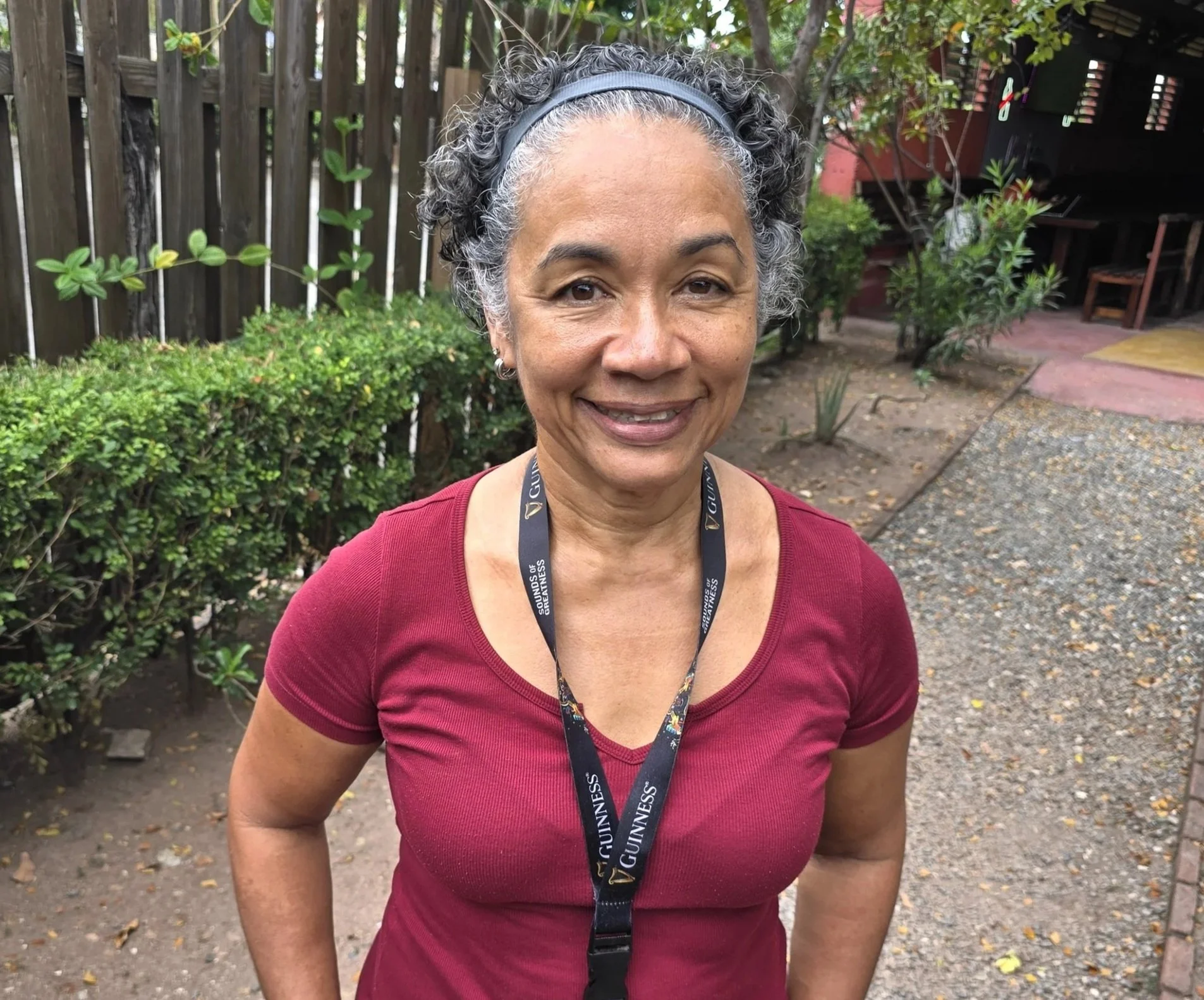
For University of Guyana faculty member Dr. Mellissa Ifill, a regular customer, the relationships Baker maintains are as distinctive as her cooking.
“What stands out to me most about Samantha is that as successful as she’s become, she has remained grounded and has never lost the personal connection with her customers,” she said. “Every time I go into the restaurant, she is there, interacting and ‘gaffing’ with customers, many of whom I can tell have become her friends. Because of her personal touch, Brown Sugar is not only a restaurant but also a community meeting place, a testament to the relationships Samantha has built and nurtured.”
Ifill also values what she sees as Baker’s effort to keep meals within reach of the people who supported her from the beginning.
“Samantha has not forgotten those who helped make Brown Sugar what it is today,” she said. “That, for me, is part of what makes her special. She intuitively understands that success in her service-oriented business is not only about making money, but also about valuing and remaining connected to the people who helped her get there.”
For Guyanese living in Canada, a visit to Brown Sugar can be part of reconnecting with home through familiar food and conversation. For other visitors, it offers an introduction to Guyanese cooking and the community around it.
Family involvement helps sustain the enterprise.
Baker’s mother and brother help in the business, as did her sister before her death in July. The deceased sibling’s three children live with her and also help.
Her teenage son assists with preparations and stocking drinks before school.
Baker’s achievements reflect the challenges women face in accessing capital and balancing business ownership with running a household and raising children.
“In other words, it was no small feat for Samantha to successfully secure financing, build her brand and establish several thriving businesses,” Ifill said.
She also drew attention to the often invisible physical and mental labour of caring for a household, work she believes deserves recognition alongside the visible results of business success.
By involving younger family members, Baker is teaching them the responsibilities of managing the businesses they may one day inherit.
“Generational wealth is not just about handing people money,” she said. “It is also about passing on the knowledge needed to run a business. What I am giving my son is knowledge he can pass on to the next generation.”
Ifill believes that inheritance is already taking shape in the kitchen, where Baker’s son works alongside his mother.
Beyond businesses and property, she sees Baker passing on her Christian faith, moral values, discipline, compassion and resilience.
“He is learning from watching her work diligently and professionally, seeing how she treats people and observing how she responds to setbacks,” Ifill said. “No classroom can provide this education of learning from the inside.”
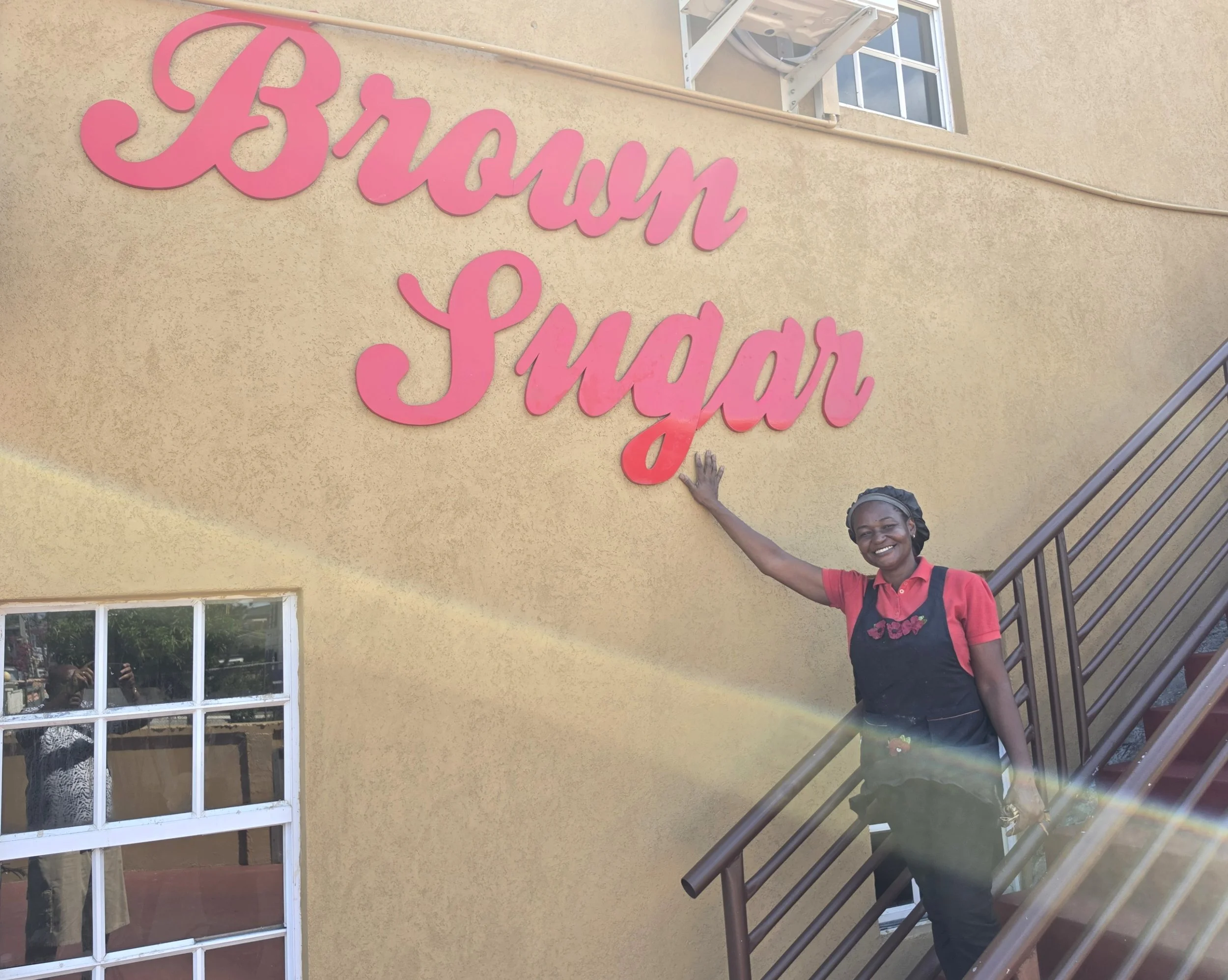
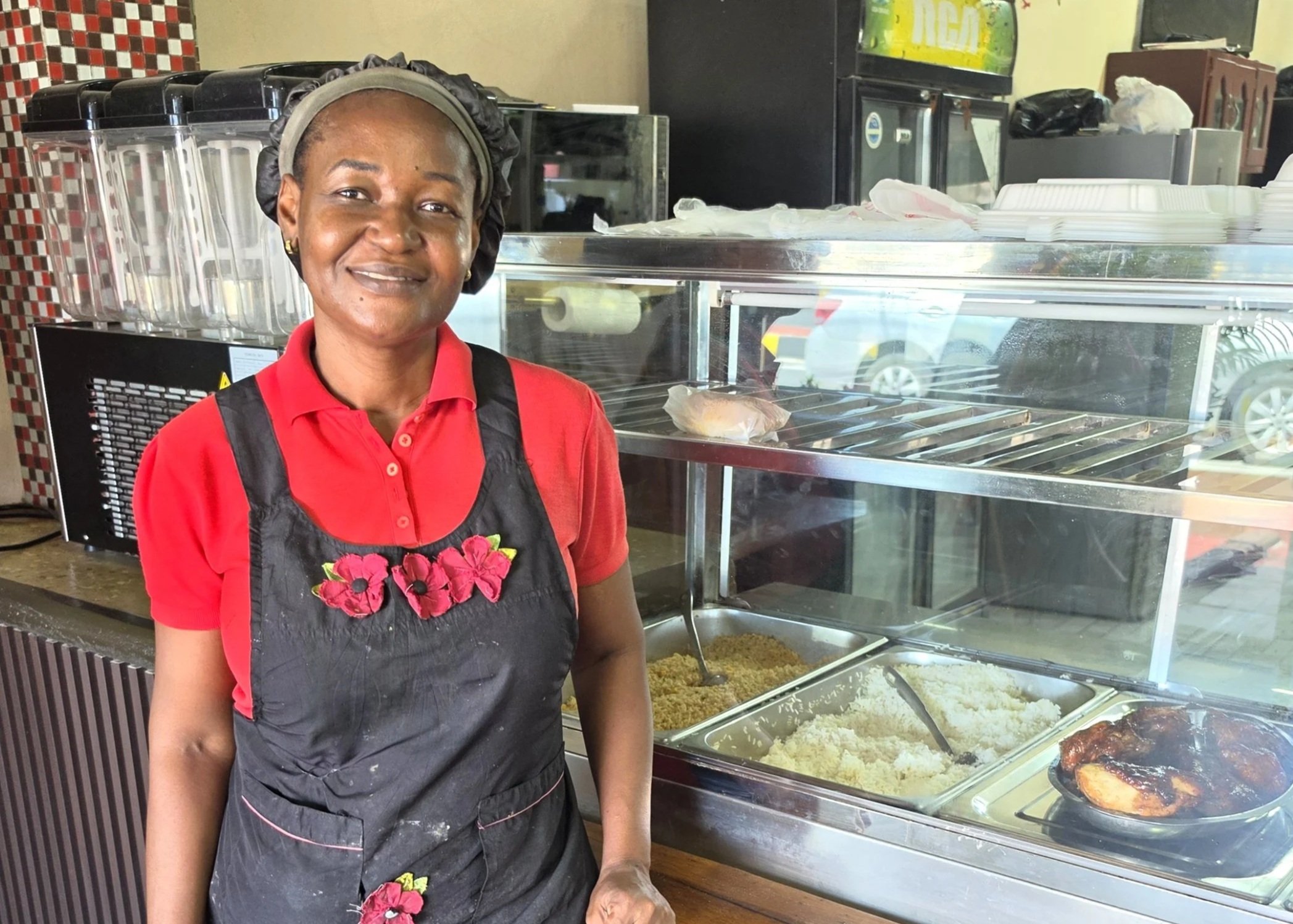
Samantha Baker has every reason to be proud of the business she has built (Photo by Ron Fanfair)
Baker wants the younger generation to do more than maintain what she has established. She encourages them to bring their own ideas and explore possibilities such as franchising.
“I am not saying that you have to be the chef,” she said. “What I’m saying is you must be able to take this business to another level.”
After years spent building, closing, reopening and expanding, Baker hopes her work will give them a place from which to begin.
“The goal is to keep growing,” she added. “I worked hard to bring the business to this level.”
On the land her grandfather left behind, Baker is building a future she wants the next generation to make its own.