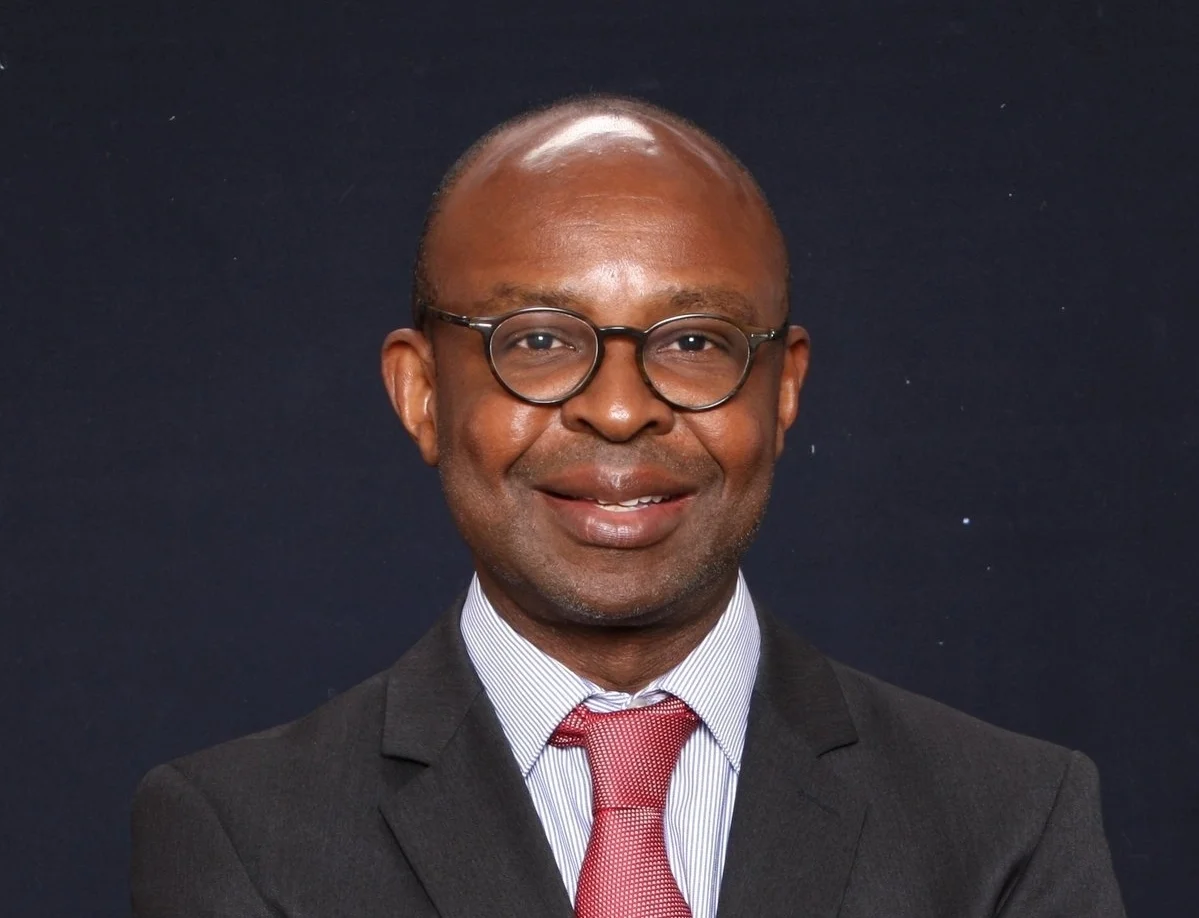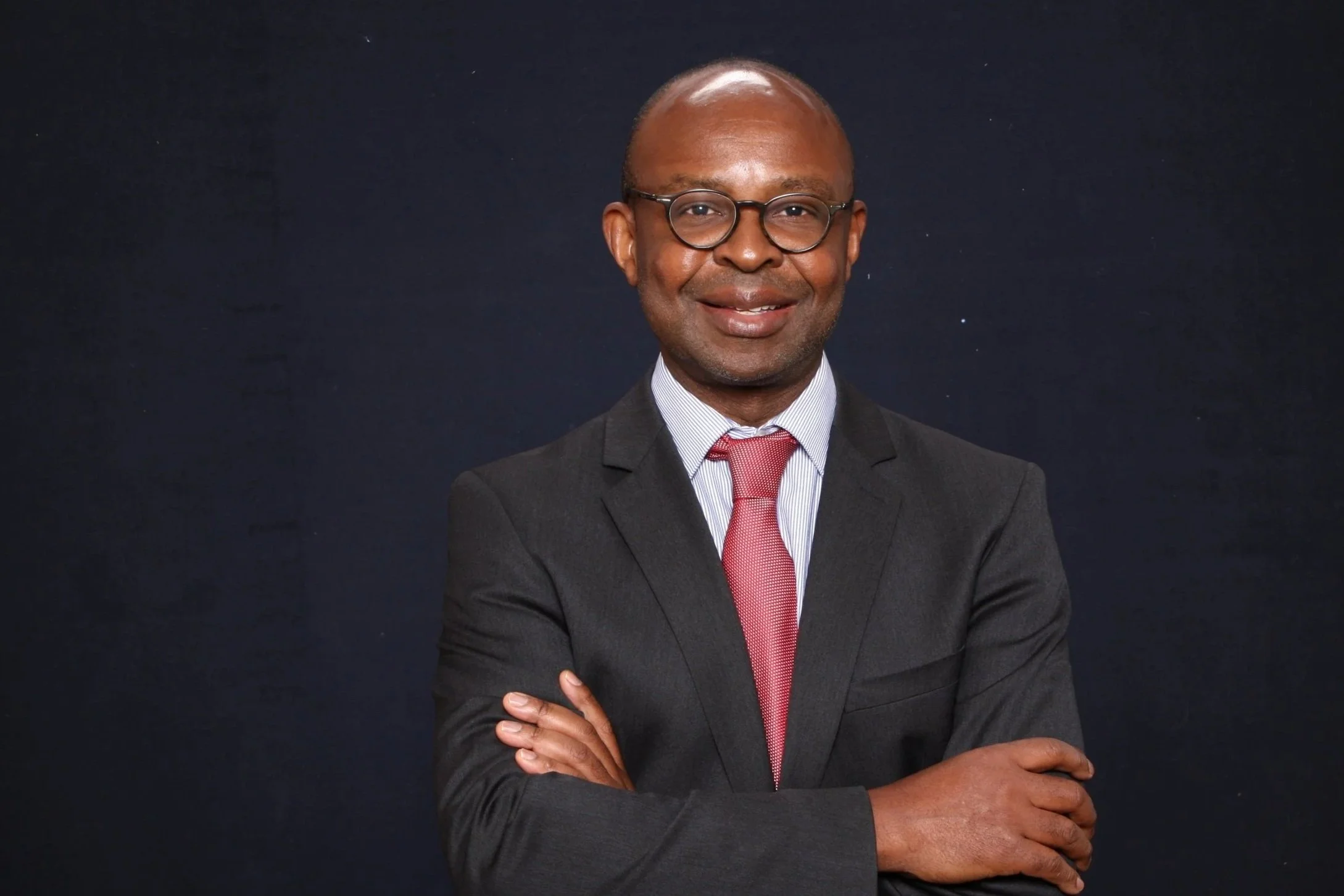
Chris Usih embraces equity, the power of education and leading with purpose
January 14, 2026
As he approaches his third year as Superintendent of Schools for the Richmond School District in Greater Vancouver, Chris Usih continues to bring deep passion and purpose to his work, viewing this role as likely the final senior leadership chapter of his career within a school board.
Guided by a strong commitment to service, he is focused on mentoring emerging leaders and strengthening the foundations that will sustain the district well into the future. His leadership is driven not simply by a desire to lead, but by a determination to leave Richmond stronger than he found it.
Usih believes firmly that leadership carries an obligation to give back.
“I have been blessed by the experiences I have had, and I believe in paying it forward,” said the University of Toronto doctoral candidate in mathematics education. “I am part of the BC Black Educators Network because it is important for young people to see leaders who look like them. We need educators from diverse backgrounds who reflect the communities we serve. Any opportunity to support professional learning and help others along their journey truly matters to me.”
After nearly five years as Chief Superintendent of the Calgary Board of Education, Usih joined the Richmond Board of Education in 2023. Before that, he spent 27 years with the Toronto District School Board (TDSB).
Having worked across multiple education systems, the award-winning educator is often asked how British Columbia’s approach to education compares with those he has experienced elsewhere. While he acknowledges that each jurisdiction has its own context, he notes that the core priorities remain largely the same.
“Every jurisdiction is different, but there is far more in common than there are differences,” Usih said. “Improving outcomes for students and working with parents, communities and staff to achieve that goal are priorities everywhere. We constantly need to ask why some students are not thriving and whether the evidence shows that what we are doing is actually making a difference.”
He noted that British Columbia’s education system allows for more local control than larger, more centralized systems such as Toronto’s where decision-making has traditionally been driven from the central office.
“Unlike Toronto’s centralized, content-driven approach, BC schools focus on competency-based learning,” Usih explained. “This gives teachers and local boards greater flexibility to emphasize skills development, personal growth and real-world application of knowledge. It enhances teacher autonomy and creates meaningful opportunities for students to explore the curriculum.”
With family members living in Portland, Oregon, he saw his move to British Columbia as both a personal and professional opportunity, one that allowed him to be closer to loved ones while making a meaningful contribution to another school district.
“You have to take advantage of every opportunity that comes your way,” Usih said. “The more I learned about the role and the district, and the good work already happening here, the more the transition felt natural. It was the right fit at the right time.”
Under his leadership, the Richmond School District has strengthened community partnerships, expanded professional development opportunities and implemented initiatives that support both academic achievement and students’ social-emotional well-being.
For some experienced education leaders, smaller school districts can offer the chance to make a more direct impact and build closer connections with the community.
The TDSB operates 579 schools, the Calgary Board of Education has 251 and the Richmond School District serves 48 schools, 38 of which are elementary.
“I definitely considered the size of the district when the opportunity in Richmond came up,” said Usih who holds a Professional and Executive Development Certificate from Harvard’s Division of Continuing Learning. “Compared to Toronto and Calgary, it is smaller, but there is a strong sense of community. We place a high value on engagement and collaboration with our partners. Building relationships is essential.”
Growing up in Nigeria, he learned early how education could open doors and transform lives. That understanding deepened after he moved to Winnipeg and worked on Indigenous reserves where he saw firsthand how access to quality public education could empower individuals, strengthen communities and create pathways to opportunity.
Usih’s journey into education was shaped by both technical training and academic study.
After completing an Engineering Technology program at Cape Breton University, he earned undergraduate and graduate degrees in Education from the University of Manitoba. He began his teaching career in an Indigenous community, an experience that solidified his lifelong commitment to education.
“The passion for education was always there,” Usih said. “Teaching on the reserves brought together everything I had observed growing up and showed me, very clearly, how public education can change lives and communities.”
Throughout his career, he has drawn inspiration from both students and mentors. While working in Manitoba, it was his students who reinforced his dedication to teaching. Later, during his time with the TDSB, that inspiration came from school leaders whose examples helped shape his leadership philosophy.
He credits Jeff Farber, then principal of Cedarbrae Collegiate Institute in Scarborough, with having a lasting influence early in his Toronto teaching career.
“The way he interacted with staff and students stood out to me,” Usih recalled. “He was always present in the hallways and treated every student fairly and respectfully, regardless of background. He was an effective administrator and a leader I learned a great deal from.”
When Usih moved into administration, he was further inspired by Donna Quan, his superintendent after transferring to Lester B. Pearson Collegiate Institute and later Albert Campbell Collegiate Institute.
“She and Jeff fueled my interest in educational leadership,” he said. “I saw the impact leadership could have, not just within a school, but across the broader community.”
Growing up in Nigeria, societal expectations often emphasized fields such as engineering as pathways to stable, well-paying careers. Usih attended Benin Technical College, which focused on technology, science and mathematics.
“Engineering felt like the expected path not necessarily because it was my own choice, but because it was what my family and others believed was the way forward,” he said.
After high school, Usih received a scholarship and chose to pursue post-secondary education in Canada, influenced by positive experiences with a teacher from Edmonton.
“I could have gone to the United States or England, but the impact of that one Canadian teacher led me to choose Canada,” he said.
With just over three years teaching in Manitoba, Usih joined the TDSB in January 1991. After seven-and-a-half years as a secondary school teacher and college professor, he became Head of the Mathematics and Computer Science Department at W. A. Porter Collegiate Institute (later renamed the Scarborough Academy of Technological, Environmental & Computer Education). In September 1998, he was appointed Vice-Principal at L’Amoreaux Collegiate Institute.
Two years later, he was promoted to Principal at Lester B. Pearson Collegiate Institute, where he served for four years, followed by an 18-month term at Albert Campbell Collegiate Institute. He later held system-level leadership roles, including Central Coordinating Principal and Superintendent of Schools, before being appointed Executive Superintendent in August 2013.
In February 2015, Usih was promoted to Associate Director, overseeing Student Achievement and Employee Services.
During his tenure with Canada’s largest school board, he supported student transitions, implemented strategies to improve high school completion rates and developed partnerships that expanded post-secondary pathways.
“Chris understood the relationship between student achievement and equity,” said late TDSB Executive Officer for Equity Lloyd McKell in 2018. “As a result, his priority was to ensure that his work focused on improving opportunities for the most vulnerable students in the system. I was privileged to have his support for my efforts to level the playing field for Black, Aboriginal and other marginalised students in the system.”
Throughout his career, Usih has earned a reputation for integrity, efficiency, and a steadfast commitment to equity and academic excellence, values that continue to define his leadership as he approaches the final stretch of an extraordinary career in public education.