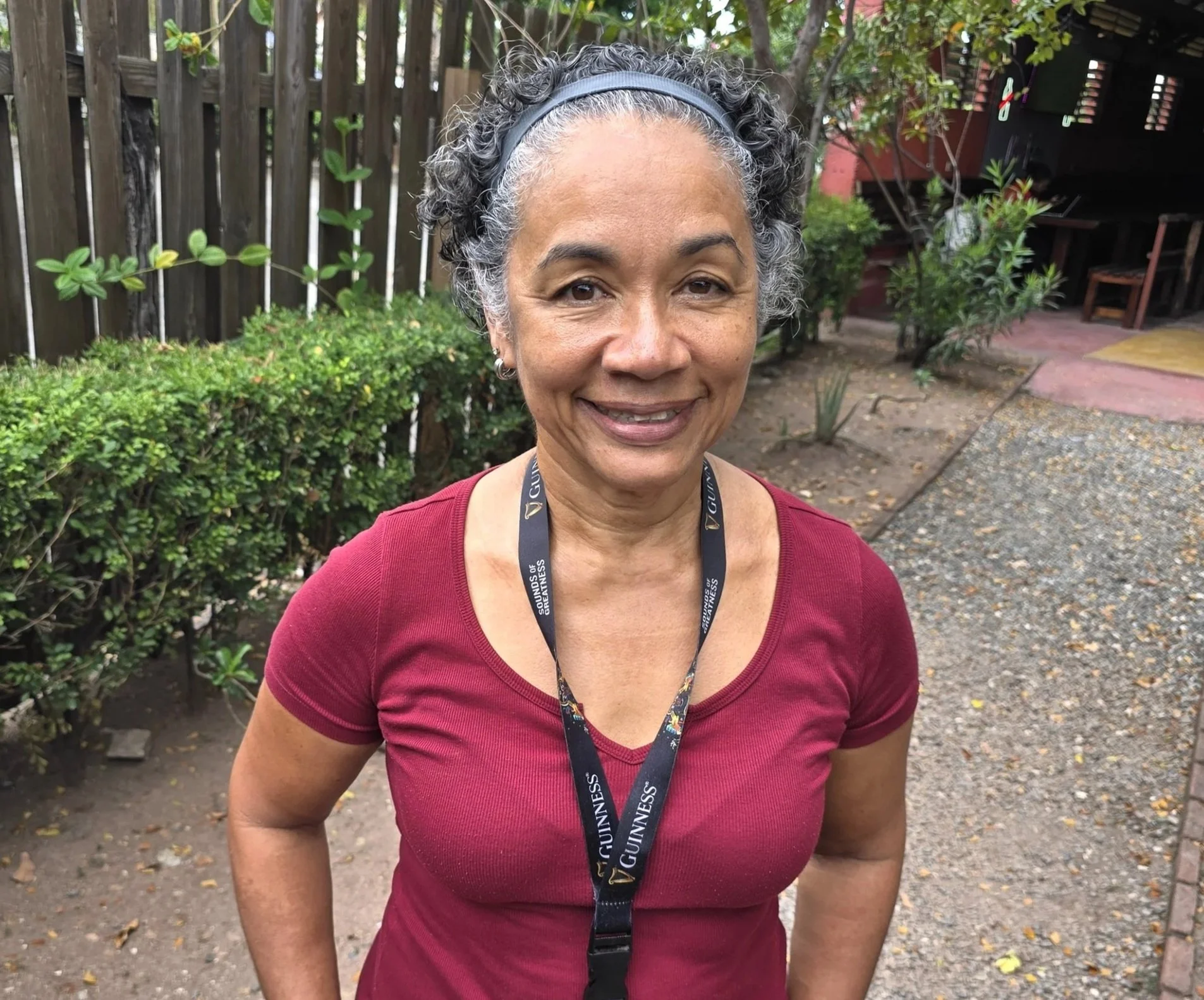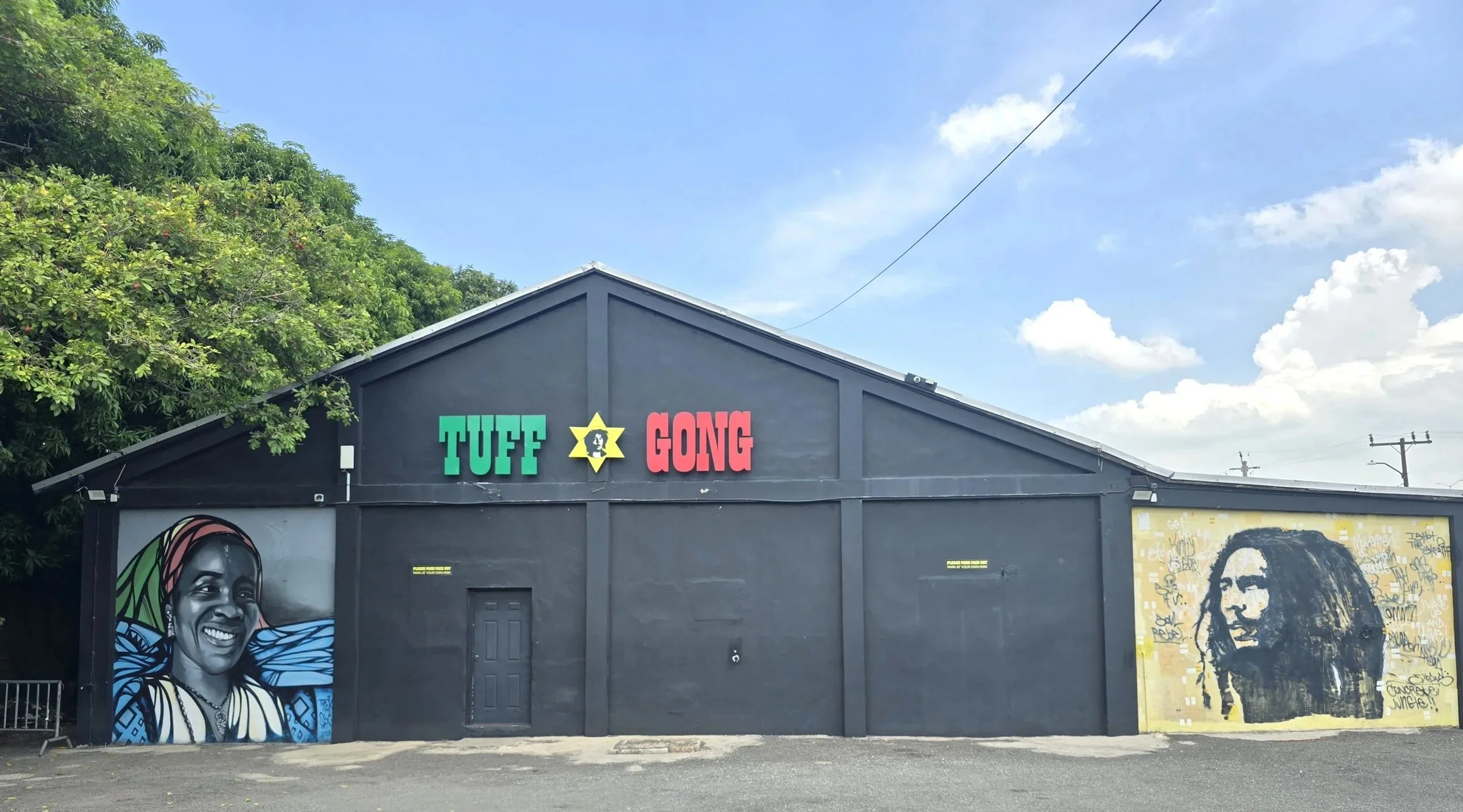
At Tuff Gong, a Marley colleague keeps the music alive
September 25, 2026
Sitting quietly inside a recording studio at Tuff Gong International in Kingston, Chiao ‘Chow’ Ng might have escaped our notice had tour guide Malik Stanley not introduced him.
Originally from Malaysia, he worked as an assistant engineer on Bob Marley and the Wailers’ Survival, Uprising and Confrontation. The last of those albums was released in 1983, two years after Marley’s death.
“Legend, man, believe me when I tell you so,” Stanley said of Ng who still works at Tuff Gong after spending much of his life there.
When a visitor suggested the studio must feel like home, Ng replied, ‘Home is where the heart is’.
Asked about Marley, he recalled the job that brought him to Jamaica.
“I came here as a technician,” Ng said. “But Bob was the best boss I ever had. He wasn’t really a boss. He was more like a leader.”
He noted that people called Marley ‘Skip’, a nickname that seemed fitting for a man who captained his football team as well as led his band.
When asked whether he had a favourite Marley song, Ng sat at the piano and played ‘Lively Up Yourself’. For a moment, the equipment and photographs around us gave way to music played by a man who had helped make the studio’s history.

Chiao 'Chow' Ng at the pinao playing his favourite Bob Marley song (Photo by Ron Fanfair)
The encounter was an unexpected highlight of a tour that took us through the places where music is rehearsed, recorded and pressed onto vinyl.
Stanley made the work in each room accessible, but meeting Ng gave us a connection to the people behind the records.
The studio also reflects Rita Marley’s work to carry Tuff Gong forward.
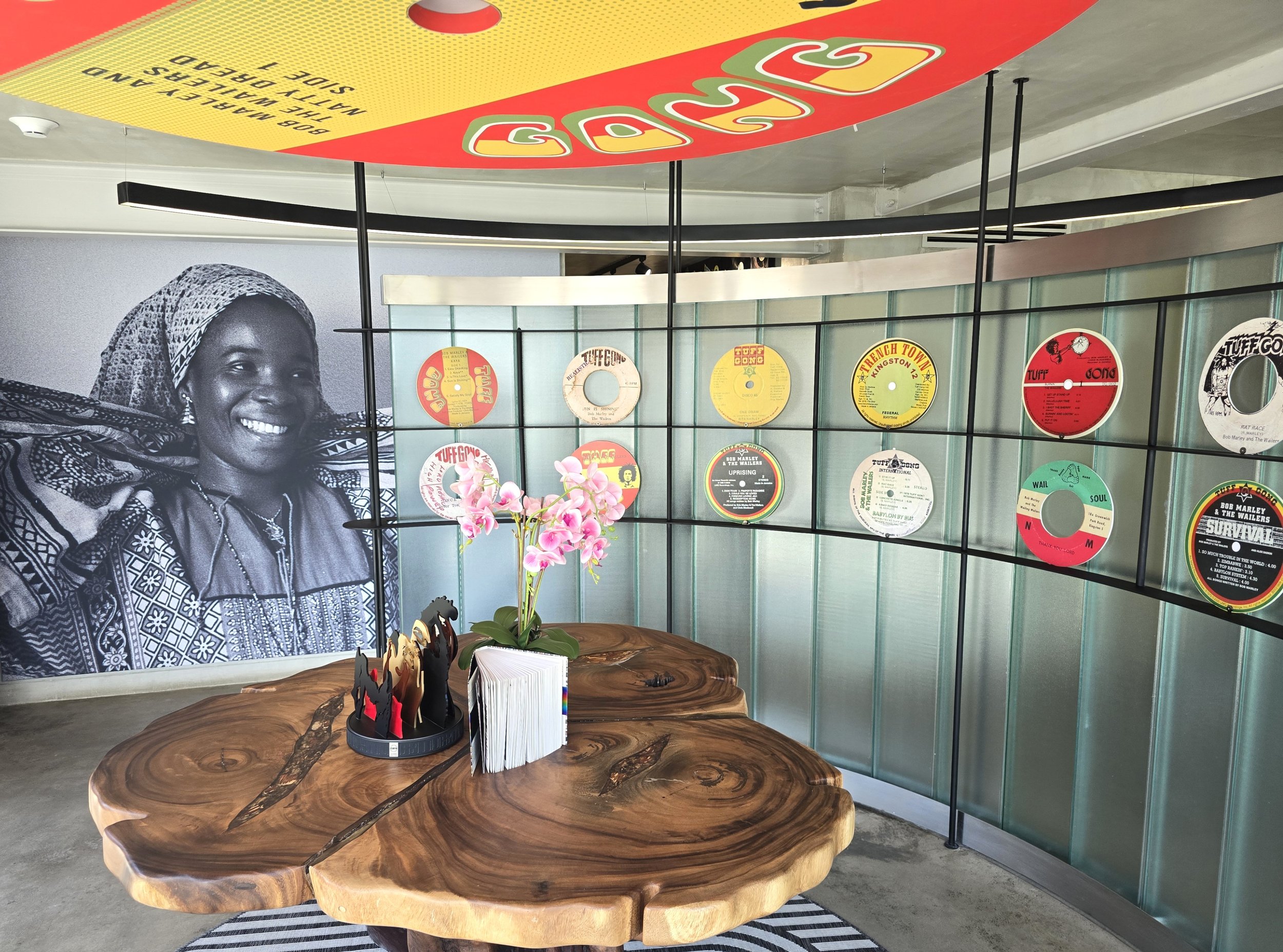
Inside Tuff Gong Studio, a photograph of Rita Marley and a collection of records serve as reminders of her role in preserving Bob Marley’s legacy and keeping the music alive (Photo by Ron Fanfair)
Bob Marley established the company, originally based elsewhere in Kingston. After his death 45 years ago, his wife acquired the former Federal Records facility on Marcus Garvey Drive where Tuff Gong operates today. The move gave the company room for recording, mastering and pressing records.
Earlier, Stanley led us into a rehearsal room that remains in use. He spoke of Marley’s children, including Ziggy, Stephen, Damian and Julian, as well as younger Jamaican artists such as Koffee and Chronixx who have used the space.
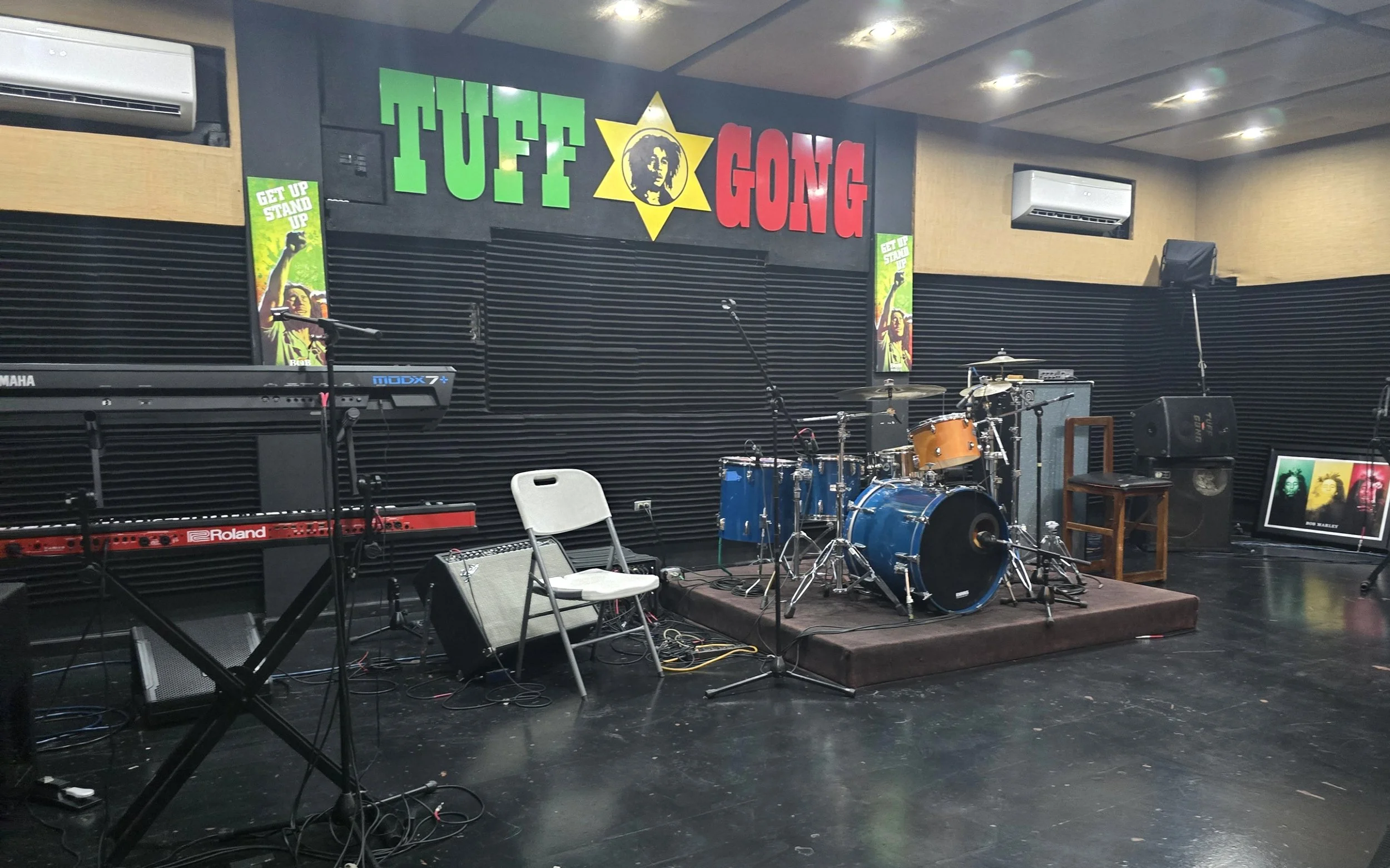
Inside Tuff Gong rehearsing studio (Photo by Ron Fanfair)
Elsewhere on the tour, he pointed to artists connected with Tuff Gong’s recording or manufacturing work, including Lauryn Hill and Sinéad O’Connor. Their names showed how the facility had continued to draw musicians long after Marley’s death.
The room was also our first hint that visitors might be called upon to perform.
Stanley invited anyone willing to step onto the stage, saying we would have a chance to sing in a smaller studio later.
He carried that easy invitation into the main studio, though he first asked us to be respectful if Ng was at work. In the control room, the mixing board was on and analogue tape machines stood nearby as he explained that Tuff Gong continues to use analogue equipment alongside digital technology.
Ng’s experience remains valuable to that work.
When a session calls for the tape machine, he is likely to set them up. The machines we were examining were still part of a working studio, and the man who knew them had just spoken to us about Marley.
From the control room, Stanley led us into the larger space where musicians record together. He identified the albums Ng had helped make, giving the room a history we could attach to a person we had met.
Survival was the first album recorded in that studio.

A wall of Bob Marley album covers greet visitors as they enter Tuff Gong International (Photo by Ron Fanfair)
The tour then followed a recording beyond the studio walls. In the cutting room, Stanley showed us how music from a master recording is cut onto an acetate disc.
“The acetate plate is the first physical version of the music cut directly from the master recording using a precision lathe,” he explained. “It captures the original grooves, but it’s too delicate for mass production.”
Stanley held up the metal stampers used to press copies of a record and showed us examples for a 45-rpm single and an LP. The objects made the steps easier to picture -- a recording becomes a set of grooves on an acetate, and a more durable stamper carries those grooves into production.
The guide also described the creative possibilities of the cutting room. When preparing a dubplate, he said an engineer can change which parts of a recording are heard, working with voices and instruments to make a different version. It was another reminder that the process involves choices by skilled people at every stage.
At the pressing area, Stanley showed us the machines and materials used to turn those grooves into a record. Plastic pellets are heated and formed into a puck which is placed in a hydraulic press between the stampers. Labels go in on both sides before the press shapes the vinyl. The rough edge is trimmed while the record is still warm.
He said a record can be pressed in under a minute. Hearing that figure after seeing the cutting room brought the preparation into focus. The press works quickly because so much has already been done to create the recording and prepare the stamper. Finished records still have to be checked for sound and physical flaws.

Bob Marley’s “Ride Natty Ride” truck sits in the yard at Tuff Gong International. Marley bought the truck to transport his band and equipment to performances (Photo by Ron Fanfair)
There were traces of Marley beyond the recording equipment.
Stanley pointed out cases he said had belonged to Marley and the Wailers, among other objects that connected the operation we were touring to its past. He also showed us records associated with artists who had recorded at Tuff Gong or used its manufacturing facilities.
After explaining the vinyl process, he returned to the prospect of putting our group behind a microphone.
“Now this is the fun part,” Stanley said. “We’re going to sing now. Are you ready?” He began asking who would take the lead and who would sing backup.”
His invitation let visitors experience a small part of a recording session.

Tuff Gong’s artist lounge has a table tennis table and a table football game where musicians can unwind between rehearsals and recording sessions (Photo by Ron Fanfair)
Ng’s piano performance had offered something different. We had heard from a man who remembered Marley as a colleague and a leader, then listened as he played one of Marley’s songs.
By the end of the visit, Tuff Gong felt like more than a landmark in Marley’s story. It was still a place where people rehearse, record and make records, with Ng among those carrying its knowledge forward.