Canada and Caribbean unite for tourism resilience
July 29, 2026
When Hurricane Irma tore through the British Virgin Islands in September 2017, Dona Regis-Prosper was nearly 7,000 kilometres away attending a business meeting in Germany.
As chief executive officer of the territory’s cruise port, she had spent months preparing her team for the possibility of a major storm. Sandbags had been placed, windows boarded up, doors secured and emergency plans activated. Satisfied that every precaution had been taken, she went to bed believing they were ready.
The following morning, she awoke to television images that would forever change her understanding of tourism resilience.
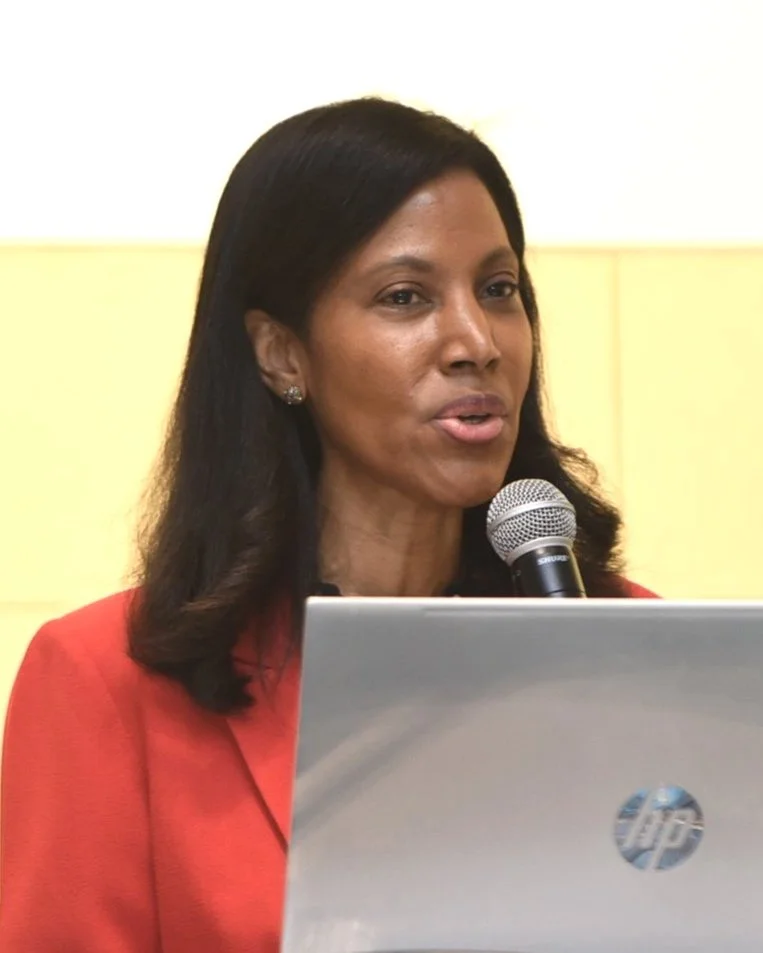
“I started to see those images, and then I decided to tune in to the BBC and CNN and saw the devastation that was happening in the British Virgin Islands, my home,” recalled Regis-Prosper, now Secretary-General and Chief Executive Officer of the Caribbean Tourism Organization (CTO). “When I got there personally, my home was destroyed and 90 percent of the island was destroyed. At that point I recognized what resilience is all about.”
It is a deeply personal story that set the tone for the opening of the two-day Canada Caribbean Tourism Resilience Symposium at George Brown Polytechnic in Toronto, where tourism leaders, academics, policymakers and sustainability experts gathered to examine how one of the world’s most important industries can better prepare for an increasingly uncertain future.
For the Caribbean, resilience is no longer an abstract concept.
It has become an economic necessity.
Climate change, stronger hurricanes, supply chain disruptions, labour shortages, geopolitical uncertainty and rapidly changing traveller expectations are forcing destinations to rethink how tourism is planned, managed and sustained.
Regis-Prosper reminded delegates that resilience cannot be something destinations pursue only after disaster strikes. Instead, she argued, it must be embedded in every aspect of tourism planning and development.
“Resilience is not something we create after a crisis,” she said. “It is something that we build every single day through preparation, through investment, through collaboration, innovation and leadership. This symposium is not a talk shop. It signals the importance of getting together and turning vision into action…Buildings can be restored and infrastructure can be rebuilt. But if we do not invest in our people and build the human capacity to anticipate, adapt and lead through disruption, then we have not truly built resilience.”
That people-centred philosophy shaped the symposium, jointly hosted by the Global Tourism Resilience and Crisis Management Centre (GTRCMC) at George Brown Polytechnic and the Caribbean Tourism Organization (CTO).
Participants explored everything from climate adaptation and sustainable destination management to workforce development, Indigenous knowledge, food security, artificial intelligence and transportation, all while examining what it will take to build a tourism industry capable not only of surviving disruption but thriving through it.
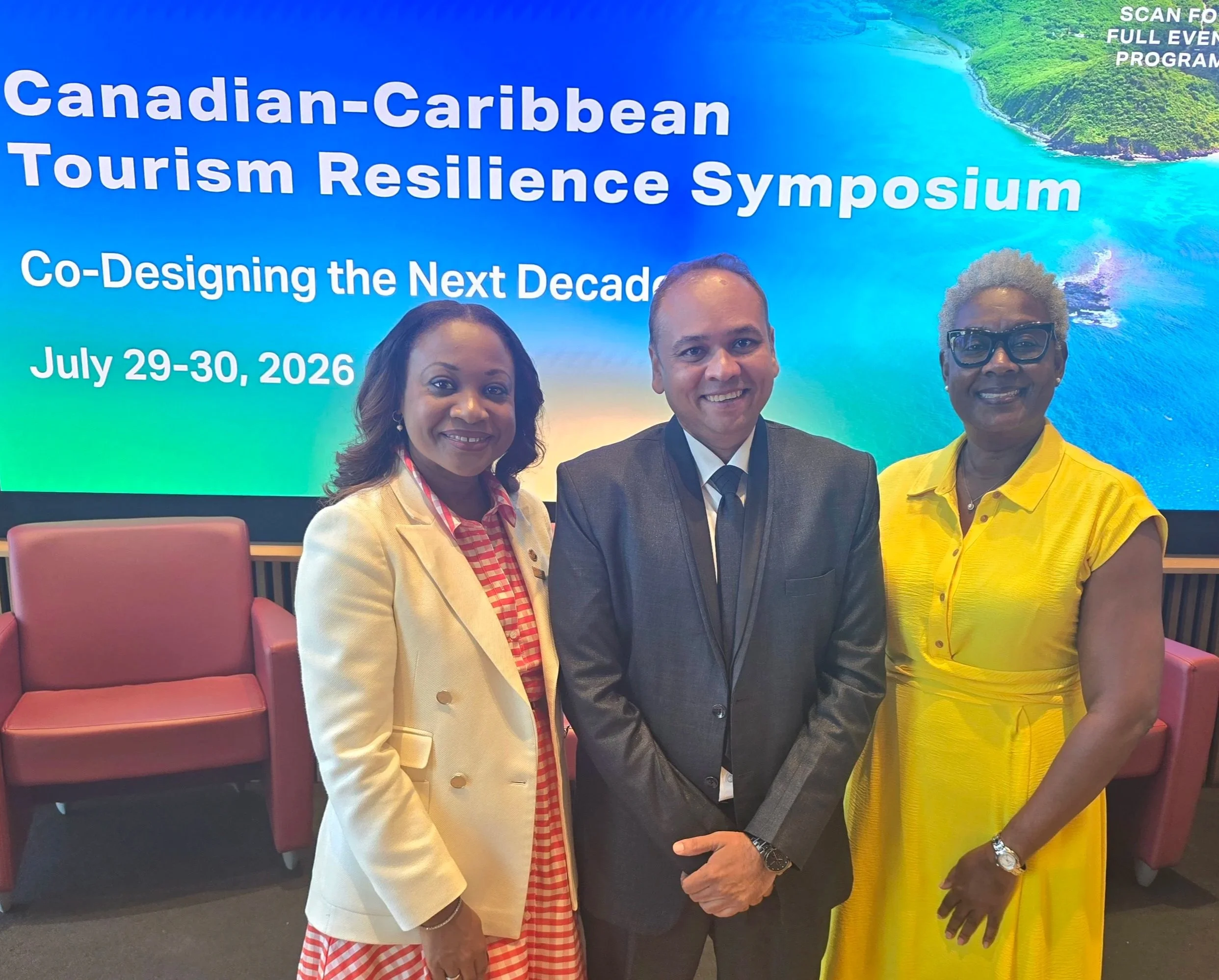
Caribbean Tourism Organization representatives at the symposium in Toronto included secretary general & CEO Dona Regis-Prosper (l), deputy director with responsibility for sustainable tourism Narendra Ramgulam and Shannon Banfield who is the director of resource mobilization & development (Photo by Ron Fanfair)
George Brown Polytechnic President Dr. Gervan Fearon reminded participants that the relationship between Canada and the Caribbean extends far beyond tourism.
“It is rooted in generations of educational exchange, immigration, business partnerships and cultural connections,” he said.
Fearon described tourism as one of the strongest bridges connecting the two regions, bringing shared opportunities while exposing both to common challenges.
“It is really important to recognize the linkage between Canada and the Caribbean in terms of resilience, innovation as well as community spirit,” he said.
Pointing to tourism's enormous economic impact, Fearon noted that the sector contributes more than US$81 billion annually to Caribbean economies and accounts for more than one-fifth of the region's GDP. In Canada, tourism generates well over $130 billion in annual visitor spending while supporting hundreds of thousands of businesses and millions of jobs across the country.
Those figures, Fearon pointed out, illustrate why resilience must be viewed as more than recovering from hurricanes, pandemics or other crises.
“When we think about resiliency, it's a recognition that any interruption or enhancement of tourism will have a material impact on the overall economy,” he added.
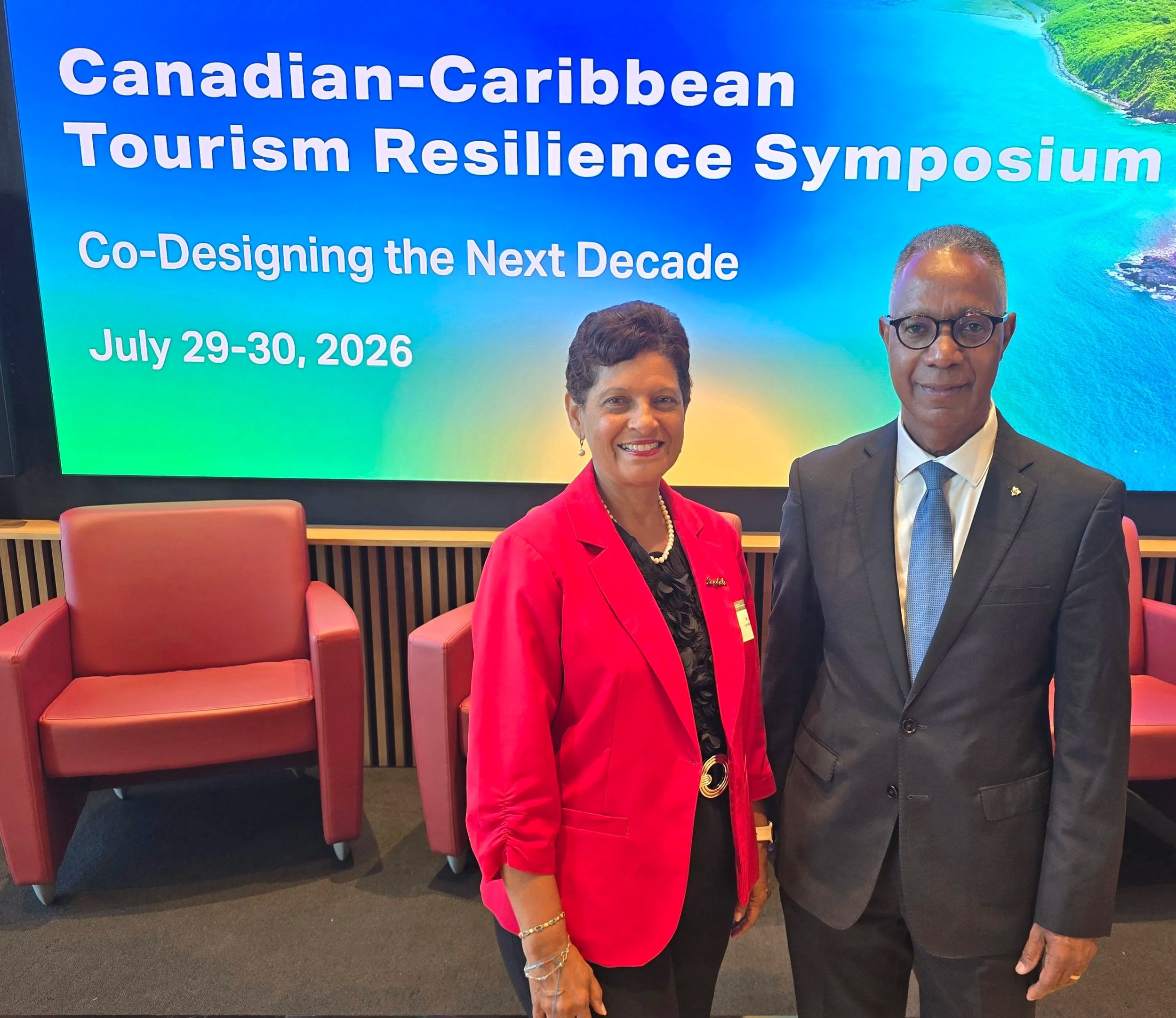
George Brown Polytechnic president Dr. Gervan Fearon and Dr. Luz Longsworth who is Sandals Corporate University senior corporate director (Photo by Ron Fanfair)
The symposium also highlighted George Brown Polytechnic’s growing leadership in tourism resilience.
In 2022, it became the first Canadian post-secondary institution to establish a formal partnership with Jamaica's Global Tourism Resilience & Crisis Management Centre (GTRCMC) through a Memorandum of Understanding signed by Fearon and Jamaica's Minister of Tourism Edmund Bartlett.
The agreement established George Brown as the Canadian hub within a rapidly expanding international network of tourism resilience centres created to help destinations anticipate, prepare for and recover from disruptions ranging from pandemics and natural disasters to cyber threats and geopolitical crises.
That collaborative spirit has become central to the vision championed by Bartlett since launching the GTRCMC in Jamaica in 2018.
Few people have witnessed that evolution more closely than Professor Lloyd Waller.
As executive director of the GTRCMC headquarters in Jamaica, he recalled how what began as a conversation with Bartlett has grown into an international movement reshaping how governments and tourism organizations think about resilience.
“When I started working with Minister Bartlett in 2018, I never imagined that a conversation we had about resilience would evolve into the tourism resilience framework, an institution and tangible outcomes,” Waller said.
Those outcomes have been substantial.
Beyond establishing resilience centres around the world, the organization has helped expand the global conversation beyond environmental sustainability to include business continuity, crisis preparedness, recovery planning, mobility, destination transformation and risk management.
“We single-handedly helped move the global discourse beyond environmental sustainability,” Waller said. “We have helped codify tourism resilience, normalize the conversation about resilience and move the conversation from recovery to preparedness.”
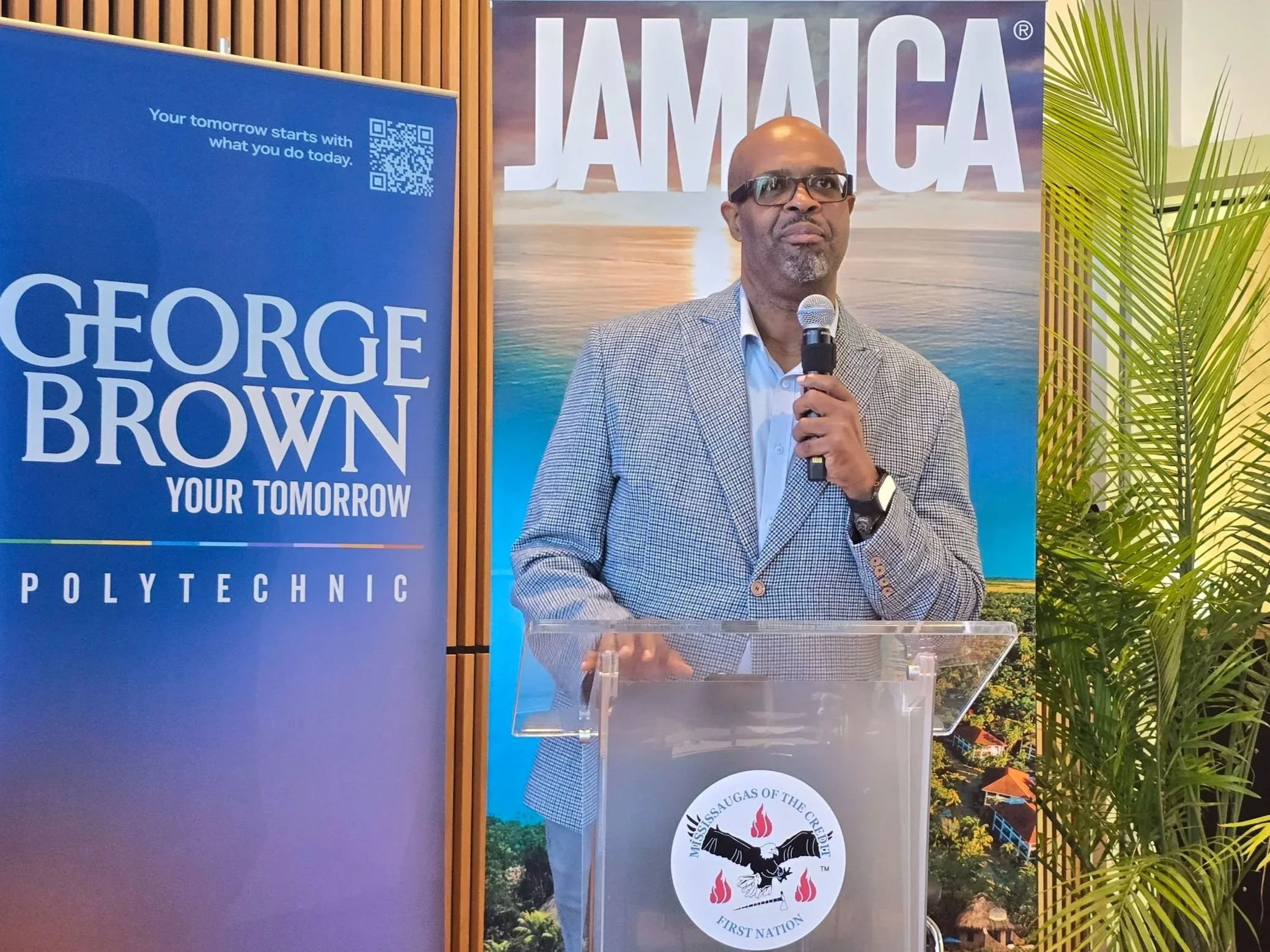
Dr. Lloyd Waller is a professor of digital transformation policy and executive director of the GTRCMC (Photo by Ron Fanfair)
Among its proudest achievements, he noted, was successfully advocating for the United Nations to proclaim Global Tourism Resilience Day, now observed annually on February 17.
For Waller, however, perhaps the greatest accomplishment has been demonstrating that dialogue can produce tangible results.
“I wanted to highlight how dialogue can transform and lead to outcomes that are positive and shape global transformation and sustainability,” he said.
That message resonated throughout the symposium.
Speakers emphasized that resilience is no longer measured by how quickly destinations recover after disaster strikes.
Destination Toronto vice-president of destination development Kelly Jackson broadened the discussion by reminding delegates that resilience is not solely a Caribbean concern.
Canada’s largest city, she said, has also learned that tourism’s success depends on long-term planning rather than short-term gains.
“Whether in Canada or across the Caribbean, our destinations share a common truth,” Jackson said. “Tourism is a key economic driver, it is a builder of community, and it is a bridge between cultures. But as recent years have taught us, building long-term sustainable strength requires deliberate planning, strategic stewardship and deep regional collaboration.”
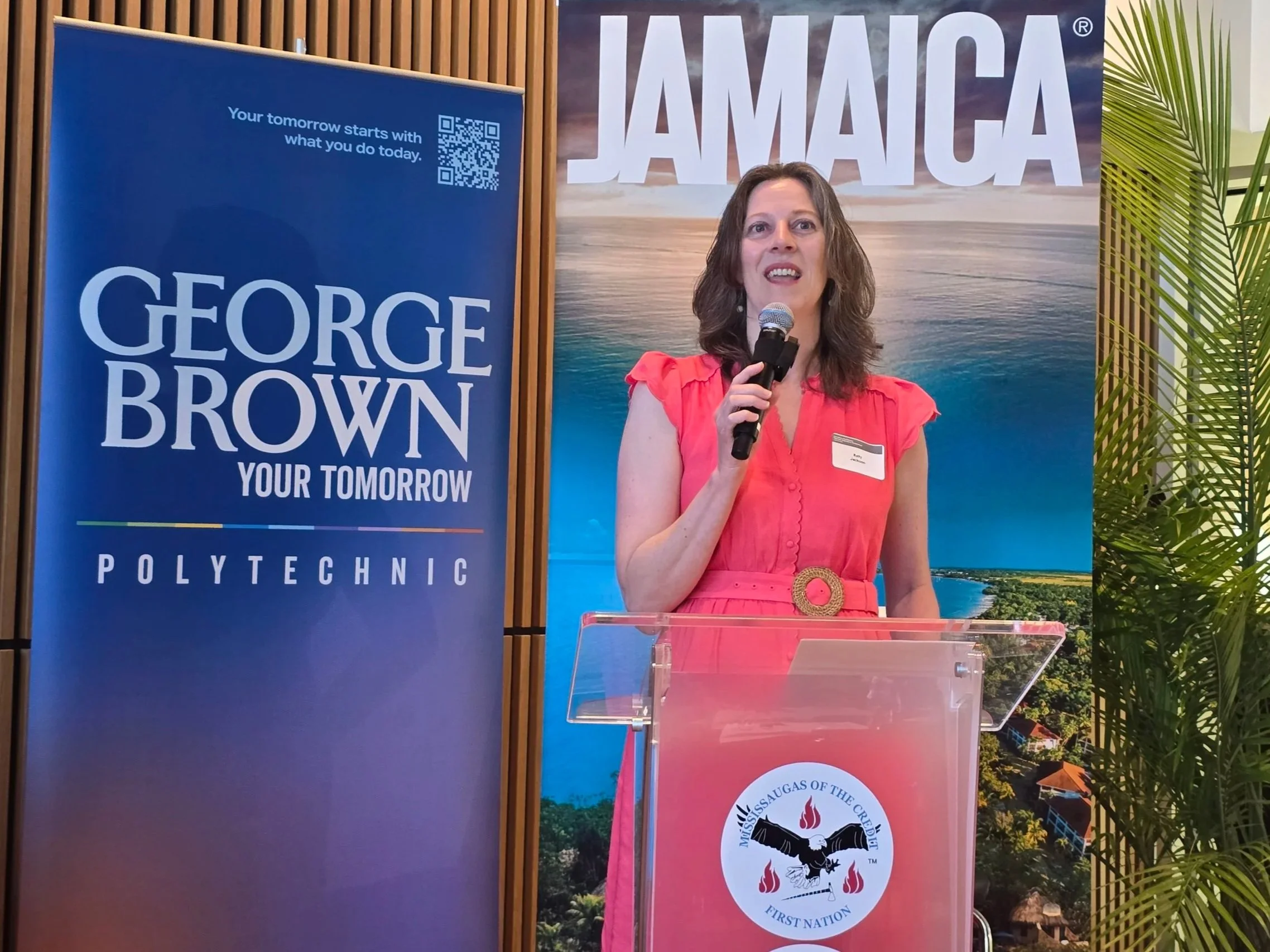
Kelly Jackson is Destination Toronto vice-president of destination development (Photo by Ron Fanfair)
Toronto welcomed more than 20 million visitors in 2025, generating $9.1 billion in visitor spending, evidence that the sector has rebounded strongly from the COVID-19 pandemic.
Yet Jackson cautioned that growth alone should never be mistaken for resilience.
“Volume alone does not equate to resilience,” she said. “Resilient destinations are those that continually invest in infrastructure, innovation and experiences that improve residents’ quality of life while enriching the visitor experience.”
While hurricanes and extreme weather dominated many discussions, speakers repeatedly emphasized that resilience encompasses far more than adapting to climate change.
Elizabeth Dove, Executive Director of the United Nations Global Compact Network Canada, said today’s tourism industry faces a web of interconnected challenges that can no longer be addressed independently.
“Climate impacts are reshaping coastlines,” she said. “Extreme weather is disrupting travel, labour shortages persist, supply chains are fragile and communities are demanding that tourism deliver benefits, not just visitor numbers. These are not separate challenges. They are interconnected risks requiring collective solutions.”
Dove argued that sustainability has become a competitive advantage rather than simply a corporate responsibility.
“Destinations that invest in decent work, gender equality, Indigenous partnerships, youth employment, skills development and environmental stewardship will be better positioned to attract visitors, employees and investment alike,” she said. “A resilient tourism sector begins with resilient people. Responsible business is not separate from competitiveness. Increasingly, it defines competitiveness.”
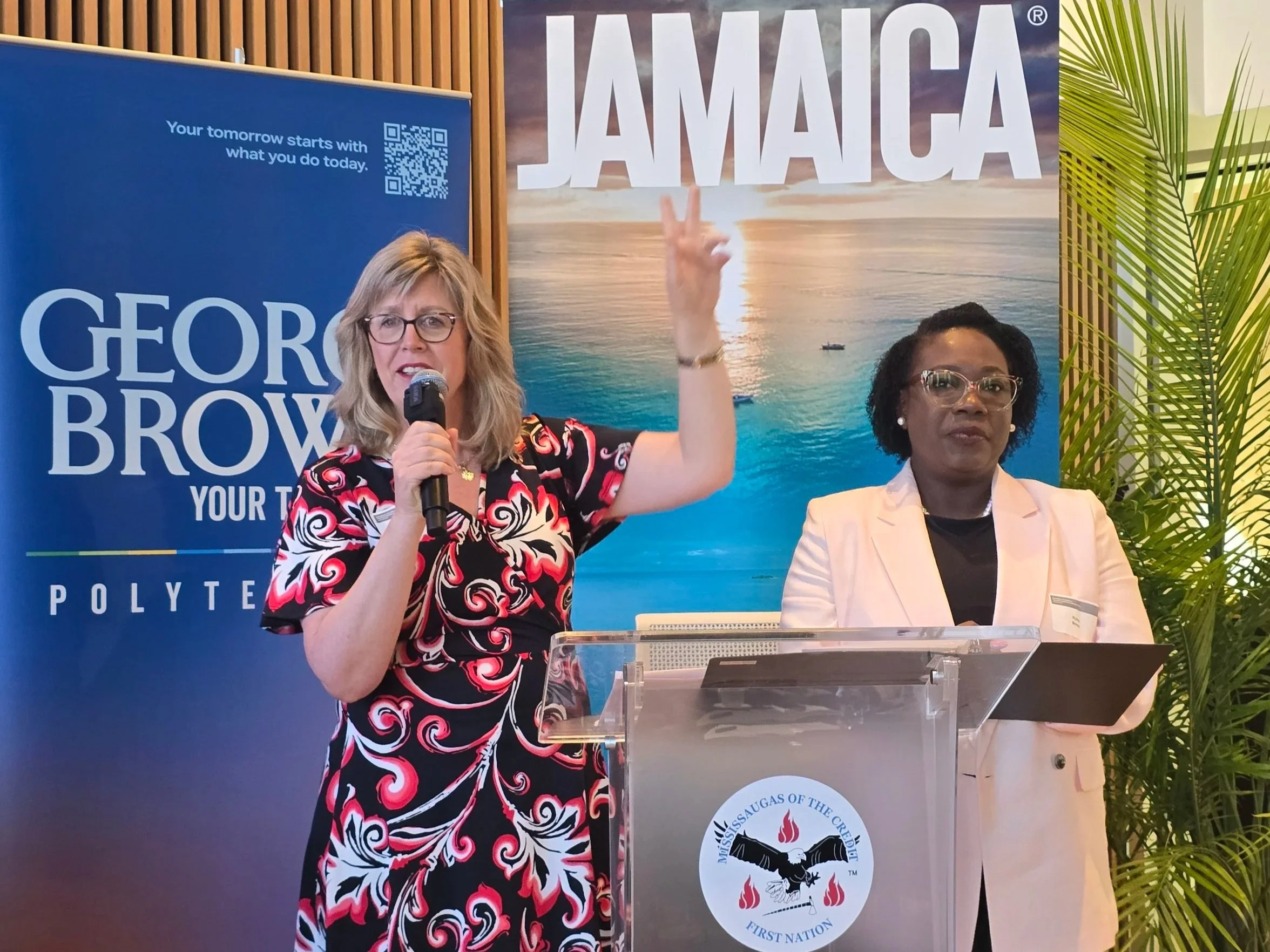
Elizabeth Dove (l) is the executive director of UN Global Compact Network Canada & Kyana Bowen is executive director of UN Global Compact Network Caribbean (Photo by Ron Fanfair)
Her colleague, Kyana Bowen, Executive Director of the United Nations Global Compact Network Caribbean, reinforced that message through the lens of lived Caribbean experience.
Having worked in disaster management in the Turks and Caicos Islands during Hurricane Irma, she recalled living without electricity for 38 days after the storm.
Bowen reminded delegates that the Caribbean remains among the world’s most tourism-dependent regions while simultaneously being among the most vulnerable to climate-related disasters.
She said the consequences extend well beyond damaged hotels and beaches.
“Tourism disruptions affect employment, biodiversity, infrastructure and entire communities, with women often bearing a disproportionate share of the economic impact because they make up a significant percentage of the sector’s workforce,” added Bowen.
The symposium also acknowledged that some of the most enduring lessons about resilience have existed for generations.
The opening land acknowledgement emphasized that Indigenous peoples across Canada have long embraced stewardship, reciprocity, respect and shared responsibility, principles that continue to offer valuable guidance as governments and the tourism industry seek more sustainable models of development.

Dr. Krista Holmes (Photo by Ron Fanfair)
Building on those values, Dr. Krista Holmes, George Brown Polytechnic's assistant vice-president of research and innovation, encouraged delegates to look beyond tourism’s economic benefits and consider its potential to restore ecosystems, strengthen local economies, preserve cultural knowledge and leave communities better off than they were before visitors arrived.
For George Brown Polytechnic, the landmark event represented more than another academic conference.
It signalled Canada’s growing role in an international movement that increasingly sees resilience not as a response to crisis but as the foundation upon which the future of tourism must be built.