Order of Canada links Duane Gibson to Isaac Phills’ legacy
July 12, 2026
Isaac Phills made history in 1967 as the first Black Canadian to receive the Order of Canada.
Nearly six decades later, his legacy has taken on added significance for hip-hop artist, author and educator Duane Gibson whose own appointment to the Order came a few months after the death of Phills’ son last January.
Charles Phills passed away in London, Ontario last January at age 97.
Gibson shared a close bond with the man he affectionately called ‘Uncle Charlie’, describing him as a grandfather figure who provided a sense of family and stability during a childhood marked by frequent moves.
“Charlie was more than an uncle to me,” he said. “He was like a grandfather because my grandparents lived in Saskatchewan and Nova Scotia, and he and his first wife Florence lived in London. “
Lawrence Gibson and Sadie Rae Maxwell, Duane Gibson's grandparents, established their family roots in Whitney Pier. Their community lineage traces back to early pillars who helped co-found St. Philip’s African Orthodox Church, a landmark Black heritage parish in the community.
Their son, Dr. Robert Gibson, who resides in Petrolia, southwestern Ontario, later became a United Church minister and is Duane's father.
As a nine-year-old living in Stratford, he travelled alone by train to spend weekends with Charles Phills and his wife.
“They let me stay up late at night, drink pop and watch Saturday Night’s Main Event wrestling,” he recalled. “We would play video games. That is how close I was to them.”
That relationship continued well into Charles’ later years. The two spoke regularly by telephone, sometimes for hours, as the elder repeated family stories Gibson never tired of hearing.
Among the subjects they discussed was why Isaac Phills had been selected for the newly created Order of Canada.
“We always wondered why his father was the first Black person to receive this prestigious award because his accomplishments didn’t fit the traditional profile of an honouree,” Gibson said. “He was a steelworker and a dedicated family man. But perhaps that was exactly the point. He made education a priority, ensuring his children had opportunities he never did. They went on to become accomplished professionals and community leaders, and through them, his legacy continued to make a difference.”
Canada’s highest civilian honour was created to coincide with the centennial of the Confederation of Canada.
The inaugural list of 90 appointees included just one Black person, Isaac Phills, who migrated from St. Vincent & the Grenadines in 1916 as a trained 20-year-old agriculturalist.
Unable to find a job in his field in Whitney Pier, where he settled, he spent 45 years working at the Sydney steel plant in Cape Breton. He also served in Canada’s first and only Black battalion, #2 Construction, which was formally authorized as a unit of the Canadian Expeditionary Force in 1916.
Phills, who, with his wife Alda, had seven children, died in March 1985 at age 89.
The connection between the Gibson and Phills families has endured for generations. Gibson is now the godfather to Charles Phills’ great-grandson and continues to value the relationships within their extended family.
A trip to St. Vincent & the Grenadines last September further reinforced that connection.
After arriving without confirmed accommodations, Gibson was met by two men associated with a hotel where he stayed for two nights. He soon discovered they were members of the extended Phills family.
“They were so kind and treated me very well,” he said. “It was amazing to see how you could just land in a place and, by chance, find family. I really liked the chance to bond with them, learn from them, and have them learn from me. That was a very cool experience.”
Gibson wishes Charles had lived long enough to celebrate his appointment.
He suspects his initial response would have been understated.
“I think Charlie would have simply said, ‘Yep, okay,’” Gibson recalled with a laugh. “He wasn’t someone who became overly excited. But if I had told him in person, he probably would have asked me to pour him a glass of his ‘medicine,’ which is Crown Royal. After a drink, he usually became a little more talkative.”
While the fifth-generation Canadian has spent years discussing the significance of Isaac Phills’ honour, he never anticipated that he would one day join the Order himself.
Gibson learned of his appointment in late April after spending several weeks without access to his phone while filming The Amazing Race Canada with Maestro Fresh Wes. While shooting in Niagara-on-the-Lake, he was informed that several urgent messages were waiting for him.
“It was my first time seeing a phone in a few weeks,” he said.
Shortly afterwards, Gibson sat down for dinner with Maestro and shared the news.
“I said to him, ‘Can you believe I’m getting the Order of Canada?’” he recalled.
Gibson’s official citation recognizes him as a Guinness World Record-setting hip-hop artist, author and educator whose music, books and youth programs have reached more than 4,000 schools.
Sharing the moment with Maestro, a pioneering Canadian hip-hop artist and recipient of a Governor General’s Performing Arts Award, made the announcement particularly meaningful.

Duane Gibson (l) & Maestro (Photo contributed)
Gibson was also struck by how few Black male artists have received the Order of Canada.
“That was a little overwhelming, but it was very humbling,” he said. “It is really cool to see hip-hop artists and more Black artists being recognized for their achievements.”
Although Gibson is widely known as D.O., the artist behind positive and socially conscious music, he most strongly identifies with his role as a teacher.
He traces that outlook partly to rapper KRS-One, one of his early influences.
“He would always say you don’t want to be a king,” Gibson recounted. “In hip-hop, you often talk about who is the king, who is in the top five and who wins the battles. But he said rulers rule and are mostly misunderstood. He said he would rather be a teacher. I identify with being a teacher.”
The Northstarr Entertainment Inc. founder once taught after-school classes in Scarborough and has since built a career using hip-hop, storytelling and history to connect with students across Canada.
Gibson said the continuing effects of the COVID-19 pandemic have made that work even more important.
“We are still dealing with the repercussions of that, and it is great to be able to connect with kids, give them some old-school values, but tell them in a way they can understand,” he said.
His Stay Driven school presentations combine music with messages about resilience, literacy, leadership and positive decision-making.
Some of his most rewarding moments occur when parents tell him their children returned home eager to share stories they learned during one of his presentations.
“I love when I get messages from parents saying, ‘My six-year-old daughter came home today and told me this long story about Viola Desmond,’” said Gibson. “I know they may be from a small town that is 99 percent White, and I love that because it shows the message is connecting with a young generation.”
He said students may recognize Desmond as the woman whose image appears on the Canadian $10 bill but often know little about the circumstances surrounding her arrest at a Nova Scotia movie theatre in 1946.
Gibson uses the story to explain that the tax difference between the theatre sections was one cent and to remind young people that Desmond was also a successful Black entrepreneur.
“I think it is really important for kids, racialized or non-racialized, to see a Black woman as an entrepreneur back in the day,” he said.
Gibson does not always know how much influence a single school visit may have, but over the years he has seen evidence that the lessons can leave a lasting impression.
During a 2006 appearance in Fergus, Ont., he invited a young aspiring rapper named Robbie G to join him onstage for his first public performance.
“He rocked his high school,” Gibson recalled. “He has gone on to have a great career in hip-hop. He is an entrepreneur, tours the country, does what he loves and promotes a good message. It is also nice to see people like NBA player Andrew Wiggins, whose school I visited when he was in Grade 8.”
On another occasion, a University of Waterloo football player approached Gibson after a presentation and told him he remembered watching him perform in elementary school.
“He even said, ‘I still have your bookmark’,” Gibson recalled. “That made me feel good because he was in Grade 4 or 5 when I visited, and now he was in university.”
Encounters like those have strengthened Gibson’s belief that educators and mentors do not always realize the lasting impact of their work, even when the lessons they share remain with young people for years.
“The thing about teachers is you don’t always know the impact you have had,” he said. “I have had some great teachers in my life, and they may not know what I have gone on to accomplish.”
Among those teachers was Harry Houston, Gibson’s Grade 7 teacher in Sault Ste. Marie, who encouraged him to write for a school newspaper and participate in student film projects.
“Duane was bound to achieve what he did,” said Houston who last year stepped down as artistic director of the Sault Theatre Workshop. “He was very creative. We did a lot of projects together, including making fun movies in class that he often spearheaded with a friendly smile.”
Drama teacher Lynda Gibb later recognized the voice behind the shy teenager and cast him as the title character in a school production of The Wiz. Because singing was not his strength, Gibson was allowed to convert some of the musical lines into rap.
“It is really important to have teachers, especially ones who can see something in you before you see it yourself,” he noted.

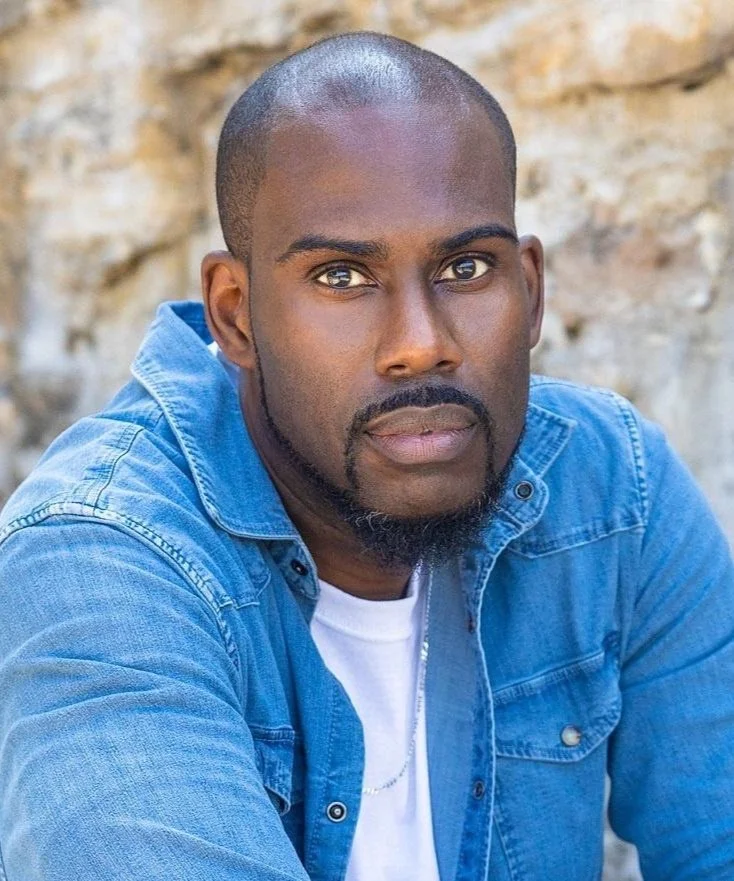
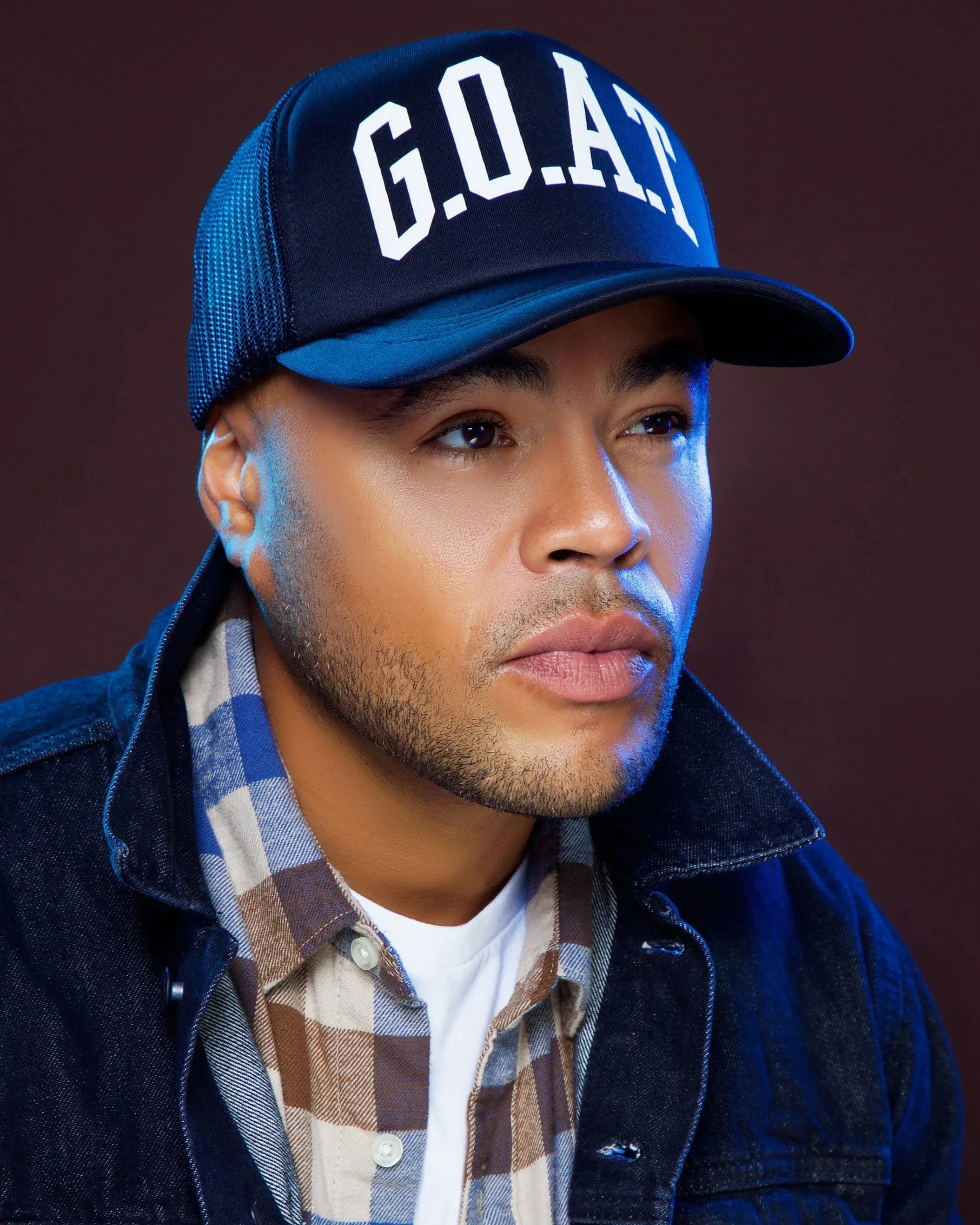
Duane Gibson (Photo by Anna Keenan)
Growing up in Stratford exposed Gibson to theatre and the creative arts, but it was after moving to Sault Ste. Marie that he developed a stronger connection to hip-hop and a deeper understanding of his Black identity.
“It's a predominantly White city, and living there gave me a better understanding of what it meant to be Black,” he said. “Because it's a border city, I could also cross into Michigan and buy hip-hop music that many people in Toronto didn't have access to.”
Gibson wrote and performed his first rap in Grade 7. Later, at a Sarnia house party, friends called out words while he improvised rhymes about them.
“People were like, ‘Oh my goodness’,” he said. “Back then, just the simple ability to freestyle was something many people had never seen. It made me want to continue going that route.”
His career, however, has unfolded against the barriers faced by Black artists in Canada.
Gibson recalled a record executive expressing interest in signing his group, Art of Fresh, before telling them they were ‘too Black’.
“I thought to myself, I’m pretty light-skinned,” he said. “My mother (Louise Gibson) is White, and our music was upbeat, friendly, happy and fun. If they thought we were still too Black, I realized there were systemic barriers in our culture that were very difficult to overcome.”
Racism was also part of his childhood.
Gibson recounted being called the N-word at school and being expected to laugh along with those using it. Today, he addresses the word’s history and harmful impact during presentations after hearing from parents whose children have been asked to permit classmates to use it.
“As troubling as it is, some kids don’t realize the power of that word,” he said. “I think it is important to teach them.”
Rather than allowing those experiences to define his career, Gibson used them to reinforce his commitment to creating music that reflects his own life and values.
“If I started rapping about violence and negativity, that just wouldn’t be me,” he said. “My songs are rooted in lessons and experiences I know firsthand. I wrote a song called Appreciation about having a White mother and strong Black women in my life because that is my story.
“It’s not that I set out to make positive music. I was influenced by 2Pac (Tupac Shakur), whose songs tackled real-life issues such as single mothers, his relationship with his own mother, police brutality and the story of a 12-year-old New York girl who became pregnant after being assaulted by a relative. That kind of honest, meaningful storytelling is the type of rapper I aspired to be.”
Gibson, who completed his undergraduate degree at York University and spent a semester at the University of the West Indies Cave Hill campus in Barbados on a student exchange program, also chose to build a sustainable career rather than chase a single commercial hit.
After noticing that artists with radio-friendly songs were not always able to tour consistently or draw large audiences, he began studying the career of Nova Scotia rapper Classified.
Gibson admired how Classified's music combined strong themes and positive messages while attracting fans across Canada.
“What I noticed about him was that, unlike some artists from Toronto, he toured across the country and performed to packed audiences,” he said. “I listened to what his music was about, and the themes and messages were strong. I decided to go that route because I value having a long career over having one hit or one moment.”
That approach helped launch Gibson onto the international stage.
In 2008, he opened for Snoop Dogg in Croatia and later shared the stage with both Snoop and Wiz Khalifa. He has since performed throughout Canada, Europe, Asia and the United States while helping other artists gain international exposure.
Through showcases connected to music conferences and events in Rotterdam, Atlanta, Los Angeles and other cities, Gibson said he has helped more than 100 artists perform and assisted more than 100 in securing grant funding.
“It doesn’t have to be crabs in a bucket,” he said. “More people experiencing success means more success and more opportunities for everyone.”
Gibson’s school presentations have nevertheless provided the greatest consistency and, he believes, the most enduring impact of his career.
Unlike late-night club performances and lengthy drives between cities, school tours allow him to reach thousands of young people, sometimes through several presentations in a single day.
“A lot of those kids don’t go to concerts, so I might be the only artist they ever get to meet,” Gibson pointed out. “It is humbling to have that response from youth.”
His latest recognition arrives as he prepares to publish his fourth book, In the Flow Zone, in September.
The book examines the mental state that allowed him to set a Guinness World Record by freestyling for eight hours and 45 minutes.
“I don’t know how I did it because I was in a flow state,” Gibson said. “It is similar to when you are reading a book and suddenly an hour has gone by, or when you are young and play basketball in the driveway for three hours. Time flies.”
He plans to use examples from music, sports and everyday life to explore how people can overcome nervousness, find stillness and become fully absorbed in what they are doing.
It is another extension of a career that has moved seamlessly among music, writing, education and community service.
Gibson encourages young people hoping to follow a similar path to act on their ambitions rather than merely talk about them.
“You have to walk the walk,” he said. “You have to eliminate your fear of failure. There have been many times when I wanted to throw in the towel, but one of the greatest lessons I have learned is not to quit. Just keep going another day.”
His appointment to the Order of Canada recognizes a body of work that has carried him from childhood classrooms and house-party freestyle sessions to international stages and thousands of Canadian schools.
Yet the honour also brings him back to the conversations he shared with Charles Phills and to the seemingly ordinary qualities that helped make Isaac Phills extraordinary.
The trailblazer was a steelworker and devoted father whose influence could be measured through the achievements of his children and the generations that followed.
Gibson hopes his own contribution will be judged in much the same way, not only through records, books or awards, but through the people encouraged by his example.
Asked what he hopes Canadians will say about him years from now, Gibson's answer was simple.
“That I always promoted Canadian values of working hard, being humble and being kind,” he said.
By joining the Order that first recognized Isaac Phills nearly 60 years ago, Gibson becomes part of a legacy that values service above celebrity.
It is a full-circle moment linking two men from connected families and different generations, each recognized for enriching Canada not through fame, but by investing in others and inspiring them to reach their potential.