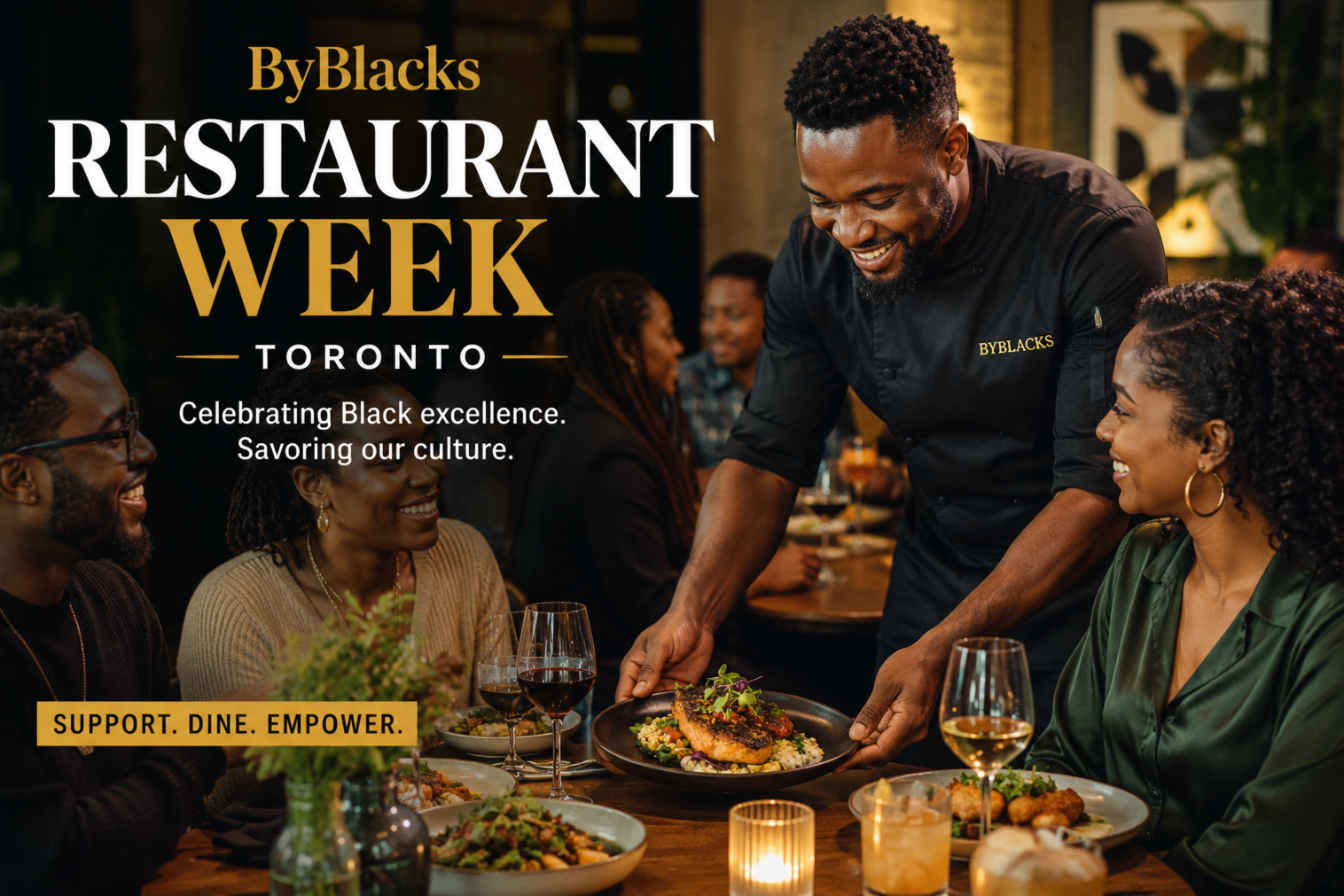
ByBlacks Restaurant Week reflects the growth of Black culinary entrepreneurship in Canada
May 13, 2026
What began as a celebration of 10 restaurants has evolved into a powerful national movement championing Black culinary excellence.
This year, ByBlacks Restaurant Week proudly features 27 participating restaurants, nearly triple the number from its launch, reflecting the growing recognition and support for Black-owned food businesses and the rich diversity of flavours across Canada.
In 2021, husband-and-wife team Roger Dundas and Camille Dundas launched the initiative which has since grown into a national celebration of Black food culture and entrepreneurship across Canada.
Looking back on how the event has evolved, Camille Dundas said one moment stands out as a major turning point.
“Last year was the first time we hosted an in-person kickoff that included vendors and guests, instead of just a media launch,” she said. “People loved meeting the restaurant owners and sampling food from so many different places in one night. This year, we have doubled the number of restaurants participating in the launch and opened it to a wider audience. Everything we do supports our mission of highlighting and uplifting Black-owned businesses.”
That focus on visibility and connection remains central to the philosophy behind Restaurant Week. For the couple, the event is about much more than food. It is also about telling the stories behind the businesses and the communities they represent.
Roger Dundas, who co-founded ByBlacks.com with his wife in 2013, said those stories deserve to be seen and heard.
“It’s important because we are, first and foremost, a digital magazine built on storytelling,” he said. “We have seen the direct impact of sharing stories of Black success that are often overlooked elsewhere.”
One story that especially resonates with Camille Dundas is that of Carib Dish, founded by Grenadian entrepreneur Devon Wells. What began as a meal-delivery service has grown into a thriving restaurant business with locations in Barrie and Toronto.
“I am a terrible cook,” she joked. “I ordered from his business several times, and his meal kits actually helped me reconnect with my Trini and St. Lucian roots in the kitchen.”
She also praised Wells for opening his first restaurant in Barrie, a city not traditionally known for its diversity, before successfully expanding into Toronto. At this year’s launch event, he marked the occasion by giving away 100 free meals to guests.
Beyond the dining experience, the founders hope Canadians leave Restaurant Week with a greater appreciation for the role Black entrepreneurs are playing in shaping the country’s cultural and economic landscape.
“I think food is one of the most powerful entry points into someone else’s story,” Camille Dundas pointed out. “We hope that after this week, Canadians walk away with a deeper appreciation for the people behind it and the entrepreneurs who have built something meaningful, often against the odds. Black business owners are shaping Canada’s cities, its cultural identity and its economy. We want this week to be a reminder that supporting them is not charity. It is good taste in every sense of the word.”
Her husband shared a similar perspective, emphasizing that Black entrepreneurs are already making a significant impact across the country.
“Black entrepreneurs are not waiting to be discovered,” he added. “They are already here, building and contributing. Restaurant Week gives Canada a reason to pay attention. We hope that the attention does not stop at the end of the week.”
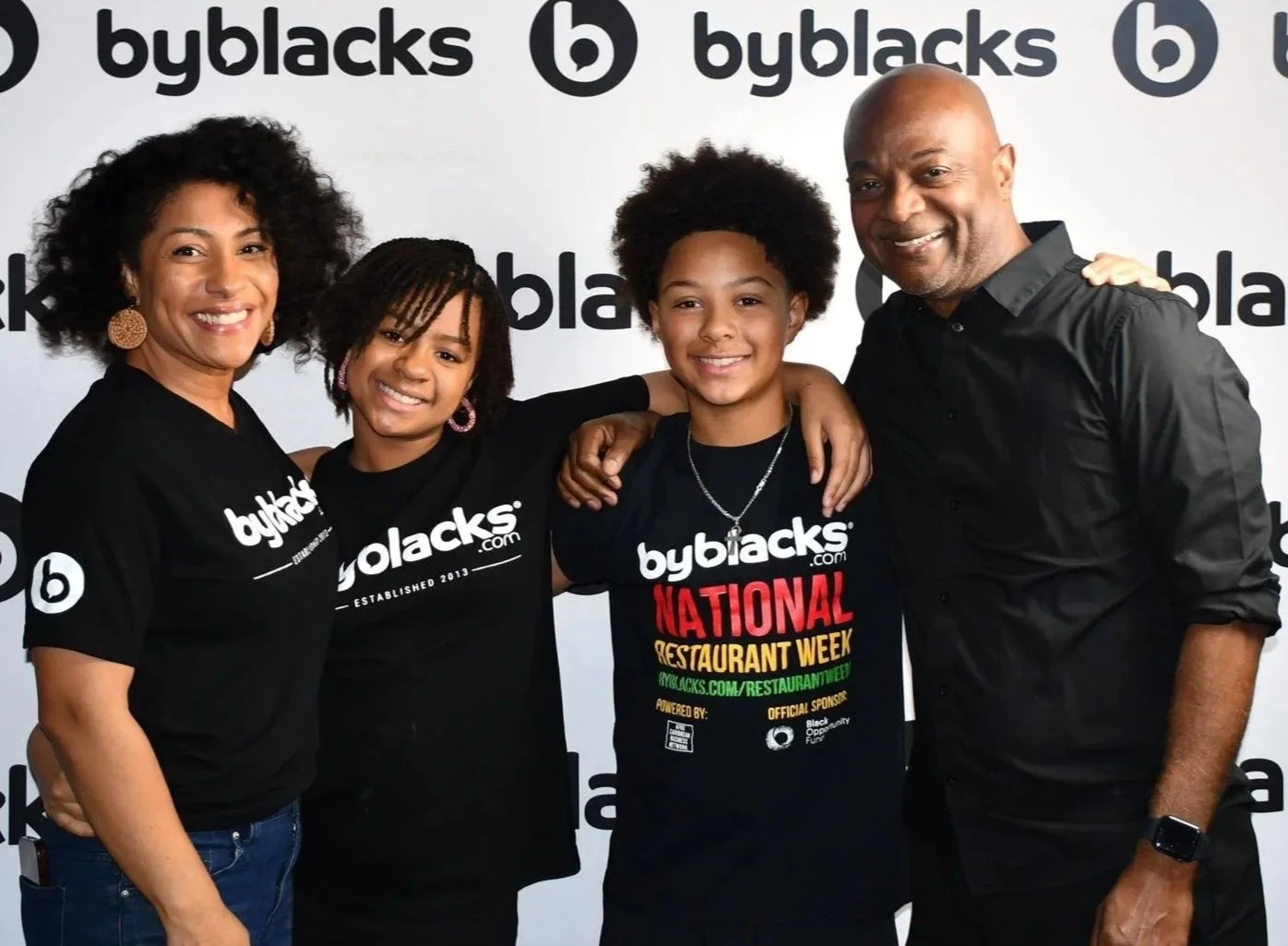
Roger and Camille Dundas with their children Chase and Marley Rose (Photo contributed)
The sixth edition of ByBlacks Restaurant Week also marked a milestone for the city itself. Olivia Chow’s attendance at the opening ceremony on May 11, the first time a Toronto mayor has attended the event, signalled growing recognition of the cultural and economic contributions Black entrepreneurs are making to the city’s food industry.
Her presence underscored how far the event has come since its inception, evolving from a grassroots initiative into a celebrated city-wide platform highlighting excellence, diversity and community investment within Toronto’s culinary scene.
The launch took place at the Black-owned Mascot Brewery in the city’s west end.
Among the original pioneers is SugarKane, co-owned by sisters Nicole and twins Renee and Donna Charles, first-generation Canadians of Trinidadian and Grenadian heritage.
The restaurant is the only business to have participated in all six editions of the national culinary festival and has become a symbol of consistency, culture and community, helping pave the way for the growth of Black culinary entrepreneurship in Canada.
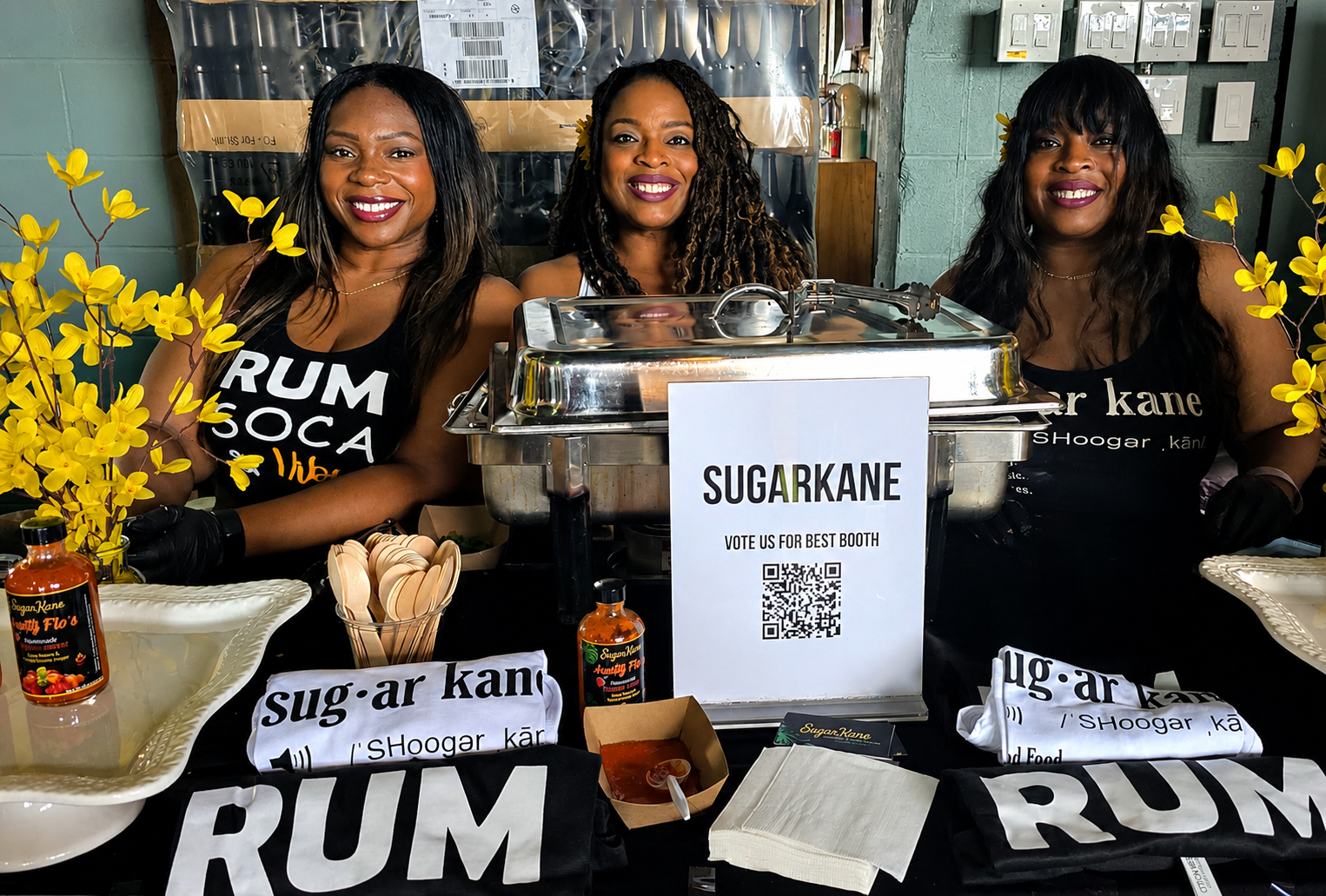
Sisters Nicole, (l) Renee and Donna Charles co-founded SugarKane restaurant (Photo by Ron Fanfair)
For the sisters, participating in the event from the beginning was both an opportunity and a necessity.
“Imagine being a brand new restaurant opening six months before the COVID lockdown,” said Nicole Charles. “We were looking for a lifeline and basically anything to promote ourselves. We have been able to connect with customers who support us regularly. This initiative gives Black businesses the shine they deserve and don’t often get.”
The sisters’ entrepreneurial journey began long before SugarKane opened its doors.
“We are very close and have worked together since a young age,” Charles pointed out. “We ran a mini restaurant out of our home and hosted block parties for members of our Scarborough community. We operated a catering company for about six years. The goal was always to open a restaurant, but we never thought we would have the financial means. Our parents provided us with that opportunity, and we are so grateful to be here doing what we love. We had our little arguments, but they never got in the way of us being on the same page when it came to striving for the goal of owning a restaurant.”
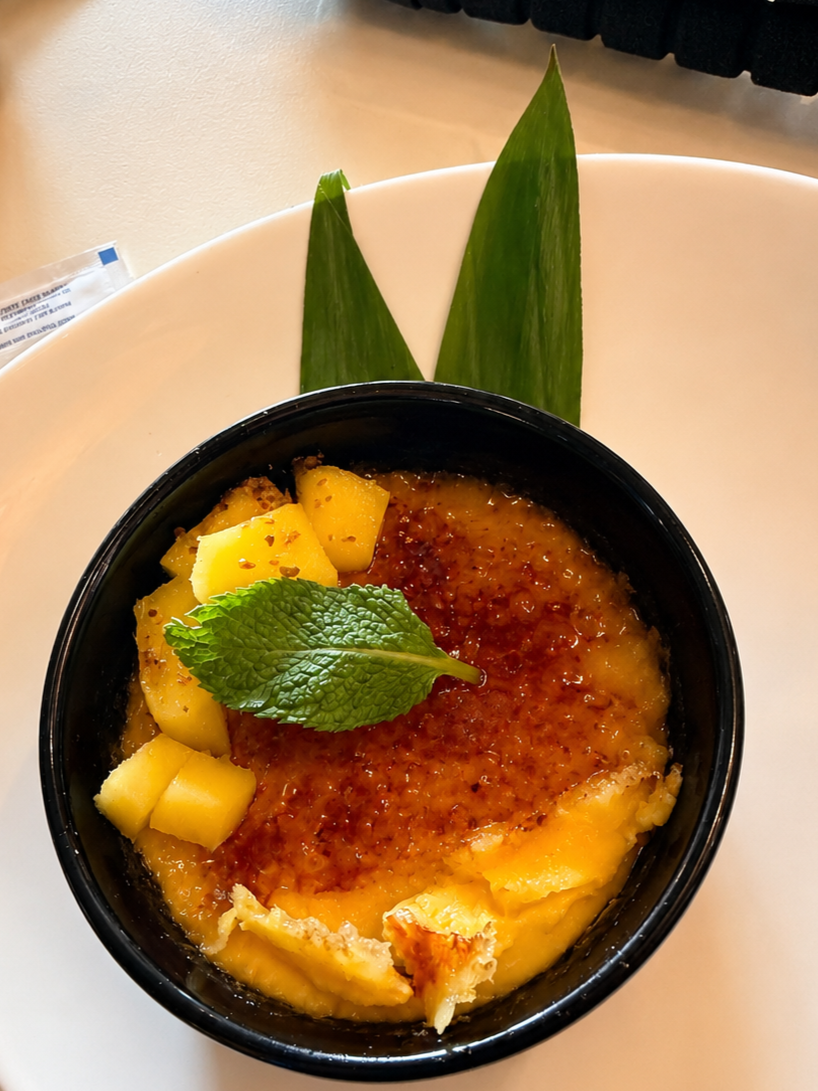
SugarKane restaurant's mango creme brulee is a silky smooth and creamy dessert (Photo by Ron Fanfair)
Caribbean heritage remains central to the SugarKane experience, shaping everything from the food to the atmosphere.
“Our parents are from the Caribbean where storytelling is a big part of everyday life, whether it happens around the dinner table, at family gatherings or through music and culture,” Renee Charles pointed out. “At SugarKane, we want people to feel that connection the moment they walk through the doors. The food, the atmosphere and the overall experience are all meant to celebrate the warmth, flavours and traditions of the Caribbean while helping people better understand the stories and heritage behind the cuisine.”
Like many restaurants, SugarKane faced enormous challenges during the pandemic and nearly closed its doors. Support from family, friends, the community and an anonymous $4,000 donation helped the business survive. The owners now hope to expand with a second location, preferably downtown.
This year’s Restaurant Week also expanded beyond food, with eight beverage businesses joining the lineup and adding another layer to the celebration of Black entrepreneurship.
Among them is Nyarai Cellars, widely recognized as Canada’s first Black-owned winery and wine label.
Founder Steve Byfield has played a pioneering role in diversifying the Canadian wine industry and increasing representation within Niagara’s wine community.
At Nyarai, wine pairing is about far more than choosing a drink to accompany a meal. It is an opportunity to enhance ingredients, balance flavours and create memorable shared experiences around the table.
That philosophy shapes the elevated experience the virtual winery brings to ByBlacks Restaurant Week, where food and wine work together to tell cultural stories through flavour, texture and connection.
For Byfield, that entrepreneurial mindset has guided his journey from the beginning.
More than 30 years ago, while in his second year at York University, wine evolved from a simple curiosity into a career path. Looking to earn extra income, he accepted a part-time job with a retired Toronto Police officer who had recently purchased a brewing franchise.
“He was looking for a part-time assistant to help with the orders,” recalled Byfield whose parents emigrated from Jamaica. “Within four months, I was fascinated by wine and by the end of my second year, I knew I didn’t want to pursue my goal of becoming a music educator. When I graduated from university, I wanted to see the wine-making process from the commercial end.”
That passion eventually led him to launch Nyarai Cellars in 2008. Rather than building the company around a single estate vineyard, he chose to source grapes from carefully selected vineyards across Niagara, reflecting both his philosophy as a winemaker and his commitment to storytelling through wine.
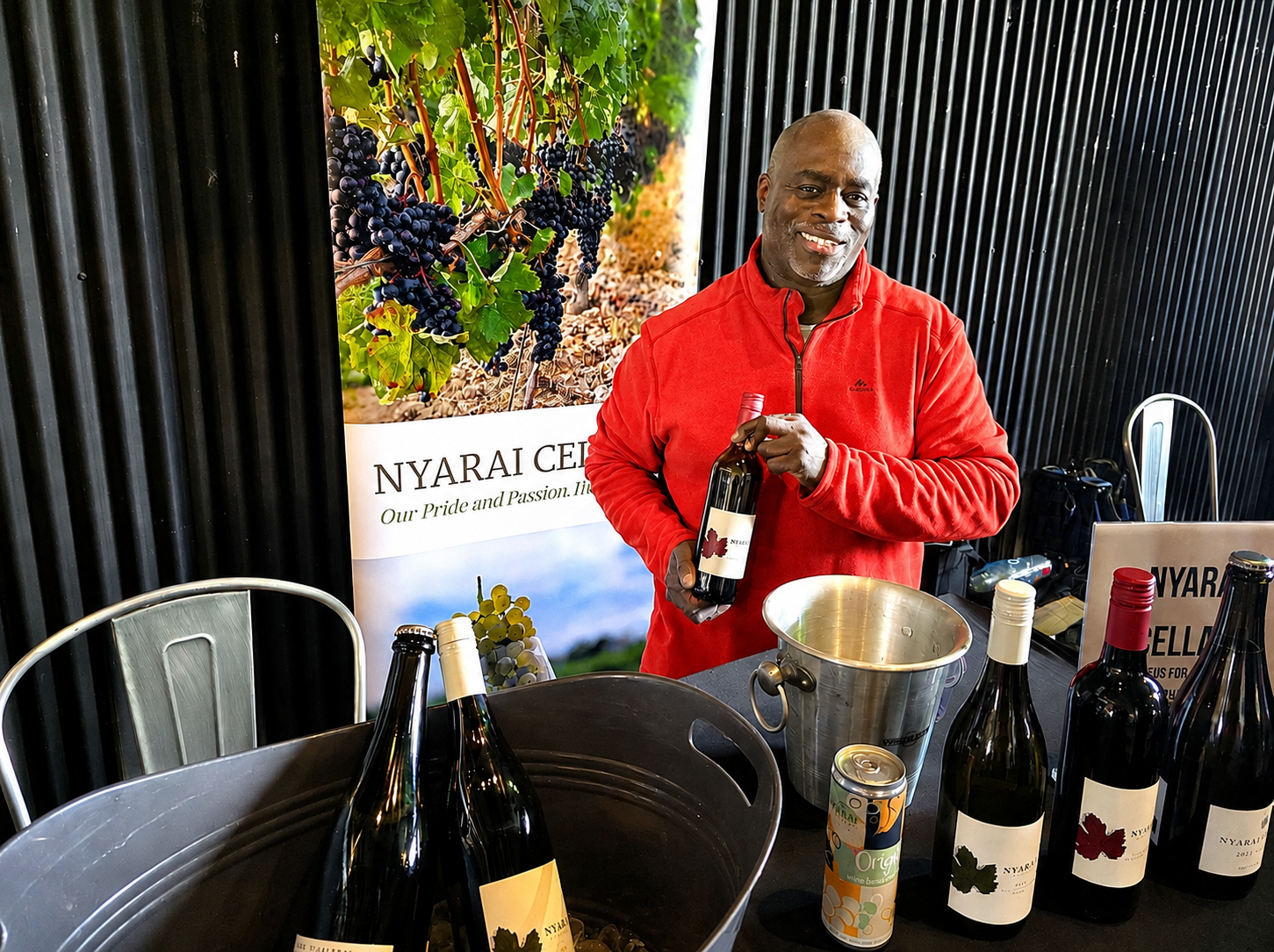
Steve Byfield fell in love with the wine business while in university 30 years ago (Photo by Ron Fanfair)
Byfield believes every vineyard site possesses its own personality, shaped by factors such as microclimate, soil composition, elevation and even wind direction. Those environmental differences influence how grape varieties develop and ultimately express themselves in the glass.
By sourcing from multiple vineyards across the region, he said he can capture the diversity and complexity of Niagara’s landscape while matching specific vineyards to the grape varieties and wine styles best suited to them.
As a Black winemaker in an industry where representation remains limited, Byfield acknowledged there have been challenges along the way.
“There has been some negative stuff and that was more from people from the consumer base than the industry itself,” he noted. “My peers in the Niagara wine industry have been supportive.”
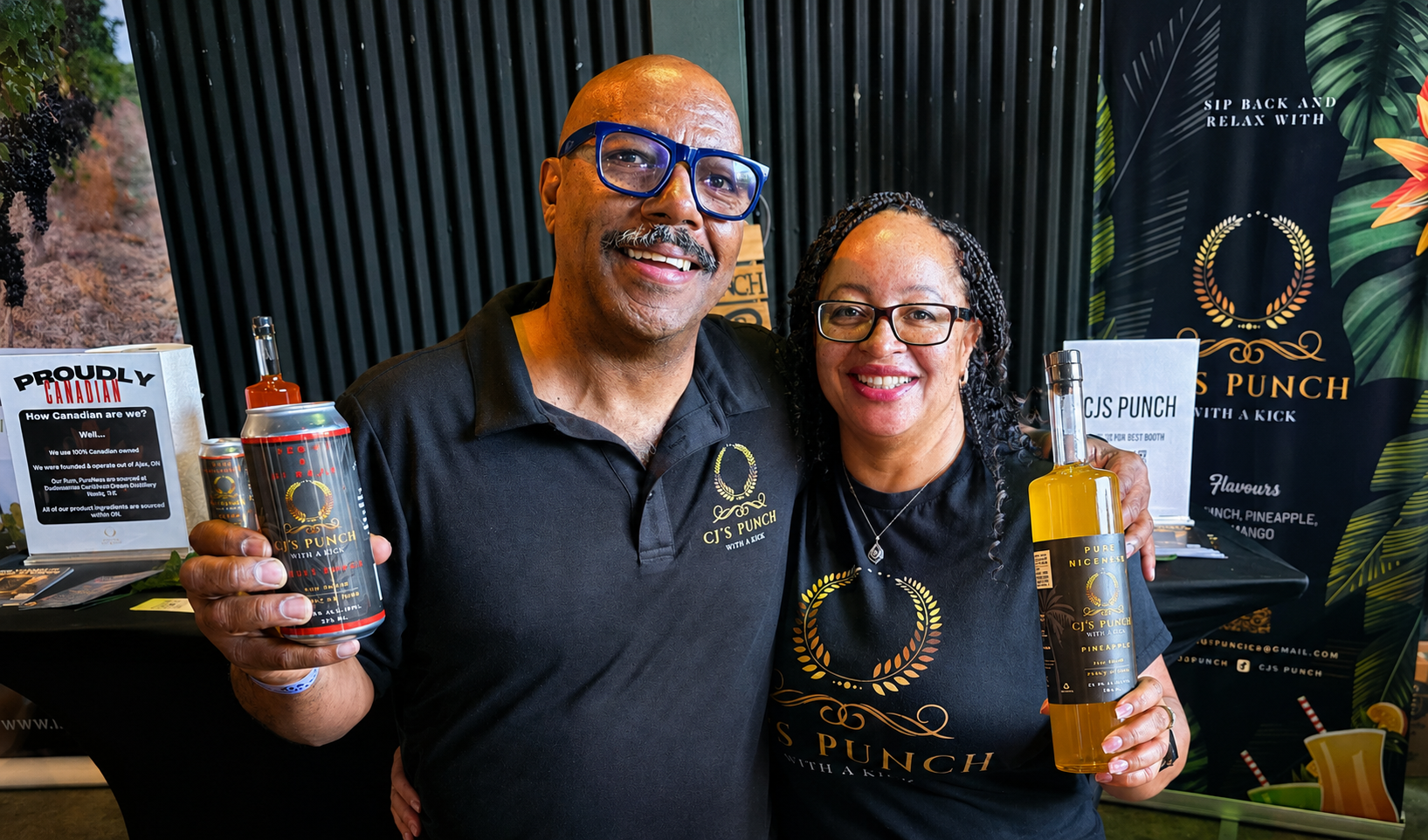
Colin James and Allicia Miller co-founded CJ’s Punch that is one of the beverage companies participating in ByBlacks Restaurant Week (Photo by Ron Fanfair)
The stories behind the businesses participating in Restaurant Week are as diverse as the menus themselves.
A painful breakup several years ago pushed Tobias Brown into one of the darkest periods of his life.
Raised in Chicago and living in British Columbia since 2013, he was working as a sous chef at the time, struggling to find direction while dealing with emotional pain and uncertainty.
During a conversation with his adopted Jamaican mother, she offered advice that would ultimately change the course of his life. She encouraged him to keep moving forward and reminded him that he was becoming skilled in the kitchen.
Brown took those words to heart.
What began as cooking to cope and rebuild his confidence gradually evolved into something much bigger. He started preparing Jamaican jerk dishes for community events and gatherings, quickly earning a reputation for bold flavours and authentic Caribbean cooking.
“I started making food for different events,” Brown recalled. “People liked it and she said, ‘I think you got a good thing going and people love you’.”
A graduation party in British Columbia’s Lower Mainland in 2016 became the turning point.
“The jerk chicken was a hit and people told me I should start selling it,” Brown said. “I told them if they think it is worth it, put money on the table. I wanted to gauge how much they would pay for the wings, legs and thighs. When the girl whose party it was came in and saw all this money on the table, she asked who it was for. I told her it was for her and she was shocked. I told her to take it because I didn’t need it. I just needed to know how good my food was. That is how I got started.”
That moment laid the foundation for what would eventually become Tommie’s Jerk in British Columbia.
Operating out of a commercial kitchen, the entrepreneur has steadily built a loyal following through word of mouth, consistency and flavour-packed Caribbean dishes.

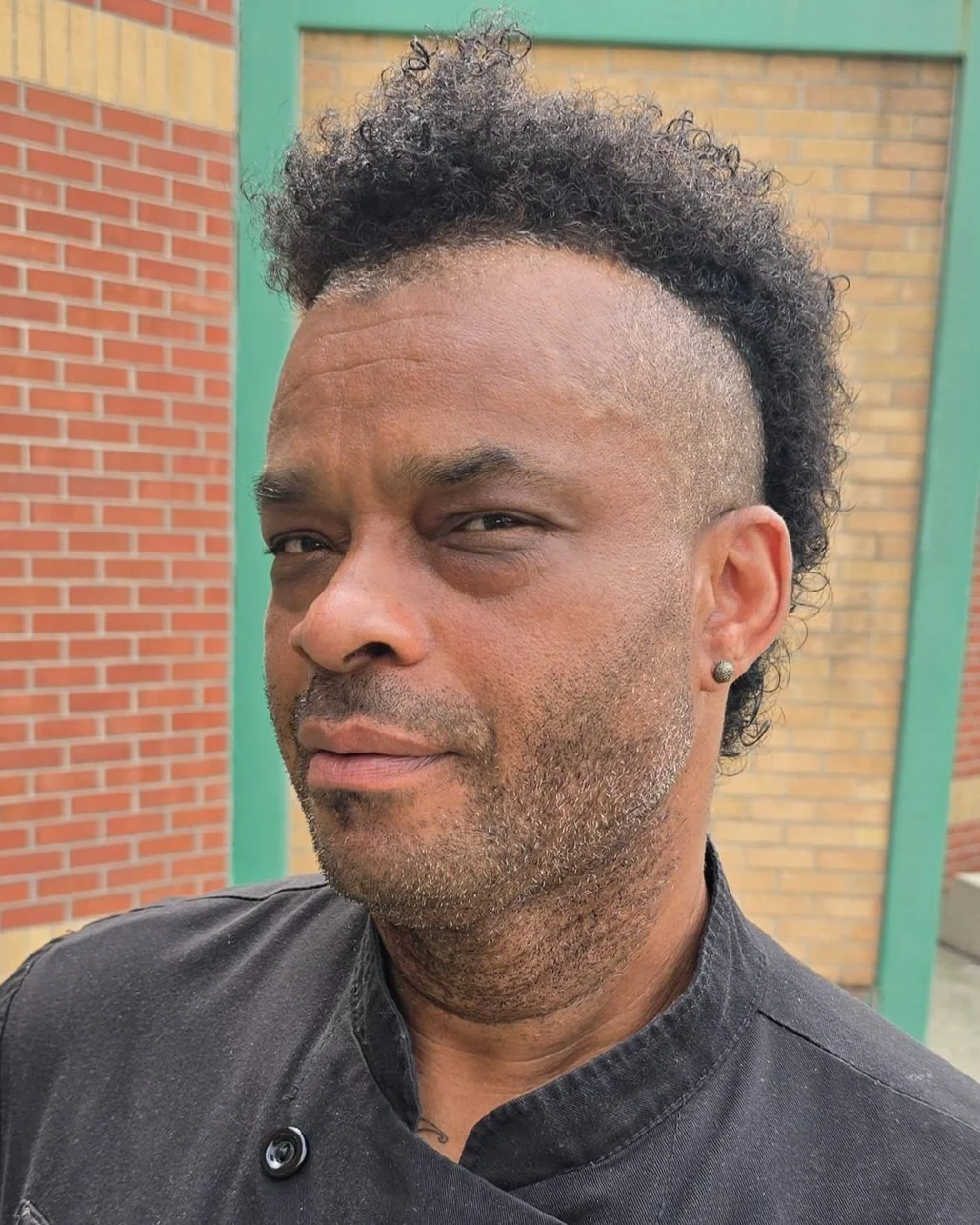
Tobias Brown (Photo contributed)
For Brown, who was a Top 25 finalist for the Canadian Immigrant Awards in 2024, the journey reflects how pain, encouragement and determination can sometimes lead to unexpected purpose.
His growing list of recognition also includes receiving the Trailblazer Award at DIVERSEcity’s fourth annual Black Brilliance event in Surrey last February.
Tommie’s Jerk offers a wide range of Jamaican favourites, including jerk chicken, beef and pork, boneless pork, jerk patties, ribs, wings, legs and thighs. One of the newest additions to the menu, jerk mac and cheese, has quickly become a customer favourite.
“I use natural cheese with shredded cheese and add mozzarella to it,” Brown said. “Everything is marinated with 21 spices for 48 hours. Everything goes on that grill for 48 hours.”
Dedicated to consistency and quality, Brown operates the business more than 50 weeks each year, taking only about two weeks off for vacation.
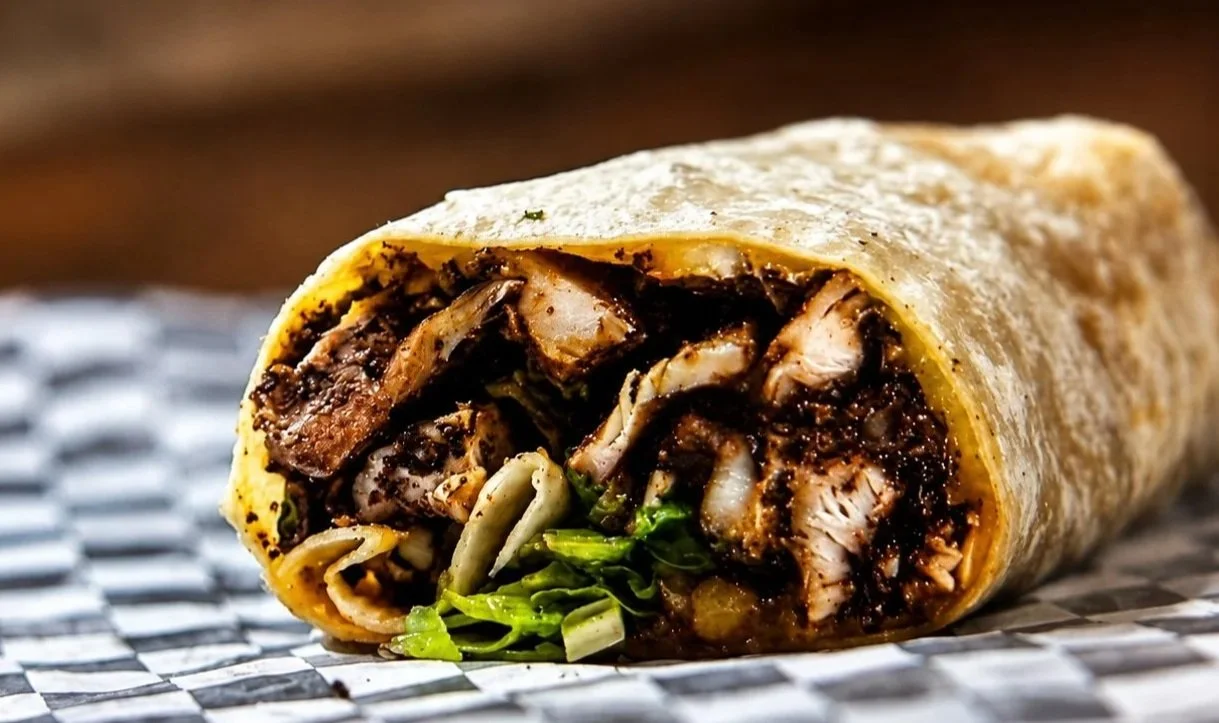
The Jerk Chicken Burrito is Tommie’s Jerk signature menu item (Photo contributed)
Weekends are especially busy, with Friday service at Diabolikal Ink Tattoo Parlour in Cloverdale, Saturdays at Canadian Tire in Newton and Sundays at Bargain Boyz on the Delta side of Scott Road.
Further evidence of Tommie’s Jerk’s growing recognition came last March when it was among 30 Black-owned Canadian restaurants selected to receive $10,000 in funding and a one-year Restaurants Canada membership.
The investment was made possible through DoorDash Canada in partnership with the Black Opportunity Fund.
“The opportunity to support Black restaurants and food purveyors is incredibly important,” said Ray Williams, chair of the Black Opportunity Fund and a well-known food enthusiast. “While we continue to invest in areas such as the arts, justice, youth and housing, supporting community-centred initiatives like these is equally important because community is at the heart of everything we do.”
Anan Lololi, executive director of the Black Food Sovereignty Alliance and research associate at Toronto Metropolitan University’s Centre for Studies in Food Security, said ByBlacks Restaurant Week is intentionally serving as a critical infrastructure tool for Black culinary development in Canada.
“It is part of a larger national Black food sovereignty awakening that is identifying and addressing structural inequalities within Canada’s food system,” he explained. “This event is making a significant contribution by helping Black-owned restaurants overcome systemic barriers to capital and visibility, while bridging the national gap for small local eateries that are often overlooked by mainstream media. In essence, this is Black food sovereignty in practice. As people of African descent, our restaurants and chefs showcase culinary excellence that preserves historical and cultural identity, fosters economic empowerment and promotes health through culturally relevant cuisine.”
From her perspective as an American journalist and founder of Cuisine Noir, V. Sheree Williams believes the growing recognition of Black-owned restaurants in Canada reflects a broader understanding that these businesses contribute far more than food to the communities they serve.
She said Black-owned restaurants often preserve culture, history and identity through the meals they prepare.
“When you begin to deconstruct a meal and go beyond what is on a plate, that is where the heart of it begins,” said Williams whose publication was the first media outlet in the United States dedicated to Black food stories at a time when such narratives were largely overlooked in mainstream media. “Food is more than ingredients put together and seasoned to create a good dish. Food reveals the heart and soul of people and the communities they have built based on survival and ingenuity.”
Watching ByBlacks Restaurant Week evolve into a national Canadian celebration of Black-owned food businesses is significant, Williams noted, because it gives greater visibility to the diversity of Black culinary traditions and the stories connected to them.
“Having events such as ByBlacks Restaurant Week recognizes the diversity of Black food and the communities that are culturally telling us who they are through the dishes they prepare and serve,” the Bay Area publisher said. “Their food stories are rooted in family and traditions. For some, it is a homeland they have travelled from and left behind. However, it was there that food shaped how they connect with others.”
Williams said the growing attention to Black-owned restaurants in Canada is important not only for the businesses themselves but also for helping Canadians better understand the cultural and historical legacies those establishments carry forward.
“Black-owned restaurants continue to be important pillars in our communities and amplifying their visibility throughout Canada and outside the country gives them the recognition they deserve based on the legacies they carry forward and the food that continues to influence how and what we eat within the Caribbean and beyond,” she added.
What started as a modest effort to spotlight Black-owned restaurants has grown into a national platform celebrating culture, resilience, entrepreneurship and community through food.
From Caribbean kitchens in Scarborough and British Columbia to Niagara vineyards and Toronto dining rooms, ByBlacks Restaurant Week is helping Canadians better understand the stories, traditions and determination behind the businesses shaping the country’s culinary landscape.