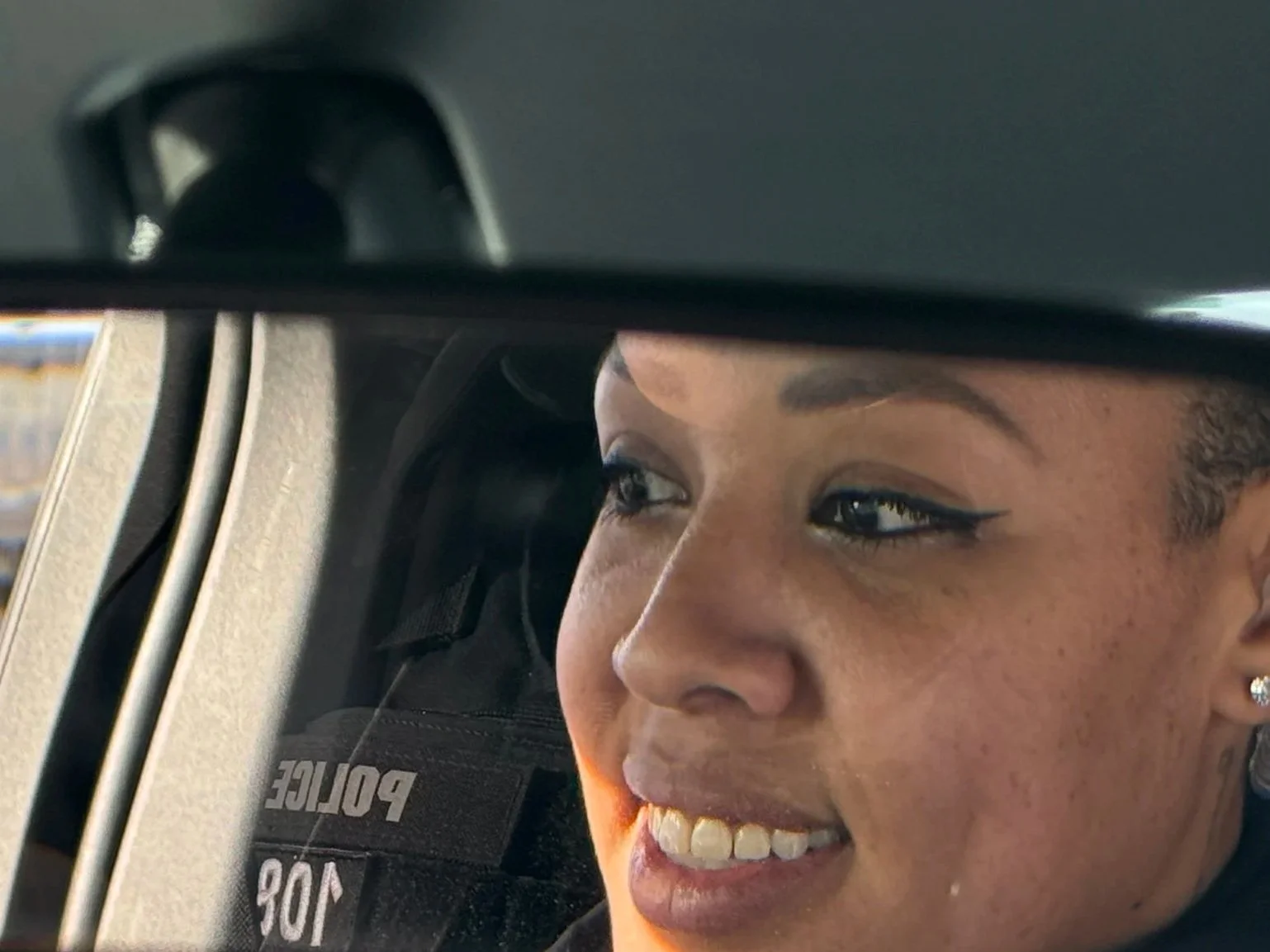
Desiree Ates makes history as Regina’s first Black female police officer
March 25, 2026
When Desiree Ates applied to the Regina Police Service, her goal was to earn the opportunity to serve her community.
What she did not realize at the time was that the journey would also lead her to make history as the Service’s first Black female uniformed officer.
Growing up in Saskatchewan’s capital, Ates did not recall seeing Black women wearing the police uniform. Still, she assumed there may have been Black officers who served at some point, even if their stories were not widely known to her.
It was only shortly before graduating from the police academy late last year that she learned she would be making history.
“Soon after joining, I joked that it would be fun to be the first because I didn’t know of any,” Ates recalled. “As graduation approached, I started asking around to see if there had been any before me. Most of the responses were ‘no’ or ‘I don’t think so.’ That’s when it became clear that I was going to be the first.”
Becoming the first carries a heightened sense of responsibility. In a profession built on public trust and the duty to serve and protect, she recognizes that her role brings added visibility.
Ates understands that her presence may inspire others who have never seen themselves reflected in the badge, while also reinforcing the importance of representation within institutions that serve diverse communities.
“My primary responsibility is to serve and protect like any other officer,” she said. “At the same time, I know that representation matters. I would encourage anyone not to count themselves out before even trying. If you care about people, value integrity and want to make a difference in your community, policing can be a meaningful career. Even if someone who looks like you have not been there before, it might be you who open the door for others to walk through.”
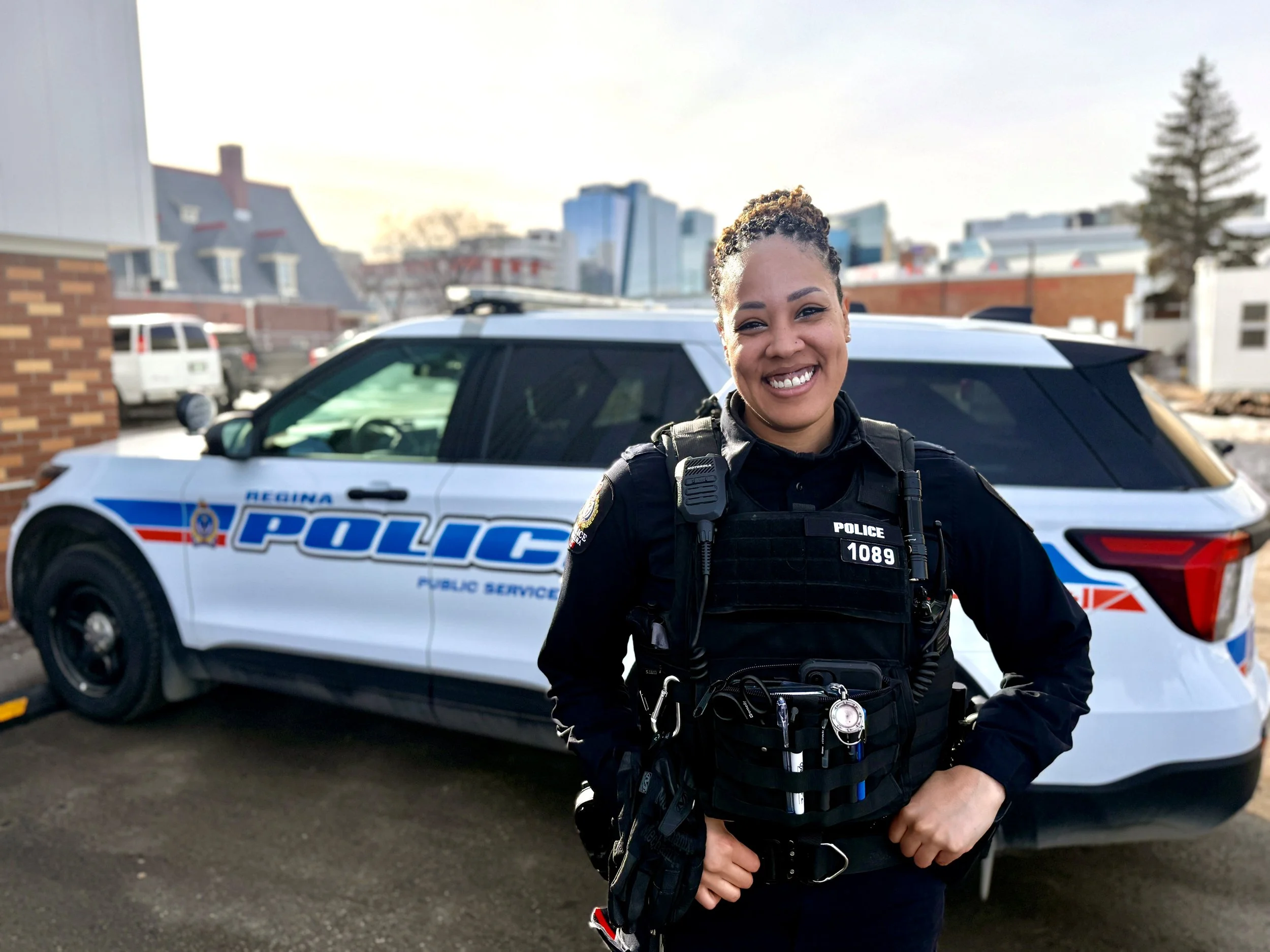
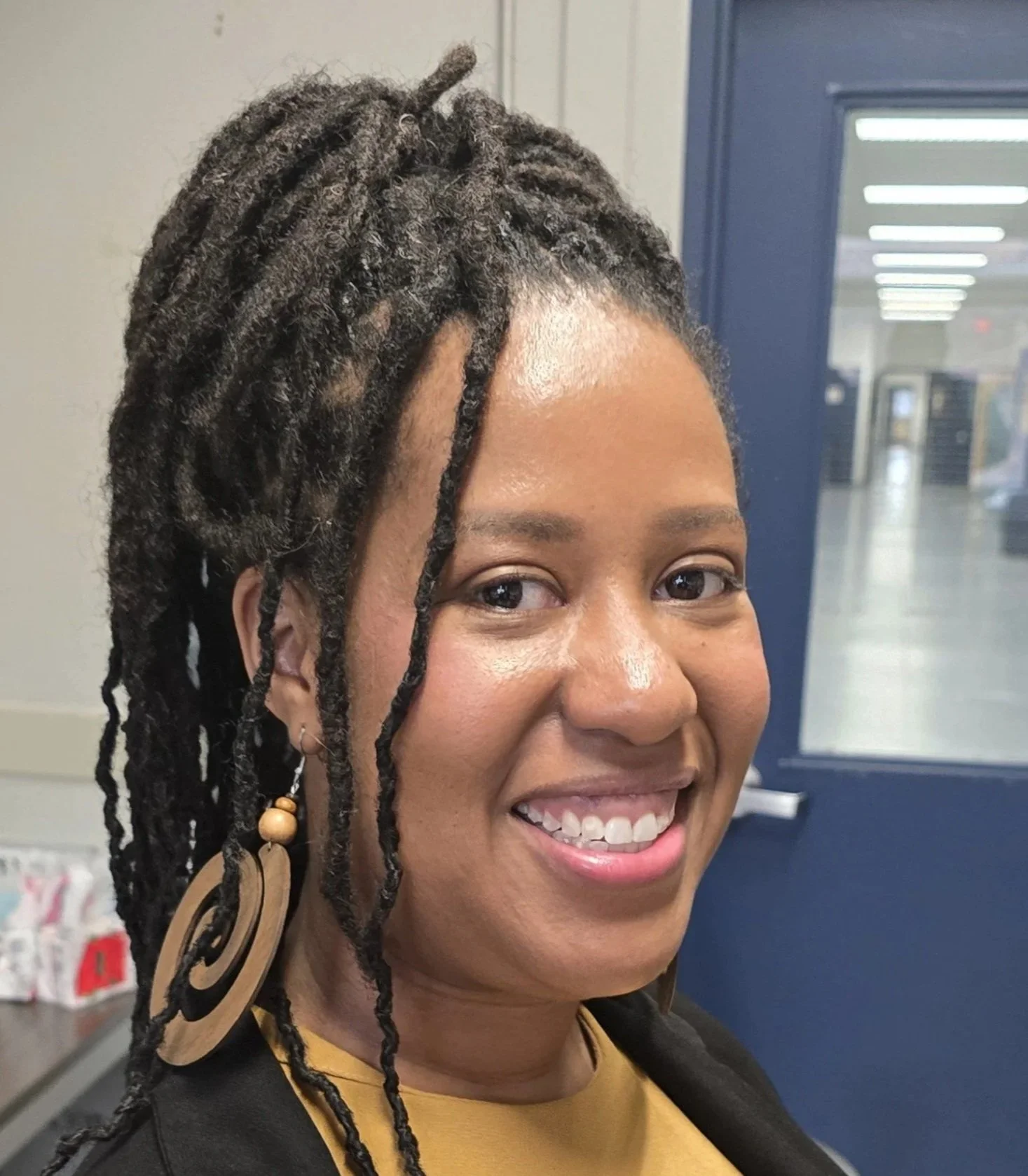
Desiree Ates on the job (Photo contributed by Regina Police Service)
Though Ates has been on the job for just three months, she said the community's response has been positive and encouraging.
“People from different backgrounds have approached me to say how proud they are to see me in uniform and how important that kind of representation is,” she noted. “The most meaningful moments, however, have been hearing from young people. Some have told me they never thought about policing as a career until now and that they might consider it. For me, that is very powerful. It is a reminder of the impact of what I have accomplished.”
Ates acknowledged that stepping into such a visible role, particularly in a profession where there had never been a Black female officer in the service, naturally brings attention and differing opinions.
“When you step into a role like policing, people will have their views, and they will let you know about them,” she pointed out. “At the end of the day, my job is to serve my community with honour and dignity.”
Arriving in Regina from Jamaica in 1971, Mavis Ashbourne-Palmer has watched the prairie city and its institutions evolve over the past five decades, including gradual changes in representation within public service.
She recalls that David Pollanais was the first Black officer she saw on patrol in the city 55 years ago.
“Dave was from Trinidad and he served for several years before going to university and moving into social work,” the former health care worker said. “Since then, there have been other Black officers, but it’s wonderful that we now have a Black woman in that role. While I am surprised it has taken this long, it’s especially uplifting for young Black girls who can look up to her and realize that they, too, can become police officers.”
Ashbourne-Palmer is the co-founder and president of the Saskatchewan Jamaican Society. The organization’s board includes Jamaican-born Lincoln Tulloch Jr. who joined the Service in 2022.
There are currently about 10 Black male officers serving with the Regina Police Service.
There was little in Ates’ early life to suggest that policing would one day become her career. In fact, she said the path that led her to the Regina Police Service was anything but direct.
“My journey has not been a straight line,” she said. “But when I look back now, what I am doing makes sense. I grew up playing sports, and being part of team environments played a big role in shaping who I am.”
Ates’ parents also played an important role in shaping those values.
Her father, originally from Georgia in the United States, served in the U.S. military and understands the discipline, sacrifice and sense of duty that come with wearing a uniform. Her mother is Indigenous, adding another layer of cultural significance to the moment the family watched her graduate and enter policing.
For her parents, seeing their daughter take on the responsibility of serving her community carried deep meaning. For many Indigenous families, relationships with law enforcement have historically been complex, shaped by difficult chapters in Canadian history. At the same time, having an Indigenous family member in uniform can also represent progress, visibility and the possibility of building stronger bridges between communities and the institutions meant to protect them.
“They have had a huge impact on who I am,” said Ates. “They instilled the values of hard work, resilience and belief in myself when I was uncertain about things. When I told them I was hired, they were incredibly proud. For them, I think it was one of those moments where all the sacrifices were worth it. They encouraged me to challenge myself and find ways to make an impact. I could not have been here without them.”
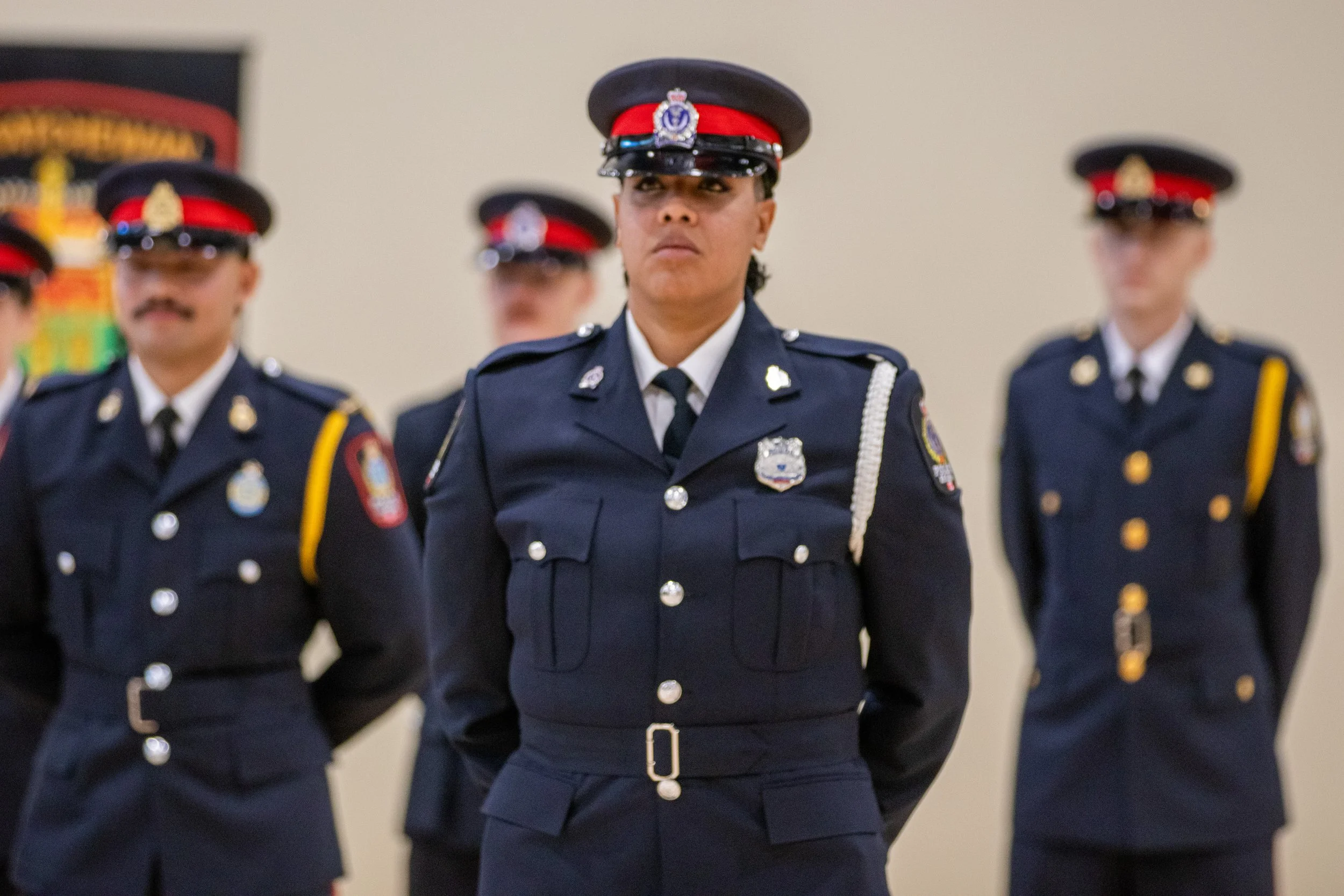
Desiree Ates on graduation day (Photo contributed by Regina Police Service)
Ates was born on a U.S. Air Force base in Germany. She moved to Regina when she was in kindergarten, later relocated to the United States and returned to Canada 25 years ago.
Sports also played a major role in shaping her early life.
Ates was a standout volleyball player throughout high school and university. A three-time Most Valuable Player at Sheldon-Williams Collegiate in Regina, she later helped lead Pasco-Hernando Community College in Port Richey, Florida, to the National Junior College Athletic Association national championship in 2010.
The outside hitter also played softball while attending the Florida school before transferring to the University of New Hampshire, where she appeared in 12 matches and recorded 62 kills and 31 digs.
Ates went on to leave a lasting mark with the University of Regina Cougars. In two seasons with the program, she became the school’s all-time leader in kills per set at 3.58 and ranks eighth in team history with 587 career kills. In 2014, she earned second-team All-Canadian honours after recording 347 kills, which at the time set a Canada West single-season record. She later returned to the Cougars program as an assistant coach.
After university, she worked as a digital content creator and spinning instructor before applying to the Regina Police Service six years ago. Although she had a variety of life experiences, she was advised that gaining law enforcement-related experience would strengthen her application.
Ates, the youngest of three siblings, went on to do just that, serving as a deputy sheriff at Regina’s Provincial Court and the Court of King’s Bench. The role provided her with first-hand exposure to the inner workings of the justice system and further reinforced her commitment to public service.
In Regina, where the relationship between police and the community has generally been cooperative but continues to evolve, her presence in uniform represents an opportunity to further strengthen trust and understanding between the service and the diverse communities it serves.
“Growing up, you see how policing impacts the community, both positively and negatively,” Ates said. “Those experiences helped me realize that policing is not just about enforcement or making sure people follow the law. It is also about presence, communication and trust. When the community trusts you, that is huge because it means you have the support of the people you are sworn to serve and protect.”
While she has already made a few arrests and laid charges, Ates said the experience has reinforced the realities of the profession.
“Policing comes with both highs and lows, and situations that may initially seem minor can escalate quickly,” she noted. “That is why I need to trust my instincts and training and be able to quickly shift gears when circumstances change. Every day is something different, and that is what I enjoy about this job.”
While still early in her policing career, Ates hopes one day to join a specialized unit, recognizing that reaching that level will require time, experience and dedication.
“I have goals that include being part of the tactical team, the canine unit or working in forensics, which is a field I find particularly interesting,” she said. “Becoming a school resource officer is also a role I aspire to because I have coached young people and feel I can connect with kids and build relationships with them. In fact, I had a great relationship with my own school resource officer who was one of the first people I thought about when I decided to apply.”
A few weeks after Ates graduated, Lorilee Davies was sworn in as the first female Chief of the Regina Police Service which traces its roots back to 1892 when it began as a one-man operation. She also became the first woman to hold the position of Chief of Police in the province.
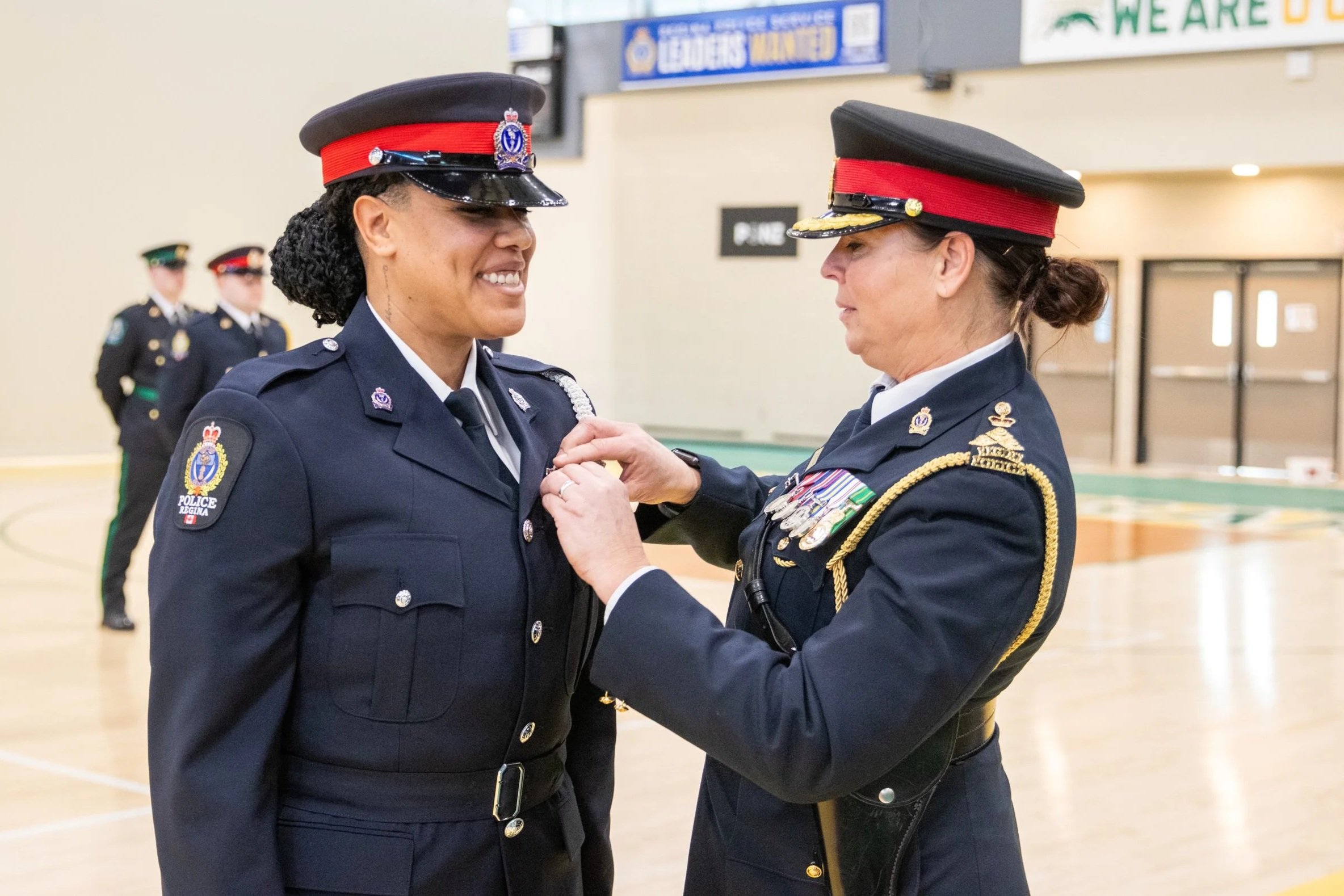
Then Chief-Elect Lorilee Davies presented Desiree Ates with her badge on graduation day (Photo contributed by Regina Police Service)
The day after the announcement last November, Davies found her office locker decorated with ribbons and messages such as ‘Girl Power.’ The gesture prompted her to describe the moment as ‘bittersweet’, a reminder of how long it took to reach this milestone, but also of what it represents for young girls and women.
“I am really hoping that if they feel like they can see it, they can be it,” she said in an interview.
If the Chief is right, then Ates’ achievement carries significance far beyond a single badge. Her presence reflects a shift that is both overdue and necessary, opening the door wider for those who may not yet see themselves in uniform.
Like Davies, she may not set out to be a symbol, but her work, visibility and quiet persistence will resonate loudly, shaping what the next generation believes is possible.