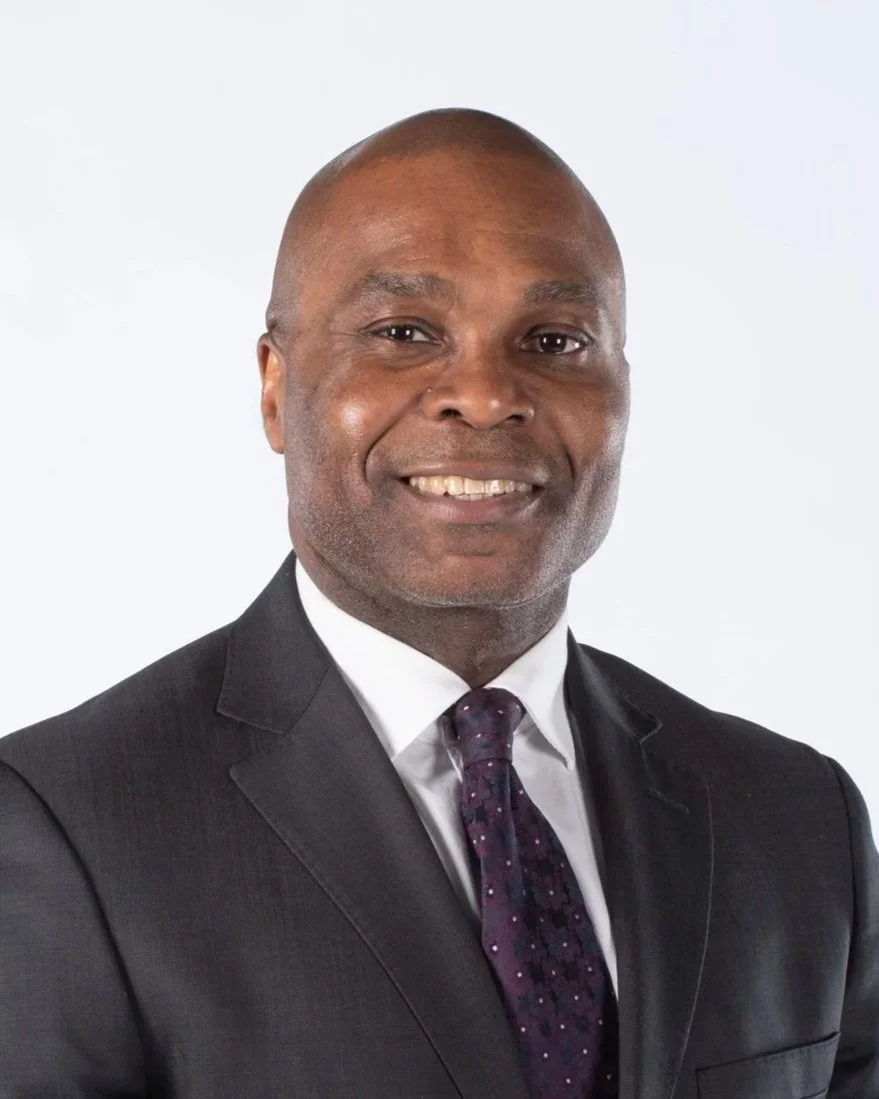
100 Strong Academy forges boys into men of character
September 8, 2025
In these times, Black boys need a lifeline to hope, opportunity and belonging.
Far too many drop out of high school and end up in the criminal justice system.
Justice Donald McLeod grew up in a cockroach-infested Regent Park apartment, slept with the oven door open in winter to stay warm and struggled academically.
A few blocks away resided Toronto District School Board (TDSB) administrator Ainsworth Morgan whose family migrated from Jamaica when he was seven years old.
Both raised by single moms in public housing, they proved that circumstances don’t define destiny.
Becoming successful and deeply connected to their community, McLeod and Morgan took matters into their own hands to co-found an organization aimed at uplifting and inspiring Black boys.
Established in 2012, the 100 Strong Foundation creates pathways for young Black boys to realize their full potential.
“Too many young Black men were being sacrificed on the altar of apathy and low expectations, conditioned to accept mediocrity instead of inspired to pursue greatness,” McLeod noted. “As a result, many drifted through life, uncertain of their footing and unable to chart a course towards higher heights…Our foundation is more than an organization. It is a movement rooted in purpose and built for our boys.”
The 100 Strong Academy’s four-week summer program is the organization’s catalyst and flagship.
“It was our declaration that excellence is not optional,” said Morgan, a former elementary school principal and Toronto Police Service Board member. “It is our mandate. We chose to disrupt the status quo and build a space where young Black men could rise with integrity, cultural pride and future readiness.”
The proof that the organization is achieving its mission is evident in the outstanding results.
Over 95 percent of the Strong Academy students have gone on to post-secondary education and almost 100 percent complete high school on time, outcomes that surpass national averages for all students.
“These are not anomalies,” McLeod pointed out. “They are the product of intentional investment, unwavering belief and a community committed to excellence.”
Joining the academy last year, Brennan-Jay Bennett didn’t have a clear sense of his goals or direction.
He didn’t know which university he wanted to study at or even which high school program to take.
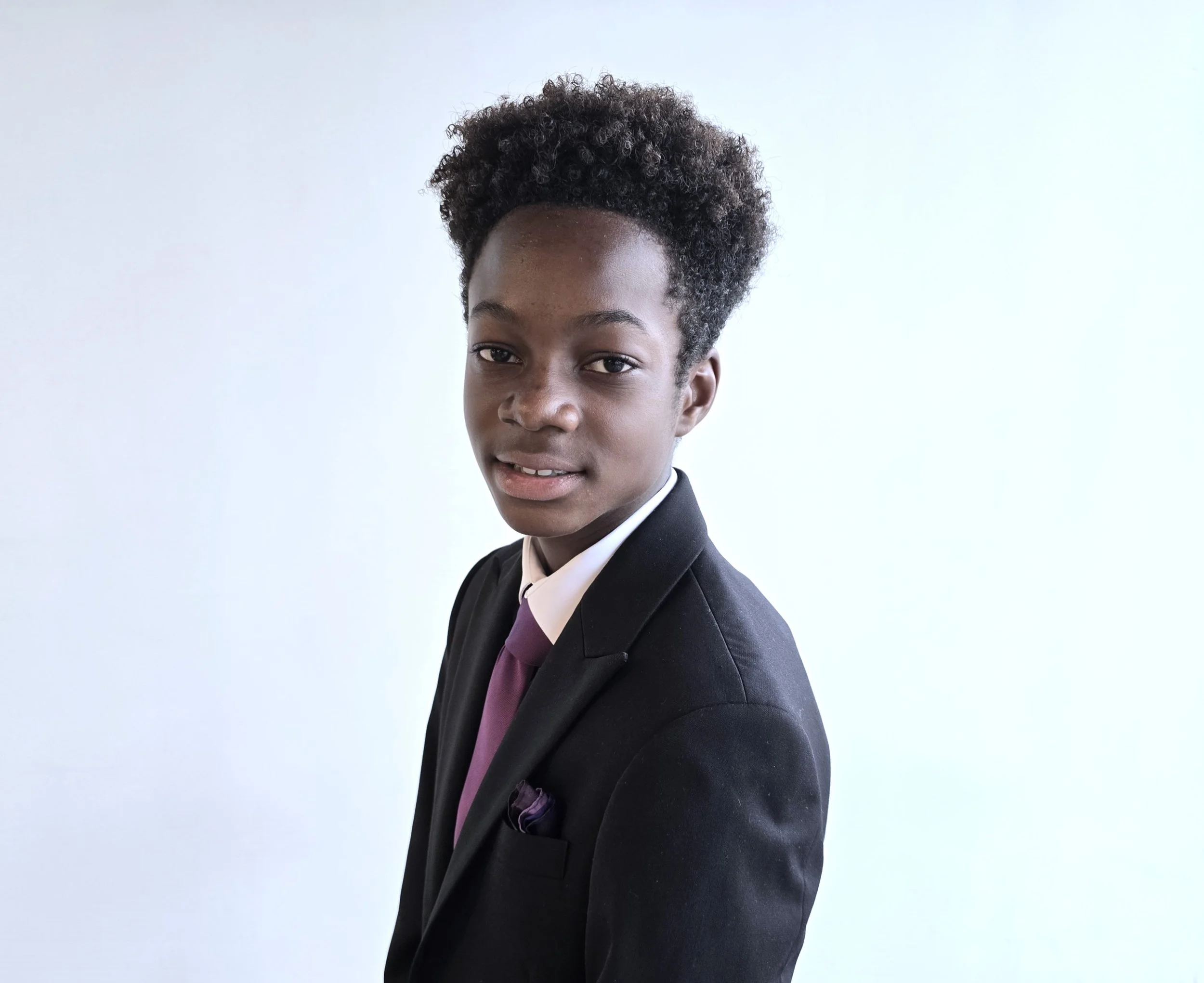
Brennan-Jay Bennett (Photo by Ron Fanfair)
Bennett wasn’t alone.
“Before joining, many of us were still searching for direction,” he said in the valedictorian address at the 100 Strong Foundation inaugural gala on August 28 at the Globe & Mail Centre. “Some dreamt of being athletes or artists and others thought about business. Others were not sure what they wanted to do.”
Having an interest in business, Bennett relished participating in the business pitch competition.
“That was my favourite part,” said the 12-year-old Sir Isaac Brock Public School student. “Working together to design, research and present ideas, we learned creativity and collaboration and how to speak with confidence in front of an audience. For many of us, this was the moment we began to see ourselves as leaders and entrepreneurs.”
Struggling with low grades, poor behaviour and minimal direction, Adam Elmi’s life was marked by turbulence.
Recognizing that the Nelson Mandela Park Public School student was heading in the wrong direction, Morgan – then the school’s vice-principal – encouraged his mother to allow her son to join the program.
She agreed.
“When I look at where Adam is now compared with where he was back then, it is a complete 360-degree turnaround,” the TDSB acting superintendent pointed out. “The shift is incredible.”
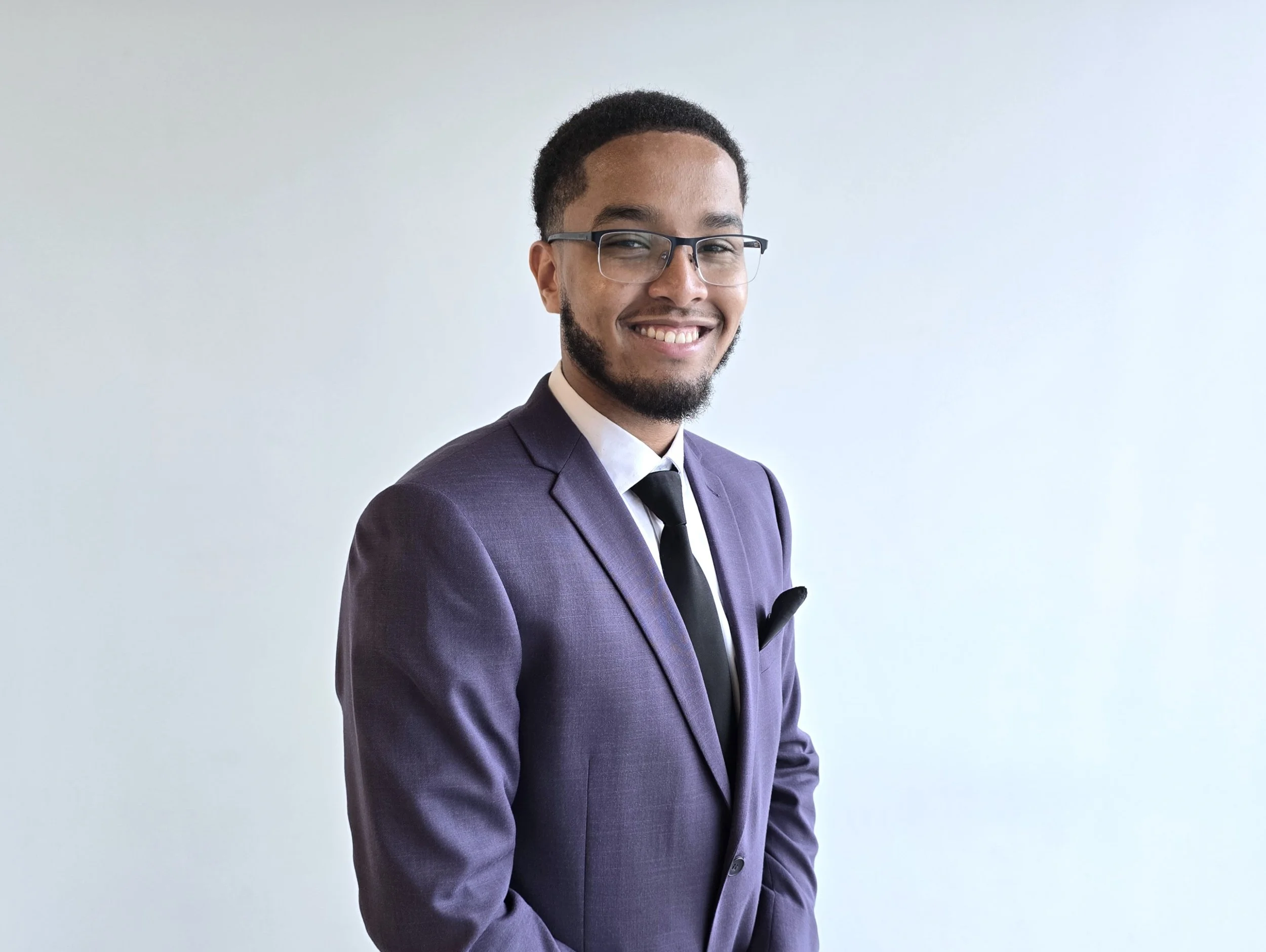
Adam Elmi (Photo by Ron Fanfair)
Through the program, Elmi gained a deeper understanding of himself.
“I also became more confident, outgoing and organized,” the 2017 and 2018 participant said. “I learned about the power of networking and gained valuable insights into leadership.”
Elmi, who recently completed an internship at Mazda Canada, is a fourth-year student in Seneca College’s Business Technology Management program which provides students with a strong foundation in information technology (IT) and business management, enabling them to lead collaborative teams and tackle business challenges.
He intends to give back to the 100 Strong Foundation that has contributed so much to his growth.
Jazre Griffiths admits he didn’t know much beyond East Scarborough where he was raised.
“My world felt small and familiar,” he said. “Joining the academy made me feel like meeting myself. I connected with many others I had never met or had only seen once. 100 Strong expanded my circle and sense of possibility, helping me see myself in a larger community.”
When you are not exposed to much outside your ‘little box’, stepping into something new could be intimidating and overwhelming.
Terrence Nelson could not be faulted for feeling nervous on his first day in the academy.
“My life before then offered limited exposure to enriching experiences,” he said. “100 Strong is an opportunity for young Black men like me to experience things that could influence my future. Your future is shaped by the choices you make today.”

Former Prime Minister Justin Trudeau attended the 100 Strong Foundation fundraising gala. Before the event, he posed for photos with attendees, including Suzette Chin Loy (Photo by Ron Fanfair)
Struggling with conflict resolution and navigating peer relationships, Cairo Penny connected with mentors in the program who offered guidance and encouragement.
“I was exposed to new opportunities, and I grew as a leader,” he noted.
Though Caleb Thorpe’s early life was shaped by school experiences, it lacked the meaningful connection and mentorship that 100 Strong Academy provided.
“Through my mentor’s guidance, I discovered confidence and leadership,” he said. “My story shows how structured support and peer engagement can transform uncertainty into achievement.”
Despite good grades and being surrounded by a strong church community, Zephan Ackie was introverted and avoided new experiences.
“My challenge was internal as I feared anything new,” he pointed out. “I wanted to grow, but I didn’t know how. When I started the program, my introversion was stronger than ever. By the end. I knew most people by name and I found out that leadership begins with self-awareness.”
Shy and introverted, Elijah James spent much of his time at Crawford Adventist Academy East practicing piano and playing video games while avoiding team activities.
When his mother signed him up for the program, he was obviously hesitant and nervous.
“I didn’t really want to be there,” said James. “Strong Academy showed me that stepping outside my comfort zone could lead to meaningful change. It gave me experiences I would not have had otherwise and helped me see the value of being part of a wider community.”

100 Strong Academy graduates Jazre Griffiths (l), Terrence Nelson, Cairo Penny, Caleb Thorpe, Zephan Ackie & Elijah James (Photo by Ron Fanfair)
Caleb McLeod grew up with the program.
After four years as a student and a mentor for two years, he became an ambassador.
McLeod is the son of the 100 Strong Foundation co-founder and his wife, Susan Berridge-McLeod, who have contributed immensely to their son’s healthy development.
“My mom and dad have been influential in different, but equally important ways,” the 22-year-old young man pointed out. “Observing how dad carried himself and how he acted gave me a sense of what my constitution needs to be like as a man. Mom assisted me daily with my essays and homework. My parents never pretended they were indifferent. They used their different perspectives to help me more. Growing up in a dual family household is vital. Even more important is having parents who give their time to personalize life for their children.”
McLeod is studying philosophy at the University of Toronto.
A lifelong toolkit, the academic discipline equips individuals to keep thinking, adapting and questioning through life’s challenges.
“I think philosophy is a bit of an under-rated discipline,” said McLeod who plans to pursue a Master’s in Philosophy and a law career. “It makes you focus on what necessitates specific connections. Sometimes, we have associations with particular outcomes in life and we don’t think deeply about whether these associations really produce that effect. When you spend time studying a discipline like that, you realize there is some nuance behind that and through that, you gain greater wisdom.”
Most young Black boys don’t grow up seeing the Ivy League, or even elite education, as a space where they belong.
Not Christopher Egi who was the keynote speaker at the fundraiser.
At age seven, he was on a home video, telling his family and anyone who would listen that he was going to Harvard University and then become the CEO of a company.
A decade later, an offer came his way to attend the world-class educational institution.
“At first, I didn’t feel like I belonged,” said Egi. “I felt like everyone there was going to be smarter than me or know more than me. I set my goals and believed in myself and I have a family and people who believe in me. I had a great time, did well in school and learned a lot about myself. It was a humbling experience and I tell young people never to believe that anyone is better than them. Have absolute confidence in yourself until proven otherwise.”
While confidence matters, it is not enough by itself.
Figuring out what it means to be a man today, noted Egi, is more complicated than it used to be.
“Being a man is a process and a journey,” the former Canadian junior and Harvard University basketball captain said. “It is a journey you go through with your community, the people you look up to growing up, your parents and your grandparents. Becoming a man is also a journey about learning how to love and doing so graciously and generously.”
The product of Nigerian immigrants with a strong business sense, Egi sold glue sticks to classmates in Grade 2.
He attended Montverde Academy in Florida before enrolling in Harvard where he completed a Bachelor’s degree in Economics in 2018.
Investing in start-ups after securing his undergraduate degree, Egi is enrolled in Harvard University’s four-year JD/MBA program that offers the core curricula of the school’s Master of Business Administration and the Law School JD with a wide range of elective options at both schools.
After friend and former Harvard teammate Seth Towns was arrested and briefly detained while protesting police brutality in the wake of George Floyd’s murder in May 2020, the Canadian and some friends launched ‘No More Names’ to address racial injustice.
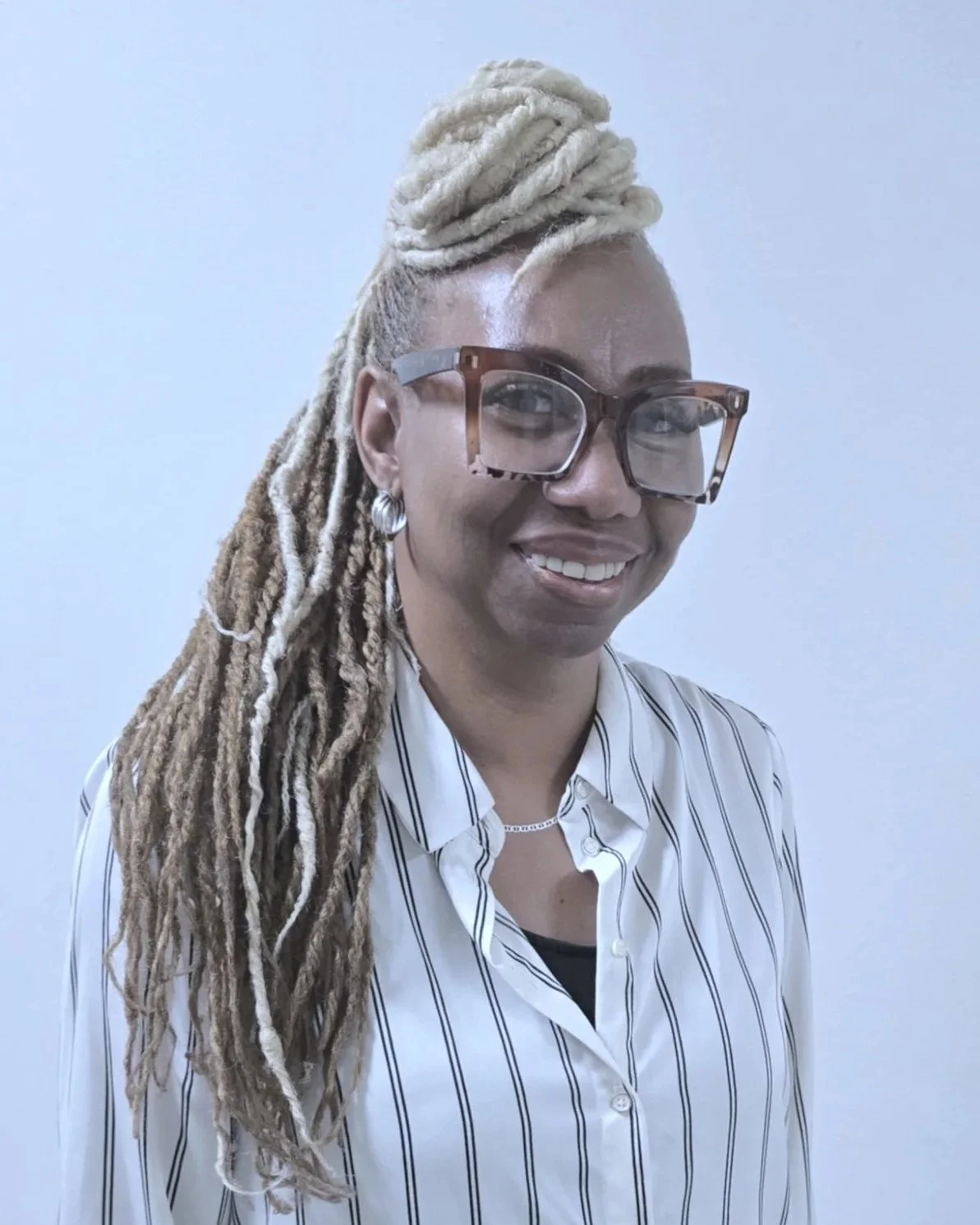
Nearly four years ago, lawyer-turned-entrepreneur Donna Walwyn and marketing communications executive Charmain Emerson were the first women to join the 100 Strong Foundation board.
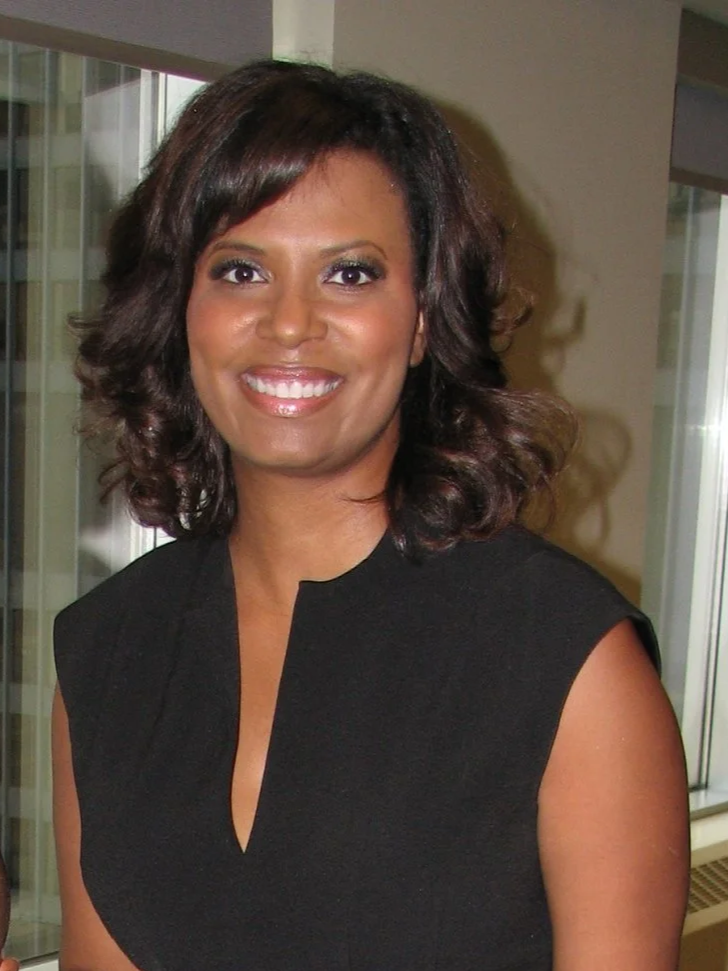
Donna Walwyn (Photo by Ron Fanfair)
“The academy is proof that when we intentionally and consistently show up for our boys, we change the trajectory of lives,” noted Walwyn, a former Canadian Association of Black Lawyers president. “It creates a circle of care and possibility, reminding each young man he is seen, valued and supported by a community that believes in him. For me, it is not just a program. It is a promise that talent won’t go untapped and that excellence will always have champions. It is a legacy of belief made visible.”
Emerson said the academy inspires young Black men to aim high and pursue excellence.
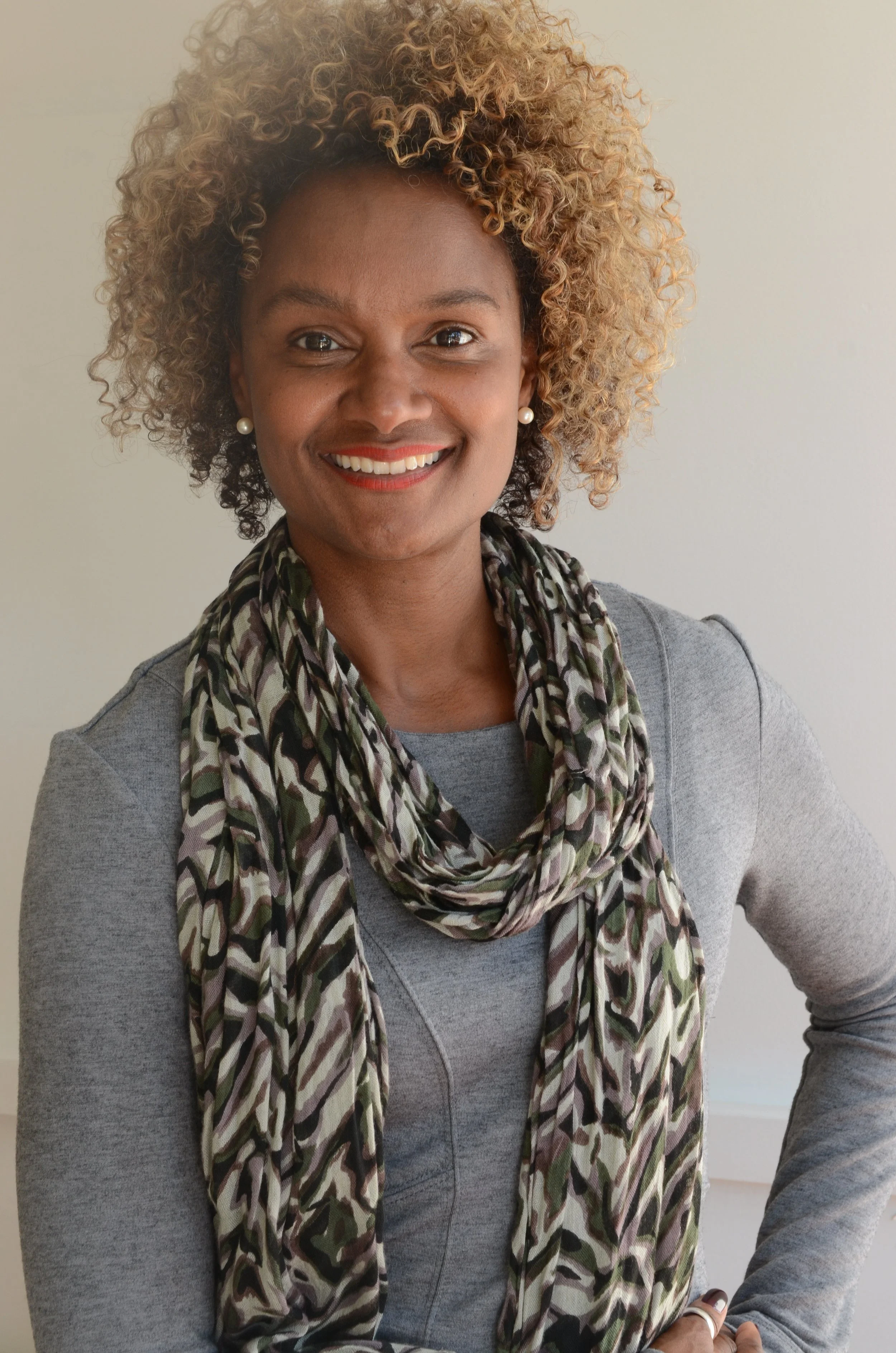
Charmain Emerson (Photo by Ron Fanfair)
“Through the guidance of Black educators and the success stories of accomplished Black professionals, participants see firsthand that opportunity is real and within reach,” she added.
Money is essential for any youth program to not just survive but thrive.
As 100 Strong Academy sets out to scale the program nationally and perhaps build a school, it is shifting from community support to corporate funding.
“When we started, our funds came exclusively from people who we referred to as ‘sustainers’,” said 100 Strong Academy co-founder Marlon Reid who is the treasurer and director of the 100 Strong Foundation. “We were intentional in approaching it that way because we wanted to build as a community first. We wanted to prove to ourselves that we could build something. That is why we did not approach corporate sponsors. As we scale, we are reaching out to more boys and creating more structure around what it is we are trying to deliver.”
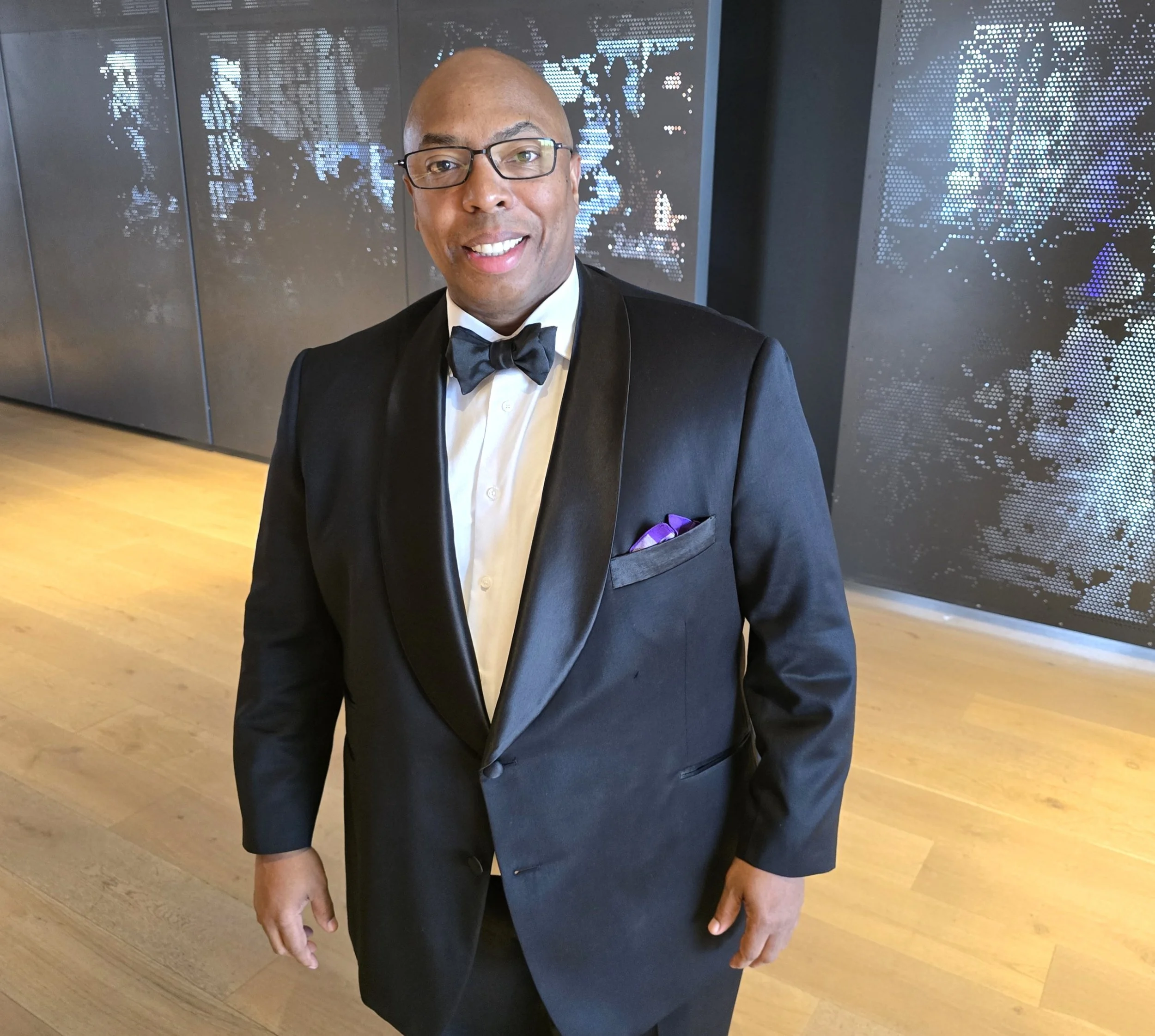
Marlon Reid (Photo by Ron Fanfair)
By supporting the Strong Leadership Academy, investors are interrupting cycles of trauma and incarceration, creating safe, affirming spaces for Black boys to thrive, building a generation of leaders, innovators and nation builders and backing a proven model of excellence, equity and empowerment.