Abebe Bikila Awards recognize outstanding achievements and inspiration
September 22, 2025
Most Ethiopians see Abebe Bikila as a national icon.
Running barefoot at the 1960 Rome Olympics which was his first competitive race outside his homeland, he won the marathon in a world record time of 2:15:16.2.
Bikila defended his title four years later in Tokyo, running with shoes.
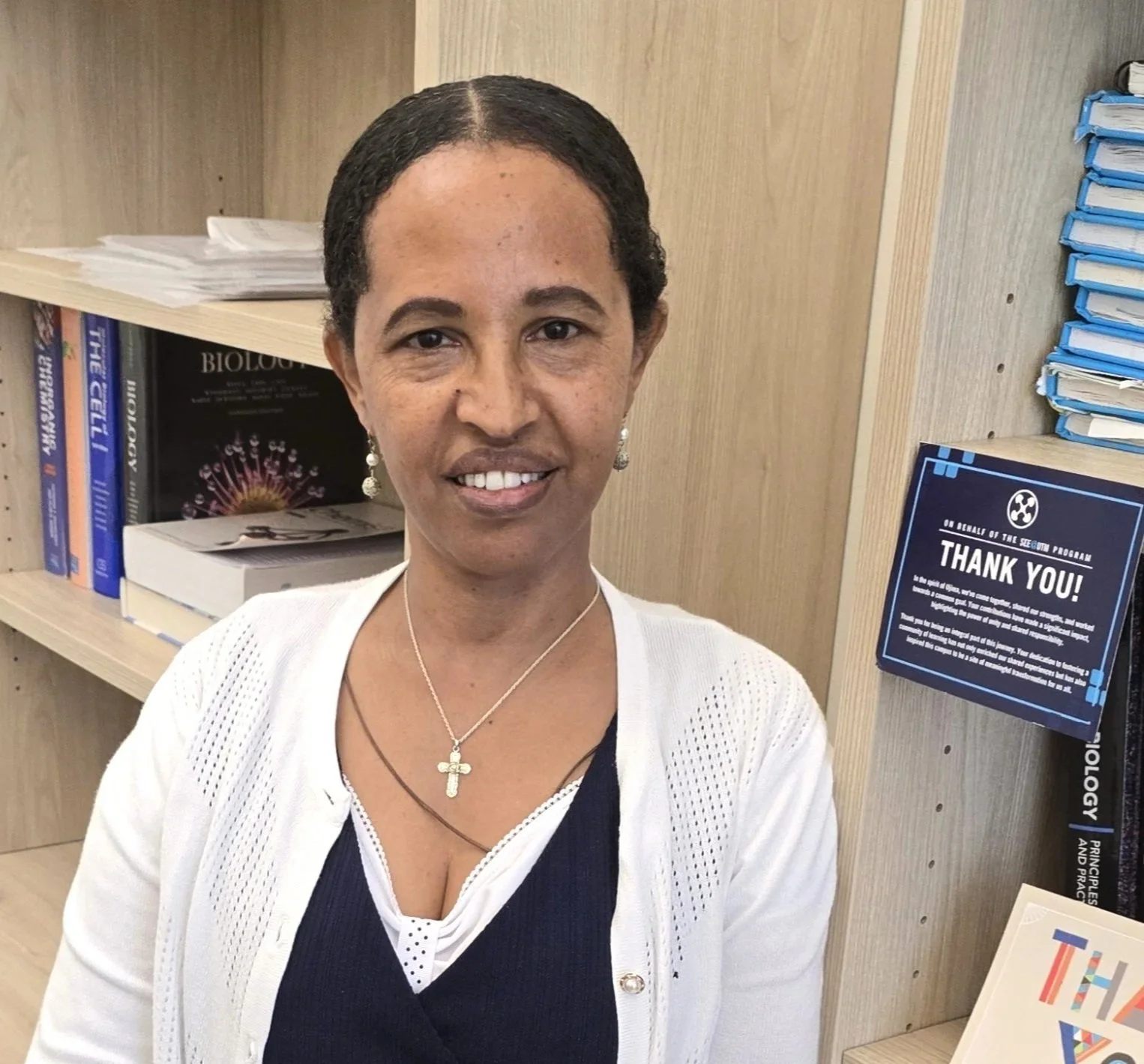
For Dr. Mulu Geletu, receiving an award in his name signifies more than just being honoured.
It represents excellence, dedication, courage, perseverance and a strong connection to her country’s identity and culture.
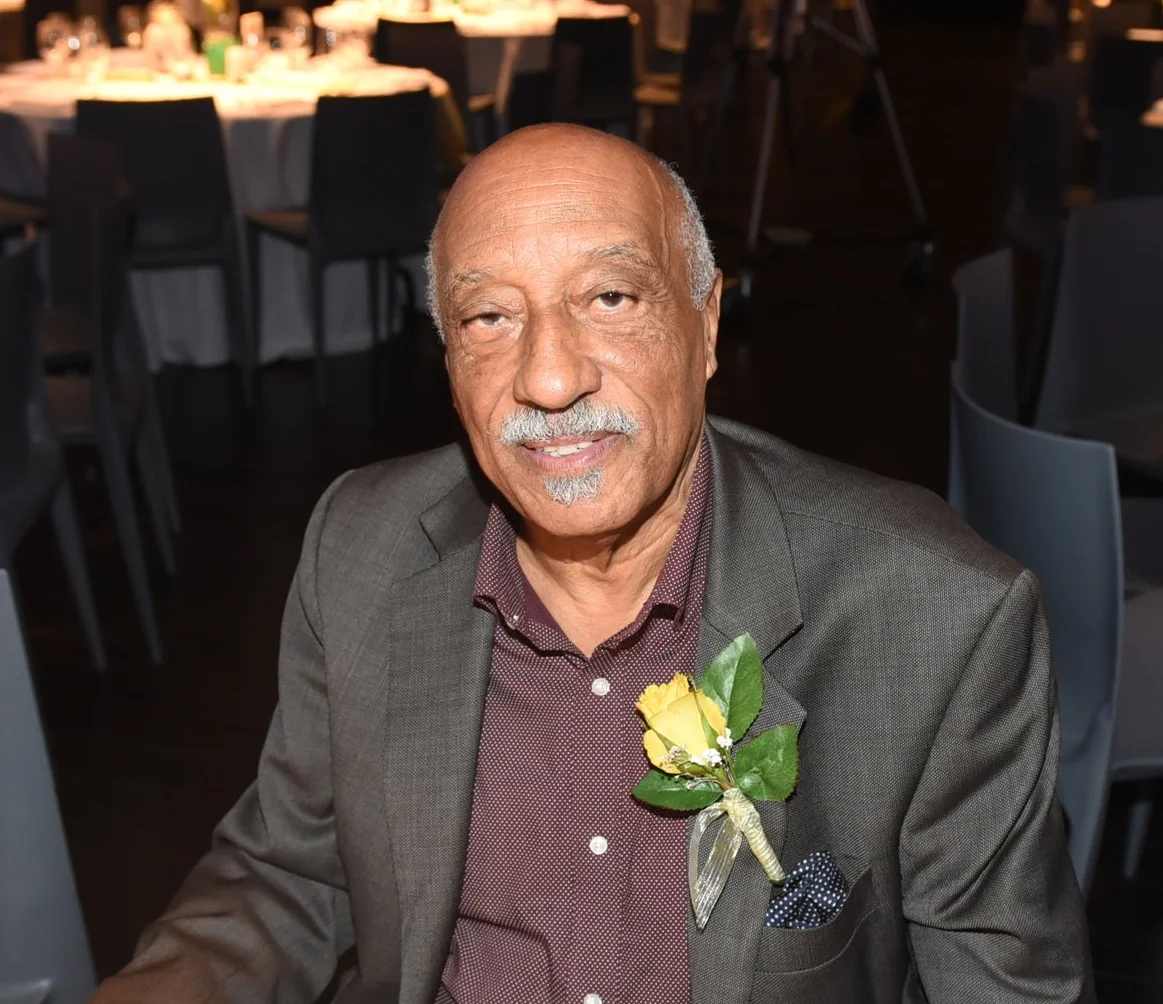
“Growing up hearing about his accomplishments, I was deeply inspired,” said Geletu who was recognized for excellence in community service at the 11th annual Bikila Award ceremony in Toronto on September 20. “By breaking barriers, he set a new standard for us, including me.”
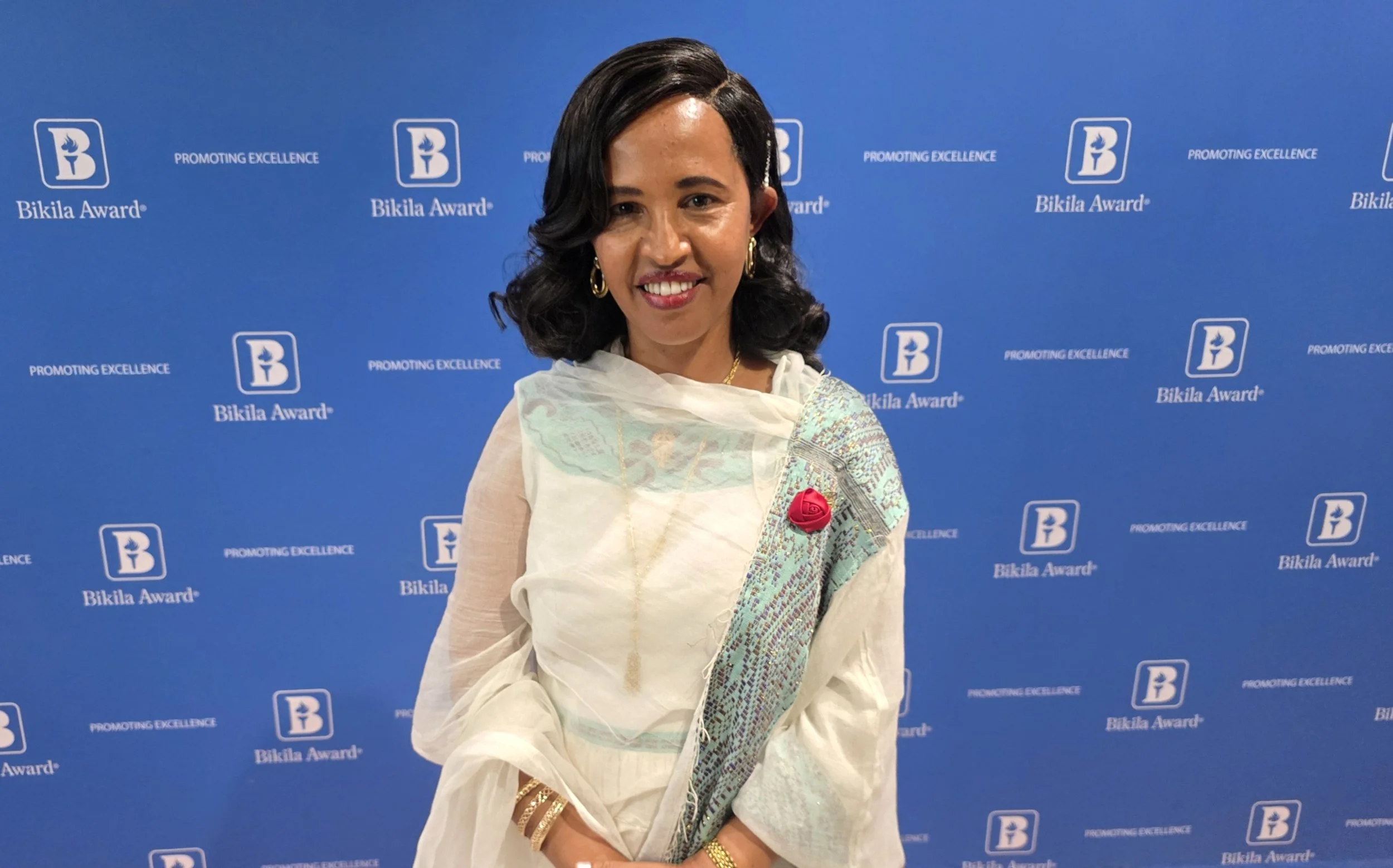
Dr. Mulu Geletu was recognized with a Bikila Award for excellence in community service (Photo by Ron Fanfair)
Since 2020, she has been a Senior Research Associate in Professor Patrick Gunning’s lab at the University of Toronto Mississauga (UTM) campus.
Much of Geletu’s life has mirrored Bikila’s.
Marked by resilience, relentless pursuit and a refusal to settle for the ordinary, she has proven that true greatness is forged not just by talent, but by unwavering determination and the courage to defy expectations.
Geletu’s love for animals and plants growing up fuelled her interest in science.
However, a teacher stoked the fire that ignited her passion further by introducing her to the wonders of biology and encouraging her curiosity.
“He explained things in a way that was easy to understand and made learning enjoyable,” said Geletu. “Because of him, I dedicated my life to science and teaching.”
Graduating high school with honours in the science subjects, she received a scholarship to pursue undergraduate and graduate studies in St. Petersburg, Russia.
Many universities in the world’s largest country require foreign students to spend about a year learning Russian before starting their main courses.
Learning a new language takes time, patience and practice.
“It was not easy,” Geletu admitted. “But every time it felt like a huge hurdle, I reminded myself why I was there. That was what kept me going. Having lots of African students on campus also helped.”
After six years in Russia, completing an undergraduate degree in Biology and a Master’s in Biochemistry, she returned to Ethiopia in 1995 and joined the Armour Hansen Research Institute which focuses on infectious diseases.
While working as a Senior Research Assistant, the idea of pursuing a PhD crossed her mind.
“After applying for PhD positions in several countries, I found a supervisor at Ludwig Maximilian University in Munich, Germany who said he was willing to accept me,” Geletu said. “The only problem was that he did not have funding.”
While in northern Germany, attending a workshop, she contacted the doctoral supervisor who told her she was welcome to come.
Travelling almost 700 kilometres from Kiel to Munich by train, she stayed with a friend and touched base with the supervisor who took her on a tour of his lab.
When he reiterated that there were no funds to bring her on as a PhD student, she reminded him that Germany supports international PhD candidates through a range of scholarships.
“He said he did not know and told me I could apply,” Geletu said. “When he inquired what I needed from him, I asked for a reference letter which he wrote.”
Back in Ethiopia, she successfully applied for the scholarship.
Leaving her two-year-old son behind with family members in 2002, Geletu spent six months learning German before completing her dissertation, ‘Proteomic analysis of acute promyelocytic leukemia’, four years later.
Reaching the end of the doctoral journey was not easy.
Geletu had to relocate almost 375 kilometres away when the lab moved.
Seven months into her second pregnancy, she returned to Munich to defend her thesis.
After coming to Canada in 2007 to do a postdoctoral fellowship at Queen’s University, Geletu joined UTM six years later where she established a cell biology laboratory in the Gunning Lab in the Department of Chemical & Physical Sciences.
Over the past 12 years, she has conducted a variety of cell biology and biochemistry experiments, focusing on the effects of lead compounds on multiple cancer cell lines. In addition, she manages the lab’s operations and provides mentorship to undergraduate and graduate students as well as postdoctoral fellows.
Although Geletu enjoys teaching in the classroom, she finds even greater joy in introducing young people to STEM.
“When I came to this lab, I didn’t see many Black students here,” she recounted. “When I asked why this was the case, I was told science is hard. Finding that difficult to believe, I asked my supervisor if I could bring some students in, and he said yes.”
Geletu started the UTM Black Mentorship Program to promote inclusion, provide mentorship and support STEM engagement among underrepresented students.
She estimates that nearly 200 Black students have pursued studies in science since the funded program was launched.
In addition, Geletu teaches the Amharic language on Saturday to elementary students in the Peel District School Board.
Running multiple outlets of the same business across a city is a clear sign of strong business expansion and management skills.
In just seven years, Milkyas Tefera opened 10 Mofer Coffee shops in Toronto which is a testament to his ability to scale a proven model with consistency and operational excellence.
What makes this achievement even more remarkable is that he accomplished it within only a decade of arriving in Canada.
By most standards, this would be the epitome of success. Yet, after learning he was being recognized for business excellence, Tefera remained humble.
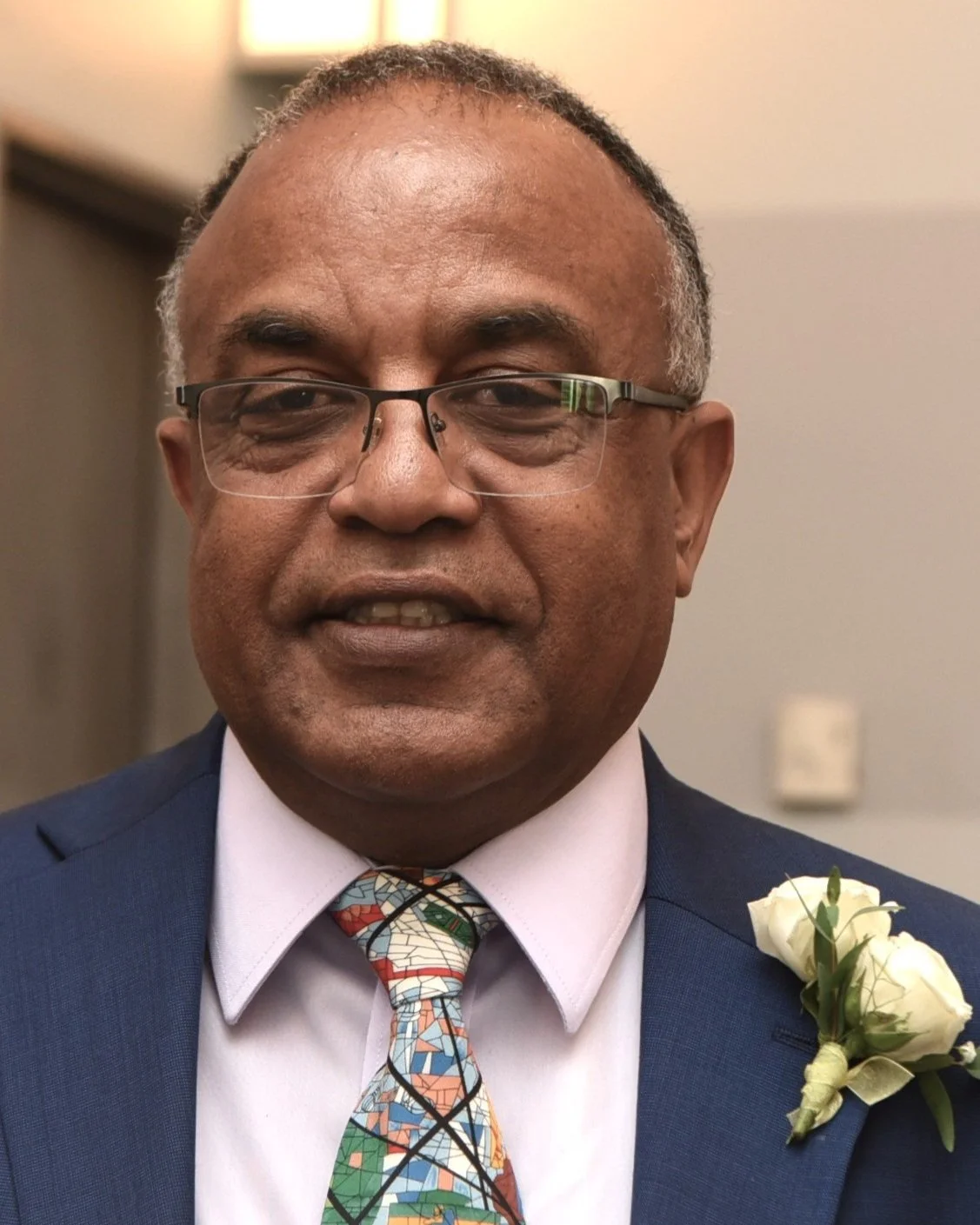
“I don’t know why I am getting this honour because I have not accomplished anything yet,” he said. “I am still growing.”
In many cultures, fathers treat their sons as treasures. When raising a child alone, that love deepens even more.
Growing up, Tsnat Kelemework learned that Canada was a safe country and dreamed of going there.
A decade ago, Tefera acquiesced to his son’s wish.
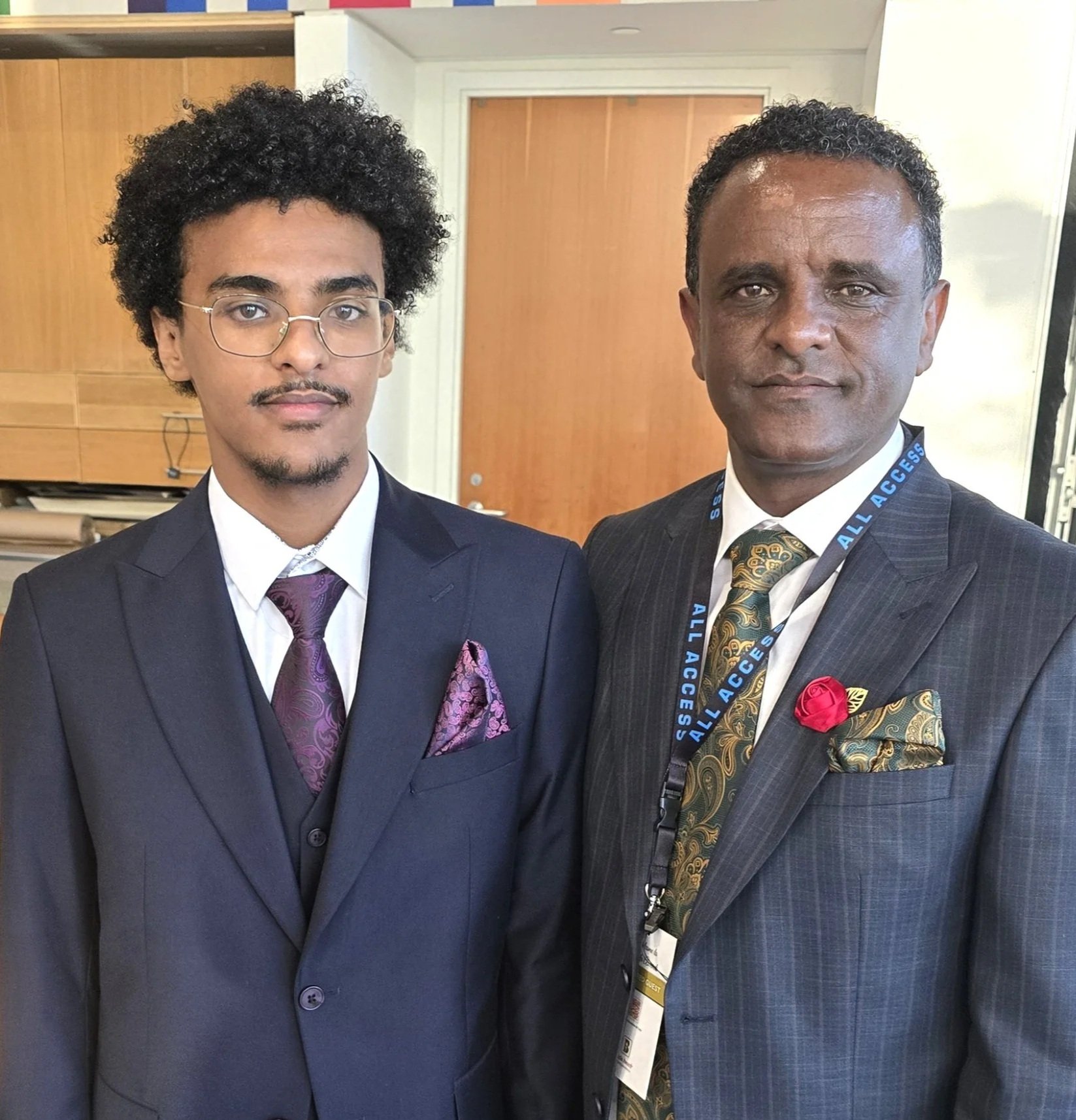
Tsnat Kelemework (l) enocuraged his father, Milkyas Tefera, to come to Canada (Photo by Ron Fanfair)
Transitioning to a new country is never easy. Learning a new language makes it even more challenging.
Though Tefera did not speak a word of English, he came with something far more important which is the will to work hard and overcome any barrier.
At age 10, he began polishing shoes before entering Ethiopia’s lucrative coffee industry where he plowed and tilled the soil under the hot sun before transitioning to the import/export sector.
Ethiopia, considered the birthplace of coffee, relies heavily on the beverage for its economy, with one in four people depending on coffee for their livelihood.
Last year, Ethiopia generated over $2.24 billion in revenue from coffee exports, totalling 409,605 tons, according to the Coffee & Tea Authority.
Recognizing a market for Ethiopian coffee in Canada, Tefera imported a shipment and supplied it to two brothers who ran independent businesses.
“They told me to come back 45 days later for the cheque,” he recalled. “It was supposed to be for $30,000, and I was very happy and excited. I thought if I could supply them and get paid, I would be in a good place.”
But life had other plans.
When he returned, the door was closed, and a notice said the brothers had declared bankruptcy.
“When I asked their lawyer what I should do, he said they were bankrupt,” Tefera said. “The devastation of not getting paid was demoralizing. I was depressed.”
Weighed down by language barriers and the challenges of being new, Tefera found someone who believed in him.
That crucial support gave him hope and strength, reminding him he wasn’t alone. It also encouraged his vision of creating a positive community space where people could experience authentic Ethiopian coffee.
Mofer Coffee’s first location opened in 2018 at 1040 St. Clair Ave. W. Today, the 10 locations employ 60 full-time and 20 part-time staff.
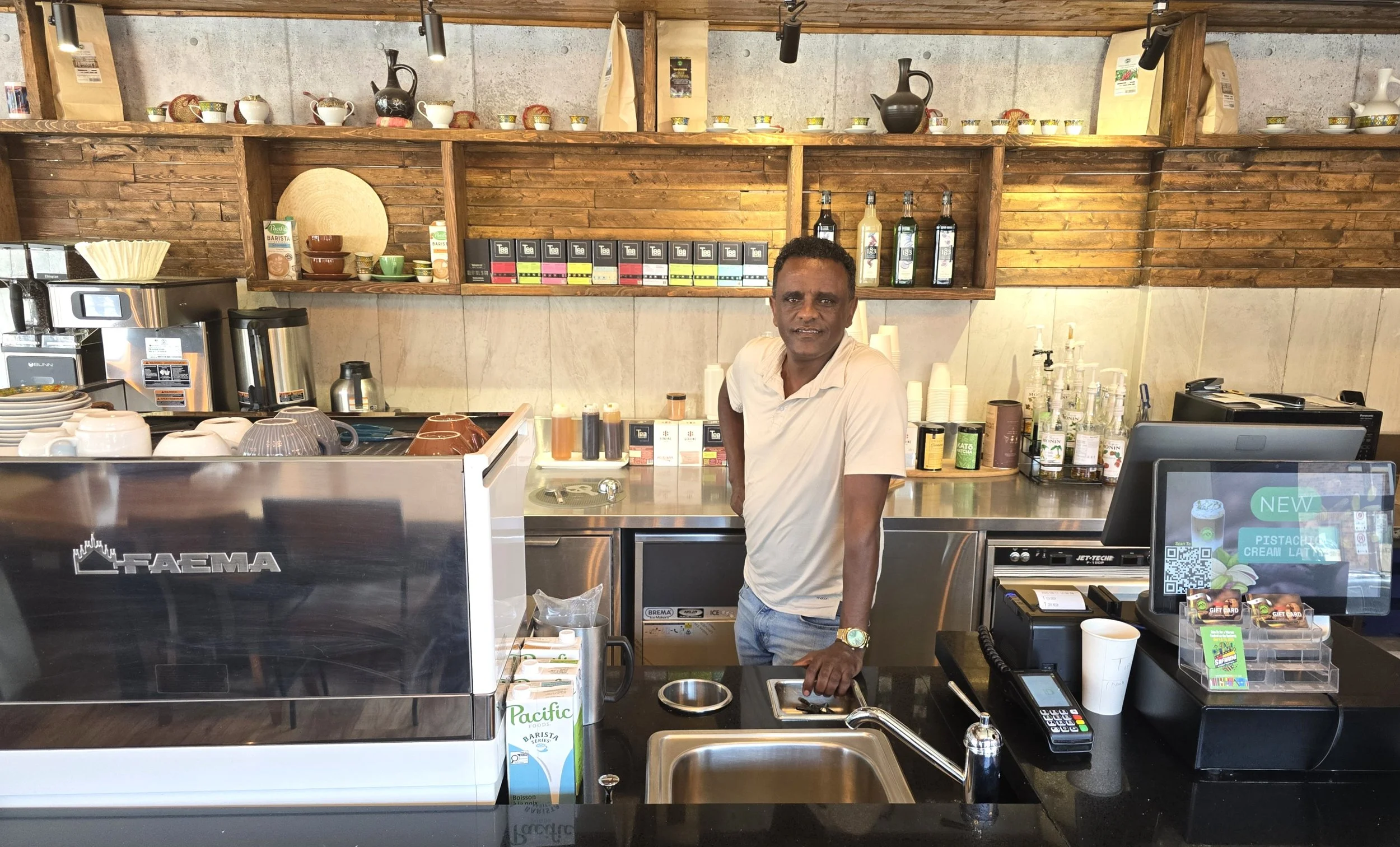
Milkyas Tefera owns 10 Mofer Coffee shops in Toronto (Photo by Ron Fanfair)
Unsatisfied with growth limited to Toronto, Tefera is expanding to the United States this year.
The name ‘Mofer’ is meaningful.
In Ethiopia, a mofer is a traditional wooden plow used to turn and enrich the soil for agriculture.
“I grew up doing that,” Tefera said. “To start anything, you have to do it from the ground up and build a foundation. That’s what I am still doing.”
With his business thriving, he consistently gives back, showing that success goes hand in hand with generosity.
Young people and education are his primary focus because he believes education is key to their advancement and future success.
Tefera donates an entire day’s sales from his coffee shops to the Hamere Noah Kidanemihret Ethiopian Orthodox Tewahedo Church in Kitchener which runs weekly academic tutorials for children and teenagers.
He regularly supports schools in Ethiopia, plans to award two scholarships annually at the Bikila Award event and will soon launch a foundation to support youth.
Tefera’s mother, Enfenis Moges, inspires his commitment to giving back.
“She is a magician economist,” he said. “She raised seven kids on just three dollars a day. I am so happy I can now take care of her and my family.”
Never one to find lasting satisfaction in his successes, Tefera is overseeing the refurbishment of a building in Vaughan that will become a retirement home for Ethiopian Canadian seniors. The 120-room facility, expected to open next year, will bear his mother’s name.
The idea came from meeting an Ethiopian senior who felt isolated in a care home that didn’t meet his cultural needs.
“I met this man about three years ago, and he asked me to bring Ethiopian food because they didn’t serve it there,” the entrepreneur recalled. “I did that for a year before he passed away. After he died, I committed to building a home that serves my community.”
While taking pride in growing his business and philanthropy, Tefera is especially proud of his son who is actively contributing to Mofer Coffee’s business operations.
Kelemework recently completed George Brown College’s Game Programming Advanced diploma program and is pursuing a Bachelor of Information Technology degree at Ontario Tech University.
Two weeks ago, Africa’s largest hydroelectric dam was unveiled in Ethiopia.
Launched in 2011, the Grand Ethiopian Renaissance Dam (GERD) is on the Blue Nile River which is Egypt’s primary water source. It is also located about 15 kilometres from the Sudan border.
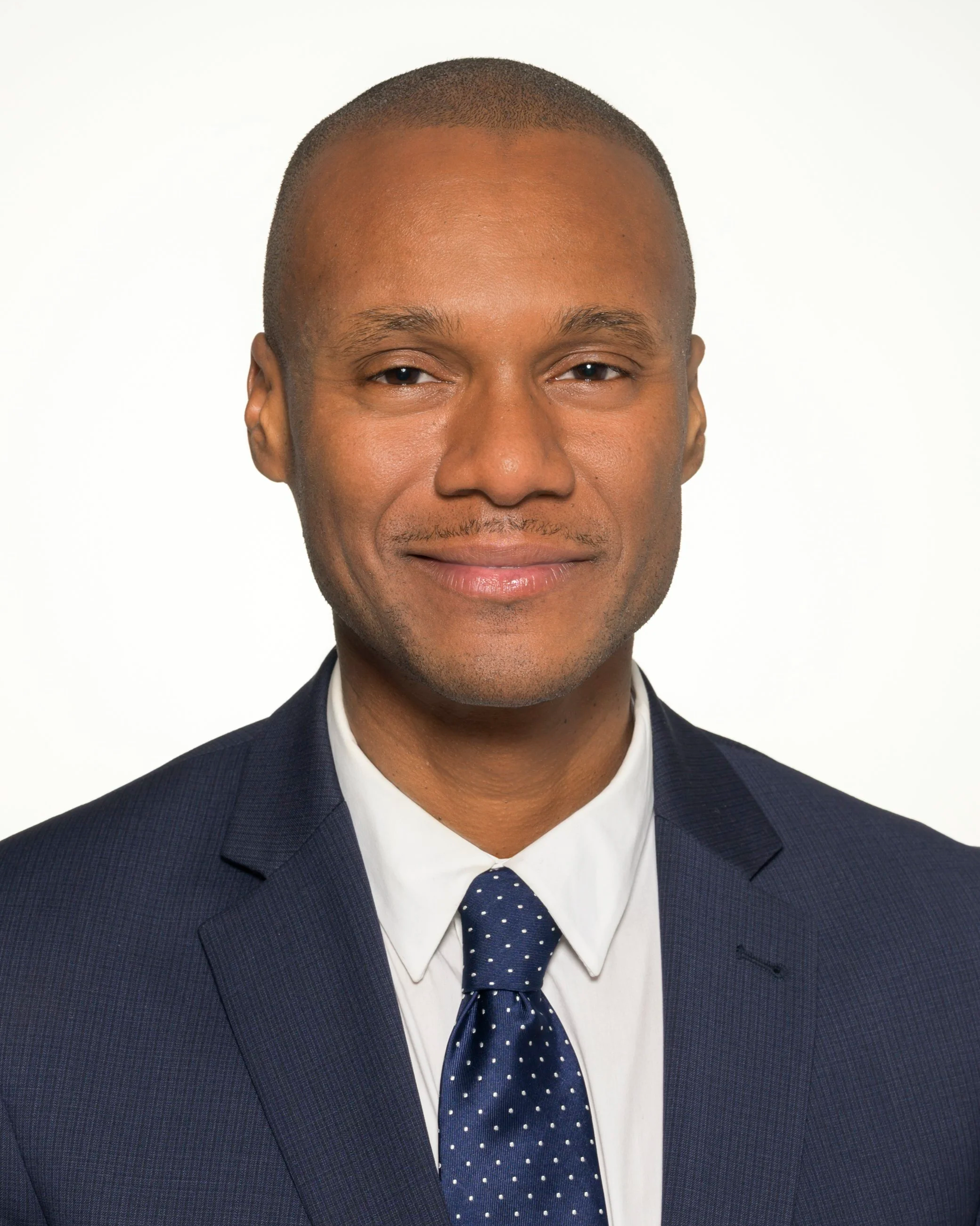
Gedion Asfaw, Ethiopia’s chief negotiator on the project, was honoured and humbled to receive the Professional Excellence Award for accomplishing a historic milestone that will have a lasting and positive impact on his country.
“In 2011, late Prime Minister Meles Zenawi invited Egypt and Sudan to address their concerns and to look at the design and study documents together with us,” he said. “Along with an expert from each of the three countries, we had an international consultant so that the review of the design could be as independent as possible. We reviewed 150 design documents to show we were transparent. It has been a lengthy process to get to this point.”
Generating 5,150 megawatts of electricity, the dam will produce approximately 15,700 gigawatt-hours of power annually.
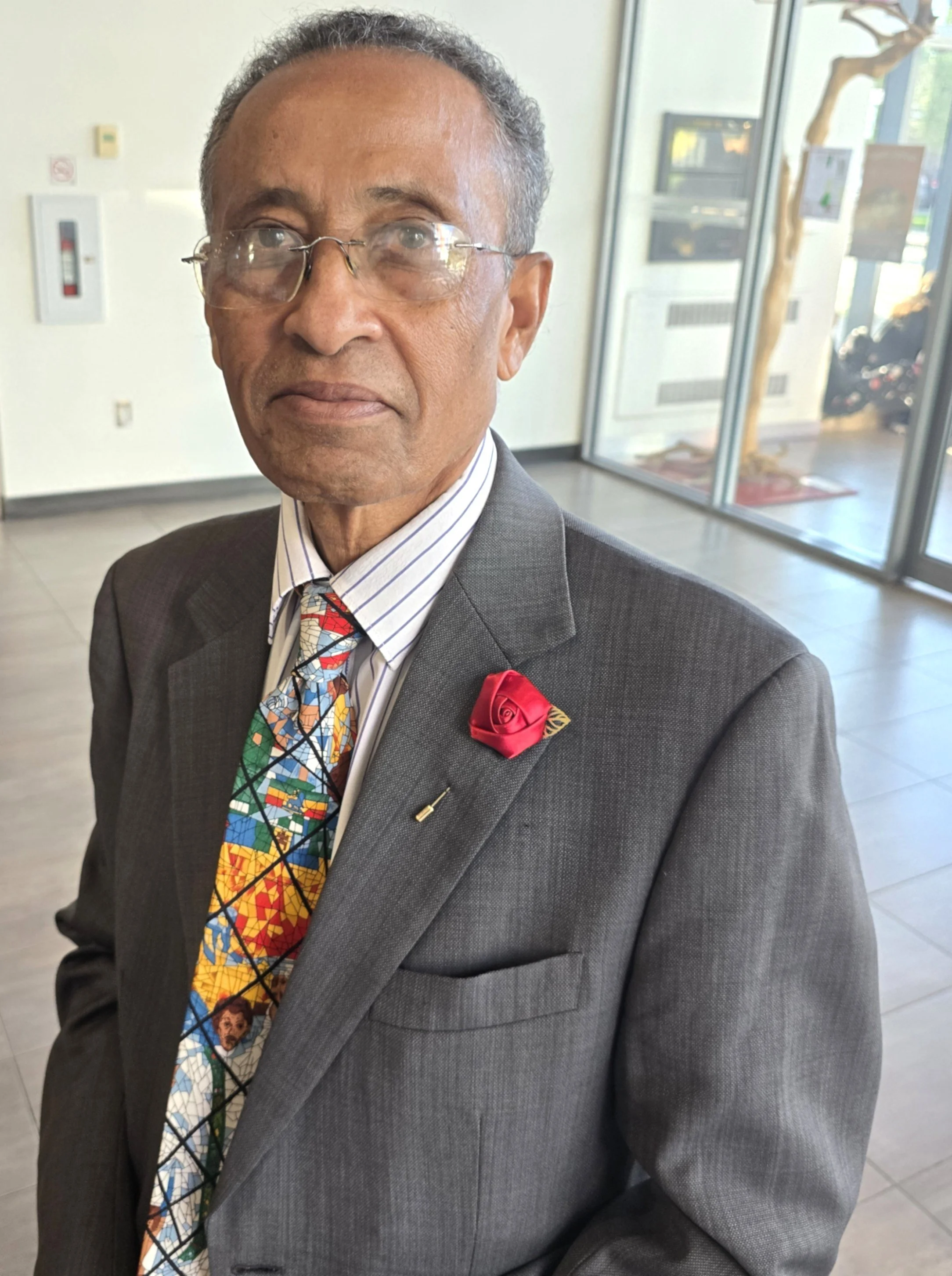
Gedion Asfaw (Photo by Ron Fanfair)
In Canada for the first time, Asfaw said the GERD has the capacity to light millions of homes across Ethiopia and significantly boost the country’s economy.
“Half of the dam’s power output will be exported to several countries, including Kenya, Somalia, Sudan, South Sudan and Djibouti,” he added.
Asfaw said the Ethiopian government is open to dialogue with Egypt regarding how that country could benefit from the dam.
“That shows that we really want to resolve our differences instead of fighting over drops of water,” he pointed out.
Egypt is concerned about the dam, fearing a drastic reduction in its water security from the Nile River. The country’s population of about 118 million rely on the Nile for about 90 percent of its fresh water.
Lifetime achievement awards can be a double-edged sword.
While it is a profound honour, recognizing a significant body of work that has made a lasting impact, some people who are still actively working may feel uneasy, feeling that the award is a send-off rather than a celebration of their accomplishments.
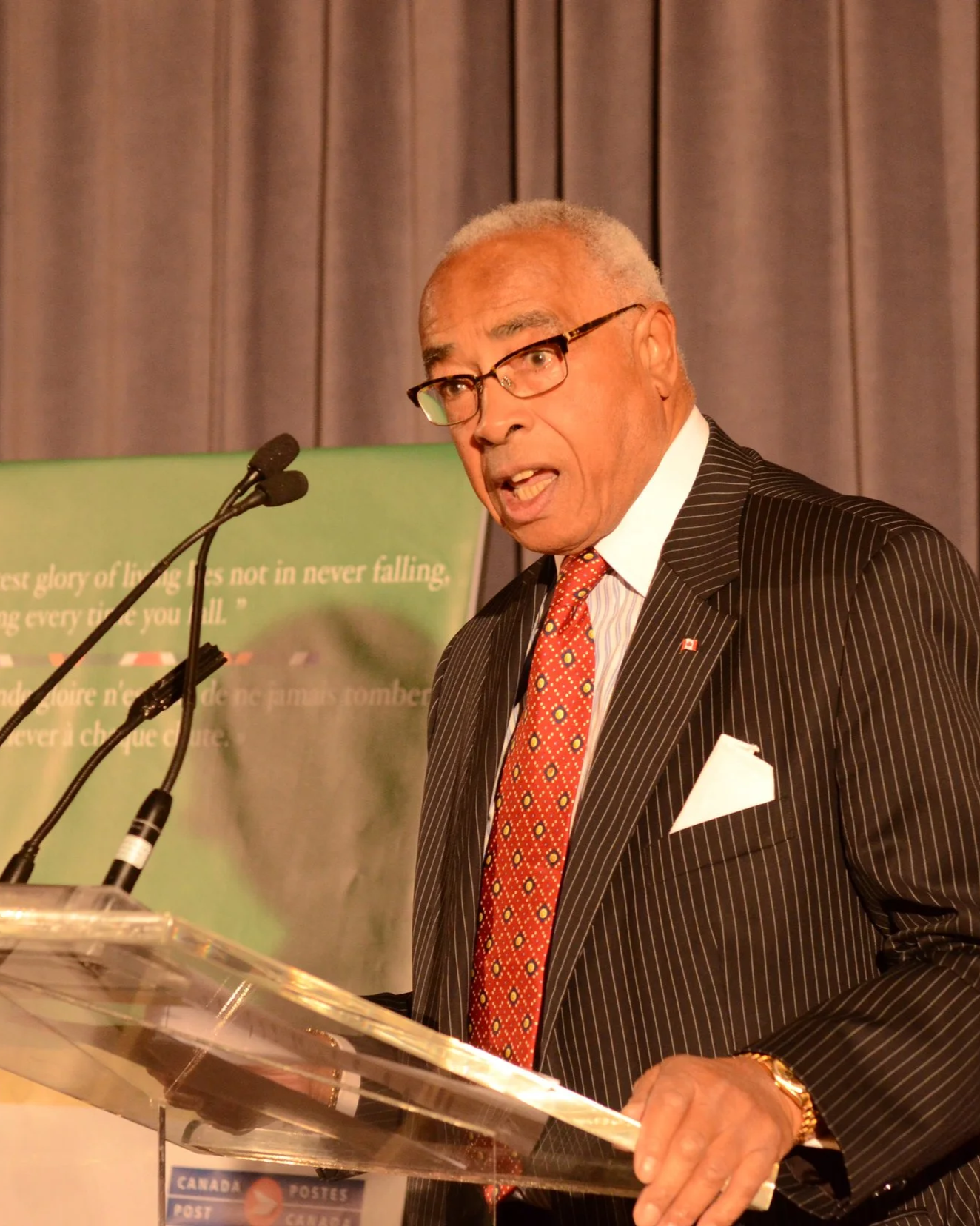
“Just the other day, someone remarked, ‘They are telling you to stop working’, and I said to that individual that I am now beginning,” pointed out Dr. Debrework Zewdie who conceptualized and managed the World Bank’s ground-breaking US$1 billion multi-country HIV/AIDS program that changed the AIDS funding landscape as a pioneering large-scale multi-sectoral response providing direct financing to civil society and the private sector. “The way I see it, a Lifetime Achievement Award at my age is appropriate, considering all I have done over the years.”
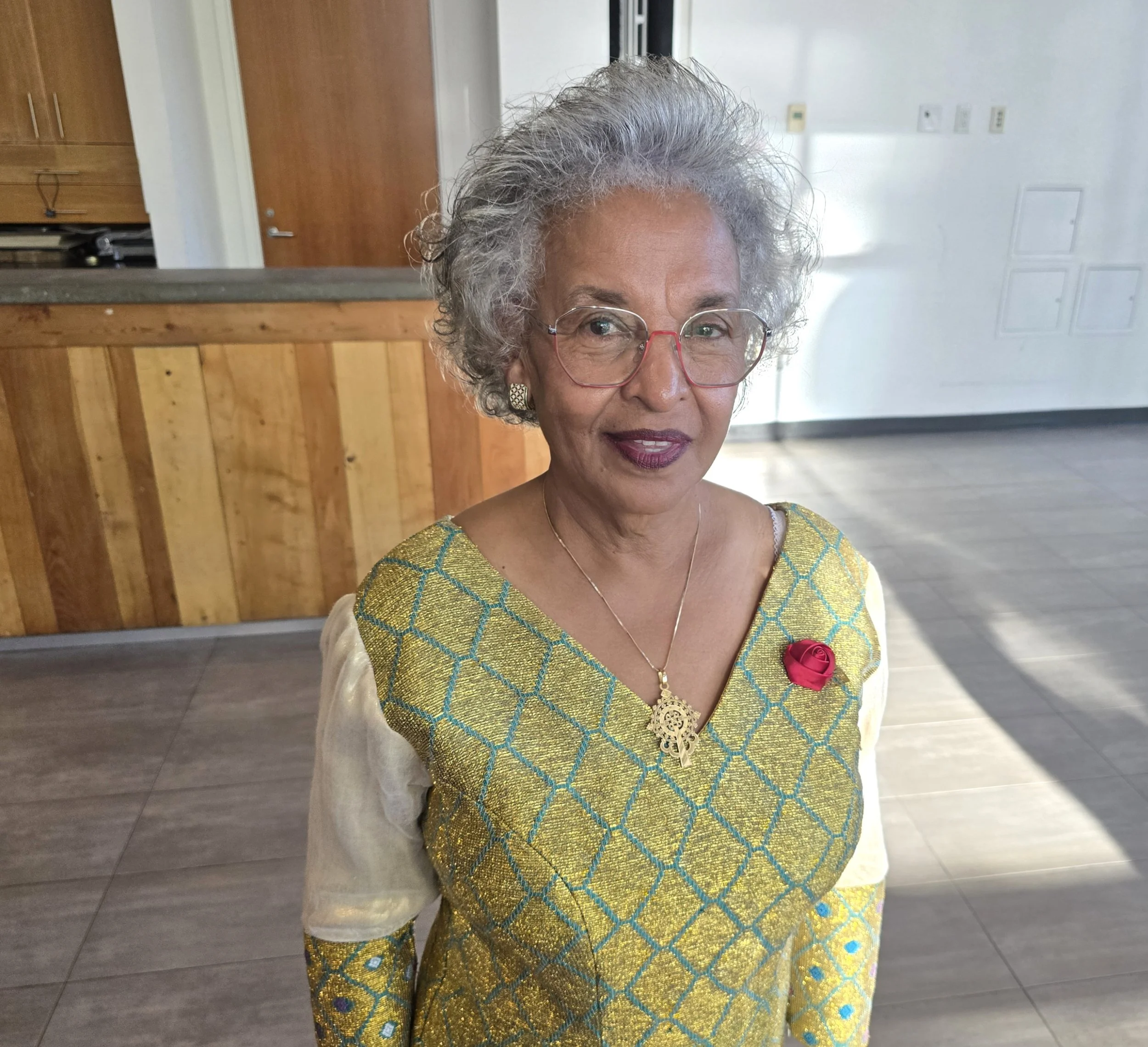
Dr. Debrework Zewdie (Photo by Ron Fanfair)
As a founding UNAIDS Global Coordinator, she was instrumental in making the unique cooperative structure of the UNAIDS family a working reality, fostering strong interagency partnerships.
An advocate for women’s health, Zewdie was the founding Vice President of the Society for Women and AIDS in Africa (SWAA).
She was also the Deputy Executive Director and Chief Operating Officer of the Global Fund to fight AIDS, tuberculosis and malaria, leading its wide-ranging internal reform that culminated in its transformation.
In 2015, Zewdie was appointed a Senior Leadership Fellow at the Harvard T. H. Chan School of Public Health.
Other honourees were Tsegaye Gebremedhin who was posthumously recognized with the Order of the Shining Star of Ethiopia for his pioneering contributions to Ethiopian literature and the performing arts, Dr. Thomas Bogale who is considered among the best neurosurgeons in Ethiopia and husband and wife Drs. Tesfaye Telila and Obsinet Merid whose pioneering leadership in cardiovascular care and outstanding humanitarian service in Ethiopia have made a profound and lasting impact.
Community builders Robel Adugna and Gelila Geremew were the recipients of Youth Impact Awards and Nardos Wakjira, Hana Fikru and Essete Makonnen received Academic Excellence Awards.
“This award is not just for me, but the people who played a role in getting me to this point,” said Makonnen who completed an undergraduate degree in science in 2023 and was recognized with a Murray G. Ross Award for leadership on campus.
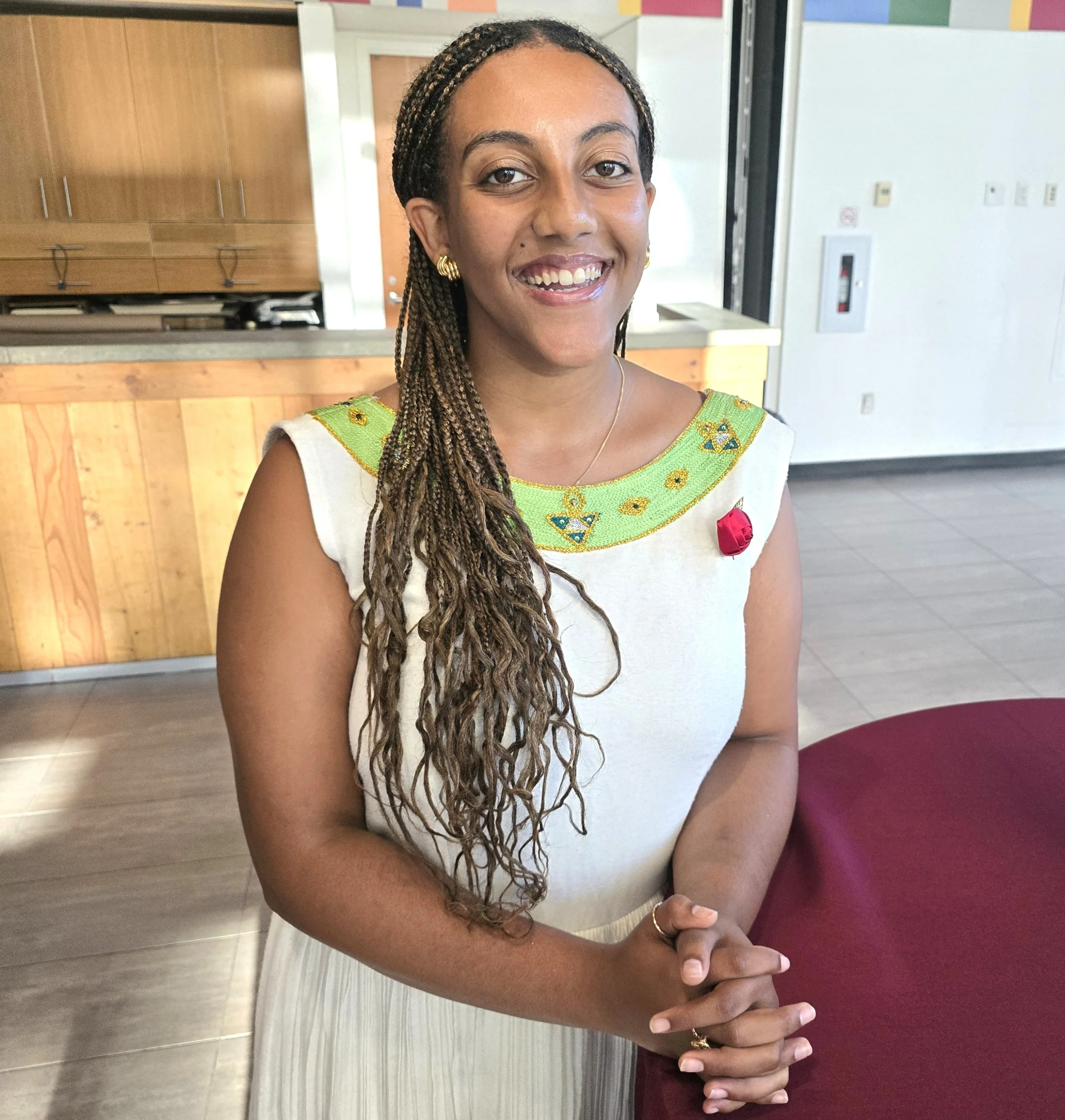
Essete Makonnen (Photo by Ron Fanfair)
Coming to Canada in 2019 to study, the York University Residency Life Co-ordinator plans to pursue graduate studies in public health.
Bikila Award founding member Behailu Atnafu understands that legacy isn't just built after death, but moment by moment while the person is alive to feel it.
Confined to a wheelchair and living in a long-term care home in British Columbia after his wife passed away, Dr. Taffara Deguefe gladly accepted an invitation to receive a Lifetime Achievement Award at the inaugural Bikila Awards in 2014.
In 1946, he won a government scholarship to attend Garbutt Business College in Calgary. Four years later, the former Director of Civil Aviation completed a Bachelor of Commerce at the University of British Columbia.
The first Ethiopian to manage the State Bank of Ethiopia, Deguefe played a key role in modernizing the country’s banking system before retiring to Vancouver in 1994 at age 68.
“Though not in good health, he came and was given a rousing applause after his acceptance speech,” recounted Atnafu who is the Bikila Award public relations officer.
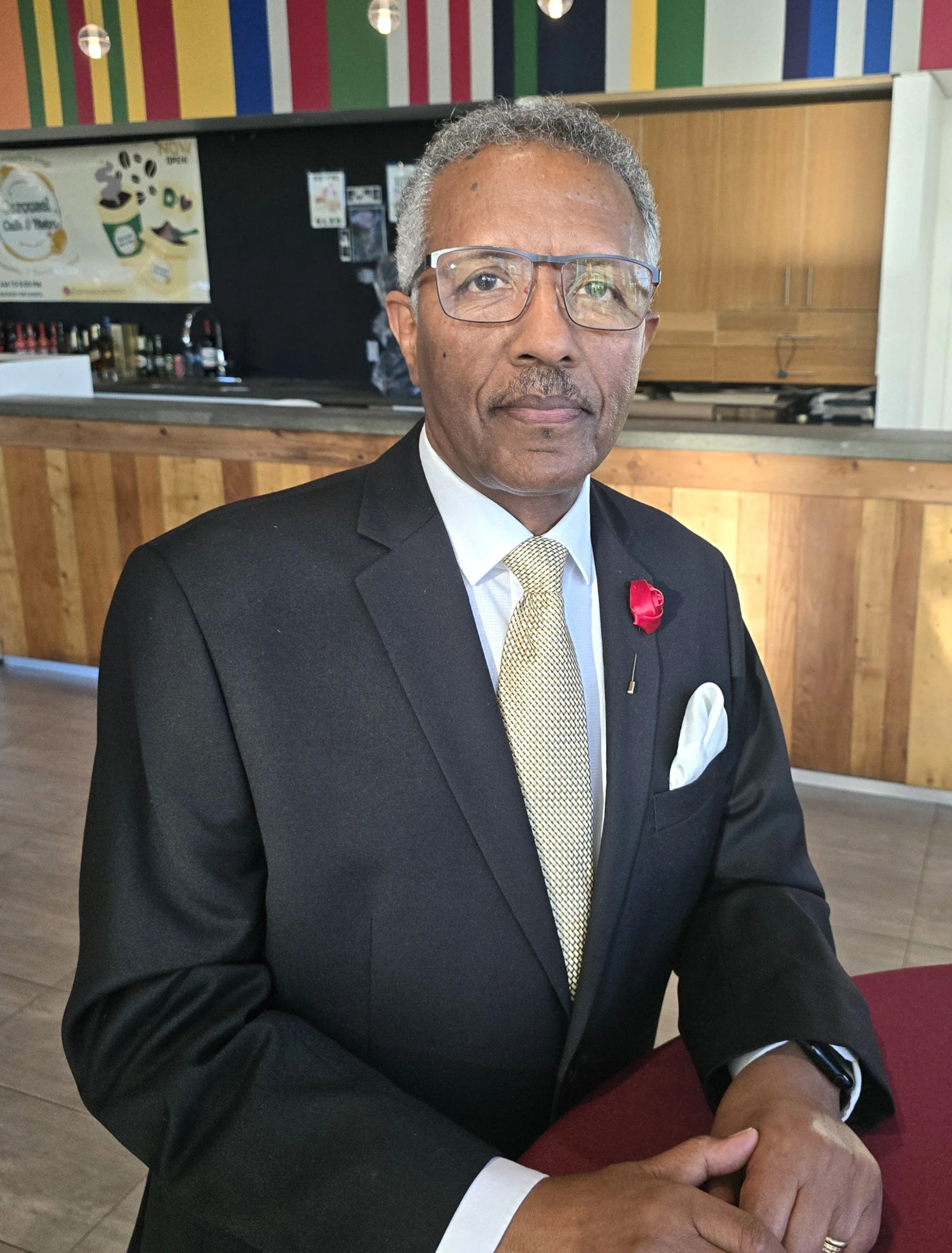
Behailu Atnafu (Photo by Ron Fanfair)
Deguefe died five months later.
“After his passing, his son told me he gloated about the recognition and was so happy to know that he was not forgotten,” Atnafu added. “For me, that signified the importance of this awards ceremony.”
Atnafu along with Tessema Mulugeta, Birku Menkir, Dr. Haregua Getu and the late Tamrat Gebeyehu co-founded the organization.
Bikila, who died in October 1973 of a brain hemorrhage caused by complications from a single-vehicle accident four years ago that left him paralyzed, is globally recognized.
For the past 19 years, Abebe Bikila Day in Washington, D.C has honoured his legacy through an International Peace Marathon & Half Marathon that took place earlier this month.
Global Running Day celebrated the legendary athlete on June 4 this year and a street bearing Bikila’s name was unveiled in Kasama, Japan last month.