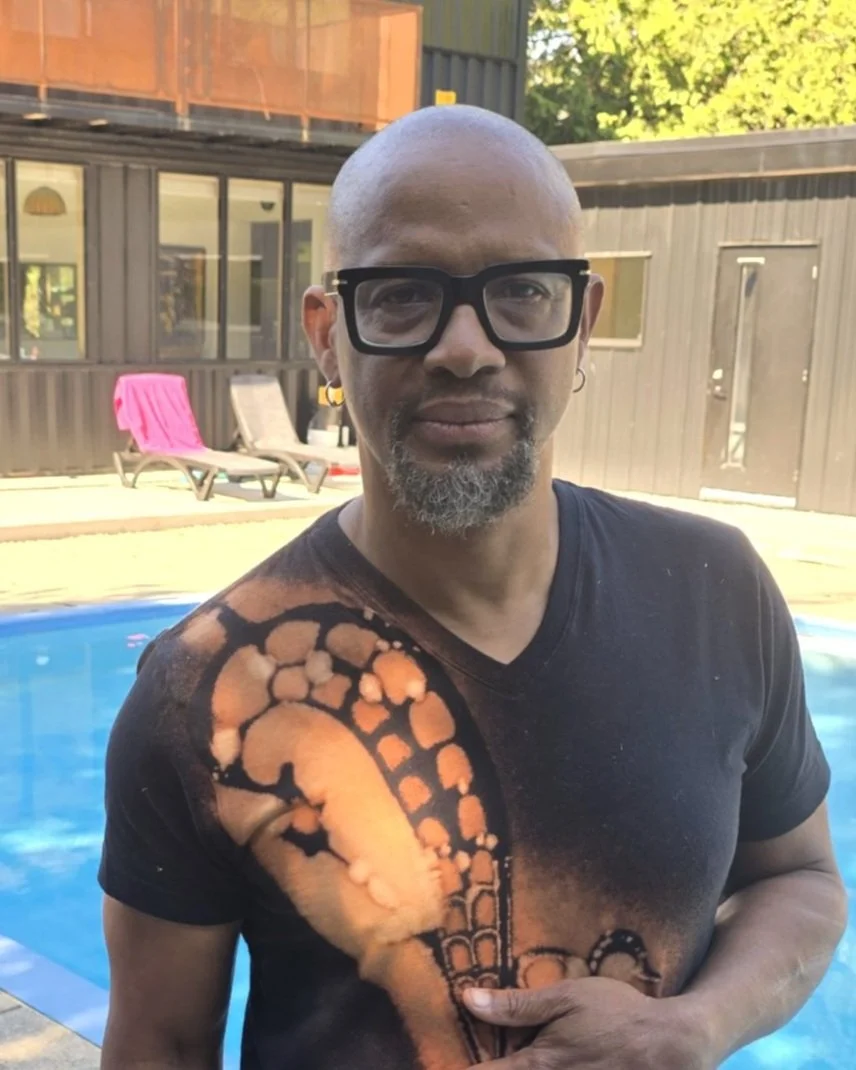
Carl Cassell: From restaurant owner to eco-architect and back
June 2, 2025
Sometimes, a child says something poignant that makes you stop in your tracks.
Just before leaving home for his waitering job at The Westin Harbour Castle, Toronto on Christmas Day 2000, Carl Cassell’s young daughter started crying.
“How could Santa let you work on this day?” he remembered her asking while sobbing.
Cassell becomes very emotional when recalling the story.
“That was a moment,” he said with tears streaming down his face. “I asked myself, ‘Why am I doing this?”
At the time, Cassell owned a home and was making good money working in the waterfront hotel’s Lighthouse, a two-storey, disc-shaped rooftop addition.
“I was just allowing myself to become comfortable and my kid snapped me out of it,” he said. “Though I was making almost $80,000 in tips annually during my two years there, it was time to own myself.”
Cassell quit that day.
“I burnt my uniform and didn’t return their calls,” he pointed out. “I burnt that bridge which is one of the few times I have done that in my life. It had to be done.”
Three years earlier, Cassell completed a Commerce degree at McMaster University’s DeGroote School of Business.
After graduation, most people embark on a job search in their field.
Instead, Cassell came to realize that traditional employment didn’t align with his long-term goals.
“I knew I would not be a great employee,” he noted. “I don’t have what it takes to move through corporate Canada. I could not wear a tie that I felt would choke off the blood flow to my brain and dress in expensive Hugo Boss suits. Those things did not appeal to me. That was a moment when I came to terms with the things I am. I decided I was going to spend eight hours a day not pursuing money, but the things that would make me money.”
With his first child and just 27, Cassell needed a job to support his family.
While it is a bold undertaking, he decided to start a business.
The next four months, in early 2001, were spent searching for space to launch a restaurant.
“I had some equity in the first home I bought when I was 29 and renovated myself, I had a line of credit and I had saved some money,” Cassell said. “I did the math on how much it would take to get a business off the ground. I got an agent who I quickly realized was a waste of time because that person was not acting in my best interest. I got rid of that person and decided I was going to figure out how to negotiate a lease on my own.”
Making offers to landlords was challenging and time-consuming.
“All of them looked at me as if I were crazy and laughed at me,” Cassell recalled. “On the day that I was about to give up after a property owner treated me cruelly and tried to break my spirit, I drove by a crack bar that I had passed on several occasions and never thought much about the building. For some reason, I saw that same building and its surroundings in a different light that day as I drove by. I was looking for this ideal thing when, in fact, what I was seeking was right there.”
Within two days of making the offer to the lessee, he got the building for $36,000 and paid rent while renovating the space.
Two months later in the summer of 2001, Cassell opened Irie Food Joint at 745 Queen St. W. that offered, among other mouth-watering dishes, jerk chicken salad, jerk snapper en papillote, curry shrimp linguine and seafood gumbo.
The euphoria was short-lived.
With the lease expiring in 2003, the landlord showed Cassell an offer of $640,000 he received for the building.
At that time, the city was grappling with the severe acute respiratory syndrome (SARS) outbreak and there was a global concern about the potential for a bird flu pandemic.
“My business was not doing well, I am broke and my landlord is selling the building,” said Cassell.
At a breaking point and looking for relief, the owner threw out a lifeline, proposing a Vendor Take-Back Mortgage which is a financial arrangement where the seller of a property provides a portion or all of the funds for the buyer’s purchase, acting as the lender and receiving payments from the buyer over time.
With a year to come up with the money, Cassell sold his home for $350,000 which helped with the payment.
Ecstatic to cross that hurdle, he, however, had to find a new home for the family.
Always thinking and acting outside established norms and expectations to generate novel and surprising ideas and solutions, Cassell pioneered eco-architecture in Toronto with his groundbreaking shipping container home – the first of its kind in Canada’s largest city -- on Queen St. W. at the back of where Harlem Underground was situated.
Driven by surging real estate costs and the need for innovative and sustainable housing solutions, shipping container homes are becoming increasingly popular in Toronto.
Growing up in Jamaica, Cassell observed shipping containers being used for building and watched an uncle, who recently passed away, modify them for bars.
“I was fascinated by what he did and that stayed with me,” he said. “I had everything worked out in my head what I was going to do and just could not wait longer to get it started.”
It took Cassell three years to build the hybrid structure, using three used shipping containers for one half of the building and conventional methods for the other section.
Not only did he build the structure, but he designed it and did a large portion of the welding and the do-it-yourself projects on the three-bedroom, 320 square metre home he named ‘The Black Star’.
A powerful symbol, ‘The Black Star’ is associated mainly with the ‘Black Star Line’ which is a shipping company founded by Marcus Garvey.
Samuel Cassell, the grandfather he never met, was a staunch Garveyite.
“Garvey and my grandfather met in Limon, Costa Rica and I went there in 2019 to see the place because I knew they were there,” he said.
Among the approximately 50,000 Caribbean labourers who helped construct the Panama Canal, Samuel Cassell got a job as a cook on a ship bound for the United States, arriving in Harlem in 1914 and becoming a Universal Negro Improvement Association (UNIA) member.
At the time, the Upper Manhattan neighbourhood was a vibrant and growing area with a surging Black population and emerging as a centre of Black culture.
The names of Cassell’s restaurants – Harlem East and Harlem Underground – were inspired by the Harlem Renaissance, a cultural and artistic movement in New York City.
After a decade, Harlem on Richmond St. E. closed in February 2017 and, in November 2019, Harlem Underground ceased operating for Cassell to focus on his wife’s dream of opening a wellness retreat.
“Over the last decade Harlem Underground has been an epicentre of black food and culture within the downtown core,” Cassell said at the time. “The decision to close comes not from the restaurant itself, as I continue to be supported by the community at large, but from a personal need to see other creative endeavours grow.”
Wives contribute significantly to supporting their partners.
Now it was Cassell’s turn to give back to Ana Silva and what she needed.
The couple, who are both art lovers, met at Irie Food Joint shortly after it opened. She was doing a fundraiser for a theatre and visited the restaurant with a friend who was a chef and knew Cassell.
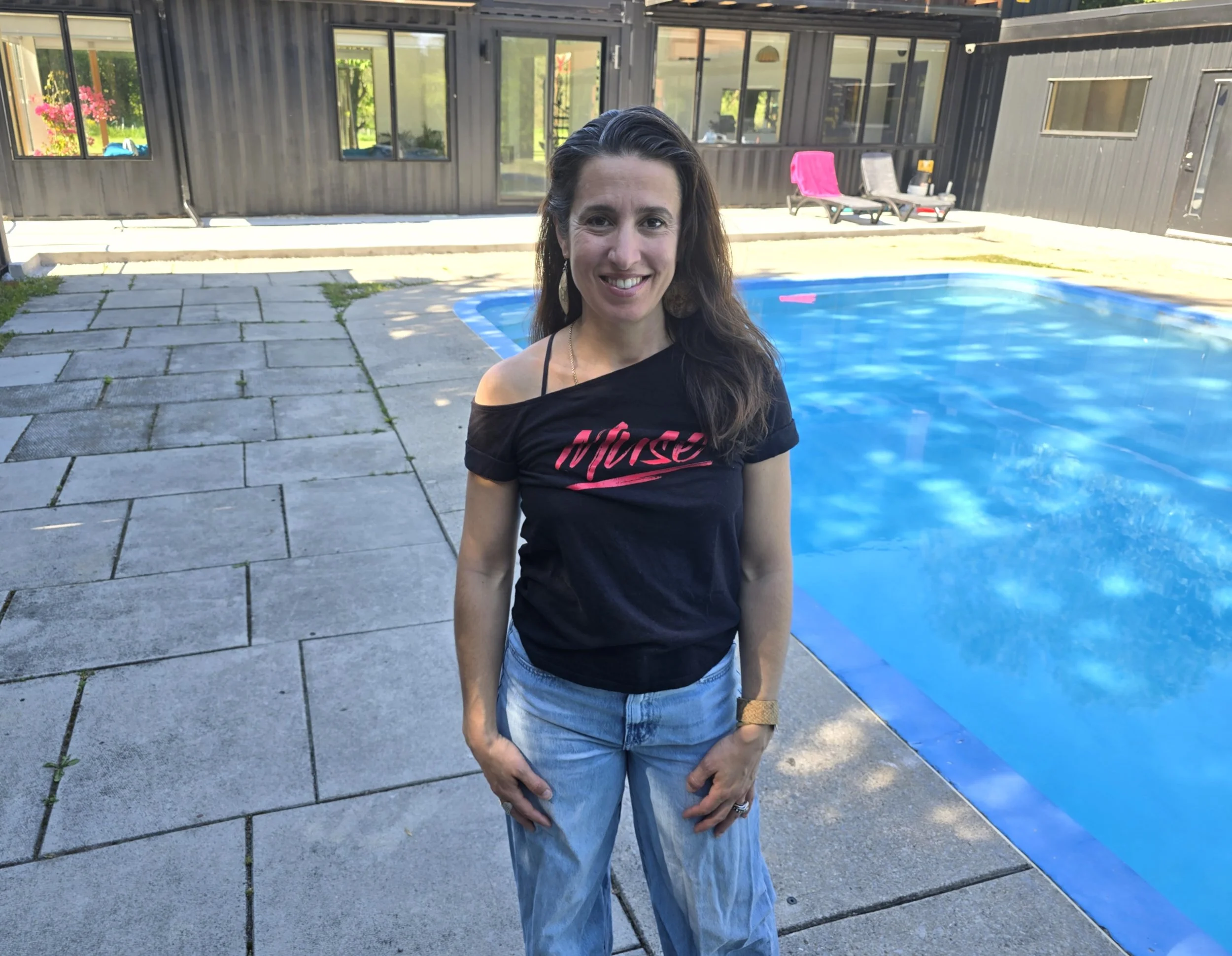
Ana Silva (Photo by Ron Fanfair)
Married since 2014, they have five daughters, ranging in age from 28 to 11.
“Ana gave so much to the family and was there waiting while I was building my dreams,” the accomplished artist and builder said. “I could not let her wait any longer.”
In retrospect, closing Harlem Underground a few months before COVID-19 surge worldwide in March 2020 spared Cassell a lot of financial and emotional stress.
With most activities suspended because of the deadly virus, he had the time to focus solely on the retreat located along the banks of the Nottawasaga River in Simcoe County.
In 2012, he and Silva bought the 54-acre forest land surrounded by streaming waters, wildflower meadows and gardens.
“This was the place where the family came to on weekends to get away from the hustle and bustle of the city,” he said. “It is an interesting piece of land, almost to the point of being Jurassic. It has always been a tree farm.”
In 2016, Partisans and Giant Container Services repurposed shipping containers for Luminato Toronto Hearn Generating Station. They were used for a 1,200-seat temporary theatre and stored away after the event.
The next year, Cassell sold a home to Anthony Sargent who was the Luminato Festival Toronto Chief Executive Officer.
“I found out who it was only because I discovered some old tiles from another renovation project I did while cleaning out the garage,” he said. “I thought I should give them to the guy who bought my house, so I drove them over to his place and let him know I was the person who owned the home and I had some extra tiles he may need at some point. He was so grateful that he gave me his cell phone number and said, ‘Call me if you ever need tickets for a Luminato event’.”
Cassell accepted the offer.
“While driving by Lakeshore waterfront one day, I saw some containers and knew they were the ones used at the Luminato Festival,” he said. “I called Sargent, inquiring if he was selling them and he said, ‘We are’.”
Those words were music to Cassell’s ears.
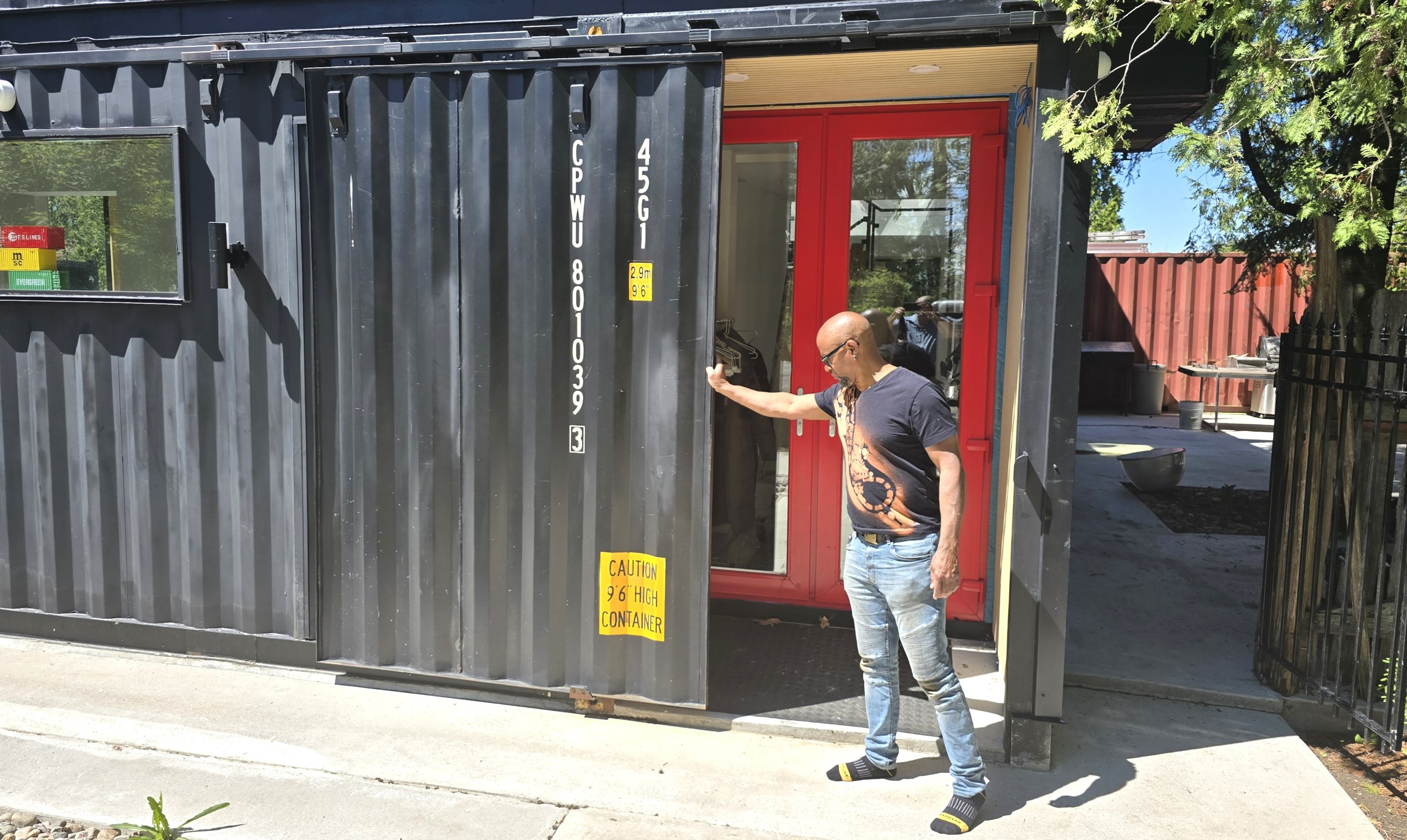
Carl Cassell opens the door made out of a shipping container that leads to BlackHouse entrance (Photo by Ron Fanfair)
The 16 containers were used to build the retreat – BlackHouse – that has 10 bedrooms with individual decks, eight bathrooms and 2,000 square feet of flexible communal space.
“Holistic health has always been my passion,” said Silva who came to Canada at age eight from Lisbon, Portugal. “When we started coming up here, something in me shifted and that was my relationship with nature. Before that, my connection to nature was the beach and the ocean that I grew up close to. In the early days while I was in this place, I didn’t have a comfort level. I had never gone camping and had never been in a forest.
“Over time, I found peace here. As I got more comfortable in the forest, I found it had a long-lasting effect on me. I slept well, thought clearly and just felt better. I wanted to know why that was the case and read books that taught me about the effect nature has on the brain. As I dived deeper, I came across the science of forest therapy which is a practice of communion with nature.”
In the North Building are pool view and sunset rooms, a YES Room, a communal area lounge and a spiral peacock staircase. The South Building comprises poolside and sunshine rooms, a treehouse and a private retreat.
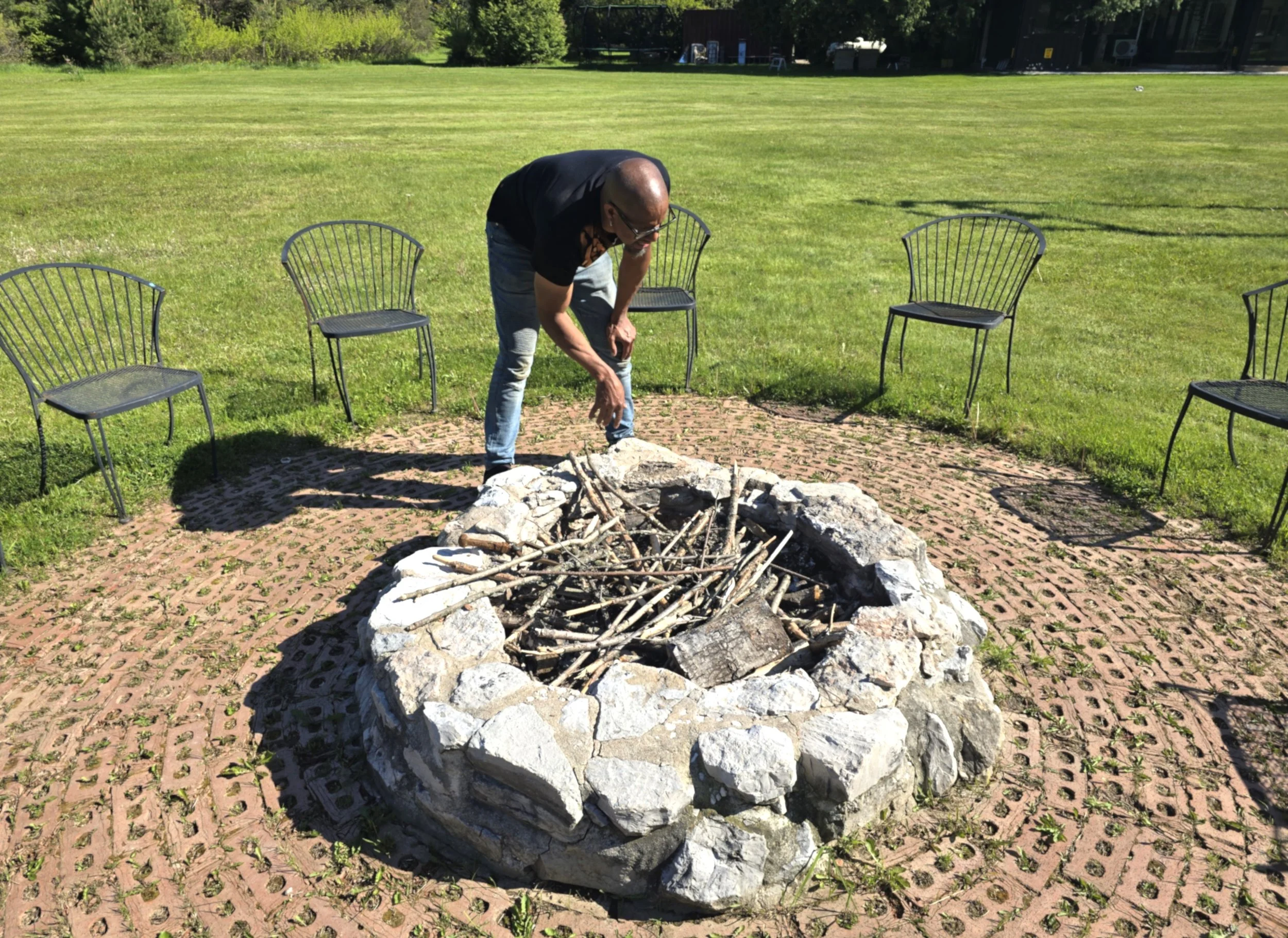
Carl Cassell at the outdoor fire pit (Photo by Ron Fanfair)
A pool, communal dining room, kitchen, outdoor fire pit and garden swing are in the 2,000 square feet flexible communal spaces.
“This innovative space represents the perfect synthesis of my Jamaican roots, artistic vision and commitment to environmental consciousness,” Cassell, whose many paintings decorate BlackHouse, noted.
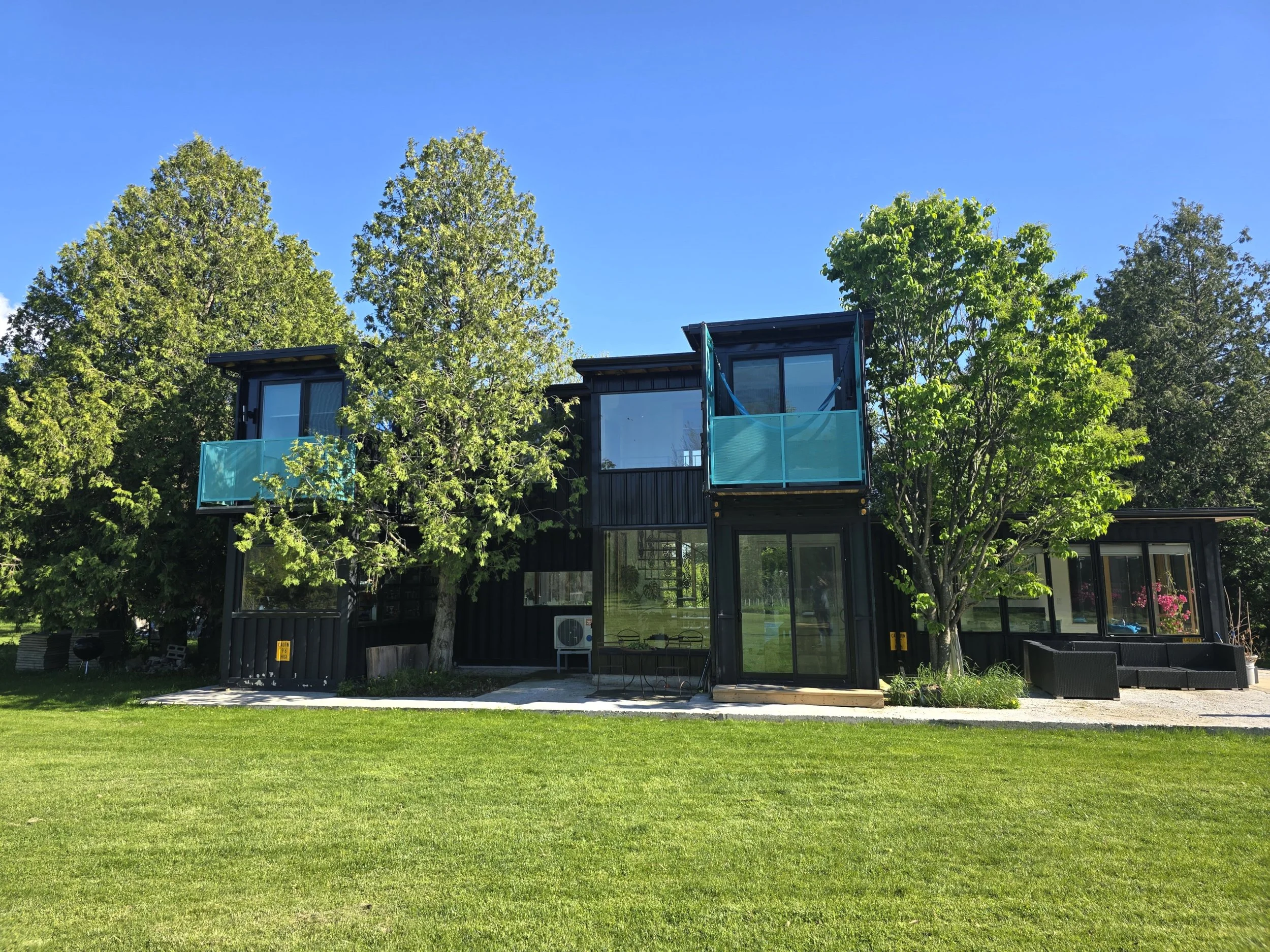
BlackHouse is a safe and creative space (Photo by Ron Fanfair)
Silva said BlackHouse is a safe and creative space for people to experience joy, peace, connection, rest and the freedom to be their natural selves.
“My ideal client is someone who needs to get out of the city,” she said. “I had that need and know what it is. It is not just for individuals. We have had community and leadership groups and grief circles. It depends on what you are looking to get out of it.”
In addition to forest therapy, BlackHouse offers seasonal elemental care, hatha yoga, holistic nutrition, mindfulness and meditation, purpose elemental readings, ancestral ceremonies, art therapy and the Wim Hof Method which is a system that combines breathing exercises, cold exposure and commitment to practice, improving physical and mental wellbeing.
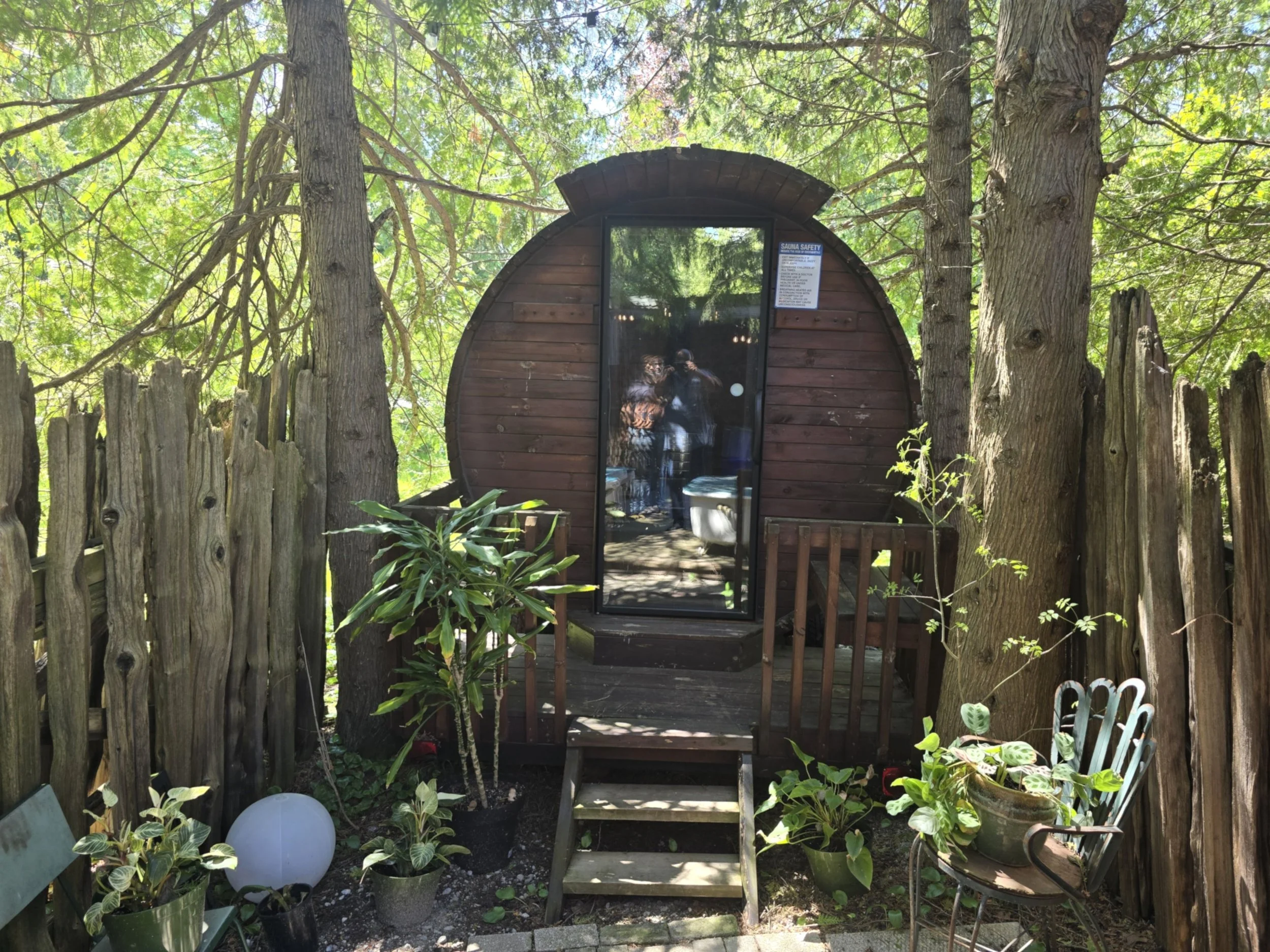
The sauna at the retreat (Photo by Ron Fanfair)
Launched last year, the space is open year-round.
“We do forest walks during the winter that is magical,” said Silva who has an Art History degree from McGill University. “Each season brings incredible diversity and beauty differently.”
As part of its mission to encourage participation to awaken their senses, foster mindfulness and develop a deep appreciation for the interconnectedness of living things, BlackHouse recruited community guides to lead this process.
Cultural advisor & activator Shereen Ashman-Henderson, who started Saccae social innovation studio in 2023 to activate culture for joy and justice in learning, leadership and lifestyle spaces, has been running two programs at the retreat in the last year.

Shereen Ashman-Henderson (Photo by Ron Fanfair)
“One of them focuses on cultural care which is modalities rooted in nature-based healing and teaching while the second involves working with community leaders to teach the ori principles of West Africa where the emphasis is on collective upliftment at the core,” the former Career Education Empowerment Centre director of education & programs said.
Though busy with his wife building BlackHouse, Cassell’s urge to get back into the restaurant business was overwhelming.
Last month, Harlem reopened at 745 Queen St.W.
“Just this morning, I was telling my wife one of the things I have never done is a comeback,” Cassell laughingly said. “I don’t know what that looks like because I build things from the ground up and move on. I have never revisited something I created. When you look around, far too many Black-owned businesses are falling by the wayside. I wanted to demonstrate that it is still possible for us to own things and be successful.”
The menu, he said, will be ‘stripped back to the basics’.
“There is so much we put on a menu for the sake of doing it,” said Cassell who is a chef. “With restaurant profit margins being tight since COVID created the need to scale back and do what we are good at and focus on food differently. That enables us to keep the inventory fresh because the food is moving. What you don’t want in a restaurant is food just sitting there.”
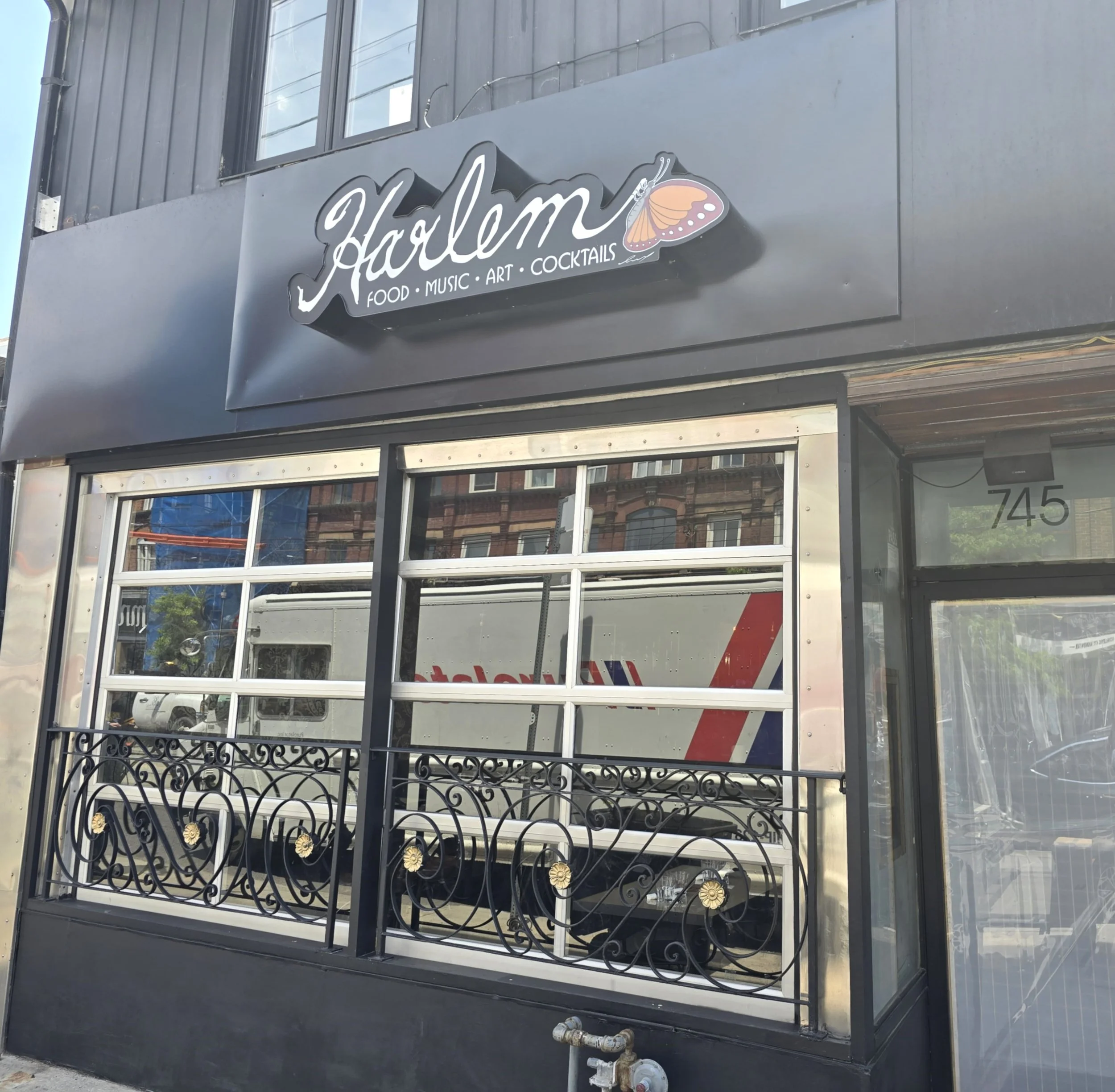
Harlem Restaurant reopened in May 2025 (Photo by Ron Fanfair)
Event planner Joan Pierre was among the specially invited guests at the rebirth.
“Carl is an astute businessman who understands the business he is in,” she said. “The beauty is that he is an endlessly creative human being. He comes up with stuff that is completely out of left field. His work constructing buildings out of containers is mind-boggling and this is just a snippet of the creative flair he brings to the businesses he runs. He is also such a beautiful human being who treats people with respect and he is always prepared to fight for what he thinks is right and will not stop until the issue is resolved.”
To say Cassell is a jack of all trades is an understatement.
Back in Manchester, Jamaica where he was born and raised, he fixed neighbours’ bikes and welded.
“I am a hands-on person,” said Cassell who pursued Industrial Arts at Manchester High School. “I have always had different proclivities.”
In high school, his mates included Dr. Carl Bruce who is the University of the West Indies Hospital’s Chief Medical Officer and Christopher Tufton who is Jamaica’s health minister.
Cassell said Tufton was a huge influence.
“He was the reason why I got into campus politics because he was the Vice-President of the Guild the year before I got there,” he pointed out.
Cassell resided on campus at Taylor Hall while completing an Economics degree at the University of the West Indies (UWI) in 1992.
“The reason I chose to study Economics is because I found it was an interesting blend of Math and Social Sciences,” he said. “I thought it was a tool I could use to analyze. As a young man, Marxism appealed to me. Marx used Math to some extent, especially in his analysis of capital accumulation, value and surplus. I found that fascinating.”
The late 1980s and early 1990s were a period of robust student activism and protest at the UWI Mona campus. This activism was often directed at socio-economic and socio-political issues, both within the region and internationally.
Cassell was part of that militant movement.
Listening to Ibrahim Traore (Burkina Faso’s president) passionate speech to the International Monetary Fund (IMF) last month in which he argued that the organization is an institution of strangulation and obedience reminded him of his student activism.
“We were talking about the same things back then and he brought it right back,” said Cassell who ran the 400, 800 and 1500 metres at UWI. “Traore’s inspiring presentation made me feel like becoming a revolutionary again at age 55.”
Finishing a first degree was the end of one chapter and the start of another journey that brought him to Canada a few weeks later to join his mother.
Though Cassell vacationed with her for a few summers, there is a big difference between visiting and residing as he quickly found out.
“That was a whole other thing,” he said. “It was not the best time of my life and I was depressed for about four years.”
Cassell’s first job was dishwashing at the Jerk Pit.
Though promoted to busser and then waiter in four months, he was not satisfied and wanted more for himself.
Cassell thinks and acts in ways that are different from the usual or expected.
What motivates the polymath to think outside the box?
“It’s funny, but that is not something I have given much thought to,” Cassell said when the question is posed to him. “I have been like this my entire life.”
While having a morning cup of coffee outside the family home on the farm, he often focuses on a large swing nearby where he proposed to his wife 11 years ago.
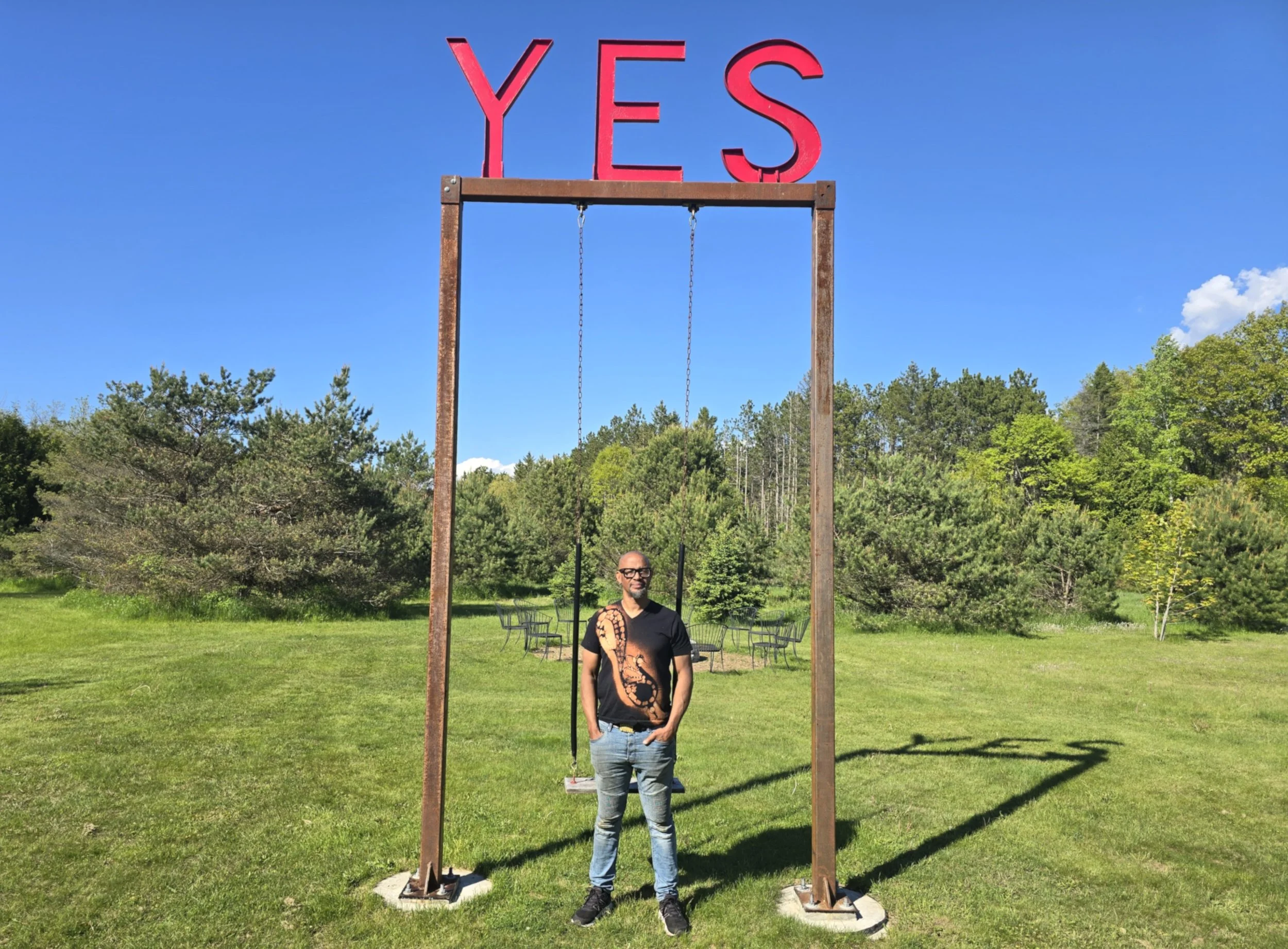
Carl Cassell next to the swing where he proposed to Ana Silva in 2014 (Photo by Ron Fanfair)
Above the hanging seat in large red letters is the word ‘YES’.
Not only is Cassell reminded of the magical moment when Silva made that commitment to a future partnership, but also that life is an act of radical acceptance and resilience.