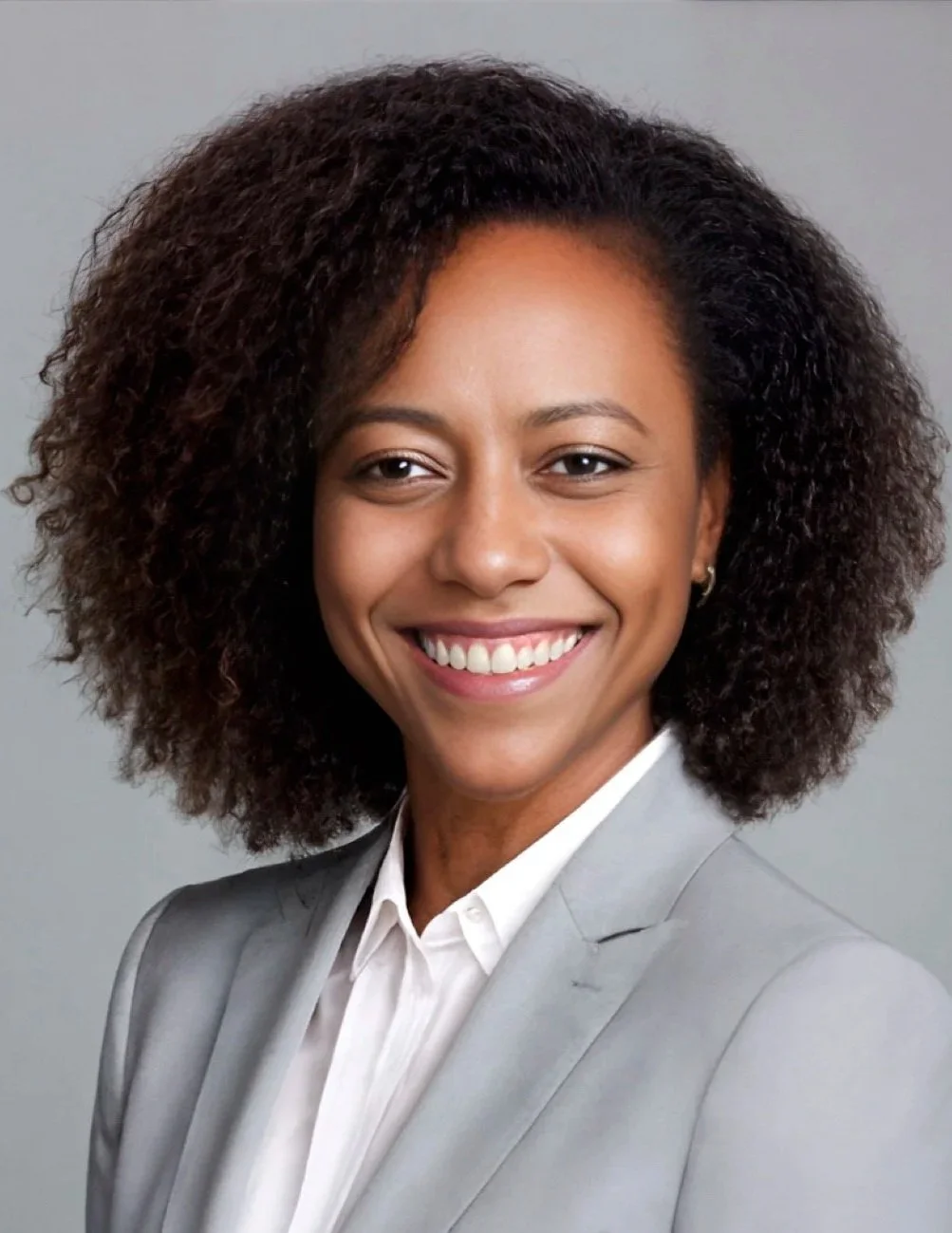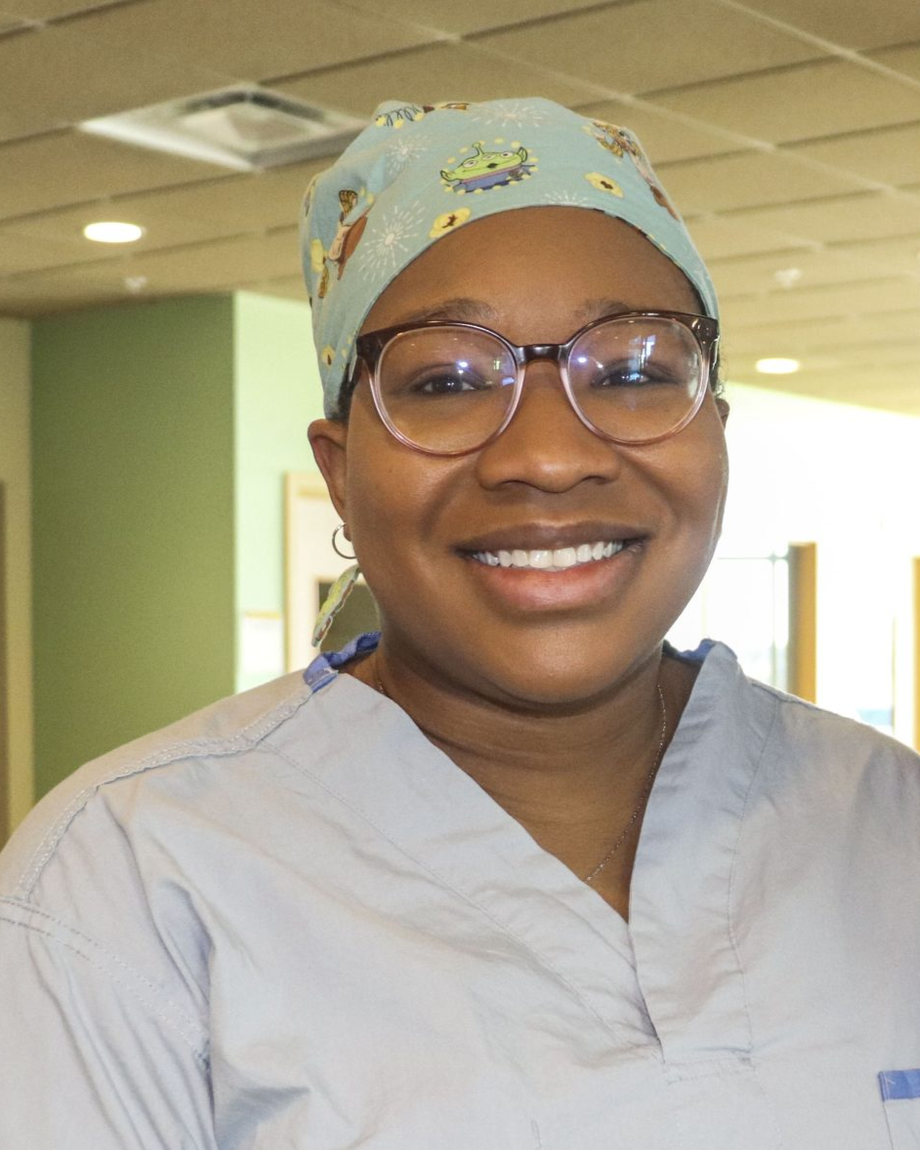
Dr. 'Tito' Daodu breaking barriers and championing equity
November 24, 2025
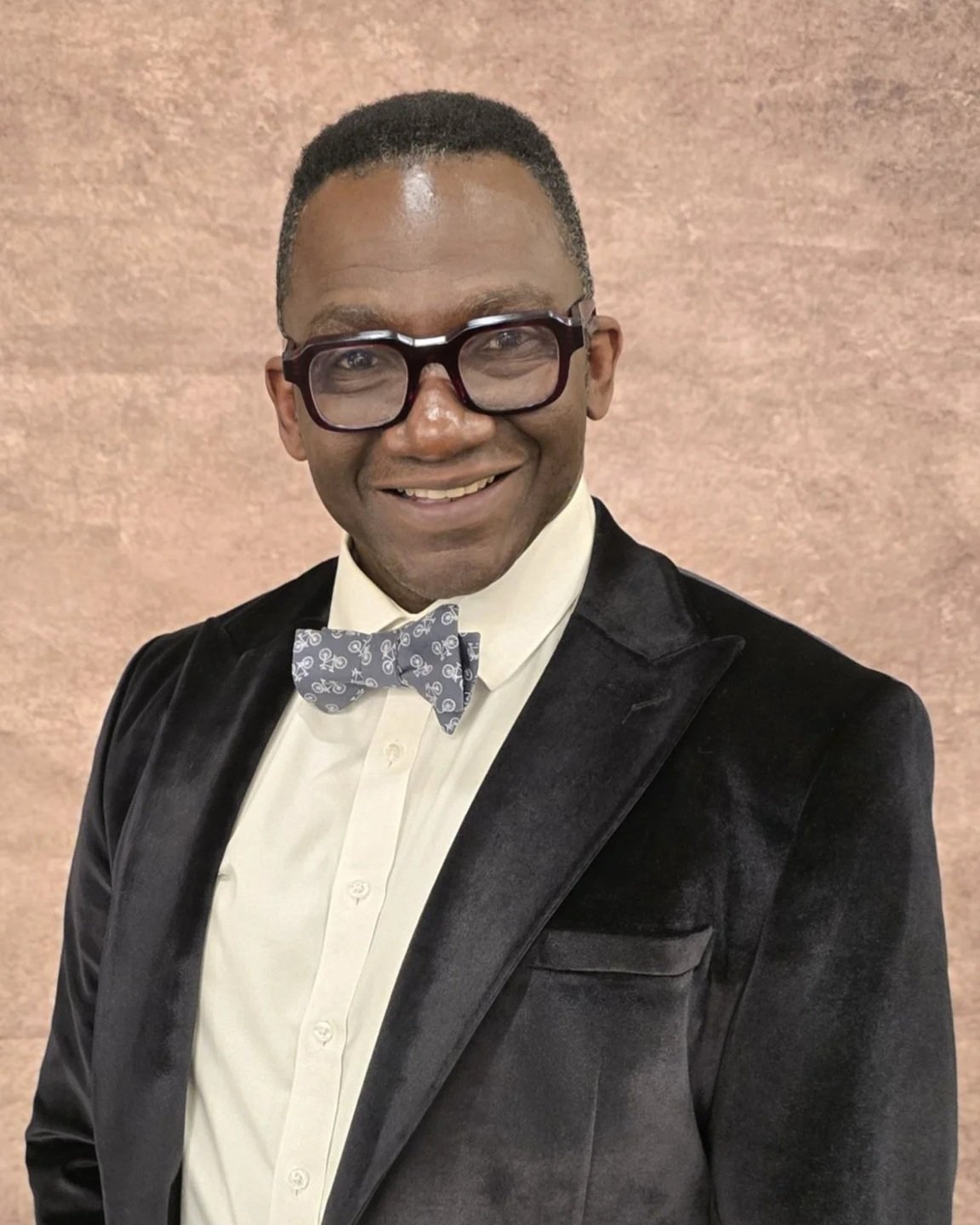
In 2020, Dr. Oluwatomilayo ‘Tito’ Daodu made history as the first Black woman to practice pediatric surgery in Canada.
While this achievement fills her with pride, it also prompts a sobering reflection. Why did it take so long for someone like her to break this barrier?
“When considering issues of equity, diversity and inclusion, it is disconcerting that this did not happen before,” Daodu, who practices at the Alberta Children’s Hospital, said. “While I am proud of my achievement, I am also mindful of the persistent marginalization of our communities. My success is not due to greater diligence or intellect, but rather to the alignment of opportunities at the right time, in the right place and with the right people. I am certainly not the brightest Black woman who dreamed of practicing pediatric surgery. I happened to be the first in Canada, and this reflects a history of systemic exclusion rather than any personal superiority.”
Recognized for championing health equity and anti-racism advocacy, she is committed to creating opportunities for others.
“I will mentor and support Black and other racialized women so they can pursue careers in medicine and surgery if they choose,” pointed out Daodu who grew up in Winnipeg and resides in Calgary with her family. “For me, the true celebration will come when we are no longer marking ‘firsts’ but simply recognizing excellence across the field.”
Her exceptional body of work and leadership have not gone unnoticed.
Daodu made the 2025 Women’s Executive Network (WXN) Top 100 Most Powerful Women in Canada list, highlighting her as one of the country’s most influential Black women leaders.
Reflecting on the honour, she admitted it still feels ‘quite surreal’.
“I was joking with someone that the award should really be called the Top 100 Tired Women in Canada, because there’s so much work involved in getting to this point,” said Daodu with a touch of humour.
For her, recognition has never been the goal.
“I don’t do the work for awards and honours,” said the Assistant Professor in the Department of Surgery and Community Health Sciences at the University of Calgary’s Cumming School of Medicine. “But it is good to know other people value what you are doing.”
With technological innovation, better understanding of child physiology and improvements in patient care, now is an exciting time to be in pediatric surgery that is evolving and rapidly advancing due to innovations in minimally invasive techniques, robotic-assisted procedures and enhanced perioperative care.
“We don’t have any robotics programs in Canada as yet for pediatric surgery, but we do a lot of laparoscopic and other minimally invasive procedures that have made a huge difference, even in my time in terms of how we can get kids home in record time,” said the 2024 recipient of a Rising Star Early Career Award in Health Services and Policy Research. “That makes their post-operative care much smoother.”
Daodu, who also serves as the Assistant Dean of Research and Scholarship for the Precision Equity & Social Justice Office, earned her medical degree from the University of Manitoba and completed her residency and fellowship training at the University of Calgary. She also holds a Master of Public Health from the Harvard T.H. Chan School of Public Health and a graduate certificate in Global Surgical Care from the University of British Columbia.
Her research focuses on addressing disparities in surgical care, expanding surgical access for rural and Indigenous communities and incorporating anti-racism education into medical training. She leads the Equity Pillar within the Equity, Quality, Innovation and Safety (EQuIS) research platform at the University of Calgary where she collaborates on impactful health-systems research.
Dr. Mary Brindle, the founder and director of the EQuIS platform at the Alberta Children’s Hospital, holds Daodu in high esteem.
“Tito is one of those people that, when you meet her, you realize you’ve been given a gift,” said the Professor of Surgery and Community Health Sciences at the Cumming School of Medicine. “Grit, creativity, intelligence and compassion all stand out. Her research tackles major challenges in equitable access and high-quality care, yet she remains focused on solutions rather than shortcomings.
“She approaches everyone with grace, inspiring her team and others to confront issues often overlooked. She rolls up her sleeves, and we roll up our sleeves with her. Her creativity not only drives her work but sparks creativity and leadership in those around her. Tito could thrive anywhere in the world, and we are incredibly fortunate that she has chosen to continue her work here in Canada, and in Calgary.”
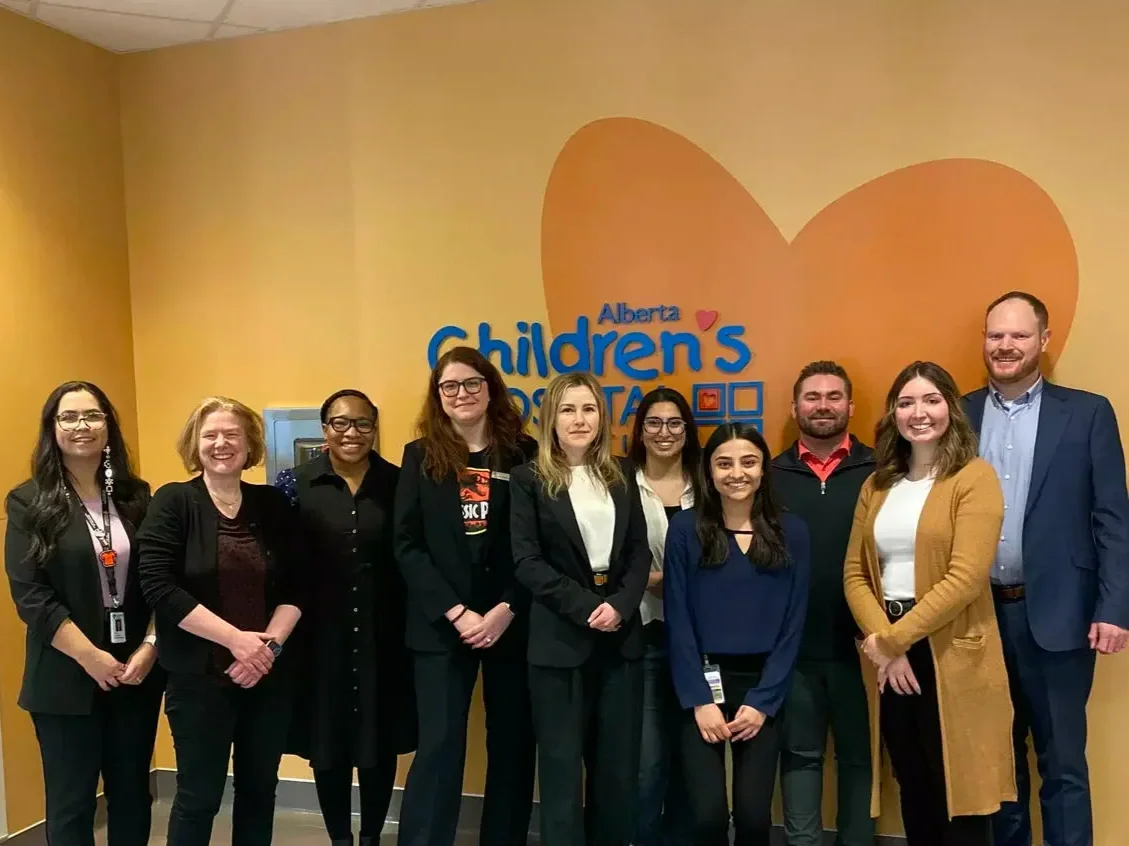
The EQuIS team with Dr. Mary Brindle (second from left) and Dr. Tito Daodu on her right (Photo contributed)
During medical school, Daodu did a two-week elective in Calgary.
“At the time, I hadn’t planned to stay,” she said. “But I liked the program and I connected with people. So, when it came time to choose a residency, Calgary was my top choice.”
There was also a personal reason for Daodu’s decision.
She met Dayo Ogunyemi, a legal counsel with the Alberta Energy Regulator and President of Global Lawyers Canada Alberta chapter which made the Southern Alberta city feel even more appealing. The couple, who tied the nuptial knot in September 2021, have two children.
Just days after news broke of her WXN recognition, Ogunyemi was named to Avenue Calgary magazine’s Top 40 Under 40 for 2025, in recognition of his efforts to guide Alberta’s energy industry toward a greener future while promoting diversity in the legal profession.
His wife received a similar recognition in 2019.

Dr. Tito Daodu and her husband Dayo Ogunyemi (Photo contributed)
It’s common for undergraduate students to feel unsure about their future career paths. Before choosing medicine, Daodu had considered pursuing a career in theatre.
“I did a lot of work in that field and was passionate about doing that,” she said. “I was also thinking about doing drama therapy because I like doing work that makes an impact on people’s lives, particularly youths.”
As Daodu continued exploring ways to combine her desire to help others with her personal interests, medicine began to emerge as a natural fit.
“Growing up as an immigrant in a low-socioeconomic household and watching how hard my parents worked to make ends meet made me acutely aware of the inequities many families face,” she said. “That early exposure instilled in me a deep commitment to serving communities like my own.”
Timing, circumstances and support from both family and mentors have played a crucial role in Daodu’s journey.
As a bright and curious child, she attended a school near a community centre that offered an Afro-focused learning program which helped shape her early development and interests.
Founded in 1974, West Broadway Youth Outreach (WBYO) is rooted in equity and care, offering valuable life skills programs.
Ken Opaleke has served as Executive Director for the past 35 years, fostering an environment where young people can thrive.
He encouraged Daodu and her younger sister to join the after-school program that provided a safe and enriching space that kept them out of trouble while nurturing their academic and personal growth.
“The first time I met Tito was decades ago on a sunny Thursday evening while we were playing soccer on her elementary school field,” recalled Opaleke who left Jamaica in 1976 to join his mother in Central Canada. “I remember telling her, ‘It’s way more fun on this side of the fence’. Within 10 minutes, she came around the fence, joined us and immediately clicked with our approach.
“Our philosophy is to celebrate enthusiastically when a child tries and to gently remind them of the opportunities they miss when they don’t. Coupled with the strong consistency we’ve maintained at West Broadway Youth Outreach over the 34 years since I started the program, that approach helped this young force of nature feel like an environment she wanted to stay in.”
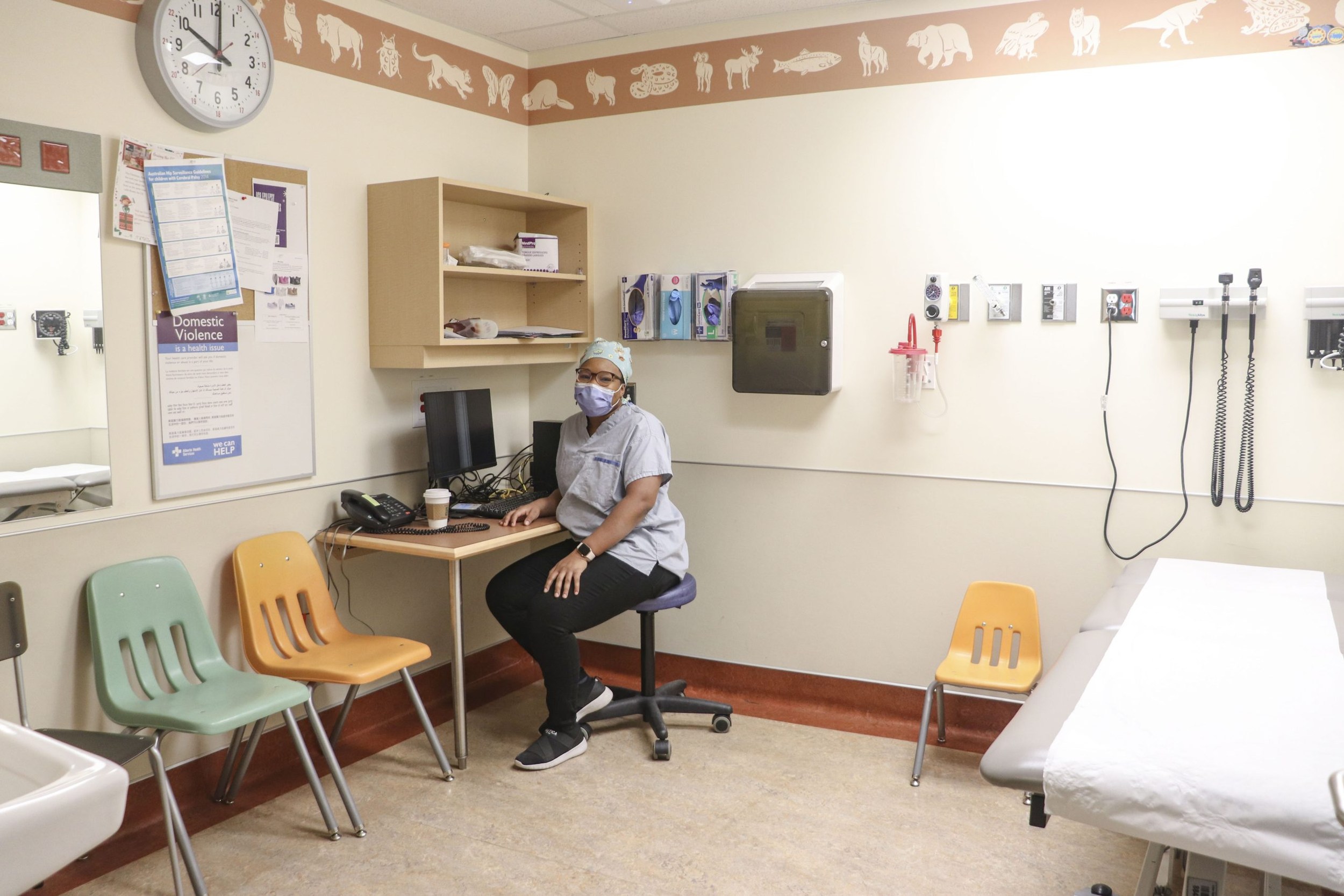
Dr. Tito Daodu at work (Photo contributed)
While mentors are influential, he emphasized that Daodu’s parents deserve most of the credit for her success.
“They instilled in her a work ethic of incredible intensity,” Opaleke added. “Anyone who spends time around Tito could only hang on for dear life, feel grateful to have her in their lives and stand in awe of this force of nature. She is someone who would inspire hundreds, if not thousands, of children across the country and beyond to strive to become better versions of themselves.”
The program’s influence stayed with Daodu, ultimately leading her to return as a volunteer and later serve as a board director.
“I found people who were excited about academics and mentors ready to encourage me,” she reflected. “That experience was so instrumental in my life.”
This foundation was strengthened by her mother’s determination, which instilled in Daodu the confidence and resilience needed to seize every opportunity that came her way.
“Mom was an incredible force, working multiple jobs to make sure we had everything we needed,” she said. “She took a chance by applying to get us into a private school, even though she couldn’t afford the tuition. Thanks to many bursaries and scholarships, we were able to attend, and that made a huge difference. Other kids in my neighbourhood didn’t have that opportunity. There were so many smart, talented people putting in the effort, but they didn’t have the same opportunities I had because of the people and circumstances around me.”
You see children succeed and hear about the role of their parents, but you rarely know the difficult journeys and heartaches those parents endured to make that success possible.
In the late 1980s, Nigeria faced a worsening economy, political instability under military rule and a growing generational divide. In response, many families migrated in search of better opportunities and a more stable life.
Kenny Daodu arrived in Winnipeg in 1990 on a six-month visitor visa. She was expecting her second child, born on July 1, and brought along her three-year-old daughter, Tito. Leaving her husband behind, they stayed with her brother and his family.
The newcomer believed she would be able to extend her visa and that giving birth in Canada would facilitate the process of securing permanent residency. But when she visited the immigration office, she was stunned to learn that her visitor visa had already expired. She was ordered to leave the country immediately, along with her firstborn child.
Unwilling to be deported to Nigeria, Kenny accepted an alternative arrangement. She would travel to Jamaica to have her documents processed so she and her daughters could eventually return to Canada. The family ended up living in St. Elizabeth, a parish still reeling from the devastation of Hurricane Melissa.
To support them, her mother, a qualified teacher, took a position at a private girls’ school.
“I loved living in Jamaica,” said Daodu. “It became our second home and a second culture. I was heartbroken when we had to leave because I had made friends who became close to me.”

Dr. Tito Daodu (Photo contributed)
The three years the family spent in Jamaica revealed her mother’s remarkable strength and resolve, as she adapted to a new country, supported her children and turned a difficult situation into an opportunity for growth.
“My mom had to think on her feet so that we could stay together,” Daodu recalled. “She leveraged her networks and people who might help. She is a bona fide hustler in the best sense. That woman worked tirelessly for us to stay together and succeed. Only now, as a mother myself, do I truly appreciate everything she did, and I am so grateful. Our dad, an engineer, joined us in Canada eight years after we left Nigeria and made many sacrifices for our family.”
In 2022, Kenny Daodu, a former president of the Congress of Black Women Manitoba chapter, published her first book, Life Labour Legacy: A Journey from the Motherland, which is an ode to family, friendships, and personal growth.
Watching her mother overcome hurdles deeply shaped Daodu.
She now confidently shares the lessons she learned while pursuing her dreams, inspiring the next generation of professionals.
“Self-doubt was my biggest hurdle,” Daodu said. “On many occasions during my life, I was the only person who looked like me in that space. That was intimidating. It is critical to rely on family and friends’ support and choose good mentors. I tell students I work with that the mentors they choose will be very instrumental in their success.”
This year’s Canada’s Most Powerful Women: Top 100 Awards Gala, celebrating the achievements of women leaders from various industries, takes place on November 27 at the Fairmont Royal York Hotel in Toronto.