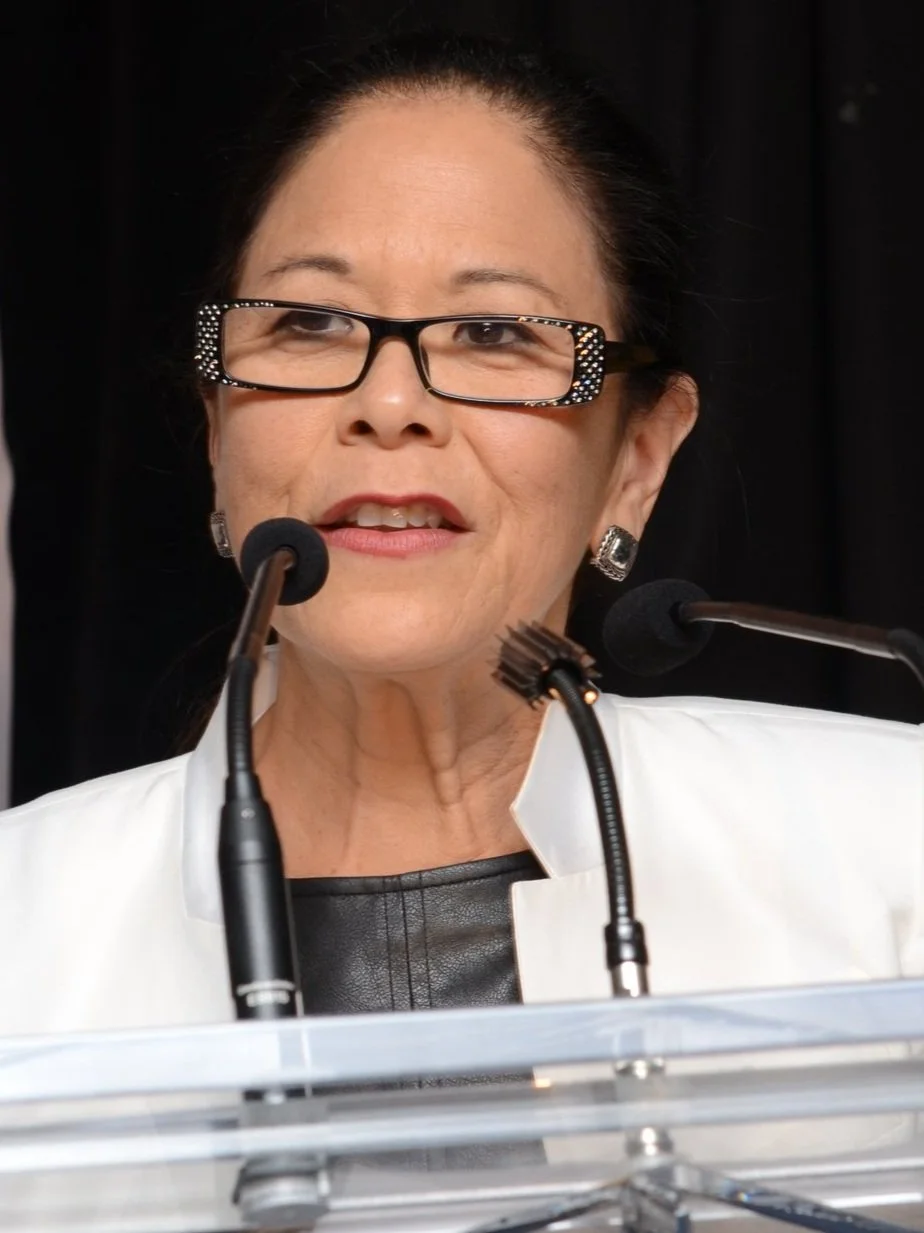
Rooted in justice, Nicole Austin’s Black Food Sovereignty work earns Viola Desmond recognition
February 27, 2026
As Black-led programs coordinator at the Urban Farm at Toronto Metropolitan University (TMU), Nicole Austin’s work is rooted in the principles of access, equity and cultural reclamation.
Through the founding of the Harvest Collective and Learning Circle programs, a Black Food Sovereignty Initiative, she has created space for Black students, elders and community members to reconnect with land, food and one another.
In a city where food insecurity disproportionately affects Black communities, Austin’s leadership transforms the farm into more than a growing space. It is a site of restoration, education and empowerment grounded in lived experience and ancestral knowledge.
Her selection as a recipient of the Viola Desmond Award carries deep symbolism. To receive an honour bearing the name of the trailblazer is to be linked to a legacy of courage, conviction and community uplift.
“I am overwhelmed, honoured and humbled to receive an award in Viola Desmond’s name when I think about who she was and what she did,” Austin said. “When I first launched this initiative, I wasn’t entirely sure what it would become or how I would fully put Black food sovereignty into action. But my priorities were clear. I wanted to centre our community through an approach rooted in representation, reclamation and creating space. I hoped our community would show up, and they did. Not only have they participated, but they have been inspired to put their own food sovereignty into action. I hope that ripple effect continues.”

Dr. Tanya (Toni) De Mello (l), Dr. Cynthia Holmes, Donette Chin-Loy Chang, TMU Talent Development, Human Resources manager Nikki Waheed and Dr. Roberta Iannacito-Provenzano with Viola Desmond Award winner Nicola Austin (Photo by Ron Fanfair)
As a mature student, she began her studies at TMU a decade ago, intending to become a registered dietitian. Enrolled in the School of Nutrition, she was soon drawn beyond the classroom into the intersecting worlds of food justice and food security where her academic interests evolved into a deeper sense of purpose.
Austin joined the Centre for Studies in Food Security (CSFS) and, in 2019, founded Students for Food Policy in Action to help amplify student voices in shaping equitable food systems.
“As someone bringing a more mature lens, I wanted to understand the key elements of advancing food sovereignty, especially how policies and systems that are oppressive and racist have shaped a food system that has made many of us sick,” she said. “I also came to realize that while food can be part of the problem, it can also be part of the solution, a pathway to sovereignty, healing and a stronger sense of place and self.”
At the time, the CSFS shared space with the Urban Farm team.
“I told them about the work I was doing, and they shared what they were working on,” Austin said. “I never imagined I would one day work at the farm. As I was graduating in 2020, just as the COVID-19 pandemic began, I had no idea what my next steps would be.”
In 2004, the Andrew and Valerie Pringle Environmental Green Roof was established as part of the original design of the George Vari Engineering & Computing Centre and planted with daylilies.
Seven years later, Nutrition and Food students Catherine Lung and Stephanie Nishi were inspired to grow food on campus. With support from the CSFS and the Faculty of Management & Development, they co-founded Rye’s HomeGrown (RHG). Under Lung’s leadership, RHG established nine campus gardens between 2011 and 2014, including in-ground, container, indoor, balcony and rooftop sites such as the ENG rooftop.
In 2014, the Andrew and Valerie Pringle Environmental Green Roof was converted into a rooftop farm, and Rye’s HomeGrown became the Urban Farm, a formal university department under Food Services. In 2016, the Urban Farm became a standalone service within University Business Services with a mission to build capacity for rooftop farming through production, research and engagement.
Five years ago, Austin launched the Urban Farm’s first Black Food Sovereignty Initiative, introducing five culturally significant crops — callaloo, okra, African eggplant, Jamaican pumpkin and Scotch bonnet — along with cerasee, a medicinal plant deeply rooted in Caribbean tradition, into the Ecological Market Garden.
“When Arlene Throness, the Urban Farm manager, approached me at the end of 2020 and asked if I would come to the farm to develop a program, I told her, ‘I am not a farmer’,” she recalled. “She said that wasn’t the point and that we are all learning every day about how to grow food, and that learning is a lifelong journey. What mattered, she said, was the work I was doing for my community. She told me she wanted to make space for that here.”
That invitation became the foundation for a vision that soon took shape at the farm.
“Nicole developed four pillars for the program — food literacy, food and social justice, environmental stewardship and community healing — and rooted the work in a 3B approach to ensure the initiatives were Black-led, Black-mandated and Black-serving,” said Throness, who nominated Austin for the Viola Desmond Award.
Operating two rooftop farms on campus using green roof technology, the Urban Farm harvests more than 3,000 kilograms of ecologically grown produce each season, distributed through a model of thirds. No less than one-third of the harvest is donated to the community, no more than one-third is sold at market value and one-third is made available to TMU students at equitable rates.
Austin joined the Urban Farm full-time four years ago and expanded the Black Food Sovereignty Initiative.
“Based on the Urban Farm’s Daphne Cockwell Complex rooftop, which is dedicated to the Indigenous Foodways and Black Food Sovereignty gardens, Nicole grows a diversity of crops representative of the African diaspora,” Thorness pointed out. “She also facilitates experiential learning opportunities that bring community members together to grow and harvest foods that are culturally significant to the African diaspora through 3B programming, such as the Harvest Collective and Learning Circle.”
Throness said Austin’s belief in the power of community has guided the creation of numerous partnerships within TMU committed to Black flourishing and inclusive engagement.
“Community leaders, students and TMU faculty form the Advisory Circle that shapes the Black Food Sovereignty Initiative’s programming based on the needs and priorities of Toronto’s diverse Black communities,” added the former Concordia University Rooftop Greenhouse leader and founder of its City Farm School. “Nicole is a member of TMU's Black Faculty & Staff Community Network, where she has identified opportunities for knowledge sharing and interdisciplinary collaboration.
“She recognizes that promoting Black history and flourishing goes beyond the walls of TMU. She has built strong relationships with organizations across Ontario that are taking action to make land and capital more accessible, including the Black Youth Farming Collective in Brampton, Ecological Farmers of Ontario and Black Creek Community Farm.”
As a first-generation Canadian of Jamaican heritage, Austin carries the grounding influence of strong family values, lessons shaped around kitchen tables, in community spaces and through stories of resilience passed down across generations. Those early teachings about sharing food, caring for neighbours and honouring cultural traditions now guide her work at the Urban Farm.
Through her programs, she has watched participants cultivate more than food. They have grown in confidence, deepened their cultural pride and rediscovered a sense of belonging and purpose within their community.
Austin recalled a visit from a class of master’s students in social work brought to the farm by a professor with whom she had built a strong relationship.
“One student, originally from Ghana, was visibly moved,” she said. “As she walked through the crops, she began pointing out familiar plants, calling them by the names she knew from home. Though the names differed, the food was the same. Seeing those crops growing in this space stirred something deeply personal. She became emotional, saying she finally felt represented. That moment of recognition forged a lasting bond, and we have become lifelong friends.”
Two summers ago, a group of about six Black young adults in their 20s attended one of Austin’s programs.
“When I asked if they were TMU students, they said they were not,” she said. “They had discovered the program on their own and came intentionally, explaining that they were on a mission to reconnect with land, culture and community in a way they had not experienced before.”
Advancing Black-led initiatives within larger institutions comes with ongoing challenges. Because the Urban Farm does not sit within a specific faculty, its programs rely on annual one-time funding, creating uncertainty each year and the possibility that support could be withdrawn unexpectedly.
“Navigating that insecurity is an added burden, even as we remain hopeful that the value of the work continues to be recognized,” said Austin who hosts learning circles for first-year Black students and field trips to local Black-led farms.
That confidence is strengthened by the university’s leadership under President and Vice-Chancellor Dr. Mohamed Lachemi.
TMU has positioned anti-racism as a core institutional priority, embedding it into policy reform, curriculum review, hiring practices and student supports that help create space for Black-led initiatives to take root and grow.
What is Austin’s vision for the future of Black-led programming at the Urban Farm and beyond?
“My biggest goal is that anyone who participates in the program leaves feeling inspired and empowered by what they have learned,” said the former Royal Ontario Museum events coordinator. “I want them to start their own initiatives, grow their own food, reclaim their health and advocate for others to do the same. I hope there is a ripple effect.”
Austin’s leadership at the Urban Farm intersects with the broader Black Food Sovereignty Alliance (BFSA) network, positioning her work on campus as part of a city-wide movement advancing Black-led food justice, cultural reclamation and community empowerment.
“Nicole has created and nurtured spaces rooted in collective care, culturally grounded food practices and community learning,” said BFSA executive director Xola Lololi. “The Viola Desmond honour reflects her years of impactful work, leadership and deep commitment to Black Food Sovereignty.”
Desmond challenged systems that denied dignity and opportunity to Black Canadians.
Austin’s work advances that same spirit in a contemporary context. By cultivating food sovereignty on campus, she is addressing inequities in access to food while also reclaiming space, knowledge and self-determination.
The recognition affirms that Desmond’s legacy lives on through leaders who quietly and persistently reshape systems from the ground up.