Friendship fuels a lifelong search for steelpan history
November 18, 2026
The elders were dying, taking with them memories that no grant application or production schedule could recover.
Anthony Pierre, Ivor Picou and Gregory Christmas, whose friendship stretches back nearly half a century, knew they couldn't wait to preserve those voices.
They picked up their cameras and began.
“A lot of our elders in the steelpan community were around the same age, and they were all passing away,” said Christmas. “So we did something unorthodox. We just grabbed our cameras and started filming.”
Working as 3Trinis Film Group, they set out to document the life and contributions of steelpan pioneer Elliott ‘Ellie’ Mannette who died in 2018 at age 90.
Almost 15 years later, that documentary project has grown into a six-part series.
Repeated interviews, research into Caribbean cultural history and unexpected discoveries have broadened its scope and deepened their understanding of the instrument and the people who shaped it.
Normally, Christmas explained, filmmakers develop a treatment, secure financing and assemble a crew before filming. As elders died, the friends began recording first and paying the costs themselves.
“We had to do this the hard way, where we had to pay out of our pockets,” he said. “That’s the reason why it has taken so long because we don’t have a budget behind us to finish.”
Picou, Pierre and Christmas brought complementary backgrounds in music, theatre, filmmaking and cultural research to the project. Their friendship dates to the 1970s, decades before they began documenting Mannette’s life.
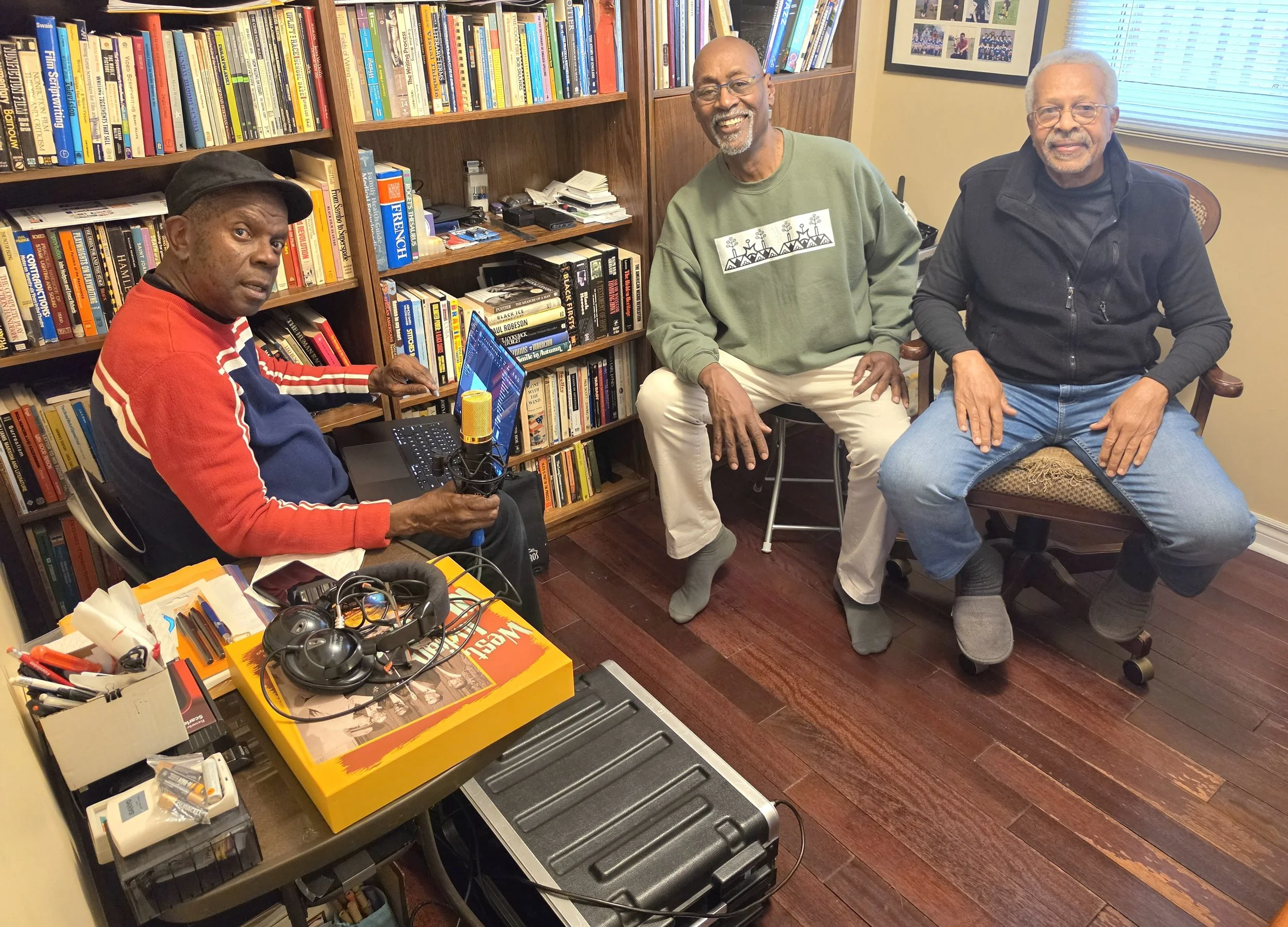
Ivor Picou (l), Anthony Pierre & Gregory Christmas (Photo by Ron Fanfair)
For Pierre, the inspiration began with a sound.
At a lecture-demonstration at York University, he heard Mannette play a triple-cello pan. Its tone left a lasting impression on the musician who had begun studying classical piano at eight.
“I suddenly heard that quality sound coming from these three drums,” Pierre said. “Because of my musical background, I was able to recognize immediately when I heard the tone of his instruments that he had done something really special.”
To the former York Tones steelpan arranger, the sound represented the fulfilment of an ambition Mannette had long expressed.
“Ellie always loved classical music,” Pierre recalled. “He had long talked about his dream of making steelpan instruments sound like a full orchestra. In that moment, it struck me that he had achieved his dream.”
Picou, meanwhile, had been considering a documentary tracing steelpan’s arrival and development in Toronto. A chance encounter with Pierre at a Toronto airport brought their ideas together, and they eventually agreed to focus first on Mannette.
Christmas joined them, bringing filmmaking training from York University and a longstanding interest in ethnomusicology, Caribbean arts and Pan-Africanism.
“Tony and I always shared an interest in ethnomusicology and the cultural dimensions of Pan-Africanism,” he said. “We talked about these subjects often and had similar perspectives. When he called and explained the project, it didn’t take much to get me on board.”
The project offered more than a portrait of an accomplished musician and instrument maker.
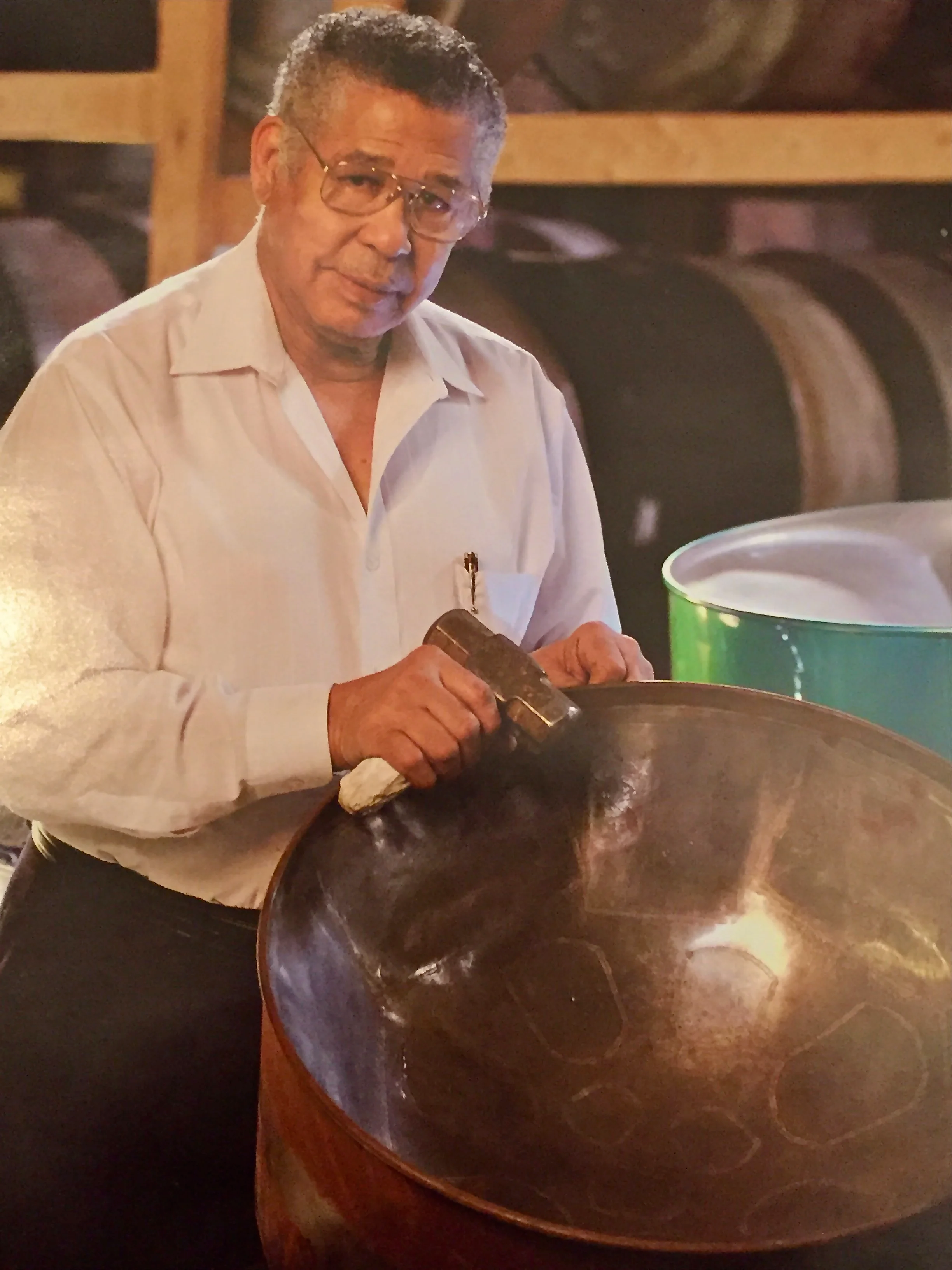
Mannette’s life opened a window into steelpan's development in Trinidad and Tobago where generations of innovators created a family of pitched percussion instruments spanning the steel orchestra’s musical range.
Among his major contributions were sinking the playing surface into a concave shape and advancing the techniques used to tune the instrument, innovations documented by the United States’ National Endowment for the Arts.
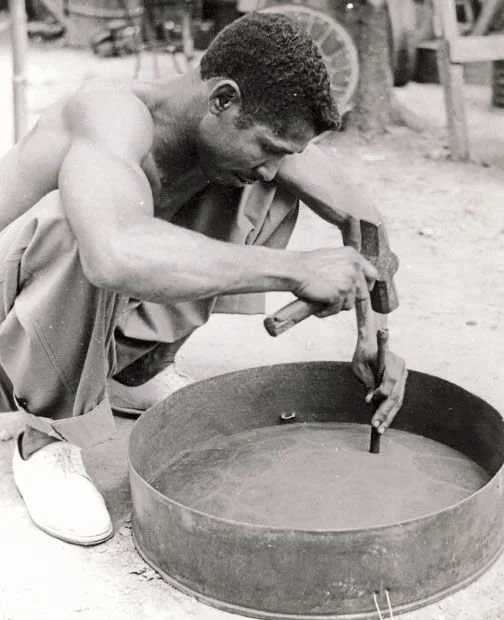
Ellie Mannette grooving pan (Photo contrbuted)
For Pierre, the significance of that work deserves closer attention. He believes accounts of steelpan’s development too often overlook how the sunken surface helped builders shape and refine individual notes.
“I personally don’t think that people recognize how important an innovation that was,” he said. “That was the innovation that made it possible to get a perfect note tuned on that surface.”
Beyond the technical achievements, the trio found a man eager to share the knowledge he had spent a lifetime acquiring.
In a steelband culture where builders and tuners sometimes guarded their techniques, Christmas said Mannette stood out for his willingness to teach.
“He was a teacher who always wanted to share his knowledge,” he said. “Until he passed, he was ready to help, whether that meant helping you start a band or working with rival bands. He was a very generous soul.”
A visit to West Virginia in 2011, when Mannette received the West Virginia Music Hall of Fame’s Spirit Award, helped deepen the project.
Pierre recalled Mannette telling them that previous accounts of his life had not captured its full depth.
The friends subsequently made repeated drives to Morgantown, spending weekends interviewing him. As their relationship grew, the conversations moved beyond the familiar stories of his achievements.
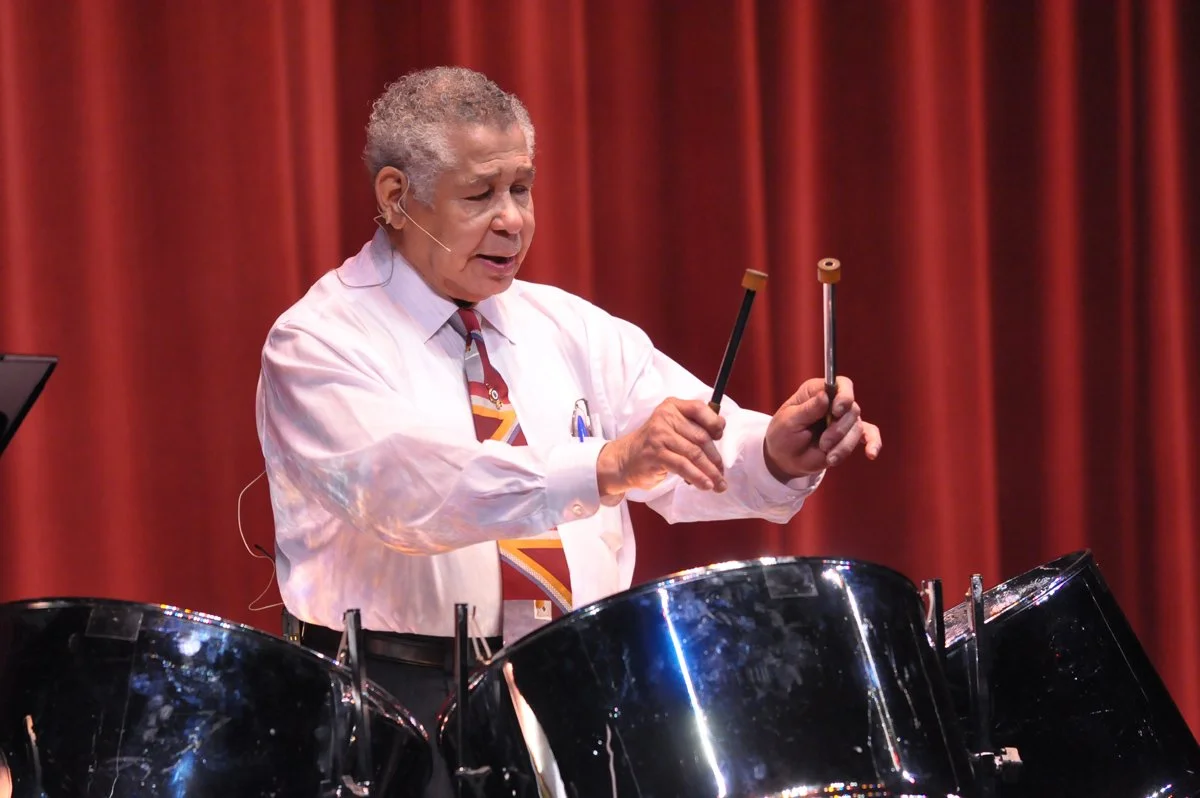
Ellie Mannette was a visionary tuner (Photo contributed)
Those encounters also held personal significance for Pierre. His father, lawyer and steelband advocate Lennox Pierre, had been close to Mannette and supported the steelband movement in its early years.
Researching Mannette’s life prompted Pierre to reconsider the father he remembered as an unconventional figure, involved in labour activism while also teaching classical music in the panyard.
“Researching Ellie’s life and work led me to discover things about my dad that I hadn’t known,” he said. “It made me wonder what had shaped him and made him so different. I wish he were here now so I could ask him the questions this research has raised.”
Among his discoveries was a reference to steelband association meetings at his father’s law office. It offered another glimpse of the organizing behind milestones such as the Trinidad All Steel Percussion Orchestra’s journey to the Festival of Britain in 1951.
Pierre’s research revealed how much steelpan’s development owed to people beyond the panyard who opened doors for those shaping the instruments.
Picou connects that creativity to the social conditions that shaped steelpan’s development, tracing its emergence to resistance, exclusion and a community’s determination to preserve its musical traditions.
“It was an instrument of resistance,” the retired Toronto District School Board teacher said. “Their drums were banned, and they were chased off the streets. They had to draw on their ingenuity to keep their musical traditions alive.”
Picou sees the experimentation with bamboo, bottles and metal objects as evidence of a community’s determination to preserve its culture. People used whatever materials were available to make music, celebrate and affirm their identity.
“What drove this was the need to celebrate who we are,” he said. “The community embraced each innovation, eventually giving rise to someone like Ellie, whose contribution was truly remarkable.”
Exploring that history repeatedly took the creatives beyond the questions with which they had begun.
One account that demanded closer attention was Mannette’s childhood recollection of a tamboo bamboo procession.
Picou remembered people carrying branches and foliage as the procession approached, creating the impression of a moving forest.
The image raised questions that he, Pierre and Christmas could not answer through pictures alone. Why were the participants carrying branches? What traditions did the procession draw on? What had the encounter meant to the boy who would become an instrument maker?
“In one of his key interviews, Ellie identified the moving forest and stick fighting as two influences that shaped who he became,” Christmas said. “That made them central to the story, but we didn’t understand what he meant. We had to research them to understand their significance.”
Those questions led them deeper into the survival and adaptation of African cultural traditions, particularly the connections among percussion, spirituality and communal celebration.
Pierre hears echoes of African ensemble traditions in the interlocking musical roles of bamboo, bottles, metal percussion and, eventually, pans.
For Christmas, understanding how communities preserved and reshaped those traditions across generations has become central to telling Mannette’s story.
“People have gotten together and amalgamated different bits of their culture and brought it to one,” he said. “We have this beautiful thing now.”
As those connections emerged, the project outgrew its original documentary format. A series offered room to explore the discoveries without losing sight of Mannette.
Christmas nevertheless maintains a clear boundary around the story.
“We’re telling one part of steelpan’s history, focusing on Ellie Mannette’s life and contribution,” he said. “We touch on other aspects to provide context, but we want to stay true to his story and what he brought to the instrument.”
Placing that contribution in context also means acknowledging other innovators.
Picou said the series examines figures including Anthony ‘Tony’ Williams and Winston ‘Spree’ Simon, showing how Mannette’s work formed part of a movement advanced by many hands.
Reconciling differing recollections has been a demanding part of the research.
Christmas wants the finished work to withstand scrutiny, particularly if students and researchers turn to it as a historical resource.
“When you’re doing a film, especially a documentary, you want to make sure the facts are straight,” he said. “It’s a tool that people may use as a source of research in the future. You need to have that solid basis with the material that you’re working with.”
Mannette’s death eight years ago made the limits of that research painfully clear.
“There are pieces of the jigsaw that we’ll never be able to complete because you just can’t ask,” Pierre said. “There are certain questions that we’d love to ask that we can’t ask him anymore.”
The team will share their research at the Trinidad & Tobago Consulate on Saturday, November 21. Their presentation, An Extended History of the Steelpan: Completing the Jigsaw Puzzle, offers audiences a preview of their findings and an opportunity to provide feedback as editing of the series continues.
Alongside that work, they must secure permission to use material requiring rights clearances.
Christmas hopes to complete the series in early 2027.
He identifies universities, colleges and libraries as its initial audience, while also seeing opportunities for wider distribution.
Picou believes preserving this history also means recognizing the Caribbean immigrants who helped make steelpan part of Canada’s cultural life.
“I am as much Canadian here because I spent the past 50 years of my life contributing to this society,” the Blackhurst Cultural Centre board director said. “I retain stuff from where I grew up. But this is as much Canadian, and you better get accustomed to it.”
Christmas remains captivated by the footage, particularly the seemingly effortless way Mannette drew music from steel.
“He would just touch it with the sticks, and this beautiful sound would come out,” he said. “It turned out to be an amazing invention for an island, a small place with so many people who have created this thing that is loved and cherished throughout the world. So I think it’s worth working for.”
Some questions will remain unanswered, but the friends’ decision to begin filming ensured that Mannette and others could tell their own stories.
In the voices they recorded, steelpan’s history lives beyond the instruments, preserving the ingenuity, struggles and ambitions of the people who gave them their sound.