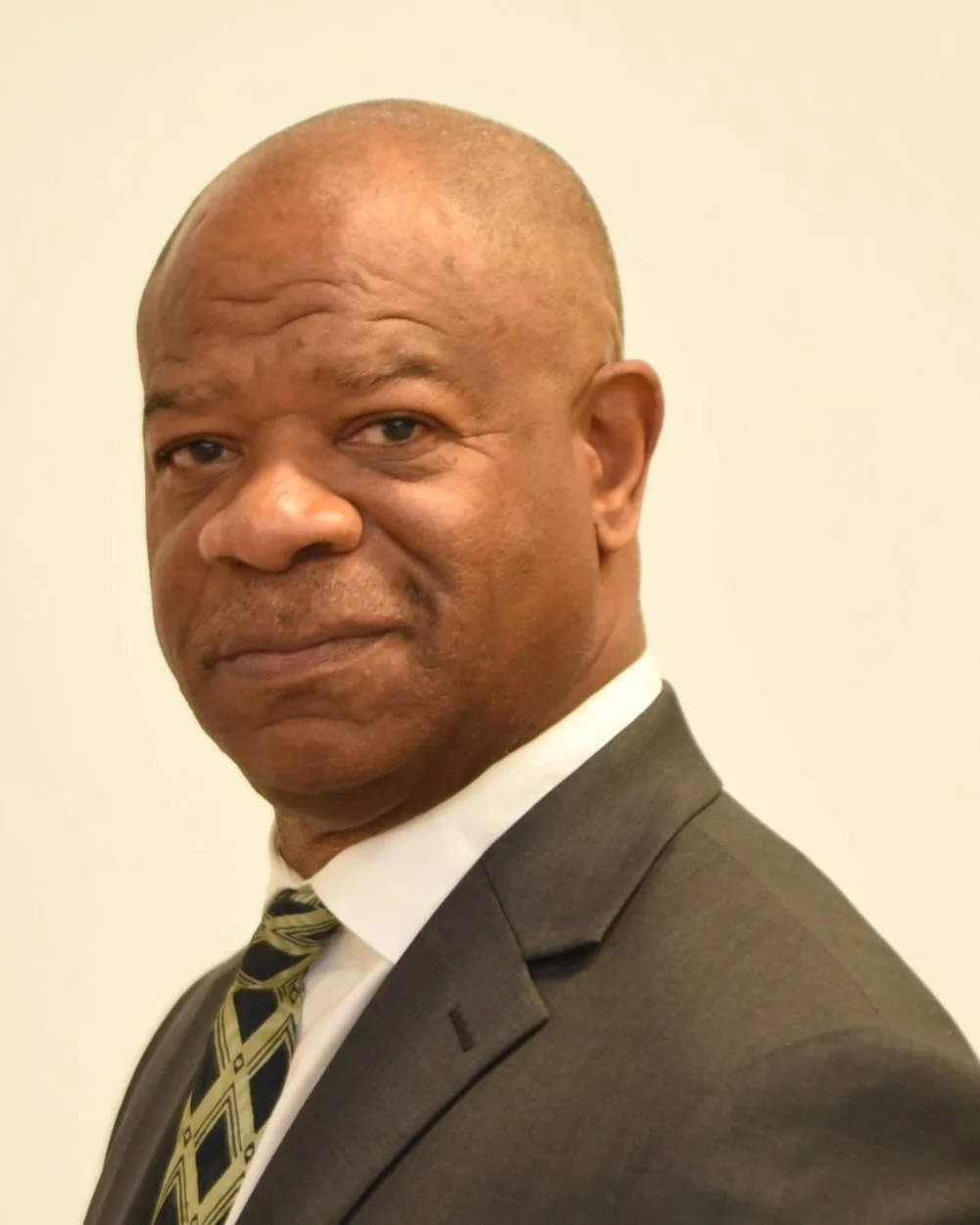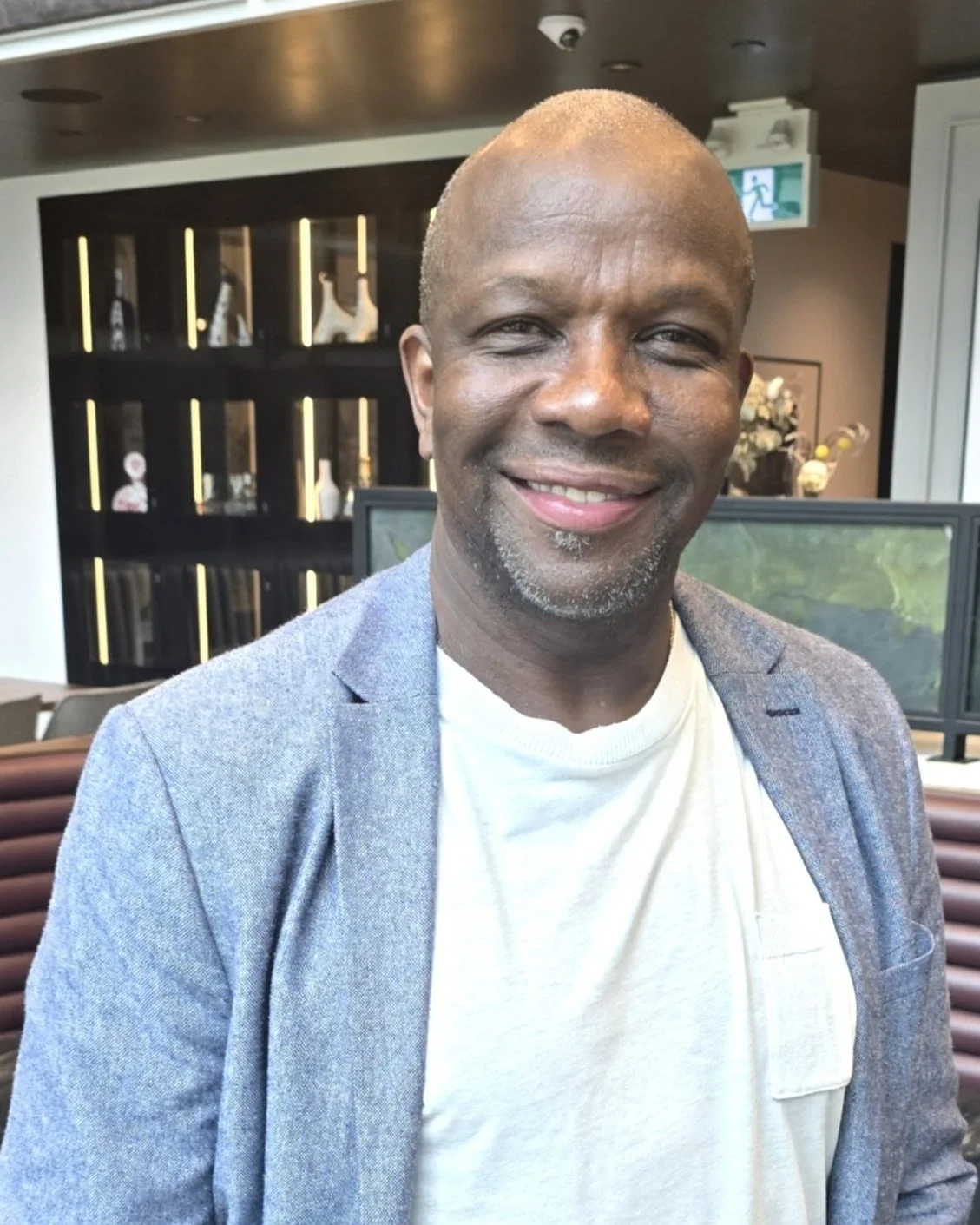
Donovan Bailey, undisputed champion and savvy businessman
July 7, 2025
Long before being the fastest man in the world, Donovan Bailey had an entrepreneurial mindset, understanding that sound business principles could help individuals and organizations achieve gains.
After winning the 100-metre sprint and becoming the first Canadian to legally break the 10-second barrier at the 1996 Atlanta Olympics, he leveraged that gold medal and fame to develop his brand and build successful business ventures.
While farming might be a hobby for some, it is a business for others, particularly in the Jamaican parish of Manchester, where agriculture is a major part of the local economy.
Being born and raised in that environment exposed Bailey to the fundamentals of business at an early age, sparking a lasting interest.
“I grew up seeing my uncle growing and selling produce,” he said. “My dad was in real estate and I observed him buying, renting and managing properties. I understood very early that by being ambitious and successful, I could have the freedom to do what I want and control my destiny.”
By age 19, Bailey had his first home and was cruising the Greater Toronto Area (GTA) streets in a Porsche convertible.
“From a young age, I knew I was going to be successful,” the Order of Ontario and Order of Canada inductee said. “I didn’t know what I was going to be when I was 10 or 15, and that track was going to lead me to where I am. What my parents taught me was that whatever I did, I had to be successful. That meant I had to work hard and smart, surround myself with people who would uplift me and ignore the negativity and noise.”
Visiting his father in the GTA from age seven, Bailey joined him permanently five years later.
Though his mother didn’t want to make the move, she saw the benefit of their son coming to be with his father and older brother.
“The decision to relocate was difficult because I was a mama’s boy,” he said. “When she decided that Canada was not going to be a place for her to be, she told me I would join my dad because I am going to be a man one day, and she could not teach me how to be that. Though separated, the good thing was that both my parents were in my life all the time.”
Unlike many newcomers who settle in urban areas with affordable housing options, Bailey moved into a home in Ontario’s largest town.
“My father practiced what he preached to us,” he said. “He came to Canada, worked his butt off as a machinist and bought a house in Oakville.”
Three years older, O’Neil Bailey was an Ontario high school long jump champion and an outstanding player in basketball and football.
That made the assimilation easier.
“I just came in and joined him in sports,” said the two-time Olympic champion. “In addition, my stepmom (Icilda Bailey) co-founded the Canadian-Caribbean Association of Halton. I was immersed in sport and culture from the time I got here, so there was no fear or reason to be shy. They were the people who laid the foundation for my seamless transition.”

In 2003, Donovan Bailey was honoured with an African-Canadian Achievement Award (Photo by Ron Fanfair)
Bailey knew he could run fast since his days at Mount Olivet Primary School in Jamaica.
Though the fastest kid in his school and parish, track and field didn’t appeal to him at a young age.
Even after Bailey moved permanently to Canada in August 1980, the sport was not a priority, despite being the Halton region’s 100-metre and long jump champion and a member of their victorious relay team.
With scholarship offers from several American universities, including Syracuse, his father didn’t think the fourth of his five sons was mature enough to be on his own.
Instead, Bailey did Business Studies at Sheridan College and was a power forward on the basketball team in the mid-1990s.
“I didn’t train or care about track and field,” he said. “Basketball was my love and still is my love. Though I was good in college, I knew I was not going to make it big in the sport.”
Leaving college early, Bailey worked as a marketing consultant with a downtown Toronto firm while helping manage his father’s real estate portfolio.
The owner of several properties in the GTA and tired of the harsh Canadian winters, George Bailey was preparing to re-migrate to Jamaica.
Bailey’s father died of cancer while his mother, Daisy, succumbed to Alzheimer’s.
Enjoying life as a successful businessman and away from track and field for nearly four years, Bailey was lured back to the sport after going to see close friends Hopeton Taylor and Andre Metivier, who were on scholarships in the United States, compete at the 1990 national trials at Centennial Stadium.
While watching his friends on the track, he observed that some of the competitors were athletes he had defeated in high school.
Sensing his excitement, Metivier asked his pal if he wanted to run and suggested he could lie to say Bailey belonged to a track club.
Buoyed by the offer, Bailey borrowed some running clothes and track spikes and, without warming up, won the 100-metre dash.
The following year, he came out on top in the 60-metre dash at the provincial indoor championships and was selected to represent Canada at the Pan American Games in Cuba where he secured a silver medal in the 4x100-metre relay.
Meeting world-renowned track and field coach Dan Pfaff in 1991 at a national team relay camp in Baton Rouge, Louisiana was a defining moment.
“I didn’t believe that I could be a track star until I met Dan,” said the two-time Canada Sports Hall of Fame inductee. “While talking one day, he asked me about my weight training regimen, and I told him I never lifted a weight in my life. He asked me about nutrition, and I asked ‘What are you talking about? He inquired about my fall and summer training and my reply was, ‘I play basketball dude’.”
At the national track & field championship in 1992, Bailey was runner-up in the 100-metre event behind Bruny Surin.
The next year, he captured a bronze medal in the 100-metre dash and silver in the 200-metre event and was an alternate on the Canadian relay team at the 1993 World Championships in Stuttgart, Germany.
That did not sit well with Bailey who vented his displeasure by hurling a television in the direction of team coach Mike Murray after he and other Team Canada officials attempted to explain the reason for his omission.
He later admitted that the incident was a pivotal moment in his career, pledging he would never allow anyone to determine his selection on a national team.
“I told Mike that he would never again be in charge of me making his team,” Bailey said at a reception in 2006 to mark the 10th anniversary of his gold-medal performances in Atlanta. “Of course, I was very upset at not running in the individual sprints or sprint relay because I knew I could probably have done some damage. This was my stage and I thought I could do something.”
Pfaff got wind of Bailey’s heated argument with Murray, told him he was disruptive and invited him to join his camp whenever he was ready.
“Dan told me I was talented and could be the greatest, but I had to get serious,” he recounted. “That was the first time I felt a sense of urgency unlike anything I had experienced before. It occurred to me that I could be squandering my talents and purpose.”
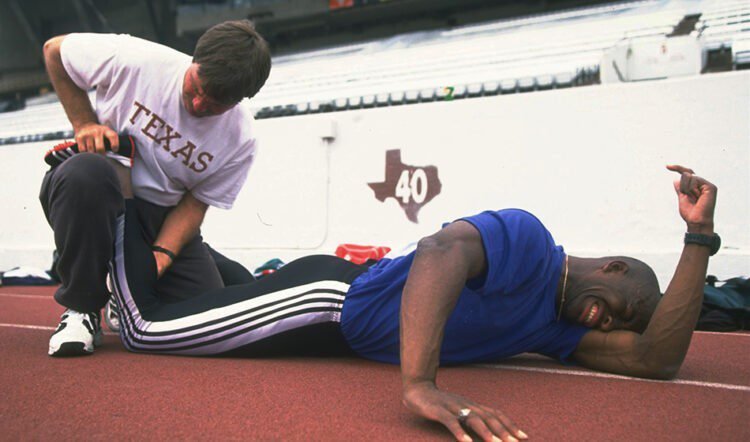
Donovan Bailey and Dan Pfaff (Photo contributed)
Pfaff coached Bailey during his peak years and they developed a close relationship that has endured to this day.
“Dan is one of the smartest and most optimistic guys I know and someone who I could talk to about life,” the Canada Walk of Fame Star member said. “If I am going into a sales pitch or am part of a consortium trying to buy a company, I call him anytime. He understands the philosophy of business, how structure works and what stimulates me.”
In 1994, Bailey signed his first professional contract with Fenerbache Athletics which is the athletics section of Fenerbache SK that is a major Turkish multi-sport company in Istanbul.
“That was the first time I signed for real money,” he said. “When I was having difficulties with the Canadian federation three decades ago, I was in discussions with the Turkish government to represent that country. If I had accepted the offer, I would have signed for US$1 million. If I were an Olympic medallist, they promised I would get US$1 million for the rest of my life. I had that option on the table, but the Canadian federation had to sign off on it which they would not have done. I was hamstrung.”
Bailey is not surprised that several world-class Jamaican athletes recently switched allegiance to Turkey.
“The window of opportunity for athletes is very small,” he said. “As the CEOs of their corporation, they must look at viable business opportunities. If you are promised more cash for something you do very good, I suggest you take it. Sports is a business and culture is not. The Jamaican athletes changing allegiance will always be culturally attached to their birth country.”
At the 1996 Summer Olympics, Bailey became the first Canadian since Percy Williams in 1928 to win a 100-metre gold medal in a world record time of 9.84 seconds.
After three false starts, including two by Britain’s Linford Christie who was disqualified, he got to the finish line ahead of Namibia’s Frankie Fredericks and Trinidad & Tobago’s Ato Boldon, reaching a top speed of 12.10m/s that was a new velocity benchmark.
“When he is in that zone, in the middle of the race, very few people can play his game,” Pfaff said after the race.
A week later, Bailey teamed up with Bruny Surin, Glenroy Gilbert and Robert Esmie to win the 4x100-metre event in 37.69 seconds, then the sixth fastest time in history. They were the first team to defeat an American quartet in 15 sprint relay Olympic competitions.
The start was delayed for several minutes as the Ghanaian team refused to leave the track after being disqualified for using an ineligible runner.
At the World Championships the next year in Berlin, he led the Canadian quartet to victory in the 4x100-metre final in 37.86 secs which was the fastest time recorded that year and was a member of ‘Dream Team II’ comprising Carl Lewis, Leroy Burrell and Frankie Fredericks that won the sprint relay in 38.24 secs.
While blazing the track, business was always at the forefront for Bailey who retired from the sport in 2001 after the World Championships in Edmonton.
A year before becoming an Olympic champion, he started Bailey Inc. to leverage the branding business of Donovan Bailey.
“That was the business that was formed in my head as a kid, watching my parents and family in their structure,” said Bailey who founded DBX sports management agency to help athletes with self-promotion and career development and was part of a consortium, including Snoop Dogg and seasoned entrepreneur Neko Sparks, that were unsuccessful in their bid to purchase the Ottawa Senators of the National Hockey League.
“That was something I wanted to implement because I dreamt big and wanted bigger. I wanted to understand brand management, sponsorship and lucrative relations with businesses around the world with track being at the forefront. As track evolved and I became a brand, I wanted to understand partnership. Now, I don’t need sponsorship. If I am promoting a product, it is because I own it or am a partner. Bailey Inc. is the business side of everything that I represent.”
The highly sought motivational speaker uses his iconic gold medal win as a powerful metaphor and foundation in his corporate presentations to top chief executive officers and money managers around the world.
“I show the tape of the race before each appearance and people would ask me about things in the race that I break down for them,” said Bailey who tried out for the Canadian bobsled team in Calgary, preparing for the 1994 Winter Olympics in Lillehammer, Norway.
Possessing technical skills, critical thinking and soft skills that allow him to interpret data effectively made him an ideal fit for CBC Sports as a track and field analyst.
“It provides me an opportunity to share my opinions on something I have done,” the father of four children said. “It is a platform for me to share with fans how it is I did it and how it is being done today…I am a huge sports fan, but in track and field I was blessed to learn from incredible people like Dan (Pfaff) who is one of the best bio-mechanic coaches. He taught me things like how the human body works, mental preparation, psychology and everything about how the human body gets from points A to B at its highest velocity and as fast as possible. Chiropractor Mark Lindsay is among the best soft tissue specialists in the world. I read a lot and talk to many people which makes me understand the differences between today’s technology, nutrition and training. I am getting to evolve and grow while supporting the younger generation competing today.”
Bailey is encouraged by the emergence of young Canadian athletes achieving success on the world stage.
“However, what I don’t like is the politics of the sport,” the Lou Marsh winner in 1996 as Canada’s Best Athlete pointed out. “There are people in volunteer positions who do not take the athletes seriously. There is no proper business structure in place to help the kids develop their brand and make them understand they are CEOs of their brand. Track and field is not a team sport by any stretch of imagination even though there are team relays.”
In October 2023, Bailey’s ghostwritten memoir – Undisputed: A Champion’s Life – was released.
“I have been asked for years to do this,” he pointed out. “Sometimes people read things about you and say, ‘that is not you and you tell your story’. Penguin Random House came along with an offer and I took it…I am open to a second book which will reflect my voice a bit more.”
The book’s original title was ‘Win or Learn’.
Why the change?
“I don’t think we are celebrated enough,” he said. “I am a history lover. I was the first man in history to break the 10-second mark in the 100-metre race and win a gold medal in the same event. I just thought if I am going to leave something, there needs to be an understanding of what I did and how I did it. ‘Undisputed’ speaks to those things. Win or Learn is what I live by.”
The title resonates with Bailey because his sports hero, the late Muhammad Ali, was boxing’s undisputed champion from 1974 to 1978.
When we talk about being undisputed, particularly in terms of global influence, courage and legacy, the fighter considered the greatest heavyweight boxer of all time fits the bill like few others in history.
“He was the man,” said Bailey who is among the cover foliage of ‘Canada: Our Century in Sport’ that is an anthology celebrating 2000 moments of Canadian sport. “My dad was a huge boxing fan and I was the remote control. As a young Black kid watching and being mesmerized by someone who has a sport, the media, culture and people in his hands and being able to control all of that said a lot about the man. He understood the causes, spoke the truth and stood up for what he believed in, knowing that he would be criticized.”
When Ali lit the flame at the 1996 Olympics opening ceremony, Bailey was almost 1,000 miles away in Texas receiving treatment for an adductor injury that prevented him from walking two weeks earlier.
A few days after his gold medal triumph, he met his idol at a hotel in the Olympic Village.
“He shook my hand and said, ‘Hello Champ’,” recalled Bailey. “I smiled and told him, ‘No, you are the Champ’. That was a surreal moment that I will never forget.”
Knowing how much he revered Ali, three-time heavyweight champion and close friend Lennox Lewis invited him to attend the funeral in Louisville in June 2016.
While track and field is popular in Europe with strong participation and high levels of engagement, it does not have the same level of currency in the United States.
Michael Johnson, who won 12 Olympic and World championship races, launched the Grand Slam Track League to boost the popularity of the sport in North America and globally.
Each slam comprises six event categories for men and women, with each event category featuring two disciplines that athletes compete in over a three-day weekend.
Starting in Kingston, Jamaica, events were held in Miami and Philadelphia. The last stop in Los Angeles was cancelled.
Before the start of the series, Johnson’s team contacted Bailey to be an adviser to help raise money and awareness.
“It did not get to the point where we discussed a business relationship that would have taken me there,” he said. “It is daunting to start something. What Michael and his team did to raise cash and give our sport more exposure and branding are things I will always support.”
Putting on a three-day competition in mid-season, Bailey feels, is untenable.
“I am stuck on Serena Williams and her husband Alex Ohanian Athlos NYC model one-competition, three-hour format,” he said. “I like that.”
In 1997, Bailey and Johnson competed in a 150-metre race at SkyDome to determine who was the world’s fastest man. The American pulled up at the 110-metre mark, citing an injury.

Donovan Bailey (r) was recognized with a University of the West Indies Toronto Benefit Gala Luminary Award in 2011. Making the presentation were late patron Ray Chang (l) and past UWI Chancellor and Vice-Chancellor Sir George Alleyne and Dr. Nigel Harris respectively (Photo by Ron Fanfair)
Understanding that success is not just a personal gain, Bailey knows there is a responsibility to give back and uplift others.
Three decades ago, he started the Bailey Foundation that partners with the Oakville Community Foundation to raise funds and provide scholarships to student athletes.
“I know the power of the platform I have and how I can use it to help enhance the lives of others,” said Bailey who supports Halton’s Big Brothers Big Sisters and cancer and Alzheimer’s initiatives. “For me, giving back is natural.”
He also embraces Nine Miles for Smiles which provides free dental care to underserved communities in Jamaica.
Mentorship is closely aligned with Bailey’s philanthropy and desire to give back.
He launched Pass the Baton which aims to empower young people by connecting them with mentors and providing resources for their development.
“I am huge on leadership and mentoring,” Bailey noted. “Our business model is simple. If you have been successful in anything, please impart that knowledge on the younger generation. Leave something.”
Though successful, he understands that life is finite and cherishes each moment and the people he is close to.
Bailey was reminded of that two weeks ago when a close friend, Rae ‘BigSarge’ McFarlane, died in a single-vehicle accident in Montana on June 21.
They met at Knox College boarding school nearly 45 years ago.
“Rae was an incredible friend and a great ambassador of track and field,” said Bailey. “We talked every day. He loved travelling the world and living life. All of a sudden, he is gone.”
Three days before his death, McFarlane posted a photo on Facebook of himself holding Bailey’s memoir and encouraging his followers to read it or listen to the audiobook.
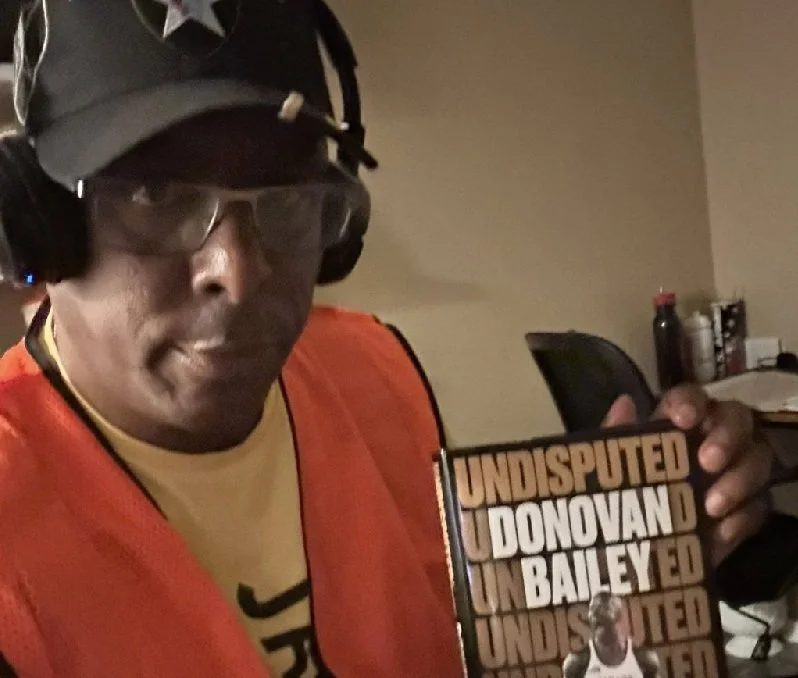
Rae McFarlane promoting Donovan Bailey’s memoir three days before his death (Photo contributed)
The retired United States Army Sergeant was in the Greater Toronto Area in May for the annual Knox Past Students Association Toronto chapter gala in Markham.
Life’s fragility makes Bailey appreciate and maximize the present.
Still his first love, he plays recreational basketball on Monday nights when in Canada.
He also relishes hosting a running podcast and spending quality time with friends in Jamaica and at Vintage Conservatory, a wine club in downtown Toronto, and Clio which is a full-service restaurant in King West Village.
“I am not a sommelier, but I know wines and I enjoy them,” said the three-time World Championships winner. “I am not a chef, but I enjoy sitting in a Michelin Star restaurant and having an incredible meal. However, my palate travels from what is perceived to be the very best to a little hut by the side of the road in Jamaica where I can have some fish and a cold Red Stripe beer and talk about life.”
Love him or hate him, Bailey did it the right way and must be respected.